
REVIEW · HISTORICAL TOURS
Historical city tour in the African Quarter in Berlin
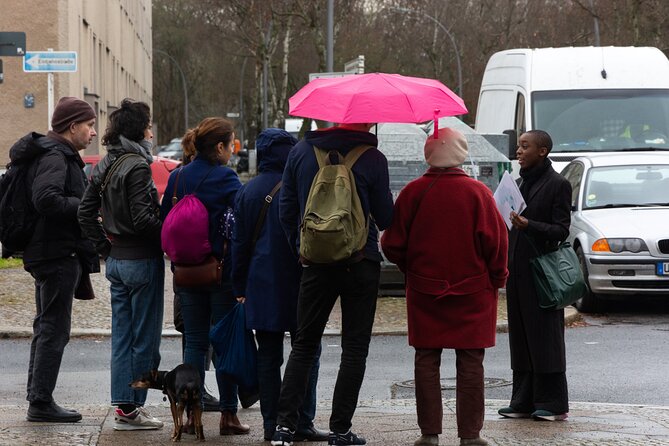
Street names tell a colonial story. That is the hook of this 2-hour walk through Berlin’s African Quarter, where a few blocks can change how you see the city.
I especially like how the tour turns street names into real questions instead of trivia. You start hearing prompts like what Germany had to do with Namibia, and why certain places got named the way they did.
The other thing I like is the tight, stop-by-stop structure. You visit Swakopmunder Straße, Anna-Mungunda-Allee, Manga-Bell-Platz, and Kongostraße, and each stop is short enough that you stay sharp for the whole route.
One consideration: this is weather-dependent and you are doing a solid walking loop for about two hours. Bring comfortable shoes and plan for rain, just in case.
In This Review
- Key highlights before you go
- Why Berlin’s African Quarter feels like a living classroom
- Price and logistics that actually matter for a short walk
- Meeting at Swakopmunder Straße, then walking with a clear route
- Stop 1: Swakopmunder Straße and the Namibia connection
- Stop 2: Anna-Mungunda-Allee and the debate over names
- Stop 3: Manga-Bell-Platz and Gustav Nachtigal’s role
- Stop 4: Kongostraße, the Congo Conference, and maps that change everything
- Who this tour suits best
- Practical tips to get more out of the walk
- Should you book this African Quarter walking tour?
- FAQ
- How long is the African Quarter historical city tour?
- How much does the tour cost?
- Where does the tour start and end?
- Is the ticket mobile?
- How many people are in a group?
- Is the tour easy for most people to join?
- Do you need to buy entry tickets for stops?
- What is the weather situation?
- Can I cancel for free?
- Is the tour near public transportation, and are service animals allowed?
Key highlights before you go
- A neighborhood built from meaning: the African Quarter covers 22 streets with names tied to African countries, European cities, and colonial-era figures
- Street-name history you can follow: each stop poses a clear question, then connects it to Germany’s colonial era
- Concrete stop list, not vague wandering: Swakopmunder Straße, Anna-Mungunda-Allee, Manga-Bell-Platz, Kongostraße
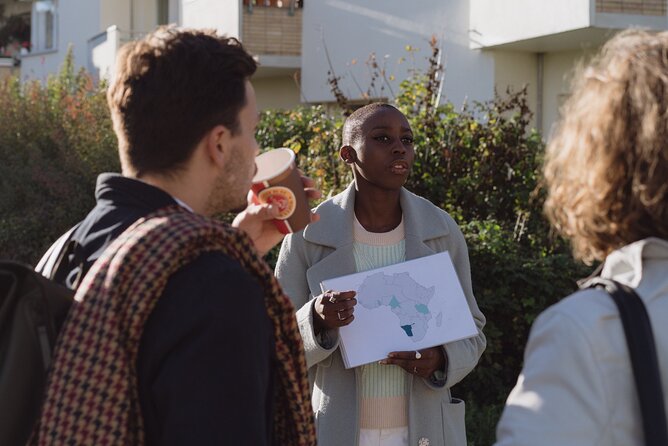
- Map-based context for big ideas: you get shown a map of Africa before and after the Berlin conference
- Small group feel: up to 20 people makes it easier to listen and keep questions straight
The wider Berlin sightseeing pile
- Berlin: 1-Hour City Tour by Boat with Guaranteed Seating★ 4.3 · 16,993 reviews
- Berlin: City Sightseeing Hop-On Hop-Off Bus Tour★ 4.1 · 4,233 reviews
- Berlin: 1-Hour City Sightseeing Cruise★ 4.4 · 2,210 reviews
- Berlin City Hop-on Hop-off Tour with Optional Cruise★ 3.5 · 1,155 reviews
Why Berlin’s African Quarter feels like a living classroom
Berlin’s African Quarter is one of those places where the city itself is the lesson plan. The area includes 22 streets, and the naming is not random. You will see street names that point to African countries, European cities, and colonial-era roles tied to the period when European powers carved up influence across the globe.
What makes this tour worth your time is the approach. Instead of treating colonial history like something distant and sealed off, it uses everyday details you can actually read while walking. Street names become clues. And those clues connect to the bigger story: what relationship Germany had to African countries, and what colonial rulers were doing while those histories were being written.
I like that it encourages a change in perspective. Not the fluffy kind. The practical kind, where you start noticing what is still in your surroundings, and why it matters. By the time you finish, you are not just remembering facts. You are comparing what a street name suggests with what the colonial system actually meant.
Also, the pace helps. The tour is about two hours, and the route is structured around multiple short stops, so it stays focused. Even if you only have an afternoon free, it is the kind of walk that can give you a strong framework for understanding the neighborhood.
Price and logistics that actually matter for a short walk
This tour runs for about two hours and costs $33.57 per person. For that price, you are paying for guided interpretation and a clear route, not an all-day museum marathon. The stops are structured so you do not need paid entrances to get value at each location, and the timing keeps it from dragging.
A key practical point: it is a mobile ticket experience. That is one less piece of paper to manage while you are figuring out public transit and meeting points in a busy city.
The group size is capped at 20. That matters because colonial-history discussions can get heavy, and you want a guide who can keep the thread clear while the group stays manageable. You also likely will hear everything without craning your neck the whole time.
The tour is near public transportation, which helps if you want to combine it with other Berlin sights. And because most people can participate, it is not limited to a highly athletic crowd.
The main “cost” consideration is not money. It is attention. The tour asks you to think about names, maps, and political decisions that shaped real lives. If you show up with a relaxed mindset and good listening ears, you will get a lot more out of it than if you treat it like a casual stroll.
Meeting at Swakopmunder Straße, then walking with a clear route
You start at Swakopmunder Str. 44, 13351 Berlin. The tour ends at Rehberge 13349 Berlin. Since the walking portion is the point of the experience, you want to plan your timing so you are not rushing.
The itinerary is organized into four stops, each around five minutes. That structure is ideal for a short tour: you do not spend long stretching out at one spot, and you do not burn energy trying to guess what is next. The questions you get at each stop also give your brain something to hold onto while you walk between points.
If you like tours where you can take mental notes and connect ideas quickly, this one fits. You are basically building a mini storyline: Germany and Namibia, the naming decisions in the streets, Gustav Nachtigal and a central square, and then the Congo Conference and the Berlin conference map comparison.
One more detail that helps your planning: the tour requires good weather. If rain hits hard, you may be offered a different date or a full refund. So check the forecast, and bring rain protection.
Stop 1: Swakopmunder Straße and the Namibia connection
Swakopmunder Straße is where the tour kicks off, and it hits you with a straightforward question: what does Swakopmund have to do with Berlin? From there, you move into the Germany and Namibia angle, which sets the theme for everything that follows.
This is a smart first stop. It tells you right away that the tour is not just about naming patterns. It is about relationships. When a city in Africa is referenced in a street name in Berlin, it signals a historical link, not just a random label.
In a neighborhood where many streets carry colonial-era traces, starting with the Namibia connection gives you a reference point. You can look at the street name and immediately ask: who chose it, and what story did they want it to tell?
Practical takeaway: at this stop, try to listen for the “why.” The tour does not just point out the name. It pushes you to connect the name to Germany’s colonial involvement and the colonial rulers’ role in that era.
How long you stay here is short, around five minutes. That is enough time to get the core idea without turning the start into a lecture. If you like tours with momentum, you will appreciate this timing.
More history walks in Berlin
Stop 2: Anna-Mungunda-Allee and the debate over names
The next stop is Anna-Mungunda-Allee, and it brings you to a different kind of historical question. The tour asks after whom Petersallee was named, and then it turns toward the street-renaming debate: should the street be renamed, and why?
This stop matters because it shows that history in public space is not only about what happened long ago. It is also about what a city chooses to honor, correct, or reconsider.
You are essentially being asked to weigh multiple layers of meaning in one place. Street names can freeze power in stone, but they can also become sites of change. By the time you reach this point in the walk, you are thinking about the same basic theme from a new angle: not only how colonial naming worked, but how communities deal with that legacy later.
What I found useful is that it is not framed as a simple “right answer” lesson. It is framed as a question. And that is exactly what makes it practical. You walk away thinking about how naming choices reflect politics, memory, and identity.
Since this stop is brief, keep your questions simple. Focus on who gets named and why. That one thread will help you understand what comes next at Manga-Bell-Platz and Kongostraße.
Stop 3: Manga-Bell-Platz and Gustav Nachtigal’s role
Manga-Bell-Platz shifts you again. Here the tour asks: who was Gustav Nachtigal, and why was the central square of the African Quarter named after him?
A central square name is powerful. It is the kind of label that people see daily, even if they never think about where the name came from. This stop pushes you to notice that difference. A square name can look “ordinary,” but it can carry a political decision from the colonial era.
This is also a turning point in the emotional tone of the walk. The first part is about making connections. This stop makes you confront the people behind the naming decisions, including the historical figures tied to Germany’s colonial period.
You are also encouraged to think about what it means when a public space centers a name connected to colonial actions. Even without turning it into a full debate, the question alone changes how you look at the square.
Like the other stops, it is around five minutes. So the key is not to expect a long sit-down explanation. Use the short time to anchor a few core ideas: the name, the person, and the reason the tour says it is central to the African Quarter story.
Stop 4: Kongostraße, the Congo Conference, and maps that change everything
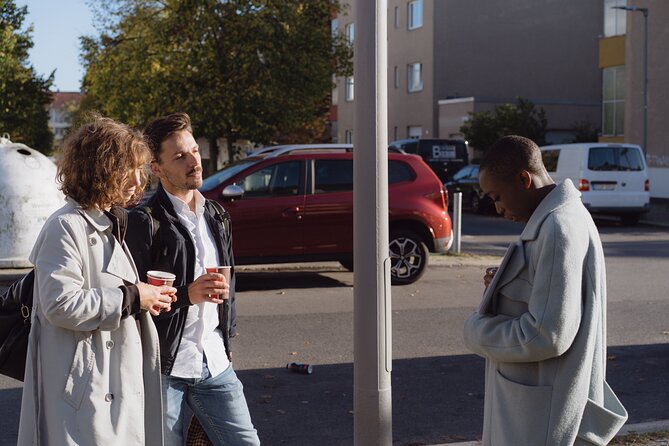
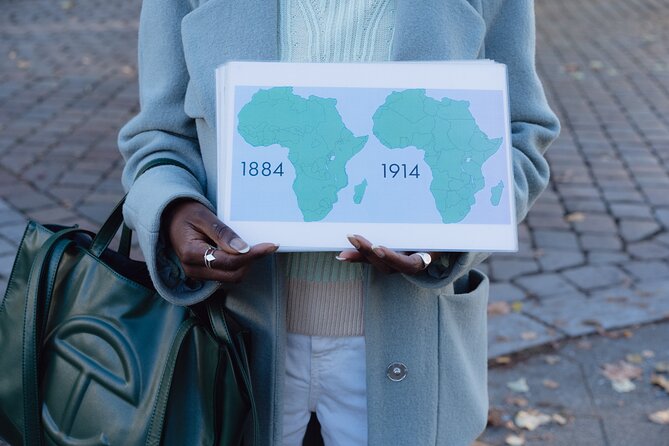
Kongostraße is the stop where the tour zooms out to the big-picture mechanics of colonial power. It asks what happened in Berlin in 1884. Then it gets specific about the Congo Conference, including why no one from Africa was present.
Even if you already know the basic shape of the story, this is where it becomes hard to keep it abstract. The point is not just that decisions were made. The point is who was excluded, and what that exclusion says about the power structure at work.
The tour also includes a map comparison of Africa before and after the Berlin conference. Maps can be dry, but used well they are one of the fastest ways to show how political outcomes reshape geography.
Here is what you should take from this stop: the conference is not presented as an “old event.” It is presented as a decision-making moment that reorganized parts of Africa through European agendas, without African participation.
And yes, the “no one from Africa present” detail is the kind of fact that changes how you interpret street names later. You stop seeing them as neat labels and start seeing them as leftovers from a process built on unequal representation.
You finish this stop at about five minutes as well, which keeps the route tight. But by then, you have walked through the logic of the neighborhood: naming, commemoration, exclusion, and how Berlin’s streets preserve these layers.
Who this tour suits best
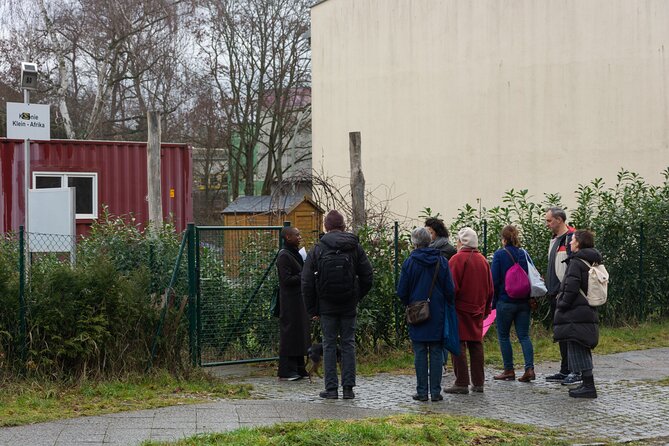
This is a strong pick if you want historical context that connects directly to what you see. If you like walking tours where you learn while moving through the city, you will enjoy this format. The questions at each stop make it feel like you are solving a puzzle, not collecting random facts.
It also fits well if you have limited time and want a concentrated overview of Germany and colonial-era naming patterns. Because it is about two hours and stays outside, it is easier to slot in than multi-hour museum visits.
If you prefer gentle, broad sightseeing, you might find the topic heavy. But if you are willing to look at the neighborhood with clear eyes, this tour gives you a structured way to do it.
Practical tips to get more out of the walk
- Wear comfortable shoes, because you are walking for about two hours.
- Bring a light rain layer, since the tour depends on good weather.
- Have a curious mindset. The tour is built around questions, not passive listening.
- If you want to remember it later, jot down one or two street names and the question you were asked at each stop.
The best thing you can do is treat street names like clues that point to systems of power. Once you do that, the route becomes more than a tour. It becomes a lens you can use while exploring the rest of Berlin.
Should you book this African Quarter walking tour?
If you want a focused, short walking experience that uses the African Quarter’s street names to explain Germany’s colonial connections, I think this is a good booking. The route is structured, the small group size helps, and the stop-by-stop questions keep your attention.
I would not choose it if you are looking for a relaxed, purely scenic walk with minimal thought. This is history with sharp edges. But for the time and price, it is a strong way to understand why this part of Berlin looks the way it does.
FAQ
How long is the African Quarter historical city tour?
It lasts about 2 hours.
How much does the tour cost?
The price is $33.57 per person.
Where does the tour start and end?
It starts at Swakopmunder Str. 44, 13351 Berlin, and ends at Rehberge 13349 Berlin.
Is the ticket mobile?
Yes, it uses a mobile ticket.
How many people are in a group?
The tour has a maximum of 20 travelers.
Is the tour easy for most people to join?
Yes, most people can participate.
Do you need to buy entry tickets for stops?
The stops listed are marked as admission ticket free.
What is the weather situation?
The tour requires good weather, and if it is canceled due to poor weather you will be offered a different date or a full refund.
Can I cancel for free?
Yes, you can cancel up to 24 hours in advance for a full refund.
Is the tour near public transportation, and are service animals allowed?
It is near public transportation, and service animals are allowed.
The Longer History of Berlin
Seeing Berlin in One Go
Everything else we filed on Berlin
- Private Photo Tour in Kreuzberg
★ 5.0 · 3 reviews - Kreuzberg Private Walking Tour: Immigrants, Artists & Hipsters
★ 5.0 · 3 reviews - Berlin’s Jewish Heritage: Private Tour of the Vibrant Jewish District
★ 5.0 · 3 reviews - Individual city tour Berlin for max. 8 persons
★ 5.0 · 3 reviews - Berlin & The Third Reich Private Guided Tour
★ 5.0 · 3 reviews - Private Analogue Photography Experience in Berlin
★ 5.0 · 3 reviews
Historical Tours, side by side.
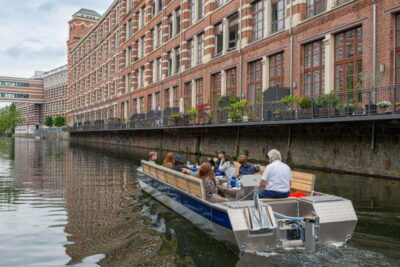 ★ 4.7Leipzig: City History Canal Sightseeing Tour on a MotorboatFrom $186,232 reviews
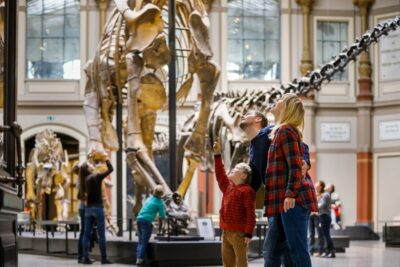 ★ 4.6Berlin: Natural History Museum Entrance TicketFrom $123,382 reviews
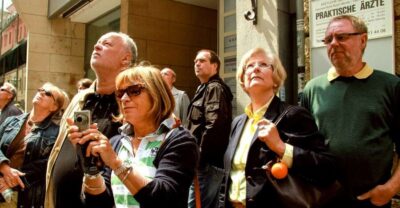 ★ 4.7Leipzig: 1.5-Hour Historical Walking Tour in GermanFrom $172,217 reviews
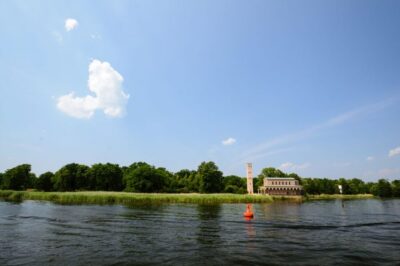 ★ 4.5Berlin: World Heritage Cruise to PotsdamFrom $251,435 reviews
 ★ 4.7Heidelberg: Night Watchman Historic Adventure TourFrom $3051,186 reviews
 ★ 5.0The Local Tour of Hamburg Historic CentreFrom $31,058 reviews
 ★ 4.8Elbfloren: Historical city tourFrom $15819 reviews
 ★ 4.6Bamberg: Guided Beer History Tour with Optional TastingFrom $21772 reviews
Other lists this tour is on