
REVIEW · WALKING TOURS
Munich Macabre Group Walking Tour
Munich has layers, and this tour walks you through them. You get a hands-on night stroll with archaeologist historian Taff Simon, mixing major squares with the grim stories beneath.
I especially loved the way the tour explains history through objects you can actually hold, and the fact you still get an upbeat guide who keeps the mood human. The other big plus is the medieval beer sampling, tied directly to why brewing mattered in daily life, not just as a gimmick.
One thing to consider: this is genuinely macabre history. You’ll hear about the Black Death, blood libel accusations, witch trials, and grave-related material, plus there can be sensitive visuals at St. Peter’s Church.
In This Review
- Key things I’d block out time for
- Munich at night, with a forensic historian’s sense of story
- Price and value: why $42.24 can make sense here
- Meeting at Marienplatz: what to expect on the ground
- Marienplatz first: origins of a city built on market life
- Landschaftstraße and the Medieval Jewish quarter, plus blood libel
- St. Peter’s Church: reading graves, handling coins, and what burial meant
- Viktualienmarkt: from medieval danger to medieval beer rules
- Alter Hof: royal power, a shocking murder, and Talhoffer combat
- Old Town Hall: Munich’s witch trial and the Pappenheimers
- The beer theme: why brewing mattered in medieval Munich
- Handling artifacts: why the “touch” makes the history stick
- Who should book this Munich Macabre tour, and who should skip it
- Should you book Munich Macabre with Taff Simon?
- FAQ
- What is the duration of the Munich Macabre Group Walking Tour?
- How much does the tour cost?
- What time does the tour start?
- Where do we meet the guide?
- Is the tour available in languages other than English?
- Is there a ticket method I should plan for?
- What food or drink is included?
- How big is the group?
- Is the tour suitable for children?
- What if I cancel?
Key things I’d block out time for
- An archaeologist-led walk with Taff Simon, who uses real finds and field experience, not memorized lines
- Hands-on moments, including ancient coins and replicated medieval arms you can examine
- Medieval brewing context plus beer tastings that connect food, health, and punishment
- Munich landmarks with darker backstories, from Marienplatz to Old Town Hall
- Small group size (up to 15) for a more interactive feel
- All-English format, with route adjustments possible if seating or mobility is an issue
Other walking routes through Munich
- Munich: Third Reich & WWII Walking Tour★ 4.6 · 6,181 reviews
- Third Reich Walking Tour Munich★ 4.5 · 4,291 reviews
- Munich: Old Town & Viktualienmarkt City Walk in German★ 4.7 · 2,304 reviews
- Munich: Night Watchman Walking Tour★ 4.7 · 2,092 reviews
Munich at night, with a forensic historian’s sense of story
This is the kind of tour that makes you slow down in a city you think you already know. You start at Marienplatz near Fischbrunnen, and instead of doing the usual postcard route, you get the archaeology behind what’s standing in front of you.
The most effective thing here is the guide’s method. Taff Simon frames Munich as a place where daily life, trade, religion, and crime left physical traces. Then he matches the traces to the stories: coins, burial practices, weapons, and even what can happen after big construction projects or bomb damage. The result is not a lecture. It feels like walking through evidence.
And yes, there’s a beer component, but it’s tied to the medieval logic of the city. Back then, beer wasn’t a casual treat. It was a food system, a trade product, and a thing authorities tried to regulate tightly.
Price and value: why $42.24 can make sense here
At $42.24 per person, you’re paying for more than narration. Most walking tours charge for time and guidance. This one charges for a specific kind of access: handling artifacts, using replica medieval arms, and getting guided interpretation that comes from archaeology and history work.
You also get alcoholic beverage samples as part of the experience, and the tour includes multiple stops in central Old Town. If you’re the kind of traveler who likes your history with tactile details, this price starts to feel fair fast. If you’re just looking for light sightseeing, you might prefer a more relaxed city overview and skip the macabre angle.
Meeting at Marienplatz: what to expect on the ground
You meet at Fischbrunnen, Marienplatz 8, 80331 München, starting at 6:00 pm. The tour runs about 2 hours 30 minutes to 2 hours 45 minutes, and it loops back to the meeting point at the end.
Practical reality check: the route includes uneven surfaces, so wear shoes you trust. Also, seating is not guaranteed at every stop. If you need a quieter pace or you want a seating-friendly route variation, tell the provider when you book, and they will adjust the path when possible.
Finally, this is English only. If you prefer German commentary, you’ll need a different tour option. The upside is that it keeps the evening consistent and easy to follow.
Marienplatz first: origins of a city built on market life
Your tour kicks off at Marienplatz, the ancient market square. Even if you’ve photographed this space before, you’ll be nudged to look at it differently. Taff Simon connects the square’s layout and long use to the city’s early role as a trading hub.
This opening matters because the tour keeps returning to one theme: the past wasn’t only cathedrals and kings. It was also markets, work, burial customs, and the everyday risks people lived with.
You’ll spend about 15 minutes here, enough time to set the context without dragging.



Landschaftstraße and the Medieval Jewish quarter, plus blood libel
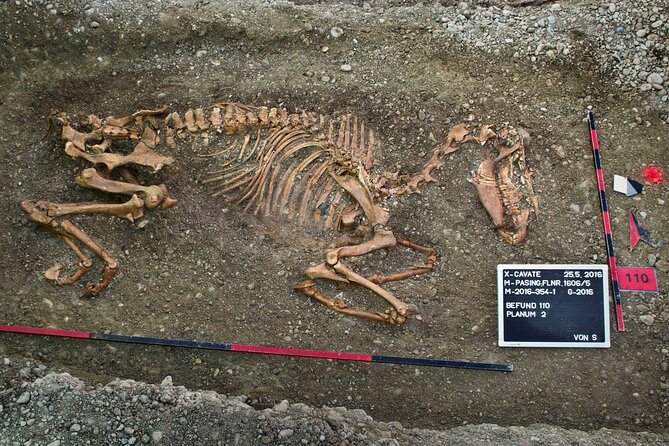
Next you head to Landschaftstraße, an area that today might look pretty ordinary, but historically ran alongside the Medieval Jewish quarter. This is where the “macabre” tag turns into real historical tension.
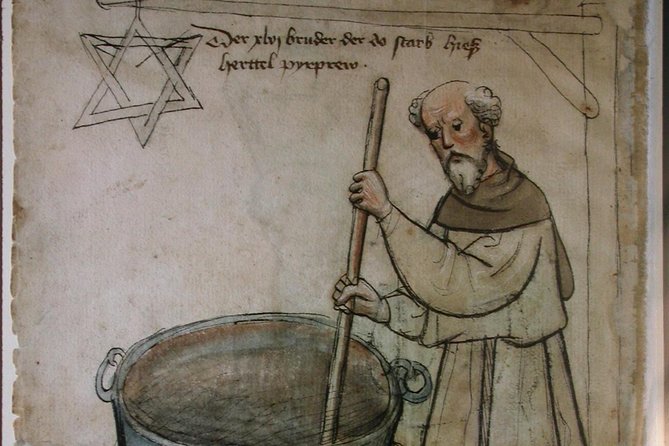
You learn how the Jewish community contributed to Munich’s economic and cultural life, and then how those same communities were targeted by baseless accusations. The tour covers claims like blood libel, blaming Jewish people for spreading the Black Death, along with accusations tied to criminals and witches.
A key part I appreciated is the archaeology angle. The tour explains how new U-Bahn-related excavations helped clarify what we know about this area now. If you like your history grounded in physical evidence, this stop delivers.
St. Peter’s Church: reading graves, handling coins, and what burial meant
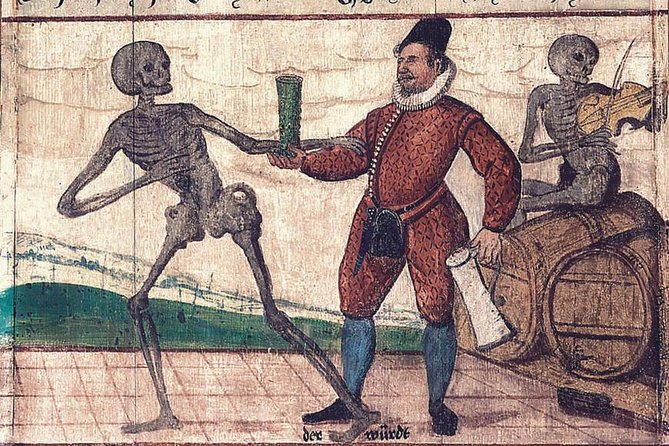
At St. Peter’s Church, you move from contested history into another kind of evidence: what people left behind when they died. The church is presented as the oldest in Munich, and the tour connects that status to the oldest graveyard context.
This stop is built around three ideas:
- How you can decipher symbols on gravestones
- What early Bavarian burial rites looked like, and how those practices shifted over time
- How social status can show up in material details
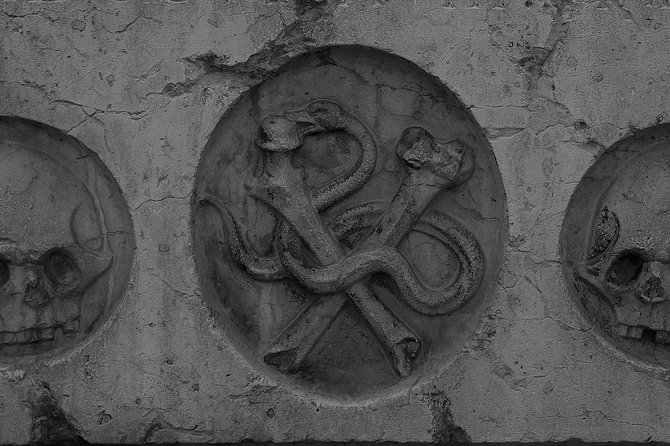
One of the most striking lessons is how phrases tied to death could mean something harsher than you’d expect. Older burial wording and marker styles connect to the reality of what happened to bodies and remains, not just the comforting sentiment.
Then comes one of the best hands-on moments: you get to handle original ancient coins used as alms. That detail makes the whole stop feel less abstract. Coins stop being “museum objects” and start being proof of charity and ritual.
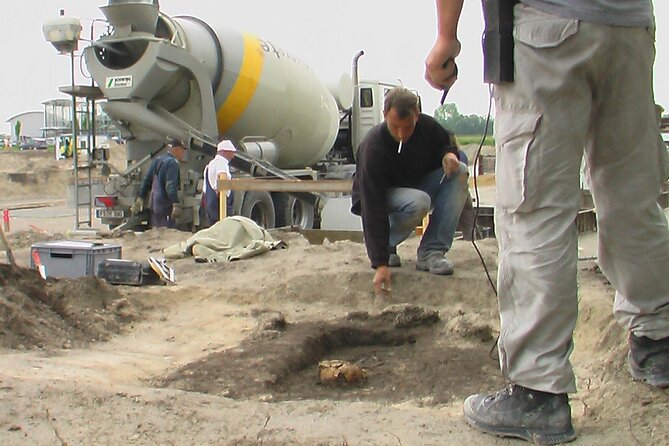
Important note for sensitive content: the guide uses photos from Dark Age and early Medieval burial excavations, often connected to construction sites. The tour also discusses gravegoods, including jewelry and weaponry, as part of how archaeologists interpret belief and social structure.
If you’re traveling with kids, this is the part where you’ll want to gauge the group’s comfort level. The tour notes that some content is not really suitable for very young children, but you can bring them if you feel it’s manageable.
Viktualienmarkt: from medieval danger to medieval beer rules
Viktualienmarkt is one of Munich’s loveliest places in the daytime. At night it feels like a food stage. This stop flips your expectations.
In medieval times, the tour frames this area as dangerous for people on the wrong side of society. You learn why you could end up here as an outcast, and the story builds toward brewing and punishments.
Then the experience shifts into something practical and fun: you get to try authentic medieval beer. Samples are provided, not full pours, but the point is education through taste. If you’ve heard people complain modern beer tastes too consistent, the tour gives you context for why medieval brewing could be more variable.
You also hear about terrible penalties for making bad beer and bad pretzels. It’s a dark way to learn that food quality was not optional. In a world without modern sanitation and standardized ingredients, controlled brewing affected more than flavor.
Alter Hof: royal power, a shocking murder, and Talhoffer combat
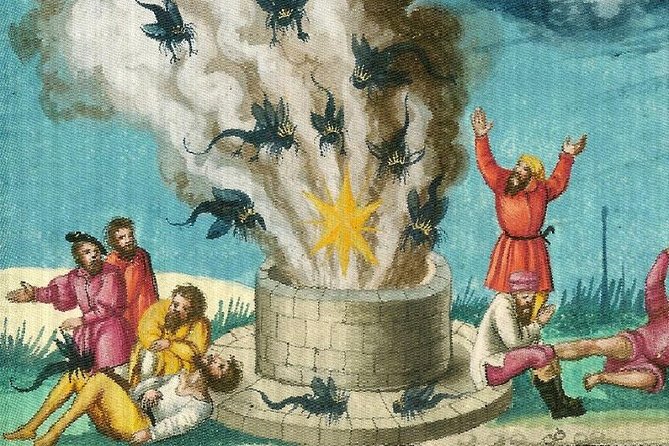
At Alter Hof, you’re on ground connected to the Wittelsbachs, Munich’s ruling family. The tour doesn’t linger only on walls and dates. It tells you how power played out when it turned violent.
You learn about a murder that shocked medieval Europe and the consequences that carried forward for later generations. The story is used to show how violence was not an isolated event. It became a ripple effect through politics, reputation, and fear.
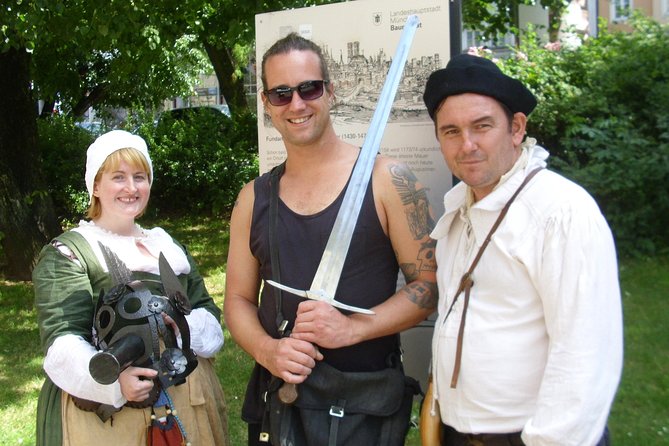
Next, you get medieval combat theory via Hans Talhoffer, a legendary late medieval sword master. The guide talks about medieval combat practices and, hands-on, you can handle replica swords and possibly other replica armor elements depending on timing.
This is one of the stops that many people call a highlight because it turns “history of weapons” into something physical. Even if you do not care about sword details, it helps you understand what sword masters trained for, not just what happened in battles.
If time allows, you’ll also get a bonus archaeology moment tied to 1944. An Allied bomb inadvertently unearthed ancient artifacts here, and the tour includes time to handle and compare different ancient pottery and other artifacts. It’s a reminder that modern conflict can become a trench for archaeologists.
Old Town Hall: Munich’s witch trial and the Pappenheimers
The tour lands at Old Town Hall, and this is where the mood turns darker in a more historical, documented way. The guide focuses on what’s described as the most vicious witch trial in German history, including the charges, the methods used to build “evidence,” and the outcome for the Pappenheimers.
You also get the wider consequence angle. This wasn’t only local theater. The events are framed as having far-reaching effects that reached places far beyond Munich.
If you’re worried about being shocked, here’s a fair heads-up: the tour is not toned down into mystery-story vibes. It presents the mechanisms, the logic of accusation, and the human damage that followed. The humor level may rise at times, but the subject stays serious.
Still, I found the balance effective because the guide keeps the story grounded in what was believed, how it was justified, and why it spread.
The beer theme: why brewing mattered in medieval Munich
Midway through the tour, the beer details start to make a pattern. The medieval brewing stories are not random. They connect to three practical realities:
- People needed a drink they could rely on in daily life
- Brewing involved rules, quality control, and punishment
- The city depended on trade goods, and food systems affected public order
When you sample the medieval beer, you’re tasting a small piece of that system. And when the guide talks about Bavarian Purity laws, penalties for bad beer, and even the idea of beer quality being policed, you understand why authorities cared so much.
One review phrase I’d echo in spirit is that Taff makes the tasting feel like part of the lesson plan, not a separate party activity. You learn what to look for and why it mattered.
Handling artifacts: why the “touch” makes the history stick
This tour repeats an idea in different forms: objects help you think. When you can hold an ancient coin, examine material details, or look at replica arms with a guide who explains how archaeologists interpret finds, the past stops being distant.
You’re also more likely to ask questions. The small group size helps too, with a cap of 15 travelers, so you’re not shouting into the air for every answer. In the conversations I’d expect on a tour like this, the guide can answer the odd questions, like what burial goods suggest, how swords were meant to be handled, or how symbols on gravestones were interpreted.
Who should book this Munich Macabre tour, and who should skip it
This is a great fit if you:
- Like history that includes the uncomfortable parts, not just the postcard version
- Enjoy archaeology and want hands-on moments with coins, pottery, and replicas
- Want a guided walk that feels interactive, especially with a small group
- Are comfortable with some sensitive material and the realistic darker side of medieval Munich
It might not be for you if you:
- Prefer light sightseeing only
- Are easily overwhelmed by topics like plague accusations, witch trials, and grave excavation imagery
- Need a fully seated, step-free tour, since the route includes uneven surfaces and seating varies by stop
Should you book Munich Macabre with Taff Simon?
If you’re visiting Munich for the first time, this tour is a smart way to get past the surface. You cover big central locations like Marienplatz and Old Town Hall, but you also learn why the city’s story includes suffering, rumor, punishment, and survival. The hands-on archaeology plus the medieval beer samples make it feel like more than a typical walking tour.
If your idea of a fun evening is cozy and cheerful only, you may find the “macabre” content heavy. But if you can handle dark medieval history with a guide who explains it clearly, you’ll likely consider this one of your strongest nights in Munich.
FAQ
What is the duration of the Munich Macabre Group Walking Tour?
It lasts about 2 hours 30 minutes to 2 hours 45 minutes.
How much does the tour cost?
The price is $42.24 per person.
What time does the tour start?
The start time is 6:00 pm.
Where do we meet the guide?
You meet at Fischbrunnen, Marienplatz 8, 80331 München, Germany.
Is the tour available in languages other than English?
This tour is only offered in English.
Is there a ticket method I should plan for?
The tour uses a mobile ticket.
What food or drink is included?
Alcoholic beverages are included as samples of authentic medieval beer.
How big is the group?
The tour has a maximum group size of 15 travelers.
Is the tour suitable for children?
Some of the content is not really suitable for particularly young children, but the provider says they can temper some of the more descriptive elements.
What if I cancel?
Free cancellation is available. You can cancel up to 24 hours in advance for a full refund. Canceling less than 24 hours before the start time is not refundable.
Pavements of Munich
Everything else we filed on Munich
- Munich Beer and Bavarian Bites Private Tour
★ 5.0 · 11 reviews - Private Day Trip from Munich to Neuschwanstein and Linderhof
★ 4.0 · 11 reviews - Private Munich Old Town Walking Tour – with optional Breakfast
★ 5.0 · 11 reviews - Festive Concert in the All-Saints Court Church
★ 4.6 · 11 reviews - Private Castle Tour from Munich: Neuschwanstein, Hohenschwangau, and Linderhof
★ 4.5 · 12 reviews - Munich: Oktoberfest Big Beer Tent Evening including table reservation
★ 4.8 · 12 reviews
Walking Tours, side by side.
 ★ 5.0Discover Berlin Half-Day Walking TourFrom $249,624 reviews
 ★ 4.9Berlin: Third Reich and Cold War 2 Hour Walking TourFrom $236,830 reviews
 ★ 4.6Munich: Third Reich & WWII Walking TourFrom $316,181 reviews
 ★ 4.9Berlin: Discover Berlin Walking TourFrom $235,998 reviews
 ★ 5.0Berlin’s Best: 2 Hour Walking Tour Third Reich and the Cold WarFrom $245,486 reviews
 ★ 4.8Berlin: Hidden Backyards Guided Walking TourFrom $235,360 reviews
 ★ 4.5Third Reich Walking Tour MunichFrom $454,291 reviews
 ★ 5.0Third Reich Berlin: Hitler and WWII Walking TourFrom $243,301 reviews