
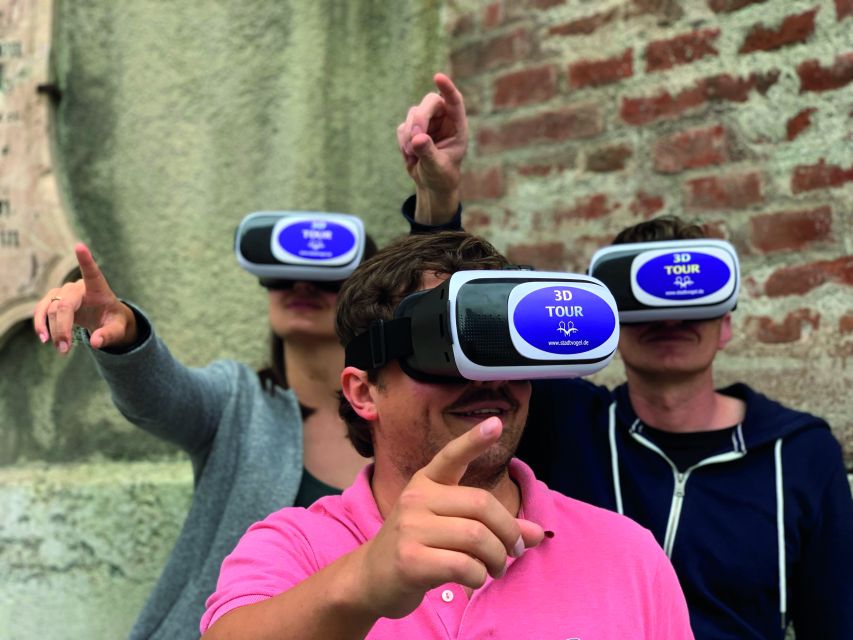
REVIEW · WALKING TOURS
Munich: Walking Tour Old Town 3D VR Tour in GERMAN
Turn Munich into a time machine. This 3D VR walking tour uses a live guide to show Marienplatz’s time split scenes from different eras, so you can connect the city you see now with what stood there before. I like the way the tour makes landmarks feel specific instead of vague, and I also like how fun it is to share the headset moment with friends. The main catch is that some VR experiences can feel more like still images than a full animation, and you must rely on your own smartphone and app.
You’ll stay on your feet for about 2 hours and move from place to place in Munich’s Old Town, guided in German. I enjoy that it’s a walking tour with a person explaining what you’re seeing, not just tech handed to you. One other consideration, and it matters, is that the tour asks you to set up VR by using your phone at the meeting point.
Plan for tech prep right away. You’ll meet directly in front of the Orlandohaus (Platzl 4), and your guide will carry a big blue bag marked Weis(s)er Stadtvogel. Then you’ll download an app onto your smartphone so it can be inserted into the VR glasses for the 3D images.
In This Review
- Key things worth knowing before you go
- A 3D VR Old Town walk with a German guide
- Where you meet at Platzl, and how the phone setup works
- Marienplatz time travel, 1570 on the west side
- Medieval grain market, gallows, and the disgraceful donkey
- Old Town Hall in 1870, plus carriages and old professions
- Platzl in 1895, and why Urmünchner feels different
- Hofbräuhaus then and now, beer hall history in 3D
- How to get the best VR results from your phone and glasses
- Price and value for a 2-hour 3D tour
- Who should book this 3D Old Town tour in Munich
- Should you book the Munich Old Town 3D VR tour?
- FAQ
- Where is the meeting point for the tour?
- What do I need to bring?
- Do I need to download an app?
- What language is the live guide?
- How long is the tour?
- What’s included in the price?
- Are food and drinks included?
- Is the tour wheelchair accessible?
- Is there free cancellation?
Key things worth knowing before you go
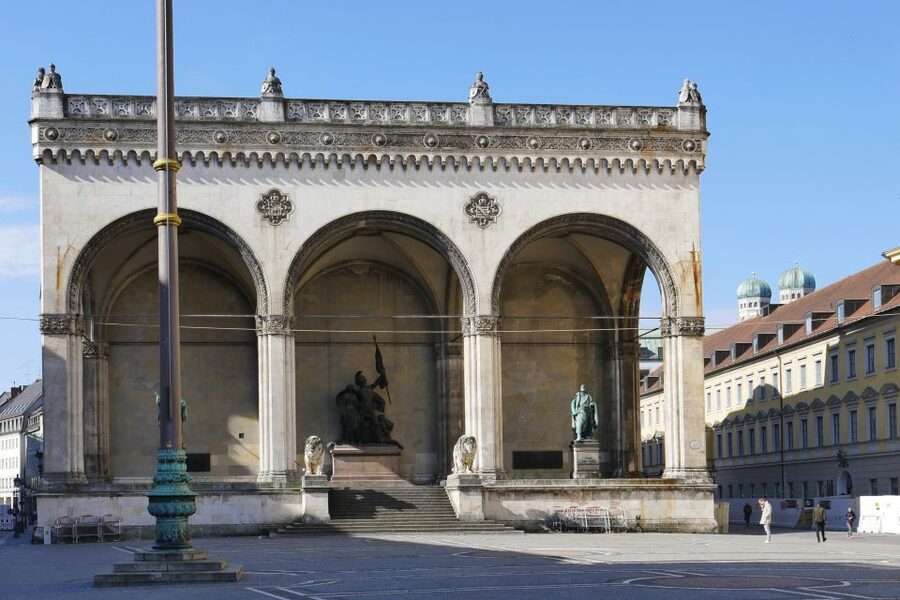
- Meet at Orlandohaus, Platzl 4, right in front, with the guide holding a big blue Weis(s)er Stadtvogel bag
- Marienplatz gets split in time, west side shows 1570, east side shows about 300 years later
- You’ll hear guided stories tied to the medieval grain market, gallows, executions, and the disgraceful donkey
- Platzl is shown in 1895, with explanations of how it became the Urmünchner area you recognize
- Hofbräuhaus appears in past and present forms, giving you a clear before-and-after feeling
- Your smartphone is part of the system, since the required app is installed at the meeting point
Other walking routes through Munich
- Munich: Third Reich & WWII Walking Tour★ 4.6 · 6,181 reviews
- Third Reich Walking Tour Munich★ 4.5 · 4,291 reviews
- Munich: Old Town & Viktualienmarkt City Walk in German★ 4.7 · 2,304 reviews
- Munich: Night Watchman Walking Tour★ 4.7 · 2,092 reviews
A 3D VR Old Town walk with a German guide
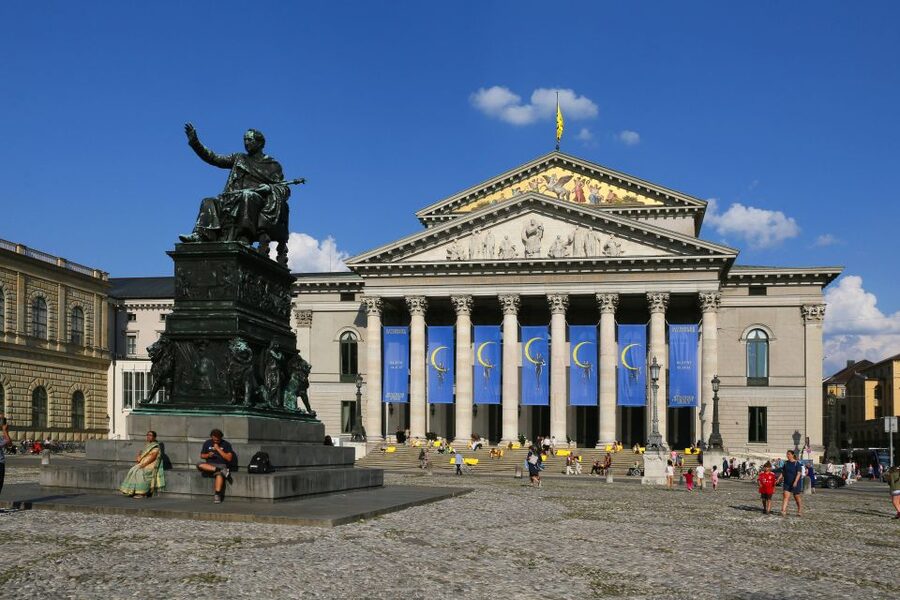
This isn’t a normal “stand here and listen” city tour. You walk through Munich’s Old Town with a guide, and along the way you switch to a 3D view that shows older versions of the places around you. That “past overlay” feeling is the heart of the experience.
I like that you’re not just looking at a screen in one place. The tour is designed around moving between key points, so the stories and the images land on the actual streets and squares you’re standing in. You also get a live German guide, so if something feels confusing, there’s a real person to explain it.
The tone is also meant to be enjoyable. The experience is built for friends and family to do together, because VR on a guided walk works best when you can compare what you’re seeing and chatting as you go.
Where you meet at Platzl, and how the phone setup works
Your start is practical and easy to find if you arrive a few minutes early. Meet directly in front of the Orlandohaus at Platzl 4. The guide will have a large blue bag with the white words Weis(s)er Stadtvogel, plus a 3D Tour sign.
Once you’re there, the most important thing happens quickly. Every participant must download an app onto their smartphone at the meeting point. That app is then used with the VR glasses to show the 3D images.
That means you should show up ready, not scrambling. Bring a charged smartphone and make sure you have internet access. If you arrive with low battery or no connection, you can easily end up waiting while others get started.
This is also why I suggest you keep your phone available during the tour. Even if the VR glasses are doing the heavy lifting, the phone is part of the required system, so it will be with you more than on a typical walking tour.
Marienplatz time travel, 1570 on the west side
One of the tour’s clever ideas is that Marienplatz is split in two for the sake of the experience. On the western side, you enter the world of 1570. On the eastern side, you move into a later period, roughly 300 years after that earlier scene.
This split matters because it helps you understand the city as layers, not as one single “old town” snapshot. When you see one era on one side and a later era on the other, the architecture and street character start to feel like a story with chapters.
In the 1570 portion, the guide focuses on what’s happening around the square, including a medieval grain market setting. It’s the kind of topic that can sound dry on a brochure, but VR makes the details more visual, and the guide’s storytelling connects it to how daily life worked.
If you like history that’s tied to everyday functions, this stop is a big win. Grain markets and public spaces are where people gathered, traded, and heard the city’s news. The tour uses that idea to turn a place you might otherwise walk past into a scene you can picture.
Medieval grain market, gallows, and the disgraceful donkey
Still on Marienplatz, you’ll hear stories tied to executions and a grim part of civic life. The guide talks about gallows used for special executions, plus something called the so-called disgraceful donkey. Whether you already know the term or not, you’re getting guided context, not just a name.
I appreciate that the tour doesn’t pretend the past was only pretty buildings and music. Munich’s Old Town had rules, punishments, and public displays. Seeing these themes in a guided VR scene can be unsettling, but it also makes the history feel more honest.
The VR portion also helps you pay attention to details you might otherwise miss while standing outdoors. When you’re given a specific “look here” moment, your brain stops treating the square like generic scenery.
One note to keep expectations realistic: based on how the VR experience has been described by people using the setup, the images can function more like still 3D renderings than moving cinematic sequences. So treat it as viewing historical reconstructions, not as a full animated VR film.



Old Town Hall in 1870, plus carriages and old professions
When you shift to the other side of Marienplatz, you’re guided into a later era, around 300 years after 1570. In this portion, the focus includes what the old town hall looked like in 1870, including the first completed part of the hall.
This is a smart segment for anyone who likes seeing how a major building changed over time. You’re not just hearing dates, you’re looking at a visual version of a specific moment in the building’s story. That makes it easier to place what you might see today into a longer timeline.
You also encounter the idea of carriages and old professions in action. Even when you’re outside, the VR framing pulls your attention to what the scene is trying to show: people, work, and movement around an important civic area.
I think this is the part that helps the tour feel less like “VR gimmick” and more like guided interpretation. The guide isn’t only telling you what the tech shows, they’re giving you meaning for why those details mattered.
Platzl in 1895, and why Urmünchner feels different
Next you move to Platzl, where the tour brings you to 1895. This section is about how the area came to be and how it changed into the Urmünchner place you see today.
The value here is the connection between past form and present atmosphere. You’re standing in a real area, then using 3D scenes to get a sense of what the same streetscape might have looked like at a different point in time. That “then and now” link is the best use of VR on this tour.
It also helps you understand neighborhoods as evolving spaces, not frozen postcards. The guide’s explanation of how things changed over time gives you a practical mental map. Later, when you walk around on your own, you may find it easier to notice which parts feel like they carry history in the built environment.
If you’re visiting Munich for the first time, this stop gives you a framework. It doesn’t replace real exploration, but it gives you context so your free time makes more sense.
Hofbräuhaus then and now, beer hall history in 3D
The tour ends with a look at the Hofbräuhaus in both past and present forms. Since this is a famous Munich name, you may already feel like you know it. The purpose of this stop is different though: you’re seeing how it changed, not just recognizing the exterior.
This segment is useful because it adds variety to the timeline. Earlier you deal with civic space, markets, and public life. Now you’re focused on a landmark tied to culture and everyday social rituals.
The “past and present” approach is the tour’s strongest idea overall. Even if you can’t recall every detail later, the before-and-after feeling tends to stick. That’s the whole goal of using renderings in VR while you walk.
How to get the best VR results from your phone and glasses
VR on this tour is dependent on setup you do right at the start. That’s why your smartphone experience matters as much as your comfort with headsets.
Here’s what I’d do to maximize your chances of a smooth experience:
- Arrive with a charged smartphone and internet access ready
- Plan to download the required app at the meeting point
- Keep your phone accessible, since the tour uses it to display and insert into the VR glasses system
Also, calibrate your expectations. Some people found the VR glasses less useful than they hoped, and a few described the experience as still images rather than moving video. So go in expecting 3D reconstructions and guided scenes, not a fully animated virtual ride.
If you end up feeling that the phone display is clearer for some scenes, that’s not a failure. It’s a practical workaround. The tour’s real value is the combination of guided stories and the visual “history picture” you can access in the moment.
A small mindset shift helps too. Instead of hunting for motion effects, treat the VR as a way to see proportions, locations, and scene details that are hard to imagine from today’s streets.
Price and value for a 2-hour 3D tour
At $37 per person for about 2 hours, you’re paying for three things: a live German guide, a walking tour, and VR glasses tied to 3D renderings at specific historical points.
For me, the value comes from that combo. A regular guided walk in Munich can be great, but you’re usually paying for the narration only. Here, you’re also getting visual reconstructions, including a clearly planned time split at Marienplatz and later scenes at Platzl and Hofbräuhaus.
Food is not included, and hotel pickup or drop-off is not included either. That’s standard for many walking tours, but it affects your total planning budget. You’re meant to do the tour, then handle meals on your own.
The other value question is about tech quality. If you’re sensitive to headsets and want high-end VR motion, you might feel the $37 pricing doesn’t match your VR expectations. But if you enjoy guided history and you like the idea of standing in real places while older scenes appear around you, the price feels more fair.
Who should book this 3D Old Town tour in Munich
This tour fits best if you want history you can see. I’d especially recommend it if you enjoy:
- Old streets and civic spaces with a story behind them
- Learning city change over time, not just facts in a list
- A guided experience that uses tech as a tool, not the main event
It also makes sense for families and groups who want something interactive. Sharing a VR moment while walking can be genuinely fun, and the guide’s role helps keep everyone engaged.
On the other hand, you might want to think twice if:
- You dislike apps and smartphone setup
- You expect fully animated VR video instead of still 3D views
- You want a purely outdoor, no-tech experience
German language is part of the deal. If German is a challenge for you, you may still appreciate the visuals, but the guided explanation is a core part of how the tour becomes understandable.
Should you book the Munich Old Town 3D VR tour?
Book it if you want a guided walk that uses 3D renderings to show Munich as layered time, with clear stops at Marienplatz (1570 and about 300 years later), Platzl (1895), and Hofbräuhaus (past and present). At $37 for 2 hours, it can be a good value when you like history plus hands-on tech.
Skip it or reconsider if you’re only interested in high-end VR motion and you’d be disappointed by still-image style scenes. The tour also depends on your smartphone and internet access, so make sure you’re comfortable handling that setup right away.
If you go with practical expectations and a curiosity for how Munich changed, you’ll likely come away with memories that are easier to picture than a list of landmarks alone.
FAQ
Where is the meeting point for the tour?
Meet directly in front of the Orlandohaus at Platzl 4. The guide will have a big blue bag and a 3D Tour sign.
What do I need to bring?
Bring a charged smartphone. You also need internet access.
Do I need to download an app?
Yes. All participants must download an app onto their smartphone at the meeting point. This app is then used with the VR glasses to see the 3D images.
What language is the live guide?
The live tour guide provides the tour in German.
How long is the tour?
The walking tour lasts about 2 hours.
What’s included in the price?
The tour includes a guide, the walking tour, and VR glasses.
Are food and drinks included?
No. Food and drinks are not included.
Is the tour wheelchair accessible?
Yes, it is wheelchair accessible.
Is there free cancellation?
Free cancellation is available up to 24 hours in advance for a full refund.
Pavements of Munich
Everything else we filed on Munich
- Munich Beer and Bavarian Bites Private Tour
★ 5.0 · 11 reviews - Private Day Trip from Munich to Neuschwanstein and Linderhof
★ 4.0 · 11 reviews - Private Munich Old Town Walking Tour – with optional Breakfast
★ 5.0 · 11 reviews - Festive Concert in the All-Saints Court Church
★ 4.6 · 11 reviews - Private Castle Tour from Munich: Neuschwanstein, Hohenschwangau, and Linderhof
★ 4.5 · 12 reviews - Munich: Oktoberfest Big Beer Tent Evening including table reservation
★ 4.8 · 12 reviews
Walking Tours, side by side.
 ★ 5.0Discover Berlin Half-Day Walking TourFrom $249,624 reviews
 ★ 4.9Berlin: Third Reich and Cold War 2 Hour Walking TourFrom $236,830 reviews
 ★ 4.6Munich: Third Reich & WWII Walking TourFrom $316,181 reviews
 ★ 4.9Berlin: Discover Berlin Walking TourFrom $235,998 reviews
 ★ 5.0Berlin’s Best: 2 Hour Walking Tour Third Reich and the Cold WarFrom $245,486 reviews
 ★ 4.8Berlin: Hidden Backyards Guided Walking TourFrom $235,360 reviews
 ★ 4.5Third Reich Walking Tour MunichFrom $454,291 reviews
 ★ 5.0Third Reich Berlin: Hitler and WWII Walking TourFrom $243,301 reviews