
REVIEW · PRIVATE
Private Taxi Tour of Berlin East and West and Neighbourhood approx. 4-6h
Berlin is two cities in one car ride. This private taxi tour links East and West landmarks with fast, meaningful stops, not just sightseeing photos. I especially like the way you get big-picture context while moving between neighborhoods, from the Wall story to rebuilt palaces.
Two things I really enjoyed: the comfortable, air-conditioned ride that makes a long day feel manageable, and the many short, photo-ready exits where Gunter points out the details most people miss. One thing to consider, though, is that for some stops you will be on the move, not lingering, and the car size can be tight for four people.
In This Review
- Key Highlights You Should Actually Care About
- A Private Taxi That Lets You Cover Berlin Without Losing the Plot
- Price and Value for a 4-6 Hour East-West Mix
- Pickup, Comfort, and Why the Car Matters in Berlin
- Reichstag, Christo, and the Rebuilt Symbols of Germany
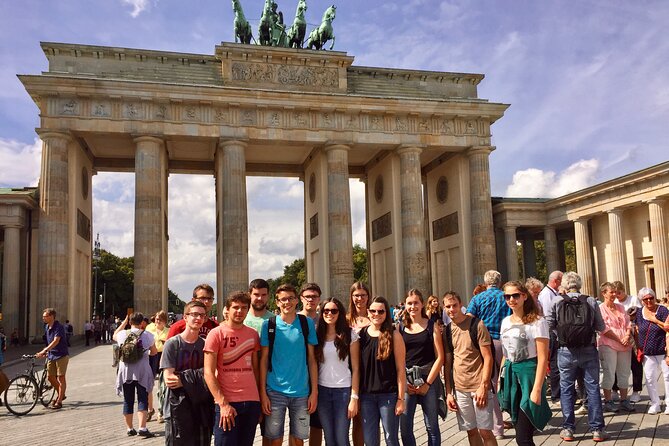
- Brandenburg Gate and Pariser Platz: The “Parlor” of Berlin
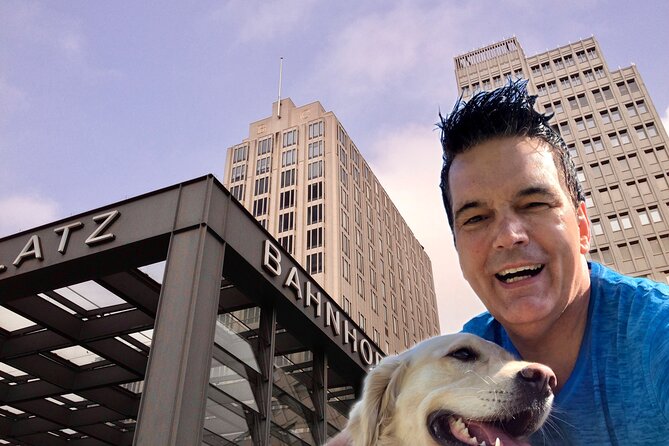
- Potsdamer Platz and the West Berlin Rebuild Mood
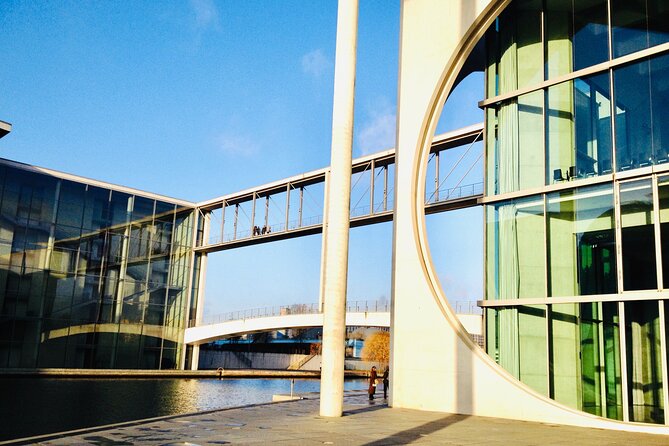
- The Bundestag Working Spaces, Not Just the Headlines
- East-West Border Stories: Water, Walls, and Escape Geography
- Friedrichstraße Station and the Palace of Tears Context
- Unter den Linden to Gendarmenmarkt: Power, Culture, and Rebuilt Identity
- Memorial Wreaths, Book Burnings, and the Neue Wache Silence
- Synagogue Exterior, German Historical Museum, and Courtyards With a Pulse
- Humboldt Forum Roof Terrace: Why Rebuilding Matters Here
- Nikolaiviertel and Rotes Rathaus: Old Berlin Backdrops, With Reality Attached
- Zoo, Victory Column, and Tiergarten-Era Scale
- Europe-Center Church Blue Light and the Mall-Age Turn
- Kulturforum and the Mies van der Rohe National Gallery Moment
- Sony Center, the Moved Hotel Wing, and Potsdamer Platz’s “Reuse” Lesson
- Wall Remnants at Abgeordnetenhaus, Topography of Terror, and Checkpoint Charlie
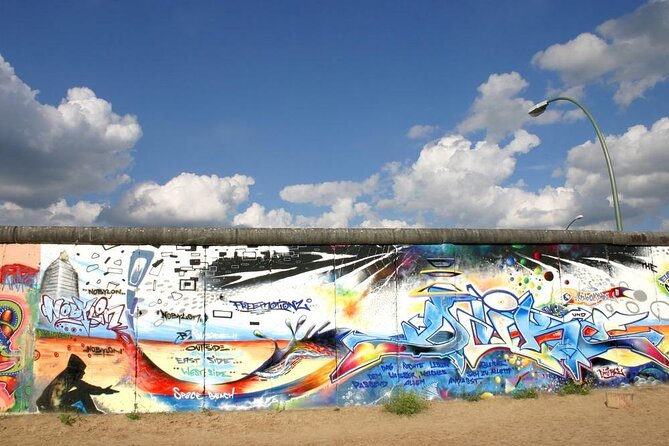
- East Side Gallery, Oberbaumbrücke, and Kreuzberg’s What-If Planning
- Vehicle Size and Timing: The Real Trade-Offs
- If You Want the Best Day, Do This
- Should You Book This Private Taxi Tour of Berlin?
- FAQ
- How long is the private taxi tour of Berlin East and West?
- What does the tour cost?
- Is the tour offered in English?
- Is this tour private?
- Do I get a mobile ticket?
- Is pickup included?
- What is included in the price?
- Is lunch included?
- Are service animals and child seats available?
- What is the cancellation policy?
Key Highlights You Should Actually Care About
- East and West Berlin in one day, built around the Wall, parliament buildings, and “now vs. then” contrasts
- Short walk-and-photo moments at major sites, so you get close without burning half a day standing around
- A guide who adapts on the fly, based on your priorities and what Berlin traffic allows that day
- Photo stops that feel intentional, with the guide taking pictures for you at several landmarks
- Massive architecture hits, from the Brandenburg Gate area to the Kulturforum and Potsdamer Platz redevelopment
Undecided? The closest Berlin write-ups we have are these.
- Berlin: Reichstag, Dome and Government District Guided Tour★ 4.7 · 18,288 reviews
- Berlin: 1-Hour City Tour by Boat with Guaranteed Seating★ 4.3 · 16,993 reviews
- Berlin: Boat Tour Along the River Spree★ 4.4 · 11,252 reviews
- Discover Berlin Half-Day Walking Tour★ 5.0 · 9,624 reviews
A Private Taxi That Lets You Cover Berlin Without Losing the Plot
If you only have a day or two in Berlin, walking every major site will eat your schedule alive. This format solves that problem with a private taxi approach, so you can see far more than you would on foot. It also keeps the story moving, so Berlin does not feel like a random list of monuments.
What I like is that the stops are chosen for meaning, not just fame. You start with places tied to German parliament power, then shift into the Wall-era geography, and later land in rebuilt-city spaces like the Humboldt Forum. That flow helps you connect the dots without needing to study a guidebook for weeks.
You will want to set your expectations: this is not a slow museum marathon. It is a smart way to get your bearings fast, then, if something grabs you, you can return later on your own for deeper time inside.
Price and Value for a 4-6 Hour East-West Mix
At $179.82 per person for about 4 to 6 hours, the value depends on what you want from Berlin. If your goal is maximum coverage plus context, paying for private transport makes sense. You are not just buying a ride, you are buying time you would otherwise spend cross-town and waiting for public transit connections.
This tour also includes practical stuff that matters in real life: parking fees, private transportation, and WiFi on board. Add the fact that the guide uses the car to reposition you quickly for photo angles and short close-ups, and the price feels less like a splurge and more like schedule insurance.
If you want long inside-visits, guided museum time, and lots of “stand here for 45 minutes” moments, you might feel rushed. For that style of trip, pair this with separate ticketed visits on another day.
Pickup, Comfort, and Why the Car Matters in Berlin
Berlin is a city of stops and starts. You can hit world-class sights and still be fighting weather, distance, or crowds. The biggest practical win here is the air-conditioned vehicle, which helps a lot when you are bouncing between neighborhoods in a single day.
Pickup is offered, and within the S-Bahn ring (roughly a 5 km area around Brandenburg Gate) it is included. If you are staying outside that zone, pickup may cost extra, and you should plan extra time if you are starting from the airports or farther out.
Also, pay attention to meeting instructions. You are asked to come outside only after the guide contacts you by SMS or WhatsApp. That small detail saves time, and it prevents the classic Berlin problem of walking the wrong direction while the driver is stuck in traffic.
Reichstag, Christo, and the Rebuilt Symbols of Germany
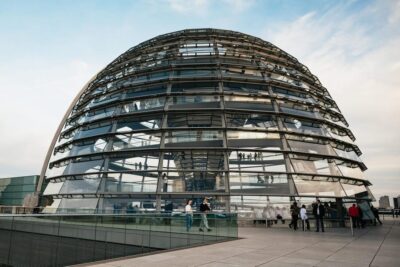
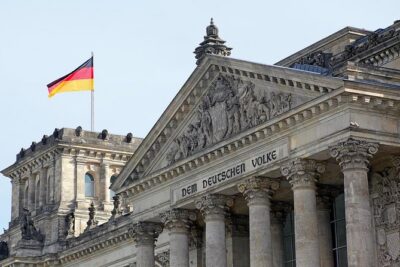
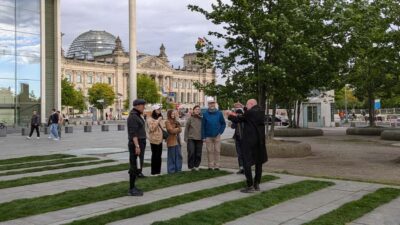
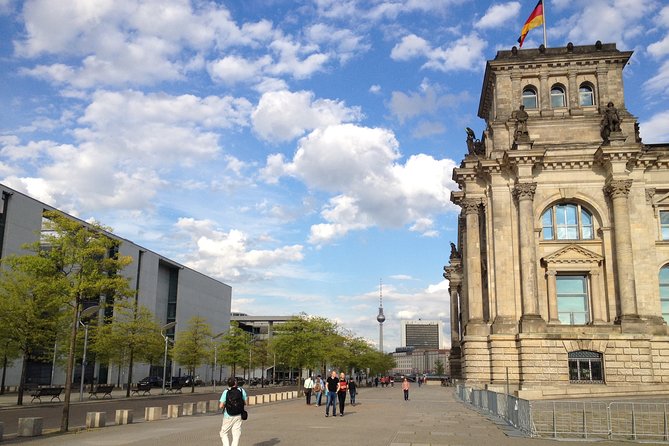
The tour kicks off with one of Berlin’s most layered buildings: the Reichstag area. You get a quick explanation of why this building is famous beyond the classic dome photo. It was historically tied to the Red Army flag moment, then later sat beside the Wall-era politics in West Berlin, even affected by what was allowed for official sessions.
Then you fast-forward to reunified Berlin, where the building was gutted in the 1990s and redesigned for a modern parliament with hundreds of members. You also hear the story of the Christo wrapping action, which helps you understand why Berlin keeps reinterpreting its symbols rather than freezing them in time.
This is a good opening chapter because it sets the theme for the rest of the day: architecture as political memory. Even if you only take a few photos from outside, the explanation makes the sight feel like a living timeline rather than a postcard.
Brandenburg Gate and Pariser Platz: The “Parlor” of Berlin
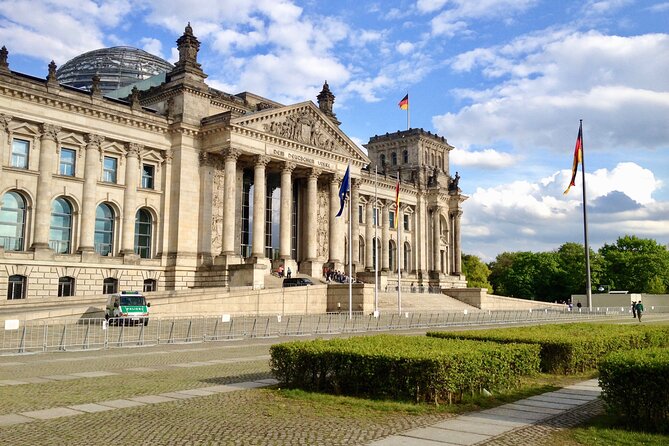
Next you roll into the Brandenburg Gate area, framed by Pariser Platz, which feels like Berlin’s formal living room. The gate survived when so much around it did not. The surrounding story matters too, because war damage and later demolition left huge gaps that Berlin had to rebuild.
You also learn why access used to feel so restricted around the Wall-era geography. That makes the modern “walk right up” experience feel like a miracle. After the Wall fell, the area was rebuilt with modernized styles while keeping the overall building volume close to the historical footprint.
If you are the type who hates standing in cold lines, this stop is manageable. From the information provided, it is roughly a 5-minute stop with free admission.
Potsdamer Platz and the West Berlin Rebuild Mood
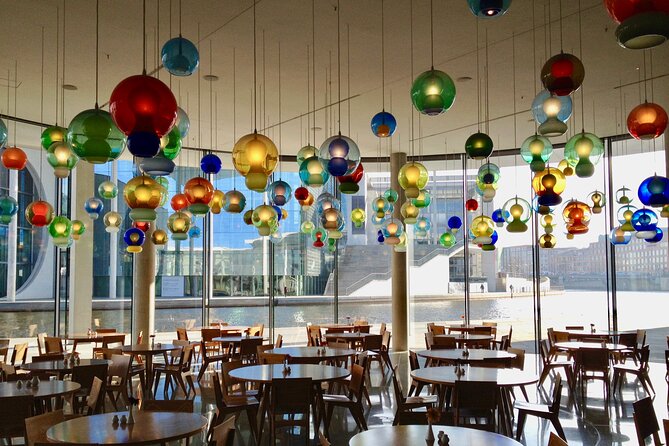
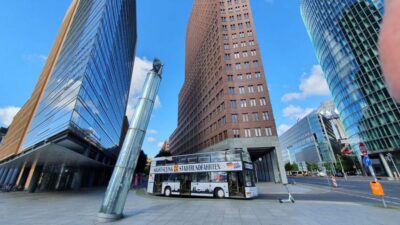
Berlin’s Western restart shows up strongly around Leipziger Platz and the Potsdamer Platz redevelopments. In this part of the city, you see how quickly Berlin tried to modernize once barriers dropped, especially with the Daimler-Chrysler and Sony Center style of development.
There is a strong architectural theme here: glass, steel, and bold forms replacing old wartime scars. You get the background on why this part of Berlin became a symbol of reinvention, not a quiet district.
Potsdamer Platz also ties into one of the most interesting practical stories in the tour: the listed wing of the old Hotel Esplanade was moved and preserved in an elaborate process. That kind of detail helps you look beyond the futuristic look and see the continuity tricks Berlin uses.
The Bundestag Working Spaces, Not Just the Headlines
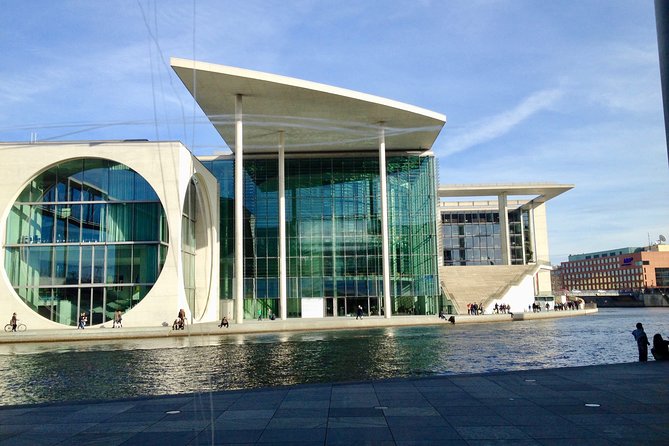
A key part of the tour is showing you how parliamentary life actually works, not only how it looks in photos. You pass the committee-heavy spaces where most of the work happens, while speeches and big moments are only a slice of the overall process.
You also get the point that the building is designed as a kind of glass presentation of democracy, meaning you can see the structure and some internal logic from outside. If you thought parliament meant one ceremonial chamber, this portion corrects that quickly.
This is ideal if you like political architecture. It is also ideal if you want a guided day that still feels varied, because you are not only doing monuments. You are also learning how the system functions.
East-West Border Stories: Water, Walls, and Escape Geography
One of the hardest-hitting segments comes when you trace the East-West border story again, including a harbor-related escape attempt. The guide explains the case of Günter Litfin, who was shot while trying to swim through the harbor area after the Wall was built.
You also hear how remembrance connects to remaining structures. The story mentions a watchtower connection near Invalidenfriedhof, which gives you a sense of how physical reminders remain even when the city changes around them.
From there, the route moves toward places that show the Wall as a citywide system, not a single block of concrete. The tour’s speed actually helps here: you experience how quickly the city’s rules changed as you traveled.
Friedrichstraße Station and the Palace of Tears Context
Friedrichstraße shows up as one of the most dramatic transportation-within-a-border stories. The guide points out that it was the only station at the time of the Wall where you could travel onward between East and West Berlin.
That detail matters because it changes your view of the station from “important transit hub” to “high-control checkpoint.” You also learn about barriers, customs checkpoints, and Stasi observation walk patterns. Nearby, the Palace of Tears is referenced as the place where families said goodbye, sometimes seemingly for good.
This stop can be omitted if timing is tight, but if you care about the human side of the border, it is worth prioritizing. You can even ask for extra time on-site for a deeper look around this theme.
Unter den Linden to Gendarmenmarkt: Power, Culture, and Rebuilt Identity
Unter den Linden is the classic Berlin boulevard, but the tour gives you the “why” behind it. It started as a tranquil bridle path linked to the Berlin Palace and continued toward the hunting grounds, which is now the Tiergarten area and the zoo direction. The linden trees story gives you the reason behind the name.
As you move along, you get the cultural spine of the city: State Library, Humboldt University area, and the State Opera context. Then the tour shifts into Forum Fridericianum and the broader cathedral, opera, and academic grouping, where you see how Berlin places power and scholarship on the same stage.
After that, Gendarmenmarkt feels like a palate cleanser. The guide explains that the so-called German and French cathedrals are meetinghouses with cathedral-like towers inspired by Frederick II. One church holds a museum tied to Germany’s parliamentary history, and the other stays in active religious use with French services Sundays, plus a small Huguenot museum background.
These stops are ideal for photos because the squares are open and cleanly framed, and the tour notes free admission for short time windows.
Memorial Wreaths, Book Burnings, and the Neue Wache Silence
If Berlin has one tricky skill, it is turning emotional memory into public space. Here you visit the memorial logic near Unter den Linden and learn why wreaths appear and why the space signals mourning for victims of war and tyranny.
You also hear about the May 10, 1933 book burning event, tied to the square area connected to Humboldt University. The tour mentions how there is a glass window in the floor that points toward an empty library space concept. That kind of detail helps you understand why this square feels quiet even when traffic roars nearby.
This is the part of the tour that benefits from your pace. If you are the type who needs a minute to absorb, ask for it. Short stops can still mean real reflection if you give yourself enough time.
Synagogue Exterior, German Historical Museum, and Courtyards With a Pulse
The tour covers Jewish heritage with a practical, security-aware approach. The guide shows a Jewish facility guarded day and night and points out Moorish architectural elements, plus the story of war destruction and later rebuilding of an entrance portal.
From there, you head toward the German Historical Museum in the former armory. The background is what makes it interesting, especially the idea that it began with war weapons “toys for men,” then evolved into a broader military and later national history story. You also get the striking detail about frescoes outside and in a courtyard referencing death masks of dying warriors.
Then comes Hackesche Höfe, which is the kind of place you can almost feel changing around you. It was restored after the Wall era and revived in Art Nouveau style. You hear how the courtyards were originally designed as mixed-use working spaces, and now workshops became shops plus curated goods, including KPM porcelain and Ampelmännchen-style products.
Hackesche Höfe is a great “legs stretch” stop. It is short, free, and visually rewarding without asking you to sit in lines.
Humboldt Forum Roof Terrace: Why Rebuilding Matters Here
The Humboldt Forum stop is one of the biggest “now Berlin” anchors. The guide explains that decades ago the palace area became a parking lot, then the historic Berlin Palace silhouette was damaged but still present. Later the East Berlin authorities demolished it, and now the Humboldt Forum project reconstructs the exterior precisely while placing non-European art and Humboldt University collections into a more modern concrete structure.
You also get a major motivation for why the roof terrace is a highlight. It gives you a bird’s-eye sense of the city’s rebuilt logic, and it connects your earlier sights to what Berlin looks like as a unified map.
From the provided information, it notes free admission for short time windows and emphasizes the roof terrace.
Nikolaiviertel and Rotes Rathaus: Old Berlin Backdrops, With Reality Attached
To balance the grand political architecture, the tour shifts into Nikolaiviertel, often marketed as old Berlin. Here you learn the reconstruction context: in the 1980s, the area was rebuilt in a way that created an old-town feel, even though only a few houses were original and the rest involved reconstructing walls and adding apartments.
You stop near Nikolaikirche, described as the oldest church in Berlin, now acting as a city museum. Nearby, you also get the Knoblauchhaus story, furnished in Biedermeier style as a cloth-maker family home with free access.
Then you visit the Rotes Rathaus. It is a neo-Gothic red brick building that shows both East Berlin city administration history and West Berlin leadership logic. The tour includes the chance to visit some rooms free of charge, including a room with plaster casts of well-known statues.
This combination works well because it gives you both political and everyday urban memory in the same trip window.
Zoo, Victory Column, and Tiergarten-Era Scale
The tour passes through large-scale green and monument areas, including the zoo as a historic hunting-ground origin story. You hear how Friedrich II shifted from exclusive hunting to allowing the public in for the first time, and how later landscape design shaped the zoo area and surrounding waterways.
Then the Victory Column is explained with unification-era cannons story, and how it became controversial. You also learn about reforestation decisions linked to occupation sectors, plus Hitler-era changes that increased the column height.
If you like being told not just what a monument is, but why people argued about it, this section satisfies. It also helps you see how Berlin uses scale to project power, then repurposes those same statements later into tourism.
Europe-Center Church Blue Light and the Mall-Age Turn
The Memorial Church segment is described from another side, including the new church building’s blue light effect created by thousands of glass stones made in France. The interior is described as surprisingly quiet because of a double-wall soundproofing air layer.
Then you also get the European Center shopping center context right behind it, including the idea that Berlin’s mall culture expanded to tens of centers. Even if you are not shopping, this is a useful reminder that modern Berlin does not only replace old buildings, it replaces old rhythms with new ones.
Kulturforum and the Mies van der Rohe National Gallery Moment
This is architecture-focused Berlin at its best. The tour explains why the Kulturforum exists as a counterpart to Museum Island: planning in the 1950s assumed halves of the city would reunify soon. You pass major cultural anchors like the Philharmonie, New State Library, and New National Gallery area.
The story then zeroes in on Mies van der Rohe’s National Gallery design choices, including the metal roof effect with no internal pillars. You also hear the unusual plan about where walls go, and how exhibitions adjust around that open interior.
If you enjoy modern design, this part is a standout for the way it tells you what to notice. Even if you do not have time for long museum stops, you will leave understanding why Berlin worships certain architectural choices.
Sony Center, the Moved Hotel Wing, and Potsdamer Platz’s “Reuse” Lesson
Potsdamer Platz returns with the Sony Center, which the guide describes as a daring glass and steel construction by Helmut Jahn, with a roof designed to look like it floats. The important story here is reuse: the listed wing of the old Hotel Esplanade survived the bombing and was moved 75 meters east, roofed over with additional floors, and its ballroom turned into an outdoor-rentable event space.
This is a great lesson for your brain. Berlin’s redevelopment is not always clean wipe and rebuild. It is also survival, relocation, and re-scripting history into new functions.
Wall Remnants at Abgeordnetenhaus, Topography of Terror, and Checkpoint Charlie
As the tour moves back toward the Wall-era center, you see multiple layers of remembrance.
You pass Abgeordnetenhaus Berlin area and learn how the city-state parliament story connects to four eras, including a remnant of the Wall visible near the Topography of Terror documentation center.
Then you visit Topography of Terror, built around excavation and information halls tied to Nazi security organs and prisoner cellars. The background about how this site was first overgrown in the 1980s and later uncovered is useful because it shows how Berlin’s memory can be literally buried and then brought back.
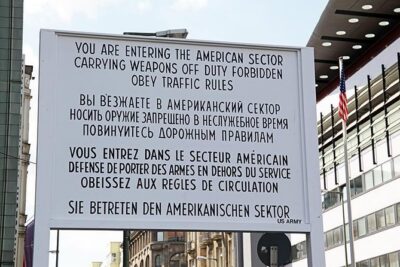
Finally, the tour approaches Checkpoint Charlie, explained as an Allied checkpoint with the nickname Charly based on the alphabet story. The guide also describes why the tension in October 1961 was so close to global catastrophe, with tanks facing each other on both sides of the border.
You will see replicas and modern museum-like pieces in the area today. The value here is not chasing exact artifacts, it is understanding why checkpoints became international stages.
East Side Gallery, Oberbaumbrücke, and Kreuzberg’s What-If Planning
To end with a lighter but still meaningful note, you might visit East Side Gallery, described as the longest surviving Wall segment about 1600 meters. The guide emphasizes that the paint you see is part of post-reunification art history, with 180 artists involved after 1990 and well-known motifs like the Trabbi through the Wall and the Brezhnev-Honecker kiss.
Then you pass Oberbaumbrücke, a bridge that functioned as a boundary and customs border. You learn about the medieval towers and what the structure did for ships at night. Today it is a key east-west connection packed with street-life energy.
Finally, you get Kreuzberg’s “what-if” story: in the 1960s there were plans for a wide motorway route that would have cut through the alternative culture. You learn that those plans did not fully happen, and the neighborhood’s vibe survived, even with later gentrification pressure.
Vehicle Size and Timing: The Real Trade-Offs
Here is the honest part. A car tour is efficient, but efficiency is not the same as depth. If you want to step into every building, linger inside, and take your time, this might feel too fast.
One review issue also points to practical comfort: the vehicle can feel small for four people, so if you are traveling as a group of four, it is smart to ask about the car size at booking.
Also, the itinerary is structured, so you will need to communicate clearly which stops matter most to you. On the best days, the guide can adjust, but you should expect the schedule to remain tight if the city traffic does not cooperate.
If You Want the Best Day, Do This
To get a great experience, do three things.
First, send your top priorities before pickup. If you have a list, rank it. Second, be ready for a mix of outside views and short indoor moments. This tour is built to cover Berlin’s “big story beats,” not to replace multiple museum days.
Third, if something feels too important to rush, ask for extra minutes on-site. The provided information explicitly notes that additional time can be arranged for certain stops depending on conditions.
Should You Book This Private Taxi Tour of Berlin?
Book it if you want a short-time, high-meaning day across East and West, with comfort and photo-focused stops. This is especially good if you do not want to spend your energy crossing the city, standing in lines, or figuring out complicated transit connections while you are still learning the map.
Skip it, or pair it with extra time on other days, if you are aiming for deep museum immersion at every stop. Also think twice if your group needs lots of room in the car, since one piece of feedback highlights that the vehicle may feel tight for four people.
If you choose wisely and communicate your priorities, you will come away with a Berlin that actually makes sense, from Wall geography to rebuilt power and modern architecture.
FAQ
How long is the private taxi tour of Berlin East and West?
It runs for about 4 to 6 hours.
What does the tour cost?
The price is $179.82 per person.
Is the tour offered in English?
Yes, it is offered in English.
Is this tour private?
Yes. It is a private tour, and only your group participates.
Do I get a mobile ticket?
Yes, the tour includes a mobile ticket.
Is pickup included?
Pickup is offered. Pickup within the S-Bahn ring is included, roughly a 5 km area around the Brandenburg Gate.
What is included in the price?
Included are collection from your desired location (hotel or apartment), an air-conditioned vehicle, parking fees, private transportation, WiFi on board, and the taxi ride plus the city tour with VAT included.
Is lunch included?
No, lunch is not included.
Are service animals and child seats available?
Service animals are allowed. Child seats are available for toddlers from six months to three years, booster seats for older children, and a baby seat can be brought on request.
What is the cancellation policy?
Cancellation is free. You can cancel up to 24 hours in advance for a full refund, and cancellations within 24 hours are not refunded.
Everything else we filed on Berlin
- East Berlin: City of Shadows Walking Tour
★ 5.0 · 11 reviews - Berlin: Die Stachelschweine – Frank Lüdecke – Träumt Weiter
★ 4.7 · 11 reviews - Potsdam Day Trip from Berlin with a Local: Private & Personalized
★ 4.0 · 11 reviews - An Introduction to Berlin Walking Tour
★ 5.0 · 11 reviews - DJ for a Day: Learn to Mix Like a Pro in Berlin
★ 5.0 · 11 reviews - 2-H Segway Sightseeing Tour Berlin
★ 4.5 · 11 reviews
Private, side by side.
 ★ 4.8Berlin: Private Reichstag and Glass Dome TourFrom $2882,226 reviews
 ★ 5.0Berlin Private Complete History All Day Walking TourFrom $253474 reviews
 ★ 5.0Munich Private Tour with a Local – Highlights & Hidden GemsFrom $112469 reviews
 ★ 5.0Private Walking Tour Berlin Third Reich Hitler and World War IIFrom $192360 reviews
 ★ 5.0Your private 3-hour Hamburg driving tour with a former policemanFrom $337304 reviews
 ★ 5.0Private Berlin: Iconic Sights and Hidden Gems Walking TourFrom $192292 reviews
 ★ 4.8Nuremberg: 1.5-Hour Private Tour through Historical Old TownFrom $140283 reviews
 ★ 5.0Berlin Private Half-Day Walking Tour: Discover the German Capital’s HistoryFrom $180244 reviews