
REVIEW · PRIVATE
Private Tour of David Bowie’s West-Berlin
A Bowie fan’s route turns Berlin into a soundtrack. This West-Berlin tour links key places from David Bowie’s Where Are We Now? to the city’s big changes, and I really liked how Martin’s guidance makes the stops feel specific, not just famous. The one drawback to think about is the pace, you’ll do a mix of short walks and train rides, so you’ll want moderate fitness to be comfortable.
You start at the Deutsche Kinemathek area and finish near Bowie’s former home on Hauptstraße 155, with a route that mixes photo stops, street-level context, and a couple of train segments to mimic how people actually moved around City West back in the day. It’s a private group setup of up to 8, so the conversation stays focused on what you want to know.
In This Review
- Key highlights to look for
- A Bowie song turns into a real Berlin route
- Meet at Deutsche Kinemathek, then move like locals
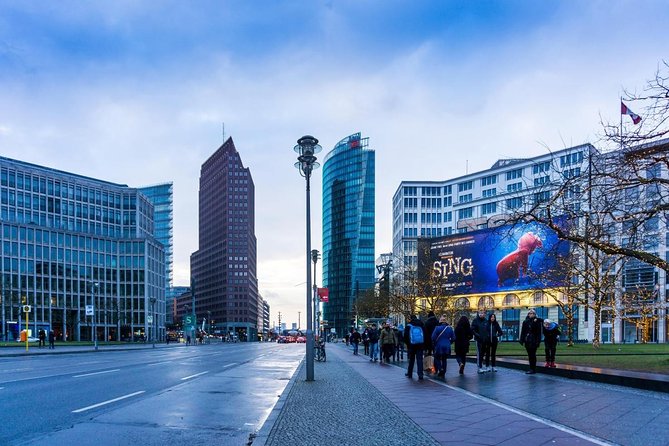
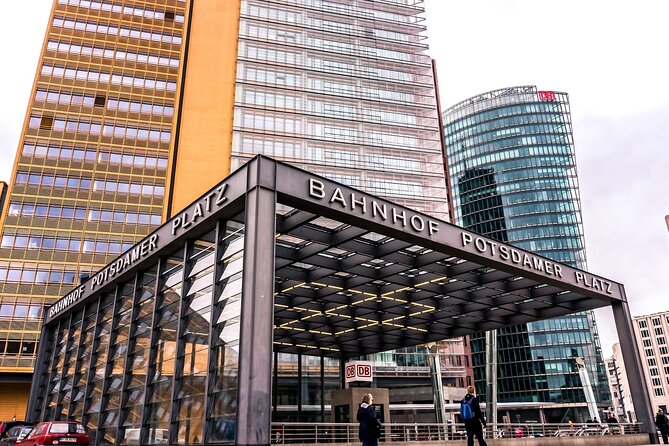
- Potsdamer Platz: from hub to wasteland and back again
- Kaufhaus des Westens: the practical side of being a Bowie fan
- Bahnhof Zoologischer Garten: a station with a cultural echo
- Hansa Studios: the Berlin Trilogy recording walls
- The ghost of the Dschungel at Nürnberger Str. 53
- City West by train: why the route design matters
- Neues Ufer: an optional nightcap with late-hours history
- Hauptstraße 155: where you see the “flowers left behind” feeling
- What you get, what you pay, and why the value can be real
- Who this tour suits best (and who might not love it)
- FAQ
- FAQ
- Is this tour private?
- How long is the tour?
- What does it cost?
- What is included in the price?
- What is not included?
- Do I need any admission tickets for the listed stops?
- How do the tickets work?
- Where do we meet and where does the tour end?
- Is the walking difficult?
- Are service animals allowed?
- Can I cancel for free?
Key highlights to look for
- A song-led route tying Where Are We Now? to real West-Berlin streets and landmarks
- Hansa Studios photo time at the recording place behind much of the Berlin Trilogy, with a fun window animation to spot
- Zoo Station to the Dschungel area with context around Christiane F. and the ghost of the nightlife scene
- Train rides between neighborhoods so the “where” feels like more than a checklist
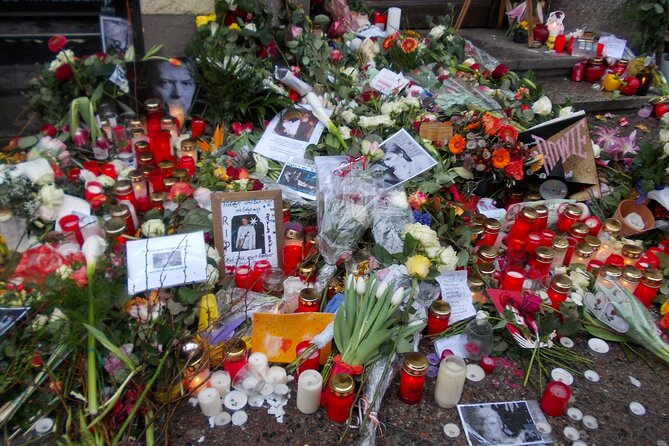
- Flowers and candles at the home address outside Hauptstraße 155, with a quiet moment to pay respects
- Optional nightcap at Neues Ufer at a local gay bar that used to run late hours
Undecided? The closest Berlin write-ups we have are these.
- Berlin: Reichstag, Dome and Government District Guided Tour★ 4.7 · 18,288 reviews
- Berlin: 1-Hour City Tour by Boat with Guaranteed Seating★ 4.3 · 16,993 reviews
- Berlin: Boat Tour Along the River Spree★ 4.4 · 11,252 reviews
- Discover Berlin Half-Day Walking Tour★ 5.0 · 9,624 reviews
A Bowie song turns into a real Berlin route
If you like Bowie’s Where Are We Now?, you know the feeling. It’s reflective, a little melancholic, and it points to a Berlin that has changed so much you almost have to squint to see the past. This tour helps you do that, by walking the places referenced in the song and then adding the real-world context around them.
What makes it work is that it is not just “famous places in Berlin.” It’s the city as Bowie would have experienced it in the West-Berlin era, with street-level details and cultural backstory that explain why those names mattered in the first place.
Meet at Deutsche Kinemathek, then move like locals
The tour starts at the Deutsche Kinemathek, Mauerstraße 79, 10117 Berlin. From there, you’ll follow a planned route through West Berlin, mixing short walks with train time so the spacing between neighborhoods feels realistic. The total length is about 3 hours, which is long enough to feel like you did something meaningful, but short enough that you’re not stuck for your whole afternoon.
Because it’s private and limited to up to 8 people, the tone stays personal. That matters for a city like Berlin, where the best connections often come from listening to the why behind the where. Service animals are allowed, and the start/end areas are near public transportation, so it’s easy to slot into a sightseeing day.
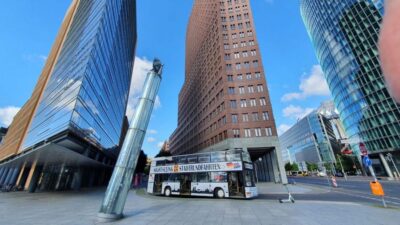
Potsdamer Platz: from hub to wasteland and back again
Potsdamer Platz is where the story starts, and the point is change. This square has lived multiple lives, and it’s a perfect match for Bowie’s backward-looking questions in Where Are We Now?
On this first stop, you’re not just seeing a landmark. You’re getting the idea of Berlin’s “before and after.” Martin uses the location to set up the rest of the walk, so each later stop lands with more meaning, not less.
Also, this is a quick, low-pressure moment. There’s time to look around, get your bearings, and take a few photos before you head into the next layer of City West.
Kaufhaus des Westens: the practical side of being a Bowie fan
Next up is Kaufhaus des Westens. This is one of those Berlin names that shows up in Bowie’s modern nods to the city, but it’s also just a very real piece of everyday life: a famous department store where people shopped, not just celebrities wandered.
In practice, you’ll get a sense of how Bowie’s Berlin was not only about music scenes and late nights. It was also about routine. A landmark like this gives your brain a better rhythm, because it shifts the tour from “myth” into “daily life.”
Like the other stops, it’s designed to be quick, so you don’t spend half your tour standing still.



Bahnhof Zoologischer Garten: a station with a cultural echo
Bahnhof Zoologischer Garten is the kind of place you can recognize even if you haven’t memorized the name. It’s tied to Christiane F., who was a big Bowie fan, and she and her friends spent time around Zoo Station when it had a more dingy reputation.
Here’s the useful part: Martin connects the station to culture beyond Bowie alone. The tour notes that Bowie’s music showed up in the movie based on Christiane F.’s book, with Bowie effectively allowing the use of his songs for the film. That’s a neat reminder that Bowie’s work didn’t just sit on albums, it seeped into other stories about Berlin.
This stop is short, but it’s the one that helps you understand how West Berlin scenes could be both gritty and creative at the same time, long before the area became a cleaner, more polished tourist circuit.
Hansa Studios: the Berlin Trilogy recording walls
Now you hit the core music stop: Hansa Studios. This is where much of the Berlin Trilogy was recorded, and it’s a rare chance to look at the physical place tied to an iconic sound. Even if you’re not an audio-gear person, studios like this carry weight because you can feel what “where the work happened” means.
You’ll have time for photos, and the tour also points out a fun visual detail: an animated Bowie GIF displayed in one of their windows. It’s the kind of small thing that makes the stop feel alive, not like a plaque-and-photo routine.
One consideration: this is an exterior-focused stop. So if you’re hoping for a deep, inside-the-studio experience, you won’t get that here. The value is in the location plus the storytelling.
The ghost of the Dschungel at Nürnberger Str. 53
At Nürnberger Str. 53, you’re standing where the Dschungel used to be. This was a nightlife hangout where Bowie could be found almost every night. The key detail is that the Dschungel no longer exists, so you’re seeing a location after the fact.
That can feel slightly bittersweet, but it’s also the point of the tour. Berlin has layers, and not all layers survive intact. Martin treats the absence as meaningful, and the stop becomes a lesson in how scenes change, close, and re-form elsewhere.
If you’re a fan of Bowie’s city imagery, this is one of the most emotionally “right” stops because you can feel what’s missing.
City West by train: why the route design matters
Between stops, you’ll take the train to get to City West. That detail sounds small, but it changes the whole tour experience. Walking only would flatten Berlin into a single block of time. Using transit helps you feel how West Berlin neighborhoods connected, and it gives you a more realistic sense of distance and direction.
This is also where a private guide really matters. Martin is able to link the idea of movement through the city to what Bowie’s songs are doing, the way they look back while the present keeps rolling forward.
If you prefer a tour that moves like a day in the city, this structure will fit your style.
Neues Ufer: an optional nightcap with late-hours history
Next comes Neues Ufer, a local gay bar where Bowie had a nightcap. The tour notes it used to be open 24/7, and it’s framed as a real hangout stop, not just a themed bar label.
You do not have to drink here. The practical point is that this is a choice, so you can either pop in for a quick refresher or simply use the location as a final context check before the end of the route.
If you do decide to order something, keep in mind the tour duration is still around 3 hours total. You want to treat the bar like a short wrap-up, not a second night out.
Hauptstraße 155: where you see the “flowers left behind” feeling
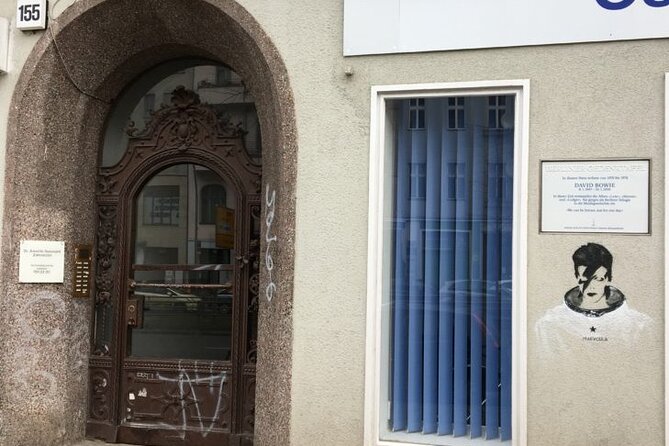
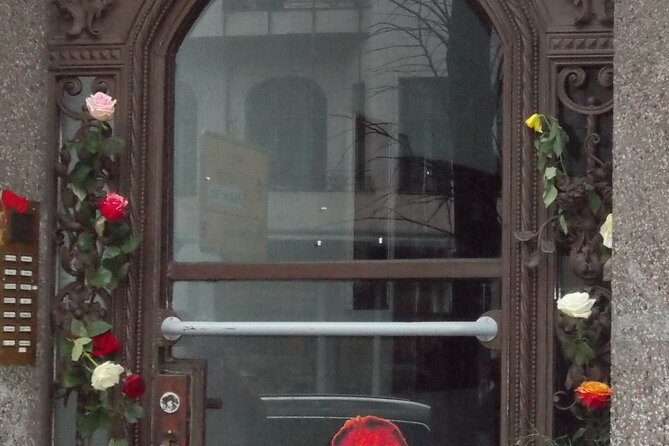
The tour ends at Hauptstraße 155, 10827 Berlin, near Bowie’s former home. This stop hits differently because people leave tributes. The tour describes flowers or candles appearing on a ledge on the building, a ledge that becomes part of the later story. It’s a touching detail, almost like the architecture predicted that in time, fans would want a place to return to.
You get a solid look at the building itself, and the stop is timed so you can pause. This is the moment where the song references become a physical address.
If you’re traveling with other Bowie fans, this is also the best place for everyone to quietly do their own thinking. It’s not about talking the whole time.
What you get, what you pay, and why the value can be real
The price is $285.07 per group, up to 8 people, for about 3 hours. On a pure per-person basis, that can look pricey if you’re solo. But private tours like this often make sense when you split the group cost with friends or family, especially in Berlin where a guided route with train segments typically adds up.
The “value” here is less about seeing a stack of attractions and more about getting a well-knit narrative across multiple locations that are otherwise scattered through West Berlin. You’re paying for that connection. You’re also paying for Martin to tailor the pacing and conversation to the group.
There’s another subtle value point from a past experience with Martin too: in at least one case, he built a history-focused approach for a GCSE curriculum. That suggests he can explain things in a way that works when learning matters, not just when sightseeing is the goal.
One more thing: this tour is often booked around 59 days in advance on average. That’s a sign it’s popular, so if Bowie is your main interest, plan ahead rather than hoping for last-minute availability.
Who this tour suits best (and who might not love it)
I think this tour is a great fit if you:
- Love Bowie’s city references and want them tied to real streets, stations, and buildings
- Prefer private guiding that can go beyond music into architecture and context
- Like routes that feel like Berlin travel, with short walks plus transit
You might want to skip it or look for something else if you:
- Want mostly indoor museum time or studio access inside a working facility
- Dislike walking for a couple of short segments and riding transit between areas
- Expect tickets and paid entry fees for specific stops, because tickets are not part of what’s included
FAQ
FAQ
Is this tour private?
Yes. It is a private tour/activity, and only your group participates.
How long is the tour?
It runs for about 3 hours (approx.).
What does it cost?
The price is $285.07 per group, up to 8 people.
What is included in the price?
Guiding services are included.
What is not included?
Coffee and/or tea are not included, and tickets, etc. are not included.
Do I need any admission tickets for the listed stops?
The stops described are marked as admission ticket free in the tour information, though tickets and similar extras are not included if you choose to add them.
How do the tickets work?
You get a mobile ticket.
Where do we meet and where does the tour end?
You start at Deutsche Kinemathek, Mauerstraße 79, 10117 Berlin, Germany. The tour ends near Bowie’s former home at Hauptstraße 155, 10827 Berlin, Germany.
Is the walking difficult?
The tour is best for people with a moderate physical fitness level.
Are service animals allowed?
Yes, service animals are allowed.
Can I cancel for free?
Free cancellation is allowed up to 24 hours in advance of the experience’s start time for a full refund.
Everything else we filed on Berlin
- Private Photo Tour in Kreuzberg
★ 5.0 · 3 reviews - Kreuzberg Private Walking Tour: Immigrants, Artists & Hipsters
★ 5.0 · 3 reviews - Berlin’s Jewish Heritage: Private Tour of the Vibrant Jewish District
★ 5.0 · 3 reviews - Individual city tour Berlin for max. 8 persons
★ 5.0 · 3 reviews - Berlin & The Third Reich Private Guided Tour
★ 5.0 · 3 reviews - Private Analogue Photography Experience in Berlin
★ 5.0 · 3 reviews
Private, side by side.
 ★ 4.8Berlin: Private Reichstag and Glass Dome TourFrom $2882,226 reviews
 ★ 5.0Berlin Private Complete History All Day Walking TourFrom $253474 reviews
 ★ 5.0Munich Private Tour with a Local – Highlights & Hidden GemsFrom $112469 reviews
 ★ 5.0Private Walking Tour Berlin Third Reich Hitler and World War IIFrom $192360 reviews
 ★ 5.0Your private 3-hour Hamburg driving tour with a former policemanFrom $337304 reviews
 ★ 5.0Private Berlin: Iconic Sights and Hidden Gems Walking TourFrom $192292 reviews
 ★ 4.8Nuremberg: 1.5-Hour Private Tour through Historical Old TownFrom $140283 reviews
 ★ 5.0Berlin Private Half-Day Walking Tour: Discover the German Capital’s HistoryFrom $180244 reviews