
REVIEW · BERLIN
Street Art & Berlin Gay, Queer, Trans History + Free Gay Map
Berlin tells stories on walls.
This 2-hour, small-group walk mixes street art with Berlin’s gay, queer, and trans roots, pulling you into neighborhoods many visitors skip. I especially liked how the tour treats the art like a living clue to identity and community, not just decoration, and how it links what you see outdoors to real places tied to people and movements. One thing to consider: it is not for kids under 16, and you will want a public transport ticket for the short transit hops.
I also like the human touch here. With a limit of 10 participants, the expert Trans woman guide (Gali Jaffe) can tailor the pace and focus, which makes the whole thing feel personal rather than generic. A possible drawback is that this is a walking tour with a gallery stop, so if you want a long indoor museum format, you might find the outdoor time less your style.
In This Review
- Key things to know before you go
- A two-hour street art walk that starts at Wittenbergplatz
- From Wittenbergplatz into Schöneberg, the street art opening act
- The short transit hops that keep the tour energy up
- A uniquely Berlin church stop, where art meets identity
- Urban Nation Gallery: guided look, then breathing room
- Nollendorf area walking: the places behind queer Berlin
- What it feels like to have Gali Jaffe guiding you
- Price and value: is $57 a fair deal?
- Who this tour suits best, and who should pick something else
- The decision: should you book this Berlin street art and queer history tour?
- FAQ
- Where does the tour start?
- How long is the tour?
- What is the group size?
- What language is the tour offered in?
- What stops are included during the tour?
- Is the tour wheelchair accessible?
- Do I need to bring anything?
- Is the tour suitable for children?
- Is there a map included?
Key things to know before you go
- Small group size (10 max), which helps the guide keep it conversational.
- Expert Trans woman guide (Gali Jaffe), bringing direct perspective to queer and trans Berlin.
- Street art plus major cultural stops, including an Urban Nation visit and a church.
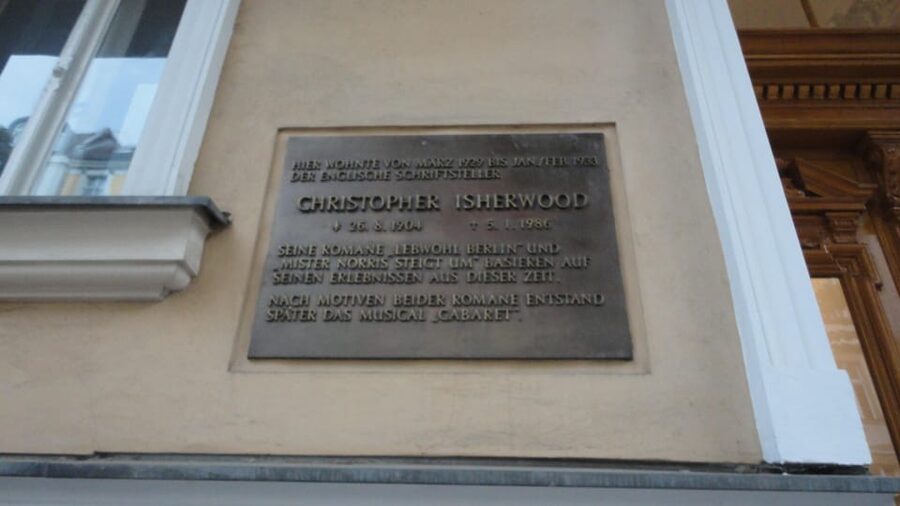
- Schöneberg and Nollendorf area focus, where you will see sites tied to Christopher Isherwood and El-Dorado.
- Magnus Hirschfeld and the Institute for the Science of Sexuality, discussed as part of the story on the ground.
- Free Berlin Gay Map included, useful for extending what you learn after the tour.
Deeper into the painted backstreets
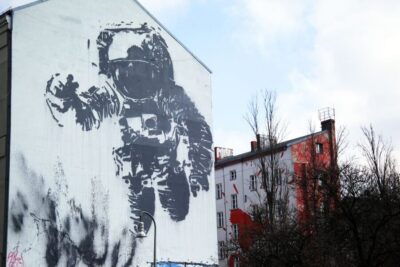
- Berlin: Alternative Berlin Walking Tour★ 4.6 · 1,204 reviews
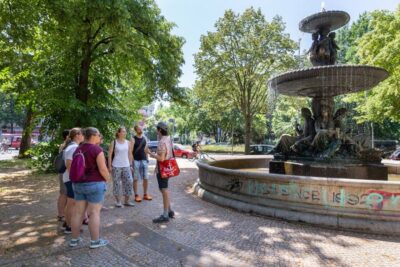
- Berlin: City Street Art Guided Walking Tour★ 4.8 · 886 reviews
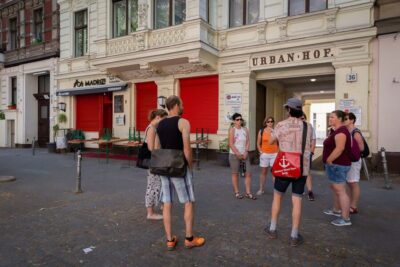
- Berlin: 3-Hour Street Art Tour★ 4.7 · 778 reviews
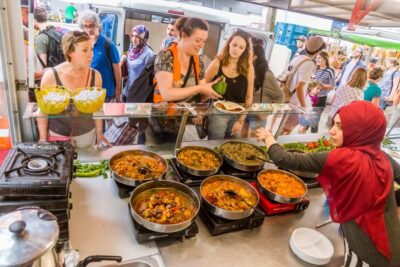
- Kreuzberg: Culinary Food Tour★ 4.5 · 770 reviews
A two-hour street art walk that starts at Wittenbergplatz

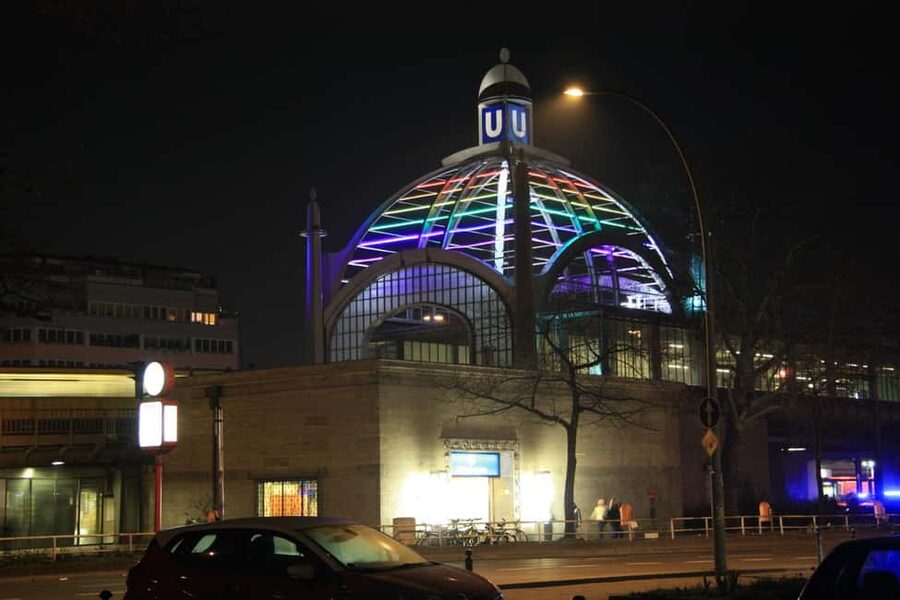
This tour is built around a quick, efficient loop that fits into a tight Berlin schedule. You meet in the entrance to the Underground Station Wittenbergplatz, in front of the KDW department store, then you head into Schöneberg for a guided street-focused experience that runs about two hours total.
The small group limit to 10 people is a big deal. Berlin can feel huge and confusing, even when you have done your homework, and a larger group can turn a history-and-art tour into a “follow the leader” march. Here, the size helps you actually look, ask questions, and connect dots as you go.
You will hear the tour in English and it is wheelchair accessible, which matters because this kind of themed walking tour can quietly become inaccessible if it is structured poorly. Also, you are not just standing around with a lecture. The format includes guided walking time plus a short guided stop in a gallery, which keeps the pace light.
From Wittenbergplatz into Schöneberg, the street art opening act
The tour begins with a walk along some of Berlin’s most mesmerizing street art. The emphasis is on color and creativity, and you are not expected to be an art scholar to enjoy it. Instead, the guide points out what to look for and how street art can signal community, resistance, and identity in a city that loves to layer eras on top of each other.
This is the part that sets expectations for the whole experience. You start in the street-level Berlin that people actually see day to day, not the “only postcard” version. I like tours that do that, because you leave with a sharper eye. You start noticing how different neighborhoods express themselves visually, and that makes the later stops feel less random.
There are also short public transport segments along the way, about five minutes at a time. They help connect the “you are here” dots without turning the tour into an all-day leg workout. Still, plan to be comfortable on foot for regular blocks between the stops.
The short transit hops that keep the tour energy up

You will get two brief public transport connections during the loop, each about five minutes. Think of these as the tour’s way of respecting your time and keeping the group together while moving between the street art areas, the gallery, and the historic sites.
You will need that public transport ticket, so bring it with you rather than hoping to buy one last second. It sounds small, but nothing kills tour momentum like fumbling at a machine or figuring out ticket zones while everyone else is ready to walk.
A uniquely Berlin church stop, where art meets identity
After the street art segment, the tour continues to see the most unique and interesting church in Berlin. The church is not presented as a random sight, it is used as another lens for reading the city.
Why include a church on a gay, queer, trans history and street art tour? Because Berlin is full of institutions that shaped public life, and public life includes how different communities were accepted, excluded, or forced into visibility. Even without a long museum lecture, a strong guide can help you look at the building with fresh context and notice details you would have skipped on your own.
The practical downside is that you will spend part of your two hours outside the “street art zone.” If you are allergic to anything resembling architecture or religious spaces, you might feel like this is a detour. But if you can handle variety, it gives the tour balance, and it also keeps the story from becoming a one-note art walk.
More history walks in Berlin

Urban Nation Gallery: guided look, then breathing room

One of the tour stops is the Urban Nation Gallery, with a guided visit and a short stretch of free time. You get a focused guided portion first, which helps you understand what makes this place special in Berlin’s street art ecosystem.
Then you get about 20 minutes on your own. I like this kind of built-in buffer because it stops the day from feeling like you are constantly being directed. Use it to scan the gallery at your pace, follow your own favorite artists or styles, or simply reset your brain for the next street-level neighborhood walk.
Urban Nation is especially useful on a tour like this. It bridges outside street walls and the curated art world, so you can compare what street art does in public space versus what it becomes when it is framed, protected, and collected.
Nollendorf area walking: the places behind queer Berlin
The heart of the tour’s themed storytelling happens in Schöneberg and the Nollendorf neighborhood. You will do guided sightseeing and a walk through the area for about 30 minutes, and this is where the names and locations start to feel real, not just educational.
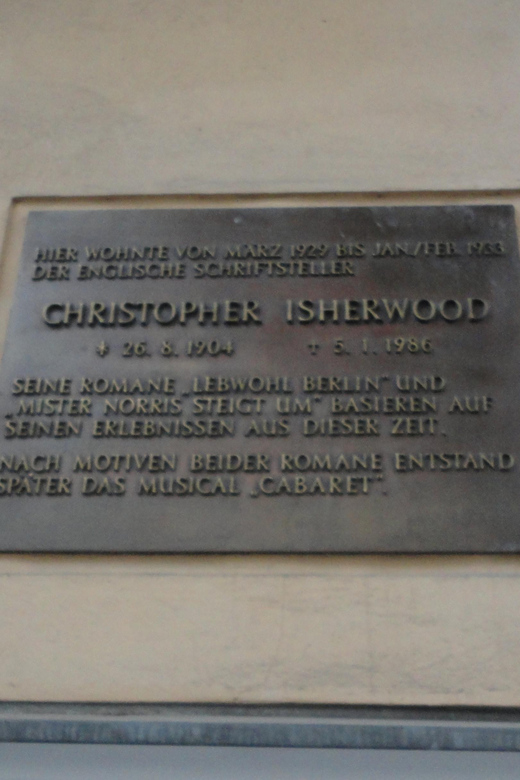
You will see the house of Christopher Isherwood. You will also visit the location of the famous El-Dorado club. These are the kinds of sites that help you understand how queer life had its own social geography, where culture happened in specific rooms and specific streets.
Then the guide talks about Magnus Hirschfeld and his world famous and first of a kind Institute for the Science of Sexuality. That part matters because it connects Berlin’s queer story to the broader movement toward scientific thinking and public discourse about sexuality. On the ground, you can feel how a city’s intellectual and social movements overlap. In this format, you are not just learning names, you are watching the city point you toward them.
What it feels like to have Gali Jaffe guiding you
This is led by Gali Jaffe, and the tour stands out because the guide is an expert Trans woman, not just a general history host. That changes the tone. It is warmer, more personal, and often more grounded in what it means to live through identity, not just study it.
The reviews also point to a key strength: she tailors the experience to what the group cares about. In practice, that means you are less likely to get a rigid script. Instead, questions and interests can shift the emphasis, whether you want to focus more on the art details, the queer sites, or the trans history threads.
One small seasonal detail from a review that is worth keeping in mind: when weather turns snowy, the whole experience can feel extra special. Street art looks different in snow, and the mood of a guided walk can feel almost cinematic. Obviously, you cannot count on snow, but you can count on the tour being photo-friendly and atmospheric.
Price and value: is $57 a fair deal?

At $57 per person for about two hours, you are paying for a tight bundle: street art and graffiti focus, a church visit, a stop at Urban Nation Gallery, and guided time in Schöneberg and Nollendorf around key queer and trans sites. You also get a free Berlin Gay Map, which extends the value beyond the walking portion.
Most importantly, you are not buying a “big group” experience. With a maximum of 10 participants, your guide can slow down when needed and keep the conversation alive. That matters on tours that are trying to connect art, identity, and places tied to real people. A larger group usually flattens that kind of storytelling.
What you should factor in for value is your own travel style. If you enjoy guided interpretation, walking tours, and neighborhood storytelling, this is a smart use of time. If you mainly want museum time and minimal walking, you might feel like two hours passes too fast.
Who this tour suits best, and who should pick something else
This experience is a great match if you want to get your bearings in Berlin through art and community sites, especially in the Schöneberg and Nollendorf area. If you love street art and you also want context, this format is practical. You can look, learn, and then walk away with a mental map for the rest of your trip.
It also fits well if you are part of the queer community and want a tour that feels respectful and informed by a Trans guide. The tone matters here, and the reviews consistently praise the guide’s friendliness and warmth, plus her ability to personalize the tour.
Who might not love it? Anyone looking for a children-friendly outing, since it is not suitable for children under 16. Also, if you do not enjoy walking in mixed conditions and you expect a long indoor schedule, you may prefer a more museum-based option.
The decision: should you book this Berlin street art and queer history tour?
Book it if you want a short, friendly, guided way to understand Berlin through street art and queer, trans landmarks in Schöneberg and Nollendorf. The mix of outdoor visuals, a church stop, Urban Nation Gallery, and specific sites tied to names like Christopher Isherwood and Magnus Hirschfeld makes it feel like you are reading the city, not just checking attractions.
Skip it if your idea of value is mostly indoor time, or if walking plus a gallery stop does not match how you like to travel. Otherwise, at $57 for a small group, you are getting a lot of story per hour, plus that free Berlin Gay Map to keep exploring after you finish.
FAQ
Where does the tour start?
It starts at the entrance of the Underground Station Wittenbergplatz, in front of the KDW department store.
How long is the tour?
The tour lasts about 2 hours.
What is the group size?
The group is limited to a small group of up to 10 participants.
What language is the tour offered in?
The tour is offered in English.
What stops are included during the tour?
You will see street art and graffiti, visit a church in Berlin, stop at Urban Nation Gallery, and walk through the Schöneberg and Nollendorf area, including key cultural locations discussed by the guide.
Is the tour wheelchair accessible?
Yes, the tour is wheelchair accessible.
Do I need to bring anything?
You should bring a public transport ticket.
Is the tour suitable for children?
No, it is not suitable for children under 16.
Is there a map included?
Yes, you get a free Berlin Gay Map.
The Longer History of Berlin
More Painted Walls and Backyards
Everything else we filed on Berlin
- 2-H Segway Sightseeing Tour Berlin
★ 4.5 · 11 reviews - Daily First Rickshaw promotion in Combi Vehicle public Group 90€
★ 5.0 · 11 reviews - Berlin: One-Hour Segway Signature Tour
★ 5.0 · 11 reviews - Berlin: Street Food Tour with 10 Tastings
★ 5.0 · 11 reviews - Private Third Reich Walking Tour of Berlin
★ 5.0 · 12 reviews - In Search of Jewish Berlin Walking Tour
★ 5.0 · 12 reviews
Street Art and Alternative City Tours, side by side.
 ★ 4.6Berlin: Alternative Berlin Walking TourFrom $291,204 reviews
 ★ 4.8Berlin: City Street Art Guided Walking TourFrom $23886 reviews
 ★ 4.7Berlin: 3-Hour Street Art TourFrom $23778 reviews
 ★ 4.5Kreuzberg: Culinary Food TourFrom $589770 reviews
 ★ 4.7Berlin: Kreuzberg Guided Walking Evening TourFrom $27555 reviews
 ★ 4.7Berlin: Alternative Bike Tour of Kreuzberg & FriedrichshainFrom $41548 reviews
 ★ 4.9Berlin: 2.5-Hour Walking Tour through Kreuzberg 61From $23525 reviews
 ★ 5.0Berlin Off-the-Beaten-Path Walking Tour: Kreuzberg, Mitte and FriedrichshainFrom $30412 reviews
Other lists this tour is on