
REVIEW · MUSEUMS
Ticket for the Emigration Museum BallinStadt Hamburg
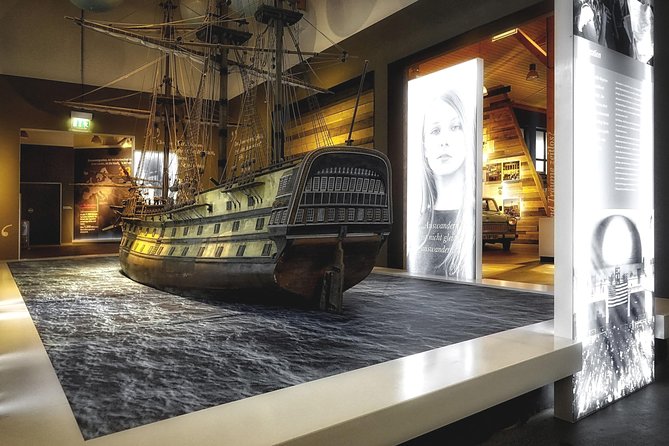
Migration history, made hands-on. BallinStadt Emigration Museum Hamburg turns a big subject into an audio-guided visit through four eras, spread across three houses in one site.
I especially liked the way the museum blends personal stories with practical tools, including a family research center where you can search your own genealogy. It also stays friendly for families, with interactive activities and the museum rat Jette for little ones.
One thing to consider: if you hoped for a tight, old-school focus only on emigration from Hamburg before 1934, the museum’s newer approach puts migration overall front and center.
In This Review
- Key highlights to look for
- BallinStadt in a Nutshell: Three Houses and Four Eras in Hamburg
- Four Epochs, One Story Told by an English Audio Guide
- House 1: Albert Ballin and the Emigration via Hamburg Focus
- House 2 and House 3: Games, Journey Details, and Three-Step Storytelling
- The Family Research Center: Making Genealogy Feel Real
- Museum Rat Jette and Hands-On Learning for Little Ones
- Timing Your Visit: Tuesday-Sunday Hours and a 90-Minute Plan
- Price and Value for $15.62 in Hamburg
- Should You Book BallinStadt Emigration Museum Hamburg?
- FAQ
- FAQ
- How long does the BallinStadt Emigration Museum visit take?
- Is the experience available in English?
- What is the opening schedule for BallinStadt?
- What can kids do at the museum?
- Is there a genealogy research option during the visit?
- How many houses and areas does the museum cover?
- What does the ticket include?
- What is the cancellation policy?
Key highlights to look for
- Four eras with an audio guide: Follow the story over time, not just a single period.
- Three houses on 2,500 sqm: You get room to wander, play, and read at your pace.
- Family research center: Use the tools to explore your own genealogy links to migration.
- Interactive games: Learning is built into play, not just display reading.
- Museum rat Jette: A child-focused character helps younger visitors stay engaged.
- Hamburg’s emigration story (1850 to 1934): The museum ties big migration themes to a specific place and era.
More collections to walk through in Hamburg
- Hamburg: Entrance to the Museum Ship Cap San Diego★ 4.7 · 467 reviews
- Hamburg: RICKMER RICKMERS Museum Entry Ticket★ 4.6 · 269 reviews
- Hamburg: Museum of Illusions Ticket★ 4.2 · 122 reviews
- Hamburg: Emigration Museum BallinStadt Entry Ticket★ 4.4 · 63 reviews
BallinStadt in a Nutshell: Three Houses and Four Eras in Hamburg
BallinStadt is a ticketed experience in Hamburg that is built for flow. Expect about 1 hour 30 minutes for a solid visit, though you can easily spend more if you like to linger at stations and try the interactive parts.
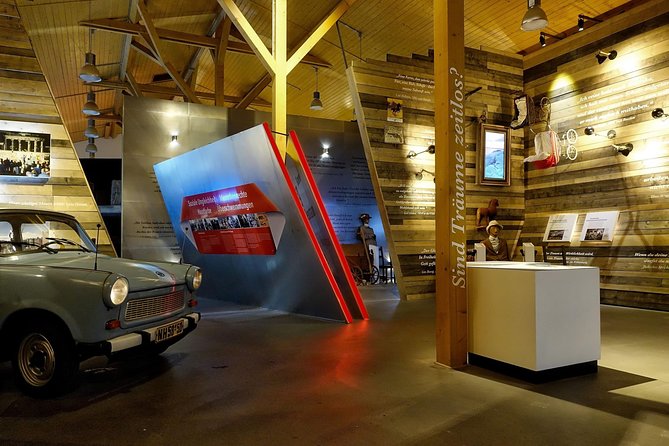
The museum site is big, around 2,500 sqm, but the layout makes it feel manageable because it is broken into three separate houses. That matters, because migration history is a lot of material. Spreading it out helps you keep your bearings and keep moving without feeling rushed.
For the price, it is about $15.62 per person, and the ticket includes admission. That is a fair value for what you get: multiple themed spaces, an English audio guide, and hands-on activities rather than only walls of text.
If you are a first-timer to immigration and emigration museums, this one is also approachable. It is designed so most visitors can participate, and the tone does not assume you already know the German history in detail. You start from human reasons and then zoom out to patterns.
Four Epochs, One Story Told by an English Audio Guide
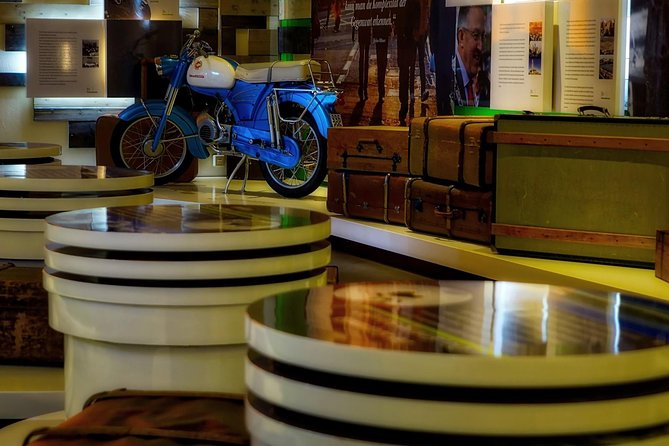
What I like most about the museum’s structure is that it’s not just a timeline you walk past. You follow a four-epoch approach through the exhibits with an audio guide, which keeps the story connected as you move from one space to the next.
The museum frames migration with a simple idea that still feels true today: people move for reasons that are hard to reduce to one neat category. You’ll see themes like escape from war, hunger, and persecution, alongside quieter motivations like curiosity, adventure, and the dream of a better life.
For me, that framing is the key practical benefit. It helps you connect personal details you read at one station to larger shifts you hear described in another. Instead of memorizing dates, you start understanding why people decided to leave, how they traveled, and what they hoped to find.
You should also know what to expect from an audio-guided visit. You will be listening and reading while you walk, so bring your patience. If you are the kind of person who prefers silent browsing, plan on taking extra time or doing the audio in shorter chunks.
House 1: Albert Ballin and the Emigration via Hamburg Focus
The heart of the museum experience centers on Hamburg’s role in migration, especially emigration via Hamburg from 1850 to 1934. You meet Albert Ballin, the founder linked to the historic emigration halls, and the story starts to make sense in a very place-based way.
House 1 is where you see the emigration angle most directly. The museum connects Hamburg as a departure point to the bigger human longing behind migration. That gives you a strong starting point if you are trying to picture how this worked day-to-day for emigrants, not just how it looked on a map.
This is also where you will find the family research center. If you have even a vague interest in your own family roots, this part can turn a general history visit into a personal project. The museum gives you a chance to connect what you are seeing with names, patterns, and the broader migration context.
The main drawback with House 1 is also simple: it can be information-heavy, because the topic is. If you find yourself reading everything, you may hit the time limit fast. I’d plan to sample the displays first, then return to the research tools and interactive areas once you have the main story in your head.
House 2 and House 3: Games, Journey Details, and Three-Step Storytelling
A lot of museums teach you about migration. BallinStadt also tries to make you practice understanding it. House 2 and House 3 keep that going through interactive elements and a focus on the emigrant journey across the different eras.
You’ll see a mix of hands-on activities and story-driven content. Interactive games are part of the experience, and they are not just for show. They help younger visitors and curious adults stay engaged, especially when the themes get heavy.
One part I found especially useful is how the museum encourages you to bring your own questions. You can search your own genealogy, and the interactive stations invite you to think like a researcher. Even if you never find a perfect match, you learn how evidence and personal records connect to migration pathways.
There is also a practical travel benefit here: three houses means you can pace yourself. If one area feels overwhelming, you can step into another space and reset. If something clicks, you have adjacent rooms to keep that momentum going.




The Family Research Center: Making Genealogy Feel Real
If you have ever tried family history research, you know it can be both exciting and frustrating. BallinStadt’s family research center is valuable because it turns that effort into part of the museum experience rather than something you do later.
The museum invites you to search your own genealogy during the visit. That turns the exhibits into prompts. You are not only learning about emigrants in general, you are also learning how a migration story might connect to a family line.
Here is how to get the most from it without getting stuck. Go in with whatever you know, even if it is partial: names, rough dates, and hometown guesses. Then treat the research center as a starting point, not a guarantee. Migration records can be messy, and spelling variations happen.
Also, give yourself time. The research tools deserve a real block of attention. If you try to rush through the center just to check it off, you lose the value of the experience.
For me, this is one of the museum’s strongest strengths. It does not assume everyone arrives with a deep family background. It simply gives you a path to explore.
Museum Rat Jette and Hands-On Learning for Little Ones
This museum works for families because it adds play and character to the learning process. One highlight is the museum rat Jette, designed for little ones, along with interactive games that let children do things rather than only watch.
That is a big deal. Migration topics can be too big for kids if the museum experience stays purely informational. Here, the activities give younger visitors a way to participate, and the exhibits offer enough structure that parents can keep the visit moving without constantly redirecting.
I also appreciate that the museum’s interactivity is not only for children. Adults benefit too, because the games break up long reading stretches and help you remember what you just learned.
If you are visiting with kids, plan to slow down slightly. The museum is built so you can choose what to try, and that works well when children need breaks or want to repeat an activity.
Timing Your Visit: Tuesday-Sunday Hours and a 90-Minute Plan
BallinStadt is open Tuesday through Sunday from 10:00 AM to 6:00 PM. Since the visit time is about 1 hour 30 minutes, you should be able to fit it into a Hamburg day that also includes other sights.
Because it is audio-guided and multi-house, I recommend you do one main sweep first. Move through the four eras in the order the audio guide suggests, then circle back to the research tools or the interactive areas if you still have energy.
Try not to schedule it too late in the day, especially if you are traveling with kids. The museum is easy to enjoy, but it is also easy to get absorbed. Late-day visits can turn into a rushed read if you feel the clock.
One more practical point: the museum is near public transportation, which makes it easy to drop into even if your Hamburg plans shift.
Price and Value for $15.62 in Hamburg
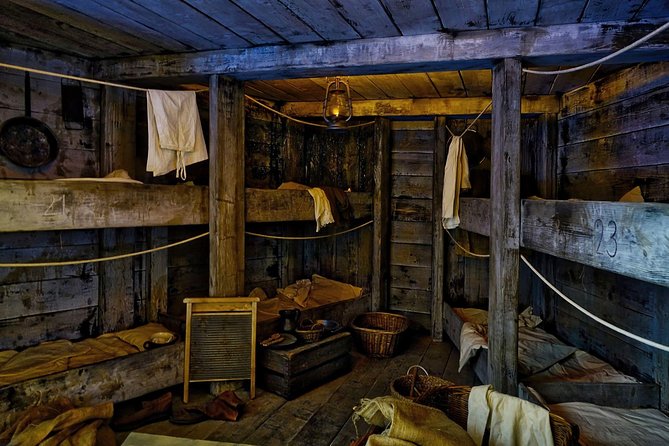
Let’s talk value in plain terms. At about $15.62 per person, you are paying for more than a single room of displays. You get admission to a large museum space with three houses, 2,500 sqm of exhibits, an English audio guide, and hands-on interactive features including genealogy research.
For a museum visit, that is a strong mix. Many experiences either go heavy on content with no participation, or they go light on depth. BallinStadt tries to balance both. The story is organized by time periods, and the participation is built in, not added as a side attraction.
There is also a timing clue in the demand pattern. The experience is often booked around 11 days in advance on average. That does not mean you must book far out, but it does suggest it is popular enough that waiting until the last minute can be annoying, especially during peak travel seasons.
Should You Book BallinStadt Emigration Museum Hamburg?
I think BallinStadt is worth booking if you want a migration museum that is story-driven and interactive, and if you like the idea of using a family research center during your visit. The inclusion of museum rat Jette and the hands-on games make it a smart choice for families who want something more engaging than a standard museum walkthrough.
It may not be your best match if you are only interested in a very narrow slice of history. The museum’s newer concept broadened the focus toward migration as a whole, not just a limited pre-1934 emigration angle. If you expected the old version’s tighter emphasis, you could feel that the museum is moving wider than you hoped.
If you are the type of visitor who enjoys audio guidance, multi-room layout, and activities that help you process big themes, you will likely have a satisfying visit. Plan for around 1.5 hours, bring curiosity, and treat the genealogy tools like a fun research start.
FAQ
FAQ
How long does the BallinStadt Emigration Museum visit take?
The visit is about 1 hour 30 minutes.
Is the experience available in English?
Yes, it is offered in English.
What is the opening schedule for BallinStadt?
It is open Tuesday through Sunday from 10:00 AM to 6:00 PM.
What can kids do at the museum?
The museum includes interactive activities and a museum rat named Jette for little ones.
Is there a genealogy research option during the visit?
Yes. There is a family research center where you can search your own genealogy.
How many houses and areas does the museum cover?
The museum experience takes place across three houses on about 2,500 sqm.
What does the ticket include?
Your admission ticket is included with the experience.
What is the cancellation policy?
The experience is non-refundable and cannot be changed for any reason.
Museums Worth the Queue in Hamburg
Everything else we filed on Hamburg
- Hamburg: Safari tour in St. Pauli
★ 4.9 · 11 reviews - Hamburg: Party Bingo with the Bingo Gringos
★ 4.8 · 11 reviews - Hamburg Harbor: 3.5-Hour Guided Tour by Bike
★ 4.7 · 11 reviews - Hamburg: 2-Hour St. Georg Walking Tour
★ 4.8 · 11 reviews - Hamburg: Guided Walking Tour in Danish
★ 5.0 · 11 reviews - Discover Hamburg in a retro Bulli
★ 3.0 · 12 reviews
Museums, side by side.
 ★ 4.5Berlin: Jewish Museum Berlin Entrance TicketFrom $08,393 reviews
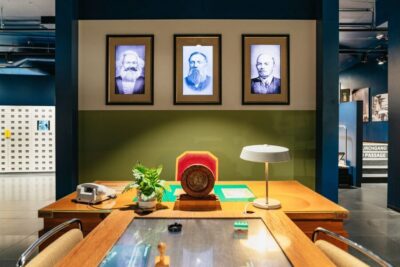 ★ 4.3Berlin: DDR Museum TicketsFrom $153,443 reviews
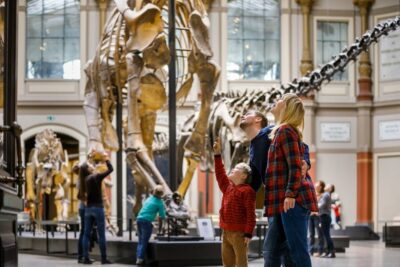 ★ 4.6Berlin: Natural History Museum Entrance TicketFrom $123,382 reviews
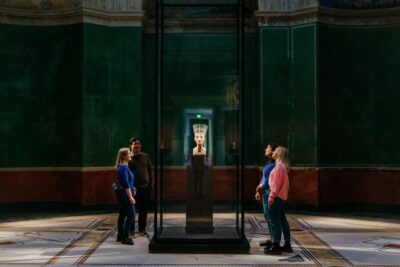 ★ 4.6Berlin: Neues Museum Entry TicketFrom $163,261 reviews
 ★ 4.4Cologne: Chocolate Museum Entrance TicketFrom $192,790 reviews
 ★ 4.7Dresden: Church of Our Lady Guided Tour of GalleryFrom $152,421 reviews
 ★ 4.1Skip-the-Line: Berlin Wall Museum at Checkpoint CharlieFrom $212,041 reviews
 ★ 4.4Berlin: Museum Island Multiple Museum Entry TicketFrom $272,007 reviews
Other lists this tour is on