
REVIEW · TRIER
Trier: Private Guided Walking Tour
Trier can feel like two cities at once: Roman and Marx. This private guided walking tour packs the big UNESCO hits into a tight 2 hours, starting at Porta Nigra and moving through Konstantin-Basilika plus Trier’s oldest cathedral area. I like that the experience is built around stories, not just stone photos, and you get a guide who stays with your group the whole time.
What I like most, though, is the mix of famous landmarks and the lesser-seen angles, including the House of the Three Magi and Trier’s subterranean labyrinth. One thing to consider: it’s a short walk, and some stops may involve extra ticketed entry costs since entrance fees are not included.
In This Review
- Key highlights you will actually feel
- Trier’s Roman-And-Marx Story in Just Two Hours
- Meeting in Front of the Black Gate, then Getting Oriented
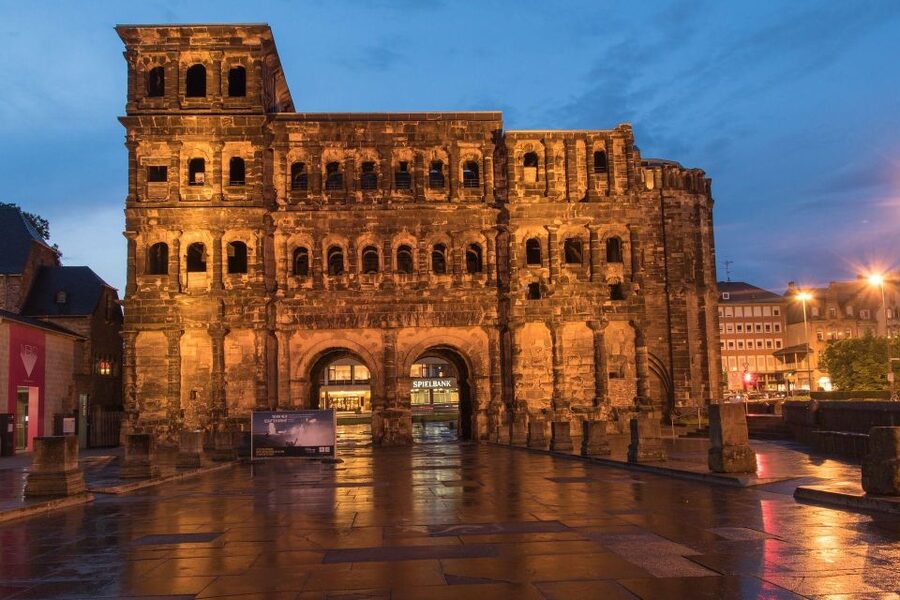
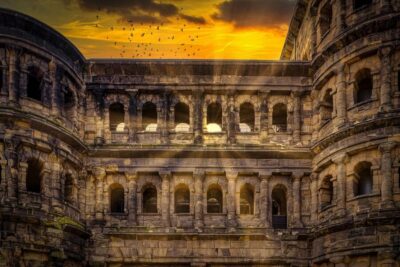
- Porta Nigra: Name Origins and Roman Engineering
- Konstantin-Basilika and Trier’s Largest Roman Relic
- The House of the Three Magi and the People Behind the Stones
- Trier’s Oldest German Cathedral and the Underground Labyrinth
- Moselle Vineyards and Half-Timbered Streets to End the Walk
- Price and Value for a Group up to 15
- What Type of Guide Experience You’re Getting in English or German
- Who This Private Walking Tour Suits Best
- Should You Book This Trier Private Walking Tour?
- FAQ
- How long is the Trier private guided walking tour?
- Where does the tour meet?
- What is the group size limit?
- What languages are available?
- Are entrance fees included?
- What is the cancellation policy?
- Can I reserve and pay later?
- What is included in the tour price?
Key highlights you will actually feel
- Porta Nigra at close range, with explanations of how the name is tied to Trier’s story
- Konstantin-Basilika, highlighted as the world’s largest remaining Roman structure
- House of the Three Magi, where local legends help translate what you’re seeing
- Trier’s oldest German cathedral area, paired with context that makes the building make sense
- Subterranean labyrinth, a way to understand how the city’s hidden spaces shaped daily life
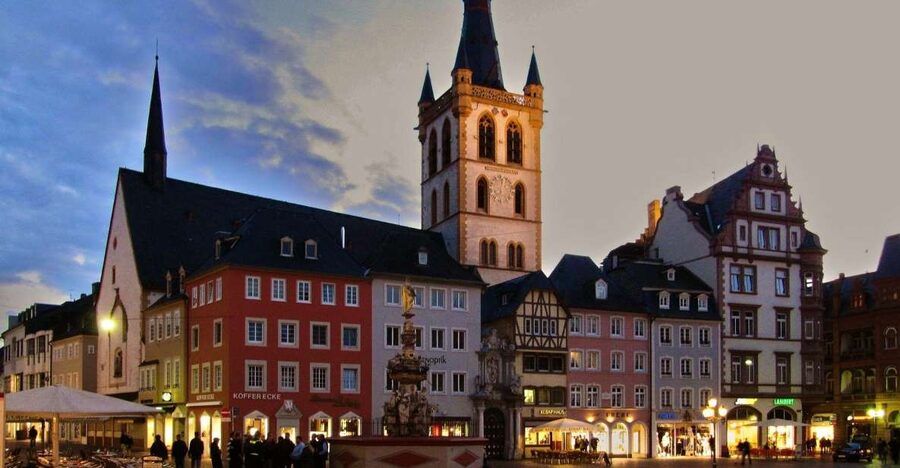
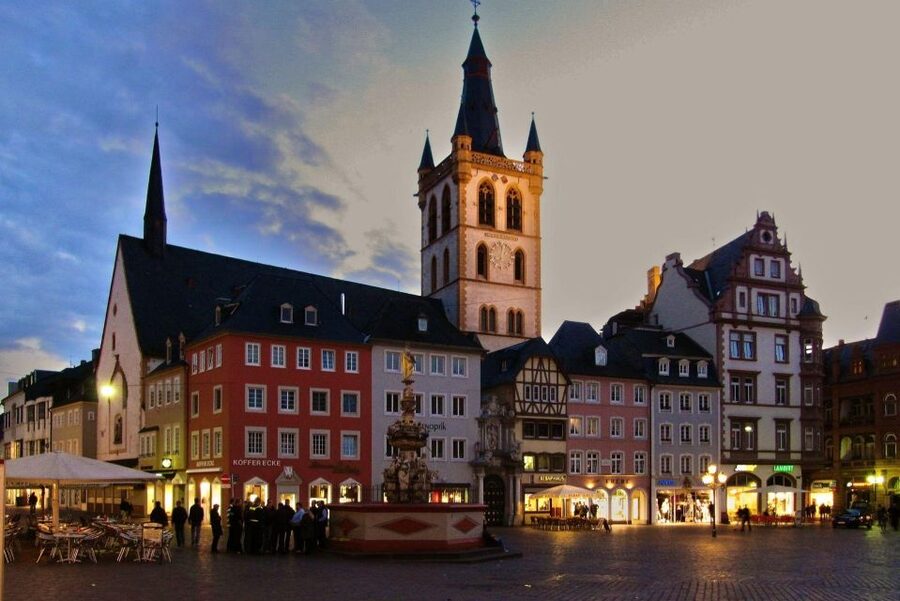
- Moselle vineyards and half-timbered streets, so your last minutes still look like Trier
More Roman stone and river corners
- Trier: Guided City Walk with Wine Tasting★ 4.8 · 979 reviews
- Trier: Guided Old Town Highlights and History Walking Tour★ 4.7 · 687 reviews
- Trier: Discovery Tour – Germany’s Oldest Wine Cellar★ 4.7 · 218 reviews
- Trier: City Walking Tour★ 4.6 · 118 reviews
Trier’s Roman-And-Marx Story in Just Two Hours
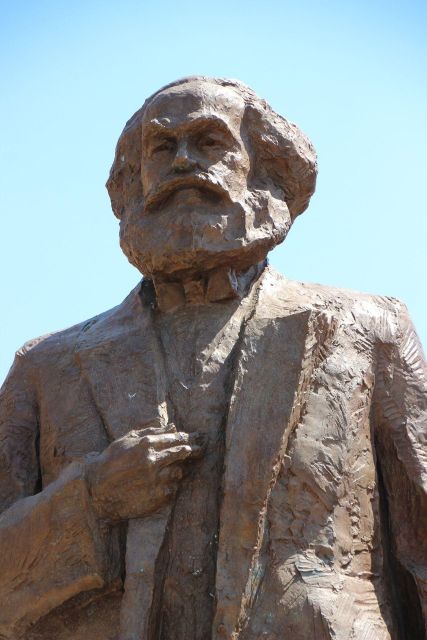
Trier is Germany’s oldest town, and the tour leans into that hard. You’ll hear why people call it the second Rome, then you’ll connect the Roman footprint to later chapters like the birthplace context of Karl Marx. The best part is that you do not just see monuments, you learn the “why” that turns them from postcard backgrounds into a living timeline.
I also like the pacing concept here: it’s long enough to cover several major sites, but short enough that you still feel fresh when you finish. For a lot of travelers, Trier’s landmarks can feel scattered if you go on your own. This format helps you build a mental map fast, then walk it while it’s still easy.
The main drawback is simple: two hours is not time for a slow museum day. If you want to linger at every stop or if you have mobility needs that slow walking, you might feel rushed. It helps that this is a private group, so you can ask your guide to adjust the flow on the spot.
Meeting in Front of the Black Gate, then Getting Oriented
Your tour starts in front of the Black Gate at Porta-Nigra-Platz, 54290 Trier. That matters because Porta Nigra is the anchor point for the whole story you’re about to walk. Instead of starting randomly in the center and hoping everything connects, you begin at the monument that most people use to understand Trier’s Roman past.
From there, your guide typically sets the theme right away: Roman power, later reuse and interpretation, and how the city’s identity survived through centuries. Even if you only catch a few key phrases at the start, you’ll feel it when you move to each next stop, because the tour keeps tightening the narrative.
You should plan for the walk to be comfortable, not sprinting. Still, given the time limit, the route can feel brisk. If weather is bad, bring layers, because you’ll still be outside for portions of the tour.
Porta Nigra: Name Origins and Roman Engineering
Porta Nigra is the one stop that can take your breath away even before the details land. It’s massive, and it sits there with the confidence of something built to last. Your guide’s job is to make that size meaningful, not just impressive.
Expect two key things here. First, you’ll learn why Porta Nigra is such a focal point for Trier’s UNESCO story, because it represents Roman ambition made visible in everyday space. Second, you’ll get the name origin angle. The tour highlights that there are intriguing ways the name gets interpreted, and your guide will point you to the idea you should remember.
Here’s the practical payoff: once you understand what you’re looking at, you start noticing cues in the stonework and the surrounding urban layout. In a short walking tour, that’s huge. It prevents the “I saw it” feeling and replaces it with “I get why it matters.”
Konstantin-Basilika and Trier’s Largest Roman Relic
Next up is Konstantin-Basilika, presented as the world’s largest remaining Roman structure. That wording is doing a lot of work. When you see it in person, you understand that the scale is not just architectural. It’s political and cultural. Roman Trier was not a small outpost; it was a statement.
This stop is also where the tour helps you connect the dots. You’ll hear how this Roman core influenced later urban development. Even if you only remember one concept, try to remember this: Roman Trier left behind structures that people kept building around, adapting across time, and reading through different eras.
A fair consideration: because this tour is only two hours, you’ll likely get overview-level context rather than a long, slow explanation. If you love Roman engineering details and you have questions, go ahead and ask early. Guides can often slow down one moment if you show you’re genuinely engaged.

The House of the Three Magi and the People Behind the Stones
Then comes the House of the Three Magi, and this is where the tour changes texture. Monuments can turn abstract fast. A house with a story gives you something more human to hold onto.
Expect your guide to share the stories tied to the site, including why it’s associated with the Three Magi idea and what that association means for interpreting the artwork and architecture you see. You’re not only learning a fact. You’re learning how symbols, names, and local storytelling shape what visitors think they’re seeing.
If you enjoy history that feels like it was created by real people, this stop tends to land well. It also helps break the “Roman bulk” feeling you can get after Porta Nigra and the big basilika.
One practical tip: if it’s busy or if the area is open-air, take a quick look with your eyes first, then let your guide steer the rest. You’ll understand more because you have a mental image to attach the explanation to.
Trier’s Oldest German Cathedral and the Underground Labyrinth
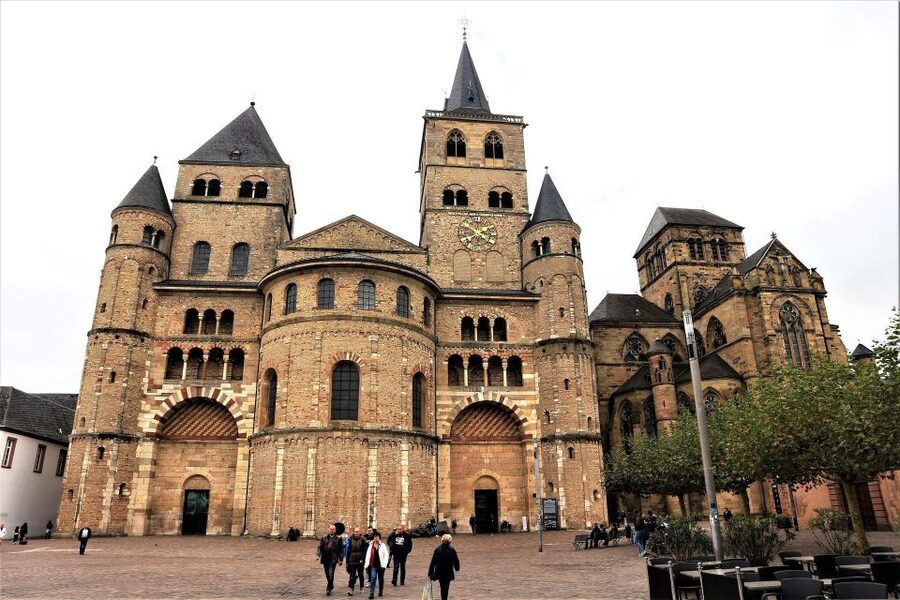
Trier’s tour continues toward its oldest cathedral area, positioned as the oldest German cathedral in the highlights. This is the moment where the tour shifts from Roman scale to longer continuity. You’ll learn how the cathedral fits into the city’s bigger narrative, so it does not feel like a random medieval stop dropped into a Roman itinerary.
Then the route heads into one of Trier’s most intriguing features: the subterranean labyrinth. The tour frames it as Trier’s hidden history. That phrasing matters, because underground spaces are easy to ignore when you’re walking streets above them.
What you can expect here is an explanation of what those underground areas likely meant for the city, and how hidden spaces can support practical city life even if they are not visible in everyday sightseeing. Even if the physical access depends on local setups and what areas are open, the guide’s storytelling is designed to make the underground feel like part of one continuous system, not a separate attraction.
A caution to keep you happy: underground and cathedral areas can mean different light, acoustics, and foot traffic patterns. If you have trouble hearing in busy spaces, tell your guide so they can speak clearly and slower when needed.
Moselle Vineyards and Half-Timbered Streets to End the Walk
The last stretch of the tour leans into atmosphere. You’ll pass through the charming feel of Trier with half-timbered houses and the vineyards that line the Moselle. This is the part that often makes the tour feel complete, because it brings you away from monuments and into how the city looks and feels when you’re not studying it.
This also helps you keep perspective. Trier is famous for UNESCO sites, Roman structures, and major landmarks. But it’s still a lived-in town with everyday streets. Seeing the vineyards and timbered fronts at the end gives you a “memory hook” for when you look back later and want to recall what made the walk feel like Trier.
If you have time after the tour, this is also a good moment to plan a casual follow-up, like a short walk through the river area or a relaxed drink near where the route leaves off. Even with no extra sightseeing, the change of scenery is satisfying.
Price and Value for a Group up to 15
The price is $280 per group, up to 15 people, for a 2-hour private tour. On paper, private can sound expensive, but the math changes when you compare it to the value you get from having a guide dedicated to your group.
Here’s the practical way to judge it: you’re paying for (1) a local guide working only with you, (2) a curated sequence of major Trier sights, and (3) on-the-spot customizing. If you’re traveling with friends or family, that private factor can make this feel like a bargain compared to splitting across separate group tours.
Entrance fees are not included, so your final “trip cost” depends on which sites require tickets during your route. Still, even when extra entry costs pop up, a good guide often saves you time and confusion, which is its own kind of value.
Also, this tour is built for adults and curious teens who want context. If you want a guide to explain the story behind names and structures, private can be worth every dollar. If you just want a quick photo lap, you might find a cheaper self-guided walk better.
What Type of Guide Experience You’re Getting in English or German
This tour includes a live guide in English or German, and the guide stays with your group only. That is a big deal because it keeps the pace flexible and lets you ask questions without waiting for the next person to catch up.
From the feedback themes you can infer what to look for. The strongest praise tends to focus on guides who are friendly, informative, and steady even when weather turns. Some people also commented on personal, easy conversation, with one guide name coming up as Susanne. If you see a guide with that personal style, you’ll probably appreciate the human approach, not just facts read from a script.
At the same time, one caution showed up in the kind of comments you should keep in mind: if a tour feels too fast or explanations are unclear, it can make it harder to ask follow-up questions. Since this is private, you can usually correct that in real time. If the pace is quick for your liking, ask for a slower explanation at the next stop.
Who This Private Walking Tour Suits Best
I’d point you to this tour if you want Trier to feel coherent. It’s perfect when you’re visiting for the first time and you care about connecting UNESCO sites, Roman structures, and later cultural context like Karl Marx.
It also suits you if you travel with:
- A small group who wants quiet, personalized explanations
- Family members who like guided storytelling more than solo wandering
- Anyone who enjoys asking questions about why a place is famous, not just what it looks like
It might be less ideal if you:
- Plan to spend most of your time indoors and want long museum-style stops
- Need a very slow pace with lots of breaks
- Prefer to avoid any route that could include underground areas with varying conditions
Should You Book This Trier Private Walking Tour?
If Trier is on your list and you want to leave with a real understanding, this is a strong choice. You’re getting the big Roman anchor points, plus the cathedral and the underground angle, and you end with the Moselle and half-timbered atmosphere. The private format also makes it easier to tailor the pace and questions.
I’d say book it if you value a guide-led narrative and you’re comfortable with a brisk two-hour walk. I’d hesitate only if you hate the idea of possibly paying extra for entrances or you strongly prefer unstructured time.
If you do book, go in with one question you genuinely want answered, like what makes Porta Nigra’s name so important, or how the Roman sites connect to why people call Trier the second Rome. A tour like this rewards curiosity.
FAQ
How long is the Trier private guided walking tour?
It lasts 2 hours.
Where does the tour meet?
Meet in front of the Black Gate at Porta-Nigra-Platz, 54290 Trier, Germany.
What is the group size limit?
It is priced per group up to 15 people, and it is a private group.
What languages are available?
The live guide is available in English and German.
Are entrance fees included?
No, entrance fees are not included.
What is the cancellation policy?
You can cancel up to 24 hours in advance for a full refund.
Can I reserve and pay later?
Yes. You can reserve now and pay later.
What is included in the tour price?
A local professional guide is included, and there may be possible customizing on the spot with your local guide.
Pavements of Trier
Trier, Koblenz and the Saarland
Everything else we filed on Trier
- Trier: Your Adventure Awaits – The Return of the Elector
★ 4.0 · 12 reviews - Trier, Moselle: Wine excursion with boat trip
★ 3.9 · 13 reviews - Trier: Private Guided Walking Tour
★ 4.2 · 32 reviews - Trier: Solve the Mystery of the Merchant’s Gold!
★ 4.2 · 61 reviews - Trier: City Walking Tour
★ 4.6 · 118 reviews - Trier: Discovery Tour – Germany’s Oldest Wine Cellar
★ 4.7 · 218 reviews
Trier Koblenz and the Saarland, side by side.
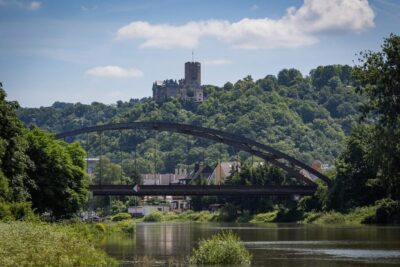 ★ 4.4Koblenz: Rhine Valley Castles and Palaces Boat TourFrom $211,824 reviews
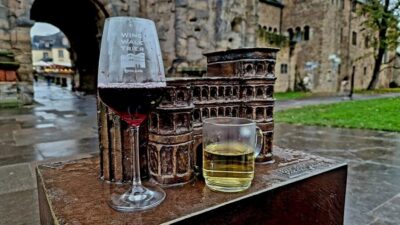 ★ 4.8Trier: Guided City Walk with Wine TastingFrom $43979 reviews
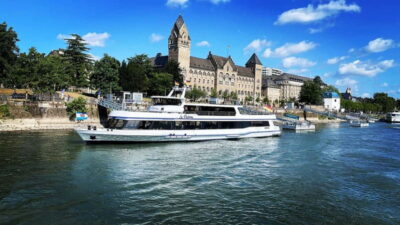 ★ 4.6Koblenz: 2-Hour Sightseeing Cruise on the RhineFrom $20839 reviews
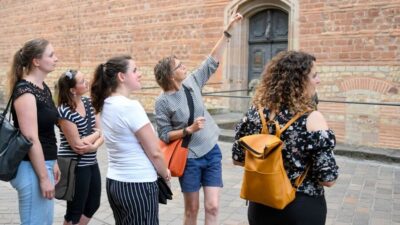 ★ 4.7Trier: Guided Old Town Highlights and History Walking TourFrom $16687 reviews
 ★ 4.5Koblenz: Old Town Sightseeing Cruise along the RhineFrom $16305 reviews
 ★ 4.4Koblenz: Panoramic Cruise on Moselle River to WinningenFrom $22283 reviews
 ★ 4.7Trier: Discovery Tour – Germany’s Oldest Wine CellarFrom $20218 reviews
 ★ 4.6Trier: City Walking TourFrom $17118 reviews
Other lists this tour is on