
REVIEW · TRIER
Trier – Private Guided Walking Tour
Two hours can feel like 2,000 years. I especially love Porta Nigra and the way the tour brings you into Constantine’s Throne Room with context that actually sticks. The only real catch is the pace, you cover multiple major sites in a short time, so comfy shoes help.
This is a private guided walking tour for up to 15 people, with an official guide and a simple mobile ticket. You also get to focus on the big-ticket sights since admission is listed as free for the stops on the route, and the tour is offered in English. One more consideration: if your idea of fun is lingering for long stretches, the itinerary may feel a bit structured.
You start at Porta-Nigra-Platz and finish at the Imperial Baths area, which is a smart way to end your walk while you are already on the Roman-culture side of town. If you want a guided hit of Roman Trier without the stress of planning every turn, this tour is built for that.
In This Review
- Key points to know before you go
- Trier on Foot, With a Guide Who Connects the Dots
- Porta Nigra, Dreikonigenhaus, and Frankenturm in One Continuous Start
- Market Cross and the Kornmarkt Area, Where Trier’s Center Keeps Talking
- St. Gangolf Kirche: A Second-Oldest-Feeling Church Stop
- Trier Saint Peter’s Cathedral, Built on Roman Brick
- Konstantin-Basilika (Evangelische Kirche zum Erlöser) and the Throne Room
- Electoral Palace, the Aula Palatina Area, and the Roman Baths Ending
- Tour Length Options and How to Choose What Fits Your Group
- Price and Value: When $369.34 Per Group Makes Sense
- What You Will Actually Feel During the Walk
- Practical Notes: Where to Meet and How to Plan Your Timing
- Should You Book This Trier Private Guided Walking Tour?
- FAQ
- How big is the group for this private walking tour?
- How long is the guided walking tour in Trier?
- Is the tour offered in English?
- Are admission tickets included for the stops?
- Where do I meet and where does the tour end?
- What happens if I cancel?
Key points to know before you go
- Porta Nigra’s UNESCO scale, plus nearby historic sights like Dreikonigenhaus
- Constantine-Basilika interior details, including what has been kept intact since WWII repairs
- A tight, efficient route that fits a major Trier highlight loop into about 2 hours
- Free admission for listed stops, so your money goes to the guide, not tickets
- Private group up to 15, which is handy for families and small circles of friends
- A natural ending at the Imperial Baths, keeping the walk coherent to the finish
More Roman stone and river corners
- Trier: Guided City Walk with Wine Tasting★ 4.8 · 979 reviews
- Trier: Guided Old Town Highlights and History Walking Tour★ 4.7 · 687 reviews
- Trier: Discovery Tour – Germany’s Oldest Wine Cellar★ 4.7 · 218 reviews
- Trier: City Walking Tour★ 4.6 · 118 reviews
Trier on Foot, With a Guide Who Connects the Dots
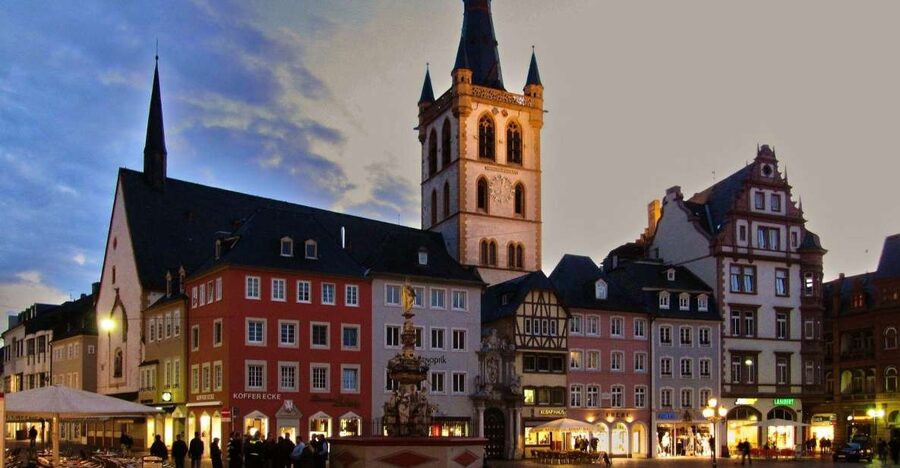
Trier is one of those German cities where the past is not behind rope or far away. It is right there on streets, in church interiors, and around Roman stonework that still shapes the city layout. The private walking format matters because you are not just collecting photos, you are getting the why behind each place.
I like that this tour is set up as a single thread from the Roman city gate into later layers of Trier. You see major monuments like Porta Nigra, then move through church spaces tied to early Christianity, and end at the Roman Bath complex near the Imperial Baths area.
The other big value is time. In about 2 hours, you get a tour that is designed to keep moving while still giving you enough story to make sense of what you are seeing. That is great for a first visit, and it can work well even if your group includes teens, as long as they can tolerate a steady walking pace.
Porta Nigra, Dreikonigenhaus, and Frankenturm in One Continuous Start
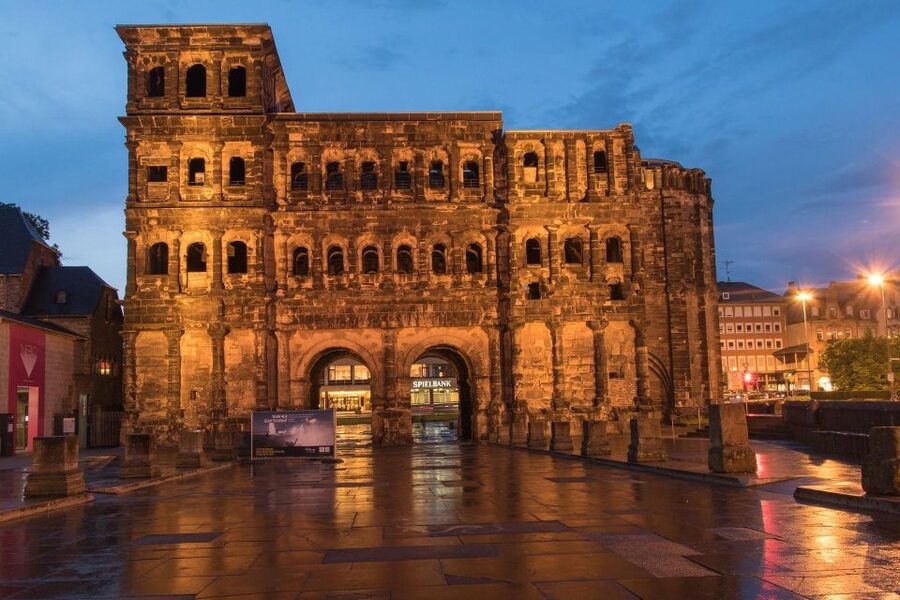
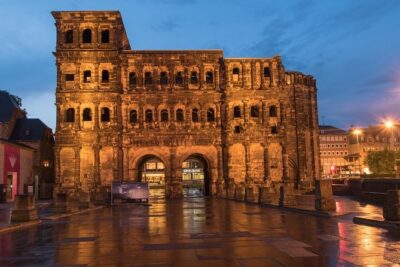
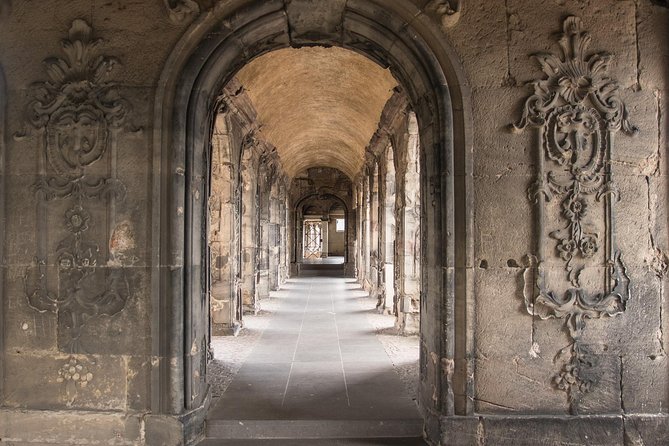
Your walk begins at Porta-Nigra-Platz, which is the natural staging area for Porta Nigra. Porta Nigra is a UNESCO World Heritage Site, and it is described here as the largest city gate from the ancient world. The guide-led context is the point: built with grey sand after 170 AD, this is not just a big doorway, it is a statement of how Trier functioned as a Roman city.
You also pass Dreikonigenhaus, a unique house in Trier. That stop is small but memorable because it is the kind of detail you might miss on your own if you are only scanning for the big monuments. Then you reach Frankenturm, the fortified brick residential tower associated with an 11th-century origin.
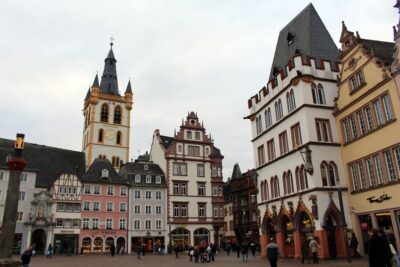
What makes this stretch feel worth it is how the sights show different layers of reuse and continuity. Roman gate, medieval tower, and the everyday town square traffic all share the same walking corridor. The tour also folds in a look at the Market Cross on the main market early in the route, so you get the sense of where commerce and street life anchored the city.
A practical note: this start includes several different “types” of viewing, outside stone scale, then smaller architectural oddities. If your group is the kind that enjoys noticing details, this opening section will click fast.
Market Cross and the Kornmarkt Area, Where Trier’s Center Keeps Talking
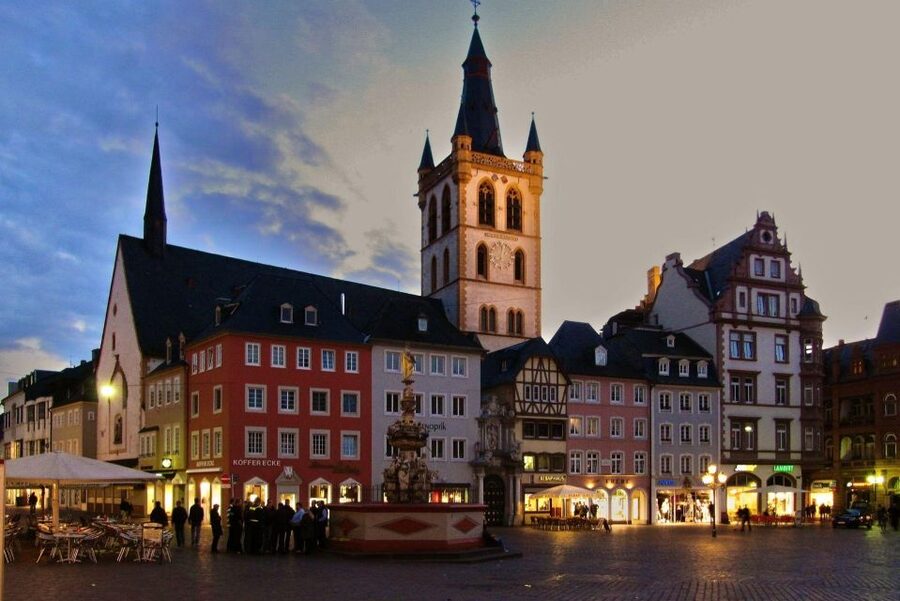
The tour returns to the main market area again, including Market Cross. This is Trier’s central market square and was known for a medieval trading hub. You get a short, focused look that is enough to orient you, plus a quick chance to shop or grab a café break after you have the story in your head.
Then the route shifts toward the Kornmarkt area, where the Saint George’s Fountain shows up more than once in the flow. The fountain is listed as built between 1750 and 1751 by the same builder of the Electoral Palais. Even if you only spend a few minutes, that builder connection helps you see the city as a planned composition rather than random landmarks.
This is also where the tour’s design makes sense for real life. You will be walking through active city spaces, not only museum-like zones. For a group, it is a good balance: you get guided interpretation, but you are not stuck indoors or in overly controlled environments.
If you have mobility limits, you might want to keep your pace expectations realistic. The itinerary is built to move between points efficiently, so plan for steady walking rather than extended pauses.
St. Gangolf Kirche: A Second-Oldest-Feeling Church Stop
Next up is St. Gangolf Kirche, a Roman Catholic church dedicated to St. Gangulphus. The tour information calls it the second-oldest church in Trier, which instantly gives the stop a “you are standing in a long timeline” feeling.
This is a short stop, and it works best as a breather between larger monuments. You are not meant to treat it like a long chapel visit, but the guide-led framing helps you notice what makes early church spaces different from later ones in style and intent.
As you move through the area, you also pass Saint George’s Fountain in Kornmarkt again as part of the connection between key city anchors. That repetition is not necessarily redundant, it is a way of building a mental map. After a couple of passes, you start to understand how these spots relate to each other in the city plan.
Other walking routes through Trier

Trier Saint Peter’s Cathedral, Built on Roman Brick
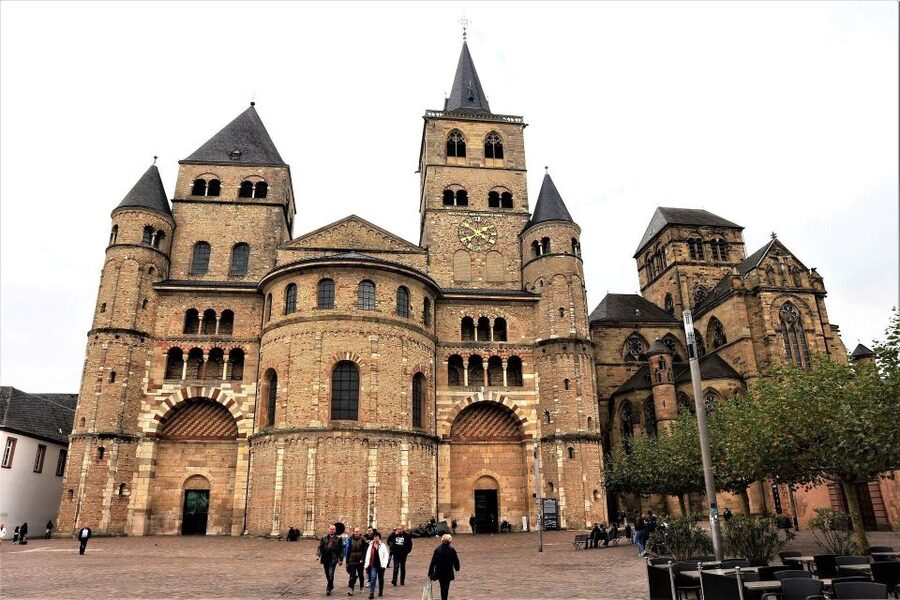
At Trier Saint Peter’s Cathedral, you get the kind of fact that makes the rest of the city click. This is described as the oldest church in Germany, and it also has the largest religious structure of the city. Even more grounded is the foundation detail, built with Roman brick in the early 4th century.
That early-4th-century foundation is the key. When a site is that old, you can feel it in the way it anchors the city around it. The tour gives you just enough time to register the scale and significance without turning this into a slow, standalone museum visit.
The best way to get value from this stop is simple: keep listening. When you hear about the Roman brick foundation, suddenly other Roman-era materials and building logic in Trier start to look connected rather than random.
Like many church stops on walking tours, it is not a silent, sit-and-read experience. You are there to see, listen, and move on, which is ideal if you want a curated flow instead of open-ended wandering.
Konstantin-Basilika (Evangelische Kirche zum Erlöser) and the Throne Room
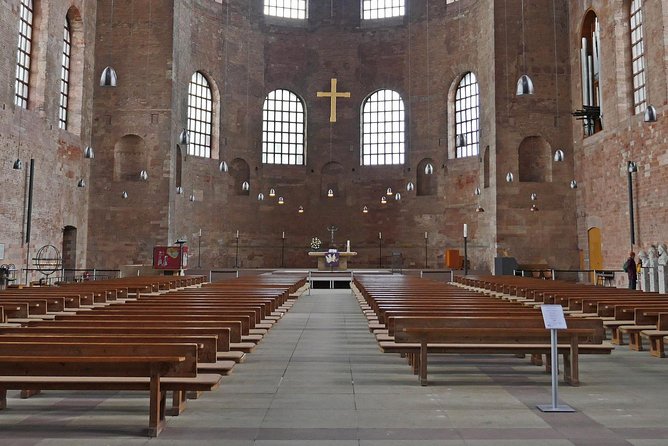
This is the stop I would personally circle as the reason to book. The tour takes you to the Konstantin-Basilika, also referred to as Evangelische Kirche zum Erlöser. It is described here as built around 310 AD, which places it firmly in the early story of Trier.
The tour information also highlights something rare and practical for history lovers: the inner walls of the cathedral have been kept intact, with no changes even after repairs due to World War II. That detail matters because it explains why the interior can feel so direct, as if you are standing inside a survival story rather than a reconstructed one.
Then comes the Throne Room of Constantine the Great and subsequent Roman Emperors from the 4th century. The tour frames it as the largest throne room, now used as a Protestant church. When a space changes religious use while keeping architectural features, it gives you a powerful example of how buildings can outlast political and faith shifts.
You will likely get more from this stop if you ask your guide one question. Something like, What exactly would have made this room a throne room in the 4th century? With a good guide, you turn facts into understanding, fast.
Electoral Palace, the Aula Palatina Area, and the Roman Baths Ending
The tour wraps up at the Electoral Palace area, tied to the 16th-century residence of the Archbishops and Electors of Trier. Even though you are moving into later periods, the route still keeps the Roman thread alive.
The highlight material for this experience specifically points to the Aula Palatina, and the final stop is also described as including the large Roman Bath complex constructed in the 4th century AD. That pairing is smart because it sets up a contrast you can actually feel on foot: Roman civic space, then later elite residence, all in the same ending zone.
This finish is one of the best parts for practical planning. Ending near the Imperial Baths area means you are not just dropping people in a random spot. You can keep exploring Roman Trier immediately, or you can head back toward transportation with a sense of closure because you have seen the arc from gate, to churches, to imperial architecture.
If you are tired at the end of the walk, do not worry. This is a place where short attention is still rewarded. Even if you only glance at the scale, the Roman Bath setting makes it clear that Trier was built with serious ambition.
Tour Length Options and How to Choose What Fits Your Group
The tour offers two tour lengths based on personal preferences, but the exact difference in minutes or which stops change is not spelled out in the details you were given. In practice, that means you can choose the version that matches how your group likes to travel.
Here is the rule I use. If this is your first time in Trier and you want to see the core highlights quickly, go for the longer option if you can handle a steady walk. If you prefer a lighter outing, pick the shorter option to protect energy for food, photos, and independent exploring.
Also consider your group size. Up to 15 people is still “private,” but it is big enough that pacing needs to stay consistent. If you have a mixed group, with walkers who want extra time at one stop, the private structure is helpful because your guide can usually manage questions and timing in a human way.
Your tour is also offered in English, so it is a good fit if you want your history explanations without translation lag.
Price and Value: When $369.34 Per Group Makes Sense
The price is listed as $369.34 per group, up to 15 people, for about 2 hours. That pricing can look steep if you are thinking per person, but it is built around group value, not solo sightseeing.
Let’s do the simple math so you can decide fast. If you book with just 2 people, the cost per person is roughly $184.67. If you book with 10 people, it becomes about $36.93 per person. With a full group close to 15, it is about $24.62 per person.
Where this becomes a real bargain is when you factor in two things you would otherwise spend time and effort on. First, the tour includes an official guide, and second, the stops listed are marked as admission ticket free. You are paying mainly for interpretation and routing, not for a lineup of paid entries.
If you hate planning, this kind of private route is often worth it. You show up, you follow a clean path, and you leave with a coherent story instead of a pile of unrelated photos.
What You Will Actually Feel During the Walk
This is not a slow city stroll where you stop for long conversations every few minutes. It is a focused guided walk that keeps you moving through Trier’s biggest anchors: Porta Nigra, major church sites, the Market Cross area, and the Electoral Palace and Roman Baths ending zone.
That format has a good side. You get traction on your first day, and you will know what to revisit later on your own. You also get frequent “scene changes,” gate, tower, market square, church interiors, and palace or bath architecture, so your eyes do not get bored.
There is also a human side. Because it is private, your guide can respond to your group. In particular, this experience is known for guides who stay engaging while covering architecture and history in a way that keeps younger visitors interested, not just adults who already love Roman details.
If your group is mostly adults and you want depth, this tour still works, because the route includes strong technical points like the 310 AD basilica timing and the preserved inner walls after WWII repairs.
Practical Notes: Where to Meet and How to Plan Your Timing
You start at Porta-Nigra-Platz, 54290 Trier, Germany. The tour ends at the Imperial Baths, 54290 Trier, which is listed as the final point for the walking route.
The experience is near public transportation, so you should be able to build it into a day without complicated logistics. You also get a mobile ticket, which keeps things simple on arrival.
In terms of practical preparation, plan for a steady walk. This is a walking tour with multiple stops, some of them in church spaces and some outside. Bring water if it is warm, wear comfortable shoes, and give yourself a little buffer afterward so you can absorb what you just learned.
Should You Book This Trier Private Guided Walking Tour?
Book this if you want the best of Roman Trier plus early church sites, in a single, guided loop that finishes at the Imperial Baths area. It is especially worth it if you are traveling as a small group where the per-person cost drops quickly, and you want an English-speaking guide to connect the architectural dots.
Skip it or consider a shorter option if you prefer unstructured wandering and long stops. The itinerary is designed to cover a lot in about 2 hours, so you will want to be comfortable with a brisk, guided pace.
If you care about seeing Porta Nigra and then understanding how later Trier grew around Roman foundations, this tour gives you that sequence with minimal hassle, and it ends where you can keep exploring on your own.
FAQ
How big is the group for this private walking tour?
It is a private tour with up to 15 people per group.
How long is the guided walking tour in Trier?
The duration is approximately 2 hours.
Is the tour offered in English?
Yes, it is offered in English.
Are admission tickets included for the stops?
The tour details list admission tickets as free for the listed stops.
Where do I meet and where does the tour end?
You meet at Porta-Nigra-Platz, 54290 Trier, Germany, and the tour ends at Imperial Baths, 54290 Trier, Germany.
What happens if I cancel?
This experience is non-refundable and cannot be changed for any reason.
Pavements of Trier
Trier, Koblenz and the Saarland
Everything else we filed on Trier
- Trier Private Walking Tour With A Professional Guide
★ 5.0 · 4 reviews - Trier: Private Walking Tour with a Local Guide
★ 5.0 · 5 reviews - Trier: Express City Walking Tour with Local Guide
★ 5.0 · 5 reviews - Trier – Private Guided Walking Tour
★ 4.5 · 6 reviews - Trier: early morning tour without the hustle and bustle and with less noise
★ 5.0 · 6 reviews - Trier Self Guided Sherlock Holmes Murder Mystery Game
★ 4.0 · 9 reviews
Trier Koblenz and the Saarland, side by side.
 ★ 4.4Koblenz: Rhine Valley Castles and Palaces Boat TourFrom $211,824 reviews
 ★ 4.8Trier: Guided City Walk with Wine TastingFrom $43979 reviews
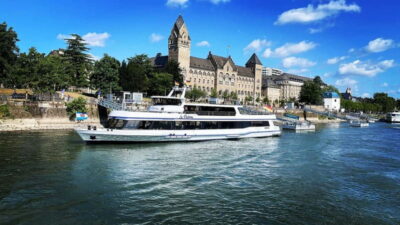 ★ 4.6Koblenz: 2-Hour Sightseeing Cruise on the RhineFrom $20839 reviews
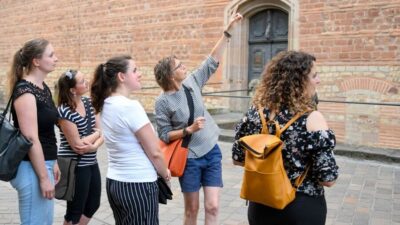 ★ 4.7Trier: Guided Old Town Highlights and History Walking TourFrom $16687 reviews
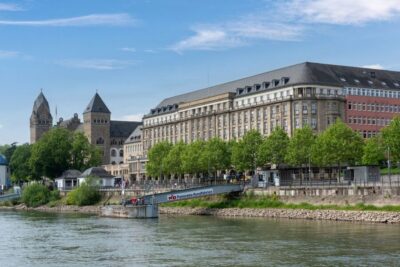 ★ 4.5Koblenz: Old Town Sightseeing Cruise along the RhineFrom $16305 reviews
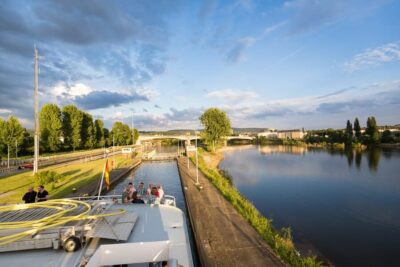 ★ 4.4Koblenz: Panoramic Cruise on Moselle River to WinningenFrom $22283 reviews
 ★ 4.7Trier: Discovery Tour – Germany’s Oldest Wine CellarFrom $20218 reviews
 ★ 4.6Trier: City Walking TourFrom $17118 reviews
Other lists this tour is on