
REVIEW · TRIER
Trier Private Walking Tour With A Professional Guide
Trier’s best sights stack up fast. This private walking tour pairs an English-speaking guide with a smart route through Trier’s biggest Roman and medieval landmarks, plus built-in photo stops like the Porta Nigra and the Main Market. It’s designed to get you oriented quickly, without feeling like you’re sprinting.
I love two things right away: the live commentary that turns monuments into a timeline you can actually follow, and the option to tweak the focus as you go. In past groups, guides like Wolfgang and Michael got high marks for clear historical context, with Michael using a portfolio of drawings and images to show how the buildings looked in Roman, Gothic, and Renaissance periods.
One thing to consider is pacing. This is a tight, about 2 hours walk, and entrance fees are not included, so if you want extra time inside any site, plan a bit of follow-up on your own.
In This Review
- Key highlights and what they mean for you
- Entering The Porta Nigra, Trier’s Roman starting point
- Main Market routing: Dreikönigenhaus, Hauptmarkt, Steipe, and the fountain
- Trier Cathedral and Liebfrauenkirche: how Gothic enters the picture
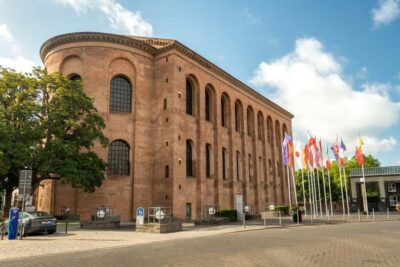
- Konstantin-Basilika: the Roman Imperial Throne Room in full scale
- Electoral Palace and the 17th-century rococo pause
- Kaiserthermen: stepping into the underground imperial baths
- Private group value: timing, guide attention, and cost math
- How the guide style shows up in real enjoyment
- Who should book this Trier private walking tour?
- Should you book this private Trier walk?
- FAQ
- Is this tour private for my group only?
- How long is the Trier private walking tour?
- What language is the tour offered in?
- Where does the tour start and where does it end?
- How much does the tour cost, and what is the group size limit?
- Is a mobile ticket included?
- What’s included in the price?
- Are entrance fees included?
- Can I cancel for a full refund?
Key highlights and what they mean for you
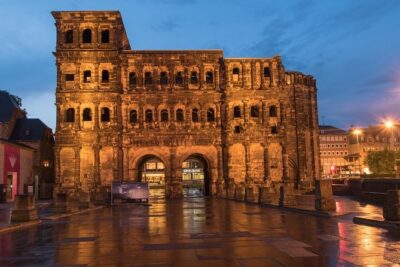
- Porta Nigra sets the tone with its UNESCO status, Roman origin (A.D. 180), later church conversions, and even a Napoleon-era renovation story.
- A Main Market route that feels efficient goes from the Dreikönigenhaus photo stop to the Hauptmarkt details you might otherwise miss.
- Trier Cathedral plus the Gothic shift gives you a real sense of how the city’s style changed, with Liebfrauenkirche highlighted as the earliest Gothic church in Germany.
- Konstantin-Basilika shows Roman scale as the world’s largest remaining Roman hall, tied directly to Emperor Constantine.
- Kaiserthermen finishes underground with the subterranean labyrinth feel, so the tour lands with a wow moment, not just another facade.
- Visual explanations from your guide can be a big deal, especially with guides like Michael who use historical drawings to make the past legible.
More Roman stone and river corners
- Trier: Guided City Walk with Wine Tasting★ 4.8 · 979 reviews
- Trier: Guided Old Town Highlights and History Walking Tour★ 4.7 · 687 reviews
- Trier: Discovery Tour – Germany’s Oldest Wine Cellar★ 4.7 · 218 reviews
- Trier: City Walking Tour★ 4.6 · 118 reviews
Entering The Porta Nigra, Trier’s Roman starting point
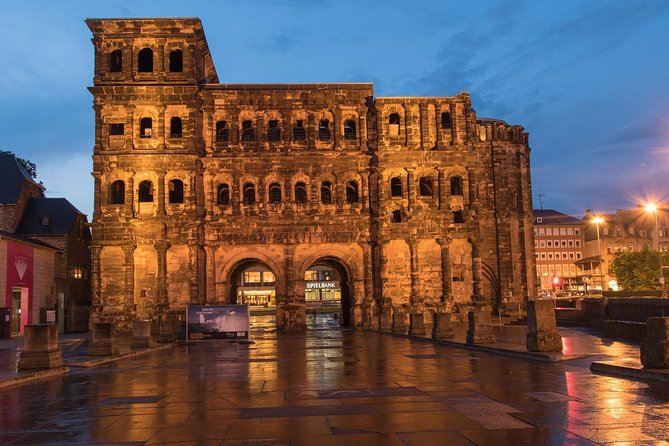
If you want Trier to click, start with the Porta Nigra. This UNESCO site is more than a dramatic gate for photos, it’s a whole storyline in stone. Built in A.D. 180, it later got converted into two churches, and it was renovated by Napoleon afterward. That blend of eras is exactly why this first stop matters, it tells you the city never stayed still.
From here, you’re set up to understand what comes next. The guide’s job is to keep the timeline straight while you’re walking, so you’re not just seeing pretty buildings, you’re seeing cause and effect. I’d treat this opening as your mental map. Look at it as a Roman object that survived long enough to be reused and reimagined.
Tip: wear comfortable shoes and give yourself a moment at the gate to just take it in. When a tour starts with a major landmark, it’s easy to move on too fast. Slow down for five breaths, then let the guide pull you forward.
Main Market routing: Dreikönigenhaus, Hauptmarkt, Steipe, and the fountain
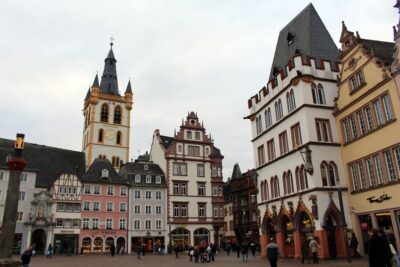
The route naturally leads you toward the Main Market area, and that’s where Trier’s personality gets loud. On the way, you’ll stop for pictures at the Dreikönigenhaus, a unique 13th-century building. It’s a small moment, but it’s the kind of oddball detail that makes your photos feel like Trier, not just Germany.
Then comes the Hauptmarkt, the Main Market, which is where the city’s medieval look really shows. Expect charming half-timbered houses and a cluster of attractions that feel layered rather than random. The guide steers you toward a standout Gothic example, the 15th-century Steipe house, plus a 16th-century market fountain.
Here’s the practical advantage of this stop. Without a guide, it’s easy to wander and just snap pictures. With a guide, you get a quick framework for what you’re seeing: which parts are Gothic, which are later medieval, and why the market square became a focal point. That’s the value of a guided shortcut, you’re not spending your limited time figuring things out on the fly.
What to watch for: half-timbering patterns, the way the market fountain anchors the square, and how the Steipe house reads as a distinct style from its neighbors. Even if you do not go inside every building, the exterior details are part of the story.
Trier Cathedral and Liebfrauenkirche: how Gothic enters the picture
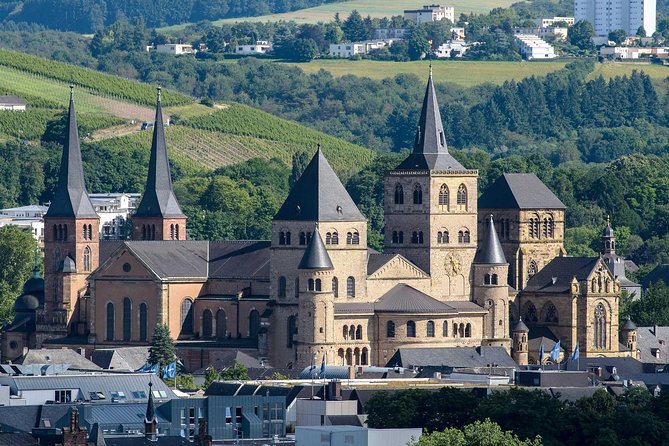
Next, you visit Trier Cathedral, built in the 4th-century and often described as Germany’s oldest church. That’s a big claim, and it helps the guide frame what you’re seeing right away: this is not just an old building, it’s one of the city’s core anchors.
What makes this segment especially useful is the south side story. The south side was destroyed in the 12th century, and it was replaced by the Liebfrauenkirche, known as the earliest Gothic church in Germany. That is a fascinating shift in one sentence, and the guide’s commentary turns it into something you can visualize as you look around.
Why you’ll probably like this section: it’s a rare chance to connect architecture to history in a walkable radius. Roman-era survivals and early Gothic ambition are right here in the same cathedral complex area. So instead of treating Gothic as an abstract style from a museum label, you see the transition as a real event in Trier’s timeline.
If you’re the kind of person who likes to understand why styles changed, this is a good stop to pay attention and ask yourself a simple question: what would it have felt like to rebuild after destruction with a new design language in mind?
Konstantin-Basilika: the Roman Imperial Throne Room in full scale
Then you shift from medieval markers back to Roman muscle. The Konstantin-Basilika is the Roman Imperial Throne Room, and it’s described as the world’s largest remaining Roman hall. It was built for Emperor Constantine, which gives the scale a clear purpose rather than leaving it as a generic big ruin.
This is one of those stops that benefits from a guide who can make size meaningful. A “largest remaining” site can be hard to absorb if you only get a quick glance. But when your guide connects the space to the emperor, and to the idea of imperial authority, the building starts to feel less like a set piece and more like a working stage from another era.
Practical advice: take a step back and look at how the hall’s proportions affect your sense of time. Roman architecture tends to overwhelm slowly. Give it a minute to sink in before you move on, especially if you’re taking photos.
Other walking routes through Trier

Electoral Palace and the 17th-century rococo pause
Right next to the Konstantin-Basilika, you’ll find the Electoral Palace, a 17th-century rococo building. It’s considered the most beautiful of its kind, and this is where Trier adds personality beyond pure ancient or purely medieval.
Rococo is about ornament and elegance, and that makes the Electoral Palace a contrast stop. After Roman scale and cathedral thinking, you get a different visual language and a different kind of “power” in the city. A guided walk is good here because you can read the change in the city’s priorities, from ancient authority to later courtly style.
What I like about this stop in the tour format is that it keeps variety without adding extra logistics. It stays close to the previous attraction, so you don’t lose momentum.
Kaiserthermen: stepping into the underground imperial baths
The final stop is the Kaiserthermen, the Imperial Baths. This is a classic “last stop” choice because it can feel like a time machine rather than another above-ground view. You’ll travel back in time by visiting its subterranean labyrinth and learning about its history.
Underground spaces always do something psychological. They pull you away from the present simply because you’re physically lowered into the site’s original function. That’s what makes the Kaiserthermen landing so effective at the end of a walk. Instead of ending on a facade and hoping you remember everything, you close with an experience that sticks in your body and your memory.
Practical tip: pace yourself. Labyrinth-style layouts can be easy to rush through. Let the guide walk you through what you’re looking at, then take a moment for photos after you understand the layout.
Private group value: timing, guide attention, and cost math
This tour is priced at $290.70 per group, up to 15 people, and it runs about 2 hours. That price structure matters. For a larger group, it can be a real value because you’re effectively buying one set of expert guidance for everyone, not paying per person for the explanation. If you have, say, 10 people, you’ll feel the cost drop per head fast.
If your group is small, it may not be the cheapest option compared to self-guided wandering. But you’re paying for structure and interpretation, and in Trier that can save you time. The tour is built to give you a shortcut to the most interesting places, with commentary while you walk, so you’re not spending the first hour hunting down your next stop.
Also, you get a private guide with your group only. That’s more than a comfort perk. It means you can ask follow-up questions in real time, and your guide can adjust the focus on the spot. The itinerary even notes that customizing is possible with your local guide.
One more detail that’s easy to overlook: you receive a mobile ticket. That helps the day stay smooth, especially when you’re hopping between major sites in a compact urban area.
How the guide style shows up in real enjoyment
The best part of the reviews is not just that the guides were friendly. It’s the way they explained. Wolfgang was praised for being right on time and delivering interesting historical facts with strong background context. Michael was highlighted for bringing a portfolio of drawings and images, showing how buildings and areas looked in different periods, including Roman, Gothic, and Renaissance.
That kind of visual framing is gold when you’re looking at buildings that are partially altered or reused across centuries. If you’re looking at the Porta Nigra today, the guide helps you picture how it functioned and how its role changed when it became church space later on. It makes the past easier to hold in your head.
So when you book, lean into that. Ask your guide to explain the connection between two stops, like how the cathedral transition leads into the Gothic highlight at Liebfrauenkirche. Those links are where a good guide turns a collection of monuments into one story.
Who should book this Trier private walking tour?
This tour fits best when you want three things at once: major sights, clear explanations, and a smooth route.
I’d book it if:
- you’re visiting Trier for a first time and want your bearings fast
- you care about Roman plus medieval overlap and want the timeline explained in plain language
- you prefer a guide who can point things out as you go, including with visual aids like drawings
- you’re traveling with a group that benefits from private attention, because you’re not sharing the walk with strangers
It’s also a good choice if you like flexibility. Since customization on the spot is possible, you can steer the pace toward the parts you care about most, whether that’s cathedral details or the underground baths labyrinth.
Only one caution: because entrance fees are not included, you should budget extra if any stops require payment once you’re there. This tour is designed as guided highlights and interpretation, not a full spend-all-day ticket package.
Should you book this private Trier walk?
Yes, if you want an efficient, guided tour that actually helps you understand Trier instead of just see it. The route hits the big names in a logical sequence, starting with Porta Nigra, moving through the Main Market and cathedral complex, then landing at Roman scale with Konstantin-Basilika, finishing with the underground experience at Kaiserthermen.
Book it if you value a guide who can make architectural change feel real, especially with strong explanation habits like Wolfgang’s clear background facts or Michael’s period drawings. And book it confidently if your group wants privacy and flexibility without turning the day into a logistics puzzle.
Hold off or do extra planning if you’re hoping for long time inside buildings. This is about two hours of focused walking and interpretation, so you’ll likely want to return later on your own if you want deeper museum-style time.
FAQ
Is this tour private for my group only?
Yes. It is a private tour/activity, and only your group will participate.
How long is the Trier private walking tour?
The duration is about 2 hours.
What language is the tour offered in?
The tour is offered in English.
Where does the tour start and where does it end?
It starts at Porta-Nigra-Platz, 54290 Trier, Germany, and ends in Trier at 54 Trier, Germany.
How much does the tour cost, and what is the group size limit?
It costs $290.70 per group and accommodates up to 15 people.
Is a mobile ticket included?
Yes, the tour includes a mobile ticket.
What’s included in the price?
A local guide who will be with your group only, plus a private guided tour. Customizing on tour with your local guide on the spot is also possible.
Are entrance fees included?
No. Entrance fees are not included, and gratuities are not included either.
Can I cancel for a full refund?
Free cancellation is available. You can cancel up to 24 hours in advance for a full refund.
Pavements of Trier
Trier, Koblenz and the Saarland
Everything else we filed on Trier
- Trier Private Walking Tour With A Professional Guide
★ 5.0 · 4 reviews - Trier: Private Walking Tour with a Local Guide
★ 5.0 · 5 reviews - Trier: Express City Walking Tour with Local Guide
★ 5.0 · 5 reviews - Trier – Private Guided Walking Tour
★ 4.5 · 6 reviews - Trier: early morning tour without the hustle and bustle and with less noise
★ 5.0 · 6 reviews - Trier Self Guided Sherlock Holmes Murder Mystery Game
★ 4.0 · 9 reviews
Trier Koblenz and the Saarland, side by side.
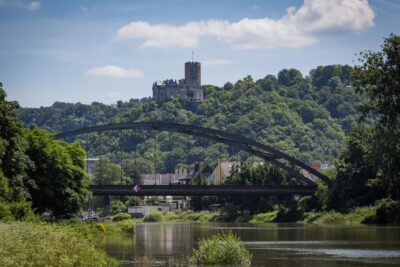 ★ 4.4Koblenz: Rhine Valley Castles and Palaces Boat TourFrom $211,824 reviews
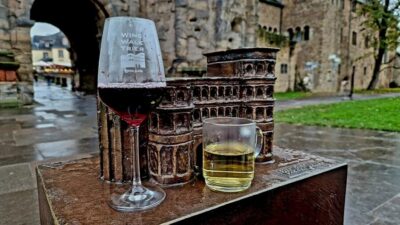 ★ 4.8Trier: Guided City Walk with Wine TastingFrom $43979 reviews
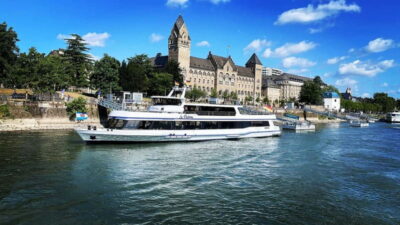 ★ 4.6Koblenz: 2-Hour Sightseeing Cruise on the RhineFrom $20839 reviews
 ★ 4.7Trier: Guided Old Town Highlights and History Walking TourFrom $16687 reviews
 ★ 4.5Koblenz: Old Town Sightseeing Cruise along the RhineFrom $16305 reviews
 ★ 4.4Koblenz: Panoramic Cruise on Moselle River to WinningenFrom $22283 reviews
 ★ 4.7Trier: Discovery Tour – Germany’s Oldest Wine CellarFrom $20218 reviews
 ★ 4.6Trier: City Walking TourFrom $17118 reviews
Other lists this tour is on