
REVIEW · TRIER
Trier: Private Walking Tour with a Local Guide
Trier feels like ancient Europe on foot. This private walking tour is built around Roman Trier and the kind of clear, friendly storytelling you want when landmarks blur together on a map. I also like that you get to Porta Nigra and the Basilica of Constantine in one smooth route, without the hassle of piecing things together yourself. One catch: entrance fees are not included, so if you add ticketed stops later, your total cost can rise.
You’ll meet your guide in front of Hotel Römischer Kaiser, near Porta Nigra, then walk city highlights for about three hours and return to the same spot. The tour runs with an official guide in English or German, and it’s a private group (up to 20 people), which makes it easier to ask questions and move at a comfortable pace.
In This Review
- Key points worth knowing
- Roman Trier starts at Porta Nigra, by Hotel Römischer Kaiser
- From Porta Nigra to Dreikonigenhaus: Roman scale, then quirky local flair
- Frankenturm and the Market Cross: fortifications meet medieval trade
- St. Gangolf Kirche and the Kornmarkt fountain: faith, art, and civic space
- St. Peter’s Cathedral and Constantine’s Basilica: the oldest church and the preserved walls
- Archbishops, electors, and the Roman Bath complex: the city after the emperors
- Price and group value: $441 per group up to 20, for a 3-hour narrative
- Who this tour suits best, and who should skip it
- Should you book this Trier private walking tour?
- FAQ
- How long is the Trier private walking tour?
- Where do I meet my guide?
- Where does the tour end?
- Is this a private tour?
- What languages are available?
- How many people are in a group?
- What is included in the price?
- Are entrance fees included?
- Can I cancel for a refund?
- Is there a reserve and pay later option?
Key points worth knowing
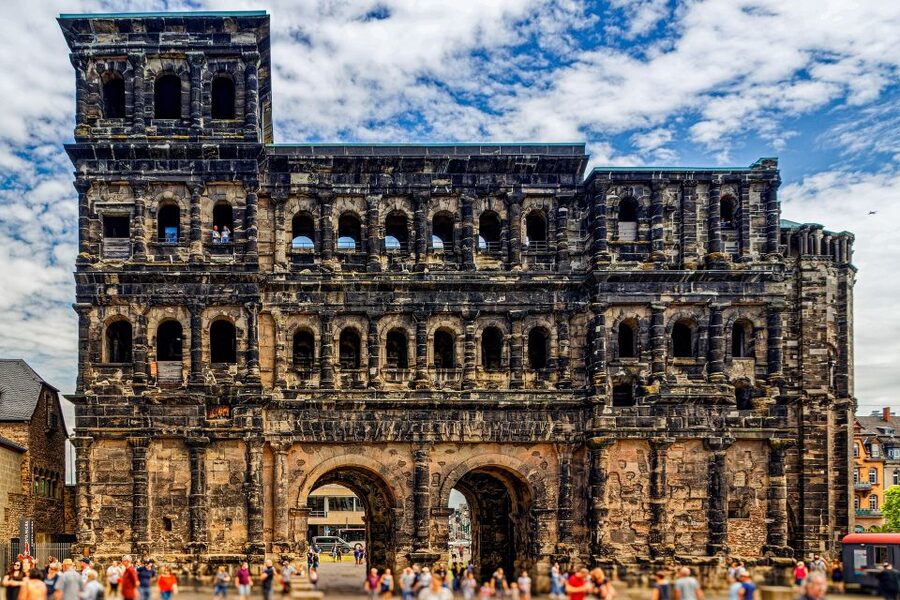
- UNESCO Porta Nigra up close, including how it was built with grey sand after 170 AD
- Basilica of Constantine and its preserved inner walls, plus the Throne Room of Constantine the Great
- Frankenturm (11th century) and other fortifications, not just pretty facades
- Market Cross in the main market, where medieval trade shaped daily life
- St. Peter’s Cathedral as the oldest church in Germany, founded by Roman bricklayers
- Guides like Nicholas and Andrea Tullius are praised for kindness and making the story easy to understand
More Roman stone and river corners
- Trier: Guided City Walk with Wine Tasting★ 4.8 · 979 reviews
- Trier: Guided Old Town Highlights and History Walking Tour★ 4.7 · 687 reviews
- Trier: Discovery Tour – Germany’s Oldest Wine Cellar★ 4.7 · 218 reviews
- Trier: City Walking Tour★ 4.6 · 118 reviews
Roman Trier starts at Porta Nigra, by Hotel Römischer Kaiser
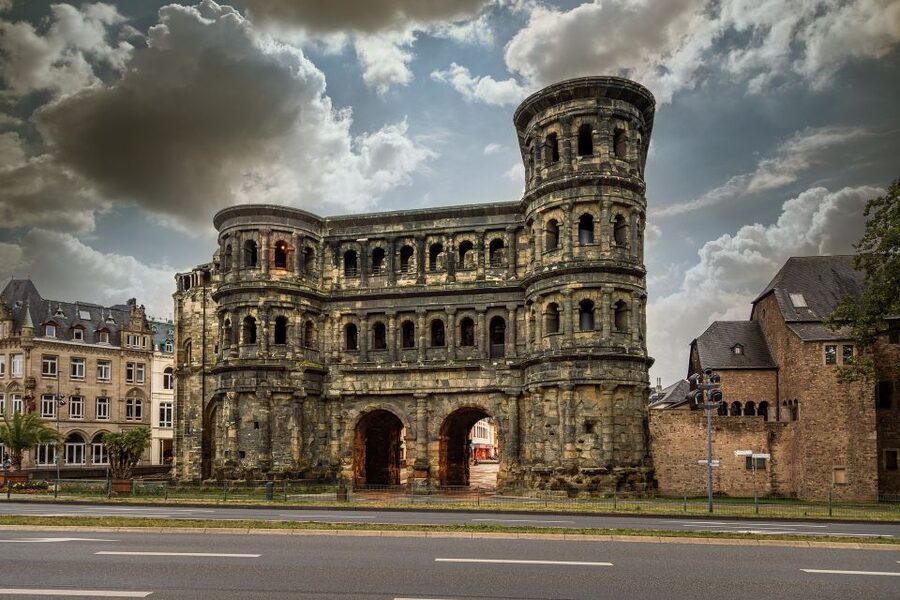
The best part of this tour is how it launches you straight into the Roman story. You start right in the Porta Nigra area, meeting your guide in front of Hotel Römischer Kaiser. That location matters because it puts the UNESCO site in front of you early, before you’ve spent your energy on transit or map-wrangling.
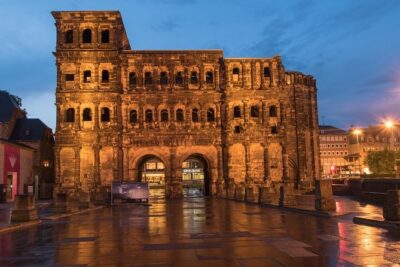
Porta Nigra is not a small “cool gate you can spot from the street.” It’s the ancient world’s largest city gate, and the details are what bring it alive. You’ll learn that it was built with grey sand after 170 AD, then you’ll walk the surroundings with context so it feels less like trivia and more like city planning.
Since it’s a private walking tour, the format also helps. A guide can explain how all these layers, Roman, medieval, and later Christian Trier, connect. And from the reviews you have strong signals that the guides explain in a way that is easy to follow, with a friendly tone. That’s a big deal on a three-hour format, when you do not have time to guess what you’re looking at.
Practical tip: Trier streets can be a mix of smooth and uneven stone. Wear comfy shoes, and bring your phone for quick photo checks, because you’ll want to capture angles of Porta Nigra and the cathedral from different corners.
From Porta Nigra to Dreikonigenhaus: Roman scale, then quirky local flair
After you’re oriented at Porta Nigra, the tour keeps moving in a way that avoids the common problem of landmark overload. You don’t just pass buildings. You get what they were, who used them, and why they mattered.
One stop that adds personality is Dreikonigenhaus, a distinctive house in Trier. It’s the kind of place that can look like a photo opportunity until you know what makes it famous. This is where a good local guide earns their keep, because they can connect a standout facade to the wider city story.
The walking rhythm is also smart: Roman grandeur first, then little-to-medium surprises that help you reset your brain between the big “headline” monuments. That balance makes the walk feel like a narrative, not a checklist.
Also, you’ll get plenty of chances to orient yourself for the rest of the day. By the time you reach the fortified features later, you’ll already have a mental map of where you are in Trier’s historical center.
Frankenturm and the Market Cross: fortifications meet medieval trade
Then comes Frankenturm, a fortified brickwork residential tower built in the 11th century. The word tower can sound generic, but in this context it becomes a clue. You’re seeing how power and defense worked in a city that had already built deep Roman roots.
Frankenturm is often more about what it represents than about grandeur. It shows that Trier’s story doesn’t stop with emperors and ancient walls. Centuries later, people still needed protection, and wealthy residents built upward and fortified.
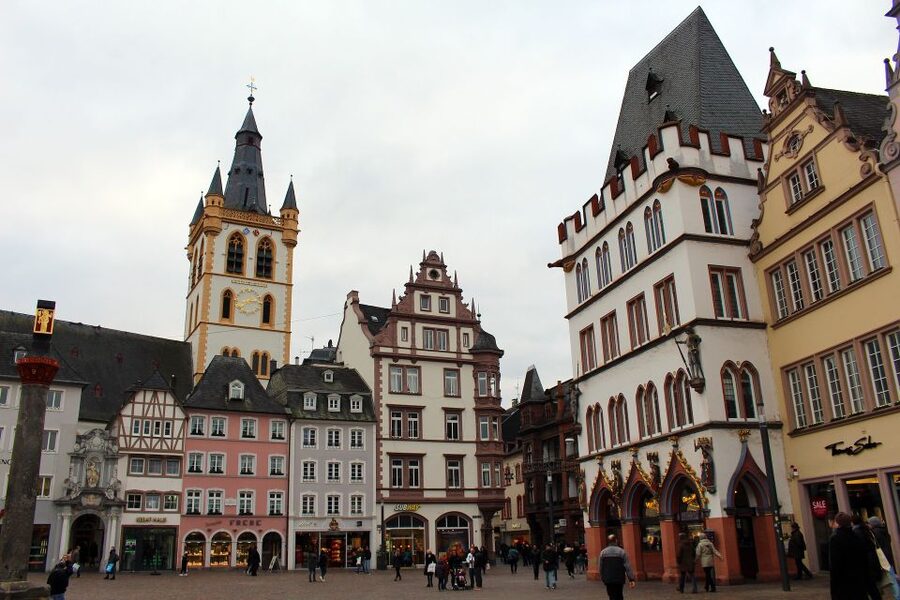
From there, the tour heads through the Market Cross on the main market. This part is quietly important. Market Cross is tied to Trier’s medieval trading hub, and when your guide explains it, the square stops being just a place with shops and cafes. It becomes a snapshot of how people actually lived, bought, negotiated, and survived year to year.
What I like about this section is that it gives you a realistic sense of daily life. Trier isn’t only museums and churches. You’re walking through an economic engine that helped keep the city going long after Rome changed.
Practical tip: this is a good moment to pause for a quick snack or coffee, because after the Roman and medieval stops, the churches and basilicas require a little extra attention.
St. Gangolf Kirche and the Kornmarkt fountain: faith, art, and civic space
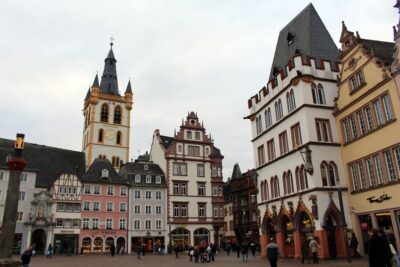
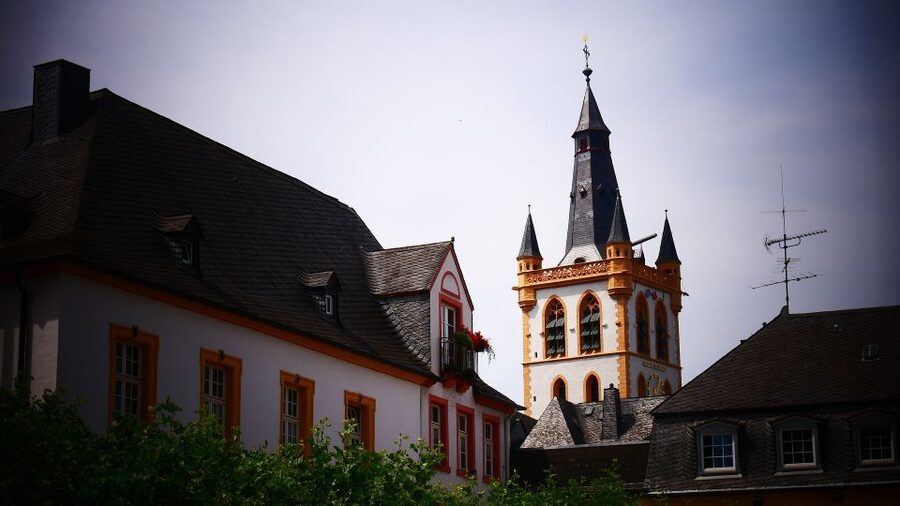
The tour moves into religious and civic landmarks, starting with St. Gangolf Kirche, dedicated to St. Gangulphus, and described as the second-oldest church in the city. When you hear that detail, it changes how you look at the building. You’re not just seeing architecture, you’re seeing continuity.
From there you’ll pass Saint George’s Fountain in the Kornmarkt, built between 1750 and 1751 by the same builder of the Electoral Palais. This matters because fountains were not only decorative. They were social and practical points in the city, places people gathered and stayed near.
If your past experience in European cities is that churches blur together, this is where the guide’s clarity can make a difference. The tour is set up so each stop has a specific hook, a reason you should care about it beyond appearance.
You also get a smoother transition from medieval civic life into major Christian sites. By the time St. Peter’s Cathedral appears, you’ll already understand the city has layers, not one tidy era.
Other walking routes through Trier

St. Peter’s Cathedral and Constantine’s Basilica: the oldest church and the preserved walls
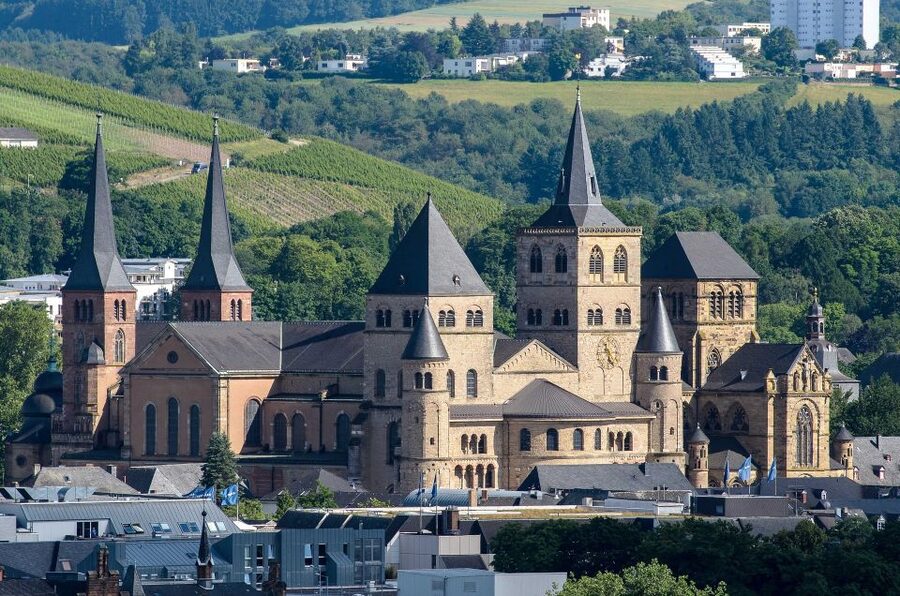
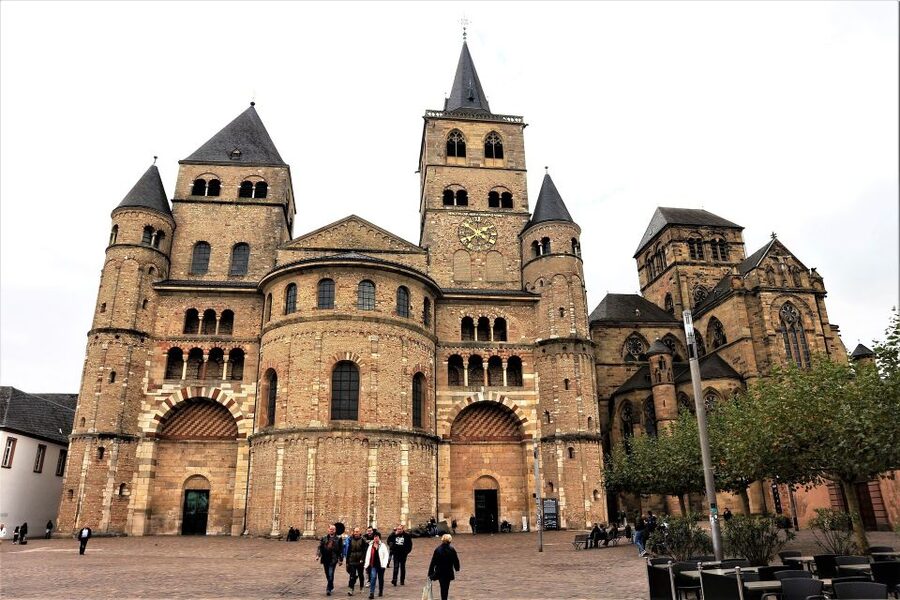
Now for the big, memorable segment. You’ll reach St. Peter’s Cathedral, which is said to be the oldest church in Germany and also the largest religious structure in Trier. The foundation dates to the early 4th century, built by Roman bricklayers. That Roman connection is not a minor footnote. It’s the spine of what you’re seeing.
As you move through this part, focus on what your guide emphasizes. The tour’s value is the linking of time periods: early Roman building techniques feeding into later Christian identity. That’s why this stop feels more meaningful than a single landmark photo.
After St. Peter’s, you’ll visit the Basilica of Constantine, built around 310 AD. The standout detail here is the preservation story. The inner walls have been kept intact without any changes even after the building repairs due to World War II. That is a rare kind of continuity, and it helps you picture how the space may have looked across centuries instead of only after modern restoration.
You’ll also see the Throne Room of Constantine the Great and subsequent Roman Emperors from the 4th century. Today it’s used as a Protestant church, which is another reminder that Trier’s sacred spaces shifted without losing their scale and core structure.
This section is probably where you’ll feel the “time travel” effect the tour is designed for. And based on what people highlight in the reviews, the guides’ kindness and easy-to-understand explanations make these complex timelines feel manageable instead of overwhelming.
Practical tip: if you’re sensitive to church acoustics or darker interiors, give yourself a moment to adjust before you start taking photos. You’ll get better results, and you’ll enjoy it more.
Archbishops, electors, and the Roman Bath complex: the city after the emperors
The tour continues to the 16th-century residence of the Archbishops and Electors of Trier. This is where the story broadens. Rome gave Trier a major starting point, but later rulers shaped what the city became politically and architecturally.
Then you end with the large Roman Bath complex, constructed in the 4th century AD. If Porta Nigra is the Roman “power statement,” the baths are the human one. This is where Roman life becomes more than conquest and administration. You get a sense of how the Romans organized leisure, daily routines, and urban living.
Ending on the bath complex also works emotionally. It’s a strong visual and an easy way to remember the tour as more than churches. You’ve seen fortifications, markets, imperial religious space, and then the everyday rhythm of Roman city life.
By the time you return to the meeting point, you’ll likely feel like Trier’s historical layers finally make sense as one connected story.
Price and group value: $441 per group up to 20, for a 3-hour narrative
Let’s talk value, because private tours can swing wildly in cost. This one is listed at $441 per group up to 20 people, and it lasts about three hours. That pricing can be a great fit if you’re traveling with friends or family and you want the same guide experience for everyone.
What you’re paying for here is not only “someone to walk with.” You’re paying for interpretation. A good guide turns Trier from a list of famous names into a coherent story, especially when you’re bouncing between Porta Nigra, multiple churches, and Roman sites like the Basilica of Constantine and the baths.
Entrance fees are not included. That’s the only real financial ambiguity to plan for. If you want to rely on included access only, you might end up paying add-ons separately. If you’re okay with that, the structure still feels efficient because you’re not wasting time deciding what to do each step of the way.
Who gets the best value:
- Groups who want a shared, guided overview without splitting up
- People who enjoy explanations and want to ask questions as they walk
- Travelers who want Roman Trier to make sense quickly
Who this tour suits best, and who should skip it
This private walk is a strong match if you want a guided storyline through Trier’s biggest landmarks in a tight time window. It’s also ideal if you prefer learning from a friendly guide who keeps explanations easy to follow, something reflected in the reviews about Nicholas and Andrea Tullius.
You might be less satisfied if you’re the type who wants long stays inside every church or museum. This is a three-hour walking tour, and the format moves from stop to stop. If you plan to spend extra time inside buildings after the tour, that’s fine, just know the visit rhythm is designed to cover highlights, not to linger for hours in one place.
If your goal is maximum depth at a slower pace, pair this with self-guided time afterward. But if you want the city to click quickly, this does that job.
Should you book this Trier private walking tour?
I’d book it if you want Trier’s Roman legacy to feel understandable, not overwhelming. The route hits the big emotional anchors: Porta Nigra, St. Peter’s Cathedral, and the Basilica of Constantine with its preserved inner walls and imperial throne room. You also get variety through Frankenturm, the Market Cross, St. Gangolf Kirche, and the Roman Bath complex, which keeps the walk from turning into one long church corridor.
I would not book it if you are mainly hunting for cheap, casual sightseeing with no guide. This is a paid, guided experience, and you’ll get the most value if you plan to use the guide’s explanations.
If your group is comfortable meeting near Porta Nigra at the Hotel Römischer Kaiser, and you’re ready for a focused three-hour history walk, this tour is a smart way to spend your time in Trier.
FAQ
How long is the Trier private walking tour?
The tour lasts about 3 hours.
Where do I meet my guide?
You meet your guide in front of Hotel Römischer Kaiser, close to Porta Nigra in Trier.
Where does the tour end?
The tour ends back at the meeting point.
Is this a private tour?
Yes. It’s a private group tour with an official guide.
What languages are available?
The live tour guide is available in English and German.
How many people are in a group?
The price is per group up to 20 people.
What is included in the price?
A private walking tour and an official guide are included.
Are entrance fees included?
No, entrance fees are not included.
Can I cancel for a refund?
Yes, free cancellation is offered up to 24 hours in advance for a full refund.
Is there a reserve and pay later option?
Yes, you can reserve now and pay later, meaning you can book without paying today.
Pavements of Trier
Trier, Koblenz and the Saarland
Everything else we filed on Trier
- Trier Private Walking Tour With A Professional Guide
★ 5.0 · 4 reviews - Trier: Private Walking Tour with a Local Guide
★ 5.0 · 5 reviews - Trier: Express City Walking Tour with Local Guide
★ 5.0 · 5 reviews - Trier – Private Guided Walking Tour
★ 4.5 · 6 reviews - Trier: early morning tour without the hustle and bustle and with less noise
★ 5.0 · 6 reviews - Trier Self Guided Sherlock Holmes Murder Mystery Game
★ 4.0 · 9 reviews
Trier Koblenz and the Saarland, side by side.
 ★ 4.4Koblenz: Rhine Valley Castles and Palaces Boat TourFrom $211,824 reviews
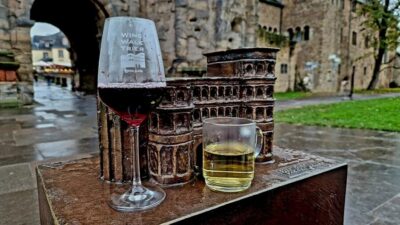 ★ 4.8Trier: Guided City Walk with Wine TastingFrom $43979 reviews
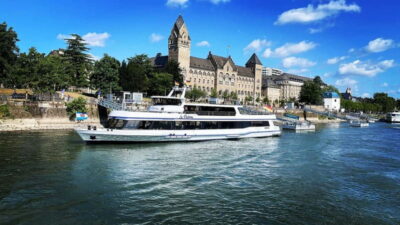 ★ 4.6Koblenz: 2-Hour Sightseeing Cruise on the RhineFrom $20839 reviews
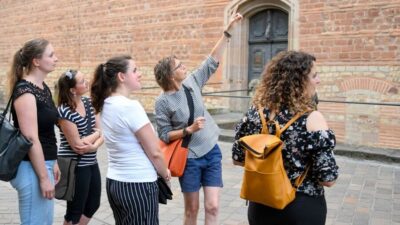 ★ 4.7Trier: Guided Old Town Highlights and History Walking TourFrom $16687 reviews
 ★ 4.5Koblenz: Old Town Sightseeing Cruise along the RhineFrom $16305 reviews
 ★ 4.4Koblenz: Panoramic Cruise on Moselle River to WinningenFrom $22283 reviews
 ★ 4.7Trier: Discovery Tour – Germany’s Oldest Wine CellarFrom $20218 reviews
 ★ 4.6Trier: City Walking TourFrom $17118 reviews
Other lists this tour is on