
REVIEW · WALKING TOURS
Walking Tour on Origins of Nazism in Munich – English
Nazism took root on Munich streets. This 2-hour walking route links real locations tied to the party’s rise with places honoring victims and resistance. You get a guided sense of how Adolf Hitler went to Munich on a mission, and how that moment grew into the Third Reich.
What I like most is the clear link between the buildings and the story, including stops tied to Nazi organizing and propaganda. I also like the balance of seeing memorials for victims and resistance rather than a one-sided look at power. The main drawback: it’s a heavy subject in a short time, so 2 hours can feel rushed if you want museum-style depth.
In This Review
- Key Highlights You Should Know
- A 2-Hour Walk That Reframes Munich’s Big Squares
- Start at Marienplatz, Finish at Königsplatz
- Stop 1: Platz der Opfer des Nationalsozialismus (Victims First)
- Stop 2: Staatliches Hofbräuhaus, Where the Nazi Base Formed
- Stop 3: Haus der Kunst, From Propaganda to Museum Space
- Stop 4: Hofgarten, One of Munich’s Major Parks
- Stop 5: Odeonsplatz, A Key Munich Square
- Stop 6: Königsplatz, Planning for the Third Reich
- Why This Route Works: Context With Consequences
- Price and Value: Paying for Guided Meaning
- Practical Tips for a 3:00 pm Walk
- Who Should Book This Tour
- Should You Book This Walking Tour on Origins of Nazism in Munich?
- FAQ
- How long is the Walking Tour on Origins of Nazism in Munich?
- Where does the tour start and end?
- What time does the tour begin?
- How much does it cost?
- Is admission included?
- What do I need to bring for the ticket?
- What group size should I expect?
- Is lunch included?
- FAQ
- Can I cancel for a full refund?
- Is the tour in English?
- Is the meeting point near public transportation?
- Is everyone able to participate?
Key Highlights You Should Know
- Small-group pace (max 35) keeps the walk moving, without feeling like you’re stuck in a crowd.
- Real Munich locations connect the rise of the Nazi movement to the city you can still see today.
- Memorial stops help you hold the human cost in view, not just the political drama.
- Two parts of the “system” show up in one loop: meeting spaces for Nazi power, and public-facing propaganda locations.
- Admission included at several stops, so you spend more time looking and less time buying add-ons.
Other walking routes through Munich
- Munich: Third Reich & WWII Walking Tour★ 4.6 · 6,181 reviews
- Third Reich Walking Tour Munich★ 4.5 · 4,291 reviews
- Munich: Old Town & Viktualienmarkt City Walk in German★ 4.7 · 2,304 reviews
- Munich: Night Watchman Walking Tour★ 4.7 · 2,092 reviews
A 2-Hour Walk That Reframes Munich’s Big Squares
This is a focused, 2-hour route through central Munich, designed for people who want context without needing a full day of museums. The pace is practical, and the guide keeps the story moving from one site to the next, so you’re not wandering with only a map and a vague timeline.
You’ll be walking between major landmarks and squares, so it works well if you like “city reading,” where streets and architecture help you understand events. And because the tour includes both the rise of the Nazi party and monuments to resistance and victims, the tone stays grounded in consequences, not just controversy.
One more point I appreciate: the tour uses a mobile ticket, which makes it easy to manage on the day, especially if you’re pairing this with other afternoon plans.
Start at Marienplatz, Finish at Königsplatz
The meeting point is at Mariensäule, Marienplatz 22, 80331 München, and the tour ends at Königsplatz 1, 80333 München. Start time is 3:00 pm, which is a nice sweet spot. You can still sleep in a bit, grab an early lunch on your own, then get a strong narrative walk in the afternoon.
This route also makes logistics easier. It’s described as near public transportation, so if you’re staying close to the center, you can hop on and off without stress. Ending at Königsplatz is handy too, since it’s right in the area with other sightseeing options.
Duration is listed as about 2 hours, and the stop times are kept short. That’s a feature, not a flaw, if you want a high-level route you can build on later.
Stop 1: Platz der Opfer des Nationalsozialismus (Victims First)
You begin at Platz der Opfer des Nationalsozialismus, the Square of the Victims of National Socialism. The stop is free and short, around 15 minutes, but it sets the emotional frame for the rest of the walk.
I like this order because it changes what you’re doing as you move forward. Instead of starting with political theater, you start with the fact that the Nazis caused enormous suffering. It primes you to notice the contrast when later stops point to how the movement gained influence.
Expect a respectful pause that’s more about meaning than sightseeing photos. If you’re prone to treating dark history like a “theme,” this stop helps you slow down and keep it human.
Stop 2: Staatliches Hofbräuhaus, Where the Nazi Base Formed
Next you head to Staatliches Hofbräuhaus, described as the mother of all breweries and specifically tied to where the Nazi party established its base. This stop runs about 15 minutes, and admission is included.
This is the kind of place where your brain wants to see beer and chatter, because that’s what historic beer halls often look like today. But here, the guide connects the venue to organizing and power building. That contrast can be uncomfortable, but it’s also one of the most important lessons of the tour: political movements don’t only live in parliament rooms. They also live in ordinary social spaces.
What’s valuable is that the story is anchored in a real setting you can still walk into and recognize. You’re not learning abstract ideas. You’re learning how people gathered, talked, and converted attention into momentum.

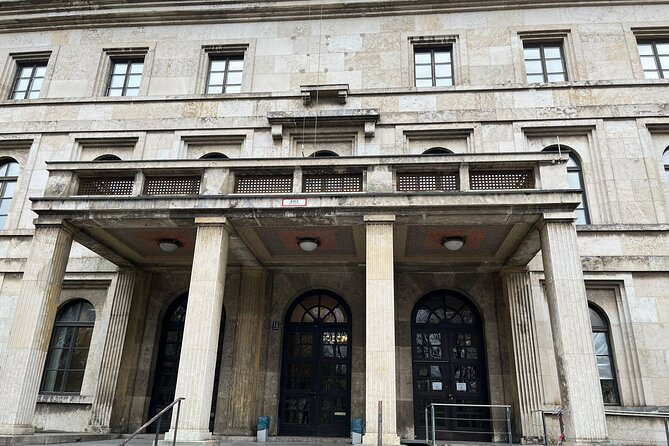
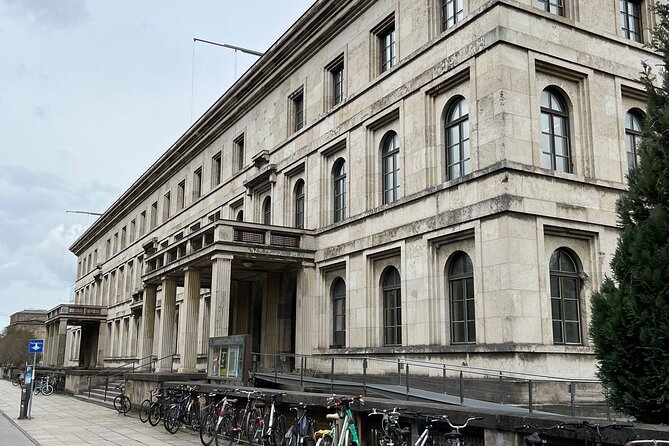
Stop 3: Haus der Kunst, From Propaganda to Museum Space
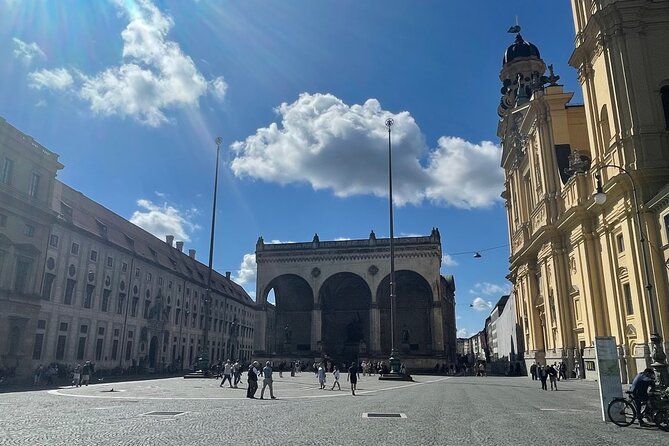
Then it’s Haus der Kunst, a current museum and also described as the first propaganda building of the Third Reich. This is another 15 minutes stop, with admission included.
I find this stop especially useful because it forces you to think about how architecture can serve power. The building itself becomes a teaching tool. Even without going deep into a lecture, you can look at a space and understand why propaganda needs scale and confidence.
Here’s a practical tip: spend a minute letting your guide finish the point, then do your own quick scan of the area. Don’t rush. Propaganda buildings often aim for a specific feeling, like authority and permanence. Noticing that tone helps the rest of the story land.
If you’re the type who likes photo-heavy tours, this one may feel more “thought-driven” than “Instagram-first.” That’s a good fit for the tour’s purpose.
Stop 4: Hofgarten, One of Munich’s Major Parks
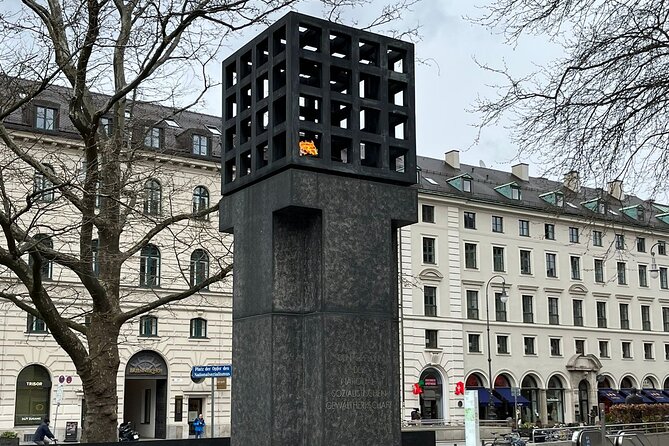
Stop four is Hofgarten, described as one of the most important parks in Munich. The stop is about 20 minutes, with admission included.
On a tour like this, a park might sound like a break, but it’s more than downtime. Parks and gardens matter for how public life works, where crowds move, and how cities project an image. The guide uses the space to help you connect power to everyday urban form, not only to buildings with obvious history.
I like that the pacing changes here. It gives your brain a moment to breathe after the heavier propaganda-focused stops. You can also take a short pause, check your footing, and reset before you hit more of the big squares.
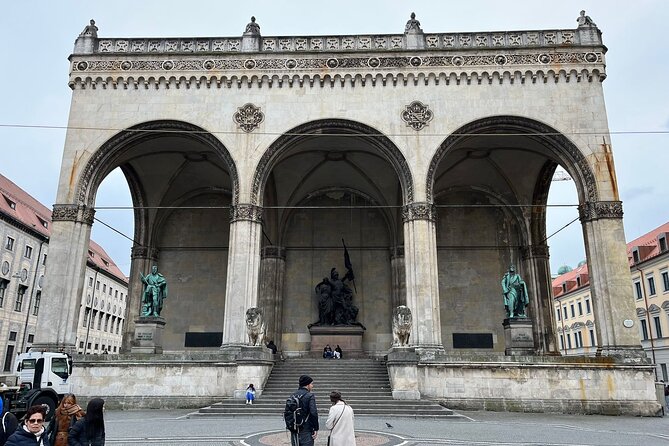
Stop 5: Odeonsplatz, A Key Munich Square
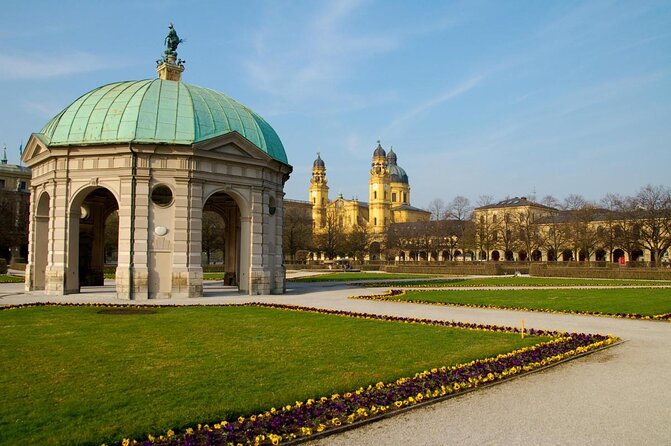
Next is Odeonsplatz, described as one of Munich’s most important squares, with a 15-minute free stop.
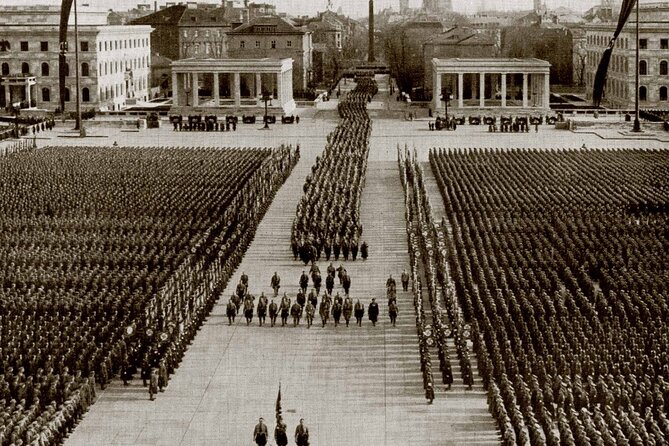
Squares can feel like stages, and that’s exactly why they’re useful on this kind of history walk. This stop helps you read the city’s layout as a tool for visibility and public messaging. Even if you don’t know every architectural detail, you can get a feel for how a square supports speeches, processions, and crowd movement.
This is also where you’ll likely start noticing how often power connects to open space. The guide’s job is to translate that into the Nazi era story, so you’re not just admiring architecture, you’re understanding function.
Stop 6: Königsplatz, Planning for the Third Reich
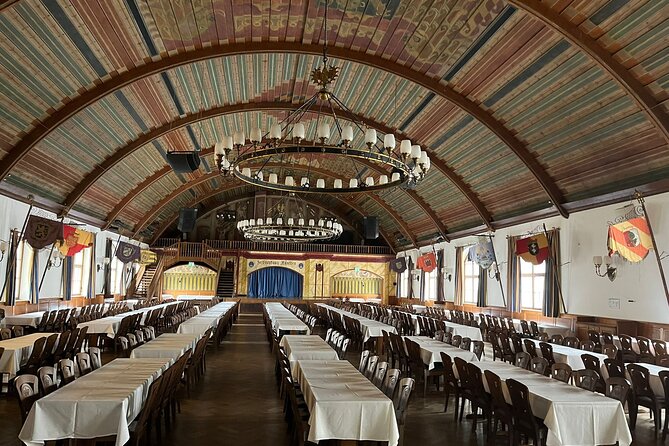
You end at Königsplatz, described as one of the main squares that formed the backbone of the new city designed by the Third Reich. This is another 15-minute free stop.
This last stop is where the tour’s “systems” idea becomes clear. The Nazi movement wasn’t only about meetings and propaganda buildings. It also aimed to shape public space and the visual language of authority. Königsplatz is presented as part of that planning, not just a pretty plaza at the end of a walk.
Ending here at the finish point (Königsplatz address is listed) is also smart for you. You can continue sightseeing in the area right away, instead of having to backtrack after the story closes.
If you remember one thing from this stop, make it this: street-level design and layout can serve ideology, not just convenience.
Why This Route Works: Context With Consequences
This tour is built around the origin story of the Nazi movement in Munich. You start with Hitler being sent to Munich to spy on the German Workers’ Party. From there, the narrative connects that early moment to major turning points, including a coup attempt and episodes like the burning of Goebbels’ books and the night of broken glass.
That list is not just a history highlight reel. In a short walking tour, it’s the guide’s way of showing how fast things escalated once the movement gained traction. The locations give you places to attach those episodes to, so your understanding doesn’t stay in your head as dates only.
Just as important, the tour doesn’t stop at the rise of power. It includes monuments dedicated to the resistance and to victims of the war. That matters for you if you want a fuller picture. Nazism is not only a political success story or a scandal. It’s a system with real victims, and the city itself holds reminders of that.
A practical downside to note again: with about 2 hours total and only 15 to 20 minutes at each stop, it won’t feel like deep academic study. It’s designed to be a strong first pass that you can extend later with museums, books, or longer time at specific sites.
Price and Value: Paying for Guided Meaning
The price is $20.16 per person, and it includes an expert guide. Several key stops also have admission included, while others are free. So you’re not paying only for narration. You’re also paying for access at certain points and for the guided interpretation that makes the stops connect.
Is it a bargain? For Munich, yes, because you’re getting a structured route through multiple central landmarks in one go, and the guide keeps the story tied to what you can actually see. If you tried to do this on your own, you could certainly find sites and read about them, but you’d likely lose the “why this place matters” thread that the guide is providing.
When value is this high, the main thing you have to bring is attention. This is not a casual stroll where you can half-listen and still get something meaningful. If you show up ready to follow the narrative, you’ll leave with a much clearer understanding than you’d get from a simple landmark walk.
Practical Tips for a 3:00 pm Walk
A few things make this tour easier and more comfortable.
First, wear good walking shoes. You’re covering multiple central stops, and Munich afternoons can vary with weather. Plan for pavement and a steady pace.
Second, arrive a few minutes early at Mariensäule. It’s a straightforward meeting point in the city center, but being early keeps you from rushing into the start while your brain is still in “check email” mode.
Third, take notes lightly. You do not need a notebook full of facts. Just jot down names or the big turning points the guide mentions, like the coup attempt and the episodes referenced above. Later, those notes help you connect other parts of Munich you may visit the same day.
Finally, give yourself room afterward for follow-up. Because the route is short, it’s smart to plan at least one extra activity that supports it. If you want museum time, schedule it after you finish, not before.
Who Should Book This Tour
This walking tour is best for you if:
- You want a short, guided route focused on origins and escalation of Nazism in Munich.
- You prefer learning through on-the-ground locations, not only indoor lectures.
- You want your history to include memorials for victims and resistance, not just the rise of the regime.
- You’re able to handle a serious topic in a compact format.
It might feel like the wrong fit if you’re looking for a relaxed city walk with lots of free time at each stop. The stops are intentionally brief, so you need to like moving and listening.
Should You Book This Walking Tour on Origins of Nazism in Munich?
I’d book it if you want a structured, English-guided way to understand how Munich fits into the early Nazi story, and you value the tour’s choice to include reminders of victims and resistance. The $20.16 price is strong for what you get: a guided route through major sites, with admission included at several stops.
Skip it only if you know you need deep museum-level detail to feel satisfied. In that case, use this as a warm-up and plan extra time elsewhere, because the tour is built to be a first narrative pass, not the final word.
FAQ
How long is the Walking Tour on Origins of Nazism in Munich?
It runs for about 2 hours.
Where does the tour start and end?
It starts at Mariensäule, Marienplatz 22, 80331 München and ends at Königsplatz 1, 80333 München.
What time does the tour begin?
The start time is 3:00 pm.
How much does it cost?
The price is $20.16 per person.
Is admission included?
Admission is included for some stops, while others are free. The tour details admission included for Staatliches Hofbräuhaus, Haus der Kunst, and Hofgarten, and lists free entry for Platz der Opfer des Nationalsozialismus, Odeonsplatz, and Konigsplatz.
What do I need to bring for the ticket?
You’ll use a mobile ticket.
What group size should I expect?
The tour has a maximum of 35 travelers.
Is lunch included?
No, lunch is not included.
FAQ
Can I cancel for a full refund?
Yes. You can cancel up to 24 hours in advance for a full refund.
Is the tour in English?
Yes, the tour is listed as Walking Tour on Origins of Nazism in Munich – English.
Is the meeting point near public transportation?
Yes, the tour is described as near public transportation.
Is everyone able to participate?
Most travelers can participate, since participation is broadly available.
Pavements of Munich
Everything else we filed on Munich
- Munich Beer and Bavarian Bites Private Tour
★ 5.0 · 11 reviews - Private Day Trip from Munich to Neuschwanstein and Linderhof
★ 4.0 · 11 reviews - Private Munich Old Town Walking Tour – with optional Breakfast
★ 5.0 · 11 reviews - Festive Concert in the All-Saints Court Church
★ 4.6 · 11 reviews - Private Castle Tour from Munich: Neuschwanstein, Hohenschwangau, and Linderhof
★ 4.5 · 12 reviews - Munich: Oktoberfest Big Beer Tent Evening including table reservation
★ 4.8 · 12 reviews
Walking Tours, side by side.
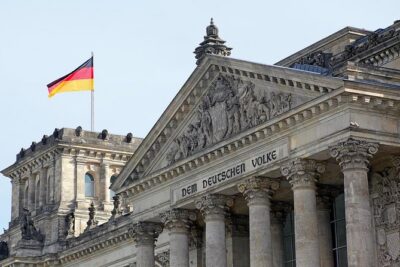 ★ 5.0Discover Berlin Half-Day Walking TourFrom $249,624 reviews
 ★ 4.9Berlin: Third Reich and Cold War 2 Hour Walking TourFrom $236,830 reviews
 ★ 4.6Munich: Third Reich & WWII Walking TourFrom $316,181 reviews
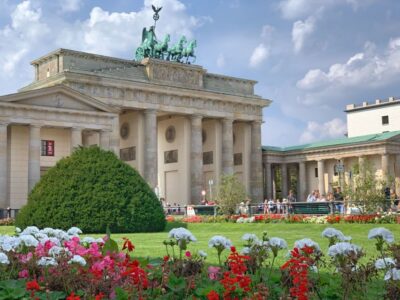 ★ 4.9Berlin: Discover Berlin Walking TourFrom $235,998 reviews
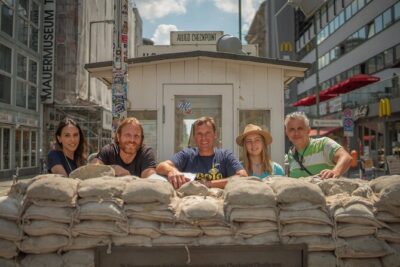 ★ 5.0Berlin’s Best: 2 Hour Walking Tour Third Reich and the Cold WarFrom $245,486 reviews
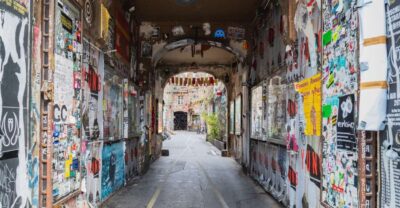 ★ 4.8Berlin: Hidden Backyards Guided Walking TourFrom $235,360 reviews
 ★ 4.5Third Reich Walking Tour MunichFrom $454,291 reviews
 ★ 5.0Third Reich Berlin: Hitler and WWII Walking TourFrom $243,301 reviews