
REVIEW · WALKING TOURS
Walking Tour on Resistance to Nazism in Munich
Resistance has addresses in Munich.
I love how this walk turns big Nazi-era headlines into specific stories you can see on the street. I also like that the tour includes free admission at every stop, so your $19.49 mostly pays for the guidance, not extra ticket fees. One drawback: the topic is emotionally heavy, so come ready to listen, not just sightsee.
The route is paced for a 2.5-hour afternoon, with a small group size of up to 25. You’ll cover politics, the military, culture, and faith, ending at Georg-Elser-Platz, which makes it easy to keep exploring after the tour.
In This Review
- Key Points to Know Before You Go
- A 2.5-Hour Walk From Odeonsplatz to Georg-Elser-Platz
- Price and Value: $19.49 With Free Entry at Every Stop
- Sensitive Subject, Strong Stories: What This Tour Really Does
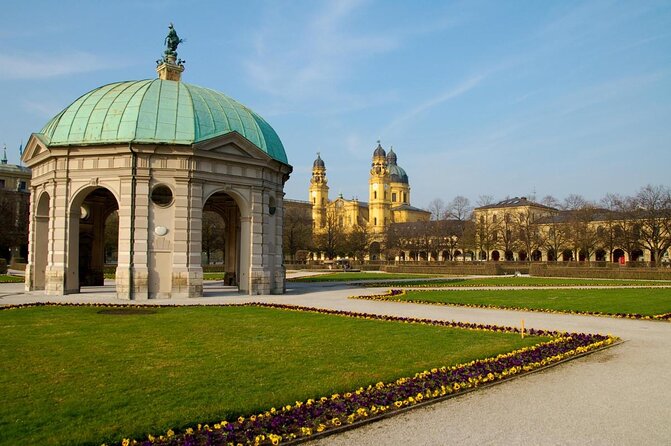
- Hofgarten: Royal Life During the Nazi Period
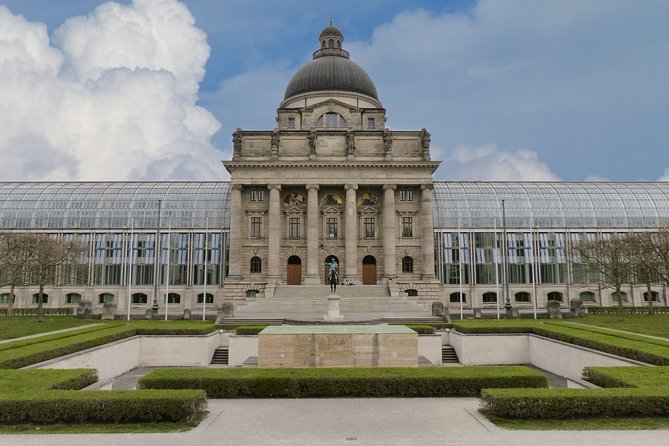
- Bayerische Staatskanzlei and the Sopade: Political Resistance
- Prinzregentenstraße and the Luftwaffe Command Center
- Bavarian National Museum and the Valkyrie Operation
- Haus der Kunst: Degenerate Art and Press Propaganda
- Ludwigskirche: Church, Nazism, and Law T4
- Denkstätte Weiße Rose: Munich’s Most Known Resistance Group
- Türkenstraße and the Georg Elser Memorial
- What Makes the Guides Work: Laura, Maca, Javier, Jaime, and Julieta
- Who Should Book This Tour (and Who Might Not Love It)
- Should You Book This Resistance to Nazism Walking Tour?
- FAQ
- How long is the walking tour?
- Where does the tour start and end?
- What time does it run?
- How much does it cost?
- Is there a mobile ticket?
- Is admission required at the stops?
- What group size can I expect?
- Can I bring a service animal?
- What if I need to cancel?
Key Points to Know Before You Go
- Small groups (up to 25) and a focused 2.5-hour format, so questions feel welcome
- Mobile ticket only, handy if you travel light
- Free admission at each major stop, from Hofgarten to the Georg Elser Memorial
- A resistance-first angle, including the Sopade, Valkyrie Operation, Degenerate Art, Law T4, Weiße Rose, and Georg Elser
- Guides with clear, friendly delivery, with strong praise for staff such as Laura, Maca, Javier, Jaime, and Julieta
Other walking routes through Munich
- Munich: Third Reich & WWII Walking Tour★ 4.6 · 6,181 reviews
- Third Reich Walking Tour Munich★ 4.5 · 4,291 reviews
- Munich: Old Town & Viktualienmarkt City Walk in German★ 4.7 · 2,304 reviews
- Munich: Night Watchman Walking Tour★ 4.7 · 2,092 reviews
A 2.5-Hour Walk From Odeonsplatz to Georg-Elser-Platz
This is an afternoon walking tour that starts at 3:00 pm at Odeonsplatz and ends at Georg-Elser-Platz in the Munich-Maxvorstadt area. It runs about 2 hours 30 minutes, which is long enough to connect the dots without turning into a marathon.
Expect easy logistics for meeting up: it’s near public transportation, so you won’t need a complicated plan just to arrive. Also, the group limit is 25 people, meaning you can usually stay close enough to hear the guide and not get swallowed by a crowd.
One practical note: because it covers multiple sites in sequence, good walking shoes matter. You’ll be spending the time outdoors, moving between buildings and memorials where details are part of the lesson.
Price and Value: $19.49 With Free Entry at Every Stop
The price is $19.49 per person, and that’s where the value really shows. Every listed stop includes admission ticket free, so you are not stacking extra costs as you go.
In other words, you pay for the interpretation and the route. That matters for this kind of tour because a lot of what you’ll take away is how events link to place. Buildings, courtyards, and memorial spaces become a kind of timeline, and a guide helps you read it.
It also helps that the tour is typically planned well ahead (on average, bookings happen around 141 days in advance). If you want a specific date, don’t leave it to the last week.
Sensitive Subject, Strong Stories: What This Tour Really Does
This walk is built around one simple idea: everyday life in Munich changed when the Nazi regime took power, and resistance happened in more ways than most people expect. You’re not just learning about villains and victims. You’re tracing people who resisted in the political sphere, in institutions, in culture, and even in faith.
That focus makes the tour feel different from the usual “how bad it was” approach. It becomes about choices: who stayed silent, who complied, and who pushed back when the cost was real. You’ll see how resistance could show up as organized political action, internal opposition, censorship battles, moral refusal, and high-risk attempts aimed at the Führer.
Because the topic is serious, you should plan for a slower mental pace. This is not a quick photo-op loop. It’s more like a guided lesson where the streets give context.
Hofgarten: Royal Life During the Nazi Period
You start at Hofgarten, where you’ll talk about how the royal family lived during the Nazi period and what the surrounding political situation looked like. This stop is interesting because it complicates the story. It nudges you to ask hard questions like: how do power and everyday living coexist when a dictatorship takes hold?
The value here is in contrast. You’re not only learning about resistance groups. You’re also learning how the system shaped behavior around traditional status and visibility. A guide can make this make sense quickly, especially if you’ve only seen the Nazi era in textbooks.
At this stop, you’ll spend about 20 minutes. Since it’s a lighter slice of the overall route, it also works as a mental warm-up: get oriented, then let the later stops hit harder.



Bayerische Staatskanzlei and the Sopade: Political Resistance
Next is Bayerische Staatskanzlei, the kind of building you associate with government. Here, the story shifts toward politics: how political parties resisted the Nazi regime and what the Sopade represents in that picture.
This is one of the most useful stops for first-time visitors because it shows resistance as more than underground posters and secret meetings. When you learn how resistance could be tied to political structures, it helps you understand how dictatorships try to control legitimate opposition.
You’ll have about 20 minutes, and since it’s an official setting, expect the conversation to stay grounded in the mechanics of power. Admission is listed as free, so again, your cost stays focused on the tour itself.
Prinzregentenstraße and the Luftwaffe Command Center
At Prinzregentenstraße, you’ll discuss the building of the former Luftwaffe Command Center and resistance that existed within the militia itself. This stop is a gut-check. Resistance in a dictatorship is not always external. Sometimes it lives inside systems the regime depends on.
The guide’s job here is crucial. A place like a command center can feel abstract unless you’re helped to connect it to real human choices. When it clicks, you realize resistance also had to fight against pressure from people who shared the same uniform or chain of command.
You’re at this location for about 20 minutes, with admission also noted as free. It’s a good time to slow down and take in the environment around the site, since the setting makes the idea more believable.
Bavarian National Museum and the Valkyrie Operation
The tour then moves to the Bavarian National Museum, where you’ll learn what happened in the Valkyrie Operation. The name alone signals something big and famous, but the tour perspective keeps it human. You’re not just memorizing a plan. You’re learning what it meant for the people connected to it and why it matters in the resistance story.
A museum stop also changes the pace slightly. Even if you’re mainly walking through the area and hearing the guide’s explanation, a museum environment tends to make details easier to absorb. It helps you shift from “street-level context” to “story-level understanding.”
Plan on about 20 minutes here. If you like history explained with clear cause-and-effect, this is the kind of stop you’ll appreciate.
Haus der Kunst: Degenerate Art and Press Propaganda
At Haus der Kunst, the conversation turns toward culture and control. You’ll hear how Nazism tried to censor art, including the exhibition of Degenerate Art. You’ll also discuss how the regime managed the press through a propaganda apparatus.
This is one of those stops where you start seeing how control isn’t only about arrests and speeches. It’s about what people are allowed to see, read, and feel. When art and media get restricted, the entire public conversation gets squeezed.
About 20 minutes at this stop gives you enough time to understand the theme without turning it into a long academic lecture. If you’re a traveler who likes how history shows up in daily life, this stop delivers.
Ludwigskirche: Church, Nazism, and Law T4
Then you’ll visit Ludwigskirche. Here the tour explains the relationship between the Church and Nazism, Law T4, and how religious resistance pushed back against the regime.
This stop can be intense, mostly because it ties ideology to real human harm. The guide’s tone and clarity really matter in settings like this, and that’s where the tour’s strong reputation helps. You’re not just learning terms. You’re learning the moral conflict and how people responded when forced to choose between obedience and conscience.
You’ll spend about 20 minutes, and admission is also listed as free. Come with respect. This is a place where quiet attention fits the moment.
Denkstätte Weiße Rose: Munich’s Most Known Resistance Group
Next is DenkStatte Weisse Rose, one of Munich’s best-known resistance groups, the Weiße Rose. This stop feels different because it’s explicitly memorial-focused. The resistance story becomes not just a tale of what happened, but a message Munich keeps alive.
In practical terms, this is a great moment to collect yourself. After earlier stops covering institutions, war, and propaganda, this one narrows in on a specific group and the moral clarity often associated with it.
Expect about 20 minutes here. If you like tours that don’t just list events but also connect emotion to meaning, you’ll feel the shift.
Türkenstraße and the Georg Elser Memorial
The final stop is at Türkenstraße, where you’ll visit the Georg Elser Memorial and learn about the attentiveness against the life of the Führer himself. This is the point where the tour’s resistance theme becomes sharply personal and high stakes.
Elser’s story, as framed here, is about the regime facing threats close to its center. It’s also about how vigilance and fear work in dictatorships. When you hear this explained alongside earlier stops on resistance, it pulls the whole route together.
You’ll spend about 20 minutes at this location. From there, your tour ends at Georg-Elser-Platz, so you can continue exploring with a clear “last stop” anchor.
What Makes the Guides Work: Laura, Maca, Javier, Jaime, and Julieta
The standout strength of this tour is how the guide delivers the story. Names that repeatedly come up include Laura (including a guide described as having long hair), Maca, Javier, Jaime, and Julieta. Across them, the common thread is a friendly approach and explanations that are easy to follow without losing detail.
People specifically praise how guides answer questions and how they can make heavy material understandable without sounding robotic. One guide is praised for explaining from the heart and for being detailed. Another is praised for liking history and making the tour feel interesting and pleasant.
If you want a tour where you can ask follow-up questions and actually get them answered, this is the kind that tends to deliver.
Who Should Book This Tour (and Who Might Not Love It)
This tour is a strong fit if you want a resistance-first look at Nazi-era Munich. It’s also ideal if you like walking tours that connect buildings to stories, not just plaques and dates.
You’ll likely enjoy it if you appreciate balance: politics and institutions, culture and censorship, and moral resistance through faith are all covered. It’s built to show that resistance happened in multiple lanes, not just one.
You might want to skip it if you prefer lighter sightseeing or if you know you want an upbeat tone during your Munich day. The content is serious and designed to make you think, so plan accordingly.
Should You Book This Resistance to Nazism Walking Tour?
Yes, if you want an efficient 2.5-hour walk that uses Munich’s real addresses to explain how resistance worked and why it mattered. The big value is the blend of free admission at every stop plus a guide who makes complex, heavy topics understandable.
Book it if you like guided storylines, small groups, and tours where you can ask questions. If the subject matter feels like a lot, treat it like a focused museum experience, not casual strolling.
If you want, tell me your travel dates and what kind of history you usually enjoy in Munich, and I’ll suggest how to pair this with a morning or evening plan.
FAQ
How long is the walking tour?
It lasts about 2 hours 30 minutes.
Where does the tour start and end?
It starts at Odeonsplatz (Odeonspl., 80333 München) and ends at Georg-Elser-Platz (80799 München-Maxvorstadt).
What time does it run?
The start time is 3:00 pm.
How much does it cost?
It costs $19.49 per person.
Is there a mobile ticket?
Yes, the tour uses a mobile ticket.
Is admission required at the stops?
The listed stops are marked as admission ticket free.
What group size can I expect?
The tour has a maximum of 25 travelers.
Can I bring a service animal?
Yes, service animals are allowed.
What if I need to cancel?
You can cancel for a full refund up to 24 hours in advance. If it’s canceled because the minimum number of travelers is not met, you’ll be offered a different date or a full refund.
Pavements of Munich
Everything else we filed on Munich
- Paul’s Private Tour Munich Highlights
★ 5.0 · 3 reviews - Private Linderhof Castle, Entry-Ticket – optional Toboggan Run
★ 5.0 · 3 reviews - Paul’s Private Tour in the Alte Pinakothek Munich
★ 5.0 · 3 reviews - Private Tour at Neuschwanstein And Linderhof Palaces From Munich
★ 4.5 · 3 reviews - Private Highlights of Munich Bike Tour with Beer Garden Stop
★ 5.0 · 3 reviews - Munich WWII and Dachau Concentration Camp Private Tour with Licensed Guide
★ 5.0 · 3 reviews
Walking Tours, side by side.
 ★ 5.0Discover Berlin Half-Day Walking TourFrom $249,624 reviews
 ★ 4.9Berlin: Third Reich and Cold War 2 Hour Walking TourFrom $236,830 reviews
 ★ 4.6Munich: Third Reich & WWII Walking TourFrom $316,181 reviews
 ★ 4.9Berlin: Discover Berlin Walking TourFrom $235,998 reviews
 ★ 5.0Berlin’s Best: 2 Hour Walking Tour Third Reich and the Cold WarFrom $245,486 reviews
 ★ 4.8Berlin: Hidden Backyards Guided Walking TourFrom $235,360 reviews
 ★ 4.5Third Reich Walking Tour MunichFrom $454,291 reviews
 ★ 5.0Third Reich Berlin: Hitler and WWII Walking TourFrom $243,301 reviews