
REVIEW · HISTORICAL TOURS
Where It All Began: Berlin’s Queer & Trans History Tour
Berlin remembers, and you walk its trail.
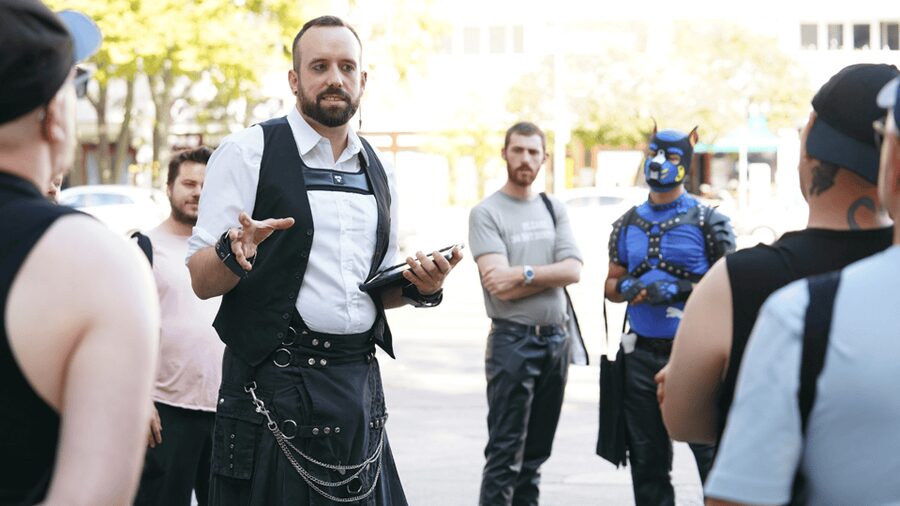
This 3-hour queer and trans history tour pulls in 150+ years of resistance, identity, and nightlife with 200+ archival photos, videos, and rare audio clips. I love the way it uses multimedia to make big history feel personal. One consideration: the tour covers sensitive topics, with parts that can be emotionally heavy and some areas with high sensory input.
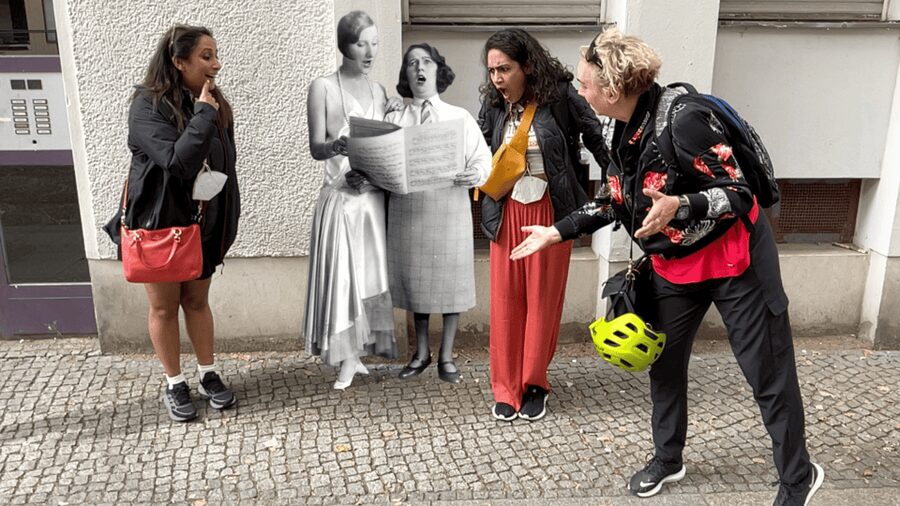
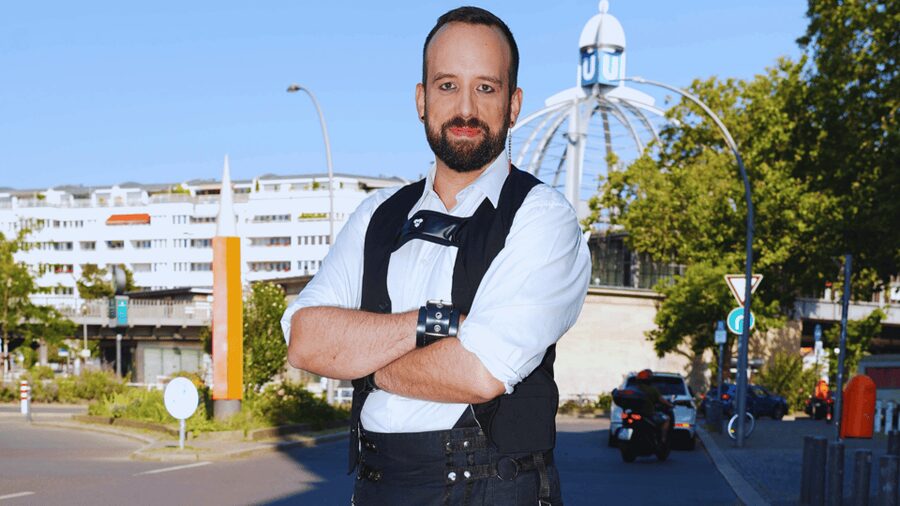
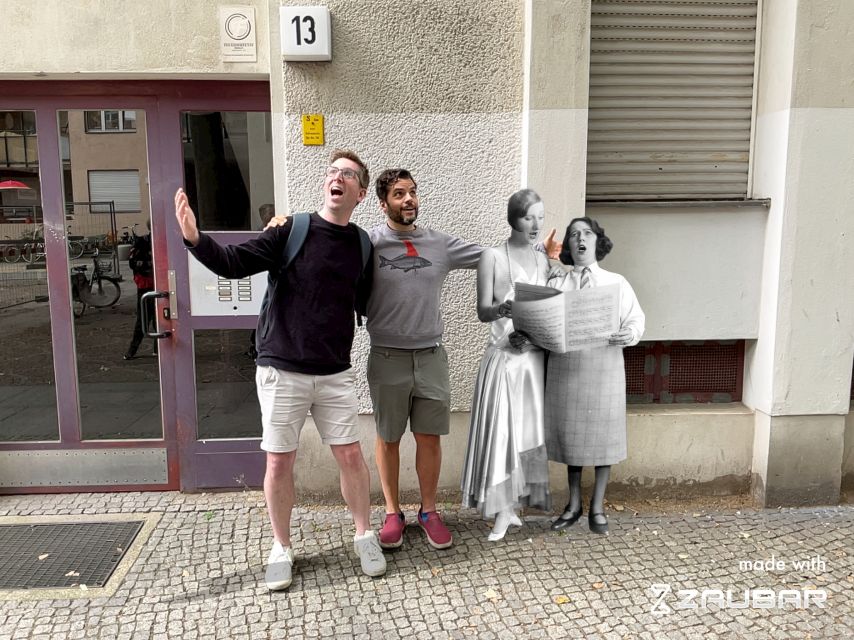
The guide, Jeff, is a queer activist, social scientist, and certified sex educator, and you feel that care in how the tour is built. You move through the Nollendorfplatz area with short stops, built-in quizzes, and AR fun through Mixies, which are personalized augmented reality selfies with historic figures. If you want Berlin history without boring lectures, this is the kind of tour that keeps your attention.
For $81, you are not just paying for a walk, you are paying for a tightly planned show of archival material, interactive elements, and insider nightlife context, all in a small group capped at 10. It is wheelchair accessible, but some paths may be bumpy, so plan accordingly. Also, it runs in English, and videos include subtitles in German, English, or both.
In This Review
- Key points worth your time
- Where the tour starts, and why this area fits the story
- Meet Jeff, the guide who blends activism and sex education
- The 3-hour storyline: how 150 years fits without feeling rushed
- Stop-by-stop feeling: from Ulrichs streets to Metropol
- From early rights activism to the first trans identities
- 1920s lesbian community, cabarets, and feminist resistance
- Nazis, contradictory policy, and the queer survival story
- AIDS crisis activism, SchwuZ, and the meaning of the Berlin Wall nickname
- Berlin’s influence on global nightlife and Pride, from Chez Romy Haag to Berghain
- How the multimedia and AR parts work, without turning it into a gimmick
- Practical tips for your comfort, focus, and expectations
- Price and value: why $81 can make sense for this kind of tour
- Should you book this Berlin queer and trans history tour?
- FAQ
- How long is the Where It All Began Berlin’s Queer and Trans History Tour?
- How much does the tour cost?
- Where do we meet for the tour?
- Is the tour in English?
- Is the tour wheelchair accessible?
- What is included in the tour?
- Is the tour suitable for children?
Key points worth your time
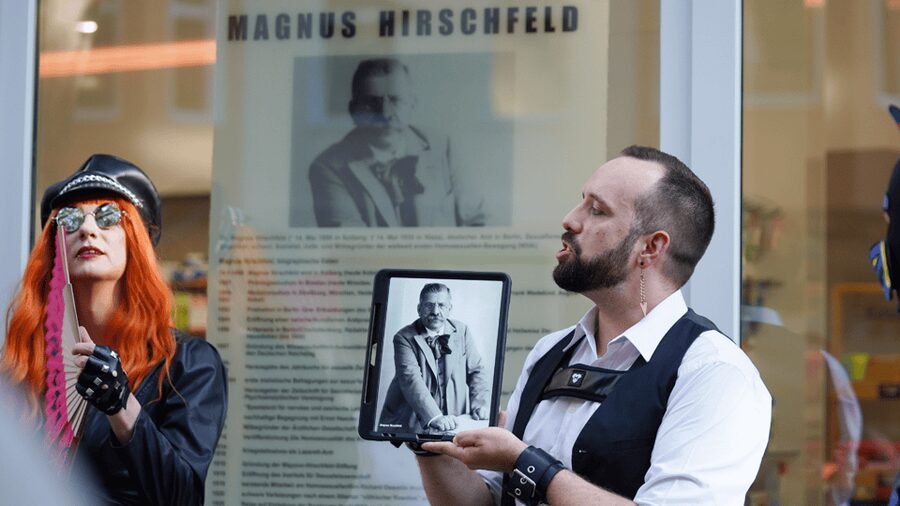
- 150+ years, starting with Ulrichs and Hirschfeld: you trace the modern LGBTQIA+ rights movement from early pioneers onward.
- The world’s first trans identities on the timeline: you learn about early gender-affirming surgeries and trans people living with “transvestite certificates.”
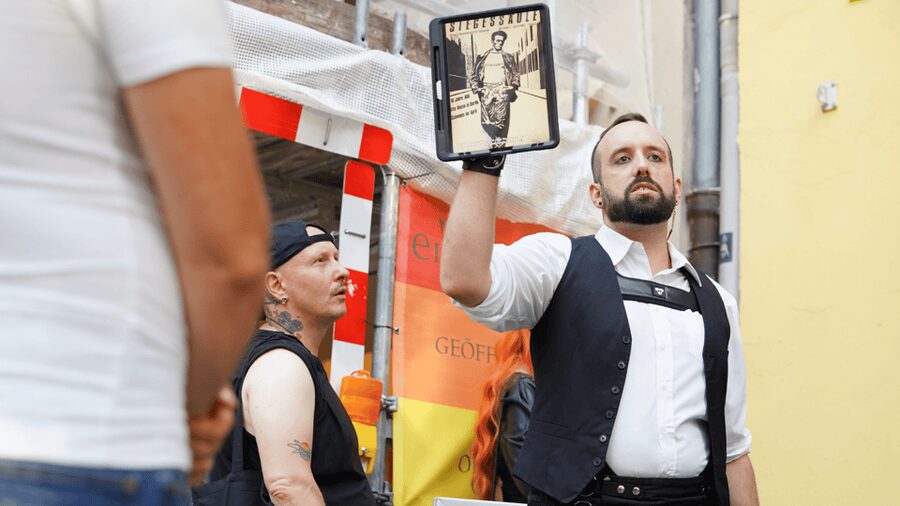
- 200+ archival photos, videos, and rare audio clips: multimedia stops keep you anchored in real sources, not vague storytelling.
- AR Mixies selfies and AR scenes: you take personalized AR photos with historic queer activists and test knowledge with quizzes.
- From 1920s lesbian life to Nazi persecution to AIDS activism: the arc includes lesbian cabarets, Nazi repression, SchwuZ, and even the Berlin Wall being nicknamed the condom of the GDR.
- Small group with Jeff’s inclusive style: reviews describe Jeff as welcoming, funny at the right moments, and responsive to the group.
More history walks in Berlin
- Berlin: Natural History Museum Entrance Ticket★ 4.6 · 3,382 reviews
- Berlin: World Heritage Cruise to Potsdam★ 4.5 · 1,435 reviews
- Berlin Historical Highlights Walking Tour★ 4.9 · 657 reviews
- Berlin Private Complete History All Day Walking Tour★ 5.0 · 474 reviews
Where the tour starts, and why this area fits the story
You meet at Nollendorfplatz, directly in front of Alnatura Super Natur Markt on Else-Lasker-Schüler-Straße 18. From there, the tour works its way through streets and stops around Karl-Heinrich-Ulrichs-Straße, Nollendorfstraße, and the longer stretch near Metropol, then finishes back at Nollendorfplatz. It is a smart setup because the route mirrors how queer Berlin history layers over everyday streets.
This matters more than it sounds. Berlin can feel like many cities in one place, especially in the way nightlife, activism, and memorial spaces sit close together. Walking this route, you get the sense that queer history is not parked in a museum. It is part of the city you are standing in, with people building community, fighting back, and keeping culture alive in between eras.
Meet Jeff, the guide who blends activism and sex education
The tour is led by Jeff, and he is not just a narrator. His background is listed as queer activist and gender scholar, plus he is a social scientist and a certified sex educator. That combination shows up in two ways you will likely notice right away.
First, the tour sounds researched and specific. One review singled out that Jeff shows unusual, well-researched image material, and that he pays attention to what the group wants when the group’s setup allows it. Second, Jeff has a way of balancing facts with tone. In the reviews, the experience is described as both funny and shocking, which is exactly the emotional mix you want for topics like Nazi persecution, the AIDS crisis, and the survival stories that followed.
This is also a small group tour, limited to 10 participants. That tends to make interactive moments, like quizzes and AR takeovers, feel more personal. You are less likely to disappear into the back of a crowd, and you are more likely to feel included.
The 3-hour storyline: how 150 years fits without feeling rushed
The tour runs 3 hours, and it uses short guided segments, usually 10 to 20 minutes at each stop. Even with that walking pace, it covers a lot, which tells you the design is built around tight transitions and multimedia cues.
The arc follows themes you can understand even if you are new to Berlin:
- how early LGBTQIA+ activists built a rights movement
- how trans identities were documented and affirmed in very specific ways
- how lesbian community formed through bars, cabarets, and feminist activism
- how the Nazis tried to erase queer people, followed by resistance and survival
- how the AIDS crisis reshaped activism and nightlife in divided Berlin
- how Berlin’s queer culture influenced global nightlife and Pride
If you like history that has a beginning and an end, this structure helps. It also keeps the tour from turning into a single long lecture. Instead, the tour changes mood often enough to keep you mentally fresh.
Stop-by-stop feeling: from Ulrichs streets to Metropol
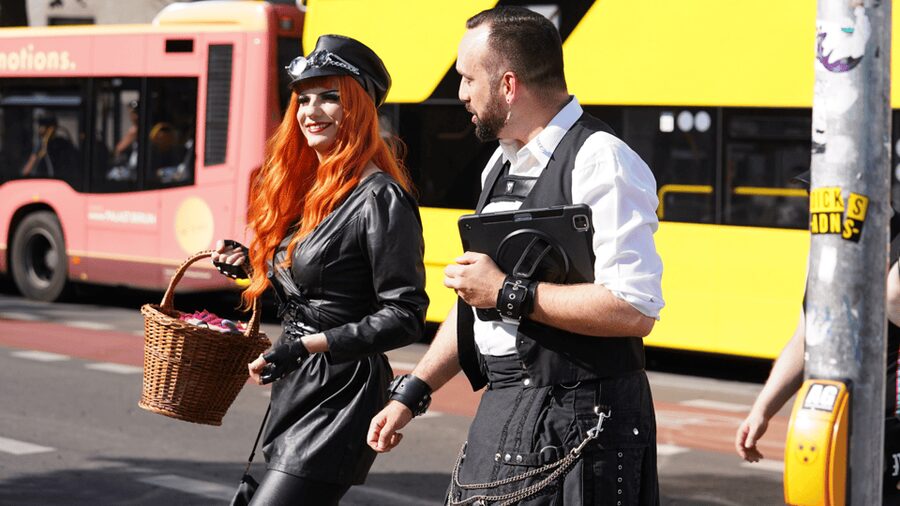
You start with a 10-minute introduction on Karl-Heinrich-Ulrichs-Straße, which sets the tone with early activism. Then you hit a hidden gem stop for 10 minutes. Because it is described only as a hidden gem, you should expect something visual and location-based, not a textbook moment.
Next comes Schwerinstraße for 15 minutes, then Nollendorfstraße for 10 minutes. These are the kinds of streets where queer Berlin history fits naturally into the present day, because the area has a long association with LGBTQIA+ nightlife and community life.
You spend 20 minutes at Magnus-Apotheke, then 15 minutes at Denns BioMarkt. The stop names here are everyday, which is the point. The tour keeps showing how extraordinary queer history happened in ordinary spaces, not only in grand monuments.
After that, you have 15 minutes at Prinz Eisenherz and 15 minutes at Connection Club. This is where the nightlife thread connects your history to the city’s modern club DNA.
The tour pauses again at Internationale Stele GEGEN DAS VERGESSEN for 10 minutes, a reminder-focused stop that shifts you from entertainment history to memory and accountability. Then it takes 20 minutes at Metropol, before finishing at Nollendorfplatz again.
One practical note: since the stops vary in time and some areas may be noisy or brightly lit, you should wear comfortable shoes and be ready for a tour that changes sensory levels.

From early rights activism to the first trans identities
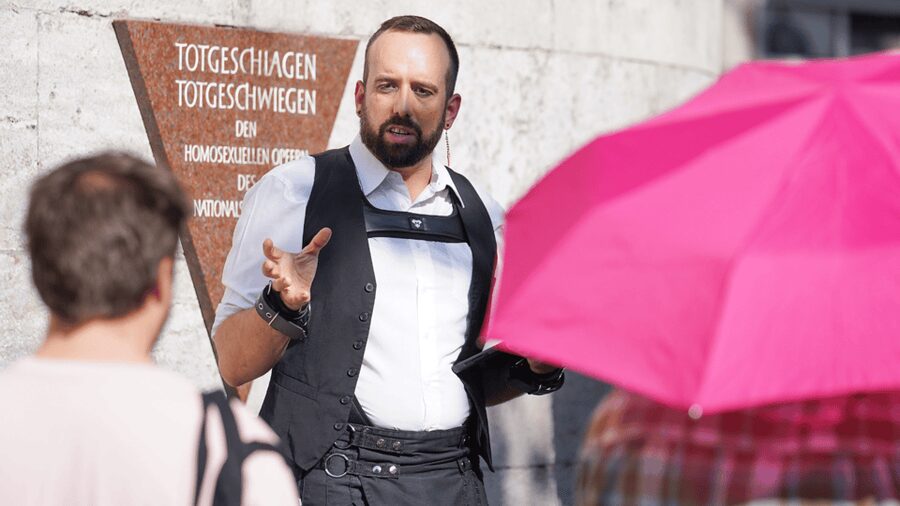
One of the biggest promises here is that you will learn about the world’s first trans identities and the history around gender-affirming care. The tour highlights early trans narratives, including the existence of gender-affirming surgeries and how some trans people lived openly with transvestite certificates.
That matters because the word trans has a modern feel, but the experience of being trans, non-binary, and gender-variant has long roots. You do not only learn that trans identities existed. You learn that documentation, medical history, and social life were tangled together in ways that are important to understand.
The tour also covers how the Nazis tried to erase this history. That thread, placed early in the experience, helps you see later events with clearer eyes. When persecution comes, it is not random cruelty in a vacuum. It is part of a system that targeted identity, community, and visibility.
1920s lesbian community, cabarets, and feminist resistance
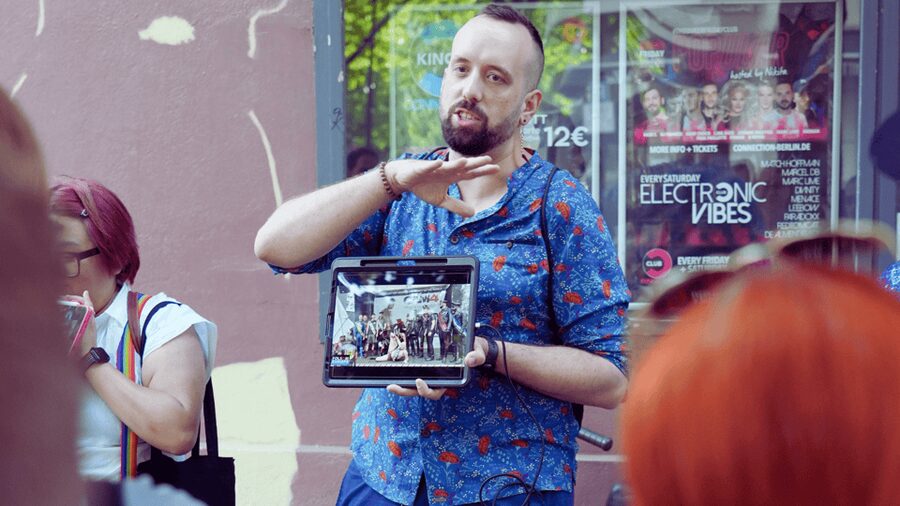
Berlin in the 1920s is part romance, part political pressure cooker, and the tour leans into that. It takes you into stories of lesbian bars and cabarets, where queer women found community and resistance.
This section is also where the tour drops memorable names. You will meet or learn about icons like Claire Waldoff, Marlene Dietrich, and Josephine Baker, and the way their era and their public presence fed into queer culture.
Even if you are not a nightlife historian, you will likely appreciate how the tour frames these spaces as more than fun venues. They were places to gather, to be seen, and to make culture under real constraints. That context helps you connect the interwar era to why Berlin’s later club scene has such a strong activist streak.
Nazis, contradictory policy, and the queer survival story
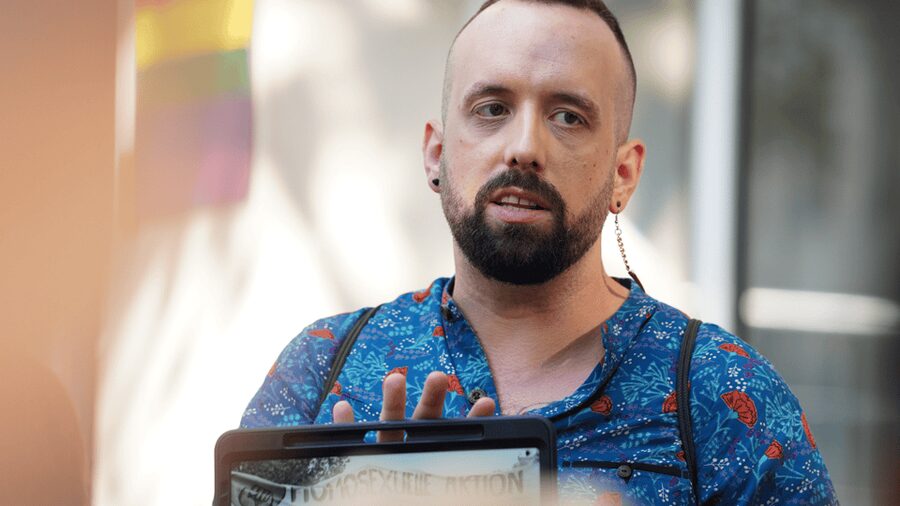
The tour covers what happened to queer people under the Nazis, and it does not treat it like a one-line tragedy. It highlights Hitler’s contradictory stance on homosexuality, the persecution of queer people, including in concentration camps, and the reality of queer resistance during and after the Nazi era.
This is emotionally heavy content, and it is listed as a content sensitivity area. The tour includes discussions of Nazi Germany and (mass) murder, antisemitism, racism, homophobia, transphobia, and queerphobia, plus sexualized violence and other difficult subjects. The guide is also prepared to handle this in a structured way, but you should still know your own limits beforehand.
If you prefer light sightseeing, this tour will not be that. If you want to understand Berlin honestly, with real human consequences included, this is one of the more direct ways to do it.
AIDS crisis activism, SchwuZ, and the meaning of the Berlin Wall nickname
A key section looks at the AIDS crisis and queer activism in divided Berlin. You learn about how the community fought for survival, and you get a specific example: SchwuZ nightclub as an activist hub.
You also hear a striking line tied to GDR history: the Berlin Wall was called the condom of the GDR. Even if you have heard versions of that idea in other contexts, it lands differently inside a tour focused on community action. The point is not the punchline. The point is that activism adapted to policy, stigma, and public health fear.
If you are interested in how queer nightlife and activism keep feeding each other, this section gives you the bridge. It helps you understand why today’s Berlin Pride culture does not feel like a separate universe. It is built on decades of community survival.
Berlin’s influence on global nightlife and Pride, from Chez Romy Haag to Berghain
After the hard chapters, the tour returns to culture and the future. You see how LGBTQIA+ culture shaped Berlin’s club scene from earlier venues to now, with references that include Chez Romy Haag and Berghain.
The tour also connects the city to Pride movements and events, including Dyke March and Folsom Europe, framing them as part of a legacy. That is where the quizzes and AR scenes help, because you are not only collecting facts. You are actively checking what you remember while the tour connects past and present.
This section is also practical for what you might do after the tour. You get insider tips about modern queer nightlife and events, which can help you make a smarter plan instead of guessing where to go.
How the multimedia and AR parts work, without turning it into a gimmick
This tour is not only walking. It is a multimedia experience built around:
- 200+ archival photos, videos, and rare audio clips
- personal quotes
- interactive quiz questions
- Mixies, AR selfies with historic queer activists
- digital recreations and AR scenes to bring moments to life
That is a lot of input, but it is paced as stop-by-stop segments of 10 to 20 minutes. You also get subtitles on videos, in German, English, or both, which matters in an English-language tour.
Practically, I would treat this as a tour where you should be mentally ready to look at screens and listen to audio during some pauses. If you hate being asked to pay attention to your phone or a device, this might feel like work. If you like interactive learning, it is exactly the right style.
Practical tips for your comfort, focus, and expectations
The basics are simple. Bring comfortable clothes and weather-appropriate clothing. You will be walking enough to make footwear a real decision.
Sensory factors are explicitly noted. Some parts take place in areas with bright lights and loud noises. If you are sensitive to that, plan your day so you are not already overstimulated from museums, crowds, or late nights.
Accessibility is also clearly addressed. The route is wheelchair accessible, but some paths may be bumpy. Accessible toilets are available upon request, and the guide says they can describe all visual materials for guests with visual disabilities.
Also, content includes adult themes like BDSM, kinks, sex work, drugs, HIV/AIDS, and sexualized violence, and it is not suitable for children under 18. If you are traveling with teens or kids, skip it.
Price and value: why $81 can make sense for this kind of tour
At $81 per person for 3 hours, this is not a cheap generic walking tour. The value comes from three things that are rare to bundle together:
- Scale of archival material: 200+ rare photos, videos, and audio clips
- Interactive elements: quizzes plus AR Mixies selfies with historic figures
- Guide expertise: a queer activist, social scientist, certified sex educator, plus a small group cap of 10
You are paying for research, production, and teaching style, not just route guidance. If you are the type of person who likes learning through visuals and interactivity, the price starts to look fair fast.
If you prefer low-tech tours with only a story and a street corner, you might not get as much value. The AR is a central selling point, so be sure that’s your thing.
Should you book this Berlin queer and trans history tour?
Book it if you want Berlin history that connects to real people, real activism, and real cultural spaces. It is ideal for LGBTQIA+ travelers and allies, history lovers, and even Berlin locals who want a guided way to reconnect with queer heritage. It also makes sense if you like multimedia learning, quizzes, and AR fun like Mixies.
Skip it if you are not ready for sensitive material. The tour explicitly includes heavy topics like Nazi persecution, antisemitism, racism, transphobia, HIV/AIDS, and sexualized violence. It also is not for children under 18.
My best advice: read your own comfort level first, then commit. If you are open to honesty and interaction, this tour gives you a lot more than a list of landmarks. You leave with names, dates, and a sense of how Berlin’s queer life kept pushing forward, even when systems tried to erase it.
FAQ
How long is the Where It All Began Berlin’s Queer and Trans History Tour?
It lasts 3 hours.
How much does the tour cost?
The price is $81 per person.
Where do we meet for the tour?
You meet at Nollendorfplatz in front of Alnatura Super Natur Markt, Else-Lasker-Schüler-Straße 18.
Is the tour in English?
Yes, the live tour guide speaks English.
Is the tour wheelchair accessible?
The route is wheelchair accessible, but some paths may be bumpy. Accessible toilets are available upon request.
What is included in the tour?
You get a guided walking tour led by a queer activist and gender scholar, augmented reality elements (Mixies), 200+ rare historical photos, videos, and archival materials, plus insider tips on modern queer nightlife and events.
Is the tour suitable for children?
No. It is not suitable for children under 18, since it includes discussions of sensitive historical and social topics.
The Longer History of Berlin
Everything else we filed on Berlin
- Private Photo Tour in Kreuzberg
★ 5.0 · 3 reviews - Kreuzberg Private Walking Tour: Immigrants, Artists & Hipsters
★ 5.0 · 3 reviews - Berlin’s Jewish Heritage: Private Tour of the Vibrant Jewish District
★ 5.0 · 3 reviews - Individual city tour Berlin for max. 8 persons
★ 5.0 · 3 reviews - Berlin & The Third Reich Private Guided Tour
★ 5.0 · 3 reviews - Private Analogue Photography Experience in Berlin
★ 5.0 · 3 reviews
Historical Tours, side by side.
 ★ 4.7Leipzig: City History Canal Sightseeing Tour on a MotorboatFrom $186,232 reviews
 ★ 4.6Berlin: Natural History Museum Entrance TicketFrom $123,382 reviews
 ★ 4.7Leipzig: 1.5-Hour Historical Walking Tour in GermanFrom $172,217 reviews
 ★ 4.5Berlin: World Heritage Cruise to PotsdamFrom $251,435 reviews
 ★ 4.7Heidelberg: Night Watchman Historic Adventure TourFrom $3051,186 reviews
 ★ 5.0The Local Tour of Hamburg Historic CentreFrom $31,058 reviews
 ★ 4.8Elbfloren: Historical city tourFrom $15819 reviews
 ★ 4.6Bamberg: Guided Beer History Tour with Optional TastingFrom $21772 reviews
Other lists this tour is on