
REVIEW · HISTORICAL TOURS
Where It All Began: Berlin’s Queer & Trans History Tour
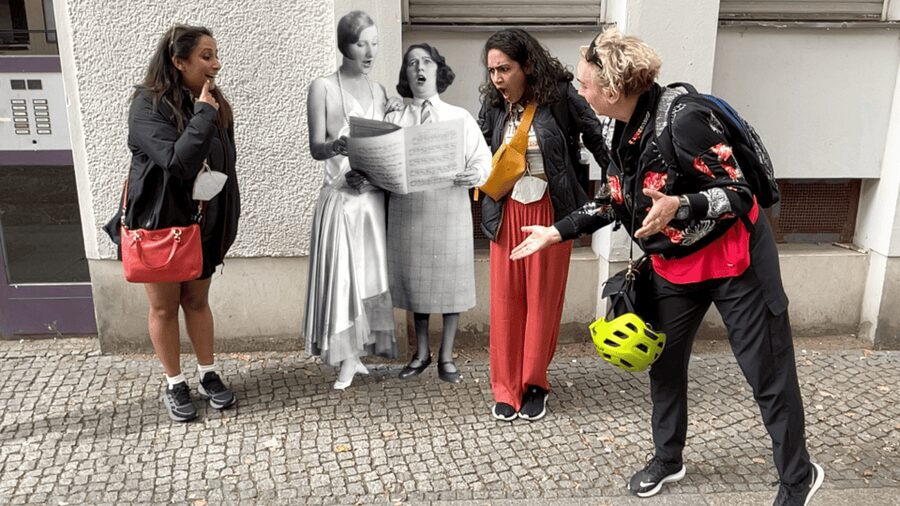
Queer Berlin history comes into focus fast. This 3.5-hour small-group walk (max 10 people) zeroes in on LGBTQIA+ and trans history, using iPad augmented reality so you can see the past layered onto today’s streets.
I love that the stories are guided by a queer activist and gender scholar, and you end up learning names and details you would never catch if you only wander on your own, like Magnus Hirschfeld and the fight against Paragraph 175. One consideration, it is a lot of subject matter in one afternoon, so come ready for heavy moments as well as clever, even funny cultural stops.
In This Review
- Key takeaways before you go
- From Ulrichs to today, why the tour’s flow works
- Stop 1, Karl-Heinrich-Ulrichs-Straße 1: early activism that predated modern terms
- Stop 2, Nollendorfplatz: Nazi persecution and why the pink triangle still matters
- Stops 3 and 4 on Schwerinstraße and Nollendorfstraße: lesbian community, cabaret inspiration, and police records you do not expect
- Stop 5, Magnus-Apotheke: Magnus Hirschfeld, gender science, and the fight against Paragraph 175
- Stop 6, Denns BioMarkt: Eldorado drag bar legacy and the Röhm contradiction
- Stops 7 and 8: post-war activism, SchwuZ, Charlotte von Mahlsdorf, and Chez Romy Haag
- Stop 9, Internationale Stele GEGEN DAS VERGESSEN: AIDS crisis, Berlin’s division, and activism that saved lives
- Stop 10, Metropol and the walk into now: queer nightlife, pride, and gentrification fights
- AR, photos, and what the $83.13 price really buys you
- Timing, meeting point, and how to get the most from a 2 pm start
- Should you book this Berlin queer and trans history tour?
Key takeaways before you go
- iPad augmented reality on the street, so historical photos show up where they belong
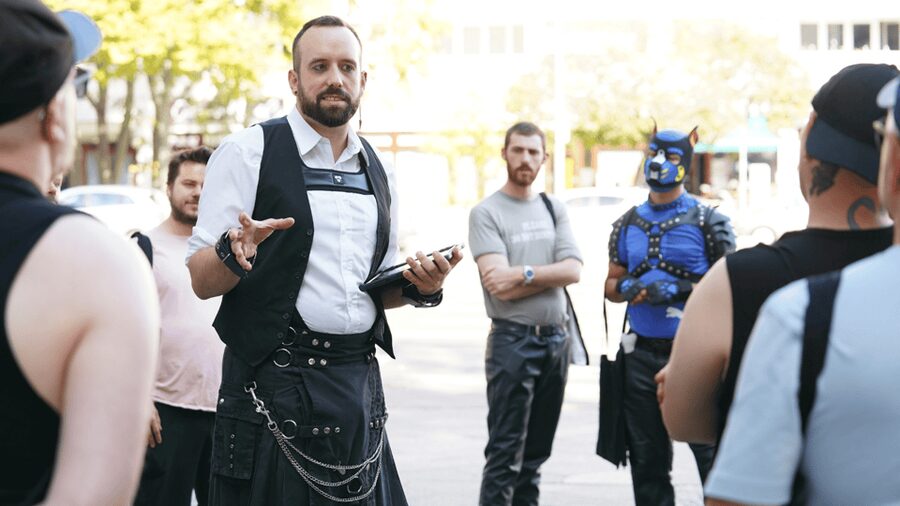
- Mixies AR group photos and access to 200+ rare archival images, videos, and materials
- A capped group of 10, which keeps the pace human and questions possible
- A timeline that actually connects eras, from early activism to Nazis, then post-war, AIDS, and today
- A strong nightlife and activism ending at Metropol, with practical tips on what to catch now
More history walks in Berlin
- Berlin: Natural History Museum Entrance Ticket★ 4.6 · 3,382 reviews
- Berlin: World Heritage Cruise to Potsdam★ 4.5 · 1,435 reviews
- Berlin Historical Highlights Walking Tour★ 4.9 · 657 reviews
- Berlin Private Complete History All Day Walking Tour★ 5.0 · 474 reviews
From Ulrichs to today, why the tour’s flow works
This tour is built like a straight line through Berlin’s LGBTQIA+ and trans past, but it never feels like a lecture. You walk through specific addresses and sites, then you get the context that explains why each place mattered, who used it, and what changed when laws, politics, or violence shifted.
I like the momentum. The route starts with early activism tied to Karl-Heinrich-Ulrichs on Karl-Heinrich-Ulrichs-Straße, then it moves to places where state power became deadly, and eventually it lands in modern nightlife and organizing. That structure helps you connect dots fast, especially if Berlin is your first time doing queer history on the ground.
And the AR piece is not just a gimmick. When you use the iPad to view historical photographs and compare them to what’s there now, you get a concrete sense of how much was lost, reshaped, and rebuilt. It is also why this tour fits well for people who like details, not just general storytelling.
Stop 1, Karl-Heinrich-Ulrichs-Straße 1: early activism that predated modern terms
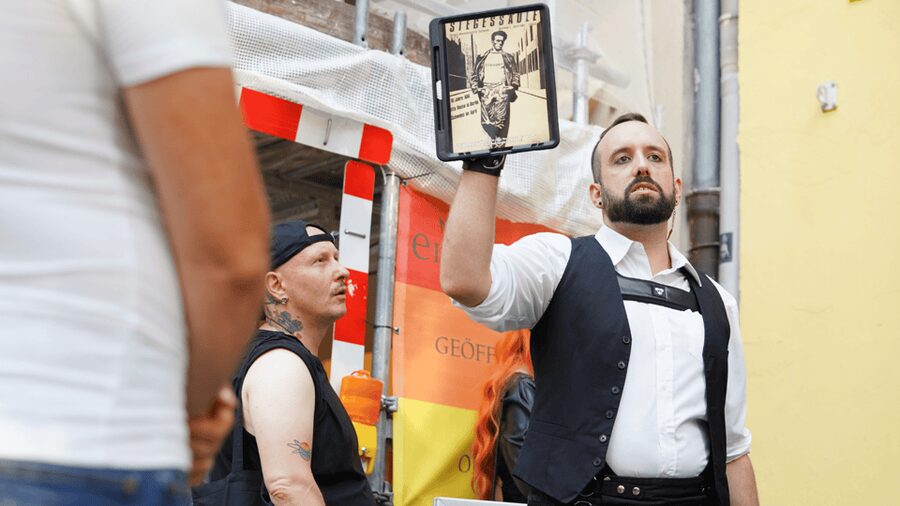
The walk begins at Karl-Heinrich-Ulrichs-Straße 1, linked to the man often described as the world’s first gay rights activist. What you take from this stop is not only a name, it is the idea that public advocacy for decriminalization existed long before today’s vocabulary did. The tour frames his thinking as foundational for later LGBTQIA+ movements worldwide.
This is a smart starting point for you if you want more than a Berlin highlights reel. It sets the baseline, so later stops about persecution and punishment do not feel random. You also get an early sense that queer identity and political action have always been connected, not separate stories.
Stop 2, Nollendorfplatz: Nazi persecution and why the pink triangle still matters
At Nollendorfplatz, you get Berlin’s LGBTQIA+ history in the darkest chapter. This stop focuses on Nazi-era attitudes and the consequences for LGBTQIA+ people, including the role of Adolf Brand and right-wing gay activists, the complicated position of Ernst Röhm, and the broad, brutal impact of Hitler’s stance on homosexuality.
You also learn what happened during the Night of the Long Knives, when Röhm and many queer people within the Nazi party were executed. The tour then connects that political violence to concentration camps, where people were forced to wear the pink triangle, and where survival and resistance also happened.
If you come in expecting only nightlife history, this stop is a necessary reality check. It can be emotionally heavy, but it is also part of what makes the tour feel honest. You leave understanding that persecution was not just social stigma, it was policy, propaganda, and terror.
Stops 3 and 4 on Schwerinstraße and Nollendorfstraße: lesbian community, cabaret inspiration, and police records you do not expect
Then the route shifts into 1920s life, and you see how community formed around music, performance, and safe gathering spaces.
On Schwerinstraße 13, you visit the site of Toppkeller, a famous lesbian bar. This stop explains why spaces like these mattered: they offered safety and belonging for queer women in a city where visibility carried risk. You also hear about cultural impact through figures like Claire Waldoff, whose lesbian cabaret songs became anthems of defiance.
Right after that, the tour heads to Nollendorfstraße 17, where you get one of the most surprising angles on the whole experience. The stop covers the homosexual department of the Berlin police force. That detail matters because it shows how authorities tracked and managed queer lives, even while queer culture was expanding in public.
This section also ties in Christopher Isherwood and how his Berlin writing fed into Cabaret. You learn about his relationship with Heinz Neddermeyer and their escape from Nazi Germany as queer refugees, which gives the artistic legacy a real personal stakes.
A practical note for you here: the tour covers culture and survival together, so expect quick emotional shifts. It is not all dark, but it is not sanitized either. That balance is one of the reasons this works so well.
Stop 5, Magnus-Apotheke: Magnus Hirschfeld, gender science, and the fight against Paragraph 175
Magnus Hirschfeld’s work sits at the center of Stop 5 at Magnus-Apotheke. This is the moment where the tour gives you a deep political and intellectual backdrop for queer rights in Berlin.
You learn about the Institute for Sexual Science and the Scientific-Humanitarian Committee, which the tour describes as the world’s first organization dedicated to queer rights and gender studies. You also hear about Hirschfeld’s theories, including ideas around sexual intermediaries and Berlin’s third gender concept. The tour even references world-first gender-affirming surgeries performed on Dora Richter, Lili Elbe, and Karl M. Baer.
Then it shifts to the legal weapon that shaped daily life for LGBTQIA+ people, Paragraph 175, which criminalized homosexuality. The stop also covers the devastating Nazi destruction of the Institute, which makes the point that scientific work and human rights advocacy can be targeted as quickly as any political organization.
This is where the AR can be especially helpful for you. You are not just looking at a street address, you are connecting it to institutions, debates, and people that shaped the language of rights.
Stop 6, Denns BioMarkt: Eldorado drag bar legacy and the Röhm contradiction
Next comes the party history side, but the tour keeps it grounded. At Denns BioMarkt, you look back at the former site of Eldorado, one of Berlin’s famous drag bars of the 1920s. This stop focuses on gender-nonconforming people and queer performers finding space to exist, with the club described as a hotspot for community.
Then the tour adds the contradiction that Berlin does so well, and Europe in that era often had to live with. Eldorado is also linked with Ernst Röhm as a high-profile regular who later became part of a regime that persecuted LGBTQIA+ people. That contrast is part of why the stop feels so thought-provoking, not just nostalgic.
For you, this is the section where you can breathe a little. You still get meaning, but the mood lightens. It also prepares you for the later jump into modern club culture, where you will see continuity between resistance and nightlife.
Stops 7 and 8: post-war activism, SchwuZ, Charlotte von Mahlsdorf, and Chez Romy Haag
Berlin after World War II is a major theme here, because the tour shows that queer life did not pause, it reorganized.
At Prinz Eisenherz, you hear about post-war activism through groups like Homosexuelle Aktion West-Berlin, described as one of the first queer rights organizations after WWII. You also learn about the founding of SchwuZ, one of Berlin’s most iconic queer clubs, and you get the story of Charlotte von Mahlsdorf, a trans woman who preserved Berlin’s queer history and built safe spaces for the community in East Berlin.
Then Stop 8 moves into West Berlin trans community in the 1970s and 1980s, highlighting Chez Romy Haag. This stop frames Chez Romy Haag as legendary and trans-led, and it credits the nightclub with changing Berlin nightlife by making room for gender-diverse people to exist freely. The tour positions it as a building block for the queer club culture Berlin is famous for today.
If you are wondering what to do with the word trans in a history tour, this portion helps. It shows trans people as creators of culture and organizers of space, not only subjects of persecution. That shift matters for how you remember the whole walk.
Stop 9, Internationale Stele GEGEN DAS VERGESSEN: AIDS crisis, Berlin’s division, and activism that saved lives
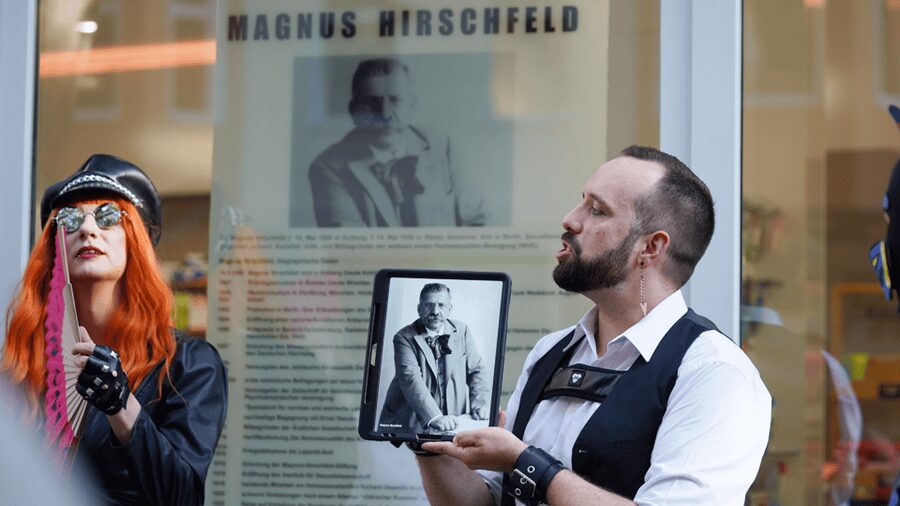
At Internationale Stele GEGEN DAS VERGESSEN, the tour turns to the AIDS crisis and how it affected a divided Berlin. The tour explains how the crisis hit both sides, and how queer communities organized to fight for survival.
You also hear about political advocacy through Rita Süssmuth, described here as one of the few politicians pushing for AIDS awareness. The tour makes a striking metaphor using the Berlin Wall being called the condom of the GDR, highlighting differences in how East and West Berlin handled the crisis.
This stop is important if you want the tour to feel current. AIDS activism is not just history, it is part of the modern relationship between public health, stigma, and organizing. You leave with a better sense of why today’s activism language exists and why it keeps showing up in queer spaces.
Stop 10, Metropol and the walk into now: queer nightlife, pride, and gentrification fights
The final stop is where the tour cashes out into present-day Berlin. At Metropol, you get queer nightlife roots and activism, tied to the early gay community and the techno scene.
The tour connects Metropol to today’s famous names, including Berghain and Lab.Oratory. You also hear about SO36’s legendary queer nights, plus major events like Folsom Europe, Kreuzberg Pride, and the Dyke March. The tour also points to the ongoing fight for an affordable city through the radical Tuntenhaus squat.
This ending works for you if you want a history tour that does something practical afterward. You get insider tips on what is happening in Berlin’s queer nightlife and events, and you finish in a place that feels like the city’s current heartbeat.
It also helps that this stop is not just about bars and festivals. It folds in the reality of gentrification. That makes the whole experience feel complete, because queer survival has always depended on space, and space gets expensive.
AR, photos, and what the $83.13 price really buys you
Let’s talk value. At $83.13 per person for about 3 hours 30 minutes, you are paying for more than a walking guide. You are paying for a story-led route plus tools that make it feel like you are time-traveling with your feet on modern pavement.
Here’s what you actually get based on the tour details:
- iPad provided for augmented reality while you walk
- Mixies AR photos for personalized group memories
- 200+ rare historical photos, videos, and archival materials
- A guided experience led by a queer activist and gender scholar
- Insider tips on modern queer nightlife and events
For me, the best value piece is the AR plus the archival media. If you usually forget what you heard on a tour by the time you get home, these added visual anchors change the odds. Instead of only verbal descriptions, you get images tied to the exact spots you visited.
You also get a real small-group setup capped at 10 people, and the tour is booked in advance often enough to suggest steady demand. I’d call that a sign that people feel it is worth planning for.
The only cost-related drawback to consider is the time commitment. It is a half-day plan with heavy themes, so if you want a light, flexible afternoon, this might feel like a lot. But if you want meaning and context, it hits the mark.
Timing, meeting point, and how to get the most from a 2 pm start
This tour starts at 2:00 pm at Alnatura Super Natur Markt, Else-Lasker-Schüler-Straße 18, 10783 Berlin, and it ends at Metropol, Nollendorfpl. 5, 10777 Berlin. Knowing that helps you plan dinner afterward without backtracking across the city.
Because you will be walking and focusing on street-level details, I recommend comfortable shoes and a layer for changing weather. The tour notes it requires good weather, so if Berlin gives you rain, your plan needs a little flexibility.
Also, coffee and tea are not included, so plan a quick snack either before you start or after you finish. If you pace your water intake, you will handle the longer stops and the emotional moments more comfortably.
Finally, the tour is offered in English, and most travelers can participate. Service animals are allowed, and it is near public transportation, which makes it easier to slot into a Berlin itinerary.
Should you book this Berlin queer and trans history tour?
Book it if you want a guided Berlin walk that connects LGBTQIA+ history across eras, from early activism to Nazi persecution, then post-war organizing, AIDS crisis survival, and today’s queer nightlife and activism. The combination of small group size and iPad augmented reality is a practical edge, and the AR plus 200+ archival materials gives you something to remember beyond the walk.
Skip or think twice if you prefer lighter, entertainment-only tours. This route includes Nazi-era persecution and the AIDS crisis, so the emotional tone can be intense, even though the guiding style also includes humor and human stories.
If you are the kind of traveler who likes to leave a city with names, context, and “I get it now” clarity, this is one of the best uses of a half day in Berlin.
The Longer History of Berlin
Everything else we filed on Berlin
- East Berlin: City of Shadows Walking Tour
★ 5.0 · 11 reviews - Berlin: Die Stachelschweine – Frank Lüdecke – Träumt Weiter
★ 4.7 · 11 reviews - Potsdam Day Trip from Berlin with a Local: Private & Personalized
★ 4.0 · 11 reviews - An Introduction to Berlin Walking Tour
★ 5.0 · 11 reviews - DJ for a Day: Learn to Mix Like a Pro in Berlin
★ 5.0 · 11 reviews - 2-H Segway Sightseeing Tour Berlin
★ 4.5 · 11 reviews
Historical Tours, side by side.
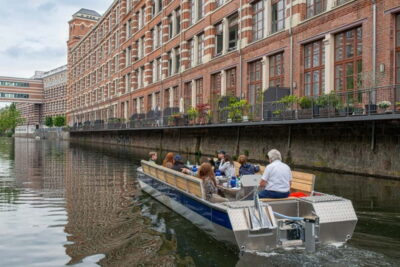 ★ 4.7Leipzig: City History Canal Sightseeing Tour on a MotorboatFrom $186,232 reviews
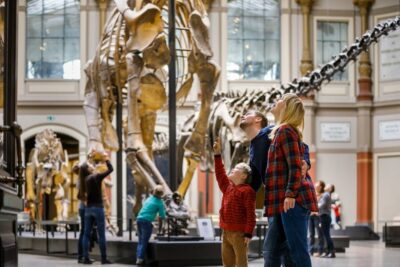 ★ 4.6Berlin: Natural History Museum Entrance TicketFrom $123,382 reviews
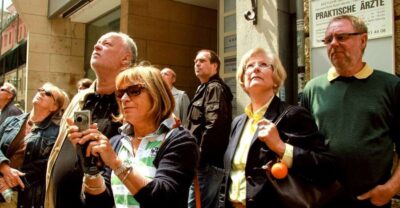 ★ 4.7Leipzig: 1.5-Hour Historical Walking Tour in GermanFrom $172,217 reviews
 ★ 4.5Berlin: World Heritage Cruise to PotsdamFrom $251,435 reviews
 ★ 4.7Heidelberg: Night Watchman Historic Adventure TourFrom $3051,186 reviews
 ★ 5.0The Local Tour of Hamburg Historic CentreFrom $31,058 reviews
 ★ 4.8Elbfloren: Historical city tourFrom $15819 reviews
 ★ 4.6Bamberg: Guided Beer History Tour with Optional TastingFrom $21772 reviews
Other lists this tour is on