
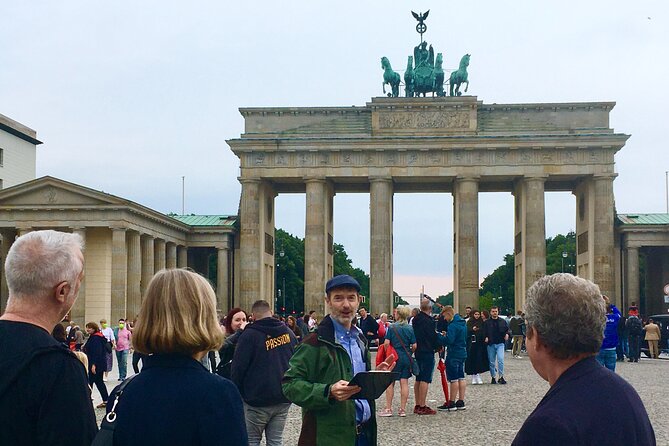
REVIEW · WALKING TOURS
An Introduction to Berlin Walking Tour
Berlin tells its story in a straight line. This 3-hour, historian-led walk brings Prussian roots, 20th-century militarism, and Berlin Wall history into focus as you move between major landmarks like the Reichstag dome and the Holocaust Memorial. I love the small group size (max 8), because you can actually ask questions and keep a good pace. I also like that you hit both politics and architecture, not just photos on a screen. One possible drawback: it uses public transport a few times, so you’ll want a day metro pass plan ready.
I recommend this route when you want context fast. You start at Unter den Linden 42, you’re in English, and the stops are clustered enough to feel like one connected story instead of random sightseeing. At $156.53 per person, it’s not a budget stroll, but many of the key sites here are free to enter during the tour, and the guide is a professor, doctoral student, journalist, or a similarly serious storyteller.
In This Review
- Key Points at a Glance
- Price and Value for a 3-Hour Berlin Hit
- Starting at Unter den Linden 42, Where the Day Gets Focused
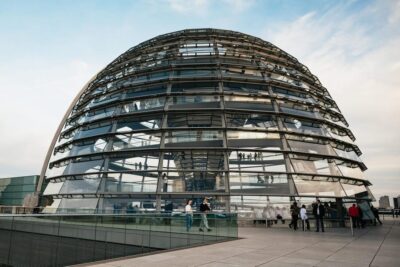
- Stop 1: Reichstag Building and Norman Foster’s Glass Dome
- Stop 2: Brandenburg Gate, Prussian Planning to Cold War Stage
- Stop 3: Museum Island on Spreeinsel and the Prussian Museum Machine
- Stop 4: Potsdamer Platz, After the Wall and After the Smoke
- Stop 5: Unter den Linden, From City Palace to Brandenburg Gate
- Stop 6: Tiergarten, A Pause Inside the City
- Stop 7: Memorial to the Murdered Jews of Europe, 2,711 Slabs and Silence
- Stop 8: Hackescher Markt and Courtyards of Pre-War Berlin
- How Transit and Timing Actually Work on the Route
- Who This Tour Fits Best
- Should You Book This Berlin Walking Tour?
- FAQ
- How long is the Berlin walking tour?
- What is the price per person?
- Is the tour offered in English?
- How many people are in the group?
- What is included in the tour price?
- What is not included?
- What is the cancellation policy?
Key Points at a Glance
- Max 8 people means more attention from your guide and a tighter group pace
- 3 hours, big payoff with major stops from the Reichstag to the Holocaust Memorial
- Architecture gets treated seriously, including the Reichstag dome by Norman Foster
- Multiple major landmarks with free admission at tour stops like the Brandenburg Gate and Museum Island buildings
- Public transport is part of the design, and your guide can help with the first metro ticket
- Holocaust Memorial time is built in so you can slow down and reflect instead of rushing through
Other walking routes through Berlin
- Berlin: Third Reich and Cold War 2 Hour Walking Tour★ 4.9 · 6,830 reviews
- Berlin: Discover Berlin Walking Tour★ 4.9 · 5,998 reviews
- Berlin’s Best: 2 Hour Walking Tour Third Reich and the Cold War★ 5.0 · 5,486 reviews
- Berlin: Hidden Backyards Guided Walking Tour★ 4.8 · 5,360 reviews
Price and Value for a 3-Hour Berlin Hit
At $156.53 per person, this tour sits in the mid-to-higher range for Berlin walking tours. The value comes from two places.
First, it’s a historian-led experience, and not just a guide reading facts off a phone. The provider lists guides as professors, doctoral students, journalists, and enthusiastic storytellers, which usually means you get clearer framing for what you’re seeing and why it mattered.
Second, the route is built around huge, time-consuming targets. In about three hours, you cover the Reichstag, Brandenburg Gate, Museum Island, Potsdamer Platz, Unter den Linden, Tiergarten, the Holocaust Memorial, and Hackescher Markt. You also get planning help for transit. If you were trying to piece this together solo, you’d spend energy figuring out order, logistics, and what to notice at each stop.
If you like Berlin at a slower pace, keep your expectations realistic. This is a “get oriented and learn fast” tour, not a long museum day.
Starting at Unter den Linden 42, Where the Day Gets Focused
Your tour begins on Unter den Linden 42 (10117 Berlin). That matters because Unter den Linden is Berlin’s grand political boulevard, stretching toward the Brandenburg Gate area. Starting here helps you understand the city’s layout right away, before you start hopping between different eras.
You’ll also feel the tour’s structure early. It’s offered in English, it uses a mobile ticket, and the group stays small, with a maximum of 8 people. That combination usually creates a better back-and-forth conversation than big-bus-style sightseeing.
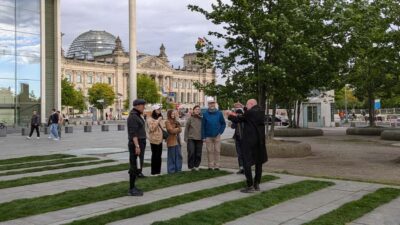
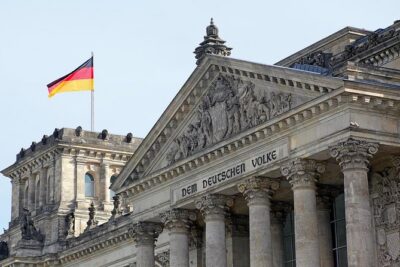
Stop 1: Reichstag Building and Norman Foster’s Glass Dome
The Reichstag Building is where Berlin’s political story turns visible. Today, it’s the meeting place of the Bundestag, Germany’s national legislature.
What makes the Reichstag a must-see is the glass, transparent dome added in the 1990s by architect Norman Foster. Even if you only get a short look, it’s a powerful visual symbol: modern democracy built on top of older national power. Your guide’s job is to connect the architecture to the political shift it represents, so the dome doesn’t feel like random modern add-on glass.
This stop is about 15 minutes during the tour. The entry ticket is listed as free, which helps you avoid an extra cost right at the start. If you’re the type who likes to understand a building’s logic, you’ll probably enjoy how the dome fits into the broader narrative of German governance.
Practical note: the Reichstag area can get busy on sunny days. Your best move is to keep your eyes up, not just at your feet, because the dome and surrounding details are easy to miss when you’re rushing.
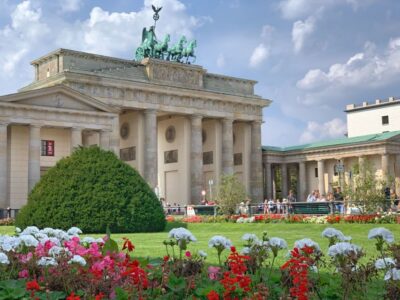
Stop 2: Brandenburg Gate, Prussian Planning to Cold War Stage
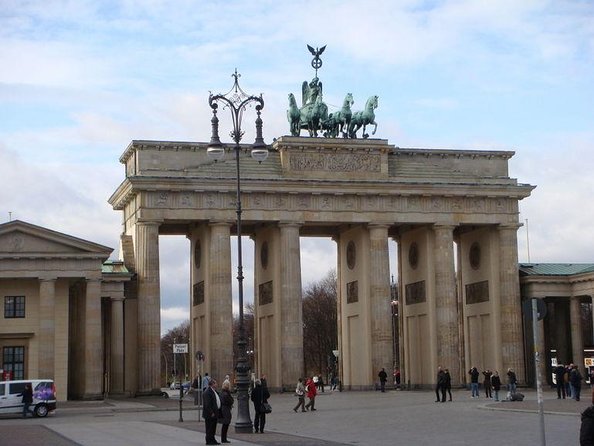
Next comes the Brandenburg Gate, an 18th-century neoclassical monument ordered by Prussian king Frederick William II. That one line helps you read the gate correctly. It wasn’t built as a neutral landmark for postcards. It was built as an expression of power, shaped by the Prussian monarchy.
Your guide ties that original purpose to later moments that played out at the gate, including Napoleon’s triumphant entrance and Ronald Reagan’s cold war speech. When you hear those references while you’re standing there, you start noticing the gate not as one scene, but as a repeated stage for European history.
This stop is about 20 minutes. Admission is listed as free, so you get the full value of the photo moment without the usual “okay, now pay and hope the line is short” stress.
If you’re short on time in Berlin, this is still worth the stop even if you skip everything else. It’s the kind of landmark that lets you anchor the rest of the city in your head.
Stop 3: Museum Island on Spreeinsel and the Prussian Museum Machine
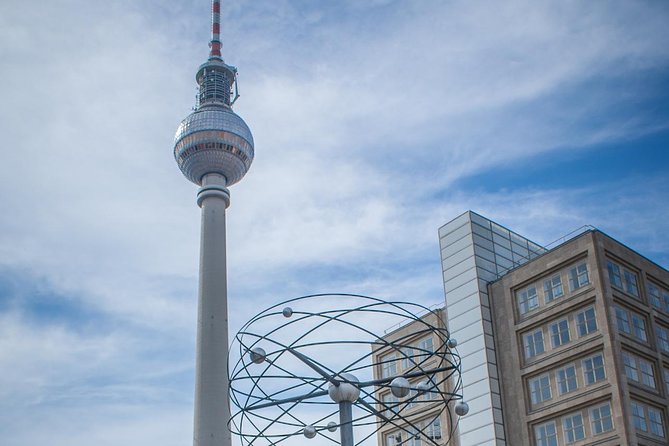
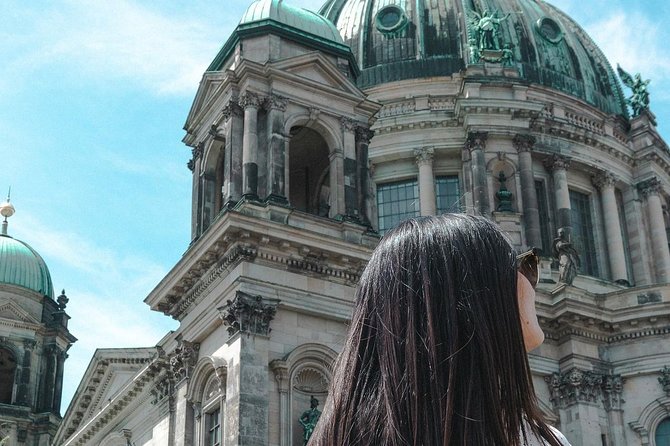
Museum Island, on Spreeinsel, is one of Berlin’s most distinctive urban plans. The ensemble includes five major museums built under the Prussian rulers, including the Pergamon Museum, the Neues Museum, and the Alte Nationalgalerie.
Even if you don’t go inside, this stop is about how power and culture worked together. Prussian rule wasn’t just about armies and politics. It also involved building institutions that helped shape what the state wanted people to see and value.
Your tour time here is about 25 minutes. The admission ticket for this stop is listed as free, which is a strong way to get the context without forcing you into a full museum ticket day.
One caution: museum architecture is best when you slow down for a minute. If you tend to walk through quickly, ask your guide one question and then take 30 seconds to look at how the buildings line up as a group.
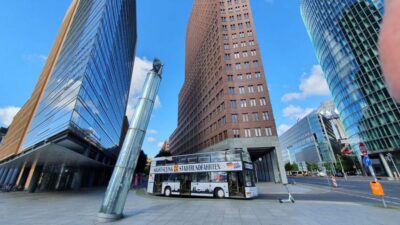
Stop 4: Potsdamer Platz, After the Wall and After the Smoke
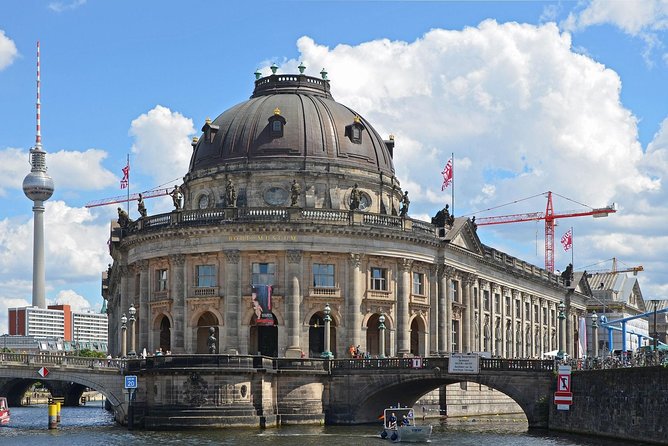
From Museum Island, you shift into an area that shows how Berlin reinvented itself. Potsdamer Platz used to represent something darker and more divided, and it was later reborn after the fall of the Berlin Wall.
Today, it’s a hub for entertainment, restaurants, and shops. That modern energy can look like just another city center, but the value of the guide here is context. You’re not just passing through a commercial district. You’re reading layers of change from one era to another, while the skyline and street layout remind you how thoroughly the city reorganized itself.
This stop is about 15 minutes, and it’s listed as free to enter. Think of it as a quick “what changed and why” moment before you head back into Berlin’s grand boulevards and park spaces.
If you’re someone who loves to watch how cities rebuild, this is one of the most satisfying transitions on the route.
Stop 5: Unter den Linden, From City Palace to Brandenburg Gate
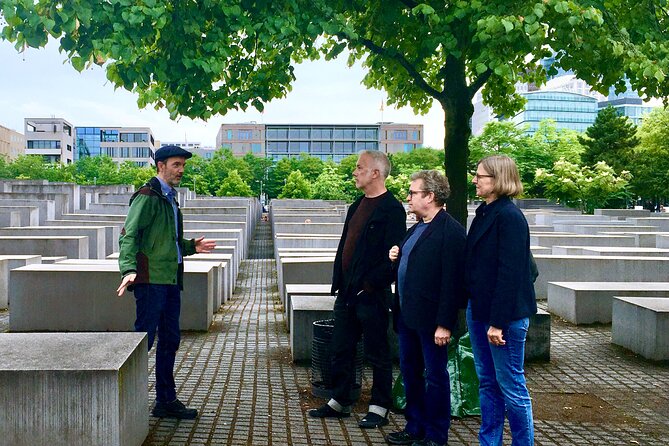
Now the tour returns to the boulevard that gives your day its spine. Unter den Linden runs from the City Palace area toward the Brandenburg Gate. The name comes from the linden trees lining the avenue.
Berlin’s version of this boulevard is often compared to Paris’s Champs-Élysées, and you can see why. It’s a ceremonial street, designed to feel important. The guide helps you connect that design to politics and public display, not just traffic and shopping.
You spend about 30 minutes here. That’s enough time to understand the feel of the street and to stop thinking of Berlin as only a cluster of monuments. It’s also a city of controlled sightlines and deliberate spaces.
If you want a small takeaway, it’s this: Berlin’s most famous streets are often political tools, even when they’re full of cafes and life.
Stop 6: Tiergarten, A Pause Inside the City
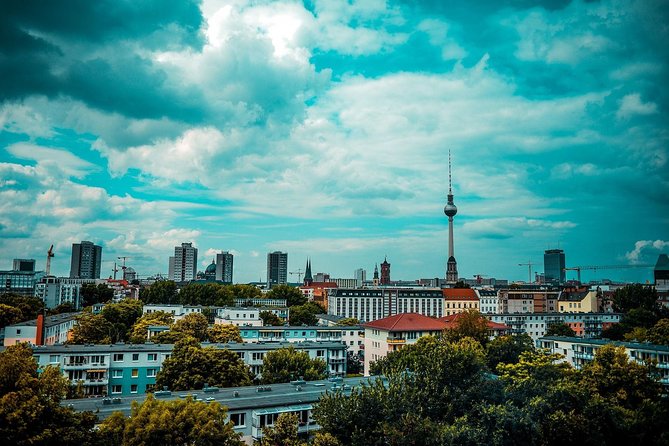
Tiergarten is Berlin’s most famous inner-city park. The guide frames it as more than a break. It’s a contrast to the stone and politics around it, with gardens and grand statuary adding a different kind of storytelling.
This stop is short, about 10 minutes. That’s not enough for a long walk through the park, but it works as a reset after the boulevard.
If you need a moment to breathe before the heavier parts of the route, this is it. Even a quick look at the statuary and garden layout can help your brain stop racing.
Stop 7: Memorial to the Murdered Jews of Europe, 2,711 Slabs and Silence
Then you reach one of the most important stops on the tour, the Memorial to the Murdered Jews of Europe.
It was designed by architect Peter Eisenman and opened in 2005. The memorial is made up of 2711 concrete slabs of different heights. The idea is that you enter a somber labyrinth-like space designed for reflection, not spectacle.
This stop is about 10 minutes. That time can still feel short, but it’s built into the route like a pause you’re expected to treat respectfully. The guide’s job is to help you notice how the memorial’s shape guides your movement and your emotions.
If you tend to take photos fast, try slowing down here. If you can, stand for 60 seconds without moving and let your eyes adjust. The slabs work through scale and rhythm, so rushing makes it feel like nothing more than concrete.
Stop 8: Hackescher Markt and Courtyards of Pre-War Berlin
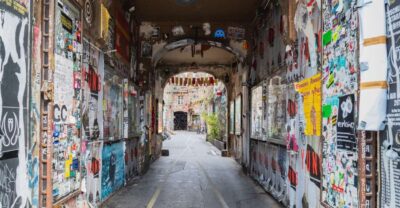
Your last stop is Hackescher Markt, a lively square with preserved Art Nouveau courtyards from pre-war Berlin.
This is a nice ending because it shifts from heavy national themes back to everyday city texture. Instead of more monument scale, you get streets and courtyards. It’s the kind of place where you can start picturing how people lived between major events.
This stop is about 15 minutes and includes free admission. It’s also a good place to decide what you want next, because you’re in an area with options for food, snacks, and browsing.
In one 5 out of 5 experience, a guide named Dan walked the group to an Italian restaurant for lunch at the end. That kind of practical handoff is what makes the end feel smoother, especially if you’re hungry and don’t want to guess where to eat.
How Transit and Timing Actually Work on the Route
This tour includes public transport a few times, because some distances between key sites would be too far to walk. If you don’t already have a multi-day transit pass, the tour suggestion is to buy a Berlin day metro pass.
The listed fares include:
- Berlin Transit one-way AB: 2.8 Euro (senior discount 1.70 EUR)
- Berlin Transit day ticket (one person): 7 Euro (senior discount 4.70 EUR)
If you can’t purchase it in advance, your guide can help you buy it at the first metro station on the tour. That reduces the risk of arriving confused or short on time.
For your comfort, wear shoes that work for city walking and be ready to move between street segments and stations. With a small group, you’ll stay together, but Berlin is still a city, so small delays can ripple.
Who This Tour Fits Best
I think this tour is a great match if:
- You want the big story of Berlin framed around power, militarism, and political change
- You like architecture and how buildings reflect decisions made by rulers
- You want an organized route that hits major sites in one half-day
- You enjoy conversation with a serious guide, not a lecture that forgets you’re human
It might be less ideal if:
- You want long museum time inside buildings
- You prefer a slow, wandering day with lots of free time
- You dislike public transport even for short hops
Should You Book This Berlin Walking Tour?
If you want a strong orientation to Berlin with real historical context, I’d say yes. The mix of Reichstag, Brandenburg Gate, Museum Island, Potsdamer Platz, and the Holocaust Memorial gives you a balanced day, not just one era or one type of site. The small group size (max 8) and historian background are the difference between seeing monuments and understanding them.
The price is the main deciding factor. At $156.53, you’re paying for guided framing plus a carefully planned route. If you’re already committed to doing a guided tour in Berlin, this one is a solid pick because it covers major landmarks in an efficient 3 hours.
If you’re the kind of person who likes to book ahead, do it soon. It’s commonly booked about a week in advance on average.
FAQ
How long is the Berlin walking tour?
The tour lasts about 3 hours.
What is the price per person?
The price is $156.53 per person.
Is the tour offered in English?
Yes, it is offered in English.
How many people are in the group?
The tour has a maximum of 8 travelers.
What is included in the tour price?
The included item is a 3-hour tour of Berlin in the company of a historian.
What is not included?
Food and drinks are not included, and there is no hotel pickup or drop-off. You also need public transportation a few times during the tour.
What is the cancellation policy?
Free cancellation is available. You can cancel up to 24 hours in advance of the experience for a full refund. If you cancel less than 24 hours before the start time, the amount you paid is not refunded.
Pavements of Berlin
Everything else we filed on Berlin
- East Berlin: City of Shadows Walking Tour
★ 5.0 · 11 reviews - Berlin: Die Stachelschweine – Frank Lüdecke – Träumt Weiter
★ 4.7 · 11 reviews - Potsdam Day Trip from Berlin with a Local: Private & Personalized
★ 4.0 · 11 reviews - An Introduction to Berlin Walking Tour
★ 5.0 · 11 reviews - DJ for a Day: Learn to Mix Like a Pro in Berlin
★ 5.0 · 11 reviews - 2-H Segway Sightseeing Tour Berlin
★ 4.5 · 11 reviews
Walking Tours, side by side.
 ★ 5.0Discover Berlin Half-Day Walking TourFrom $249,624 reviews
 ★ 4.9Berlin: Third Reich and Cold War 2 Hour Walking TourFrom $236,830 reviews
 ★ 4.6Munich: Third Reich & WWII Walking TourFrom $316,181 reviews
 ★ 4.9Berlin: Discover Berlin Walking TourFrom $235,998 reviews
 ★ 5.0Berlin’s Best: 2 Hour Walking Tour Third Reich and the Cold WarFrom $245,486 reviews
 ★ 4.8Berlin: Hidden Backyards Guided Walking TourFrom $235,360 reviews
 ★ 4.5Third Reich Walking Tour MunichFrom $454,291 reviews
 ★ 5.0Third Reich Berlin: Hitler and WWII Walking TourFrom $243,301 reviews