
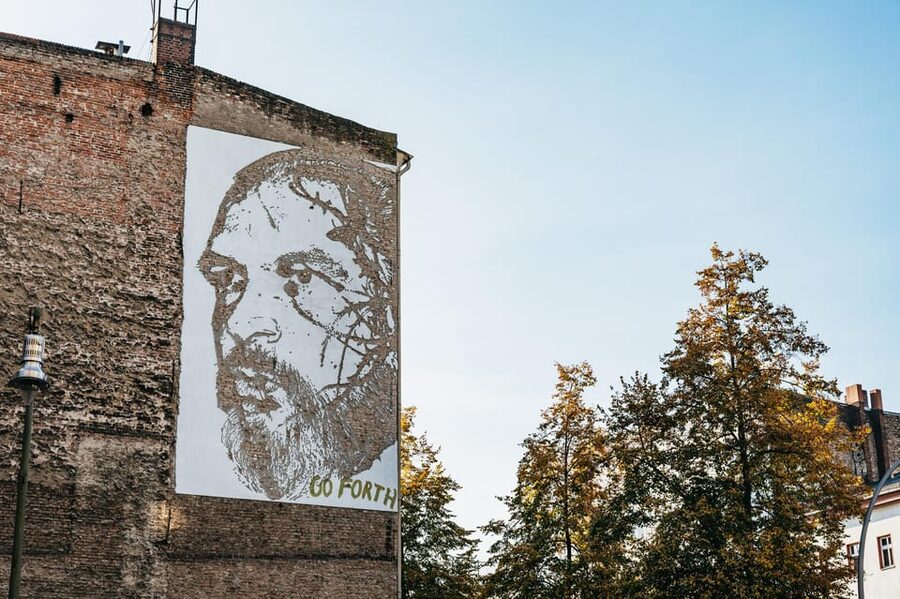
REVIEW · WALKING TOURS
Berlin: Gay Berlin Out in Schöneberg Walking Tour
Schöneberg tells its queer story in bricks and dates. This 2.5-hour Gay Berlin walking tour turns the streets around Nollendorfplatz into a living timeline, from the 1920s to today. Two things I especially like: you get a direct line to the Nationalhof gay rights center, and the walk threads major landmarks like Motzstraße and Christopher Isherwood’s home into one clear story. One thing to consider, it is a walking tour with no food stops included, so plan for your own snacks and water.
I also liked how the guide, Tobias, brings Berlin’s LGBTQIA+ past into focus without drowning you in dates. He uses humor, personal anecdotes, and helpful archive images and text to make the places feel real. The main drawback for some people is that, if you want a long break or a guaranteed coffee stop built into the route, you may need to handle that on your own since meals are not part of the package.
In This Review
- Key highlights worth your time
- Schöneberg still feels like a queer map
- Your 2.5-hour route, from Nollendorfplatz to everyday streets
- Nationalhof stop: where rights turned into a movement
- Motzstraße and the El Dorado cabaret club site
- Interwar Berlin: the 1920s scene, then the Nazi break
- Hollandais club, Kleist Casino, and how “hubs” shaped the neighborhood
- Christopher Isherwood on Nollendorfstraße and the Gay Liberation thread
- Late-1960s resurgence, the lesbian quarter, and everyday street life
- Tobias the guide: story-first, with archive support and real sensitivity
- Comfort, pace, and what to wear for a 2.5-hour walk
- Price and value: is $23 for 2.5 hours fair?
- Who this tour fits best, and who might skip it
- Should you book this Berlin gay walking tour?
- FAQ
- How long is the Berlin Gay Berlin Out in Schöneberg Walking Tour?
- What’s the price per person?
- Where is the meeting point?
- What languages does the tour guide speak?
- Is the tour wheelchair accessible?
- What is included in the price?
- Are food and drinks included?
- What is the cancellation policy?
- Is reserve now and pay later available?
- What major places does the tour cover?
Key highlights worth your time
- Nationalhof location in Schöneberg: see the historic heart of Berlin’s gay rights movement
- Motzstraße and the El Dorado cabaret club site: connect nightlife to political change
- Interwar scene, then a break in the early 1930s: understand what shifted and why
- Christopher Isherwood on Nollendorfstraße: link literature to the later Gay Liberation movement
- Late-1960s West Berlin resurgence: follow how Schöneberg became the go-to queer district again
- Lesbian quarter and everyday street life: Schwerin Straße plus Eisenacher Straße show daily reality, not just famous venues
Other walking routes through Berlin
- Berlin: Third Reich and Cold War 2 Hour Walking Tour★ 4.9 · 6,830 reviews
- Berlin: Discover Berlin Walking Tour★ 4.9 · 5,998 reviews
- Berlin’s Best: 2 Hour Walking Tour Third Reich and the Cold War★ 5.0 · 5,486 reviews
- Berlin: Hidden Backyards Guided Walking Tour★ 4.8 · 5,360 reviews
Schöneberg still feels like a queer map
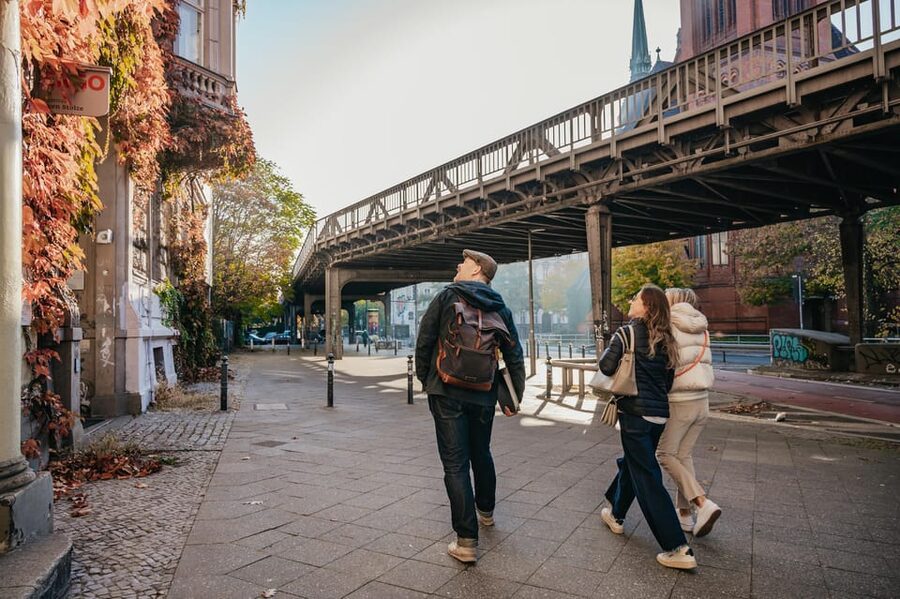
Berlin has plenty of photo-friendly memorials, but this tour works differently. You’re not staring at one plaque and calling it done. You’re walking through Schöneberg with a guide who connects the dots between places, laws, nightlife, and everyday public life.
The area around Nollendorfplatz is a smart base, because it sits in the middle of several chapters of LGBTQIA+ Berlin. You’ll cover the interwar years, then jump to the resurgence of the late 1960s, and finally land on what it looks like now. That “then, later, and today” rhythm is what makes the tour more useful than a standard city walk.
Your 2.5-hour route, from Nollendorfplatz to everyday streets
The tour runs about 2.5 hours and stays in and around Schöneberg. The meeting point can vary by option, so check your booking details the day of. You’ll be on foot the whole time, with enough pauses to take photos, look at buildings closely, and ask questions as you go.
Even if you’re only in Berlin briefly, I like this timing. It’s long enough to understand why the neighborhood mattered, but short enough that you won’t feel trapped in a single theme. And since the tour is focused on a compact area, you get the benefit of walking between real locations, not just hearing a talk over transit.
The route’s “spine” is the Nollendorfplatz area, then it fans out to streets tied to nightlife and culture, including Motzstraße, Nollendorfstraße, Schwerin Straße, and Eisenacher Straße. That spread matters, because it shows queer life in multiple forms, not only bars and clubs.
Nationalhof stop: where rights turned into a movement
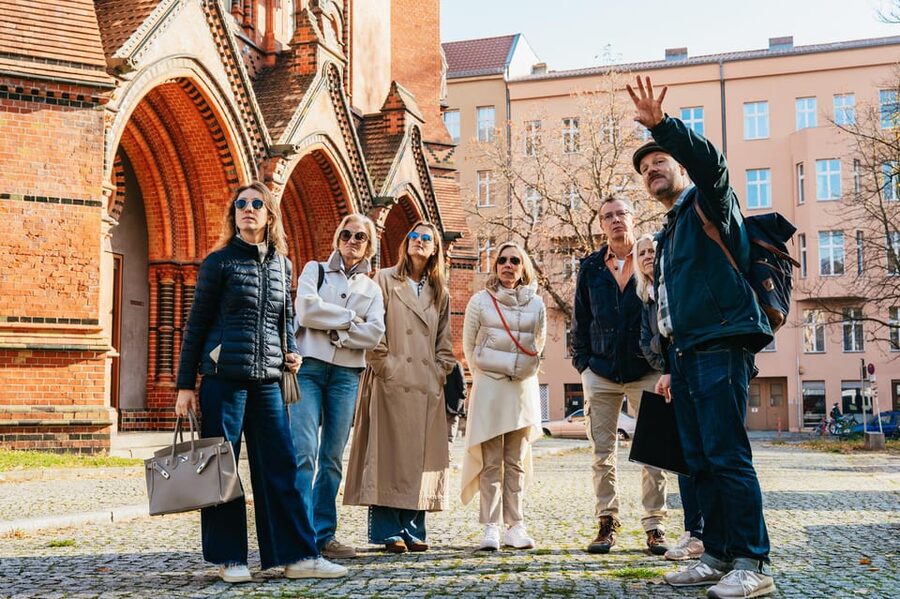
One of the most important moments on this tour is the visit to the Nationalhof location. This is where the story stops being just social life and starts becoming political history. The Nationalhof is presented as the heart of the gay rights movement, and that framing helps you understand why Schöneberg earned its reputation.
When you stand there, the lesson is not just that people gathered. It’s that organized community energy existed, and it pushed for recognition and legal change in the interwar period. The guide also sets this moment inside the broader timeline, from the end of World War I through the early 1930s, when Nazi power began to rise.
If you like history that explains cause and effect, this is your stop. You’ll leave with a clearer sense of how activism and public spaces were linked in real life, in one neighborhood.
Motzstraße and the El Dorado cabaret club site
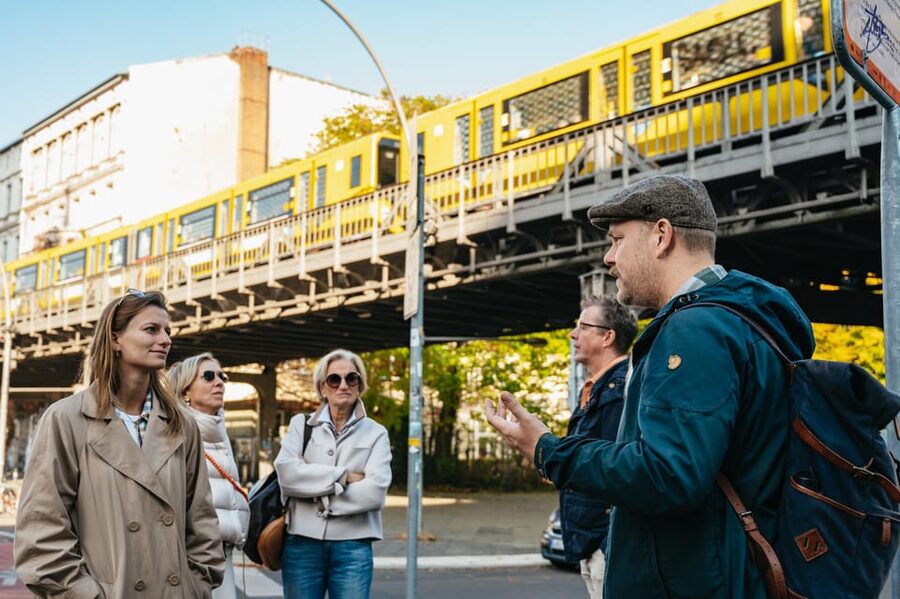
Motzstraße is where the tone shifts. Instead of politics-first, it becomes nightlife-first, but not in a shallow way. The tour points you to the site of the famed El Dorado cabaret club, connecting entertainment to identity and community visibility.
Cabaret mattered in 1920s and 1930s Berlin because it was a place where performance, style, and social signals all came together. That means it was more than just a show. It was a kind of public statement, even when the wider world was hostile.
I also appreciate that the guide doesn’t treat these venues like museums. You’re learning how the queer scene worked, who used these spaces, and why nightlife could be both freedom and a risk.

Interwar Berlin: the 1920s scene, then the Nazi break
A big part of what you’ll learn is the back-and-forth of progress and danger. The tour sets the stage after World War I, then focuses on the local gay rights movement in the 1920s. This is when you get a sense of momentum, with people building community institutions and cultural hubs.
Then the narrative reaches the early 1930s and the accession of the Nazi Party. That’s not just a date drop. The guide uses it to explain why earlier gains and public visibility could not be sustained once the regime hardened.
This interwar section is one of the reasons the tour works well for first-timers. It gives you the basic logic of the era, so Berlin’s later queer history makes sense. Without that, you can end up seeing scenes like the late 1960s as random comebacks. With this context, they feel like a return after pressure and repression.
Hollandais club, Kleist Casino, and how “hubs” shaped the neighborhood
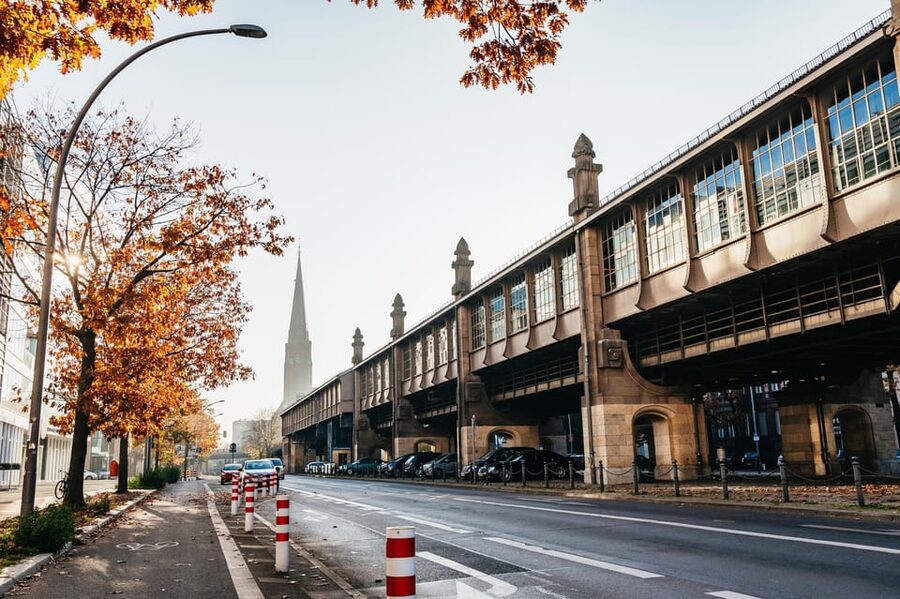
The tour doesn’t stop at one famous name. You’ll also see the locations tied to other important hubs, including the Hollandais club and the Kleist Casino.
Why do these stops matter? Because they show that Schöneberg’s reputation wasn’t built on one venue. It was built on a network of gathering places, where community could form around shared interests, social bonds, and culture.
This is the part of the tour that rewards people who like street-level history. You’re not just learning who mattered. You’re learning why the neighborhood had the gravitational pull it did.
Christopher Isherwood on Nollendorfstraße and the Gay Liberation thread
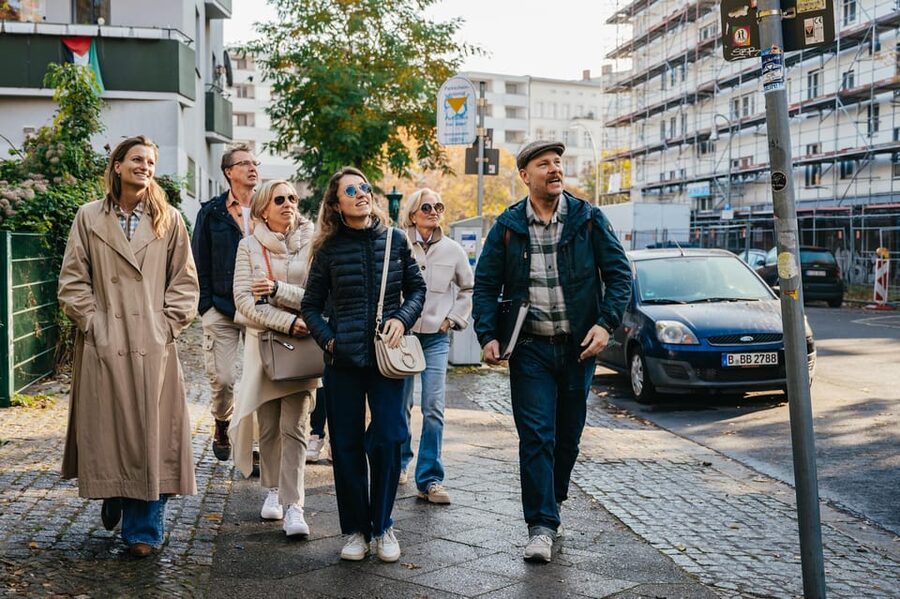
On Nollendorfstraße, you’ll stop by the former home of novelist Christopher Isherwood. This detail adds a different angle to the tour because it links Berlin’s queer story to writing that traveled beyond the city.
Isherwood’s works are described here as integral to the Gay Liberation movement. That matters, because it helps you see how cultural output can carry ideas forward. A neighborhood scene is one thing. Ideas that reach wider audiences and future generations are another.
If you’re a literature person, you’ll probably enjoy this segment. If you’re not, it still works, because it’s used as a bridge from early 20th century visibility to later LGBTQIA+ activism.
Late-1960s resurgence, the lesbian quarter, and everyday street life
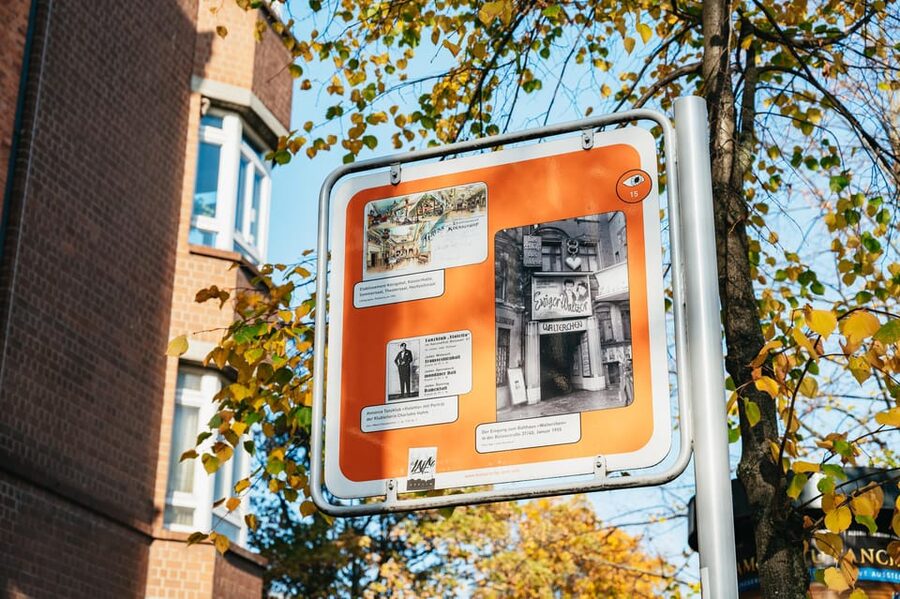
One of the tour’s smartest moves is its jump to the late 1960s. The guide explains how Schöneberg became West Berlin’s only gay district as the scene re-grew from that era onward, continuing into the present day.
That “from then to now” lens is where the tour stops being purely historical and starts being useful to you as a visitor. You can stand in modern Schöneberg and understand why the streets feel the way they do, not just that they feel that way.
Two streets in particular help with this. You’ll walk through the lesbian quarter on Schwerin Straße, and you’ll also stroll Eisenacher Straße, which reflects the varied life of a thriving neighborhood even now.
These parts are valuable because they broaden the story beyond a single brand of queer nightlife. You see how different LGBTQIA+ communities shaped the area, and how that shape can still be read in everyday life.
Tobias the guide: story-first, with archive support and real sensitivity
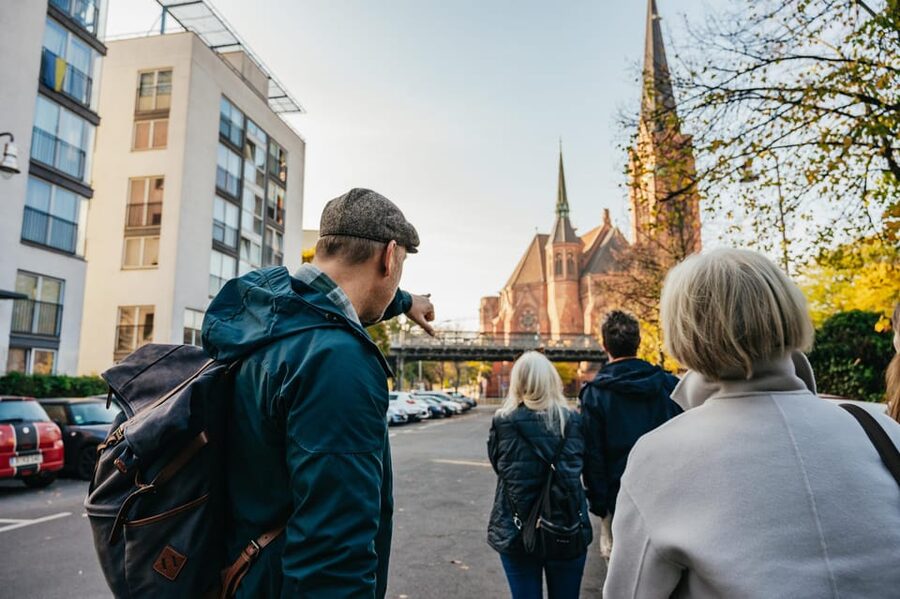
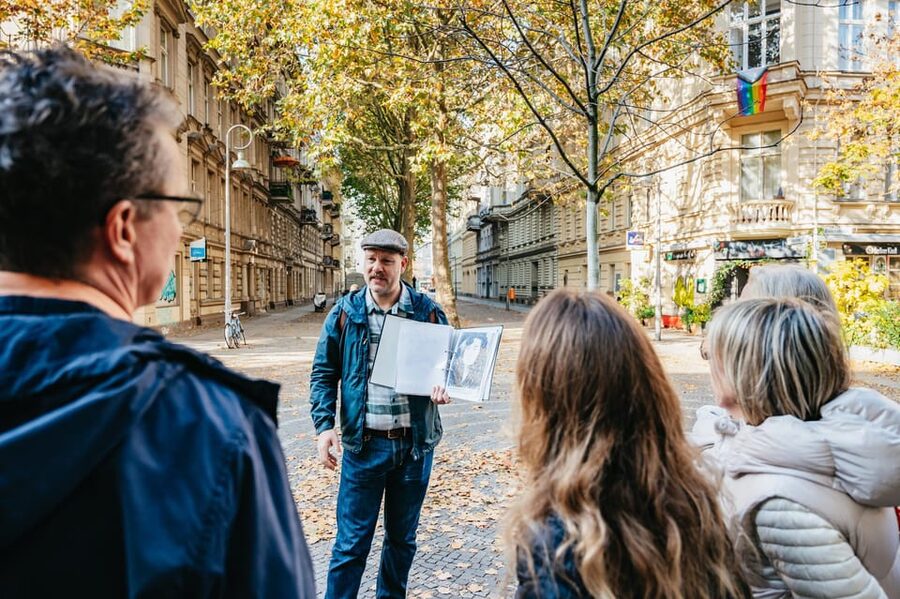
You’ll meet the guide on the ground, and his style is a key part of the experience. Tobias is described as attentive and friendly, with a strong sense of humor. He also shares personal anecdotes that make the walk feel like a conversation, not a lecture.
What I’d point out as a practical plus is the use of archive images and text. When you’re learning about places that no longer look the same, visual context helps. It makes the past feel less abstract, especially for the interwar period.
I also like that his approach includes comfort stops during the walk. On a cold or rainy day, that can be the difference between tolerating a tour and actually enjoying it. The general vibe is: ask questions as you go, take breaks when needed, and keep moving at a pace that fits a walking group.
Comfort, pace, and what to wear for a 2.5-hour walk
This is a walking tour, so your comfort matters. Even with pauses, you’re on your feet for most of the 2.5 hours. Wear shoes you trust on Berlin sidewalks and bring layers, because weather can turn quickly.
The tour is wheelchair accessible, so the route is designed with that in mind. Still, check the details for how the group moves and where stops happen in your specific time slot, since meeting points can vary.
Because there’s no food and drinks included, I strongly suggest you start with a light snack or plan one after. If you’re touring in the morning or late afternoon, having a plan prevents the last part of the experience from feeling rushed.
Price and value: is $23 for 2.5 hours fair?
At $23 per person for a 2.5-hour guided walk, this is priced like a solid Berlin “neighborhood education” option. You’re paying for more than facts. You’re paying for access to a coherent story, delivered on foot through real sites tied to activism, nightlife, and later resurgence.
The value gets stronger when you think about what the tour includes: a live guide in German and English, plus the structured route that ties together landmarks like Nationalhof, El Dorado’s site, and Christopher Isherwood’s former home. With that kind of focus, $23 feels reasonable, especially if you would otherwise spend time piecing the story together from guidebooks.
If you’re the type who likes to understand context while you walk, this price-to-time ratio is a win. If you only want casual sightseeing with minimal explanations, you might prefer a shorter, more flexible walk. But for queer history in Schöneberg, it’s good value.
Who this tour fits best, and who might skip it
This tour is a great fit if:
- You want queer history tied to specific Berlin locations, not just general background.
- You like a narrative that covers multiple periods, including the interwar years and the late-1960s comeback.
- You’re interested in how culture and activism connected, with a literature link through Christopher Isherwood.
I’d hesitate if:
- You want food included or a guaranteed sit-down break, because meals and drinks aren’t included.
- You prefer a very hands-off tour where you just wander and don’t want structured storytelling. This one is guided and story-driven.
Should you book this Berlin gay walking tour?
Yes, if you want one focused way to understand Schöneberg’s LGBTQIA+ story, this is a strong choice. The route makes practical sense for a first or second day in Berlin, and the landmarks hit key parts of the timeline: Nationalhof, El Dorado’s site on Motzstraße, Christopher Isherwood on Nollendorfstraße, and the later district resurgence.
My main booking advice is simple: bring layers, wear good shoes, and plan your own drink or snack. If you want to add a stop afterward at a local queer cafe or shop, do it based on your own judgment, since end-of-tour cafe experiences can vary.
If your goal is to understand why this neighborhood mattered, and not just take pictures, book it.
FAQ
How long is the Berlin Gay Berlin Out in Schöneberg Walking Tour?
The tour lasts about 2.5 hours.
What’s the price per person?
It costs $23 per person.
Where is the meeting point?
The meeting point may vary depending on the option booked.
What languages does the tour guide speak?
The live tour guide speaks German and English.
Is the tour wheelchair accessible?
Yes, it is wheelchair accessible.
What is included in the price?
You get a walking tour and a guide.
Are food and drinks included?
No, food and drinks are not included.
What is the cancellation policy?
You can cancel up to 24 hours in advance for a full refund.
Is reserve now and pay later available?
Yes. You can reserve your spot and pay later.
What major places does the tour cover?
You’ll visit the area around Nollendorfplatz and see stops tied to the Nationalhof, the El Dorado cabaret club on Motzstraße, Christopher Isherwood on Nollendorfstraße, plus places including the Hollandais club and Kleist Casino. You’ll also walk streets such as Schwerin Straße and Eisenacher Straße.
Pavements of Berlin
Everything else we filed on Berlin
- East Berlin: City of Shadows Walking Tour
★ 5.0 · 11 reviews - Berlin: Die Stachelschweine – Frank Lüdecke – Träumt Weiter
★ 4.7 · 11 reviews - Potsdam Day Trip from Berlin with a Local: Private & Personalized
★ 4.0 · 11 reviews - An Introduction to Berlin Walking Tour
★ 5.0 · 11 reviews - DJ for a Day: Learn to Mix Like a Pro in Berlin
★ 5.0 · 11 reviews - 2-H Segway Sightseeing Tour Berlin
★ 4.5 · 11 reviews
Walking Tours, side by side.
 ★ 5.0Discover Berlin Half-Day Walking TourFrom $249,624 reviews
 ★ 4.9Berlin: Third Reich and Cold War 2 Hour Walking TourFrom $236,830 reviews
 ★ 4.6Munich: Third Reich & WWII Walking TourFrom $316,181 reviews
 ★ 4.9Berlin: Discover Berlin Walking TourFrom $235,998 reviews
 ★ 5.0Berlin’s Best: 2 Hour Walking Tour Third Reich and the Cold WarFrom $245,486 reviews
 ★ 4.8Berlin: Hidden Backyards Guided Walking TourFrom $235,360 reviews
 ★ 4.5Third Reich Walking Tour MunichFrom $454,291 reviews
 ★ 5.0Third Reich Berlin: Hitler and WWII Walking TourFrom $243,301 reviews