
REVIEW · WALKING TOURS
Berlin: Hidden gems around the Gendarmenmarkt – Guided walking tour
Berlin hides stories in plain sight. This 2-hour walking tour around Gendarmenmarkt gave me two big reasons to smile: the cathedral-and-square architecture walk-through feels clear and practical, and the stories connect landmarks to real moments, including the 1989 proclamation of freedom to travel. One thing to consider upfront, though: the tour is German-language only, so it may not work if you need English.
I also like that it is a small group setup (max 15), so you can actually ask questions instead of just listening while walking fast. You start at Gendarmenmarkt, opposite the building at Französische Straße 44, and you finish back at the same spot, which makes it easy to keep moving afterward.
In This Review
- Key highlights you will care about
- Why Gendarmenmarkt works so well for a focused walk
- Meeting at Gendarmenmarkt, then walking smart for 2 hours
- German Cathedral, French Cathedral, and Konzerthaus: seeing architecture as a clue
- The story behind Berlin’s most beautiful square, plus what changed since
- The 1989 freedom to travel stop, and why it hits
- Hausvogteiplatz and the fashion world you can still sense nearby
- Jägerstraße: Mendelssohn Bank, meetings of thinkers, and the map of ideas
- Mohrenstraße, small streets, big connections
- People you recognize: Hoffmann, Baker, Dietrich, Waldoff, and the Mendelssohns
- Price and value: why $20 makes sense for this format
- Who should book this tour, and who might skip it
- Should you book the Gendarmenmarkt walking tour?
- FAQ
- How long is the Berlin: Hidden gems around the Gendarmenmarkt guided walking tour?
- What does it cost, and is there a way to keep plans flexible?
- How big is the group for this tour?
- What language is the live guide using?
- Is the tour wheelchair accessible?
- Can I cancel and get a refund?
Key highlights you will care about
- Three landmark buildings: German Cathedral, French Cathedral, and the Konzerthaus, explained for what they signal in Berlin-Mitte.
- How the square got its reputation: the story behind Berlin’s most beautiful square, including big changes over time.
- A concrete stop in 1989: you visit the place tied to the freedom to travel proclamation.
- Fashion history near Hausvogteiplatz: how this area fed Berlin’s rise as a fashion metropolis.
- Jägerstraße as a brain-and-bank street: Mendelssohn Bank links with intellectual meetings involving Humboldt and the Mendelssohns.
- People you recognize, tied to the streets: E.T.A. Hoffmann, Josephine Baker, Marlene Dietrich, Claire Waldoff, and more.
Other walking routes through Berlin
- Berlin: Third Reich and Cold War 2 Hour Walking Tour★ 4.9 · 6,830 reviews
- Berlin: Discover Berlin Walking Tour★ 4.9 · 5,998 reviews
- Berlin’s Best: 2 Hour Walking Tour Third Reich and the Cold War★ 5.0 · 5,486 reviews
- Berlin: Hidden Backyards Guided Walking Tour★ 4.8 · 5,360 reviews
Why Gendarmenmarkt works so well for a focused walk
If you have walked through Berlin Mitte before, you might think the Gendarmenmarkt is mostly “pretty buildings and photos.” This tour nudges you past the postcard. You are looking at a square that has been shaped by power, culture, and constant change, and you learn how those layers show up in the streets right off the open space.
The reason this matters is simple: Berlin can feel like a collection of eras with gaps in between. Here, you get a guided line that ties the architecture to the human stories, from writers and performers to banking and fashion. The payoff is that the area stops being just a landmark. It turns into a place with a timeline you can actually follow.
You’ll also hear about a major construction situation that started in 2023. Even if some parts are under work, that detail is useful. It reminds you that Berlin is not frozen, and what you see today still connects to how the city keeps reshaping itself.
Meeting at Gendarmenmarkt, then walking smart for 2 hours
This tour is built for a 2-hour time window. That is long enough to connect several neighborhoods and viewpoints, but short enough that you do not feel like you are committing a half day. You do not get shuffled across Berlin. You stay concentrated around Gendarmenmarkt and the nearby streets.
You meet at Gendarmenmarkt, opposite the building at Französische Straße 44. The tour ends back at the same meeting point, which is handy when you plan your next meal, museum stop, or just a calm walk back through Mitte.
Group size is small, max 15 people. That number matters because the guide can keep the pacing conversational. It also helps if you like to stop and look up at facades instead of being rushed to the next corner. And yes, it is wheelchair accessible, which is a real plus for a walking tour. The flip side is that it is not suitable for visually impaired or hearing-impaired participants, so plan accordingly.
German Cathedral, French Cathedral, and Konzerthaus: seeing architecture as a clue
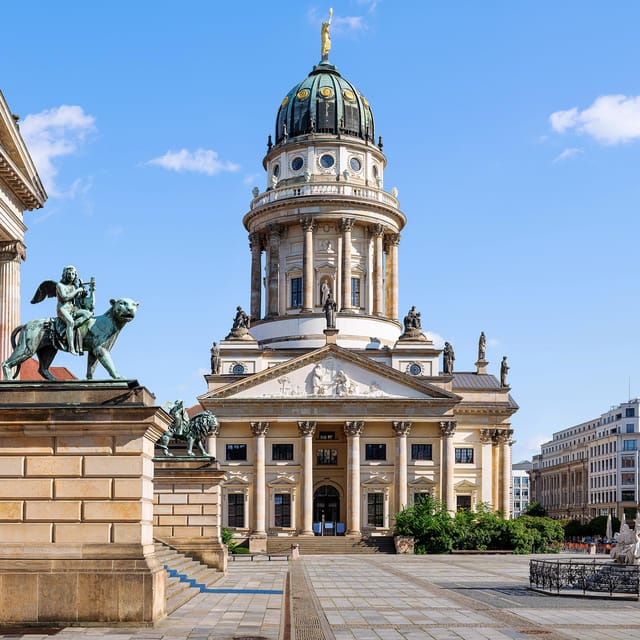
The walk starts with the three famous buildings that frame the square: the German Cathedral, the French Cathedral, and the Konzerthaus. You do not just get names. You learn what to look for when you glance up.
This is where a good guide earns their pay. Architecture can feel vague if you only get broad statements. Here, you get explanations of features and why they mattered for the city. Once you know what to notice, you start seeing symmetry, design language, and the intended message of each structure.
Practical tip: if you want the best views, take your eyes off the ground for the first ten minutes. That is when your brain starts grouping everything. After that, it gets easier to follow the stories, because you can match each new detail to what you are actually looking at.
The story behind Berlin’s most beautiful square, plus what changed since
Gendarmenmarkt has a reputation, and this tour tackles it directly. You hear the exciting story behind what people call Berlin’s most beautiful square, plus how the area has shifted through eventful times.
One value of doing it as a walking experience is that you can feel the space. A square is not just a backdrop. It is designed for public life, ceremonies, and the kind of gathering that attracts attention. When you learn that context, the square makes more sense than a quick photo ever could.
You also learn why the area has been a major construction site since 2023. That might not sound romantic, but it helps you understand why your visit may include barriers, detours, or work zones. It keeps expectations realistic. Berlin is always in motion, and knowing that up front makes the walk feel grounded rather than interrupted.
The 1989 freedom to travel stop, and why it hits
There is a key moment in German history built into this route. You visit the place where the freedom to travel was proclaimed in 1989. For many people, that year connects to big headlines. For this tour, you get the chance to experience the moment at its actual location, instead of leaving it as abstract history.
Why this is powerful as a walking tour detail: it changes the emotional temperature of the neighborhood. The square and its surrounding streets stop being only architecture and culture. They become witness points.
If you like history with a pulse, this is the part that tends to land hardest. It also makes the rest of the walk feel more coherent, because you keep seeing how Berlin’s public spaces reflect political change and personal hopes.
Hausvogteiplatz and the fashion world you can still sense nearby
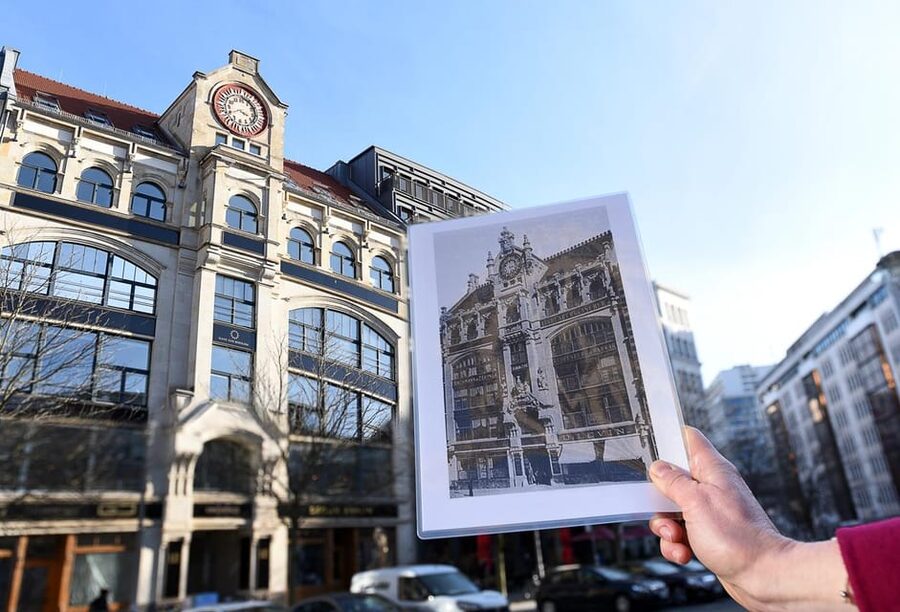
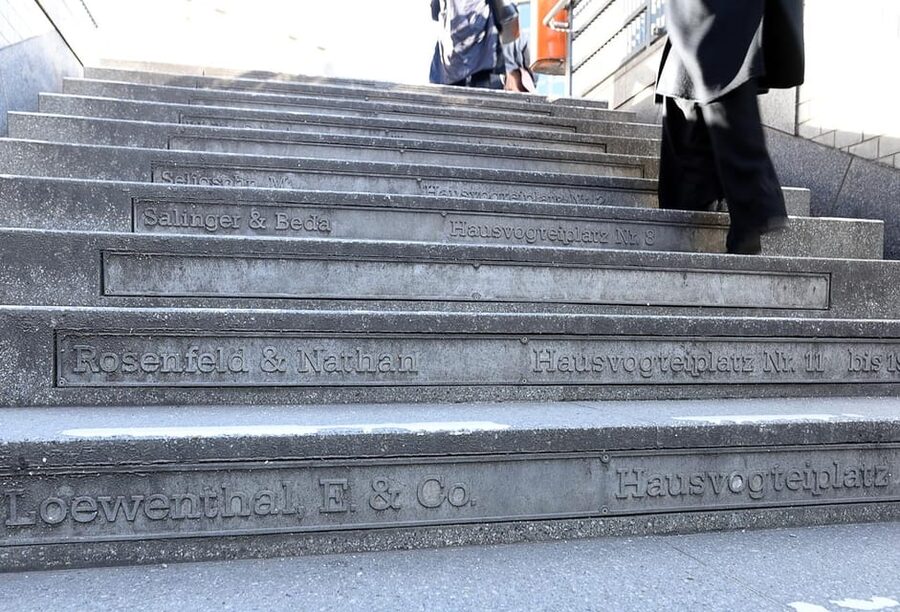
Just a few steps from Gendarmenmarkt, the tour takes you toward Hausvogteiplatz, described as a forgotten world of fashion. This is where you learn that the area once sat at the center of Berlin’s fashion industry and helped shape how Berlin developed into a fashion metropolis.
What I like about this section is that it gives you a different lens on the same city space. You are not just learning about how buildings were designed. You are also learning how people used the area for work, creativity, and identity.
And it helps you read Berlin differently after the tour. Even if fashion stores change over time, the idea that the streets once carried a creative industry sticks with you. You start seeing how culture concentrates in certain pockets, then spreads.
Jägerstraße: Mendelssohn Bank, meetings of thinkers, and the map of ideas
Next comes Jägerstraße, a street the tour treats as both financial and intellectual. You learn it was once the heart of Berlin’s financial world, tied to the influential Mendelssohn Bank. But the story does not stop at money.
This street also carried important intellectual energy. The tour highlights meetings that involved Alexander von Humboldt, Rahel Varnhagen van Ense, and Moses Mendelssohn. That combination is a clue to what made parts of Berlin so influential: finance, ideas, literature, and social life rubbing shoulders.
If you want a city walk that feels more like thinking than sightseeing, this is the section that does it. It gives you names that are not random. They connect to where people gathered and how ideas traveled through social networks.
Mohrenstraße, small streets, big connections
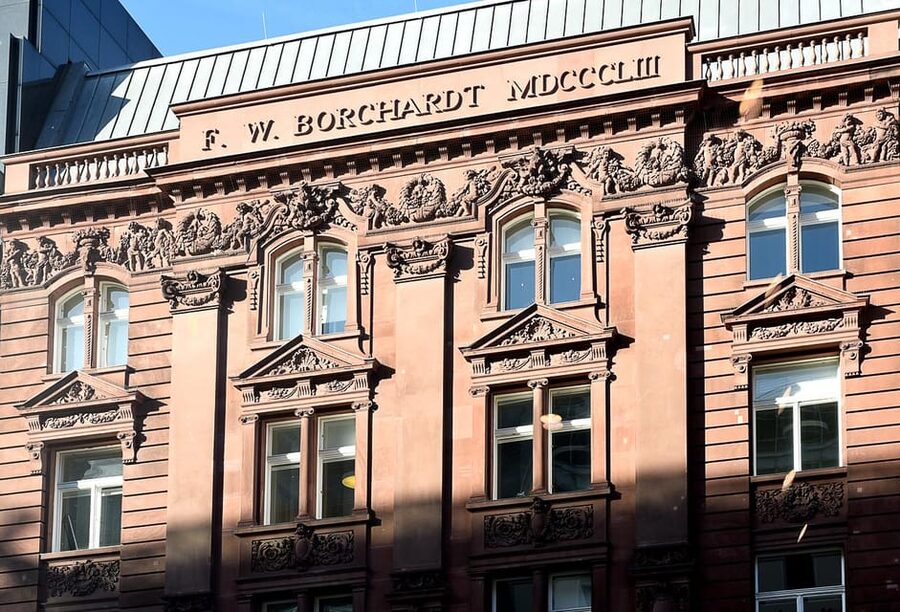
A walking tour earns its keep when it makes you notice the in-between spaces. This route includes surrounding streets such as Mohrenstraße, Hausvogteiplatz, and Jägerstraße, so you are not stuck staring at one square the whole time.
Those street segments matter because they help you understand the layout of Berlin-Mitte as a lived system. Streets connect scenes, and the guide uses that. You start to see how a change in street can shift the kind of story you hear, from architecture to fashion to banking and ideas.
The best part is that you come away with a mental map. Then, when you walk on your own later, you are not just moving through space. You are placing what you see into the framework you just learned.
People you recognize: Hoffmann, Baker, Dietrich, Waldoff, and the Mendelssohns
One of the strongest aspects of the tour is how it threads people through place. You meet famous personalities connected to the area, including:
- E.T.A. Hoffmann
- Josephine Baker
- Marlene Dietrich
- Claire Waldoff
- the Mendelssohn family
- and Moses Mendelssohn in the Jägerstraße story
I like tours that treat history as human-scale, not just dates. Here, those names give you hooks. Once you connect a person to a street, you remember the place longer, and your own wandering feels more purposeful.
Also, the guiding style seems to land well. The tone you get is friendly and competent, and that matters when you want a walk to feel easy, not like a lecture you tolerate. Even on a rainy afternoon, the storytelling keeps the mood moving.
Price and value: why $20 makes sense for this format
At $20 per person for about 2 hours, this is not a “see everything” deal. It is a focused guided experience with a small group (max 15). That format is where the value shows up.
You pay less for a guide than you would spend on a museum ticket plus a day of confusion. And you get something museums often do not provide: a guided way to connect multiple nearby landmarks and streets into one coherent story.
If you enjoy architecture, city history, and readable context, this pricing is a fair match. If you only want a quick photo stop with zero narration, you might feel it is more than you need. But if you want to feel oriented and smarter about Berlin Mitte in a short time, it is a solid use of your hours.
Who should book this tour, and who might skip it
Book this if you like:
- walking with a guide and getting context fast
- architecture that comes with reasons, not just names
- history anchored to specific places, including the 1989 freedom to travel stop
- streets-and-stories tours that cover more than one theme (culture, fashion, finance, ideas)
I would be cautious if:
- you need English-language guiding, because the tour is German only
- you have visual or hearing accessibility needs, because the tour is not suitable for those groups
- you want long, slow wandering with lots of free time, because this is structured around the guide’s pace for a 2-hour experience
Should you book the Gendarmenmarkt walking tour?
Yes, if you want a high-impact Berlin Mitte walk in a short window. The combination of three landmark buildings, a strong 1989 historical anchor, and neighborhood stories about fashion and finance makes it more than a surface stroll. The small group cap also helps you feel like you are part of the experience instead of being processed.
Skip it if language access is a problem or if you prefer self-guided exploration only. In that case, you might still visit the square, but you will miss the connections that make the area feel alive.
FAQ
How long is the Berlin: Hidden gems around the Gendarmenmarkt guided walking tour?
The tour lasts about 2 hours.
What does it cost, and is there a way to keep plans flexible?
It costs $20 per person. You can reserve now and pay later, so you do not have to pay immediately.
How big is the group for this tour?
The guided walk is in a small group, with a maximum of 15 people.
What language is the live guide using?
The live tour guide speaks German.
Is the tour wheelchair accessible?
Yes, the tour is wheelchair accessible. It is listed as not suitable for visually impaired people and not suitable for hearing-impaired people.
Can I cancel and get a refund?
Yes. You can cancel up to 24 hours in advance for a full refund.
Pavements of Berlin
Everything else we filed on Berlin
- East Berlin: City of Shadows Walking Tour
★ 5.0 · 11 reviews - Berlin: Die Stachelschweine – Frank Lüdecke – Träumt Weiter
★ 4.7 · 11 reviews - Potsdam Day Trip from Berlin with a Local: Private & Personalized
★ 4.0 · 11 reviews - An Introduction to Berlin Walking Tour
★ 5.0 · 11 reviews - DJ for a Day: Learn to Mix Like a Pro in Berlin
★ 5.0 · 11 reviews - 2-H Segway Sightseeing Tour Berlin
★ 4.5 · 11 reviews
Walking Tours, side by side.
 ★ 5.0Discover Berlin Half-Day Walking TourFrom $249,624 reviews
 ★ 4.9Berlin: Third Reich and Cold War 2 Hour Walking TourFrom $236,830 reviews
 ★ 4.6Munich: Third Reich & WWII Walking TourFrom $316,181 reviews
 ★ 4.9Berlin: Discover Berlin Walking TourFrom $235,998 reviews
 ★ 5.0Berlin’s Best: 2 Hour Walking Tour Third Reich and the Cold WarFrom $245,486 reviews
 ★ 4.8Berlin: Hidden Backyards Guided Walking TourFrom $235,360 reviews
 ★ 4.5Third Reich Walking Tour MunichFrom $454,291 reviews
 ★ 5.0Third Reich Berlin: Hitler and WWII Walking TourFrom $243,301 reviews