
REVIEW · MUSEUMS
Berlin: Interactive DeJa Vu Museum Entrance Ticket
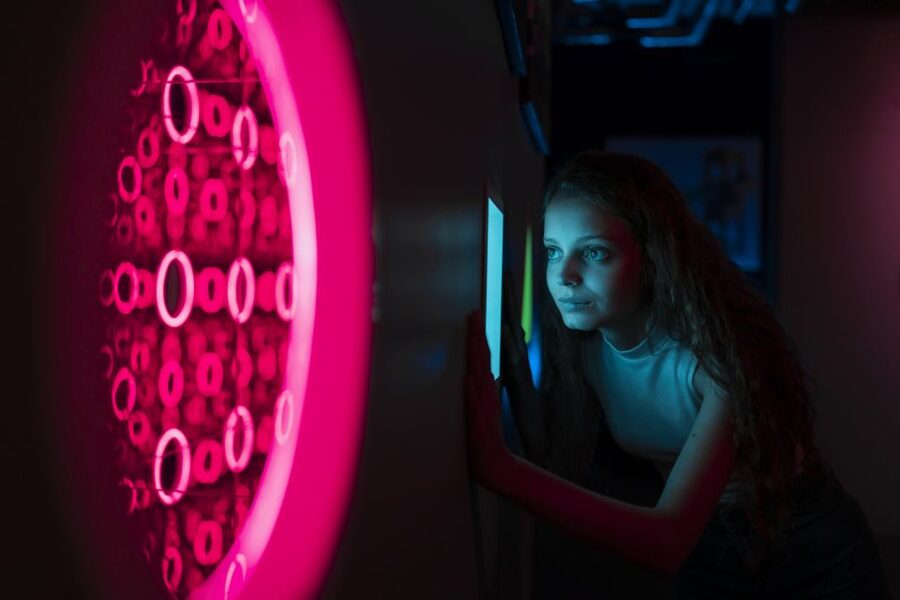
Your eyes get bossed around for 90 minutes. At the Deja Vu Museum near Alexanderplatz, you’ll work through optical-illusion exhibits, themed mirror rooms, and puzzle stations that make you part of the show. I love the mirror rooms like the Starroom and Abyss for big, camera-ready moments, and I also love the Oleg Shupliak gallery with layered artwork that turns portrait-viewing into a game.
One consideration: some exhibits feel like small, controlled rooms, so if it is busy you may spend more time waiting than doing. That said, the overall pace is still built for a smooth 1.5-hour visit.
If you want a break from the usual Berlin museum format, this is an entertaining, hands-on way to spend an hour or so. It is also a great fit for families, because a lot of the fun is about experimenting, not just reading labels.
In This Review
- Key Highlights to Know Before You Go
- Why This Berlin Optical Illusion Museum Feels Different
- Where to Find the Entrance Near Alexanderplatz
- Two Floors, One Focus: Make Your Eyes Do the Work
- Interactive Illusions and Puzzle Rooms You Can Actually Touch
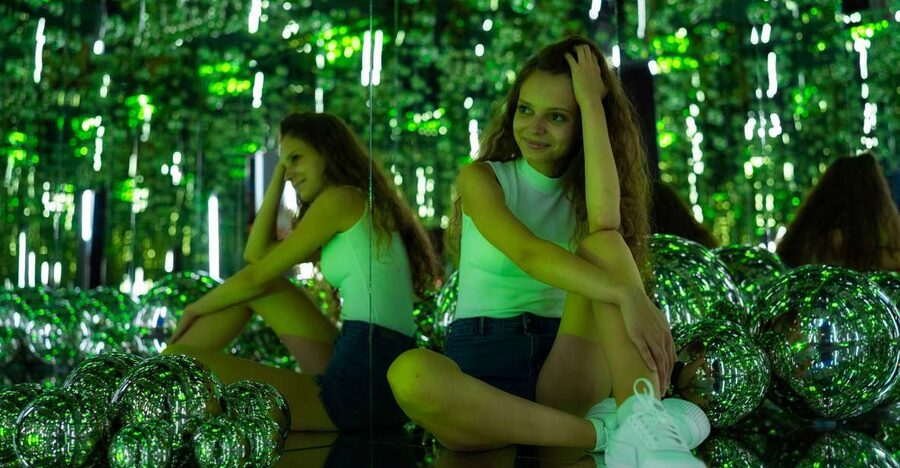
- Mirror Rooms in Berlin: Starroom and Abyss for Big Visual Payoff
- The Dark Room and Beuchet-Stuhl: When Comfort Meets Confusion
- Projector Rooms: You Become Part of the Artwork
- Oleg Shupliak’s Art Gallery: Portrait Guessing With Layered Meaning
- Kaleidoscopes and Photo Spots You Can Recreate at Home
- Price and Value: Is $17 Worth 1.5 Hours of Optical Fun?
- Who Should Book It, and Who Might Want to Skip
- Tips to Have the Best Visit Without Feeling Rushed
- Should You Book This Deja Vu Museum Ticket?
- FAQ
- Where is the Deja Vu Museum entrance in Berlin?
- How long does the visit take?
- How much is the ticket?
- Which languages are available for the host or greeter?
- Is free cancellation available?
- Is the museum suitable for people with epilepsy?
- Are pets allowed inside?
- Are there photo opportunities during the visit?
Key Highlights to Know Before You Go
- Alexanderplatz location: The entrance is about 300 meters from the Fernsehturm, right in the middle of the action.
- Mind-bending mirror rooms: Starroom and Abyss are made for both visual trickery and photos.
- Hands-on illusion stations: Expect interactive exhibits and puzzles across two floors.
- Projector rooms where you are the subject: Step into the light, and the artwork responds.
- Oleg Shupliak portrait guessing: Layers and visuals make you actively look, not just watch.
- Kaleidoscope photo moments: Bring your phone, because some spots practically beg for video.
More collections to walk through in Berlin
- Berlin: Natural History Museum Entrance Ticket★ 4.6 · 3,382 reviews
- Skip-the-Line: Berlin Wall Museum at Checkpoint Charlie★ 4.1 · 2,041 reviews
- Berlin: Museum Island Multiple Museum Entry Ticket★ 4.4 · 2,007 reviews
- Berlin: “Pergamonmuseum. The Panorama” Exhibition Tickets★ 4.6 · 1,245 reviews
Why This Berlin Optical Illusion Museum Feels Different
The Deja Vu Museum is built around one idea: your eyes are not neutral. Light, perspective, and repetition can make your brain fill in gaps, even when the real scene is doing something totally different. In other words, it is part art show, part science demo, part game.
I like that it does not treat optical illusion as a lecture. You move, you try, you react, and your understanding updates in real time. That makes it feel more like play than a typical museum stop.
Two things that make the experience especially fun for Berlin visitors: the photo-friendly mirror rooms and the mix of illusion types. You are not stuck with one gimmick the whole time. You bounce from puzzles to darkened spaces to projector rooms, so your attention stays switched on.
Where to Find the Entrance Near Alexanderplatz
The museum entrance is right by Alexanderplatz, roughly 300 meters from the Fernsehturm. That location matters more than you might think. You can tack this onto a day already packed with sights, and you do not have to plan a long commute.
Alexanderplatz is also a good base if you are moving around by transit or walking between multiple neighborhoods. After this visit, you are close to places to eat and easy routes to other Berlin highlights.
Tip: because this is an interactive museum, arriving with a little breathing room helps. You will get more out of the first few rooms if you are not rushing to catch another reservation right after.
Two Floors, One Focus: Make Your Eyes Do the Work
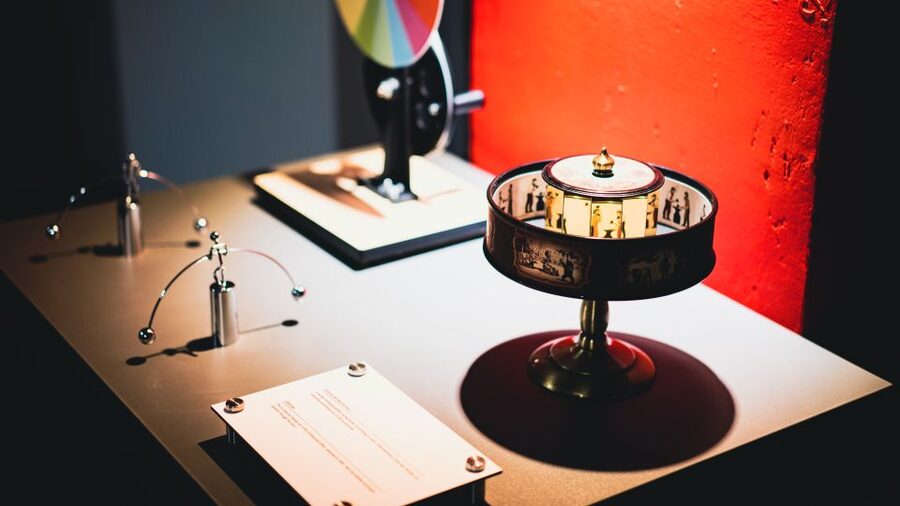
The Deja Vu Museum runs for about 1.5 hours, and you will cover two floors of galleries and illusion spaces. The layout is designed so you keep flowing through themed rooms instead of getting stuck in one exhibit for ages.
Plan for a mix of activity levels. Some parts ask for close attention and careful looking. Others are more about playful interaction and watching how the visuals react as you move.
If you tend to go fast, you’ll still find enough variety to keep it interesting. If you prefer to slow down and take photos, you’ll likely spend extra time in the mirror rooms and projector areas, where small changes in angle can completely change the effect.
Interactive Illusions and Puzzle Rooms You Can Actually Touch
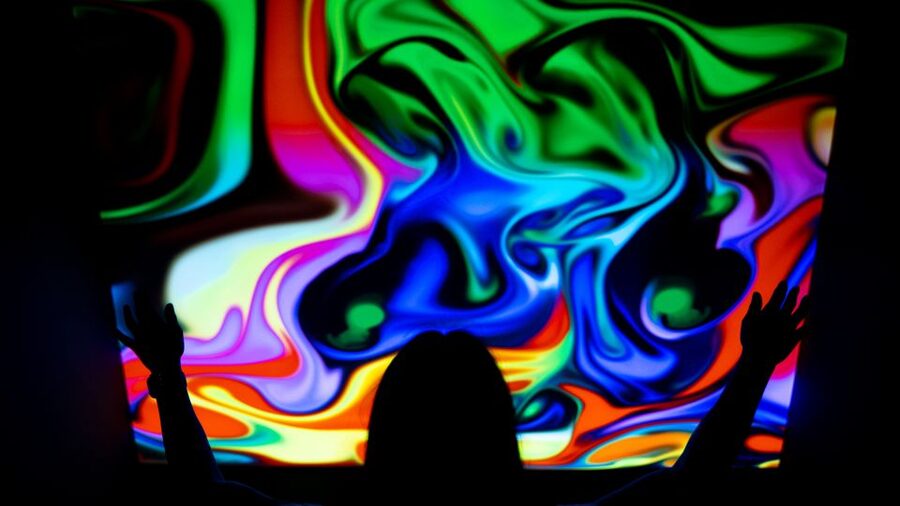
A big part of the museum is interactive exhibits and puzzles, including named stops like the Beuchet-Stuhl, the Dark Room, and the Interactive Sandbox. Even without knowing what each one looks like ahead of time, the names give you a good hint: you are meant to test your perception, not just stand back.
What I like about this style of museum is that it works for different energy levels. Some people want to solve quickly. Others want to repeat an illusion from a new angle. The museum supports both styles.
You should also expect a few exhibits to be popular. If you arrive during peak times, some rooms may feel tighter and slower because they are made for close interaction. It is not a dealbreaker, but it can change your pacing.
If you want the most fun per minute, aim to hit the most photogenic areas first, then circle back if you have time. That way, you are not stuck waiting around right when you want those final mirror-room shots.
Mirror Rooms in Berlin: Starroom and Abyss for Big Visual Payoff
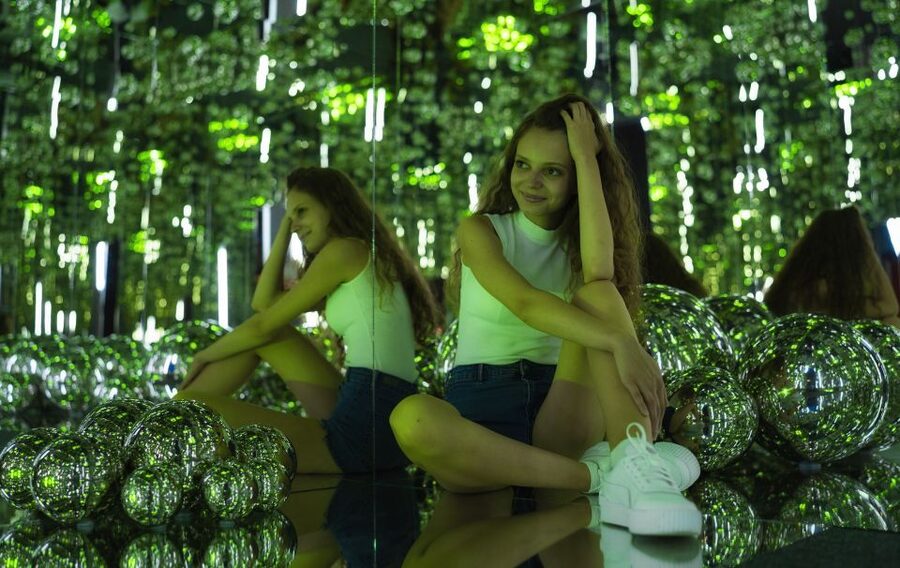
The themed mirror rooms are a major reason people book the Deja Vu Museum in the first place. The museum highlights rooms like the Starroom and the Abyss, and the whole point is perspective games. Your body, your position, and your angle create the final picture.
These rooms are especially good if you like a mix of art and comedy. You will likely laugh at how confidently your brain misreads what it is seeing. And once you find the right spot, the visuals can look wildly different with only small movements.
For photo and video, mirror rooms are one of the safest bets in any illusion museum. You can frame, step, tilt, and repeat until you get a shot that looks like it belongs in a movie. Just keep in mind that other people are doing the same thing, so be ready for brief shoulder-to-shoulder moments in the tightest areas.
One practical tip: when a mirror room gets crowded, do not waste energy fighting the flow. Take a quick shot from the side, then shift when space opens up. The best “wow” angles often appear a few steps away from where you first think to stand.
The Dark Room and Beuchet-Stuhl: When Comfort Meets Confusion
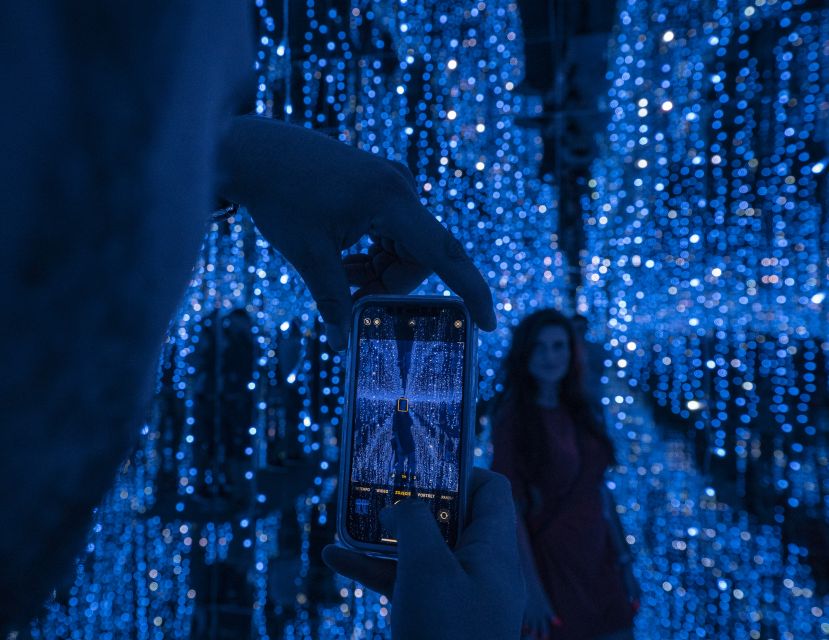
Two of the named exhibits are the Dark Room and the Beuchet-Stuhl. These tend to be the kinds of spaces where your senses reset. Dark rooms make you notice small movements and light changes more strongly, which can amplify the illusion effect.
The Beuchet-Stuhl (a chair-based illusion) fits the same pattern. Many illusion museums use hands-on, seated, or close-up setups because they control your viewpoint. That is how they get your brain to commit to the wrong idea.
Do not go in expecting a calm, quiet gallery. These spaces are meant to trigger reactions. That is also why they can be challenging for people with epilepsy, since the experience is not described as suitable for that condition.
If you are sensitive to flashing or intense lighting, it is smart to take it slowly. If you feel uncomfortable at any point, you can simply move on. The museum’s best strategy is still to follow your own pace.
Projector Rooms: You Become Part of the Artwork
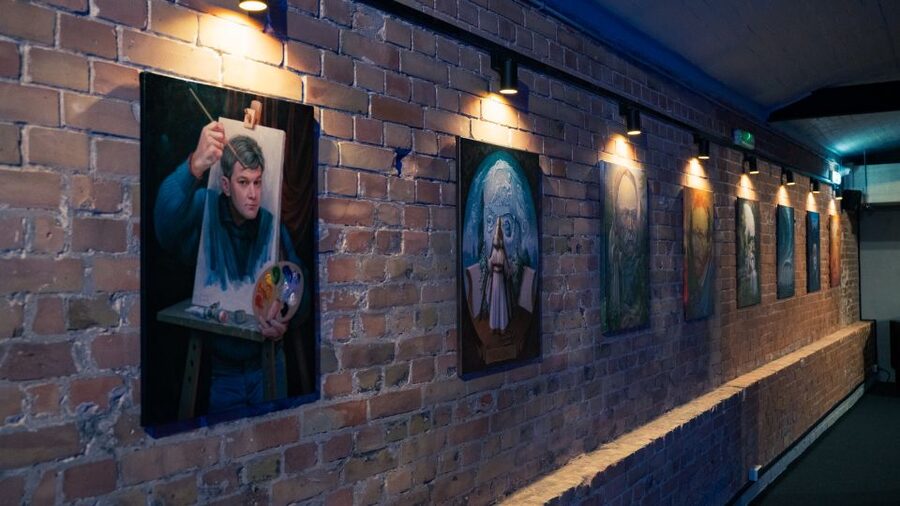
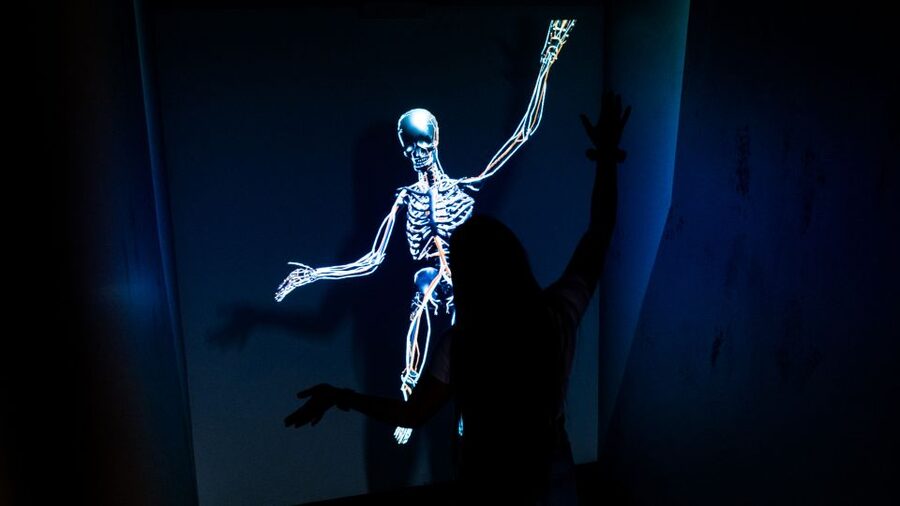
One of the most fun categories is the projector rooms, where you become the focus of the artwork and the illusion. That is a big deal because it turns the museum from something you watch into something you participate in.
Projector-based exhibits tend to reward experimentation. If you stand still, the effect may look one way. If you shift your position, raise an arm, or change your angle, you can make entirely different visuals appear on the walls or floor.
You’ll probably want to spend extra time here because these rooms are often where the “I can’t believe that is real” moments happen. They also tend to generate the best video, since movement creates a more dramatic illusion than a single still frame.
Practical note: if you see a line forming, treat it like a planning problem. Decide whether you want to wait for that specific room or move on, then come back. The museum’s structure means you can rearrange your order without ruining the overall experience.
Oleg Shupliak’s Art Gallery: Portrait Guessing With Layered Meaning
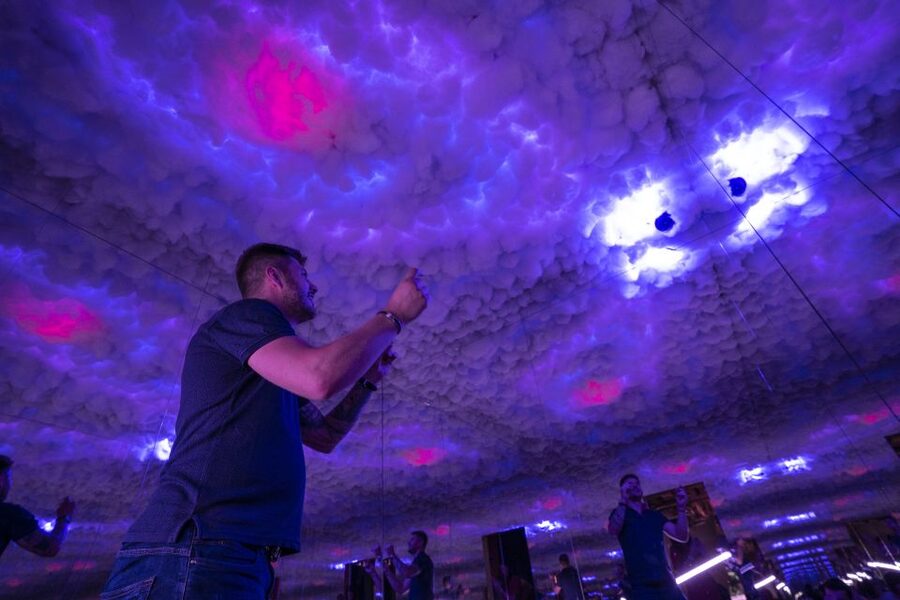
A standout section is the art gallery by Oleg Shupliak. The museum leans into the idea of layers in the artworks, and one described activity is guessing who is portrayed in his portraits.
What makes this section valuable is that it slows you down just enough. Optical illusions can be pure spectacle, but the Shupliak portraits push you into active looking. You might find yourself zooming in with your eyes, then stepping back to see the larger pattern.
The “guessing” angle is smart because it gives you a goal. Instead of wondering whether you are seeing something correctly, you focus on identifying what you think is there. That turns uncertainty into fun.
This section is also a nice contrast to the more playful mirror rooms. In a way, it balances the experience: the mirror rooms trick your spatial instincts, while the portrait gallery asks you to question what you believe you see in layered imagery.
If you enjoy art, it is worth taking a few extra minutes here. Skimming can make the layers feel less intentional, while slower attention makes the work more satisfying.
Kaleidoscopes and Photo Spots You Can Recreate at Home
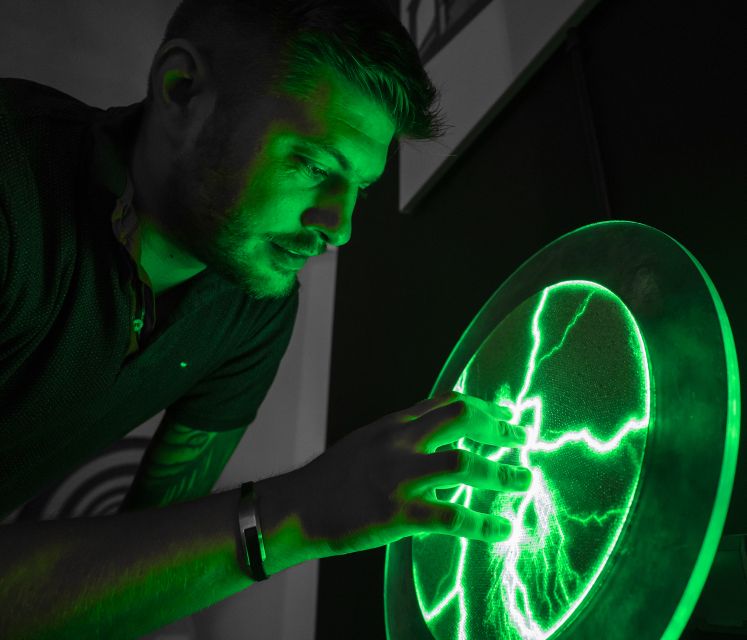
The museum specifically calls out stunning photo or video opportunities with colorful kaleidoscopes. This is a great example of the Deja Vu Museum doing something practical for visitors: it creates repeatable visual effects.
When you get a kaleidoscope moment, you’ll likely want to film, not just photograph, because small changes in angle can shift the colors and patterns. Video also helps capture the illusion evolving as the perspective changes.
Mirror rooms and kaleidoscope exhibits are also where your camera skills matter less than your timing. You do not need to be a photography expert. You just need to step into the right spot and wait for the effect.
If you want to share the results later, take a quick look at your screen and adjust once. Many people get one great shot and then stop. A smarter approach is to grab one safe angle first, then use the rest of your time experimenting.
Price and Value: Is $17 Worth 1.5 Hours of Optical Fun?
At $17 per person for about 1.5 hours, the value depends on what kind of Berlin traveler you are.
If you love interactive museums, hands-on exhibits, and a lot of photo opportunities, this price feels fair. You are not paying for a quiet walk through rooms. You are paying for structured entertainment where your actions change what you see.
If you are only interested in one or two exhibits and prefer art at arm’s length, you might feel underwhelmed. The museum is intentionally broad, with lots of themed spaces, puzzles, and illusion styles. That breadth is the point, but it does mean not every room will match every taste.
What I think makes it good value is the combination: mirrors, projector work, illusion puzzles, and an actual art gallery with Oleg Shupliak. You get variety in a short window, which is ideal in Berlin when your calendar is tight.
Who Should Book It, and Who Might Want to Skip
This is a strong match for families with kids and teenagers. The museum is designed for mixed ages, and the interactivity keeps people engaged without requiring specialized knowledge. It also works well for rainy days, because you are under cover for the full visit.
It is also a good choice for groups of friends who want something different from the usual sights. You can turn the experience into a playful challenge: who notices the trick first, who finds the best mirror angle, who cracks the portrait guessing.
However, it is not suitable for:
- people with mobility impairments
- people with epilepsy
Given that, I would not treat it as a universal “anyone can do it” attraction. The museum is made for optical effects and controlled rooms, and that is exactly why it can be a bad fit for those conditions.
Tips to Have the Best Visit Without Feeling Rushed
A good plan is to choose your own pace, but keep an eye on room size and flow. Some exhibits are interactive and can feel busy, especially on peak days. If you hate waiting, a calmer time of day can make the whole visit smoother.
Also, bring the mindset of a puzzle player. Optical illusions can be frustrating if you expect instant clarity. But if you accept that your brain might be wrong, you start enjoying the process.
Since the museum includes lots of photo opportunities, it helps to think like this:
- Grab one or two shots early in the most photogenic rooms
- Then spend time interacting where you can make the effect change
- Finish with the mirror rooms again if you have a better angle after you understand the space
Finally, remember the rules: pets are not allowed, and food and drinks, alcohol, and drugs are not allowed. That keeps the environment focused and helps explain why the museum experience feels tightly managed.
Should You Book This Deja Vu Museum Ticket?
If you want an hour of playful, brain-twisting fun near Alexanderplatz, I’d say yes. The mirror rooms, projector experiences, and the Shupliak portrait gallery give you enough variety to stay entertained the whole time, and the price matches that short, high-energy format.
I would skip or reconsider if you have epilepsy or mobility concerns. And if you are the type who dislikes crowded rooms or any waiting, choose your time carefully.
Bottom line: for most people, this is one of those Berlin activities that is easy to fit into a schedule and hard to forget once your eyes have been tricked.
FAQ
Where is the Deja Vu Museum entrance in Berlin?
The entrance is by Alexanderplatz, about 300 meters from the Fernsehturm.
How long does the visit take?
The experience is listed as 1.5 hours.
How much is the ticket?
The price is $17 per person.
Which languages are available for the host or greeter?
The host or greeter is available in English, German, Polish, Spanish, and French.
Is free cancellation available?
Yes. You can cancel up to 24 hours in advance for a full refund.
Is the museum suitable for people with epilepsy?
No. The experience is not suitable for people with epilepsy.
Are pets allowed inside?
No. Pets are not allowed.
Are there photo opportunities during the visit?
Yes. The highlights specifically mention unique photo opportunities, including mirror rooms and colorful kaleidoscope effects.
Museums Worth the Queue in Berlin
Everything else we filed on Berlin
- East Berlin: City of Shadows Walking Tour
★ 5.0 · 11 reviews - Berlin: Die Stachelschweine – Frank Lüdecke – Träumt Weiter
★ 4.7 · 11 reviews - Potsdam Day Trip from Berlin with a Local: Private & Personalized
★ 4.0 · 11 reviews - An Introduction to Berlin Walking Tour
★ 5.0 · 11 reviews - DJ for a Day: Learn to Mix Like a Pro in Berlin
★ 5.0 · 11 reviews - 2-H Segway Sightseeing Tour Berlin
★ 4.5 · 11 reviews
Museums, side by side.
 ★ 4.5Berlin: Jewish Museum Berlin Entrance TicketFrom $08,393 reviews
 ★ 4.3Berlin: DDR Museum TicketsFrom $153,443 reviews
 ★ 4.6Berlin: Natural History Museum Entrance TicketFrom $123,382 reviews
 ★ 4.6Berlin: Neues Museum Entry TicketFrom $163,261 reviews
 ★ 4.4Cologne: Chocolate Museum Entrance TicketFrom $192,790 reviews
 ★ 4.7Dresden: Church of Our Lady Guided Tour of GalleryFrom $152,421 reviews
 ★ 4.1Skip-the-Line: Berlin Wall Museum at Checkpoint CharlieFrom $212,041 reviews
 ★ 4.4Berlin: Museum Island Multiple Museum Entry TicketFrom $272,007 reviews
Other lists this tour is on