
REVIEW · COLD WAR BERLIN
Berlin: Muro,Guerra Fría y Museo de la Stasi
Cold War Berlin still feels close. This 4-hour Spanish tour traces the places where division became daily life, then ends with the Stasi Museum.
I especially love the mix of outdoor, on-the-ground wall history and indoor Stasi Museum time. You see remaining wall lines like the Death Strip area, then you get the methods behind the control system in East Berlin. One thing to consider is that you will need to buy a Berlin transport card AB (one day) for the tour, since it is not included.
In This Review
- Key highlights you should care about
- Berlin Wall and Stasi in one 4-hour walk
- Where you meet, and why Alexanderplatz matters
- First stop to understand the Berlin Wall’s design
- Frankfurter-Allee Avenue, daily life under political pressure
- Bernauer Strasse Wall Memorial, where the Wall becomes personal
- Ghost stations of the underground, when trains became political
- Stasi Museum entrance included, and why it changes everything
- How the tour explains the Wall’s rise and fall
- The guide experience, and what “good” looks like here
- Price and value: is $41 for 4 hours fair?
- Who this tour is best for
- Logistics that can save you stress
- Should you book this tour?
- FAQ
- Do I need a transport card for this tour?
- How long is the tour?
- What language is the tour guide?
- What is included in the tour price?
- What is the meeting point?
- Is food included?
- Is the tour wheelchair accessible?
- Is there free cancellation?
Key highlights you should care about
- Berlin Wall remnants and the Death Strip: See what the border system looked like in real space.
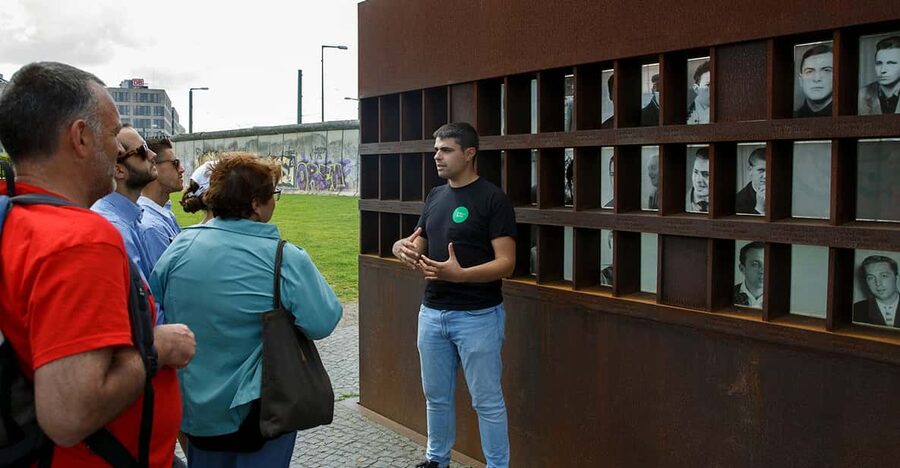
- Bernauer Strasse Wall Memorial: One of the most important places to understand the wall’s human impact.
- Frankfurter-Allee Avenue stops: A useful setting for how the wall shaped movement in everyday Berlin.
- Former ghost stations: Learn what happened to underground stations during the division.
- Stasi Museum entrance included: You do not just hear slogans, you see how the Stasi operated.
More of the divided city, written up in full
- Berlin: Third Reich and Cold War 2 Hour Walking Tour★ 4.9 · 6,830 reviews
- Berlin: Berlin Story Bunker Entry Ticket★ 4.6 · 6,759 reviews
- Berlin’s Best: 2 Hour Walking Tour Third Reich and the Cold War★ 5.0 · 5,486 reviews
- Berlin: 75-minute Trabi Safari★ 4.8 · 2,854 reviews
Berlin Wall and Stasi in one 4-hour walk
If you only know the Berlin Wall from photos, this tour gives you something better: scale and layout. You walk through parts of the city where the border system was engineered to control people, not just mark a boundary.
This is a 4-hour Spanish-language tour with a live guide. The focus is clear: the Wall’s story, the underground ghost stations, and the secret-service machinery inside the Stasi Museum.
Where you meet, and why Alexanderplatz matters
You meet at Alexanderplatz, right by the Fernsehturm (TV Tower). The exact spot is by the only entrance to the tower, between the tower and Alexanderplatz station, next to the Espresso House.
Why this is smart: Alexanderplatz is easy to reach and it helps you start the day with a clear “here’s how Berlin works now” reference point. From there, the tour can connect modern transit corridors to the Cold War routes you will hear about.
First stop to understand the Berlin Wall’s design
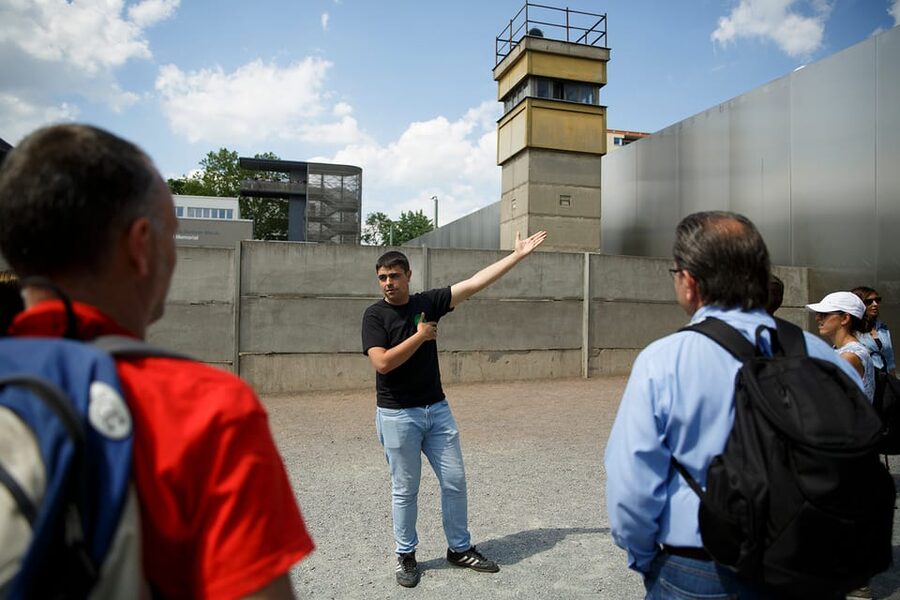
A big part of this tour is learning how the Wall worked as a system. You will see what remains of the Berlin Wall and areas tied to the infamous Death Strip concept.
The value here is practical. It is hard to understand the Wall if you only look at one photo angle. Seeing the wall segments in the city gives you a better sense of distance, sightlines, and how hard escape would have been.
It is also one of those moments where the city’s geometry does the teaching. Even when you are looking at remnants, you can start imagining the rules that controlled space, and why people risked everything anyway.
Frankfurter-Allee Avenue, daily life under political pressure

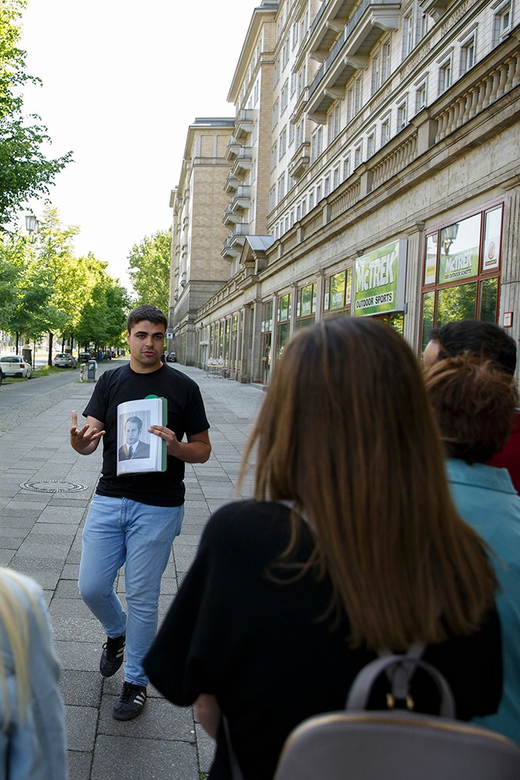
The tour includes a stop at Frankfurter-Allee Avenue. You are not just sightseeing a street name. You are connecting geography to policy, the way the Cold War shaped where East Berliners could go and what the West could see.
I like this kind of placement because it avoids making the Wall feel like a single monument. Berlin was still a functioning city during the Cold War, and streets like this helped define routines, limits, and tensions.
If you prefer your history anchored in normal life, this stop will feel like it fits.


Bernauer Strasse Wall Memorial, where the Wall becomes personal

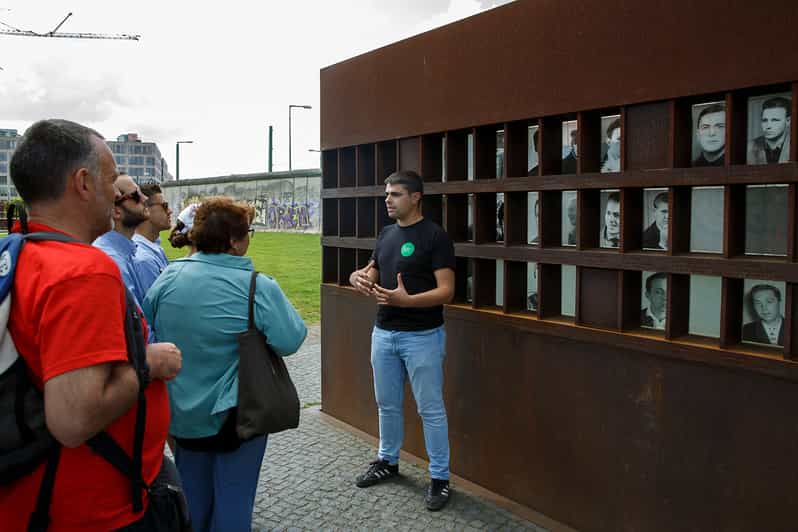
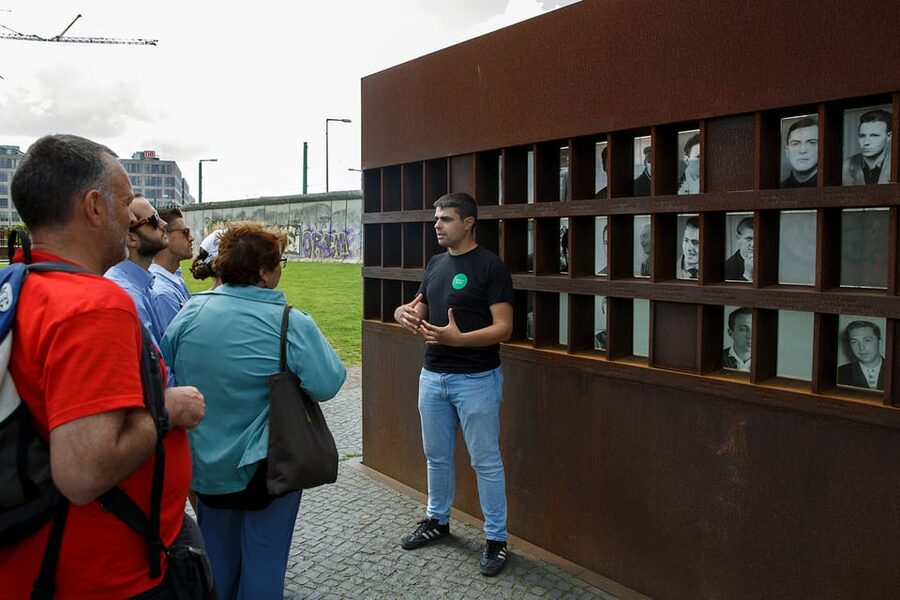
One of the anchor stops is Bernauer Strasse Wall Memorial. This is where the tour helps you understand why the Wall was built and why it became such a powerful symbol.
Bernauer Strasse is often talked about because the memorial approach makes you face the human side of the border system. Even if you already know the broad timeline, seeing the layout and the memorial interpretation changes the emotional temperature of the story.
I also like that the tour connects this area to broader questions, like what different Berliners experienced and why people tried to cross in creative ways.
A consideration: this memorial can be emotionally heavy, even when it is presented in a factual way. If you want a more upbeat history walk, you might want to balance this with lighter plans before or after.
Ghost stations of the underground, when trains became political
The tour also explores former ghost stations connected to Berlin’s underground lines. This topic has a special kind of shock: people were passing through without being able to stop, not because of technical failure, but because politics had taken control of everyday movement.
The guide portion matters here. You will get explanations for what happened to the stations and how they fit into the broader division of Berlin. In a city built on transit, this makes the Cold War feel immediate.
If you like Berlin’s U-Bahn details, this is a great section. It also helps you understand why the Wall was not only visible above ground. It affected how the city moved, on a timetable.
Stasi Museum entrance included, and why it changes everything
The tour includes entrance to the Stasi Museum. This is the part that turns the Wall story into something more concrete: the mechanisms for controlling the population in East Berlin.
You will learn about the Stasi methods used to influence life under the system. The value of this museum stop is that it shifts you from “the border was there” to “the system watched, shaped, and pressured people from inside.”
I find that balance matters. Wall history can sometimes drift into a pure monuments-and-dates mode. Adding Stasi Museum time makes the experience feel more complete, because you see how power worked day to day.
One practical note: museum time always rewards preparation. Bring water if you can, and expect to spend time reading and absorbing. You can keep it light, but you should give it your attention.
How the tour explains the Wall’s rise and fall
This 4-hour route is built around cause-and-effect. You will learn why the Wall was built, then you will hear how Berliners attempted to cross it, including the ingenious ways people tried to escape.
Then the story moves to why the Wall eventually came down, and what changed for Berliners afterward. That ending is useful because it avoids leaving you in a static past. Even with pain and trauma in the background, you get help understanding how the city developed after division.
I like that the tour does not stop at “then it ended.” It points you toward what changed in daily life as Berlin moved forward.
The guide experience, and what “good” looks like here
This tour is led by a Spanish tour guide, and that language choice matters if you want real understanding instead of half-catching the big ideas. The guides connected to this operator have a reputation for being engaging and detailed, including past named guides Constantino and Jordi.
What you should look for in a good guide here is how they handle heavy material. The best guides keep facts clear, but also connect them to what you are seeing on the street. When it works, the tour feels like a guided map through complicated history.
If you speak Spanish comfortably, you will get more from the explanations, especially at the memorial and inside the museum.
Price and value: is $41 for 4 hours fair?
At $41 per person for about 4 hours, the price feels reasonable for a Berlin history tour with museum access. You are not only paying for walking and narration. You are also paying for the guide and Stasi Museum entrance.
The main “gotcha” is the transport card requirement: you will need a Berlin transport card AB (one day), and it is not included in the tour price. So the true cost depends on what ticket you already have.
Still, the overall value makes sense if you want an organized route through multiple key sites in one go. Doing all of this alone would require more planning and would likely mean spending extra time figuring out exactly how to connect Wall remnants, memorial sections, ghost station context, and museum timing.
Who this tour is best for
This tour is a strong fit if you:
- want Cold War Berlin with specific locations, not just general lectures
- like history that connects to geography and transit
- speak Spanish (this tour is Spanish-led)
- want museum time included rather than searching for tickets on your own
It is also a good choice if you are short on time and want a structured, coherent experience. Because the route covers multiple themes, you get a fuller picture than a single-wall stop.
If you want a purely architectural tour with lighter emotions, you might find the Stasi Museum and memorial sections more intense than expected.
Logistics that can save you stress
You should plan around two practical points.
First, bring what you need for transit. This tour requires the AB one-day transport card, which is not included.
Second, plan your time. This is a 4-hour tour, so wear comfortable walking shoes. Even with breaks and explanations, you will be on your feet long enough to appreciate good footwear.
And at the end, you will likely want an easy transfer back into your own Berlin day plan. Starting at Alexanderplatz makes that simpler.
Should you book this tour?
Yes, book it if you want a Spanish-guided, place-based Cold War experience that includes both the Berlin Wall remains and the Stasi Museum. The combination is what makes the tour more than a scenic history walk.
Skip or reconsider if you are not comfortable with heavier themes. The Wall memorial and Stasi Museum are not just facts on a page. They deal with control, fear, and human risk.
FAQ
Do I need a transport card for this tour?
Yes. You need a Berlin transport card AB (one day) for this tour, and it is not included in the tour price.
How long is the tour?
The tour lasts 4 hours.
What language is the tour guide?
The tour guide speaks Spanish.
What is included in the tour price?
The tour includes a Spanish tour guide and entrance to the Stasi Museum.
What is the meeting point?
You will meet by the Fernsehturm (TV Tower) entrance in Alexanderplatz, between the tower and Alexanderplatz train station, next to the Espresso House, by a green flag that says tours en español.
Is food included?
No. Food and beverages are not included.
Is the tour wheelchair accessible?
Yes. The tour is listed as wheelchair accessible.
Is there free cancellation?
Yes. You can cancel up to 24 hours in advance for a full refund.
The Divided Years, Reviewed
Everything else we filed on Berlin
- East Berlin: City of Shadows Walking Tour
★ 5.0 · 11 reviews - Berlin: Die Stachelschweine – Frank Lüdecke – Träumt Weiter
★ 4.7 · 11 reviews - Potsdam Day Trip from Berlin with a Local: Private & Personalized
★ 4.0 · 11 reviews - An Introduction to Berlin Walking Tour
★ 5.0 · 11 reviews - DJ for a Day: Learn to Mix Like a Pro in Berlin
★ 5.0 · 11 reviews - 2-H Segway Sightseeing Tour Berlin
★ 4.5 · 11 reviews
Cold War and Stasi History Tours, side by side.
 ★ 4.9Berlin: Third Reich and Cold War 2 Hour Walking TourFrom $236,830 reviews
 ★ 4.6Berlin: Berlin Story Bunker Entry TicketFrom $216,759 reviews
 ★ 5.0Berlin’s Best: 2 Hour Walking Tour Third Reich and the Cold WarFrom $245,486 reviews
 ★ 4.3Berlin: DDR Museum TicketsFrom $153,443 reviews
 ★ 4.8Berlin: 75-minute Trabi SafariFrom $932,854 reviews
 ★ 5.0Cold War, Berlin Wall, Spies and the East Side GalleryFrom $181,024 reviews
 ★ 4.8Nuremberg: Historischer Kunstbunker WWII Art Bunker TourFrom $14921 reviews
 ★ 4.9Leipzig: 90-Minute Trabi City TourFrom $81728 reviews
Other lists this tour is on