
REVIEW · MUSEUMS
Berlin: Samurai Museum Entry Ticket
A sword, a stage, a tea bowl, in Berlin.
This entry ticket takes you through interactive high-tech exhibits, where samurai history turns into something you can try, tap, and watch, not just read. I especially like the sword collection and swordsmithing focus, and I also enjoy the AI fox setup that keeps you answering questions as you move through the rooms. One possible drawback: this is mainly a self-guided visit with installations, so if you want a live storyteller, you may need to look for extra guided options beyond the basic entry ticket.
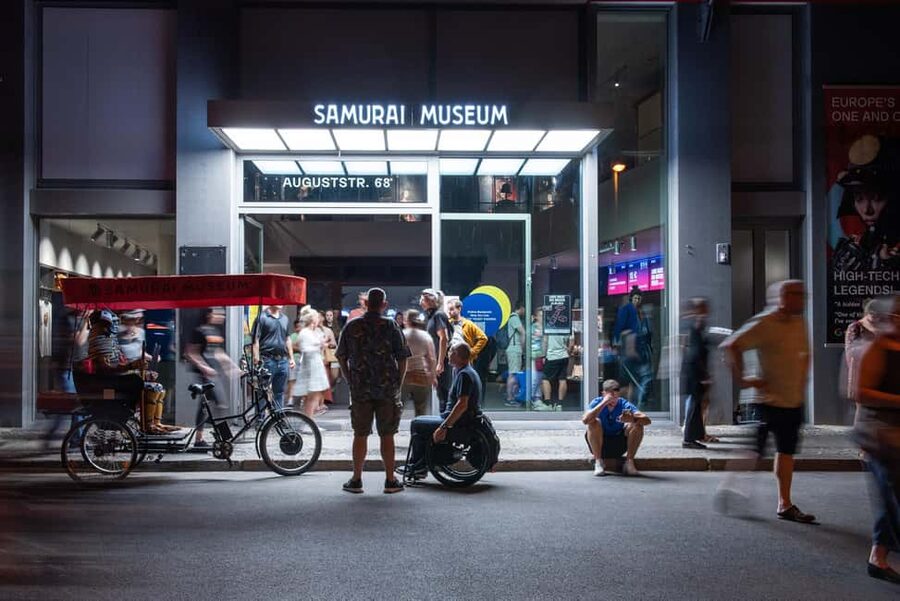
You’ll find the museum in Berlin-Mitte on Auguststraße, a very easy area to pair with other sights like Museum Island and Alexanderplatz. At around $15, the value is in the scale and variety, including big-ticket wow moments like the holographic drum performance plus the Noh theater and tea house experience. One consideration: the ticket is entry-only, so you are not getting an exhibition catalog as part of the price.
In This Review
- Key highlights to know before you go
- Berlin-Mitte location on Auguststraße, right near the action
- Your entry ticket plan: smartphone, skip the line, self-guided flow
- Inside the Samurai Museum: the interactive tech that drives the story
- The AI fox Kitsune quiz: fun, not just decoration
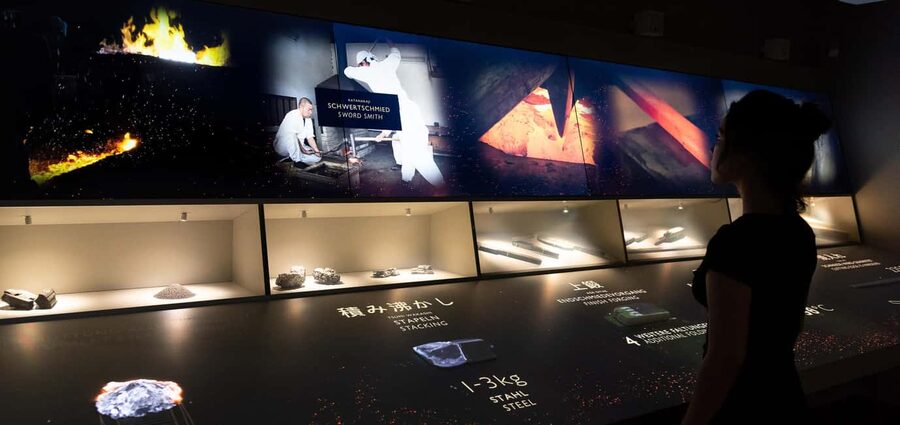
- Sword collection and swordsmithing: craft you can actually understand
- Noh theater and tea house: traditional spaces reassembled in Berlin
- Peter Janssen Collection: the 4,000-object scale, with standout pieces
- What you’ll actually do during the visit, in a logical order
- Price and value: what $15 gets you in Berlin
- Practical tips for a smoother visit
- Who should book this and who might skip it
- Should you book the Samurai Museum Berlin entry ticket?
- FAQ
- How much is the Berlin Samurai Museum entry ticket?
- How long is the ticket valid?
- Can I skip the ticket line?
- Where is the museum located and how do I get there by public transport?
- Are pets, food, or drinks allowed inside?
- Is the museum wheelchair accessible?
Key highlights to know before you go
- High-tech interactive exhibits with touchscreens and projections that guide you through samurai, ninja, and yōkai themes
- Sword collection and swordsmithing learning, focused on craft and weapon design
- Noh theater plus tea house built using traditional Japanese methods, later reassembled in Berlin with projection effects
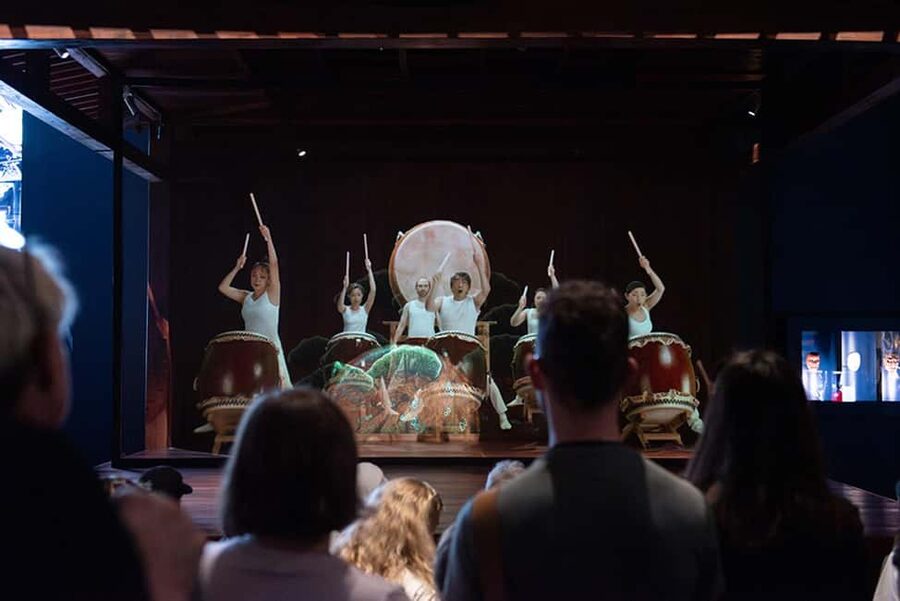
- Holographic drum performance and tea ceremony moments that break up the museum with live-style shows
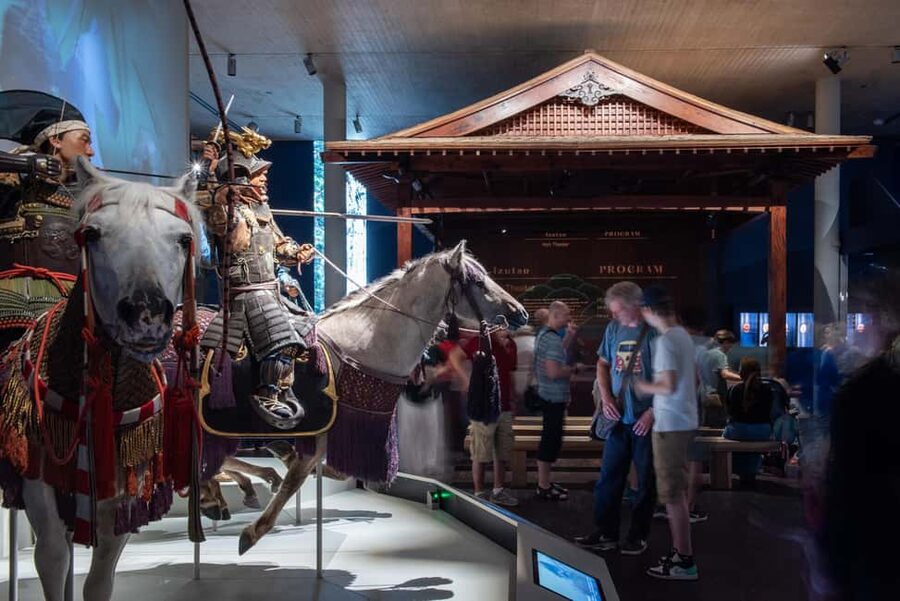
- Peter Janssen Collection, including notable pieces like armor, tea utensils, and a palanquin spanning centuries
- AI fox guide (Kitsune) that adds a playful quiz element, especially good for families
More collections to walk through in Berlin
- Berlin: Natural History Museum Entrance Ticket★ 4.6 · 3,382 reviews
- Skip-the-Line: Berlin Wall Museum at Checkpoint Charlie★ 4.1 · 2,041 reviews
- Berlin: Museum Island Multiple Museum Entry Ticket★ 4.4 · 2,007 reviews
- Berlin: “Pergamonmuseum. The Panorama” Exhibition Tickets★ 4.6 · 1,245 reviews
Berlin-Mitte location on Auguststraße, right near the action
The Samurai Museum Berlin sits in the middle of things, on Auguststraße in Berlin-Mitte. That matters more than you might think. You are close to major landmarks, and you can keep the day simple: museum first, then wander for dinner or a stroll around Museum Island and Alexanderplatz.
Public transport access is straightforward too. Use the U-Bahn to Oranienburger Tor on line U6 or Rosenthaler Platz on line U8. If you prefer the S-Bahn, stations like Oranienburger Straße (S1, S2, S25, S26) put you in the right zone. Tram options such as M1 and M5 also stop at Oranienburger Straße, and M8 goes to Rosenthaler Platz. In other words, you do not need a complicated plan to get there.
I like this kind of setup because it keeps you from feeling “locked” into the museum for the whole day. If you decide you want a longer evening, you can do it. If you want a quick hit and then head out, that works too.
Your entry ticket plan: smartphone, skip the line, self-guided flow
This is an entry ticket, and the good news is the museum is designed to make arrival easy. You can skip the ticket line and go directly to the barrier at the entrance with your ticket on your smartphone.
The ticket is valid for 1 to 14 days depending on what you select during booking, so you are not forced into one exact day only. You still need to check availability for starting times, but the flexibility helps if your Berlin schedule changes.
Because the experience is built around interactive installations, you should expect a self-guided rhythm. You walk room to room, engage with projections and touchscreens, then pause for the show-style moments like the holographic performance and the tea ceremony sections. The museum also includes a Noh theater and tea house component, which gives you those “sit and watch” breaks amid the hands-on learning.
Also note the basics of what you can bring. Pets are not allowed. Food and drinks are not allowed. And luggage or large bags are not allowed. If you are traveling with a big backpack, plan ahead. Keep it light so you do not waste time arguing with rules at the entrance.
Inside the Samurai Museum: the interactive tech that drives the story
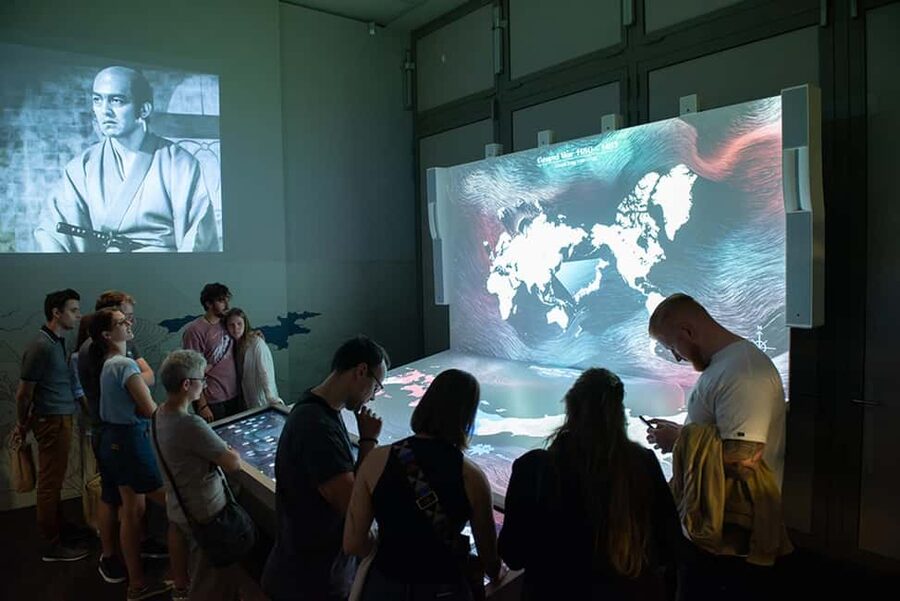
The heart of this museum is how it uses technology to turn Japanese martial culture into something you can engage with. The exhibitions are described as playful but serious in tone, with about 900 historical objects presented in an interactive way.
What you’ll notice right away is the mix of media types:
- Projections that explain themes visually
- Touchscreens that let you move at your pace
- Show elements, including the holographic drum performance
- Performance-style spaces like the Noh theater area
The overall effect is that you are not just looking at armor behind glass. You are getting guided context for why certain items mattered, how techniques worked, and what the symbols meant in different eras. That is a good match for people who normally avoid museums because they feel too static.
From the review details I see reflected in the experience design, the interactive system also works well for different ages. Kids tend to pay attention longer when they can press buttons, answer prompts, or watch visual effects. Adults benefit too, because the tech helps you connect artifacts to real use and craft.
One tip: when you hit the rooms with the highest interaction, do those first. It sounds obvious, but it helps. If you wait until the end, you might rush, especially if you are trying to fit the museum into a busy Berlin itinerary.
The AI fox Kitsune quiz: fun, not just decoration

One of the clever touches is the AI fox guide, described as Kitsune, including a playful question format. In practical terms, it means you will likely get prompted as you move through sections, rather than only receiving static labels.
In a museum focused on legends, myths, and spirits, that kind of guide makes sense. Yōkai are part of the story mix too, so the fox concept helps tie entertainment to learning. And if you are traveling with kids, the AI fox element is the sort of thing that gets them involved without you having to “museum coach” the whole time.
You do not need to be a ninja fan to enjoy it, either. The prompts keep your brain active, and that is the whole point of good interaction design. It also makes the visit feel more like a journey than a hallway of displays.




Sword collection and swordsmithing: craft you can actually understand
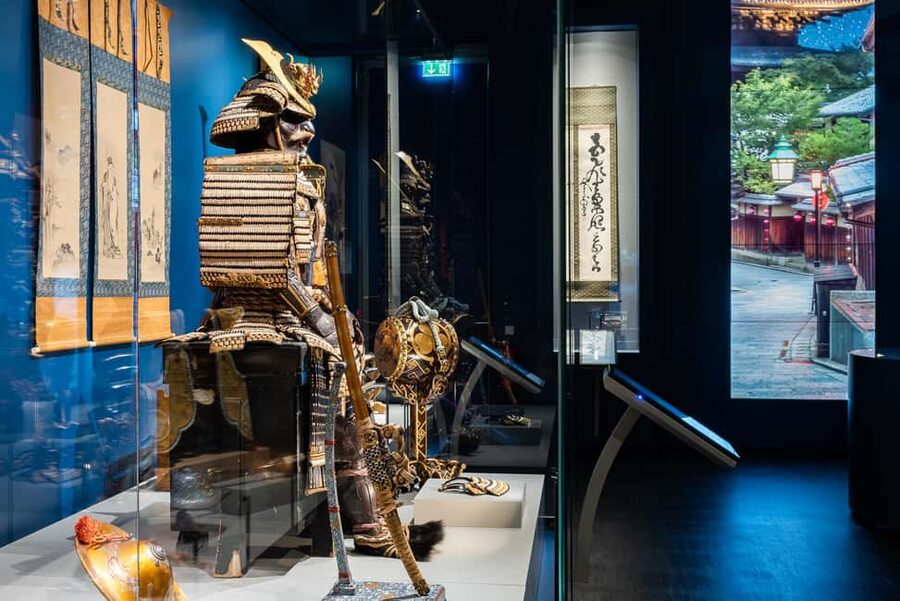
The museum highlights the sword collection and the techniques behind sword making. This is where the experience gets especially satisfying if you like how things are built.
Instead of only showing famous pieces, the exhibition focuses on sword production and the craft side of what makes a blade work. You’ll see content tied to swordsmithing and how legendary blades were created. That is a big deal because “samurai swords are cool” is not the same thing as understanding what people were trying to do with the steel, the process, and the final design.
If you are the type of traveler who likes historical objects for their engineering, you’ll probably spend extra time here. If you prefer story over details, you can still enjoy it because the museum uses projections and touchscreens to keep explanations moving.
Just keep your expectations realistic. This is still a museum, so you are not handling swords. But you can learn the logic behind them and how traditions developed over time.
Noh theater and tea house: traditional spaces reassembled in Berlin
The Noh theater and tea house are among the most striking parts of the museum experience. These structures were built in Japan using traditional materials and techniques, then later erected in Berlin.
That detail is worth savoring. It gives the museum physical credibility, not just a “look, we have a theme” vibe. When you enter these spaces, they feel built for performance and ritual, which makes the projection and show elements land better.
Realistic projections are part of how the museum brings the spaces to life. If you like performing arts, the Noh theater section gives you a very different texture than the armor rooms. And if you are into culture, the tea house section connects samurai-era influence to a practice that became a worldwide symbol of Japanese aesthetics.
The museum also includes the tea ceremony element, giving visitors a chance to see processes tied to centuries-old tradition. It is not the same as sitting through a full, in-person tea ceremony led by a person trained in the practice, but it is an effective museum version that fits the flow of a self-guided visit.
Peter Janssen Collection: the 4,000-object scale, with standout pieces
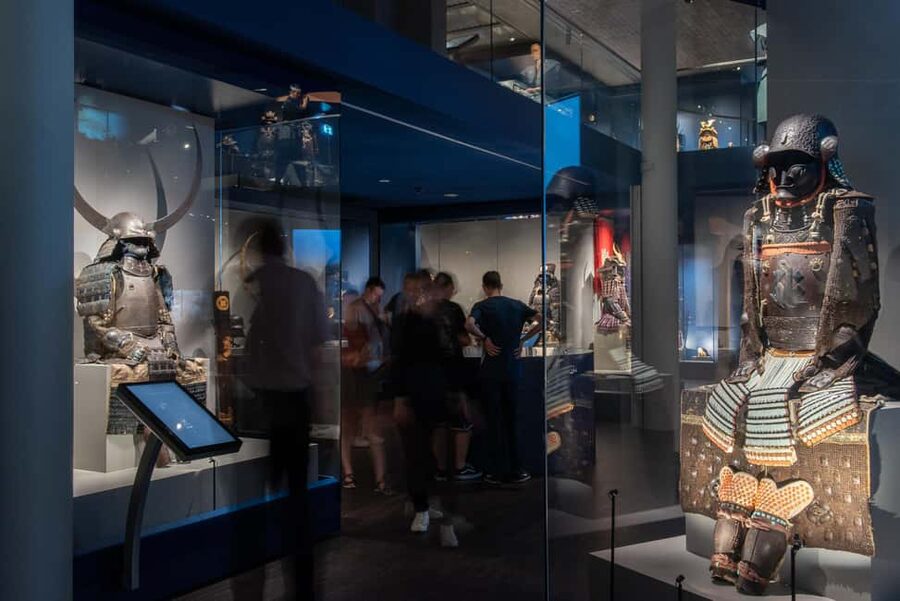
The Peter Janssen Collection is one of the biggest reasons to come. The collection started with a find at a flea market in Berlin and grew into a private holding of more than 4,000 objects. That scale is hard to ignore, and the museum uses it to show how samurai culture developed from the late Kofun period through the early Meiji period, spanning roughly the 6th to the 19th century.
What makes this more than a brag number is how the collection is framed as evidence of Japanese cultural change and craftsmanship. You are not only seeing “cool armor.” You are seeing how materials, design, and objects evolved across time.
Some named highlights you should look out for include:
- An 18th-century palanquin
- A 17th-century armor tied to the Matsudaira clan
- Tea utensils associated with Sen no Rikyū (1522 to 1591)
That last point is a great reminder that samurai culture was not only swords and battle. It also influenced arts, manners, and the tea world. If you are trying to understand Japan beyond anime and Instagram culture, this is where the museum does useful work.
One practical approach: spend time here if you like slow looking. If you tend to skim, you may want to balance this section with the more interactive rooms so you do not end up fatigued.
What you’ll actually do during the visit, in a logical order
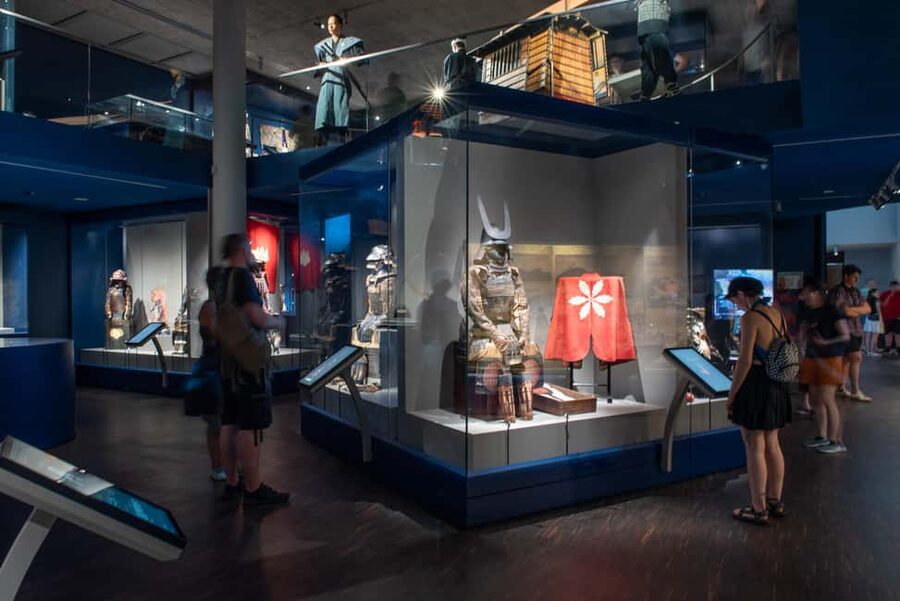
Since you have an entry ticket and the museum is built around multiple installations, think of your visit like a loop with built-in breaks.
Here’s a practical flow that usually works well:
- Start with the interactive tech zones so your brain learns the museum language fast. Touchscreens and projections make the later rooms easier to follow.
- Go to the sword-related areas next. The craft explanations pair well with the “show” moments.
- Plan for the performance-style stops, including the holographic drum performance and tea ceremony segments. These are your reset breaks.
- Then move into the Noh theater and tea house spaces, where the projections and the reconstructed architecture give you a different pace.
- Finally, linger in the collection section. This is where you connect artifacts to the themes you already saw.
If that sounds like a lot, it is. But the museum is paced with interactive and show components, so you do not feel trapped in a straight line for hours.
And yes, you will probably end up going back for one more look at a favorite display. That is the right behavior here.
Price and value: what $15 gets you in Berlin
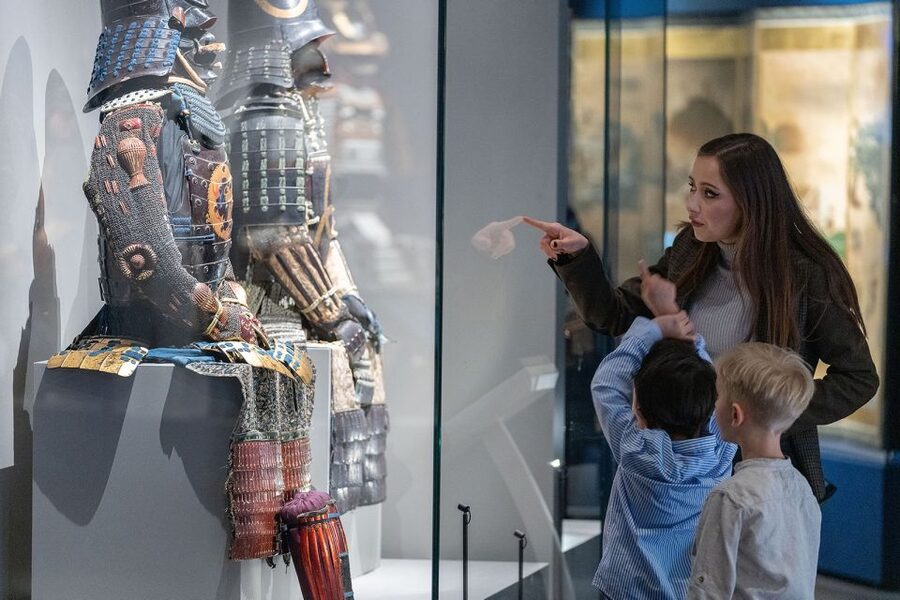
At about $15 per person, this ticket is priced like an attraction, not like a long, guided tour. So the value question becomes: are you getting enough variety for that price?
Here, the case is strong because the museum combines:
- A large object focus, with 900 historical objects highlighted in the exhibition
- A major private collection, with over 4,000 objects in total
- Multiple interactive tech elements
- Performance-style content like holographic music and theater spaces
- A tea ceremony element and cultural context across centuries
If you only wanted to see one or two rooms of samurai armor, you might feel shorted. But if you like museums that use technology and storytelling to connect artifacts to meaning, this price feels fair.
Two small notes. The exhibition catalog is not included, so if you want a take-home reference, plan to buy separately if available. Also, since it is not described as a guided tour included with this ticket, factor in that you will be reading and interacting on your own.
Practical tips for a smoother visit
To keep your day easy, plan around the rules:
- Skip the big bag. Luggage or large bags are not allowed.
- Don’t plan snacks. Food and drinks are not allowed.
- Wear comfortable shoes. You will walk through multiple rooms and installations.
For timing, pay attention to starting times tied to availability. The ticket validity covers up to 14 days depending on your choice, but your entry should align with the time you book. Arriving near your time slot helps you settle in without stress.
Also, the museum is wheelchair accessible, so if mobility is a concern, this is a solid choice based on the information provided.
Who should book this and who might skip it
This is a great pick if you want:
- Interactive museum design, not only passive displays
- A mix of samurai armor, swords, and cultural practices like tea
- A family-friendly visit with an AI fox guide and hands-on tech elements
- A Berlin activity that fits with nearby sightseeing in Mitte
You might consider skipping or supplementing if:
- You only want a basic, quiet display experience, and you dislike touchscreens or projections
- You expect a deep lecture from a live guide included with entry
- You are carrying a large bag or you need food-friendly accommodations
Should you book the Samurai Museum Berlin entry ticket?
Yes, I’d book it if you want a smart, modern museum in the middle of Berlin that actually teaches you something, not just photographs well. At roughly $15, the mix of interactive exhibits, sword craft learning, and the Noh theater and tea house components gives you more than a one-note visit.
If you are the type who enjoys both tech and tradition, this museum is a strong match. If you want a guided, slow, lecture-style tour, treat the entry ticket as your base and look for added options only if you truly need them.
In short: this is a fun, structured way to understand samurai culture, with enough show-and-learn moments to keep your interest the whole way through.
FAQ
How much is the Berlin Samurai Museum entry ticket?
The price is listed as $15 per person.
How long is the ticket valid?
The ticket is valid for 1 to 14 days. Availability determines the starting times, so check what times are offered when you book.
Can I skip the ticket line?
Yes. You can skip the ticket line and go directly to the entrance barrier with your smartphone ticket.
Where is the museum located and how do I get there by public transport?
It is located on Auguststraße in Berlin-Mitte. U-Bahn options include U6 at Oranienburger Tor and U8 at Rosenthaler Platz. S-Bahn options include S1, S2, S25, and S26 at Oranienburger Straße. Tram stops include M1 and M5 at Oranienburger Straße and M8 at Rosenthaler Platz.
Are pets, food, or drinks allowed inside?
No. Pets are not allowed, and food and drinks are not allowed.
Is the museum wheelchair accessible?
Yes. The activity is listed as wheelchair accessible.
Museums Worth the Queue in Berlin
Everything else we filed on Berlin
- East Berlin: City of Shadows Walking Tour
★ 5.0 · 11 reviews - Berlin: Die Stachelschweine – Frank Lüdecke – Träumt Weiter
★ 4.7 · 11 reviews - Potsdam Day Trip from Berlin with a Local: Private & Personalized
★ 4.0 · 11 reviews - An Introduction to Berlin Walking Tour
★ 5.0 · 11 reviews - DJ for a Day: Learn to Mix Like a Pro in Berlin
★ 5.0 · 11 reviews - 2-H Segway Sightseeing Tour Berlin
★ 4.5 · 11 reviews
Museums, side by side.
 ★ 4.5Berlin: Jewish Museum Berlin Entrance TicketFrom $08,393 reviews
 ★ 4.3Berlin: DDR Museum TicketsFrom $153,443 reviews
 ★ 4.6Berlin: Natural History Museum Entrance TicketFrom $123,382 reviews
 ★ 4.6Berlin: Neues Museum Entry TicketFrom $163,261 reviews
 ★ 4.4Cologne: Chocolate Museum Entrance TicketFrom $192,790 reviews
 ★ 4.7Dresden: Church of Our Lady Guided Tour of GalleryFrom $152,421 reviews
 ★ 4.1Skip-the-Line: Berlin Wall Museum at Checkpoint CharlieFrom $212,041 reviews
 ★ 4.4Berlin: Museum Island Multiple Museum Entry TicketFrom $272,007 reviews
Other lists this tour is on