
REVIEW · COLD WAR BERLIN
East Berlin: City of Shadows Walking Tour
Berlin whispers its Cold War secrets. This East Berlin City of Shadows walk strings together DDR landmarks with a local historian, so the city’s physical map suddenly tells a political story you can actually follow. I like how it gives quick orientation without turning into a textbook, and the small group keeps the pace human.
My second favorite part is the way the tour connects big sites to everyday life, from families caught in the system to fear in the streets. One thing to watch: this is a tight 3-hour overview, with short stops, so if you want long museum time inside places like the Stasi Museum area, you may need to plan a return visit.
In This Review
- Key things to know before you go
- East Berlin City of Shadows, the best kind of history walk
- Starting at Unter den Linden, then heading straight into DDR power
- Brandenburg Gate and the Soviet Embassy: where the Cold War is written in stone
- Friedrichstrasse and the Palace of Tears: border rules with human costs
- Park am Nordbahnhof and “ghost” stations nobody used
- Karl-Marx-Allee: socialist dreams shaped into control and deprivation
- Memorial of the Berlin Wall: the Death Strip story you remember
- Stasi Headquarters and the logic of surveillance
- Alexanderplatz: reconstructed pride and the 1989 demonstrations
- Price and time, what $156.53 really buys you
- Who this tour is perfect for (and who might want something else)
- Should you book East Berlin City of Shadows?
- FAQ
- How long is the East Berlin City of Shadows walking tour?
- How much does it cost?
- What language is the tour offered in?
- How many people are in the group?
- Where does the tour start and end?
- Is hotel pickup available?
- What is included in the tour price?
- Are food and drinks included?
- Do I need public transport during the tour?
- What is the cancellation window?
Key things to know before you go
- Three hours, built for orientation: you get a clear DDR timeline you can use for the rest of your Berlin days
- Major landmarks, short stops: each site is explained with the political and personal context you care about
- A local historian runs the show: you will hear cause and effect, not just dates and names
- East Berlin’s pressure points: the Palace of Tears, the Death Strip, and the Stasi are not random stops
- Pickup from your accommodation: the tour aims to make starting easy in a sprawling city
- Mobile ticket and small group: helpful for a smooth meeting, with a maximum of 8 people
More of the divided city, written up in full
- Berlin: Third Reich and Cold War 2 Hour Walking Tour★ 4.9 · 6,830 reviews
- Berlin: Berlin Story Bunker Entry Ticket★ 4.6 · 6,759 reviews
- Berlin’s Best: 2 Hour Walking Tour Third Reich and the Cold War★ 5.0 · 5,486 reviews
- Berlin: 75-minute Trabi Safari★ 4.8 · 2,854 reviews
East Berlin City of Shadows, the best kind of history walk
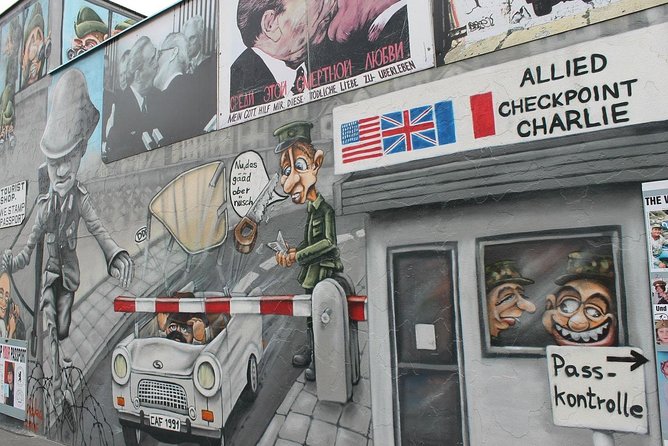
This tour works because it treats East Berlin like a living set of clues. Yes, you see famous places. But you also learn what those places were for, who used them, and why ordinary people were afraid to look too closely. You are not just looking at buildings. You are learning how power shaped movement, families, and public space.
Expect about 3 hours in English with a local guide, paced for moderate physical fitness. The group stays small, up to 8 travelers, which matters more than it sounds. With fewer people, your guide can answer questions and keep the story flowing instead of rushing through your biggest curiosity.
Also, this is a place where details matter. Berlin rebuilt itself after the war, then split itself by force, and finally stitched the city back together with scars still visible. A guided walk like this helps you read what you are already seeing outside.
Starting at Unter den Linden, then heading straight into DDR power
You meet at Unter den Linden 42, 10117 Berlin. If you have hotel pickup, the tour states they will pick up from any Berlin hotel or accommodation. Either way, getting started in the central city area is a big advantage, because you can connect this with other sights without wasting time.
From that first step, the tour is designed to move through the DDR story in a logical order. You start at the international symbol points, then step into border tension, then move into the urban machinery of control. By the time you reach the Wall memorial and the Stasi stop, the story stops feeling abstract. It feels personal.
Brandenburg Gate and the Soviet Embassy: where the Cold War is written in stone
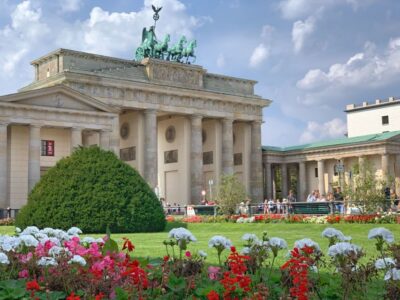
The tour begins at the Brandenburg Gate, and your guide uses it as a frame for what came next. This is not just a photo spot. You will connect the modern built environment to the darker, often hidden history underneath it. The guide covers how East Germany’s Communist regime grew stronger, how discontent increased, and how the government answered that pressure with brutal suppression.
A smart anchor here is the Reagan moment in June 1987, when President Ronald Reagan publicly told Soviet Premier Mikhail Gorbachev to tear down the Wall. It is a reminder that the Cold War did not stay behind closed doors. Leaders turned the situation into global language, then events moved faster than anyone expected.
Nearby is the former Soviet Embassy, described as a grand monument built in 1945 amid the rubble of World War II. The point is not the architecture itself. The point is what it declared, Stalin’s ambition to control all of Berlin. This stop gives you the macro view, and that matters, because later stops explain how those decisions filtered down into your daily reality.
Time is around 20 minutes, and admission is listed as free for this stop, so you are mostly learning on location.
Friedrichstrasse and the Palace of Tears: border rules with human costs
Next comes Friedrichstrasse, one of the key crossing zones between East and West Berlin. This station is where movement and family life collided. Your guide explains the way East Germany’s immigration rules tore families apart, then focuses on the sad goodbyes said in an office known as the Palace of Tears.
This stop is powerful because it is specific. It is about process, not just tragedy. You see how a system can be built to make separation feel inevitable. And once you understand that, other parts of the DDR story stop being random. They connect.
The stop time is around 15 minutes, and it is also marked as free for admission.
Practical note: train stations are busy. Even on a short stop, you will want to keep your schedule flexible around crowd flow. This is also one of those points where your guide’s timing helps a lot.
Other walking routes through Berlin
Park am Nordbahnhof and “ghost” stations nobody used
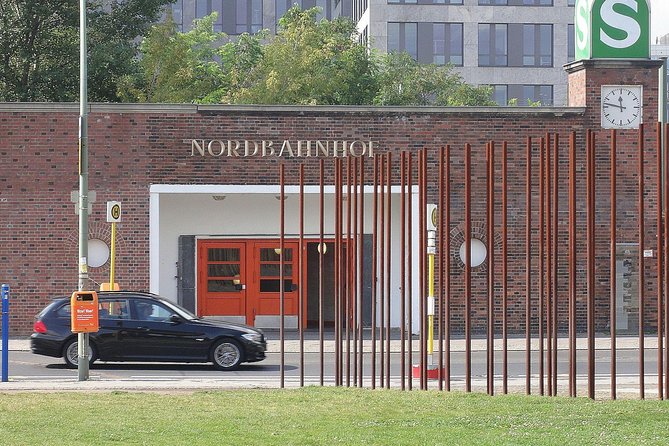
At Nordbahnhof, the tour gets into a fascinating Berlin quirk: “ghost” stations. These were stops on West Berlin subway lines that were physically located in East German territory. They were unused, heavily guarded, and effectively frozen in place.
Your guide uses this to show what division did to ordinary infrastructure. In many cities, you can treat transit as neutral. In divided Berlin, transit became political. A station could exist, still function on a map, and still be controlled to prevent people from using it.
This is a short stop, about 10 minutes, and again admission is listed as free.
If you like urban oddities and what-if history, this is one of the most memorable moments, because it is weird in a way that is totally logical once you understand the politics.
Karl-Marx-Allee: socialist dreams shaped into control and deprivation
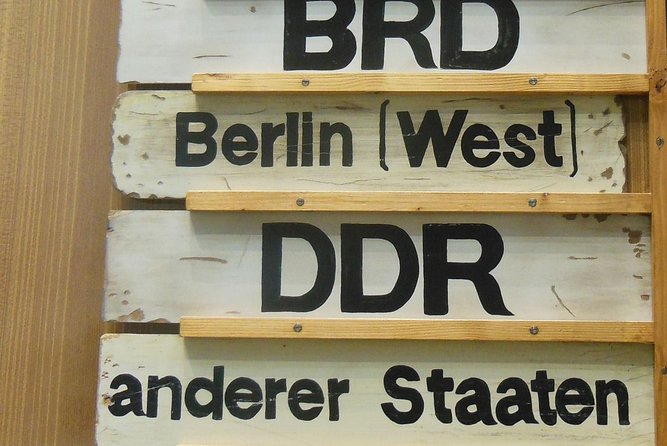
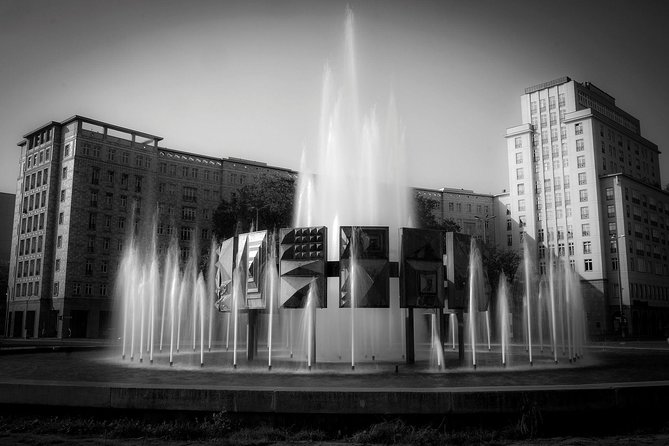
Then you get to Karl-Marx-Allee, the grand, long housing complex often described as a mile-long statement. Your guide uses it to explain how East Germans were sold ideas of a socialist paradise, and how those dreams turned into deprivation, suppression, and paranoia.
The lesson here is about how governments talk to people. Big housing projects can look like progress from far away, especially if you only know the exterior. Up close, the story becomes about what those systems did to daily life, how lived experience differed from official promises, and why fear and suspicion took root.
This is one of the stops that makes the tour worth doing even if you have already read about Berlin’s division. You start to see the propaganda function of architecture, and you understand why people did not all respond in the same way.
Time is around 10 minutes.
Memorial of the Berlin Wall: the Death Strip story you remember
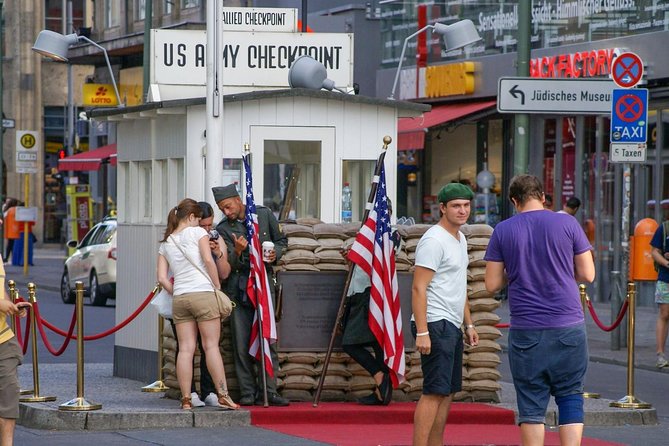
At the Memorial of the Berlin Wall, you get the tour’s most emotionally heavy segment. You will learn about the Death Strip, the notorious area used to stop escapes, and you will hear stories about East Berliners whose attempts to flee ended in death.
Your guide frames this not as sensational horror, but as the brutal logic of enforcement. It is a place where a single boundary becomes a kill zone. Once you grasp that, the rest of the city’s division stops being symbolic. It becomes structural.
Time is about 15 minutes, and admission is listed as free.
If you are the type who needs a moment to process, build that into your pace here. This stop can land harder than you expect because you are standing in the kind of location where everyday movement had terrifying rules.
Stasi Headquarters and the logic of surveillance
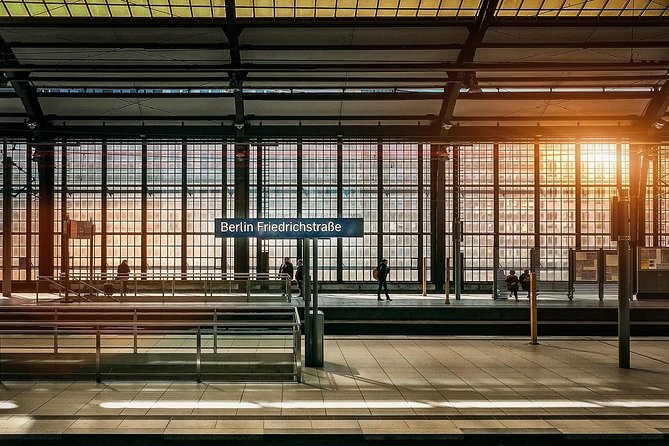
Next is the Stasimuseum stop, centered on the former Stasi headquarters. The tour covers how East Germany’s secret police coerced neighbors and family members to spy on each other. It also highlights the Stasi leader Eric Mielke and how he built a massive network of spies plus surveillance techniques.
This is the heart of why the tour is called City of Shadows. The shadow is not just the Wall. It is what happens when privacy is gone and trust is dangerous. Your guide’s storytelling connects surveillance to social relationships, which is why this stop can feel unsettling in a very specific way.
Time is around 10 minutes, and admission is listed as free for this stop. Still, keep expectations realistic. Even if you have access or the area is open, you will not get museum-level time in a short walking tour slot.
That means this works best if you see the walk as the ignition. If you want deeper museum reading time, plan to come back on a separate day.
Alexanderplatz: reconstructed pride and the 1989 demonstrations
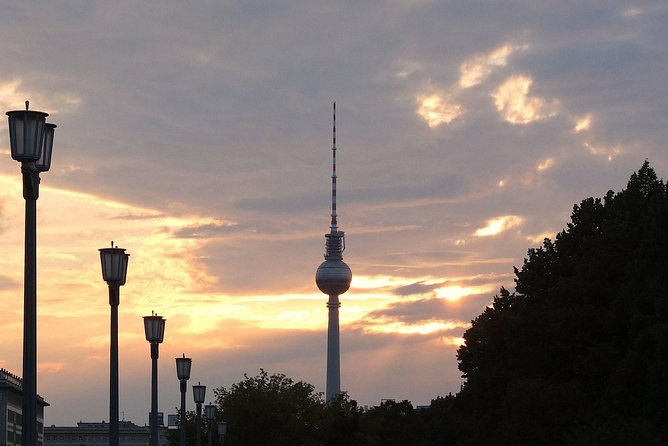
The last major city-life stop is Alexanderplatz, described as the center of public life in East Berlin. The guide points out how the square was rebuilt in the 1960s with monuments like the futuristic parliament building and the iconic TV Tower.
Then the focus shifts from design to revolt. In 1989, this area became the setting for massive demonstrations that helped push the regime toward downfall. Your guide ties the square’s symbolism to the political moment, showing how pride became pressure and then change.
This stop is about 10 minutes and is marked as free for admission.
What I like about ending here is that it brings the story back to the human scale of crowds, noise, and public decision-making. After the heavy parts, it reminds you that change did not happen only in secret offices or behind walls. It happened where people could gather and be seen together.
Price and time, what $156.53 really buys you
At $156.53 per person for about 3 hours, the value depends on what you want from Berlin. If you want a quick narrative map of East Berlin, this is a strong deal because you get a local guide plus a compact route through key DDR sites. The group size cap of 8 also matters here, because it affects how much you can ask and how well the guide can pace the story.
The tour includes the guide, and the stops are indicated as admission ticket free. But it is not a food tour. Food and drinks are not included, so you should plan on eating before or after, or carrying a snack if your day is packed.
What about transportation? The route uses some public transit because the distance between key sites would be too far to walk. That is normal for Berlin. It also means you should travel with a transit plan ready. If you do not already have a visitor day pass, the tour guidance suggests:
- Berlin Transit One Way Tarif AB ticket for 2.8 Euro (senior 1.70 EUR)
- Berlin Transit Day Ticket for 7 Euro (senior 4.70 EUR)
If you cannot purchase in advance, the guide helps you buy at the first metro station during the tour.
The other practical detail that affects value is the route style. Some stops are brief, like the 10 to 15 minute segments at multiple landmarks. You get the story and the context, not long time on site. If you love museums, you will likely want follow-up time under your own steam.
Who this tour is perfect for (and who might want something else)
This is ideal for you if you:
- want a clear DDR story across multiple neighborhoods in one go
- like political history but also care about what it meant for daily life
- prefer guided orientation early in your Berlin stay
- appreciate walking tours that explain places you would otherwise just photograph
This might be less ideal if you:
- want lots of museum time at the Stasi Museum or similar indoor spaces
- hate public transit segments and prefer one long walk without metro stops
- want a slow pace with long reflection time at each site
If you fall into the second group, you can still do this tour and then plan a separate deep-dive day later. The walk gives you context so your later museum hours feel sharper.
Should you book East Berlin City of Shadows?
I think you should book if you want an East Berlin overview that connects architecture to politics and personal life. The route hits the Wall memorial, Stasi headquarters, and key city crossroads like Friedrichstrasse and Alexanderplatz, which means you get both the coercion story and the public pressure story. The small group size helps you keep up with the details without feeling herded.
Skip it or consider a different format if your top priority is museum time inside the Stasi Museum area. In this tour, the Stasimuseum stop is brief, so plan to return if you want longer exhibits and reading.
If you are trying to choose between doing this walk and wandering on your own, my advice is simple: do the walk first. After that, you will walk through Berlin with better instincts, and you will notice things you would normally miss.
FAQ
How long is the East Berlin City of Shadows walking tour?
The tour lasts about 3 hours.
How much does it cost?
The price is $156.53 per person.
What language is the tour offered in?
The tour is offered in English.
How many people are in the group?
The tour has a maximum of 8 travelers.
Where does the tour start and end?
It starts at Unter den Linden 42, 10117 Berlin, Germany, and ends in Berlin.
Is hotel pickup available?
The pickup details say they pick up from any hotel or accommodation in Berlin. You should confirm your specific pickup details at booking.
What is included in the tour price?
A local guide is included. Admission tickets are listed as free for the stops shown.
Are food and drinks included?
No. Food and drinks are not included.
Do I need public transport during the tour?
Yes. You will need to use public transport a few times since some sites are too far to walk. The tour suggests using a Berlin day metro pass if you do not already have one.
What is the cancellation window?
You can cancel for a full refund if you cancel up to 24 hours in advance of the experience start time. If you cancel less than 24 hours before, the amount paid is not refunded.
Seeing Berlin in One Go
Pavements of Berlin
The Divided Years, Reviewed
Everything else we filed on Berlin
- East Berlin: City of Shadows Walking Tour
★ 5.0 · 11 reviews - Berlin: Die Stachelschweine – Frank Lüdecke – Träumt Weiter
★ 4.7 · 11 reviews - Potsdam Day Trip from Berlin with a Local: Private & Personalized
★ 4.0 · 11 reviews - An Introduction to Berlin Walking Tour
★ 5.0 · 11 reviews - DJ for a Day: Learn to Mix Like a Pro in Berlin
★ 5.0 · 11 reviews - 2-H Segway Sightseeing Tour Berlin
★ 4.5 · 11 reviews
Cold War and Stasi History Tours, side by side.
 ★ 4.9Berlin: Third Reich and Cold War 2 Hour Walking TourFrom $236,830 reviews
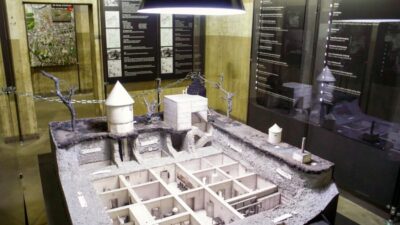 ★ 4.6Berlin: Berlin Story Bunker Entry TicketFrom $216,759 reviews
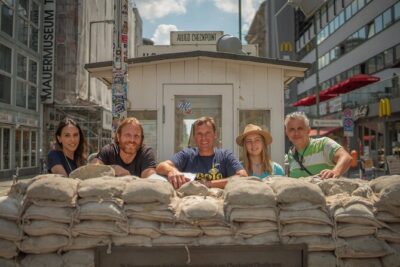 ★ 5.0Berlin’s Best: 2 Hour Walking Tour Third Reich and the Cold WarFrom $245,486 reviews
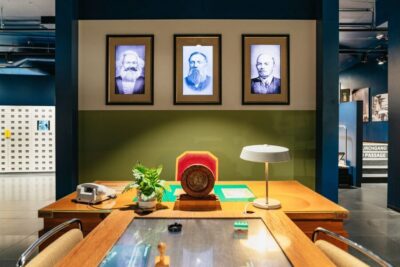 ★ 4.3Berlin: DDR Museum TicketsFrom $153,443 reviews
 ★ 4.8Berlin: 75-minute Trabi SafariFrom $932,854 reviews
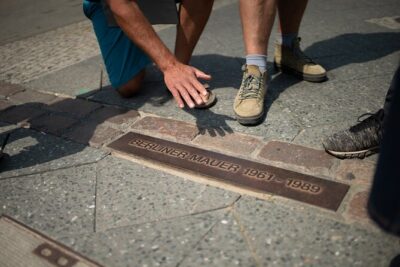 ★ 5.0Cold War, Berlin Wall, Spies and the East Side GalleryFrom $181,024 reviews
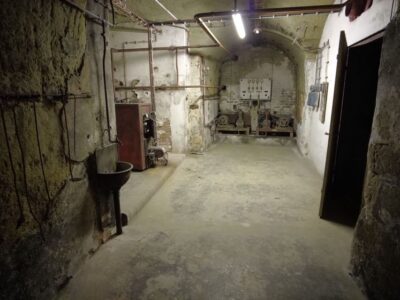 ★ 4.8Nuremberg: Historischer Kunstbunker WWII Art Bunker TourFrom $14921 reviews
 ★ 4.9Leipzig: 90-Minute Trabi City TourFrom $81728 reviews
Other lists this tour is on