
REVIEW · COLD WAR BERLIN
Karl-Marx-Allee Tour: Life and Architecture in East Berlin
East Berlin politics is written in stone. This 2-hour walking tour turns Karl-Marx-Allee into a readable story, with architecture and ideology linked stop by stop. I especially like the way the guide makes big political decisions feel concrete, and I love the tight format, so you get real takeaways even if you only have a couple hours.
One thing to consider: it is mostly outdoor viewing and walking, so comfortable shoes and decent weather matter.
You’ll also be glad it’s a small group (max 15). That setup makes it easier to ask questions when the history gets complicated.
In This Review
- Key highlights to look for
- Why Karl-Marx-Allee Architecture Turns Into a Political Story
- Start at U Frankfurter Tor and End Near Alexanderplatz
- Frankfurter Tor, Herman Henselmann, and the First Socialist Street Dream
- Laubenganghäuser and Hochhaus an der Weberwiese, Utopia Meets Propaganda
- 17 June 1953 and the Workers Uprising Memorial
- Café Sibylle, Stalin, and How Politics Sat Next to Coffee
- Karl-marx-bustendenkmal and Strausberger Platz After the Wall
- Price, timing, and who this walk is for
- Should you book this Karl-Marx-Allee tour?
- FAQ
- How long is the Karl-Marx-Allee walking tour?
- How much does the tour cost?
- Is the tour offered in English?
- Where do I meet for the tour, and where does it end?
- What group size should I expect?
- Do I get a mobile ticket?
- Are admission tickets required at the stops?
- What if bad weather cancels the tour?
- Can I cancel and get a full refund?
- Are service animals allowed, and is it suitable for most people?
Key highlights to look for
- Max 15 people means you are not shouting over a crowd for answers
- English tour with an expert local guide, designed for short on-time visits
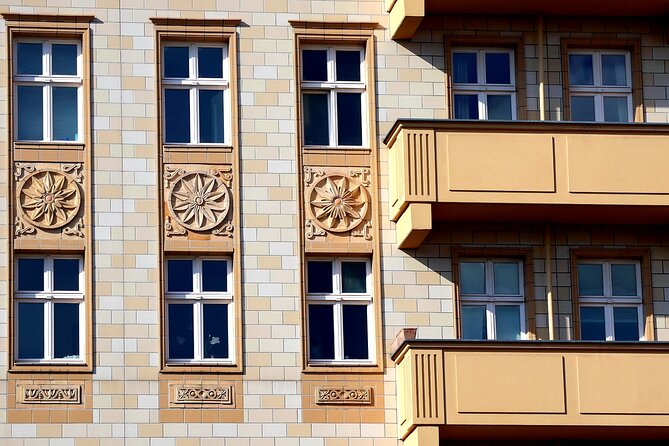
- Seven major stops along Karl-Marx-Allee, each with a clear theme
- Big names in the mix like Herman Henselmann and Hans Scharoun
- History with teeth, including the 17 June 1953 uprising and its controversial memorial
- Fresh perspective on everyday life, from an iconic café to socialist statues and busts
More of the divided city, written up in full
- Berlin: Third Reich and Cold War 2 Hour Walking Tour★ 4.9 · 6,830 reviews
- Berlin: Berlin Story Bunker Entry Ticket★ 4.6 · 6,759 reviews
- Berlin’s Best: 2 Hour Walking Tour Third Reich and the Cold War★ 5.0 · 5,486 reviews
- Berlin: 75-minute Trabi Safari★ 4.8 · 2,854 reviews
Why Karl-Marx-Allee Architecture Turns Into a Political Story
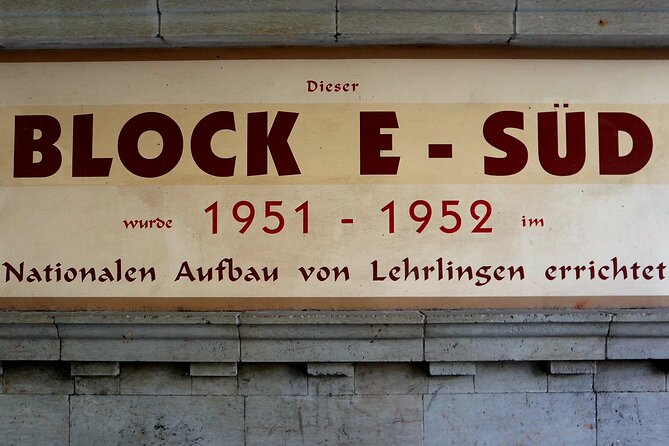
Karl-Marx-Allee looks like straight-up city planning at first glance. But once you learn what was being built, why it was built, and who was watching, it becomes much more than pretty façades.
This is not a “spot the building, move on” walk. The guide connects the architecture to East Germany’s priorities after World War II, including rebuilding efforts, the role of propaganda, and how socialist ideology was meant to shape everyday life. You also get the other side of the story, including how Western architects were drawn to what East Berliners were building.
The tone is practical too. Expect a thematic walk that stays focused on the reasons behind the design choices, not just dates.
Start at U Frankfurter Tor and End Near Alexanderplatz
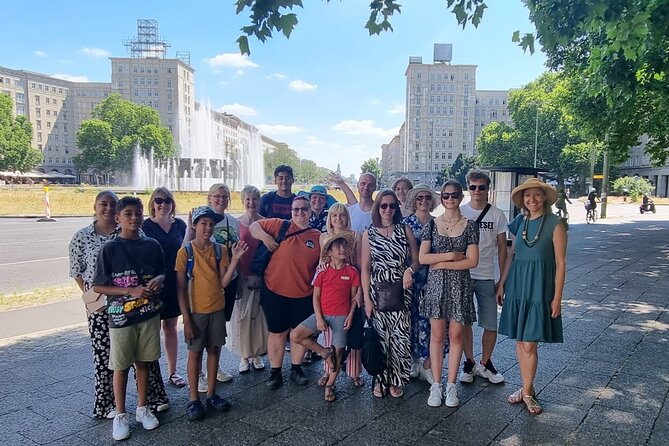
You begin at U Frankfurter Tor (10243 Berlin). The ending point is Strausberger Pl. at the eastern side of the roundabout, about a 10 minute walk from Alexanderplatz.
The pacing is built for a short visit: the tour runs about 2 hours, with stops planned for roughly 15 to 20 minutes each. And because it’s a small group, the guide can slow down when something matters, like a specific building purpose or what changed after 1989.
If you’re using public transit, this is convenient. The meeting area is near transit, and both start and end are in central East Berlin.
Frankfurter Tor, Herman Henselmann, and the First Socialist Street Dream
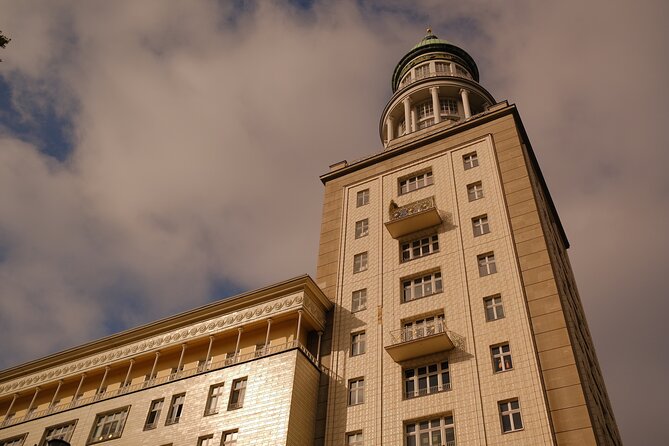
The walk kicks off at Frankfurter Tor, where you can really see the focus on symmetry. The towers here were built by Herman Henselmann, and the guide frames them as part of a bigger early-1950s push.
You’ll hear how planners approached what was described as the first socialist street in Germany, and how plans tied into the national rebuilding program. That part matters because it explains the vibe you are standing in, not just the look of the street. Rebuilding efforts involved thousands of volunteers, so this was not only top-down politics. It was also mobilization on the ground, which shows up in how the boulevard was imagined.
Practical tip: at Frankfurter Tor, take a minute to look at the overall balance before you zoom in on details. The guide usually builds the story outward, and it makes the architecture easier to “read.”
Laubenganghäuser and Hochhaus an der Weberwiese, Utopia Meets Propaganda
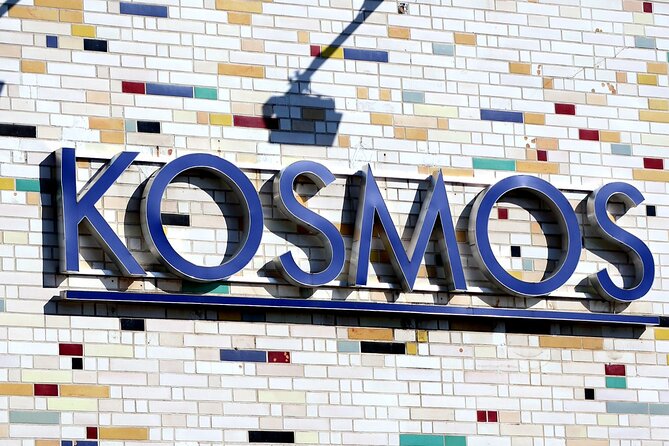
Next you move to Laubenganghäuser, where the story shifts to Hans Scharoun and early post-WWII modernism. The key idea here is utopian urban planning, born from the ashes of a destroyed Berlin. Scharoun’s ideas were not only about form, they were about how people should live.
Then comes the hard turn: those utopian ideas were soon rejected by the new East German regime. This stop is useful because it shows the conflict between visionary city ideas and the political reality that took over. You’re not just hearing about design, you’re learning how ideology narrowed what architecture was allowed to be.
After that, you reach Hochhaus an der Weberwiese, a prototype for the rest of Karl-Marx-Allee. Here, the guide explains how this building offered early tenants something described as unprecedented luxury. That sounds almost surprising until you understand the next layer: the project became a propaganda tool.
Even better, this is where you get the cross-border angle. Western architects were drawn to the project, turning Karl-Marx-Allee into a magnet for attention beyond East Germany. So the same boulevard that was meant to demonstrate socialist success was also a spectacle that pulled professionals from the West to look at it.
If you like architecture, this part of the tour is your “aha” moment. The buildings are not neutral, and the guide keeps that point sharp.
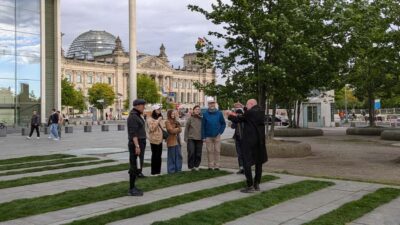
17 June 1953 and the Workers Uprising Memorial
At the Gedenkstätte Arbeiteraufstand 17 Juni 1953, the tone becomes heavier. This is the site tied to a mass uprising in June 1953 by disgruntled workers. The guide connects it to the moment when unrest almost toppled the socialist government in East Germany.
You’ll also hear about the monument itself being controversial. That detail is important. It tells you to approach the site with a sense of complexity, not a single neat moral lesson.
From a traveler’s perspective, this stop is valuable because it explains why certain public spaces in East Berlin are still debated. Buildings and monuments are part of the argument over history, not just markers on a map.
Café Sibylle, Stalin, and How Politics Sat Next to Coffee
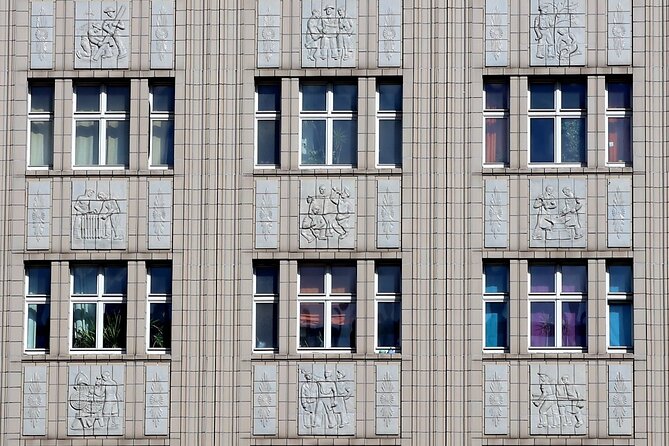
Next comes Café Sibylle, one of the more exclusive café stops on Karl-Marx-Allee during East Berlin days. The guide ties it directly to the surrounding political symbolism, including the nearby Joseph Stalin statue, which stood nearby until 1961.
This is where the tour becomes strangely relatable, because it shows how politics was not kept in official buildings. It was part of the everyday visual environment, even around leisure spaces like cafés.
If you’re the kind of traveler who likes cultural context, this is a standout. It helps you understand why the area felt different day to day, and why removing or replacing statues mattered.
Karl-marx-bustendenkmal and Strausberger Platz After the Wall
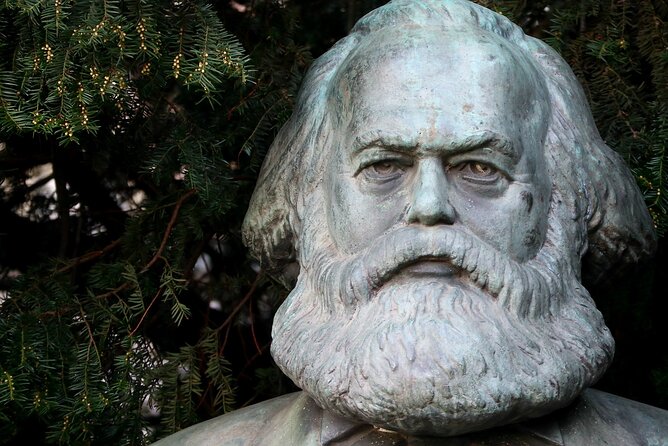
The tour continues with Karl-marx-bustendenkmal, a stop centered on the author of the Communist Manifesto. The guide uses it to explain how socialist ideology was designed to affect everyday life of East Berliners, not just politics at a distance.
Then you finish at Strausberger Platz, where you can see another splendid example in the style of Hermann Henselmann. The guide doesn’t leave it in the past. You get stories about life on Karl-Marx-Allee after the Fall of the Berlin Wall, and what the area feels like today.
This ending helps the whole walk click into place. You see the original ambitions, the political pressure behind the buildings, the moments of resistance, and then the later reshaping of identity. It’s not just a history lesson. It’s a lesson in how cities keep memory, even when regimes change.
Price, timing, and who this walk is for
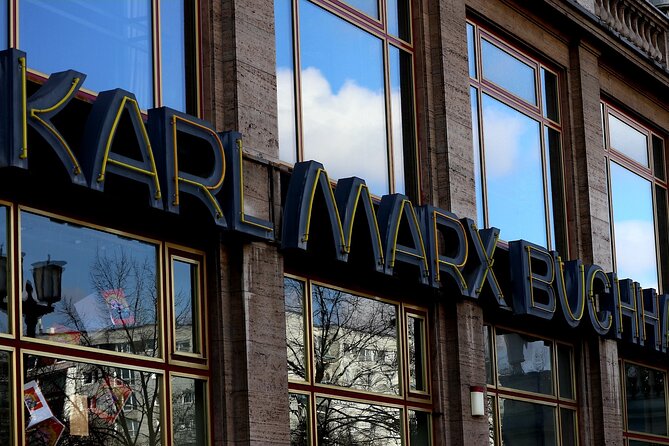
The price is $30.01 per person for about 2 hours, and that’s solid value if you want meaning without committing to a full day. You are paying for an expert local guide and a structured route that hits the big story beats along Karl-Marx-Allee.
This also helps if you’re building a Berlin itinerary fast. With an average booking window around 18 days ahead, it’s the kind of tour that often works well for planning a weekend trip. And because the group is limited to 15, it stays more personal than the big-bus style walks.
This walk fits you best if you care about:
- Architecture with context (not just photos)
- Cold War history told through the built environment
- A quick way to understand why Karl-Marx-Allee looks the way it does
It might be less ideal if you want a lot of museum time, because the experience is set up for outdoor stops and walking rather than indoor exhibitions.
Should you book this Karl-Marx-Allee tour?
Yes, if you want to understand East Berlin beyond the usual highlights. This walk does a rare thing: it connects major names in architecture like Herman Henselmann and Hans Scharoun to real political outcomes, including propaganda, resistance, and the afterlife of statues.
If you’re short on time, it is also one of the cleaner ways to get oriented. The route hits enough key points to give you a framework you can use while exploring on your own afterward.
Just plan for weather and wear shoes you can trust. This tour works best when you can comfortably stand and walk from stop to stop.
FAQ
How long is the Karl-Marx-Allee walking tour?
It lasts about 2 hours.
How much does the tour cost?
The price is $30.01 per person.
Is the tour offered in English?
Yes, the tour is offered in English.
Where do I meet for the tour, and where does it end?
You start at U Frankfurter Tor (10243 Berlin). You end at Strausberger Pl. on the eastern side of the roundabout, about a 10 minute walk from Alexanderplatz.
What group size should I expect?
The tour has a maximum of 15 travelers.
Do I get a mobile ticket?
Yes, the tour includes a mobile ticket.
Are admission tickets required at the stops?
The stop notes indicate admission ticket free at each listed stop.
What if bad weather cancels the tour?
The tour requires good weather. If it is canceled due to poor weather, you will be offered a different date or a full refund.
Can I cancel and get a full refund?
Yes. You can cancel up to 24 hours in advance for a full refund.
Are service animals allowed, and is it suitable for most people?
Service animals are allowed, and most travelers can participate.
The Divided Years, Reviewed
Everything else we filed on Berlin
- East Berlin: City of Shadows Walking Tour
★ 5.0 · 11 reviews - Berlin: Die Stachelschweine – Frank Lüdecke – Träumt Weiter
★ 4.7 · 11 reviews - Potsdam Day Trip from Berlin with a Local: Private & Personalized
★ 4.0 · 11 reviews - An Introduction to Berlin Walking Tour
★ 5.0 · 11 reviews - DJ for a Day: Learn to Mix Like a Pro in Berlin
★ 5.0 · 11 reviews - 2-H Segway Sightseeing Tour Berlin
★ 4.5 · 11 reviews
Cold War and Stasi History Tours, side by side.
 ★ 4.9Berlin: Third Reich and Cold War 2 Hour Walking TourFrom $236,830 reviews
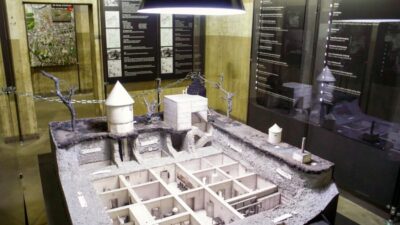 ★ 4.6Berlin: Berlin Story Bunker Entry TicketFrom $216,759 reviews
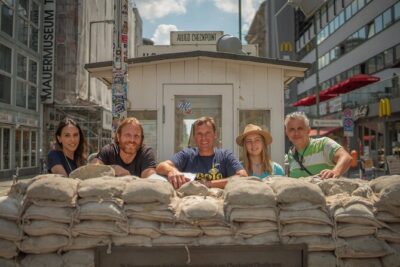 ★ 5.0Berlin’s Best: 2 Hour Walking Tour Third Reich and the Cold WarFrom $245,486 reviews
 ★ 4.3Berlin: DDR Museum TicketsFrom $153,443 reviews
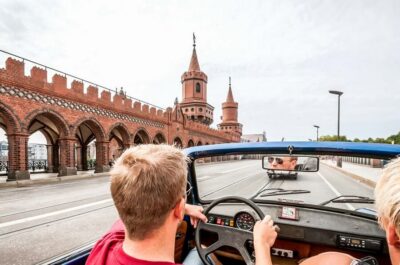 ★ 4.8Berlin: 75-minute Trabi SafariFrom $932,854 reviews
 ★ 5.0Cold War, Berlin Wall, Spies and the East Side GalleryFrom $181,024 reviews
 ★ 4.8Nuremberg: Historischer Kunstbunker WWII Art Bunker TourFrom $14921 reviews
 ★ 4.9Leipzig: 90-Minute Trabi City TourFrom $81728 reviews
Other lists this tour is on