
REVIEW · HISTORICAL TOURS
Munich: Private Walking Tour of the Historical City Center
Munich clicks into place on foot. This private 3 hour walk through Munich’s center mixes everyday landmarks with heavier World War II stories, and you can add the Residenz Museum if you want.
I love how the route connects places like Marienplatz and the town halls to the meaning behind what you see, not just the postcards. I also like the beer side of Munich, with dates and context behind famous spots like Hofbräuhaus and the beer gardens around Viktualienmarkt.
One possible drawback is audio. One guide was described as hard to understand and spoke very quietly, so if you are sensitive to that, keep it in mind when choosing a time and language.
In This Review
- Key things you will like
- Where You’ll Start at Marienplatz, and How the Walk Feels
- Marienplatz and the Rathaus-Glockenspiel, What You Are Actually Seeing
- St. Peter and Munich’s Early Christian Roots
- Frauenkirche and the Double Towers, Plus the Devil’s Footprint Legend
- Odeonsplatz and the Beer-Hall Putsch, How Munich Became a Stage
- WWII, Georg Elser, and the Story of a Plan That Almost Stopped the War
- Eva Braun in Munich, Local Roots Behind a Global Story
- Beer Gardens, Hofbräuhaus (1589), and Why the Food Market Matters
- Optional Residenz Museum, When It’s Worth Adding
- Price and Value, What $288 Per Group Really Means
- Practical Tips So You Hear the Guide and Enjoy the Stops
- Should You Book This Munich Private Walking Tour?
Key things you will like
- Private group up to 15 keeps the pace personal, not like a cattle line
- WWII stories in the exact streets where the events played out
- Rathaus-Glockenspiel meaning and why it matters at Marienplatz
- Beer culture with specific history, including Hofbräuhaus (1589)
- Optional Residenz Museum adds palace-level detail without wasting your day
Other walking routes through Munich
- Munich: Third Reich & WWII Walking Tour★ 4.6 · 6,181 reviews
- Third Reich Walking Tour Munich★ 4.5 · 4,291 reviews
- Munich: Old Town & Viktualienmarkt City Walk in German★ 4.7 · 2,304 reviews
- Munich: Night Watchman Walking Tour★ 4.7 · 2,092 reviews
Where You’ll Start at Marienplatz, and How the Walk Feels
You begin at the fish fountain in front of the town hall at Marienplatz 8. That is a great setup because everything important in the old center is nearby, so you spend less time figuring out directions and more time looking up, reading, and listening.
Because this is a private group, you are not stuck waiting on strangers. Your guide can slow down at the spots that catch your eye, like clocks, churches, or squares, and you can ask practical questions as you go.
One thing to consider: this is not a museum day. It is a walking tour, so you will want comfortable shoes and a willingness to move for the full three hours.
Marienplatz and the Rathaus-Glockenspiel, What You Are Actually Seeing
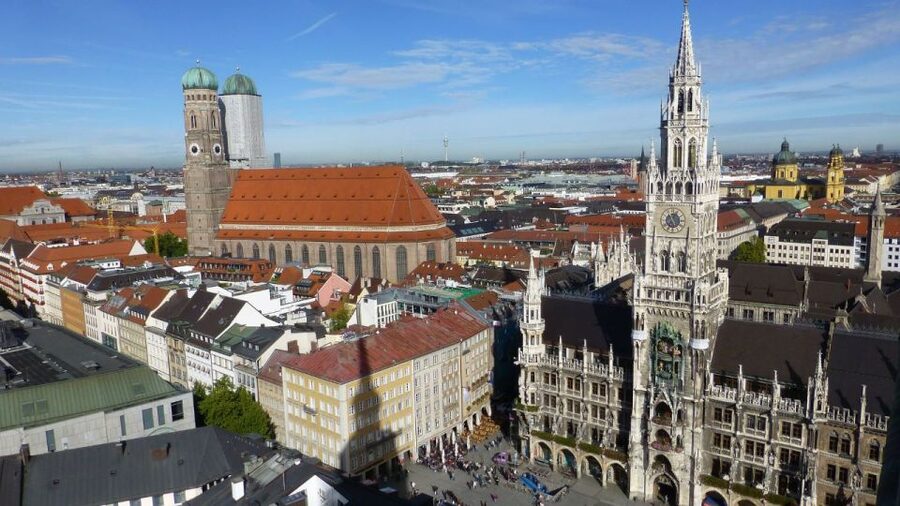
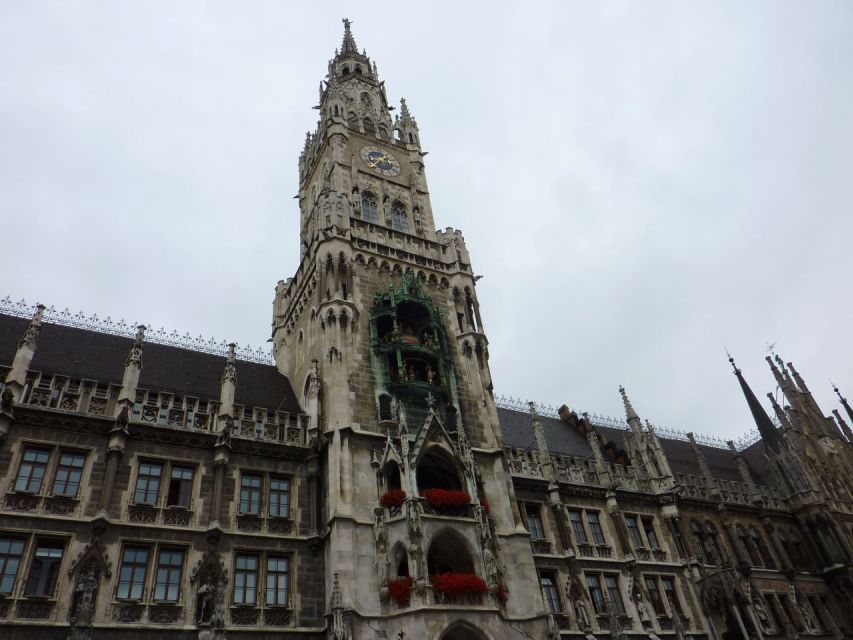
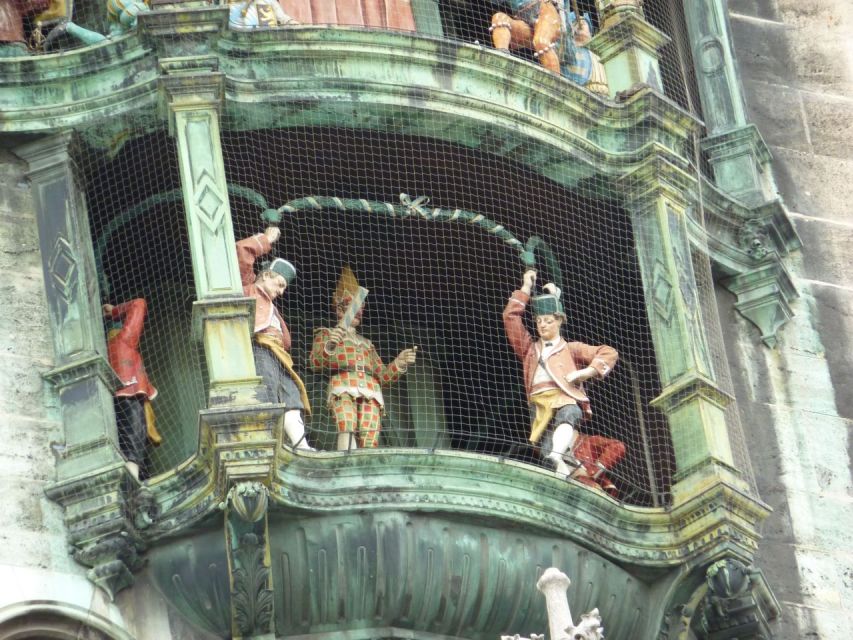
Marienplatz is Munich’s central stage, and the tour treats it like one, not like a background set. You’ll pass the Old Town Hall and New Town Hall, then focus on the famous clock tower display.
The Rathaus-Glockenspiel is easy to spot. The smarter part is understanding what it represents and how it fits into the city’s identity. Your guide explains the meaning behind the figures and the historical landmark clock tower, so you get more than a photo.
You also learn about why the central square is tied to Mary’s Column, which helps Marienplatz feel grounded in local naming, not generic “old town” branding. It is the kind of small context that makes walking streets feel purposeful.
If you are the type who likes to stand back and watch details, this stop is for you. If you are short on patience for any standing around, pick your spot early and let the guide do the narration while you look.
St. Peter and Munich’s Early Christian Roots
The tour moves from civic power to religious beginnings, with a visit around St. Peter, Munich’s oldest Catholic church mentioned on this experience. The guide also connects the story to how monks helped give rise to the city.
That religious origin detail matters. It explains why Munich’s early development shows up in the street plan and the way the center still feels designed around key institutions. You start to see patterns: where authority stood, where people gathered, and why certain buildings became anchors.
This stop is also a nice reset. After all the modern-day hustle around Marienplatz, you get a more reflective moment, with a guide who can point out the layers you would otherwise miss while rushing from sight to sight.
Frauenkirche and the Double Towers, Plus the Devil’s Footprint Legend
At the cathedral Frauenkirche, you get a strong view of the double towers, and your guide ties it to what makes the building so recognizable. This is one of those Munich landmarks where angles matter, and a good guide helps you stand in the right place to actually appreciate the scale.
Then comes the legend: the “devil’s footprint.” Your guide explains the story connected to the cathedral and that famous footprint legend, which you will then spot in your mind even after you walk away. Whether you believe the tale or not, you still get the fun cultural logic behind it.
Practical tip: cathedrals often mean cool air inside and bright light outside. If you tend to get cold easily, bring a thin layer.
The wider Munich sightseeing pile
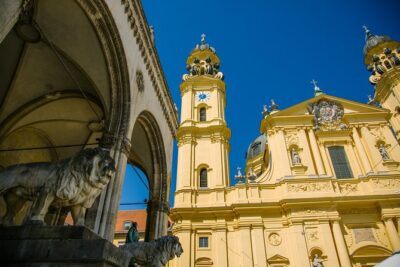
Odeonsplatz and the Beer-Hall Putsch, How Munich Became a Stage
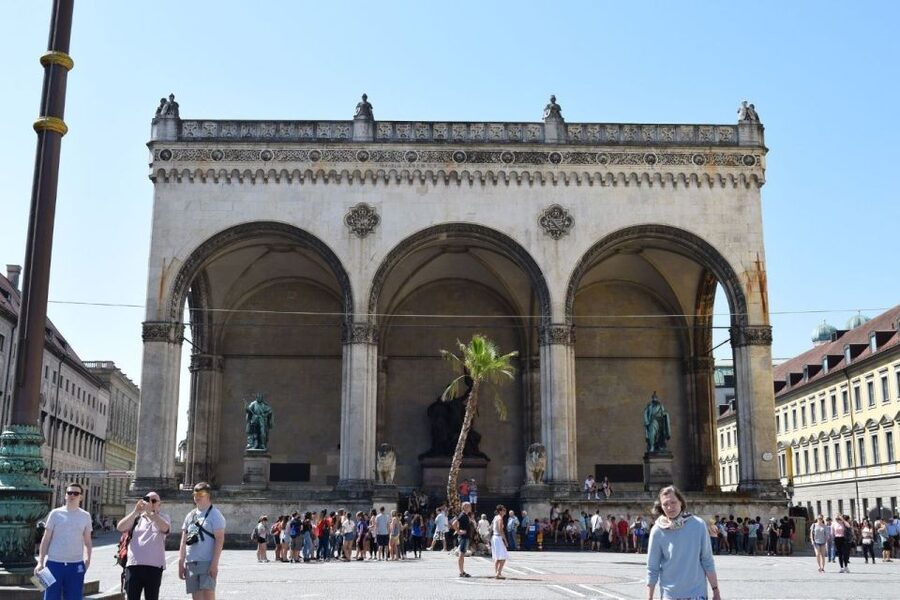
You head to Odeonsplatz, where the tour shifts into 20th-century weight. You learn about the Beer-Hall-Putsch, when about 2,000 men led by Adolf Hitler marched to the center of Munich in the Nazi’s first attempt to seize power.
This is not told as trivia. The guide frames it in a way that helps you understand why Munich, and this specific urban setting, mattered to how those events unfolded. Standing in the area where a moment like that played out changes how the story lands.
If you want history that stays human instead of just dates, this part can be compelling. You’ll get enough context to understand why the city is linked to these events, without turning the tour into a lecture that forgets you are still on vacation.
WWII, Georg Elser, and the Story of a Plan That Almost Stopped the War
The tour includes a darker thread about the war and a plan to prevent its outbreak. Your guide tells you about Georg Elser, a carpenter in Munich, who attempted a daring assassination of the Fuhrer.
You will hear how the plan aimed to stop the war, which is why this story gets repeated in Munich conversations about resistance. It is a different kind of WWII story than the usual “big names only” approach, and that variety helps the tour feel broader and more balanced.
One useful angle here is that you are not just hearing about what happened. You are learning how the city connected to the events through people, places, and decisions. That’s what makes a walking format work for this subject.
Eva Braun in Munich, Local Roots Behind a Global Story
Another guided story centers on the hometown of Eva Braun, who later became Hitler’s wife. Instead of treating her as a distant historical figure, the tour brings it back to the city scale and the local beginnings your guide highlights.
This part can be unsettling, but it is also the kind of context that makes history feel real. You understand that huge historical events were made by individuals, living somewhere, shaped by familiar streets before the world knew their names.
Because this topic is sensitive, a good guide’s pacing matters. If you are looking for a tour that handles heavy material thoughtfully, choose your guide carefully and don’t be afraid to ask for the tone you want.
Beer Gardens, Hofbräuhaus (1589), and Why the Food Market Matters
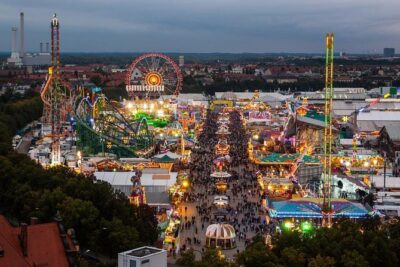
Munich’s beer culture shows up here as more than a place to drink. You’ll hear how beer became part of the city’s identity, including mention of beer gardens established nearly 450 years ago.
A highlight is the royal brewery, Hofbräuhaus, established in 1589. Dates like that do something important: they move you out of the “beer is just tradition” mindset and into “beer is a long-running civic and economic force” thinking. You start to see why certain establishments became landmarks.
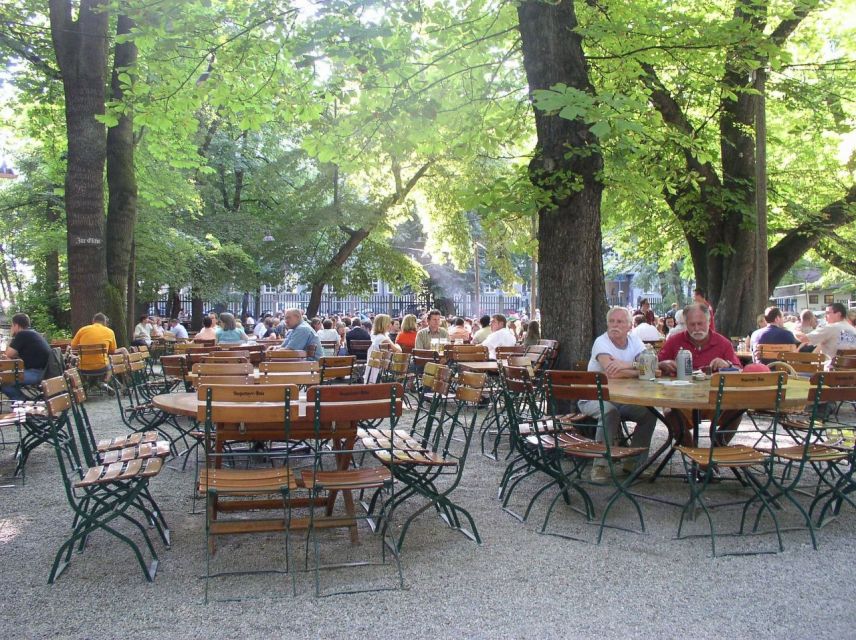
You end the walk passing through Viktualienmarkt, a public food market. It is described as offering local delicatessen, fresh produce, and one of the most central beer gardens in Munich. Even if you do not stop for a meal, the market is a smart ending because it shows how everyday life runs right alongside famous monuments.
If you want a smooth way to extend the day, this is where you can decide what sounds best for a late lunch or an easy beer stop after the tour.
Optional Residenz Museum, When It’s Worth Adding
If you choose the option, your guide can lead you to the Residenz Museum during this experience. This is the big “palace Munich” add-on, and it typically works best if you want more than street-level stories.
The key practical thing: entrance fees are not included. So factor that into your planning if you are serious about visiting the museum.
In a three-hour walking tour, the museum option is a trade. You will likely spend more time inside and less time lingering outside. If clocks, squares, and stories are your focus, you might prefer to skip the museum and keep the afternoon flexible.
Price and Value, What $288 Per Group Really Means
This tour costs $288 per group, up to 15 people, and runs 3 hours. That pricing can be a bargain or a splurge depending on who you travel with.
Here is the reality check math:
- If you have the full group size (15 people), it works out to about $19 per person.
- If it is just two of you, it becomes about $144 per person.
So, the best value comes when you split the cost with friends or travel as a small group that wants a private guide. If you are solo or just a couple, it is still worth it if you specifically want a guide to tailor the pacing and explain the meaning behind landmarks like the Rathaus-Glockenspiel and the WWII stories tied to street locations.
Also note what you get: a local professional guide. Entrance fees and food and drinks are not included, so you control add-ons and meals yourself.
Practical Tips So You Hear the Guide and Enjoy the Stops
This is a simple walking plan, but the details can make it better.
First, go into it expecting a mix of tones: comedy at the beer stops, awe at the cathedral, and heavier reflection around WWII. That balance is part of why the tour works.
Second, if you are choosing the language option, pick what lets you catch every word. One traveler described difficulty hearing a guide who spoke quietly, which is a good reminder that clarity matters when you are standing outside in open space.
Third, plan your footwear and weather gear. You will spend time outdoors around squares and churches, and Munich can swing between bright and cooler conditions even within a short walk.
Finally, if you care about the Residenz Museum option, decide early in your planning. Since entrance fees are separate, you do not want to reach the museum and suddenly rethink costs.
Should You Book This Munich Private Walking Tour?
Book it if you want Munich in one compact hit: old-town landmarks, beer culture with actual dates, and WWII stories tied to the streets where they happened. The strongest reason to choose this tour is the meaning factor, especially around the Rathaus-Glockenspiel, Marienplatz, and the way the guide connects major historical moments to specific locations.
Skip it or adjust expectations if you dislike guided storytelling that includes heavy topics, or if you are very sensitive to hearing a guide in outdoor spaces. Also, this experience is not suitable for wheelchair users, so plan another option if mobility is a concern.
If you do book, I think you will enjoy it most if you arrive curious, ask questions, and treat three hours like a focused introduction to Munich’s center, not a sprint of photos.
The Longer History of Munich
Seeing Munich in One Go
Pavements of Munich
Everything else we filed on Munich
- Paul’s Private Tour Munich Highlights
★ 5.0 · 3 reviews - Private Linderhof Castle, Entry-Ticket – optional Toboggan Run
★ 5.0 · 3 reviews - Paul’s Private Tour in the Alte Pinakothek Munich
★ 5.0 · 3 reviews - Private Tour at Neuschwanstein And Linderhof Palaces From Munich
★ 4.5 · 3 reviews - Private Highlights of Munich Bike Tour with Beer Garden Stop
★ 5.0 · 3 reviews - Munich WWII and Dachau Concentration Camp Private Tour with Licensed Guide
★ 5.0 · 3 reviews
Historical Tours, side by side.
 ★ 4.7Leipzig: City History Canal Sightseeing Tour on a MotorboatFrom $186,232 reviews
 ★ 4.6Berlin: Natural History Museum Entrance TicketFrom $123,382 reviews
 ★ 4.7Leipzig: 1.5-Hour Historical Walking Tour in GermanFrom $172,217 reviews
 ★ 4.5Berlin: World Heritage Cruise to PotsdamFrom $251,435 reviews
 ★ 4.7Heidelberg: Night Watchman Historic Adventure TourFrom $3051,186 reviews
 ★ 5.0The Local Tour of Hamburg Historic CentreFrom $31,058 reviews
 ★ 4.8Elbfloren: Historical city tourFrom $15819 reviews
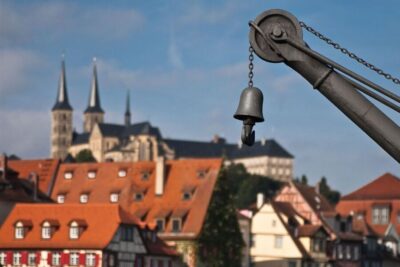 ★ 4.6Bamberg: Guided Beer History Tour with Optional TastingFrom $21772 reviews
Other lists this tour is on