
REVIEW · JEWISH HERITAGE
Path of Resistance: Berlin’s Hidden Holocaust Stories
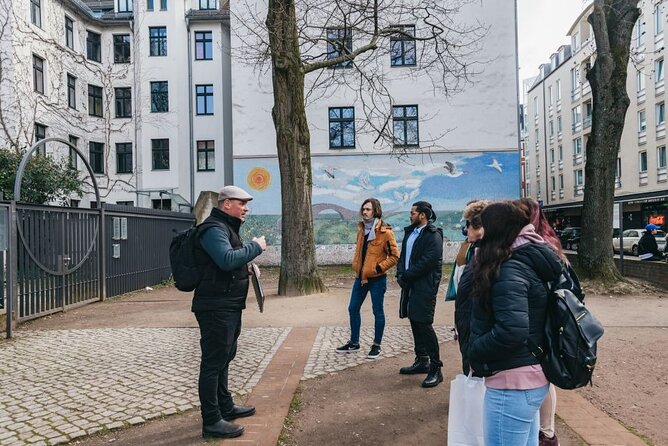
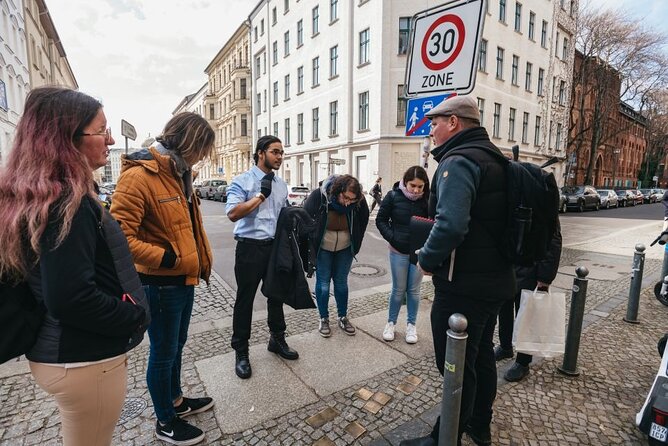
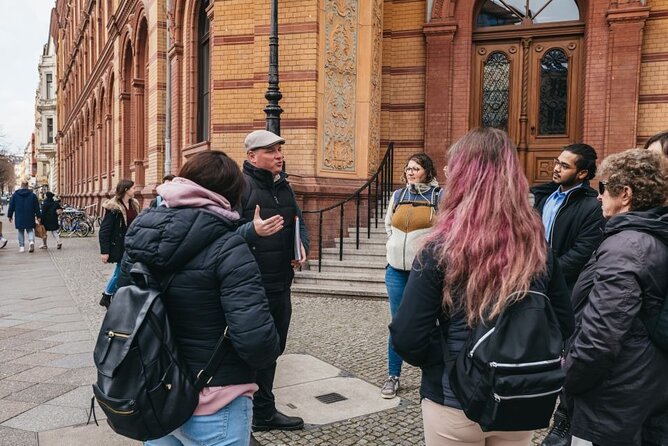
Berlin hides resistance stories in plain sight. This small-group, on-foot tour connects you to Jewish resistance and the people who pushed back against Nazism, from synagogues and schools to protests and memorials. I love the way the route uses Then & Now photos and maps to keep history anchored to real streets.
I also like that you get an expert guide who can explain the human choices behind each site, including remarkable stories like Otto Weidt’s workshop and the Rosenstraße protest. A possible drawback: it is mostly a standing and walking experience, so it can feel tiring if you prefer long seated breaks.
In This Review
- Key highlights worth your time
- Price, duration, and the value of walking this story
- Where you start, how you end, and how the route flows
- Stop 1 at the Neue Synagoge, a building that kept changing hands
- Stop 2: A Jewish school turned into a transit camp
- Stops 3 and 4: A cemetery erased, then a workshop that fought back
- Stop 5: Denkmal Rosenstraße and the courage of protest
- Stop 6 at Lustgarten: protests before Nazis tightened the rules
- Stop 7: The Zeughaus, a resistance plan, and what almost happened
- Stop 8 at Neue Wache: Germany’s central memorial for war and tyranny
- Stop 9 at Bebelplatz: book burning as a strategy, not a tantrum
- Stop 10: Trains to Life, Trains to Death and the Kindertransport contrast
- The guides make a real difference
- Who should book this tour
- Should you book Path of Resistance: Berlin’s Hidden Holocaust Stories?
- FAQ
- How long is the tour?
- Is the tour offered in English?
- What is the group size?
- Do I need to pay for admission tickets at the stops?
- Where do I meet, and where does the tour end?
- Is a mobile ticket included?
- What happens if the weather is bad or I need to cancel?
Key highlights worth your time
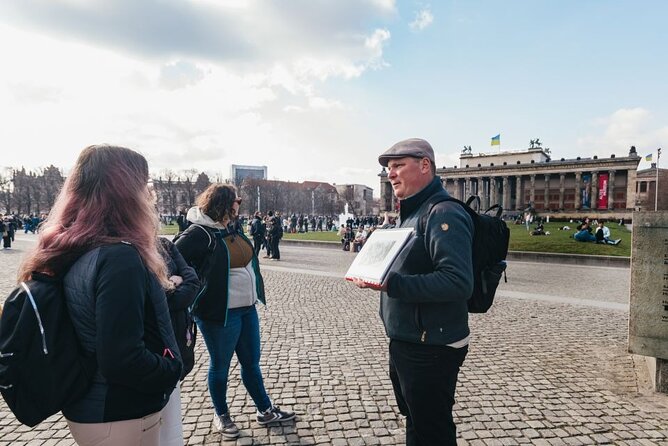
- Small group (max 15) for a more personal pace and room for questions
- Then & Now photos and maps to help you place what you see in the city
- Many key WWII-era locations tied together into a single story arc
- Resistance, rescue, and protest stories rather than focusing only on destruction
- Free admission listed for every stop, so you’re not juggling extra fees
More Jewish heritage walks and memorial visits
- Nazi Berlin and the Jewish Community Tour★ 4.8 · 55 reviews
- Path of Resistance: Berlin’s Hidden Holocaust Stories★ 5.0 · 33 reviews
- Private Tour: Jewish Heritage Walking Tour of Berlin★ 5.0 · 29 reviews
- Jewish Berlin: Walking tour The Old Jewish Quarter (private 3 Hours tour)★ 5.0 · 27 reviews
Price, duration, and the value of walking this story
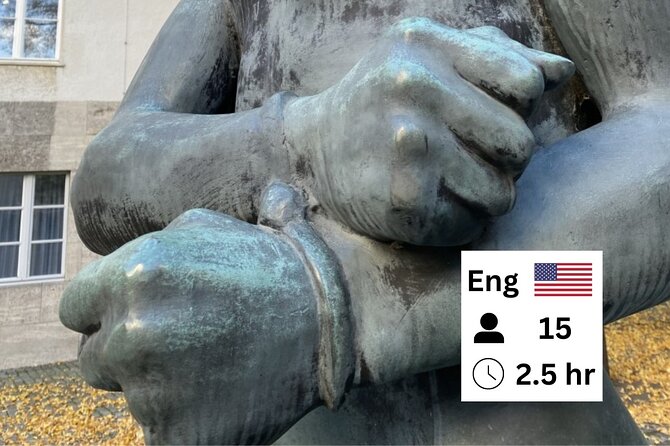
This tour runs about 2 hours 30 minutes and costs $48.01 per person. That price is reasonable for Berlin, especially because you get a true guiding service, not just a route. Here, the value is interpretation: your guide turns each landmark into a concrete story about choices, risk, and survival.
The pace is built for walking, so you’re learning as you move. You’ll also benefit from the structure: the itinerary strings together sites that might feel random if you were exploring alone. Instead, you get a deliberate path through Berlin’s wartime reality, including what was targeted, what was destroyed, and what people tried to save.
This is offered in English, with a mobile ticket. You’ll want to wear comfortable shoes, because memorials and historical sites often involve standing time. If you’re sensitive to emotionally heavy topics, plan for that too, since several stops cover persecution, deportation, and Nazi violence.
One practical tip: check the weather and dress for it. The tour requires good weather, and if it’s canceled due to poor conditions, you’ll be offered another date or a full refund.
Where you start, how you end, and how the route flows
You’ll meet at Oranienburger Str. 36, 10117 Berlin, and the tour ends at S+U Friedrichstraße (Friedrichstraße, Georgenstraße 14/17). That end point is helpful. Friedrichstraße is a major train hub, which makes it easy to connect to your next stop without stress.
The tour also notes proximity to public transportation. That matters because Berlin walking tours can be easier to fit into your day when you don’t have to fight traffic or complicated transfers.
Given the average booking window is about 37 days in advance, this is the kind of tour that can sell out around popular travel dates. If you want a specific day, don’t wait until the last minute.
Stop 1 at the Neue Synagoge, a building that kept changing hands
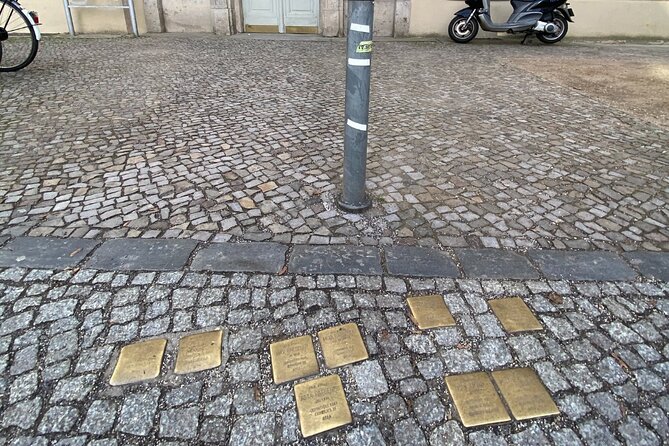
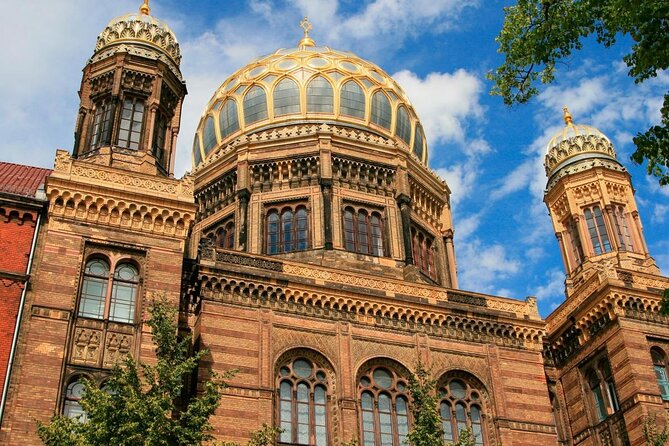
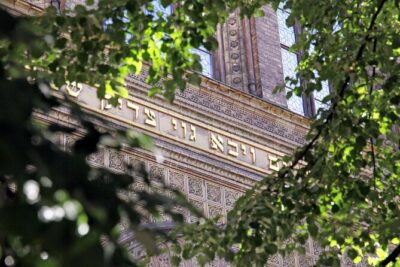
The tour starts at Stiftung Neue Synagoge Berlin, also known as the Neue Synagoge (New Synagogue). Constructed in 1866, it was once the largest and most magnificent synagogue in Berlin. It represented the scale of Jewish life in the city, a community once counted at 160,000 people.
What I like about starting here is that it frames the story before the war. You see a place that meant community and faith, then you learn how quickly power can flip. During Kristallnacht, the synagogue was saved from vandals, which signals that even within a brutal campaign, there were moments of preservation.
The synagogue’s later history is tragic and instructive. It stayed in use until 1940, when the Army confiscated it and used it to store military uniforms. In November 1943, allied bombing raids severely damaged it. The main hall was torn down in 1958, partially rebuilt in 1988, and officially reopened in 1995.
Today it houses the Centrum Judaicum foundation, focused on preserving Jewish memory and tradition. The payoff for you is clarity: this tour doesn’t just drop you into atrocity. It shows how life was disrupted, repurposed, destroyed, and then partially restored through remembrance.
Stop 2: A Jewish school turned into a transit camp
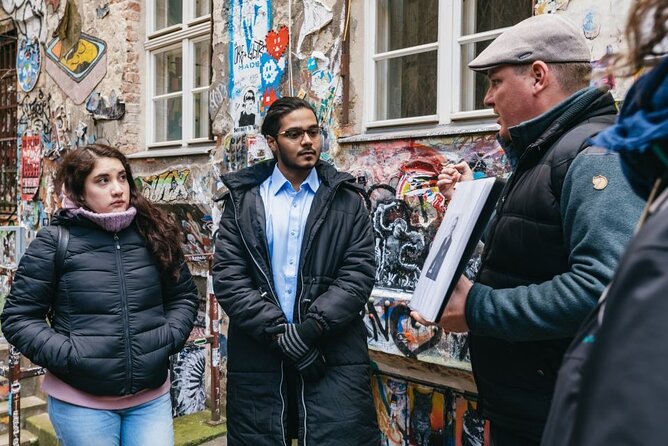
Next is the Jüdisches Gymnasium Moses Mendelssohn, founded in 1779. The details here are powerful because they show both tradition and liberal change. It was the first Jewish school in Germany without fees, and it was open to all faiths. It also promoted liberal Jewishness and accepted female students in 1931.
Then the logic of persecution tightens. In the fall of 1941, deportations of Jews to newly conquered territories to the East led to banning Jewish schools. By 1942, the SS’s Reich Main Security office turned the building into a transit camp. The windows were barred, and Jews were crammed inside to wait for deportation.
This stop is short, but it’s dense. If you only take one thing from this portion, take this: the Nazi system did not just target adults. It attacked education, youth, and the future built through schooling. Watching the building’s later use in your mind is part of why guided context matters so much.


Stops 3 and 4: A cemetery erased, then a workshop that fought back
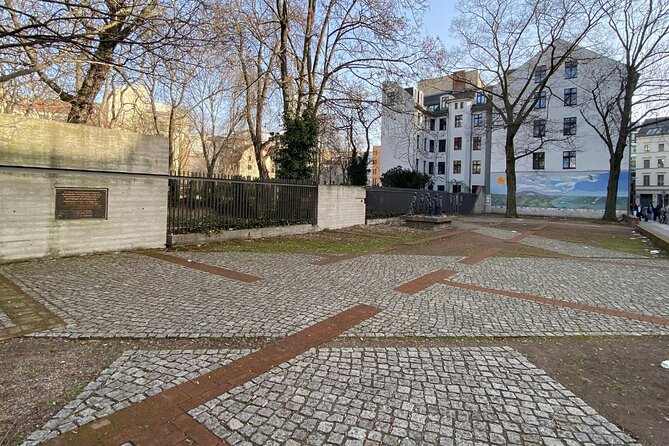
Stop 3 is the Jewish Cemetery and Holocaust Memorial. Between 1672 and 1827, about 12,000 Jewish community members were buried here. A cemetery is usually a place you think of as permanent. This one becomes a lesson in deliberate erasure.
In 1943, the cemetery was destroyed on orders of the Gestapo, with the SS smashing thousands of gravestones, discarding remains, and even playing football with skulls. That kind of cruelty is hard to sit with, but it’s important to understand it as policy, not random hatred.
Then, in April 1945, burials took place again, including mass graves of nearly 2,500 German soldiers and Berlin civilians killed during fighting or shot by the SS for hanging white flags from their windows. This part adds a wider wartime lens, showing how violence extended beyond the Jewish community to other people judged as oppositional.
Stop 4 is Museum Blindenwerkstatt Otto Weidt. Here the mood shifts toward resistance and rescue, without pretending anything was easy. Otto Weidt, supported by his wife Else, employed more than 30 blind and deaf Jewish workers between 1940 and 1945.
As the net closed, Weidt tried to protect his employees from persecution and deportation. He bribed Gestapo officers and falsified documents. He even traveled to Auschwitz to help break one employee out. Even if you’ve heard his name before, seeing this story framed as practical, dangerous action is different from reading it once and moving on.
Stop 5: Denkmal Rosenstraße and the courage of protest
At Denkmal Rosenstraße, you’ll hear one of the most striking protest stories of the Nazi period. On February 27, 1943, the Gestapo, Waffen-SS, and Berlin Police arrested 2,000 Jewish men who were married to non-Jewish German women.
What followed was not passive grief. The wives of the detained men, numbering in the hundreds, gathered to protest. Even with periodic threats of being shot if the women did not disperse, they kept returning in larger numbers when they were forced to scatter.
As pressure mounted, Goebbels authorized the release of the prisoners. This stop matters because it shows resistance as public action, not only secret hiding. It also gives you a clearer sense of why the Nazi regime feared collective defiance.
Stop 6 at Lustgarten: protests before Nazis tightened the rules
Next is Lustgarten, framed on three sides by the Berlin Cathedral, the Altes Museum, and the Zeughaus. Before the Nazis, it was a favorite location for speeches and protests. A vivid example: 200,000 Berliners protested Hitler’s appointment as Chancellor just one week after it happened.
As Nazi power grew, protest became dangerous. Strict regulations, heavy fines, and arrests narrowed public space for dissent. In 1934, Lustgarten was paved over to make way for Nazi propaganda rallies, swearing-in ceremonies, and military parades.
This is a reminder you can carry all day: the Nazis didn’t only use violence. They also reshaped everyday public life, controlling where people could gather and how they could speak.
Stop 7: The Zeughaus, a resistance plan, and what almost happened
The Zeughaus is the oldest building along Unter den Linden, built in 1730 as an artillery arsenal. On March 21, 1943, it was selected to exhibit captured Soviet weapons.
This is where the story turns sharply toward German resistance inside the Wehrmacht. Major General Rudolf Christoph Freiherr von Gersdorff, connected to the resistance, led the exhibit. You’ll learn that he agreed to attempt a major act of self-sacrifice to kill Hitler during the ceremony, using two concealed British clack mines for the plan.
This stop is a tight snapshot of a larger reality: even within German institutions, opposition existed, and it took different forms, including plots carried out with extreme risk.
One practical note for you: this portion includes a lot of “what if” momentum. It can make you feel mentally rushed if you don’t pause and let your guide slow down. If you have questions, this is a good time to ask, because your guide can connect the plan to broader resistance efforts across Berlin.
Stop 8 at Neue Wache: Germany’s central memorial for war and tyranny
Neue Wache is a moving site in the middle of a busy city. It functions as Germany’s central memorial for the victims of war and tyranny. The location itself adds a contrast you can feel immediately. You look around at everyday life, then you look back at the purpose of the monument.
This stop balances the heavy details from earlier locations. It gives you a place to step back emotionally and reflect, even if reflection is brief between blocks of walking.
Stop 9 at Bebelplatz: book burning as a strategy, not a tantrum
At Bebelplatz, you’ll reach the Book Burning Memorial. On May 10, 1933, members of the Nazi German Student Union and their professors gathered here next to the historical and prestigious Humboldt University. They staged a nationwide action described as being against the un-German spirit.
They burned more than 25,000 volumes of books labeled un-German. The point was control over ideas, not just punishment for certain authors. Learning that here, in the real place where it happened, helps the act feel less abstract.
Stop 10: Trains to Life, Trains to Death and the Kindertransport contrast
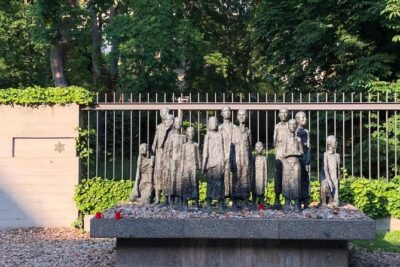
The final stop is Trains to Life, Trains to Death, an almost life-size sculpture showing two groups of Jewish children with contrasting fates. One group looks in a different direction than the other, representing children saved through the Kindertransport to England, versus those who suffered and were deported to concentration camps.
The sculptor, Frank Meisle, is also part of the story. He was among those rescued by Kindertransporte who traveled from here to England in 1939.
Ending here gives you an emotional pivot. Earlier stops focus on destruction and persecution. This one forces you to hold two outcomes side by side. It’s not just tragic. It’s a reminder that individual lives often depended on chance, speed, and the rare effectiveness of rescue.
The guides make a real difference
What stands out across the guides associated with this tour is command of the subject matter and the ability to tell stories without turning them into spectacle. Names that come up include Johan, Jochen, Scott, Jorg, and Benjamin. People consistently describe the guides as excellent at explaining history clearly and at keeping the pace moving while still answering questions.
If you care about how history actually connects from one site to the next, a strong guide is the difference between “I visited memorials” and “I understand what I saw.” Also, one review notes the guide adapted to the group’s pace, which is useful for anyone who likes to ask follow-ups.
Who should book this tour
This is a good fit if you want a Berlin Holocaust-related walking tour that focuses on Jewish resistance, protest, and rescue. It’s also a strong choice if you like “then and now” comparisons, because the photos and maps help you read the city as a living document.
If you prefer a lighter topic, you might not enjoy this. The emotional weight is real, and several stops describe explicit brutality. If you’re traveling with family, one comment noted kids enjoyed it, but you should still gauge whether your group is ready for serious content.
Should you book Path of Resistance: Berlin’s Hidden Holocaust Stories?
Yes, if you want a structured, small-group walk that connects key sites into one clear story about resistance and human choices. The price is fair for the guide-led depth, and the fact that each stop lists admission as free makes it easier to plan.
I’d especially book it if you like learning in the streets, not only in museums. Berlin’s memorial landscape can feel overwhelming on your own. This route gives you a spine.
Skip it only if you strongly dislike standing, because this tour involves a lot of it. Or if emotionally heavy topics are hard for you right now, save it for a trip when you can handle the tone.
FAQ
How long is the tour?
The tour lasts about 2 hours 30 minutes.
Is the tour offered in English?
Yes, the tour is offered in English.
What is the group size?
The tour has a maximum of 15 travelers.
Do I need to pay for admission tickets at the stops?
For each scheduled stop listed, the admission ticket is marked as free.
Where do I meet, and where does the tour end?
You meet at Oranienburger Str. 36, 10117 Berlin, Germany. The tour ends at S+U Friedrichstraße, Berlin (Friedrichstraße Georgenstraße 14/17, 10117 Berlin, Germany).
Is a mobile ticket included?
Yes, the tour includes a mobile ticket.
What happens if the weather is bad or I need to cancel?
The tour requires good weather. If it is canceled due to poor weather, you will be offered a different date or a full refund. You can cancel for free up to 24 hours in advance for a full refund. Canceling less than 24 hours before the start time does not receive a refund.
Jewish Heritage and Memorial Visits
Everything else we filed on Berlin
- East Berlin: City of Shadows Walking Tour
★ 5.0 · 11 reviews - Berlin: Die Stachelschweine – Frank Lüdecke – Träumt Weiter
★ 4.7 · 11 reviews - Potsdam Day Trip from Berlin with a Local: Private & Personalized
★ 4.0 · 11 reviews - An Introduction to Berlin Walking Tour
★ 5.0 · 11 reviews - DJ for a Day: Learn to Mix Like a Pro in Berlin
★ 5.0 · 11 reviews - 2-H Segway Sightseeing Tour Berlin
★ 4.5 · 11 reviews
Jewish Heritage and Holocaust Memorial Tours, side by side.
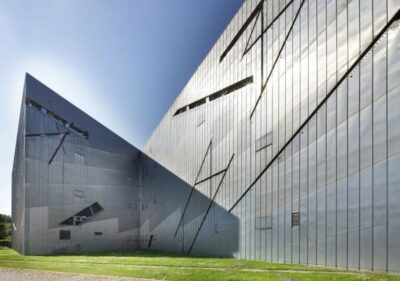 ★ 4.5Berlin: Jewish Museum Berlin Entrance TicketFrom $08,393 reviews
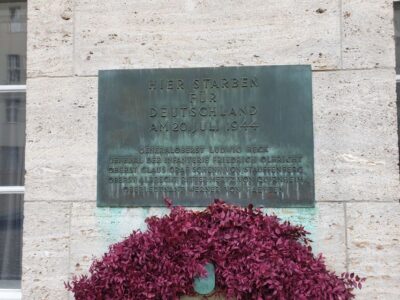 ★ 4.8Nazi Berlin and the Jewish Community TourFrom $2755 reviews
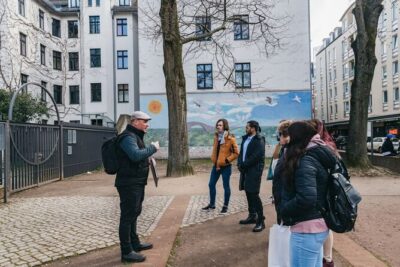 ★ 5.0Path of Resistance: Berlin’s Hidden Holocaust StoriesFrom $5633 reviews
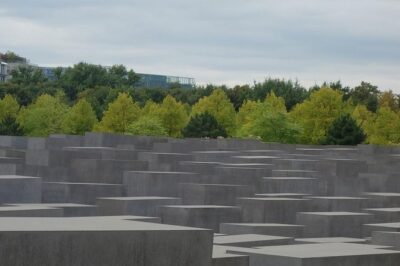 ★ 5.0Private Tour: Jewish Heritage Walking Tour of BerlinFrom $19129 reviews
 ★ 5.0Jewish Berlin: Walking tour The Old Jewish Quarter (private 3 Hours tour)From $35627 reviews
 ★ 4.5Jewish Life in Berlin – Private Walking TourFrom $35521 reviews
 ★ 5.0Jewish Berlin Extended (private Walking tour – 5 Hours)From $62418 reviews
 ★ 5.0Berlin: Jewish Museum Highlights TourFrom $717 reviews
Other lists this tour is on