
REVIEW · JEWISH HERITAGE
Private Tour: Jewish Heritage Walking Tour of Berlin
Berlin tells its Jewish story, street by street. In this private 4-hour walk, you get a pro guide and hit key places from Hackesche Höfe to Otto Weidt’s workshop, with the emotional gravity of Gleis 17 built into the route. I love the one-on-one attention, so you can ask the questions that pop up as you see each site. I also love that a lot of the stops are free to enter, which makes the price feel fair. One drawback to plan for: it covers heavy World War II material, and some memorials can take a minute to process while you’re on your feet.
You’ll cover a moderate amount of walking, and the route runs in all weather, so dress for rain or wind and wear shoes that won’t betray you after an hour. Pickup is offered, and the tour is designed so you’re not stuck figuring out logistics while you’re trying to learn. If you want a guide who is patient and responsive, this program has guides praised by name for being flexible, friendly, and able to handle tough topics without steamrolling your pace.
In This Review
- Key points to know before you go
- How a 4-hour route makes Jewish Berlin make sense
- Hackesche Höfe: the courtyard world where community life clustered
- The New Synagogue area, Centrum Judaicum, and the Missing House site
- Otto Weidt Museum: the story of protection, paperwork, and risk
- Gleis 17 Memorial at Grunewald: why this platform hurts
- Alter Judischer Friedhof: reading centuries in tombstones
- Rosenstraße and the Block der Frauen: protest as courage
- Holocaust Memorial: walking the slabs without rushing the lesson
- Price and logistics: what $191.62 buys you, and what it doesn’t
- Who this tour fits best
- Should you book this private Jewish Heritage walking tour of Berlin?
- FAQ
- How long is the Private Jewish Heritage Walking Tour of Berlin?
- Is this tour private, or do I join a group?
- What sites are included in the walking route?
- Is admission included for the stops?
- What language is the tour offered in?
- Do I need to buy transport tickets and food separately?
Key points to know before you go
- Private guide attention for follow-up questions and real explanations at each stop
- Gleis 17 Memorial at Grunewald station, with the name plaques that make the deportations feel personal
- Otto Weidt Museum for the story of protection and resistance, not only tragedy
- Jewish life and memory in layers, from courtyards and synagogues to cemeteries and protest memorials
- Mostly free-site experience, helping your dollars go to the guide, not the admissions
- All-weather schedule, so you can plan without crossing your fingers about Berlin skies
More Jewish heritage walks and memorial visits
- Nazi Berlin and the Jewish Community Tour★ 4.8 · 55 reviews
- Path of Resistance: Berlin’s Hidden Holocaust Stories★ 5.0 · 33 reviews
- Private Tour: Jewish Heritage Walking Tour of Berlin★ 5.0 · 29 reviews
- Jewish Berlin: Walking tour The Old Jewish Quarter (private 3 Hours tour)★ 5.0 · 27 reviews
How a 4-hour route makes Jewish Berlin make sense
Berlin can feel like a puzzle if you only do it by map and photos. This tour works because it treats the city like a timeline you can walk through, moving from traces of community life into the machinery of persecution, and then into memory and ongoing Jewish presence.
You do not just see monuments. You get the connective tissue: why these places matter, what happened here, and how Berlin shaped Jewish life over centuries. The guide’s job is to keep that story readable while you’re standing in front of something that’s very hard to look at.
And since it’s private, the pace is yours. If a site grabs you, you can linger a bit. If another one feels like too much too fast, you can adjust. That flexibility is a big part of why the experience lands well for families, too, when guides are prepared to slow down for younger visitors.
Hackesche Höfe: the courtyard world where community life clustered
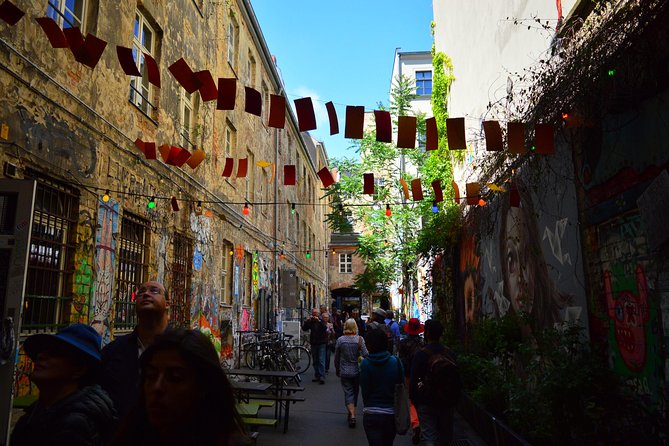
You start at Hackesche Höfe on Rosenthaler Straße, those interconnected late-19th century courtyards that once served as a hub for Jewish immigrants and artisans. Even if you only get a short window, you can feel why courtyards worked so well for city life: people could move between workplaces, homes, and street connections without being fully exposed to the chaos outside.
What I like about beginning here is that it sets the tone for the rest of the tour. Before the memorials take over, you get reminded that real life happened in Berlin long before the deportations. These were not abstract locations. They were parts of daily routines.
Practical note: this area is very walkable, but it can be busy depending on the day. The guide can help you focus on what to look for, instead of letting the place turn into background noise.
The New Synagogue area, Centrum Judaicum, and the Missing House site
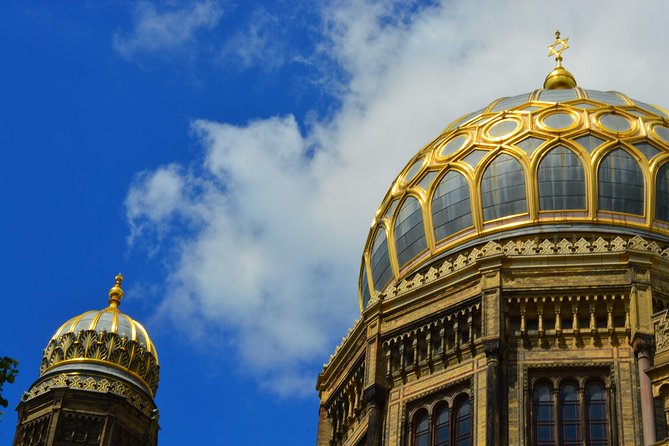
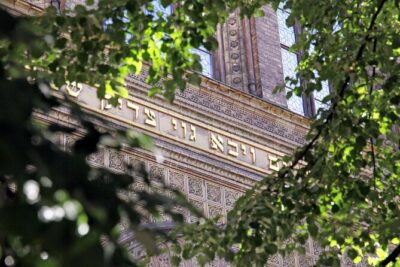
Next you move into the orbit of the New Synagogue and the Stiftung Neue Synagoge Berlin – Centrum Judaicum, housed in the restored synagogue that originally opened in 1866. You get a sense of what Jewish cultural and religious life looked like in Berlin, then you get context for what was lost and what was preserved.
One of the highlights here is the exterior view of the synagogue, with its distinctive dome and architectural details that are hard to forget once you’ve seen them in person. Right near this area, the tour also includes the Missing House site, a prompt to think about absence in a city where many landmarks were destroyed or altered.
Inside the Centrum Judaicum, you’ll find exhibitions aimed at preserving and promoting Jewish heritage, and it also functions as a place for remembrance. Even if your stop is brief, it helps you connect the dots between museum storytelling and the physical building in front of you.
If you care about seeing how Jewish life continues today, this is a useful pause. It’s not only about the past in a frozen frame. It’s also about memory done in the open.
Otto Weidt Museum: the story of protection, paperwork, and risk
Then you go to the Museum Blindenwerkstatt Otto Weidt, in Berlin-Mitte, tied to Otto Weidt, a blind brush maker who protected Jewish workers during the Nazi regime. This stop is powerful because it focuses on a specific human network of help, right down to the workshop setting where the story happened.
You walk through preserved workspaces and hear how Weidt used methods to shield people, including the use of false papers and his influence to keep workers from deportation. That detail matters. It turns the era from a wall of generalities into something concrete, which is usually what your brain needs when history feels too big.
In the same way that people remember names at Gleis 17 later, you remember the idea here: not everyone was powerless, even under brutal conditions. And because the museum is small, it tends to feel close, almost too close, which is exactly the point.
If you want a stop that balances the heavy sites without minimizing them, this is it.
Other walking routes through Berlin

Gleis 17 Memorial at Grunewald: why this platform hurts
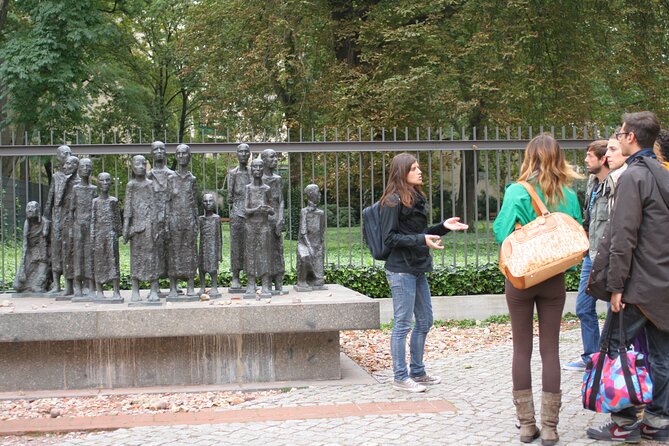
The most sobering part of the walk is the Gleis 17 Memorial at Grunewald train station. This is where thousands of Jews were forcibly transported between 1941 and 1945 to concentration camps and extermination sites across Europe.
What makes this memorial hit hard is the format: metal plaques embedded in the ground, each with names and dates tied to the deportations. Standing near that kind of documentation changes the feeling. It stops being a historical concept and becomes a list of people you can’t unsee.
The guide’s role is especially important here. You want help contextualizing the transport process, and you want the names to mean something beyond a quick photo.
Practical tip: give yourself permission to go slower than you think you need. The memorial invites reflection, and the tour’s structure makes it easier to do that without feeling like you’re falling behind.
Alter Judischer Friedhof: reading centuries in tombstones
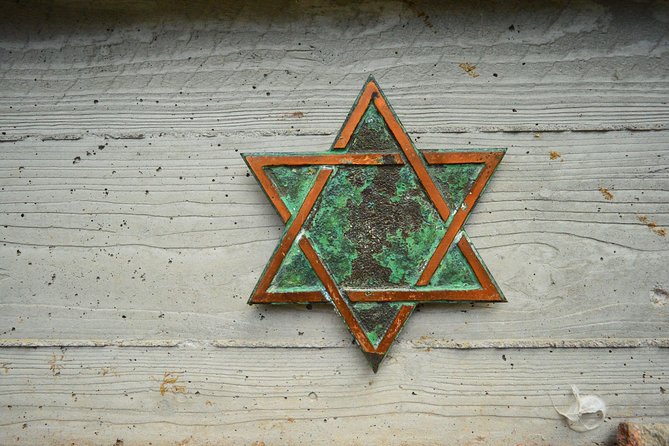
After the deportation site, you shift to stillness at the Alter Judischer Friedof (Old Jewish Cemetery). The atmosphere changes quickly. Instead of train platforms and memorial plaques, you’re in a place of names, epitaphs, and long-term memory.
This cemetery includes prominent Jewish figures, including scholars, philosophers, and community leaders who shaped Jewish life in Berlin. The tombstones show different artistic styles and epitaphs, which makes the cemetery feel like an archive you can walk through.
I like this stop because it adds time depth. It reminds you that Jewish life in Berlin was not a brief chapter, and it was not uniform. There were generations here, and the cemetery keeps that continuity visible.
One consideration: cemeteries can be quiet and emotionally present. If you need breaks from heavy concentration, this is also a good place to slow your breathing and reset.
Rosenstraße and the Block der Frauen: protest as courage
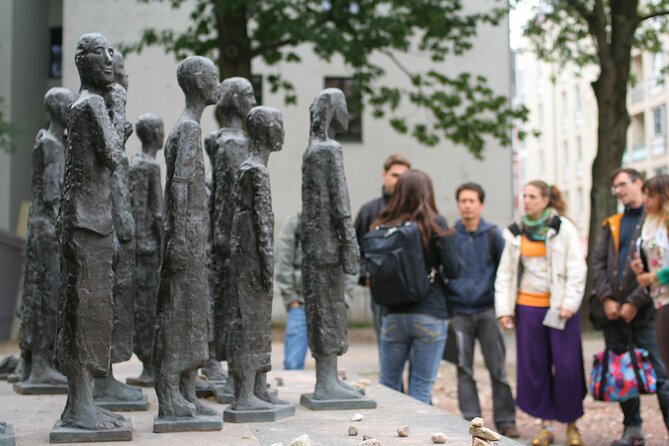
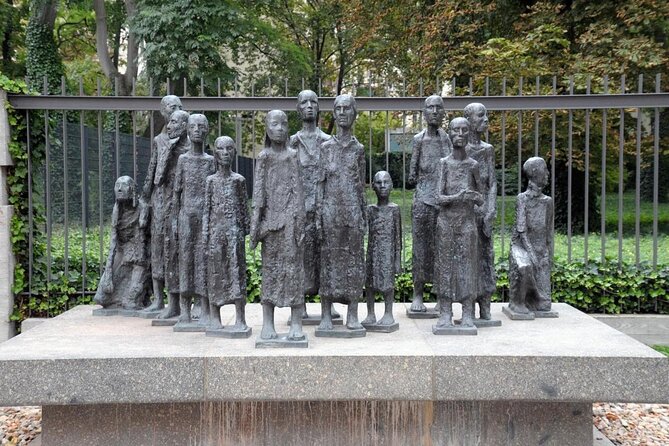
Then you come to the Block der Frauen memorial at Rosenstraße, honoring women who protested for the release of their Jewish husbands during the Nazi regime. This site marks events in early 1943, when many Jewish men were rounded up for deportation.
The memorial focuses on the protest itself, which lasted several days, and on the determination of women who demanded the return of their loved ones from the police headquarters. That detail matters because it shows action, not only suffering.
There’s an inscription that lays out what happened at the location, giving you context so you can connect the story to the city geography. It’s one of those moments where you feel the power of collective risk.
If you’re traveling with people who like agency in history, this stop delivers. It shows bravery in the middle of an awful system.
Holocaust Memorial: walking the slabs without rushing the lesson
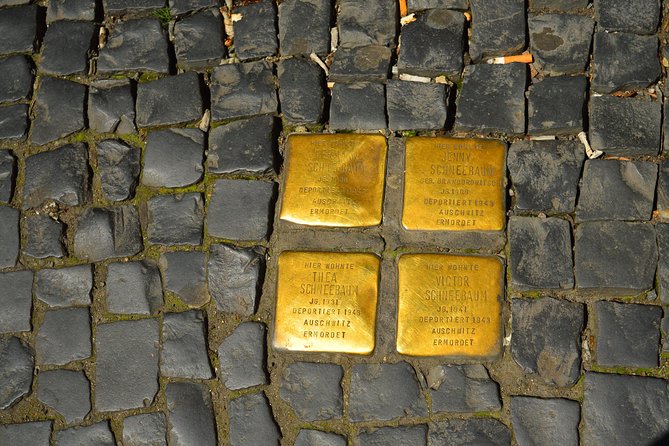
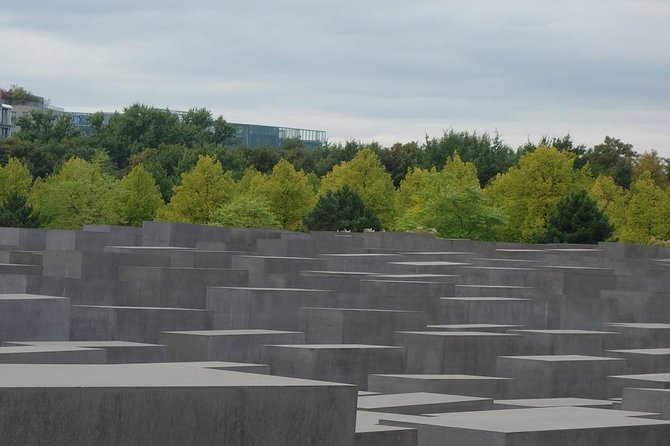
Finally, you reach the Memorial to the Murdered Jews of Europe, often called the Holocaust Memorial. It was designed by architect Peter Eisenman and inaugurated in 2005, and it covers an area with 2,711 concrete slabs arranged in a grid with varying heights.
The design does something very intentional. As you move through the slabs, pathways can feel disorienting, which mirrors the confusion and incomprehensibility of what happened to victims. You’re not meant to power-walk through. You’re meant to pause and notice how your own body feels in the space.
Your guide can help you understand how to experience it respectfully, including how to interpret the feel of the layout. The aim is reflection, not a quick checkbox.
This last stop can be emotionally intense, especially after Gleis 17 and the cemetery. If you know you get overwhelmed, plan a slower pace early on and save some energy for the walk-through itself.
Price and logistics: what $191.62 buys you, and what it doesn’t
At $191.62 per person for an approximately 4-hour private walking tour, the real question is value. Here’s how I’d judge it:
You’re paying for a guide, and for a route that links multiple major sites into one coherent story. A big cost saver is that the tour’s stops include sites with free admission as listed, which means your money goes toward learning and pacing rather than ticket math.
What you still need to budget for: a Berlin transport ticket for Berlin Transport AB Zone is listed separately at 2.70 Euro, and food and drinks are not included. Since the itinerary involves walking between locations, having the right transit plan matters, especially if you’re coming from far across the city.
Also note: pickup is offered, and the tour is near public transportation. That combination is helpful. You can start easily, then mostly walk, and still keep escape routes if you need a restroom or a breather.
Finally, this tour operates in all weather conditions. Berlin weather can turn fast. Bring layers and something that handles wind and light rain, not just sunny-day optimism.
Who this tour fits best
This is a strong fit if you want:
- Jewish heritage in Berlin told through actual locations, not only indoor lectures
- A mix of community life, persecution, resistance, and memory sites in one route
- A private guide who can handle questions, including the difficult ones
- Free-site value, with admissions listed as free for the stops
It may be less ideal if you need a light, casual history day. This route moves through major Holocaust memorials and persecution sites, and even with a good guide, it stays emotionally heavy.
If you’re traveling with kids, you should still consider it, but plan ahead emotionally. Some guides are praised for patience with younger family members, which suggests the experience can be adapted. Still, ask the operator in advance how they handle age-appropriate explanations for the specific age group you’re bringing.
Should you book this private Jewish Heritage walking tour of Berlin?
If your goal is to understand Jewish Berlin in a way you can feel under your feet, I think this is an excellent choice. You get a guided route through Hackesche Höfe, the New Synagogue area and Centrum Judaicum, the Otto Weidt Museum, and the big Holocaust memorial sites like Gleis 17 and the Holocaust Memorial. The private format is what makes it work, because the guide can slow down, answer questions, and help you connect dots.
I’d book it if you’re ready for real history, not just scenery. And I’d bring extra patience if you think your emotions might run high at Gleis 17 and the Holocaust Memorial, because that’s where the tour does its most honest work.
FAQ
How long is the Private Jewish Heritage Walking Tour of Berlin?
It runs for about 4 hours.
Is this tour private, or do I join a group?
This is a private tour. Only your group participates.
What sites are included in the walking route?
The tour includes stops such as Hackesche Höfe, the New Synagogue area at Stiftung Neue Synagoge Berlin – Centrum Judaicum, the Museum Blindenwerkstatt Otto Weidt, the Gleis 17 Memorial, the Old Jewish Cemetery, the Block der Frauen at Rosenstraße, and the Holocaust Memorial to the Murdered Jews of Europe.
Is admission included for the stops?
Admission tickets are listed as free for the stops included in the experience.
What language is the tour offered in?
The tour is offered in English.
Do I need to buy transport tickets and food separately?
Yes. You’ll need a Berlin Transport AB Zone ticket (listed as 2.70 Euro), and food and drinks are not included.
The Longer History of Berlin
Pavements of Berlin
Jewish Heritage and Memorial Visits
Everything else we filed on Berlin
- East Berlin: City of Shadows Walking Tour
★ 5.0 · 11 reviews - Berlin: Die Stachelschweine – Frank Lüdecke – Träumt Weiter
★ 4.7 · 11 reviews - Potsdam Day Trip from Berlin with a Local: Private & Personalized
★ 4.0 · 11 reviews - An Introduction to Berlin Walking Tour
★ 5.0 · 11 reviews - DJ for a Day: Learn to Mix Like a Pro in Berlin
★ 5.0 · 11 reviews - 2-H Segway Sightseeing Tour Berlin
★ 4.5 · 11 reviews
Jewish Heritage and Holocaust Memorial Tours, side by side.
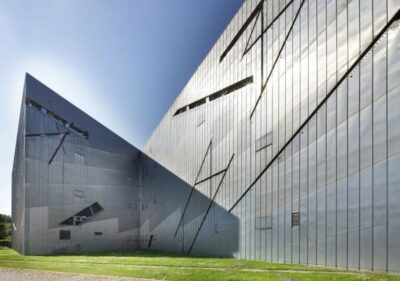 ★ 4.5Berlin: Jewish Museum Berlin Entrance TicketFrom $08,393 reviews
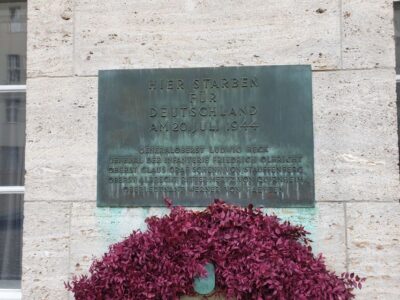 ★ 4.8Nazi Berlin and the Jewish Community TourFrom $2755 reviews
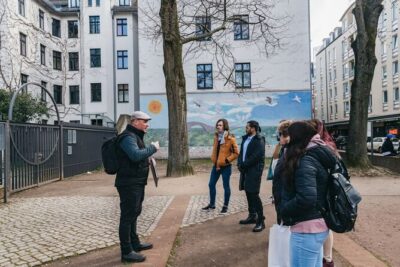 ★ 5.0Path of Resistance: Berlin’s Hidden Holocaust StoriesFrom $5633 reviews
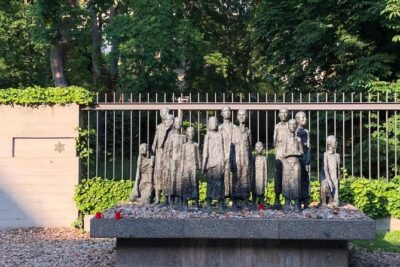 ★ 5.0Jewish Berlin: Walking tour The Old Jewish Quarter (private 3 Hours tour)From $35627 reviews
 ★ 4.5Jewish Life in Berlin – Private Walking TourFrom $35521 reviews
★ 5.0Path of Resistance: Berlin’s Hidden Holocaust StoriesFrom $4819 reviews
★ 4.5Jewish Life in Berlin – Private Walking TourFrom $35521 reviews
★ 5.0Path of Resistance: Berlin’s Hidden Holocaust StoriesFrom $4819 reviews
 ★ 5.0Jewish Berlin Extended (private Walking tour – 5 Hours)From $62418 reviews
 ★ 5.0Berlin: Jewish Museum Highlights TourFrom $717 reviews
Other lists this tour is on