
REVIEW · WALKING TOURS
Private Walk with Berlin Tour Guides (Din EN 15565)-Taylor Made
Berlin hits different when you have a guide. This private tour links major sights with smart pacing, from Berliner Fernsehturm through the Wall memorial belt to the Reichstag, and you get photo stops along the way. I especially like the hotel pickup and drop-off, plus the way your route can be adjusted to your time and interests.
One thing to consider: it is a walking-and-photo-stop format, so if you expect lots of long museum time or heavy indoor sightseeing, you may need to add extra stops (and museum admissions are not always included).
In This Review
- Quick hits before you go
- A private Berlin walk that actually gets you oriented
- How your timing shapes the route (2 to 6 hours)
- Berliner Fernsehturm to Unter den Linden: starting with scale and perspective
- Museum Island and UNESCO context in plain language
- Bebelplatz book burning memorial: remembering 1933
- Gendarmenmarkt: a beautiful square with sharp history around it
- Checkpoint Charlie: Cold War tension, explained with photos
- Topography of Terror and the Wall: looking at the past in the same line
- The Holocaust Memorial: a quiet stop you do not rush
- Brandenburg Gate to the government district: symbolism in one walking line
- Reichstag Building: from 1894 to today’s dome
- Transport choices and walking comfort, without surprise costs
- Price and value: what $175.07 per person buys
- Who this tour suits best (and who might want a different style)
- Should you book this Berlin private walk?
- FAQ
- How long is the private Berlin walk?
- Is pickup and drop-off included?
- Is the tour private or shared with other groups?
- What language is the guide?
- What are some of the main stops?
- Are admission tickets included?
- What transport options are available?
- Is free cancellation available?
Quick hits before you go
- A custom private route: you can tailor the mix of highlights and extra stops based on your duration and walking comfort.
- Photo stops at Berlin’s biggest icons: Reichstag, Brandenburg Gate, Checkpoint Charlie, and the Holocaust Memorial all appear in the itinerary.
- UNESCO Museum Island, with key context: you get the five-museum overview plus why this island became such a focal point.
- Cold War to modern Germany in one flow: the order of sights helps you understand what changed across East and West.
- Flexible mobility options: bike, rickshaw, or minivan can be part of your experience (confirm what is covered for your booking).
Other walking routes through Berlin
- Discover Berlin Half-Day Walking Tour★ 5.0 · 9,624 reviews
- Berlin: Third Reich and Cold War 2 Hour Walking Tour★ 4.9 · 6,830 reviews
- Berlin: Discover Berlin Walking Tour★ 4.9 · 5,998 reviews
- Berlin’s Best: 2 Hour Walking Tour Third Reich and the Cold War★ 5.0 · 5,486 reviews
A private Berlin walk that actually gets you oriented
Berlin can feel like a history textbook drawn on sidewalks. This tour is built for that exact problem, because it strings together the landmarks that explain how the city became what it is today, not just where to take pictures.
You are not in a big group. It is truly private, meaning your licensed guide can slow down for questions, speed up if you are eager, and adjust the stops if your energy runs out early. That matters in Berlin, where crossing between sights can take longer than you think when you factor in crowds and street layouts.
If you are planning your first or early days in town, this is a strong way to get your bearings fast. The company also advises booking early in your trip, so you can use what you learn to pick better plans afterward.
How your timing shapes the route (2 to 6 hours)
The tour runs about 2 to 6 hours. In practical terms, you can treat it like a flexible half-day to full-day plan. The guide starts with major historical highlights, then adds smaller, more specific interests as your time allows.
Even with a fixed itinerary on paper, your actual stop count can shift. The pickup notes that you can pick sights depending on your tour duration, tempo, and what is reasonably reachable by walking. So if you choose a shorter option, you will likely focus on the biggest, most educational hits rather than a long list of every photo angle.
The pacing is especially important for memorial sites. You will want enough time to understand what you are looking at, not just move past it quickly.
Berliner Fernsehturm to Unter den Linden: starting with scale and perspective
Your walk starts at Berliner Fernsehturm, the TV Tower area. From there, the route passes major landmarks nearby, then lands at the Museum Island area.
Along the way, you go by the Red Town Hall, Marien Church, Neptune’s Fountain, and then approach Museum Island. It is a good setup because these sights help you grasp the mix Berlin carries, grand civic spaces next to museum-focused culture zones.
Stop timing is short at the first point, around 5 minutes, and the notes specify that an admission ticket is not included for this segment. In other words, think of this moment as a high-impact orientation stop, not a long visit inside a venue.
Museum Island and UNESCO context in plain language
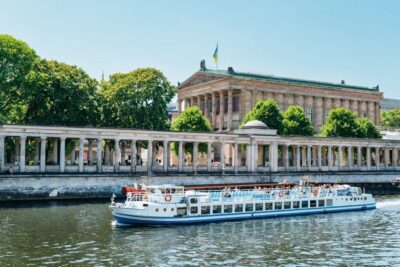
Museum Island is where the tour gives you the strongest “why this place matters” moment. Museum Island is a UNESCO World Heritage Site and is recognized as one of the world’s most important museum complexes.
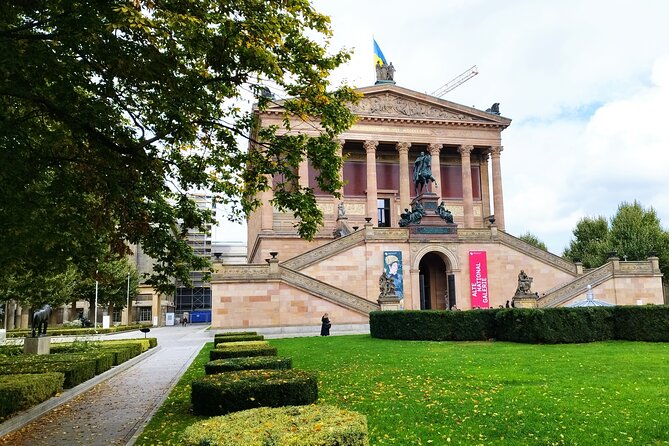
You get the five core museums named right in the flow: Altes Museum, Neues Museum, Alte Nationalgalerie, Bode-Museum, and Pergamonmuseum. Even if you do not plan to go inside, knowing what the five are helps you connect what you see outside to what exists within.
The tour also shares the island story. It was originally a naturally formed island in the Spree river, then gradually connected to both river banks with soil and rubble. The history includes a bridge that was made in 1537, later destroyed during World War II, and rebuilt again in 2011, with another round of destruction noted in 1996. You also learn how the name ties to a long-running toll house, Töpfer-Tor (Tobacconist’s Gate), which stood on the island for more than 200 years.
The stop duration is about 10 minutes, and admission is listed as free for this segment. That makes it an easy win if you want the UNESCO context without ticket stress.
Bebelplatz book burning memorial: remembering 1933
Next comes Bebelplatz, with the Book Burning Memorial. This stop centers on the square known for the 1933 Nazi book burnings, sometimes described by the sheer number of books destroyed, and the memorial is there to keep that memory from fading.
This part of the route can be emotionally heavy, but it is also one of the most meaningful stops on the day because it explains how culture gets targeted under dictatorship. You do not need to be a history expert to feel the weight here, and a guide helps you read the site with the proper context.
Right around this area, you also pass the Forum Fridericianum, linked to the State Opera, parts of Humboldt University including law faculty and main building, the State Library, and St. Hedwig’s Cathedral. Even though this is not a museum entry, those landmarks help you see the academic and cultural engine of the neighborhood.
This stop is about 10 minutes and is listed as free.
Gendarmenmarkt: a beautiful square with sharp history around it
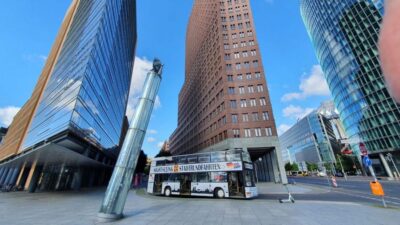
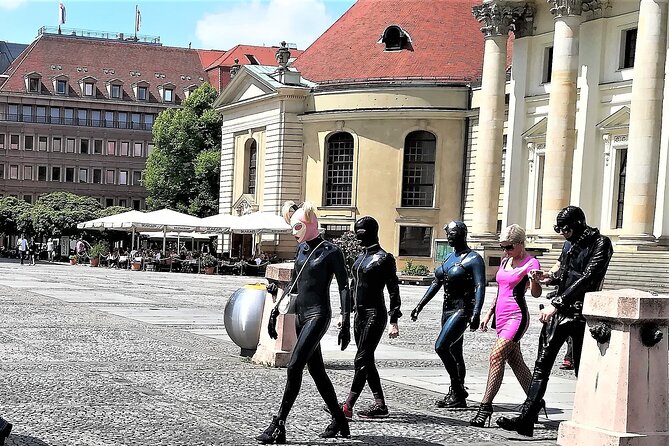
From Bebelplatz you head to Gendarmenmarkt, one of the prettiest squares in Berlin. Here, you see the former Royal Concert Hall, flanked by the German Dom and the French Dom.
This is a smart change of mood after a memorial stop. The tour uses it as a breather, but it does not treat the area like a postcard only. It helps you notice how Berlin’s public architecture can look serene while the city’s story underneath it is still complicated.
Stop duration is about 10 minutes, and admission is listed as free.
Checkpoint Charlie: Cold War tension, explained with photos
Checkpoint Charlie is the next major landmark, and it is one of Berlin’s most recognizable border-crossing symbols. The notes highlight how this crossing became famous in the Berlin Wall era and how it almost became the start of a wider conflict.
Your time here is short, about 10 minutes, with free admission noted. That is just enough for a photo stop if you keep moving, but a guide can still give you the key context so you understand the site beyond the famous appearance.
If you like history that feels close enough to touch, this is where Berlin can suddenly feel more recent than it should.
Topography of Terror and the Wall: looking at the past in the same line
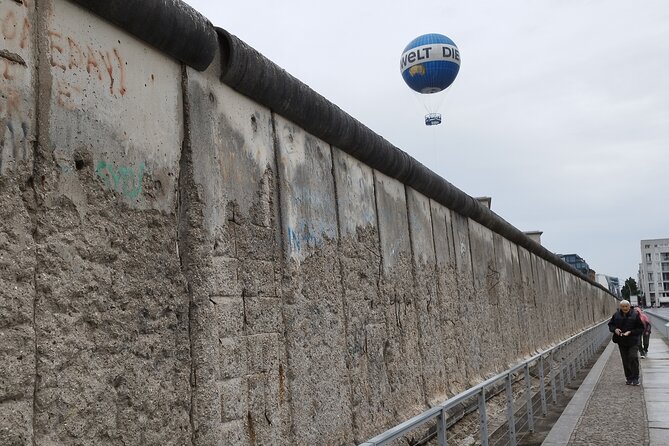
After Checkpoint Charlie, the tour follows the former border strip theme with Topography of Terror. This segment is built around two things: you can see original parts of the Berlin Wall, and you visit the documentation site connected to the period of National Socialism.
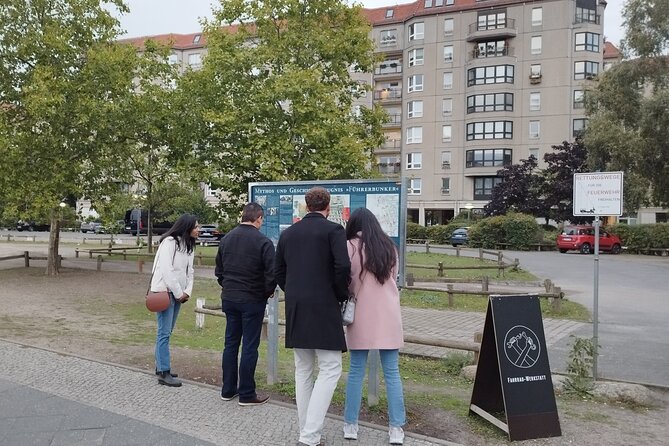
The notes point to the area’s role as the headquarters location of the SS and Gestapo, and the center is described as one of the most frequently visited documentation venues for that time period.
Stop duration is listed at about 5 minutes, and admission is free. That short time is a good fit for an outdoor walk, but if you want deeper reading, you might plan a separate time to go back later on your own. At this stage, the guide’s job is to connect you to the story so you know what you are looking at.
The Holocaust Memorial: a quiet stop you do not rush
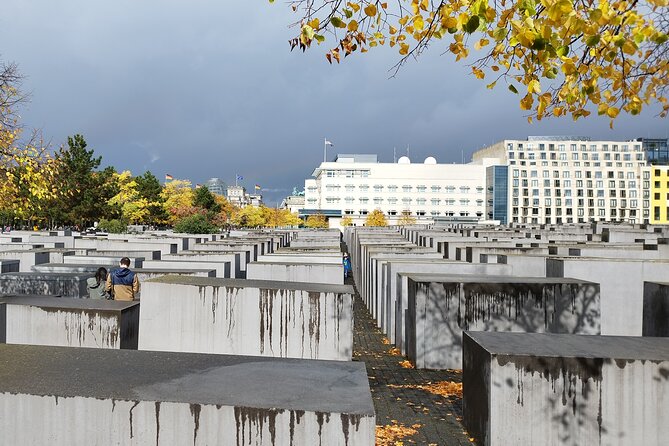
The tour then goes to the Memorial to the Murdered Jews of Europe, commonly known as the Holocaust Memorial. It opened in 2005 and is designed to commemorate the murder of more than 6 million Jews during National Socialism.
This is not a quick sightseeing stop, even if your time is listed as about 10 minutes. I like that the itinerary includes it, because it prevents a Berlin Wall day from becoming only about political architecture and border drama. It brings you back to the human cost.
Admission is listed as free, and that helps you make time for it without adding ticket tasks.
Brandenburg Gate to the government district: symbolism in one walking line
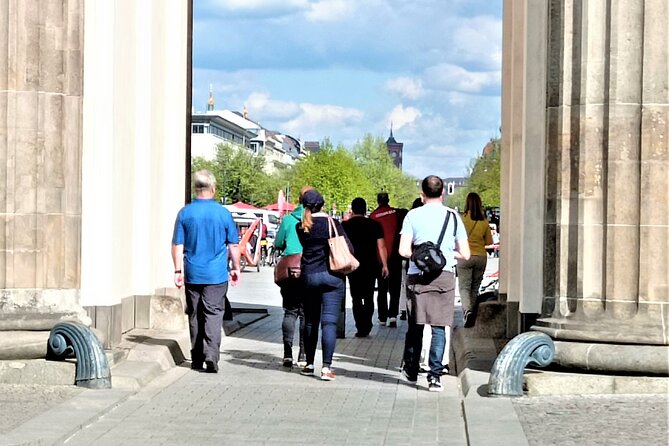
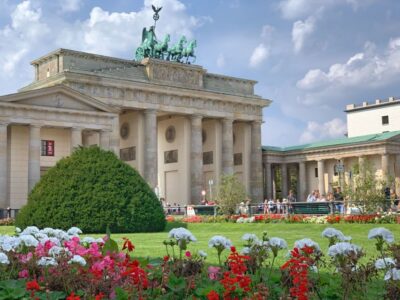
After the Holocaust Memorial, you move to Brandenburg Gate. This is the landmark most people recognize immediately, and the guide uses it as a pivot point in the day.
The notes specify that you leave the former Eastern part of Berlin and enter the area where you also find the Memorial to the Murdered Sinti and Roma and the government district that includes the Reichstag/Bundestag and the Chancellery.
The time here is about 10 minutes, and admission is free. If you have only limited daylight hours, this is still worth it, because the Gate is both dramatic and extremely photo-friendly, and it gives you a clear sense of where modern power sits in the city today.
Reichstag Building: from 1894 to today’s dome
The final major landmark is the Reichstag Building. The tour’s framing here is practical: you get a quick explanation of why the building matters, plus a sense of what changed through wars and rebuilding.
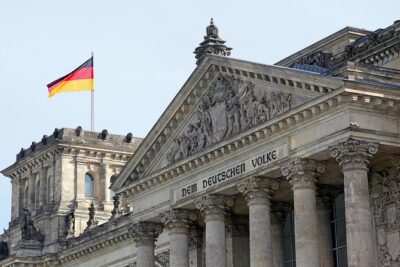
The notes say it was built in 1894 by Paul Wallot, opened in 1897, and it became the parliament building that housed both houses of Parliament, the Bundestag and Bundesrat. The Bundesrat is made up of members from Germany’s 16 states, meeting to discuss legislation affecting state interests.
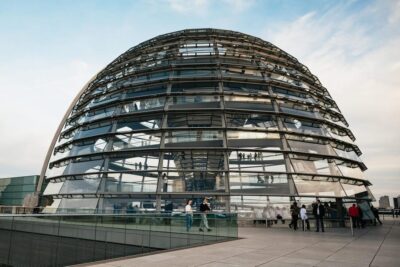
You also hear about the dome at the top. It has been restored several times since its original construction, and the Reichstag was damaged during World War II due to bomb hits by British and American planes. Later, in 1998, Germany’s Parliament moved from Bonn to Berlin, and the Reichstag dome is described as one of the most prominent symbols of modern Germany.
This segment is about 10 minutes, and admission is listed as free for the stop itself.
Transport choices and walking comfort, without surprise costs
One of the best features here is that the tour can be done with different mobility options, including bike, rickshaw, or minivan. That flexibility helps if you want the day to feel more like sightseeing and less like logistics math.
At the same time, the notes list private transportation as not included. So I recommend you treat the words as a menu, not a guarantee. If you care about a specific transport type, confirm what is covered in your booking and what might cost extra.
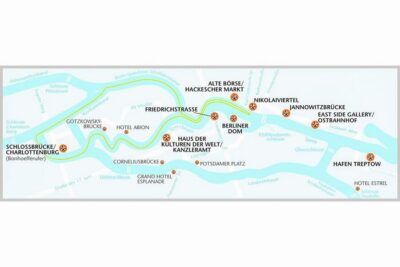
Pickup is offered, and the experience is designed around your hotel location and your route. The pickup description also notes that they tailor the tour based on duration, tempo, and reasonable walking distances. That means you should expect your guide to make real-time tradeoffs, like which streets to cross and which sights you can still enjoy without running out of time.
Price and value: what $175.07 per person buys
The price is $175.07 per person, with a duration from about 2 to 6 hours. For a private guide in central Berlin, this is not bargain-bin pricing. But it can be good value if you use it the right way.
Here is how I would judge value on this one:
- You pay for a licensed guide and a route that hits major landmarks plus explanatory context, not just a shuffle from stop to stop.
- Most stops listed are free admission during the tour window, so you are not constantly paying entry fees.
- The real savings come from the ability to customize. If you want a slightly more memorial-focused route, a more architecture-heavy route, or a lighter pace, you are not stuck with a rigid group script.
The risk is that a private tour only feels worth it if it fits your goals. If you are hoping for long museum interiors, plan separate museum time. If you want an efficient orientation and meaningful stops without ticket planning chaos, this price can make sense quickly.
Who this tour suits best (and who might want a different style)
This tour fits best if you:
- want a guided first pass through Berlin’s top political and memorial landmarks
- like learning context as you walk, including the links between sites
- prefer private flexibility over fixed group tours
- want pickup and drop-off so you spend less time figuring out transit
You might want a different format if you:
- want to spend hours inside museums at Museum Island and do not want to add admissions or extra time later
- need a fully accessible, low-movement experience beyond what walking allows (the tour says most travelers can participate, but it does not spell out step-by-step accessibility details)
If you do book this, you will get the most out of it by treating it like your Berlin outline. Then you return on your own to the places that pull you in.
Should you book this Berlin private walk?
Yes, if your goal is to connect the major dots fast, in a way that feels personal. I like this route because it covers the city’s defining layers in one line, Museum Island and culture spaces, then the painful memory stops, then Cold War landmarks, then modern government symbolism at the end.
Also, the 5/5 rating with 4 ratings signals strong satisfaction, and one guide named Levent is called out for being both accommodating and strong on context. That kind of flexible attitude matters on a tour like this, where you might slow down at a memorial or spend a few extra minutes framing a shot.
If you can spare at least a half-day and you want guided context without the hassle of planning each stop yourself, this is a solid pick.
FAQ
How long is the private Berlin walk?
The tour lasts approximately 2 to 6 hours, depending on the itinerary you choose and the walking pace.
Is pickup and drop-off included?
Pickup is offered. The tour is designed to tailor the route to your Berlin hotel, and it ends back at the meeting point.
Is the tour private or shared with other groups?
It is a private tour/activity. Only your group participates.
What language is the guide?
The tour is offered in English.
What are some of the main stops?
The itinerary includes Berliner Fernsehturm, Museum Island, Bebelplatz (Book Burning Memorial), Gendarmenmarkt, Checkpoint Charlie, Topography of Terror, the Holocaust Memorial, Brandenburg Gate, and the Reichstag Building.
Are admission tickets included?
Admission tickets are not included for Berliner Fernsehturm. The itinerary lists free admission for Museum Island and for the memorials and landmark stops afterward.
What transport options are available?
You can choose among transport options such as bike, rickshaw, or minivan.
Is free cancellation available?
Yes. You can cancel for free up to 24 hours in advance for a full refund.
Pavements of Berlin
Everything else we filed on Berlin
- Private Photo Tour in Kreuzberg
★ 5.0 · 3 reviews - Kreuzberg Private Walking Tour: Immigrants, Artists & Hipsters
★ 5.0 · 3 reviews - Berlin’s Jewish Heritage: Private Tour of the Vibrant Jewish District
★ 5.0 · 3 reviews - Individual city tour Berlin for max. 8 persons
★ 5.0 · 3 reviews - Berlin & The Third Reich Private Guided Tour
★ 5.0 · 3 reviews - Private Analogue Photography Experience in Berlin
★ 5.0 · 3 reviews
Walking Tours, side by side.
 ★ 5.0Discover Berlin Half-Day Walking TourFrom $249,624 reviews
 ★ 4.9Berlin: Third Reich and Cold War 2 Hour Walking TourFrom $236,830 reviews
 ★ 4.6Munich: Third Reich & WWII Walking TourFrom $316,181 reviews
 ★ 4.9Berlin: Discover Berlin Walking TourFrom $235,998 reviews
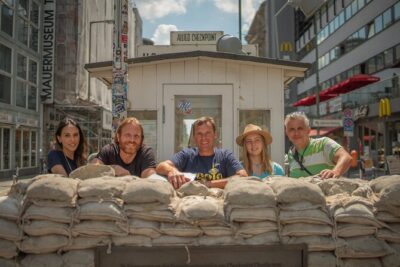 ★ 5.0Berlin’s Best: 2 Hour Walking Tour Third Reich and the Cold WarFrom $245,486 reviews
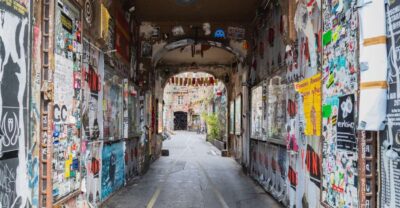 ★ 4.8Berlin: Hidden Backyards Guided Walking TourFrom $235,360 reviews
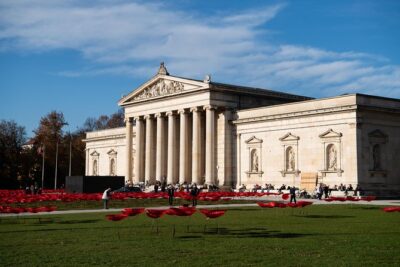 ★ 4.5Third Reich Walking Tour MunichFrom $454,291 reviews
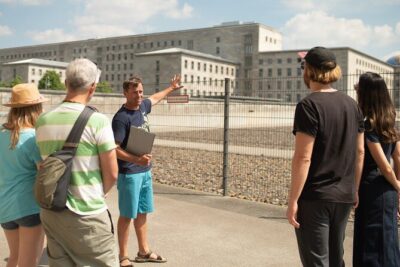 ★ 5.0Third Reich Berlin: Hitler and WWII Walking TourFrom $243,301 reviews