
REVIEW · PRIVATE
Private walking Tour: Berlin Architecture Tour
Berlin is a city you can read in buildings. This private architecture tour uses landmarks and neighborhoods to explain how Berlin’s political past shaped the streets you walk today. I especially like the east-versus-west framing and the photo-friendly stops packed into one half-day.
Two things I really appreciate are the hotel pickup and drop-off, and the fact that the route can be customized, so you are not stuck with a rigid script. One possible drawback: the day is brisk for a 4-hour tour, so wear comfortable shoes, and be ready for lots of street-level looking, not museum deep-dives.
In This Review
- Key moments worth planning around
- A private guide turns buildings into a story you can walk
- Price and what you really get for $191.87 per person
- Where the tour starts: hotel lobby pickup and a customized flow
- Museum Island: learning the art of looking in 20 minutes
- Gendarmenmarkt: the architectural trio that frames the square perfectly
- Kulturforum and the Philharmonie area: why postwar rebuilding looks the way it does
- Berliner’s modern power move: the Reichstag dome and its views
- Potsdamer Platz: Berlin’s city-planning comeback in one square
- Pariser Platz: neoclassical diplomacy meets a Frank Gehry moment
- Berliner Dom: a grand dome that dominates the skyline
- Kreuzberg: Altbau streets and the Oberbaum Bridge photo moment
- Friedrichshain: East Berlin character and the East Side Gallery
- Hackescher Markt and Hackescher Höfe: Art Nouveau detail work you can walk through
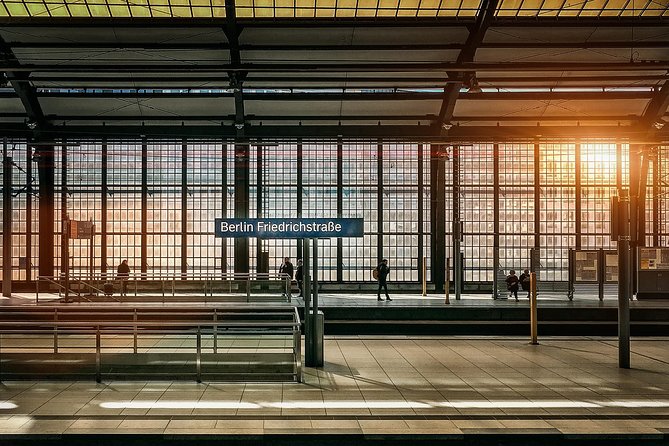
- Friedrichstrasse: the Golden Twenties spirit meets New Berlin
- Which guide strengths matter most for this tour?
- Who this tour suits best, and when it might not
- Should you book this Berlin architecture walk?
- FAQ
- How long is the Berlin architecture tour?
- Is this a private tour?
- What language is the tour offered in?
- Do I get hotel pickup and drop-off?
- Is it only a walking tour?
- What is the price per person?
- Are food and drinks included?
- Are there admission fees at the stops?
- Is there free cancellation?
- Can I bring a service animal?
Key moments worth planning around
- East vs. West Berlin: the guide ties architecture to WWII aftermath and Cold War division
- Friedrichstrasse urban renewal: a major cultural and shopping street that shows New Berlin layers
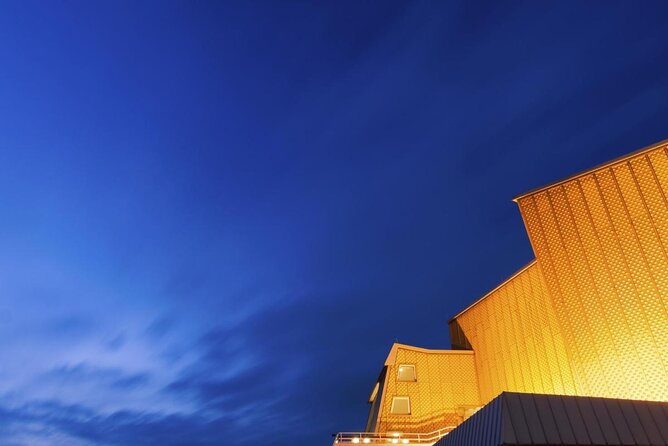
- Kulturforum photo stop: the Expressionist-style look around the Philharmonie area
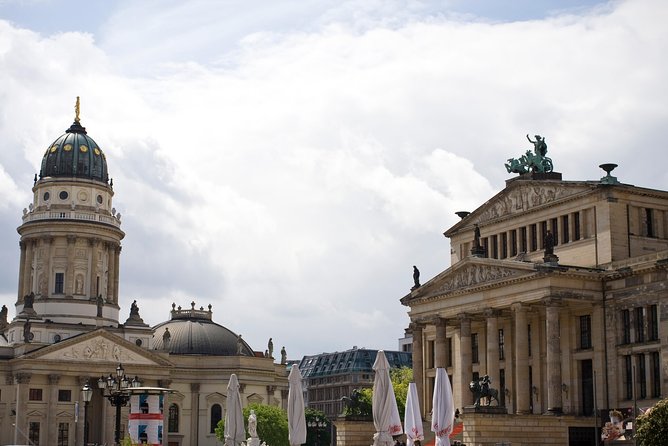
- Gendarmenmarkt architectural trio: Deutscher Dom, Französischer Dom, and Schinkel’s Konzerthaus
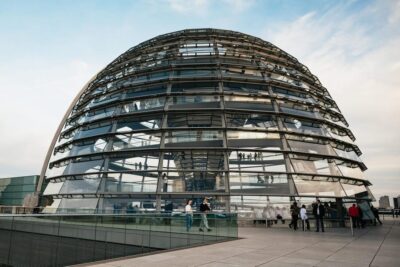
- Reichstag glass dome views: modern transparency added to a historic symbol
- Neighborhood texture time: Kreuzberg and Friedrichshain for real street-scale architecture, not only big monuments
Other walking routes through Berlin
- Berlin: Third Reich and Cold War 2 Hour Walking Tour★ 4.9 · 6,830 reviews
- Berlin: Discover Berlin Walking Tour★ 4.9 · 5,998 reviews
- Berlin’s Best: 2 Hour Walking Tour Third Reich and the Cold War★ 5.0 · 5,486 reviews
- Berlin: Hidden Backyards Guided Walking Tour★ 4.8 · 5,360 reviews
A private guide turns buildings into a story you can walk
This is a private 4-hour architecture tour in central Berlin, run by a professional guide and offered in English. You meet in a central hotel lobby, then the guide steers you through the city’s most recognizable ensembles, while also pointing out the less obvious architectural logic behind them.
I like tours like this because Berlin architecture is never just decoration. It is policy made visible, brick by brick. On this route you get that big-picture idea quickly, then you see it up close: socialist-era housing language in one direction, and postwar modern design in another.
You also have a practical advantage. The tour is described as customized. That means you can ask for focus areas, extra photo time, or a slightly different route if your interests lean more historic, more design, or more city planning.
Price and what you really get for $191.87 per person
At $191.87 per person for about 4 hours, this is not a bargain group tour. But it can be good value if you care about architecture and want a guide who connects dots instead of just reciting dates.
Here is what you are paying for, specifically:
- Private format (your group only)
- Professional guide
- Hotel pickup and drop-off
- A tight route that covers major architecture zones and multiple neighborhoods
- Choice of doing it on foot or by bike
If you are traveling as a couple or small group and you would rather spend the day understanding what you are seeing, this price can feel fair. If you mostly want wandering time with minimal explanation, you might prefer a self-guided route and spend less.
Where the tour starts: hotel lobby pickup and a customized flow
The day begins with a central Berlin hotel lobby meet and greet. The guide then builds the experience around your interests. If you want a stronger emphasis on a particular era or you want extra time around certain viewpoints, this is the moment to mention it.
A small but important practical detail: the itinerary includes stretches across the city’s architectural hot spots. Even though the tour is labeled a walking tour, it explicitly allows biking. If you are limited by walking pace, biking can make the same route feel easier and keep the day from turning into a footrace.
The tour ends with a hotel drop-off, which matters in Berlin. Transfers can eat time, so saving that time keeps your architecture time actually intact.
Museum Island: learning the art of looking in 20 minutes
You start with Museum Island, where the buildings are so iconic that even quick stops can teach you how to look. The guide’s angle here is useful: they point out architectural choices that you might otherwise miss when you are only snapping photos.
Key highlights you will see around the island include:
- Altes Museum: neoclassical lines, a portico look that screams monumental
- Pergamon Museum: massive classic facades that feel like stage sets
- Bode Museum: a dome and softer curves that change the skyline mood
- Neues Museum: a restored, modern-aware mix of history and rebuilt fabric
Even with limited time, you can get a feel for Berlin’s range, from heavy neoclassicism to war-damage recovery and restoration choices. It also sets the tone for the rest of the day, because the tour soon shifts from earlier imperial-era architecture toward the Cold War era contrast.
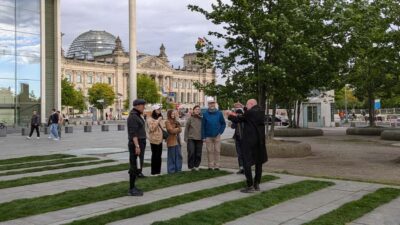
Gendarmenmarkt: the architectural trio that frames the square perfectly
Next comes Gendarmenmarkt, one of Berlin’s most visually satisfying squares. The main reason it works on a guided route is simple: the buildings create a compositional lesson. You learn how three separate structures can read as one unified ensemble.
You get the “trio” viewpoint here:
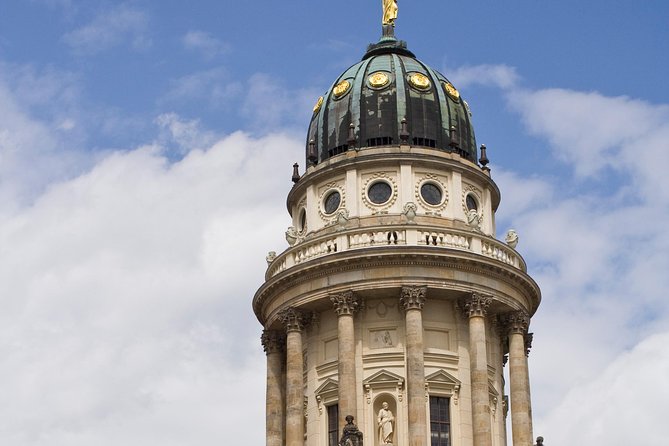
- Deutscher Dom (German Cathedral)
- Französischer Dom (French Cathedral)
- Schinkel’s Konzerthaus (concert hall)
The square also has a statue of Friedrich Schiller at its center, which gives the whole scene a cultural anchor beyond the architecture. If you like photos, this is one of the best places to slow down, frame symmetrically, and then let the guide tell you what design details to notice.
Kulturforum and the Philharmonie area: why postwar rebuilding looks the way it does
From Gendarmenmarkt you move into the Kulturforum area, known for cultural buildings assembled in the postwar period. The point is not just that it is pretty. It is that this was built up after many cultural assets were lost behind the Berlin Wall.
You will have photo time in front of the Expressionist-style Philharmonic Hall area at the Kulturforum. The building’s distinctive design and the way the surrounding institutions sit together make it feel like a whole cultural district, not one standalone monument.
If you are the type who likes to understand design decisions, ask the guide to explain how the culture district approach differs from older urban layouts. This is where the day’s theme turns practical.
Berliner’s modern power move: the Reichstag dome and its views
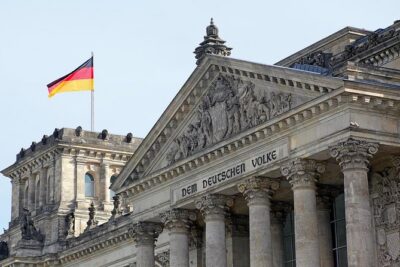
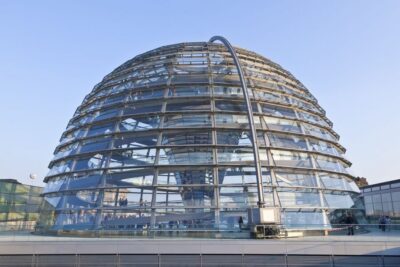
Then you reach the Reichstag Building, where history and modern meaning are intentionally linked. The historic part is the classical façade from the 1890s, but the signature element is the glass dome designed by Norman Foster added during reunification-era renovation.
This is a smart stop for a half-day architecture tour because the idea is easy to understand even if you are not an architecture student: glass dome equals transparency, and the overall design signals democracy rather than pure authority.
The dome also provides spectacular views over Berlin, and the reflective interior creates a shifting play of light. Even if your time here is short, it can still give you the feeling of standing in a modern symbol without leaving the historic shell behind.
Potsdamer Platz: Berlin’s city-planning comeback in one square
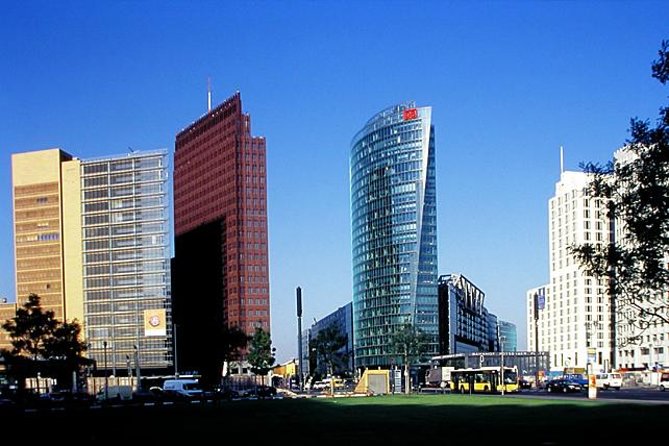
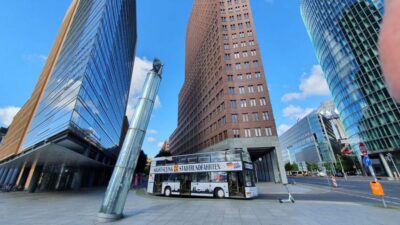
Next, you get Potsdamer Platz, an area that clearly shows Berlin’s transformation. Before WWII it was a center of activity, then it was ruined and later divided through the Cold War. Today it reads as a modern hub built on a landscape of reinvention.
This stop is especially valuable if you like the urban planning side of architecture. You will see the way contemporary office and public-space design works in a former conflict zone.
Notable architecture you can connect with what you are seeing includes:
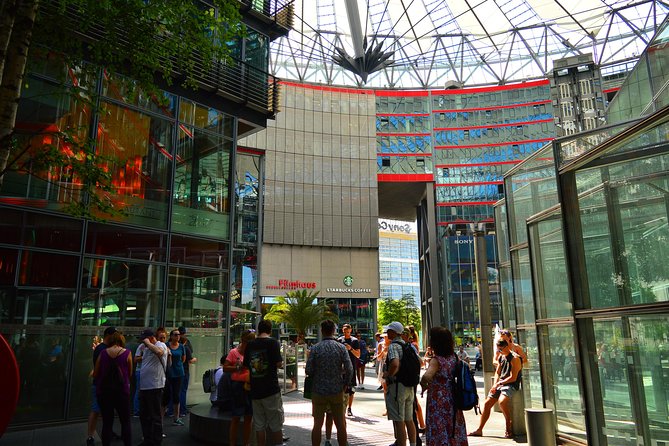
- Sony Center with its iconic glass roof
- DB Tower with its sleek glass-clad presence
- Panoramapunkt viewpoints for reading the skyline’s new rhythm
This is the kind of stop where the guide’s commentary helps you avoid the common tourist trap of treating it like just another modern square.
Pariser Platz: neoclassical diplomacy meets a Frank Gehry moment
At Pariser Platz, architecture becomes a lesson in contrast. The square is anchored by the Brandenburg Gate and the surrounding major diplomatic buildings.
You will notice traditional and modern styles side by side:
- Hotel Adlon
- the French Embassy and the American Embassy (classical/minimalist directions)
- the DZ Bank building by Frank Gehry with its sculptural glass and steel look completed in 1999
- the Academy of Arts, adding still another institutional style
This stop is great for people who like architecture variety. It proves Berlin is not one single aesthetic. It is a living catalog of design choices across time, sometimes only a short walk apart.
Berliner Dom: a grand dome that dominates the skyline
Then you hit Berliner Dom, completed in 1905 and known for Baroque and Renaissance Revival style. The key feature is the enormous central dome, one of the largest in Germany, plus the cathedral’s symmetrical, monumental approach.
The tour description also emphasizes interior drama, with richly decorated spaces including:
- soaring arches
- opulent marble columns
- elaborate mosaics
What makes this stop click on a guided architecture walk is the dome scale. The guide can help you see how the building’s proportions make it feel like a landmark even from a distance.
Kreuzberg: Altbau streets and the Oberbaum Bridge photo moment
Now the tour shifts from big cultural symbols to neighborhood texture. Kreuzberg is described as vibrant and eclectic, with historic Altbau apartment buildings alongside newer changes.
This is a good segment if you want to see architecture that lives with residents, not only architecture that performs for tourists. In Kreuzberg, the streets themselves become the exhibit.
One standout photo target is the Oberbaum Bridge, a late 19th-century bridge with red-brick towers and Gothic-inspired arches. It connects Kreuzberg with Friedrichshain, and it gives you a perfect bridge-scale view of how Berlin’s architecture can be both functional and dramatic.
Friedrichshain: East Berlin character and the East Side Gallery
From Kreuzberg you move into Friedrichshain, another neighborhood described as lively with a distinctive mix of pre-war and socialist-era influences plus modern additions.
Here the architecture lesson is the contrast between:
- pre-war Altbau buildings with ornate facades and big windows
- later socialist-era structures and subsequent restoration and conversions
The tour also includes the East Side Gallery, an open-air stretch of remaining Berlin Wall with murals by artists from around the world. Even if your main interest is architecture, this part matters because it links a physical boundary to how Berlin retold the story through art and public space.
If you want to understand postwar rebuilding and identity, Friedrichshain gives you the street-scale version of the day’s theme.
Hackescher Markt and Hackescher Höfe: Art Nouveau detail work you can walk through
Next up is Hackescher Markt, and specifically Hackescher Höfe, an early 20th-century architecture complex built in 1906 by architect August Endell.
This stop is valuable because it rewards closer looking. The complex has eight interconnected courtyards, and the architecture leans into Art Nouveau design with ceramic tiles and ironwork detailing.
The practical take: courtyards are where you can slow down, step back, and enjoy details without feeling like you are rushing from one monumental façade to the next. It is one of the best stops for people who like design texture.
Friedrichstrasse: the Golden Twenties spirit meets New Berlin
A key part of the tour highlights is Friedrichstrasse, described as Berlin’s major culture and shopping street. It is also where you see the connection between the tradition of the Golden Twenties and the architecture of New Berlin.
You are guided past decorated buildings, offices, coffee shops, and restaurants. It is also where the tour mentions Galeries Lafayette, which gives you a modern landmark anchor inside the older commercial-street DNA.
This segment makes the architecture theme feel real for day-to-day Berlin life. It is not only about palaces and domes. It is also about how cities rebuild their social and retail spaces after major disruption.
Which guide strengths matter most for this tour?
Because this is private, the guide matters a lot. The information provided highlights several guides known for strong communication and tailoring, including Ariel, Sara, Thomas, Daniel, Heiko, and Tarek Ibrahim.
Here is why that matters for you:
- You get an explanation of design intentions, not just dates
- You can adjust the timing to fit your interests
- The guide can help you make quick stops feel meaningful, instead of stopping just for pictures
If you care about architecture as a language, having that explanation turned on is the difference between a photo walk and a “now I get it” walk.
Who this tour suits best, and when it might not
This tour fits best if:
- you want a fast but structured architecture orientation
- you care about how politics shaped streets and buildings
- you like seeing multiple neighborhoods in one afternoon
- you prefer learning with a guide rather than reading a self-guided script
It might be less satisfying if:
- you only want casual sightseeing with minimal walking
- you expect long museum time, because the focus is the city and its architecture ensembles
- you want food included, since food and drinks are not part of the package
Also, the tour is most likely to feel best when you come with at least one architectural interest. Tell the guide what you enjoy, modern, classical, socialist-era, bridges, domes, anything. The tour is designed for that.
Should you book this Berlin architecture walk?
Book it if you want an efficient, well-framed way to understand Berlin’s biggest architectural contrasts. The mix of iconic sites like the Reichstag and Gendarmenmarkt, plus neighborhood segments like Kreuzberg and Friedrichshain, makes it more than a photo tour.
I would particularly recommend it if you value:
- hotel pickup and drop-off to protect your time
- a private, customizable experience
- a guide who can connect buildings to Berlin’s east-west story
If you are unsure, pick this based on your walking comfort and your interest level in architecture. Berlin rewards close looking. This tour is set up to help you do exactly that.
FAQ
How long is the Berlin architecture tour?
It runs for about 4 hours.
Is this a private tour?
Yes. It is private, so only your group participates.
What language is the tour offered in?
The tour is offered in English.
Do I get hotel pickup and drop-off?
Yes. Hotel pickup and drop-off are included.
Is it only a walking tour?
You can do it on foot, or you can choose to do the tour by bike.
What is the price per person?
The price is $191.87 per person.
Are food and drinks included?
No. Food and drinks are not included.
Are there admission fees at the stops?
For the listed stops, the admission ticket is marked free.
Is there free cancellation?
Yes. You can cancel up to 24 hours in advance for a full refund.
Can I bring a service animal?
Service animals are allowed.
Pavements of Berlin
Everything else we filed on Berlin
- East Berlin: City of Shadows Walking Tour
★ 5.0 · 11 reviews - Berlin: Die Stachelschweine – Frank Lüdecke – Träumt Weiter
★ 4.7 · 11 reviews - Potsdam Day Trip from Berlin with a Local: Private & Personalized
★ 4.0 · 11 reviews - An Introduction to Berlin Walking Tour
★ 5.0 · 11 reviews - DJ for a Day: Learn to Mix Like a Pro in Berlin
★ 5.0 · 11 reviews - 2-H Segway Sightseeing Tour Berlin
★ 4.5 · 11 reviews
Private, side by side.
 ★ 4.8Berlin: Private Reichstag and Glass Dome TourFrom $2882,226 reviews
 ★ 5.0Berlin Private Complete History All Day Walking TourFrom $253474 reviews
 ★ 5.0Munich Private Tour with a Local – Highlights & Hidden GemsFrom $112469 reviews
 ★ 5.0Private Walking Tour Berlin Third Reich Hitler and World War IIFrom $192360 reviews
 ★ 5.0Your private 3-hour Hamburg driving tour with a former policemanFrom $337304 reviews
 ★ 5.0Private Berlin: Iconic Sights and Hidden Gems Walking TourFrom $192292 reviews
 ★ 4.8Nuremberg: 1.5-Hour Private Tour through Historical Old TownFrom $140283 reviews
 ★ 5.0Berlin Private Half-Day Walking Tour: Discover the German Capital’s HistoryFrom $180244 reviews