
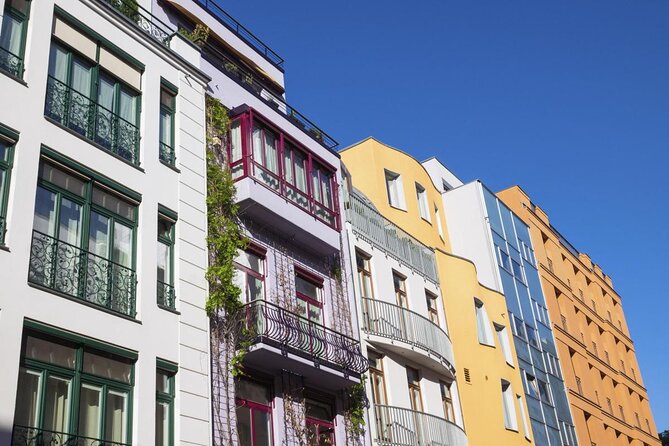
REVIEW · HALF-DAY
Half-Day Bike Tour of Berlin’s Lesser Known And Historical Sites
Berlin changes when you pedal off the main streets. This half-day bike tour stitches together Cold War East Berlin life, Stasi prison history at the Stasimuseum Memorial, and calmer lake views around Weissensee.
I especially like the small-group format (up to 8 people), because questions do not get lost and the ride stays paced for real conversation. I also like that the route stays off-the-beaten-path, with communist-era apartment blocks, former industrial sites, and the kind of everyday places you usually only notice when you live there.
One thing to consider: it is a ride with lots of stops, so each viewpoint is time-limited, and there is no food stop built in. If you get hungry, plan to handle it on your own before or after, and wear clothing that works for cycling in smart casual style.
In This Review
- Key takeaways before you ride
- A Berlin bike ride that swaps postcards for everyday East German life
- Meeting at Bornholmer Str. 75A and pacing your 4-hour ride
- Prenzlauer Berg for real apartment life, not museum facades
- Stasimuseum Memorial and the Stasi story you can picture
- Ernst-Thaelmann-Park and the GDR mix of housing and public space
- Off-the-beaten streets to the Berlin Wall memory point
- Orankesee and Obersee for quick lake pauses that actually help
- Weissensee and Strandbad Weissensee: where the tour slows down for atmosphere
- Olympic training and other period details on the route
- Price and value: what you get for $36.88 per person
- Guides and group size: why the ride feels personal
- Who this Berlin bike tour suits best
- Should you book this Berlin half-day bike tour?
- FAQ
- How much does the Half-Day Bike Tour of Berlin’s Lesser Known And Historical Sites cost?
- How long is the tour?
- Where do I meet, and does it end nearby?
- What is the maximum group size?
- What is included in the price?
- Are food and drinks included?
- Can children join the tour?
- What is the cancellation policy?
Key takeaways before you ride
- Up to 8 riders means you get direct guide attention, not a lecture from the back of the group
- East Berlin focus with Prenzlauer Berg apartment life, Cold War daily routines, and Stasi-era stories
- Stasimuseum Memorial stop keeps the Stasi topic grounded with the former prison setting
- Inner-city lakes break up the history with short scenic pauses at Orankesee, Obersee, and Weissensee
- Bicycle use is included, so you can travel light and just show up ready to pedal
More history walks in Berlin
- Berlin: Natural History Museum Entrance Ticket★ 4.6 · 3,382 reviews
- Berlin: World Heritage Cruise to Potsdam★ 4.5 · 1,435 reviews
- Berlin Historical Highlights Walking Tour★ 4.9 · 657 reviews
- Berlin Private Complete History All Day Walking Tour★ 5.0 · 474 reviews
A Berlin bike ride that swaps postcards for everyday East German life
This tour is aimed at the side of Berlin that does not live on the typical sightseeing checklist. You get a practical way to travel through East Berlin, and the guide connects the street corners to how people actually lived during the Cold War.
The big theme is how systems shaped daily life, from housing blocks and neighborhood parks to the machinery of the secret police. You also get breaks in the form of lakes and green areas, so the ride does not feel like a history march the whole time.
Meeting at Bornholmer Str. 75A and pacing your 4-hour ride
You meet at Bornholmer Str. 75A, 10439 Berlin, and the tour ends back at the same meeting point. It starts at 10:00 am, and you should plan for about 4 hours total, including short stops along the way.
Berlin Bike Tour provides the bicycle, and the tour includes a driver/guide and a local guide. You will also use a mobile ticket, so have your phone ready, and double-check the confirmation timing after booking.
Dress code is smart casual, which is a polite way of saying you should look presentable but still be comfortable cycling. Since the route is active and you are outdoors a lot, I suggest you bring a light layer and something for sun or drizzle, depending on the day.
Prenzlauer Berg for real apartment life, not museum facades
The first main stop is Prenzlauer Berg, where you spend about an hour in the area. This matters because Prenzlauer Berg is often discussed in terms of architecture and neighborhood vibe, but here the emphasis is on daily life during the Cold War.
You will focus on communist-era apartment blocks and what everyday routines could look like in East Berlin. It is the kind of context that changes how you read the streets later, even after you step off the bike.
The vibe in this section is also where a lot of the “less touristy” value comes from. Instead of constant landmarks, you notice housing, parks, and the feel of a neighborhood that kept functioning even under heavy political pressure.
Stasimuseum Memorial and the Stasi story you can picture
A short stop at the Stasimuseum Memorial highlights the former Stasi prison for about 5 minutes. It is brief, but the point is to give you a physical anchor for a subject that can otherwise feel abstract.
In the route narrative, you learn how the Stasi worked as a network of secret police and informers, and you also hear about the sheer size and scale of their headquarters and prisons. The guide does not just name institutions, they connect the system to how control and fear could spread through ordinary life.
Even with limited time at the site, this is one of those moments where the bike pauses feel intentional. I like that you come here while you already have neighborhood context, so it clicks faster than it would if you jumped in cold.
More handlebar time in Berlin
Ernst-Thaelmann-Park and the GDR mix of housing and public space
Next up is Ernst-Thaelmann-Park, with a stop of about 10 minutes. This is a GDR-style park and housing area, and the route also includes a planetarium nearby as part of the broader neighborhood context.
The value here is the balance: you see how East Berlin invested in community space alongside the housing environment. It is also a useful break after heavier political topics, because parks let you reset your brain and keep moving without losing the thread.
If you like urban design and how cities are planned for people, not just monuments, you will enjoy this stop. It is short, but it helps the tour feel less like a list of sites and more like a working neighborhood.
Off-the-beaten streets to the Berlin Wall memory point
One of the bigger “memory” stops is Platz des 9. November 1989, where you spend about 15 minutes. This is tied to a former border station and the Berlin Wall era, so you get a direct connection to the events surrounding the fall of the Wall.
This part is less about grand views and more about understanding the physical reality of borders inside a city. When you ride up to the location, the guide can explain why a border station was not just a line on a map, it was an everyday barrier for people moving through the urban fabric.
Along the ride, you also pass sites related to former slaughterhouses and breweries. That mix of “work and industry” with political sites is part of why the tour feels grounded. Berlin is not only architecture, it is labor, supply, waste, and routines.
Orankesee and Obersee for quick lake pauses that actually help
You get two short scenic breaks at inner-city lakes. Orankesee is about 5 minutes, then Obersee is another about 5 minutes.
These pauses might look small on paper, but they do something important for the overall experience. They give you a breather after concentrated East Berlin history and help you keep the ride enjoyable instead of exhausting.
Use these moments to simply look and listen. If you are the kind of traveler who likes to spot how locals use public space, these are ideal quick stops.
Weissensee and Strandbad Weissensee: where the tour slows down for atmosphere
The tour spends a longer stretch in Weissensee, about 45 minutes, followed by about 10 minutes at Strandbad Weissensee. This is the area where the ride leans into calm and greenery while still staying connected to the tour theme of how East Berlin neighborhoods evolved.
Weissensee is one of those places where you can feel the city in layers, more than just a single era. The guide keeps the conversation tied to what you are seeing, so the time does not turn into dead space.
Strandbad Weissensee adds a lakeside atmosphere, the kind that makes it easier to process everything you learned earlier. I like this layout because the tour ends with scenery that feels like a reward, not a sprint to the finish.
Olympic training and other period details on the route
The tour highlights mention an athletic facility where many famous Olympic athletes have trained. Even when you do not know the exact names in advance, it is a useful reminder that East German life was not only political and institutional.
This is the sort of detail that makes the Cold War feel less like a TV topic and more like a lived reality. If you care about sports history, social policy, or how states tried to shape results, you will likely find this portion especially interesting.
You also pass the kind of older sites that connect to the everyday economy, like the former slaughterhouses and breweries mentioned in the tour overview. I like that the guide includes these “background” elements because they explain what had to operate underneath the headline events.
Price and value: what you get for $36.88 per person
At $36.88 per person, this tour is priced like a serious short ride rather than a budget snack tour. You get a guided experience that covers multiple East Berlin themes in half a day, plus bicycle use and a small-group cap of 8 riders.
The best value comes from the combination of things that are hard to assemble on your own in one go: local guided interpretation, a bike that gets you efficiently across neighborhoods, and a route that avoids only the most famous stops.
Also, the itinerary indicates the stops you visit are marked as free admissions. That matters because it reduces surprise costs and keeps your money focused on the guide and the actual experience.
Guides and group size: why the ride feels personal
The reviews consistently point to guides who keep things fun and human. Katrin is praised as fun, informative, and accommodating, and Markus is described as knowledgeable, good at adjusting the route, and easy to talk with.
What I would pay attention to is how the small group cap changes the experience. With fewer people, you are more likely to hear the nuance in the guide’s explanations, and you can ask follow-up questions when something catches your attention.
One practical perk is timing flexibility. If the group is smaller than usual, you can sometimes get more direct attention, and the ride tends to feel less like a conveyor belt.
Who this Berlin bike tour suits best
This is a great fit if you want Berlin without only the headline sites. You’ll enjoy it if you like Cold War context that connects to streets, buildings, and daily routines, not just dates.
It also suits people who like light exertion with a purpose. You get cycling through neighborhoods, short stops for understanding, and lake time for a mental reset.
If you are visiting with teens or you want something that keeps moving while still teaching, this structure can work well because the pace is active and the stops are short.
Should you book this Berlin half-day bike tour?
Yes, I would book it if your idea of a good Berlin day includes East Berlin neighborhoods, Stasi-era context, and a ride that feels like a local detour. The $36.88 price makes sense for a guided bike outing that includes bike use, keeps the group small, and uses free admission stops to avoid extra spending.
I would think twice if you hate cycling for more than a short stretch or if you need long museum-style immersion at one site. This tour is about motion and context across several places, with each stop designed to be readable and practical.
If you want Berlin beyond the usual photos, this one earns its keep.
FAQ
How much does the Half-Day Bike Tour of Berlin’s Lesser Known And Historical Sites cost?
It costs $36.88 per person.
How long is the tour?
The tour lasts about 4 hours.
Where do I meet, and does it end nearby?
You meet at Bornholmer Str. 75A, 10439 Berlin. The tour ends back at the same meeting point.
What is the maximum group size?
The maximum is 8 people per booking.
What is included in the price?
The tour includes the driver/guide, a local guide, and use of a bicycle.
Are food and drinks included?
No, food and drinks are not included.
Can children join the tour?
Children must be accompanied by an adult.
What is the cancellation policy?
You can cancel for a full refund up to 24 hours before the experience’s start time, and cancellation is free. If you cancel less than 24 hours in advance, the amount you paid is not refunded.
The Berlin Bike Lanes
The Longer History of Berlin
Everything else we filed on Berlin
- Private Photo Tour in Kreuzberg
★ 5.0 · 3 reviews - Kreuzberg Private Walking Tour: Immigrants, Artists & Hipsters
★ 5.0 · 3 reviews - Berlin’s Jewish Heritage: Private Tour of the Vibrant Jewish District
★ 5.0 · 3 reviews - Individual city tour Berlin for max. 8 persons
★ 5.0 · 3 reviews - Berlin & The Third Reich Private Guided Tour
★ 5.0 · 3 reviews - Private Analogue Photography Experience in Berlin
★ 5.0 · 3 reviews
Half-Day, side by side.
 ★ 5.0Discover Berlin Half-Day Walking TourFrom $249,624 reviews
 ★ 4.7From Munich: Dachau Memorial Site Half-Day TripFrom $622,526 reviews
 ★ 5.0Early-Start Dachau Memorial Half-Day Tour from MunichFrom $62942 reviews
 ★ 5.0Berlin Third Reich Sites: Half-Day Walking TourFrom $21835 reviews
 ★ 5.0Dachau Small-Group Half-Day Tour from Munich By TrainFrom $60811 reviews
 ★ 4.5Potsdam Half-Day Walking Tour from BerlinFrom $23398 reviews
 ★ 5.0Berlin Private Half-Day Walking Tour: Discover the German Capital’s HistoryFrom $180244 reviews
 ★ 4.7Rostock: Full-Day, Half-Day, or Sunset Sailing ExperienceFrom $86174 reviews
Other lists this tour is on