
REVIEW · WARTIME HISTORY
Inside the Third Reich (Private Tour)
Munich has scars you can still read. On this Inside the Third Reich private tour, Curt Milburn guides you to central locations connected to Hitler, Nazi rise, and the aftermath, with an iPad loaded with films and images that add context while you stand in the exact spaces.
I love how the route stays hands-on and question-friendly, not just a lecture, so you can ask for clarification as you go. The one drawback to consider is the subject matter is heavy, so if you want a lighter sightseeing day, this may feel emotionally intense even though the pacing is well explained.
In This Review
- Key things I’d bank on before you book
- Why this Third Reich tour feels different in Munich
- Meet Curt Milburn and get set up with the iPad story kit
- The walking loop, stop by stop, and what to look for
- Isartor, where Hitler met the Nazis
- Platzl, Hitler’s first speech and early momentum
- Old Town Hall, Kristallnacht begins and an assassination attempt
- Back at Platzl, war damage on Munich buildings
- Odeonsplatz, the SA purge and Nazi speeches
- Platz der Opfer des Nationalsozialismus, Munich’s memorial
- Glyptothek, rally grounds and surviving fascist architecture
- Alter Botanischer Garten, the Nazi eagle on public display
- Residenz München, failed putsch and resistance
- Price and value: is $180.72 per group worth it?
- What the mobile ticket and timing mean for your day
- Who this tour suits best
- Should you book Inside the Third Reich (Private Tour)?
- FAQ
- How long is the Inside the Third Reich private tour?
- Where does the tour start in Munich?
- What time does the tour begin?
- Is this a private tour, or will I be mixed with other groups?
- How big is the group size?
- Do I need an admission ticket at the stops?
- Is there a mobile ticket?
- Is the meeting point near public transportation?
- Can I cancel and get a full refund?
- Is the tour okay for someone traveling with a service animal?
Key things I’d bank on before you book
- Private, small-group feel for up to 15 people, with room to ask questions during the walk
- Curt Milburn’s iPad support with films and images that help you connect street-level sites to the bigger story
- War-damage clues you might miss on Munich buildings, not just famous landmarks
- A tight loop of meaningful sites from early Nazi momentum to Kristallnacht beginnings and memorials
- Central meeting point near Marienplatz so it’s easy to start your day with momentum
Further wartime history walks we have written up
- Munich: Third Reich & WWII Walking Tour★ 4.6 · 6,181 reviews
- Third Reich Walking Tour Munich★ 4.5 · 4,291 reviews
- Munich: Birthplace of the Third Reich Guided Walking Tour★ 4.6 · 771 reviews
- Munich World War II Sites Including Dachau Concentration Camp★ 4.5 · 570 reviews
Why this Third Reich tour feels different in Munich
Munich is one of the key places where Nazi history took shape in public, not in some distant archive. That is why this tour works: you are not just hearing dates, you are standing in the streets and squares tied to speeches, propaganda, violence, and resistance.
What makes it practical is the format. You spend about 2 to 3 hours in a guided loop, and the guide uses an iPad that includes films and images. That matters because it turns vague names into something visual, so your brain can build a mental map fast. You get a guided link between what you see in Munich today and what was happening there when the Third Reich was rising.
Also, it’s private. That does not mean it’s quiet and distant. It means you can steer the pace with questions, and the guide can adjust to what you already know or what you want emphasized.
Meet Curt Milburn and get set up with the iPad story kit
Curt Milburn runs these tours in a way that feels like you’re walking with someone who truly cares about the city and the subject. The biggest “how” is the tools he brings. You are given an iPad with hundreds of films and images from over 1000 years of European history, so the Third Reich story sits inside a broader timeline rather than floating by itself.
From the reviews, what really shines is his ability to handle questions without rushing past them. People specifically praised how he moved from top-down themes to the detail they wanted. That’s not a throwaway point. It changes the experience from memorizing talking points to understanding how individuals and ideas connected to real places.
And yes, it’s worth noting the people element. Curt is described as engaging and patient, and he encourages conversation. If you’ve ever been stuck on a tour where you’re too shy to ask, a private format like this is a big plus.
The walking loop, stop by stop, and what to look for
Isartor, where Hitler met the Nazis
Your tour begins at Marienplatz 18 and you start moving toward Isartor. This stop is tied to the original beer hall where Hitler met the Nazis. The power here is simple: a beer hall is not an abstract symbol. It’s a room in a city, and that matters because Nazi politics grew through public gatherings, persuasion, and spectacle.
At this stop, think about how power can feel social. Speeches and alliances were built in ordinary settings that people chose to attend. It helps you understand why propaganda can spread when it’s packaged as community, not just ideology.

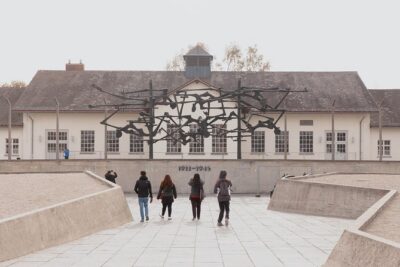

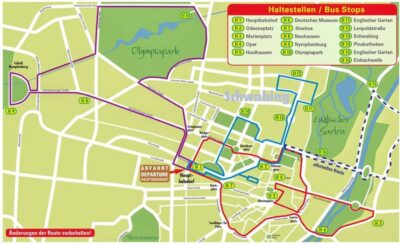
Platzl, Hitler’s first speech and early momentum
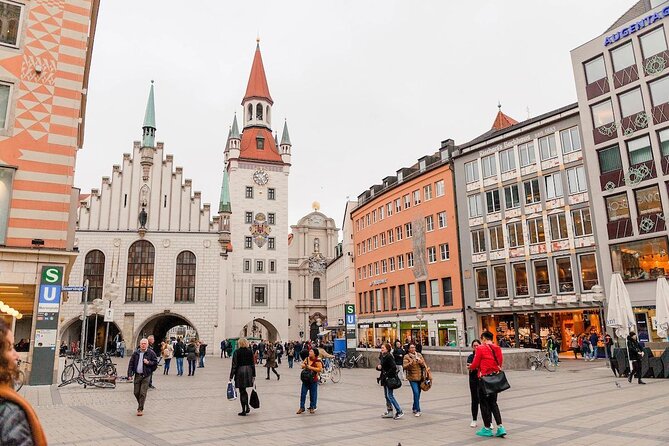
Next is Platzl, and you hit the theme of early momentum. This is where the tour connects Hitler’s first speech to his rise to success.
The practical takeaway is that you’re not only learning what happened, you’re also learning how it happened, meaning how a message went from platform to following. Standing in these central streets makes that feel less like history homework and more like a chain reaction.
One thing to be aware of: the stop durations are short (for example, around 15 to 20 minutes at several points). That’s good for keeping the loop moving, but it also means you’ll want to ask your questions when they fit the moment, so you don’t lose your place in the narrative.
Old Town Hall, Kristallnacht begins and an assassination attempt
At Old Town Hall, the tour focuses on the beginning of Kristallnacht and also the site of an assassination attempt on Hitler’s life.
Kristallnacht is one of those events people know by name, but it can stay foggy unless you anchor it to specific public spaces. This stop does that. It also pairs two strands that often feel separate: planned violence and the reality that even the Nazis were not immune to plots against their leader.
If you’re sensitive to hard material, this is likely where you feel it most. That’s not the guide being graphic, it’s the subject itself. Keep breathing, take your time looking at what’s in front of you, and let the guide’s structure carry you through.
Back at Platzl, war damage on Munich buildings
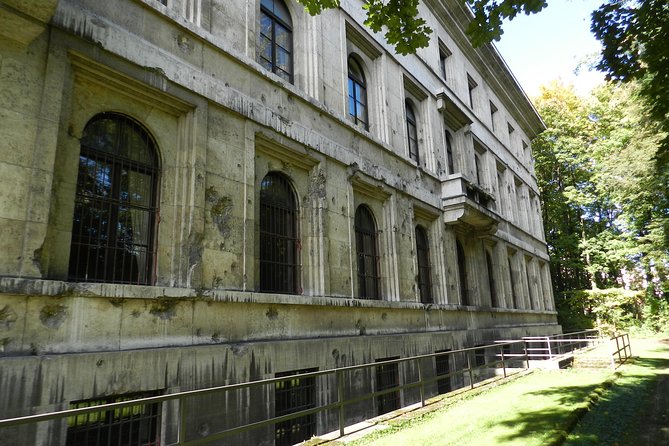
You return to Platzl for a different angle: evidence of war damage on Munich’s buildings.
This is a big value moment, because not every historic tour includes the physical scars. You get a way to read the city like a document. Even when you can’t picture the devastation from today’s viewpoint, you can see that the city was changed, sometimes permanently.
This is also where a private tour shines. If you have questions about what you’re seeing, the guide can explain what the damage means in context.
Odeonsplatz, the SA purge and Nazi speeches
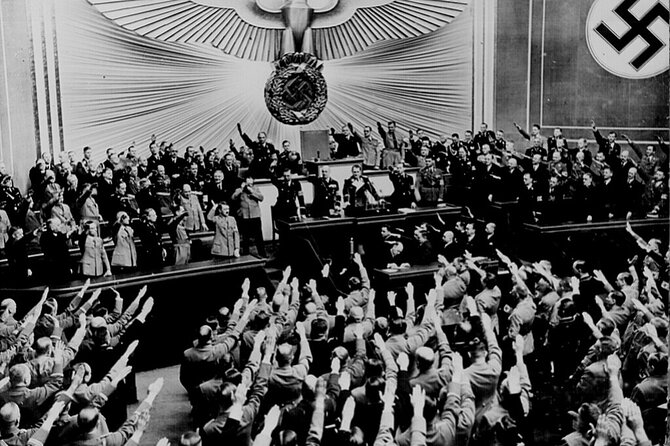
Then you go to Odeonsplatz. Here, the tour ties together Hitler’s purge of the SA and the site of his speeches.
This stop is all about atmosphere and control. If you’ve ever wondered how ideology turns into action, speeches are one of the bridges. A purge also shows the internal violence and power struggles inside the regime, which helps you understand that the Third Reich was not a single calm machine. It was contested and enforced.
Look around like you’re spotting stage effects. Where would a crowd stand? Where would attention go? The tour’s visuals on the iPad can help you imagine how the same spaces functioned as theaters of authority.
Platz der Opfer des Nationalsozialismus, Munich’s memorial
At Platz der Opfer des Nationalsozialismus, you hit the memorial for those who died at the hands of the Third Reich.
This part matters because it brings the focus back to victims, not just leaders. If you’ve been following speeches and power moves, the memorial is a needed course correction. It also helps you process the earlier stops with less abstraction.
You’ll likely want to pause here. A memorial tour can become a speed-walk if you treat it like another photo stop. This one is designed to take its time.
Glyptothek, rally grounds and surviving fascist architecture
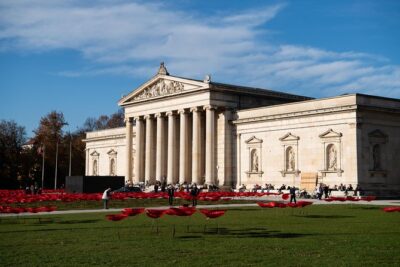
Next is the Glyptothek, where the focus shifts to Munich’s rally grounds and the presence of still-standing fascist buildings connected to Hitler.
This is one of those “you can see it from the street” moments. The Third Reich did not only leave behind documents. It shaped architecture and public spaces, and some of those elements still exist today.
The guide’s iPad visuals can help you make sense of what you’re looking at, especially if you’re not already familiar with how propaganda and design work together. In a good tour, you come away thinking, I never realized a city’s style could carry political meaning.
Alter Botanischer Garten, the Nazi eagle on public display
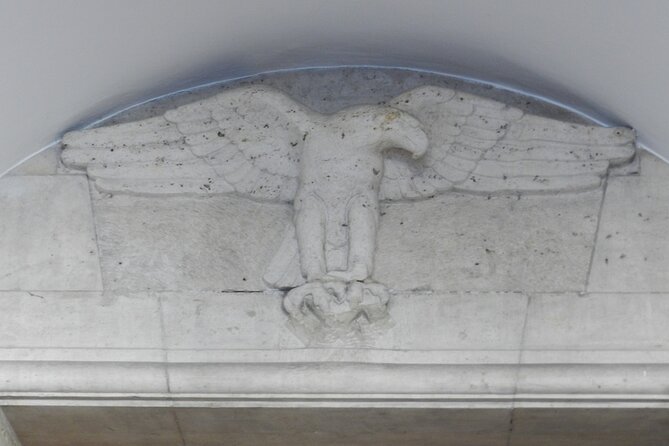
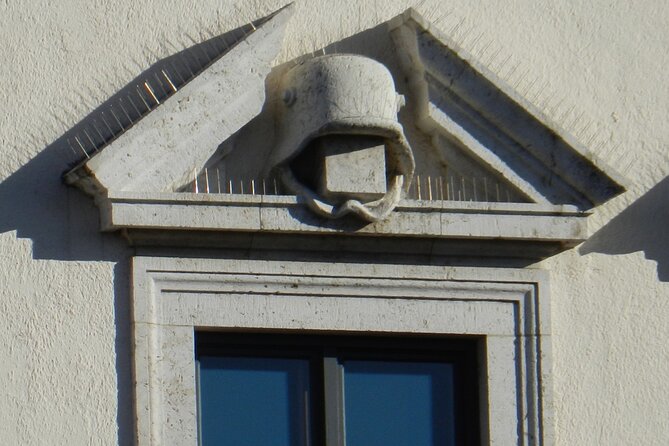
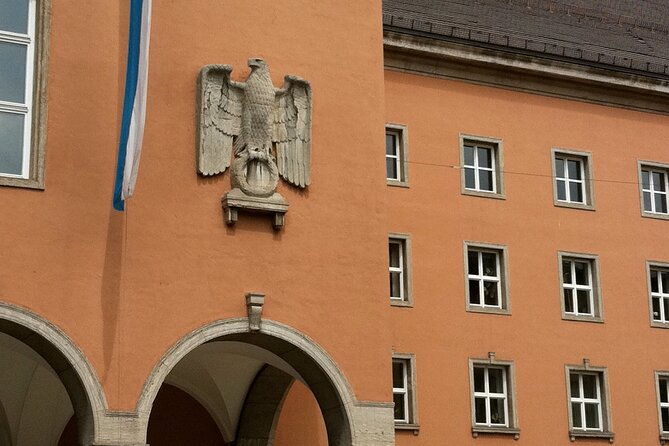
At Alter Botanischer Garten, you’ll hear about the largest Nazi eagle still on public display in Germany, plus evidence of Nazi architecture and art.
This stop is different because it’s visual and symbolic. It forces you to confront how art and design were used to communicate dominance and permanence. Even if you personally dislike the symbolism, you can still learn from it by treating it like a historical artifact you are seeing in real time.
A consideration here: some people find the sight of symbols emotionally jarring. If you’re worried about that, mentally prepare for it before the tour reaches this point. The guide can answer questions, but you control your own pace.
Residenz München, failed putsch and resistance
Finally you reach Residenz München, tied to Hitler’s failed putsch and the story of resistance during the Third Reich.
This ending is useful because it adds friction to the usual story arc. It reminds you that Nazi power was not simply inevitable. There were attempts to stop it, and there were people who resisted, even when the regime tried to tighten control.
If you want a tour that does more than show you the regime’s milestones, this last stop helps. It gives you room to think about how ordinary people and networks can push back against extremist power.
Price and value: is $180.72 per group worth it?
The price is $180.72 per group, up to 15 people, for about 2 to 3 hours. That structure matters more than the raw number.
Here’s why it can be good value:
- You’re booking a private tour, not a crowded group slot.
- The guide provides iPad visuals that improve understanding, especially for events like Kristallnacht or the SA purge, where a purely verbal explanation can feel distant.
- You cover multiple high-meaning stops in central Munich, including war-damage evidence and memorial space, not just a checklist of monuments.
Could it be expensive for solo travelers? In the typical sense of “per person” pricing, yes, because it’s priced by group. But if you’re traveling with family or a small group, or you want a guided structure that keeps you from wandering randomly through emotionally heavy sites, it can feel like a bargain.
I’d also factor in that the guide’s interaction style is praised. Time spent asking questions is not “extra,” it’s part of the tour’s value proposition.
What the mobile ticket and timing mean for your day
This experience uses a mobile ticket, and it starts at 10:30 am. The tour ends back at the meeting point, so you can plan the rest of your day without guessing how far you’ll be.
Because it’s near public transportation and centered around key historic sites, you’re not signing up for an isolated hike. Still, you will be walking and standing in public spaces. Wear shoes that handle city streets and plan to stay present, especially at memorial and war-damage stops where taking a moment improves the whole experience.
If you like to start early and you want your Munich day to have a focused theme, the morning timing helps. You’ll finish with enough time to process and then go on with food, museums, or calmer sightseeing.
Who this tour suits best
This is a strong fit if you:
- Want a guided route through Third Reich linked sites rather than reading alone
- Prefer a format where you can ask questions throughout
- Like the idea of learning through street-level context, not just museum walls
- Travel with friends or family who will benefit from shared structure
It might be less ideal if you:
- Want a purely light entertainment tour
- Are hoping for lots of indoor museum time, because the stop list points to city spaces and buildings rather than a single major venue
Should you book Inside the Third Reich (Private Tour)?
If you’re coming to Munich and you want the city to make sense beyond postcards, I think this is a smart book. The pairing of Curt Milburn’s storytelling, the iPad visuals, and the tight loop of meaningful locations makes it easier to understand how Nazi history played out in real places. Add in the private format, and you get time to shape the tour to your questions instead of rushing through someone else’s script.
My main caution is emotional, not logistical. This route touches Kristallnacht, the purge of the SA, war damage, and Nazi symbolism. If you can handle that and you want context that goes beyond headlines, you’ll likely leave with a clearer, more grounded understanding of what Munich helped enable and what it still remembers.
FAQ
How long is the Inside the Third Reich private tour?
The tour runs about 2 to 3 hours.
Where does the tour start in Munich?
The meeting point is Marienplatz 18, 80331 München, Germany.
What time does the tour begin?
The listed start time is 10:30 am.
Is this a private tour, or will I be mixed with other groups?
This is a private tour/activity, so only your group participates.
How big is the group size?
The price is listed as per group up to 15.
Do I need an admission ticket at the stops?
The provided stop details show admission ticket free for the listed locations.
Is there a mobile ticket?
Yes, it uses a mobile ticket.
Is the meeting point near public transportation?
Yes, it is near public transportation.
Can I cancel and get a full refund?
Yes. Free cancellation is available if you cancel up to 24 hours before the experience’s start time for a full refund.
Is the tour okay for someone traveling with a service animal?
Service animals are allowed.
Wartime History Walks We Have Reviewed
Everything else we filed on Munich
- Munich Beer and Bavarian Bites Private Tour
★ 5.0 · 11 reviews - Private Day Trip from Munich to Neuschwanstein and Linderhof
★ 4.0 · 11 reviews - Private Munich Old Town Walking Tour – with optional Breakfast
★ 5.0 · 11 reviews - Festive Concert in the All-Saints Court Church
★ 4.6 · 11 reviews - Private Castle Tour from Munich: Neuschwanstein, Hohenschwangau, and Linderhof
★ 4.5 · 12 reviews - Munich: Oktoberfest Big Beer Tent Evening including table reservation
★ 4.8 · 12 reviews
Third Reich and Wartime History Tours, side by side.
 ★ 4.9Berlin: Third Reich and Cold War 2 Hour Walking TourFrom $236,830 reviews
 ★ 4.6Munich: Third Reich & WWII Walking TourFrom $316,181 reviews
 ★ 5.0Berlin’s Best: 2 Hour Walking Tour Third Reich and the Cold WarFrom $245,486 reviews
 ★ 4.5Third Reich Walking Tour MunichFrom $454,291 reviews
 ★ 5.0Third Reich Berlin: Hitler and WWII Walking TourFrom $243,301 reviews
 ★ 4.7Nuremberg: Walking Tour of Former Nazi Party Rally GroundsFrom $151,665 reviews
 ★ 4.9Berlin: Third Reich, Hitler, and WWII Walking TourFrom $201,133 reviews
 ★ 4.8Nuremberg: Historischer Kunstbunker WWII Art Bunker TourFrom $14921 reviews
Other lists this tour is on