
REVIEW · MUSEUMS
Munich Private Walking Tour with the BMW Museum and BMW Welt
Munich can feel like two cities at once, cars and cathedrals. This private tour blends BMW Museum and BMW Welt with famous landmarks like Marienplatz and Frauenkirche, plus the beer-house culture that locals still treat as everyday life. I especially love how the BMW portion makes engineering feel human, and how the city stops add real plot to the history you usually only see in headlines.
My second big favorite is the way the tour handles modern history with specifics, like White Rose and Georg Elser, then brings you to Odeonsplatz to connect it to what happened in Nazi-era Munich. The one thing to weigh is that public transportation is not included, so you’ll want a little cash or card ready for short rides between BMW and the historical center.
In This Review
- Quick highlights you should pencil in
- BMW Museum and BMW Welt: More than cars, it is a Munich story
- The walk back to the city center: How Munich’s map changes your perspective
- Marienplatz, town halls, and the Glockenspiel: Getting the center view quickly
- St. Peter’s Church and Frauenkirche: Architecture with stories you can actually remember
- Odeonsplatz and the Beer-Hall Putsch: Context at the square where it mattered
- Ludwig I and Lola Montez, Ludwig II, and Eva Braun: The human side of Munich legends
- Hofbräuhaus culture at the end: Beer as local daily life, not just a souvenir
- Is $539 a good deal for a 15-person private group?
- Who should book this Munich BMW and history walk?
- Should you book this tour?
- FAQ
- How long is the Munich Private Walking Tour with the BMW Museum and BMW Welt?
- What is the price for the tour?
- Is the tour private?
- What attractions are included with admission?
- Is food or drinks included?
- Are public transportation costs included?
- Where does the tour start and end?
- What languages is the guide available in?
- What is the cancellation policy?
Quick highlights you should pencil in
- BMW Museum’s timeline shows a century of motorsports success and innovation in cars, motorcycles, and engines
- BMW Welt adds the future side, with iconic design and tech-focused exhibits plus a showroom-style look at MINIs and Rolls-Royces
- Marienplatz to Glockenspiel gives you the classic center view, fast, with clear context on what you’re looking at
- Frauenkirche legends include the devil’s footprint story, which you’ll spot as you stand in the right place
- Odeonsplatz and the Beer-Hall Putsch connect a major turning point in Nazi history to the square where it unfolded
- Hofbräuhaus stops for beer culture with a stop at the historic hall founded in 1589
Other walking routes through Munich
- Munich: Third Reich & WWII Walking Tour★ 4.6 · 6,181 reviews
- Third Reich Walking Tour Munich★ 4.5 · 4,291 reviews
- Munich: Old Town & Viktualienmarkt City Walk in German★ 4.7 · 2,304 reviews
- Munich: Night Watchman Walking Tour★ 4.7 · 2,092 reviews
BMW Museum and BMW Welt: More than cars, it is a Munich story
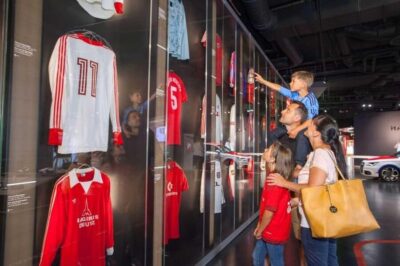
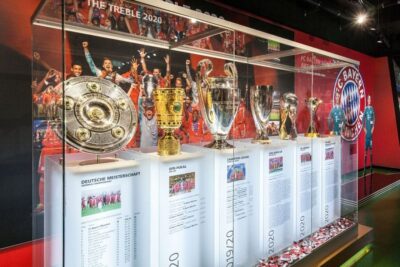
The tour starts by putting you inside the world that helped define modern Munich. First you hit the BMW Museum, where you are not just looking at shiny vehicles. You walk through the brand’s evolution, from early engineering and racing influence to the way BMW turned innovation into a recognizable style of performance.
What I like most here is the pacing. Even if you are not a hardcore car person, the exhibits help you read the story like a timeline: motorsports achievement matters, design language changes over time, and the engineering behind the scenes is the real connection. You can move from cars to motorcycles and engines without feeling like you are on a museum marathon.
Then you step into BMW Welt for the forward-looking side. This is where the vibe shifts from historical exhibits to something more future-minded: bold architecture, design that feels like it is pointing ahead, and displays that link technology with the way BMW imagines vehicles. The showroom-style elements also give you a simple, visual win, you can see MINIs and Rolls-Royces and compare how design can feel both timeless and brand-specific.
One practical tip: wear comfortable shoes. The BMW area is easy to enjoy, but you still walk. And if you like photos, you will find plenty of good angles around BMW Welt and its distinctive spaces.
The walk back to the city center: How Munich’s map changes your perspective
After BMW, you do not just return to sightseeing mode. You shift gears into classic Munich. The tour uses public transportation to get from the BMW area to the historic center, which is efficient in a compact 4-hour window.
Because public transport is not included, I recommend checking your plan before you go. You are not dealing with complicated logistics during the tour, but you should expect a short ride or two and budget for it. This is one of those “small detail, big impact” issues. If you show up with a plan for transit costs, the day stays smooth.
Once you reach the old core, the tour becomes a guided wayfinding mission. You see where you are, you learn what the buildings are doing in the story of the city, and you stop at the right moments to understand why each landmark matters.
The best part is that you do not end up with a scattershot tour. You get a sequence that feels like a story arc, beginning with modern identity (BMW), then moving to civic identity (town halls and the clock tower), then into the heavier chapters of 20th-century Munich.
Marienplatz, town halls, and the Glockenspiel: Getting the center view quickly
The meeting point is right at the action, in front of the Fish Fountain in front of Munich City Hall at Marienplatz Square. From here, it is easy to orient yourself fast. You start the walk in the place where the city’s “everyone is here” energy lives.
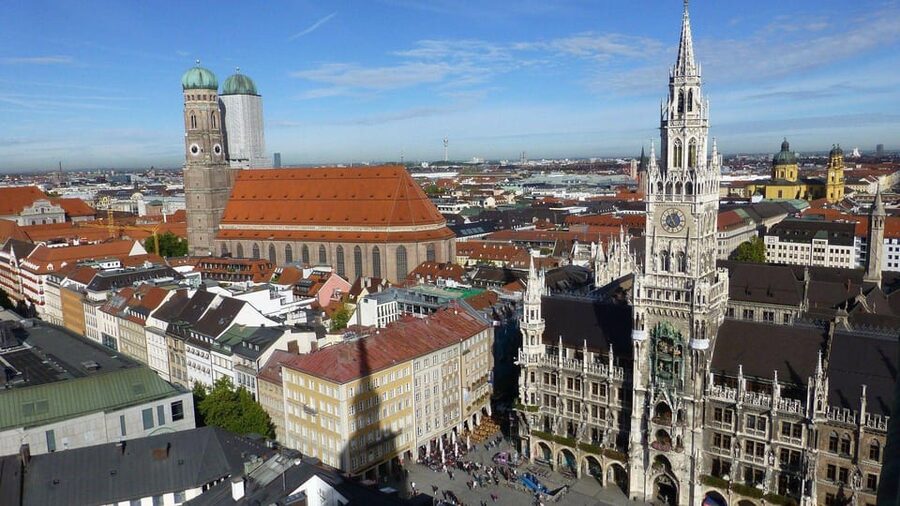
Marienplatz itself is more than a pretty square. The Old and New Town Halls anchor the area, and the tour helps you understand what you are looking at beyond postcard facts. You also get to the clock tower’s Glockenspiel, which is famous for a reason. Even if you only catch parts of what it is doing, your guide gives context so it feels connected to the city’s public life, not random machinery.
In a four-hour tour, timing matters. If you are photo-happy, you will want to keep your camera ready here because the view lines are strong and the crowd spots are real. I also like that the tour does not trap you in one location too long. You get the big center moments, then you move on before the square becomes just background noise.
St. Peter’s Church and Frauenkirche: Architecture with stories you can actually remember
Next come the religious landmarks, and this part of the tour is where Munich’s personality gets sharp. You visit St. Peter’s Church, noted as the oldest Catholic church in Munich. That fact alone is a good reason to pause, but what I like is that the guide ties it to the idea of continuity, how the city keeps rewriting itself while staying grounded in old roots.
Then you reach Frauenkirche, the big visual icon on the skyline. You get legends tied to the church, including the story of the devil’s footprint. This is the kind of detail that turns a building from “I saw it” into “I remember it.” When you have a story to attach to a specific spot, you mentally frame the whole visit.
I will be honest, this stop can feel slightly different depending on your preferences. If you love architecture and atmosphere, you will eat it up. If you are mainly there for history and beer, you might treat the churches as important pauses, not the whole point. Either way, the tour gives you enough context that the stops do not feel random.
More collections to walk through in Munich


Odeonsplatz and the Beer-Hall Putsch: Context at the square where it mattered
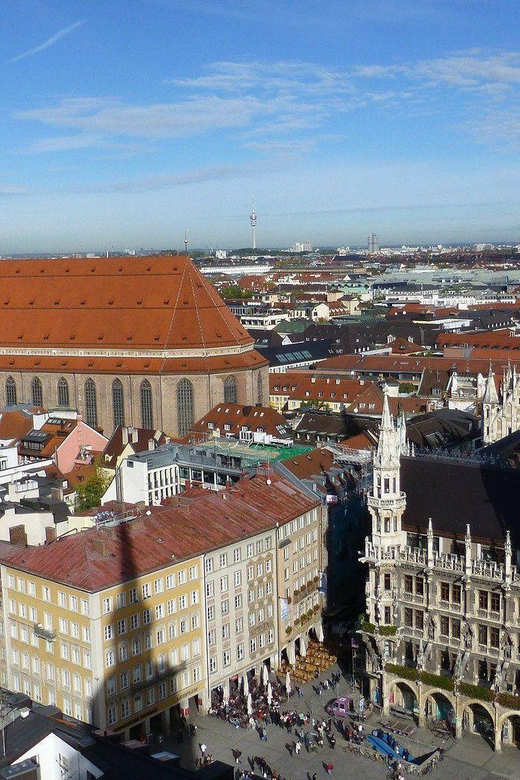
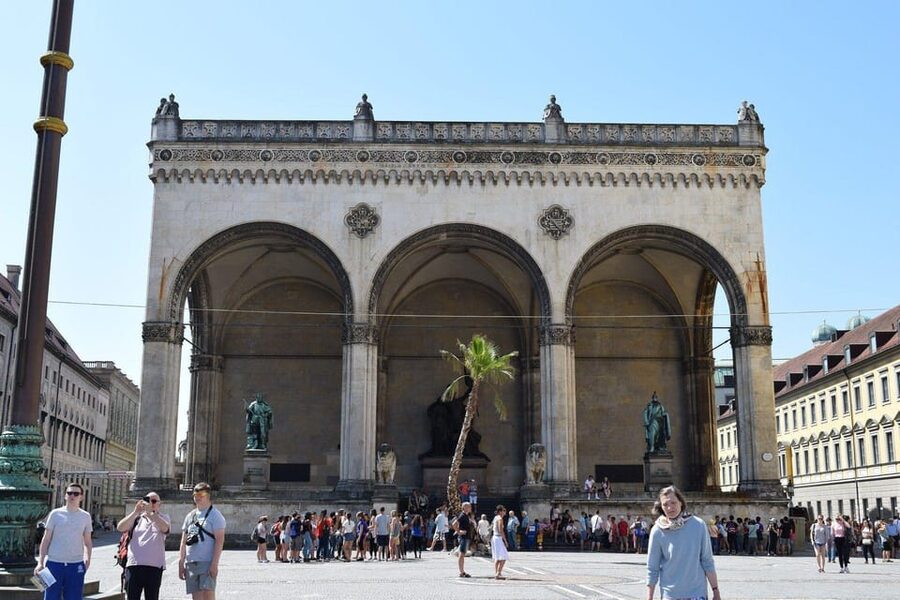
This is where the tour gets serious, and it does it with names and events instead of vague doom. At Odeonsplatz, you learn about the Beer-Hall Putsch, including the attempted seizure of power by Hitler and his followers.
What makes this stop valuable is that you connect the story to geography. Reading about history is one thing. Standing near the kind of public space where political drama played out is another. It makes the event feel less like a distant chapter and more like something that happened in a city people actually walked through.
The tour also weaves in resistance history through references to White Rose and Georg Elser. Those names matter because they highlight people who pushed back, not just the machinery of power. I appreciate that the tour does not only point at perpetrators and turning points. It also includes the idea that resistance existed in real form, not just as later textbook statements.
If you have a sensitive spot for dark history, plan your pace. This part of the walk is more intense than the earlier center highlights. Taking a moment to breathe at the edges of a square can help you keep the experience from feeling like information overload.
Ludwig I and Lola Montez, Ludwig II, and Eva Braun: The human side of Munich legends
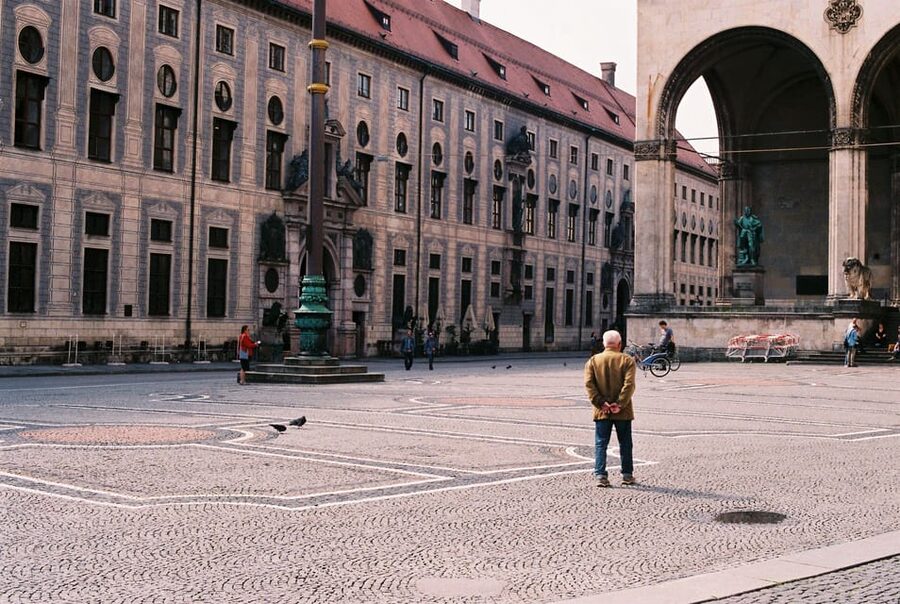
Munich is full of court drama and scandal, and this tour does a smart job of mixing legend, personality, and consequence. You learn about the love story of King Ludwig I and Lola Montez, and you also hear the tale of Ludwig II, nicknamed the Not So Mad King in the tour framing.
Then the guide touches on Eva Braun, described here through the lens of her life as Hitler’s wife and the idea of her being misunderstood. I like this approach because it steers away from clickbait. Instead of treating any of these people as caricatures, the tour gives you a historical anchor so you can keep their roles straight.
A quick note on how these stops work in the tour style: you are not stuck reading one long lecture. The guide brings the story in clean chunks, then links it back to where you are in Munich. That matters because you will otherwise remember the names but forget why the city matters.
This portion is also a good reminder that history is not only wars and politics. It includes relationships, myth-making, and the way a public image can shape what a city chooses to remember.
Hofbräuhaus culture at the end: Beer as local daily life, not just a souvenir
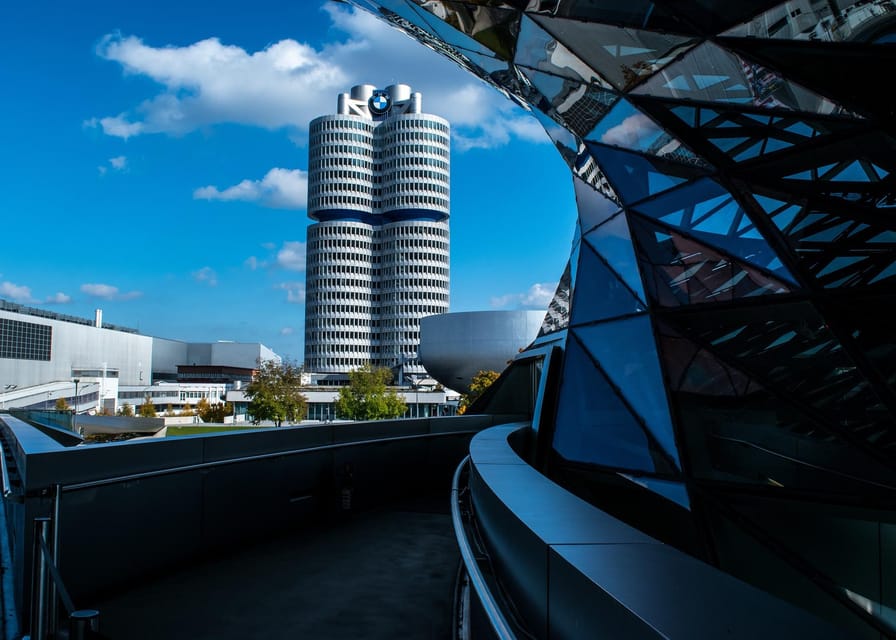
After the heavier history stops, the tour shifts into the part many people come for: beer culture. You go to Hofbräuhaus, established in 1589, and you experience why it is still part of Munich’s social rhythm.
This is not a “beer tasting” tour where you sprint from table to table. Instead, you get the vibe and the meaning. The guide helps you understand that beer halls are where people gather, argue, celebrate, and carry on traditions. It can feel theatrical as a visitor, but that is partly because it is real, not staged for you.
Because food and drinks are not included, you choose what to order. That is a plus for value because you are not paying for items you might not want. For your planning, make sure you have cash or a card ready for beer and whatever local snacks you pick.
I also like the timing: beer culture at the end gives you a chance to process what you just learned. You are walking through big stories all afternoon, then you sit in a hall that shows how Munich relaxes.
Is $539 a good deal for a 15-person private group?
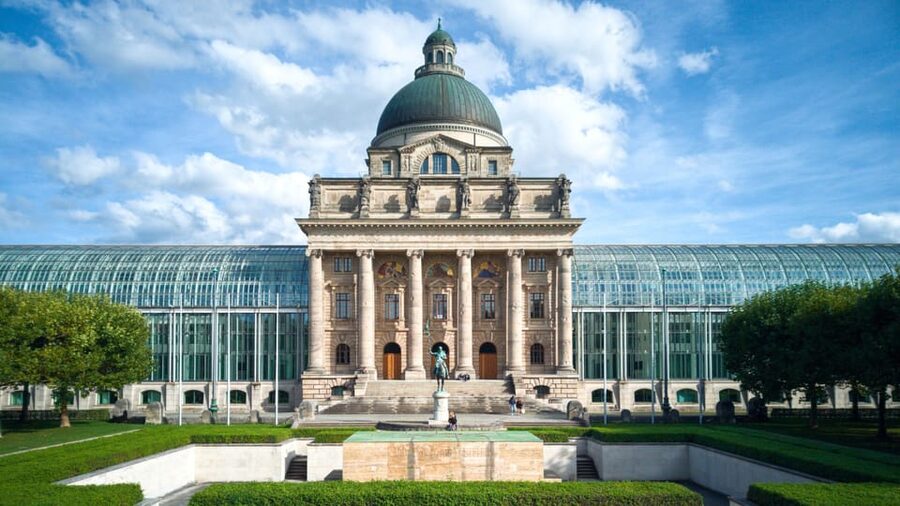
Pricing here is for the group, not per person: $539 per group up to 15. That changes the math completely. If you are traveling solo or as a couple, it can feel pricey compared to a typical group bus tour. But with a private group, your costs spread if you bring friends or family.
You also get real value from what is included:
- A local guide dedicated to your group only
- Entrances to the BMW Museum
Not included:
- Food and drinks
- Public transportation
To me, the best “value” part is not the admission. It is the time and the fact that you get a sequence that stitches together two themes that usually get separated: BMW’s modern identity and Munich’s political and civic layers. In four hours, that kind of structure is hard to DIY without wasting time.
If you want the flexibility of a private guide and you care about both engineering and history, this price makes more sense. If you only want one side, like only the Old Town highlights, you could likely find a cheaper walk. But if you want the full mixed picture, this is one of the more efficient ways to do it.
Who should book this Munich BMW and history walk?
This tour fits best if you like a guided narrative. You want your stops connected, not randomly stacked. You also want to see BMW in a way that explains what you are looking at, then transition into Munich landmarks with names, dates, and stories.
It is also a good choice if your group has mixed interests. One person might care about engineering and design, another might care about cathedrals and the Nazi-era context, and someone else might want the beer hall. The itinerary gives each person something solid.
I would pass if:
- You want a long, slow museum day. This is a four-hour plan, so it moves.
- You are not comfortable using public transportation cost for short rides.
- Your group has no interest in WWII-era history at all. This tour explicitly covers Beer-Hall Putsch plus resistance references.
If you like guides with sharp organization and real command of the material, you are in good hands. One guide name that stands out in the experience is Claudio, described as warm, affable, and full of historical detail.
Should you book this tour?
Book it if you want a private, time-efficient Munich story that pairs BMW Museum and BMW Welt with major historic stops, resistance history, and a classic beer hall finish. It is the kind of tour that helps you leave with a mental map of the city, not just photos of individual sights.
Skip it if you mainly want unguided time, deep museum wandering, or a lighter day that avoids Nazi-era topics. In other words, choose it when you want structure, context, and a Munich that feels thoughtfully connected.
FAQ
How long is the Munich Private Walking Tour with the BMW Museum and BMW Welt?
The tour duration is 4 hours.
What is the price for the tour?
The price is $539 per group, up to 15 people.
Is the tour private?
Yes. It is a private group tour with a local guide dedicated to your group only.
What attractions are included with admission?
Entrances to the BMW Museum are included.
Is food or drinks included?
No. Food, drinks, and other expenses are not included.
Are public transportation costs included?
No. Public transportation is not included.
Where does the tour start and end?
It starts in front of the Fish Fountain in front of the city hall at Marienplatz Square, Am Marienplatz, 80809 München, Germany, and ends back at the same meeting point.
What languages is the guide available in?
The live tour guide is available in English and German.
What is the cancellation policy?
You can cancel up to 24 hours in advance for a full refund.
Museums Worth the Queue in Munich
Pavements of Munich
Everything else we filed on Munich
- Munich Beer and Bavarian Bites Private Tour
★ 5.0 · 11 reviews - Private Day Trip from Munich to Neuschwanstein and Linderhof
★ 4.0 · 11 reviews - Private Munich Old Town Walking Tour – with optional Breakfast
★ 5.0 · 11 reviews - Festive Concert in the All-Saints Court Church
★ 4.6 · 11 reviews - Private Castle Tour from Munich: Neuschwanstein, Hohenschwangau, and Linderhof
★ 4.5 · 12 reviews - Munich: Oktoberfest Big Beer Tent Evening including table reservation
★ 4.8 · 12 reviews
Museums, side by side.
 ★ 4.5Berlin: Jewish Museum Berlin Entrance TicketFrom $08,393 reviews
 ★ 4.3Berlin: DDR Museum TicketsFrom $153,443 reviews
 ★ 4.6Berlin: Natural History Museum Entrance TicketFrom $123,382 reviews
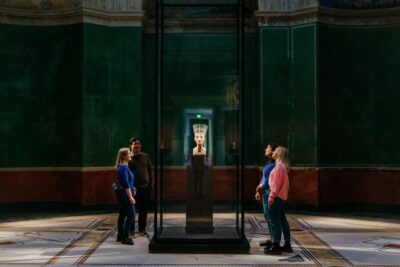 ★ 4.6Berlin: Neues Museum Entry TicketFrom $163,261 reviews
 ★ 4.4Cologne: Chocolate Museum Entrance TicketFrom $192,790 reviews
 ★ 4.7Dresden: Church of Our Lady Guided Tour of GalleryFrom $152,421 reviews
 ★ 4.1Skip-the-Line: Berlin Wall Museum at Checkpoint CharlieFrom $212,041 reviews
 ★ 4.4Berlin: Museum Island Multiple Museum Entry TicketFrom $272,007 reviews
Other lists this tour is on