
REVIEW · WARTIME HISTORY
Munich: Third Reich and World War II Private Guided Tour
Munich’s Nazi story is written into the streets. This private walking tour tracks how Munich became a launchpad for the Third Reich, from early propaganda events to the bombing and liberation in 1945, all on foot through the Old Town. You’ll see key buildings tied to Hitler and the Nazi Party and connect the dots to major events like the Beer Hall Putsch.
I really like the private, expert guide format. It’s built for questions, including the uncomfortable ones about Munich’s role in the rise and fall of National Socialism, and it doesn’t stay at surface level. Another big plus for me is the route of specific places, like Hofbräuhaus and the mass rally sites at Königsplatz, so the history feels anchored to real addresses, not just dates.
The main drawback is also the point: this is WWII history about persecution, propaganda, and violence. Come in ready for heavy themes and a serious tone, not a casual sightseeing stroll.
In This Review
- Key highlights you will actually care about
- Marienplatz to Hofbräuhaus: how Munich became part of the Nazi script
- Following the Beer Hall Putsch route to Feldherrnhalle and Odeonsplatz
- Resistance, victims, and Königsplatz: the history after propaganda
- Führerbau and the Munich Agreement stop you can’t ignore
- What you gain with the 4.5-hour option at the NS Documentation Center
- Price and value: what $311 gets you in Munich
- The meeting point and how to start smoothly at Marienplatz
- Who this tour suits best, and who should think twice
- Should you book this Munich Third Reich private tour?
- FAQ
- How long is the Munich walking tour?
- What stops do we visit on the 3-hour option?
- Is the NS Documentation Center included?
- What is the meeting point for the tour?
- Is this a private tour?
- What languages are available?
- Is the tour wheelchair accessible?
- Can I cancel for a refund?
- Is there a reserve now and pay later option?
Key highlights you will actually care about
- Marienplatz start, where propaganda moments were staged in the heart of the city
- Hofbräuhaus am Platzl stop, tied to Hitler’s 1920 speech connected to the National Socialist German Workers Party
- Beer Hall Putsch route across Feldherrnhalle and Odeonsplatz, with the Bavarian Defense Ministry moment and the link to Mein Kampf (My Struggle)
- Resistance coverage, including the White Rose Group led by five university students
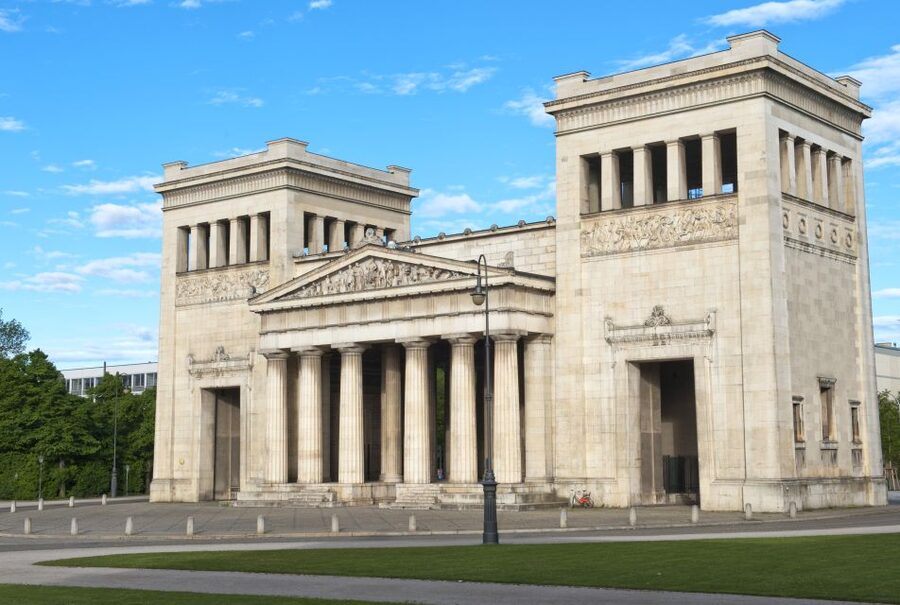
- Königsplatz for Nazi mass rallies and book burning, with the Monument to Victims of National Socialism on the way
- Optional NS Documentation Center in the 4.5-hour option for WWI and WWII exhibits and context through photos, documents, film, and media stations
Further wartime history walks we have written up
- Munich: Third Reich & WWII Walking Tour★ 4.6 · 6,181 reviews
- Third Reich Walking Tour Munich★ 4.5 · 4,291 reviews
- Munich: Birthplace of the Third Reich Guided Walking Tour★ 4.6 · 771 reviews
- Munich World War II Sites Including Dachau Concentration Camp★ 4.5 · 570 reviews
Marienplatz to Hofbräuhaus: how Munich became part of the Nazi script
This tour starts in Munich’s Old Town at Marienplatz, the public square that served as a major stage for Nazi propaganda events. From your first steps, you’ll understand something important: the Nazi movement did not only grow in secrecy. It used the city as a stage, and public spaces made it easier to attract attention and influence.
You’ll also pass the Neues Rathaus area, rebuilt after the 1945 Munich bombings that destroyed much of downtown. Even if you are not a history nerd, that contrast hits. You’re walking near architecture shaped by the war’s destruction, while the guide connects it back to how the Nazi regime built power before being crushed.
The story accelerates when you reach Hofbräuhaus am Platzl. This is one of those places that sounds famous until you learn the specific political role it played. Here, Adolf Hitler made a speech in 1920 tied to the founding of the National Socialist German Workers Party. It’s a powerful stop because it connects ideology to a real, ordinary gathering place. It also helps you see how the Nazi movement mixed politics with mass culture.
What I like about structuring the early part this way is that you get momentum. You start in a central civic space, then move to a famous beer hall tied to political beginnings. That makes later stops, like the putsch route and the mass rally ground, feel less random and more like a planned progression.
Following the Beer Hall Putsch route to Feldherrnhalle and Odeonsplatz
Next you follow the route of the Beer Hall Putsch, one of the key early turning points for Hitler’s movement. The walk takes you through locations like Feldherrnhalle and Odeonsplatz, and it’s not just a walk for photos. The point is to trace the attempted power grab and understand why it mattered later.
The guide also connects this moment to the Bavarian Defense Ministry attempt during the putsch, and the stop includes the link that the inspired Hitler to write his manifesto, Mein Kampf (My Struggle). That’s a big idea to keep in mind while you walk: early failures can still produce later outcomes. If you’re paying attention to the cause and effect, you can see how a failed event fed the narrative and political branding that followed.
This section is also where you’ll likely notice how the tour balances two threads:
1) how Nazi supporters built momentum
2) how opposition and resistance existed even inside the same city and institutions
The tour is designed to help you ask difficult questions, not only to repeat a timeline. That’s especially valuable here, because putsch stories can turn into hero myths if you only skim the headlines. With a private guide, you can keep the focus on what happened, who tried to stop it, and what followed.
If you want a practical tip, it’s this: keep your questions simple at first. Ask what the guide thinks this moment changed in the city. Then ask what it changed for Hitler’s rise. It tends to make the story click fast.
Resistance, victims, and Königsplatz: the history after propaganda
One reason this tour works is that it doesn’t end with speeches and slogans. After the early Nazi era stops, you move into the darker chapter: opposition, resistance, and the aftermath for people who suffered.
The tour specifically mentions resistance in Munich, including the White Rose Group, led by five university students. That detail matters. It takes the story away from the idea that history only involves leaders and crowds. It shows that even in a city tied to the Nazi rise, people also risked themselves against the regime.
As you continue, you will see the Monument to the Victims of National Socialism and former Nazi Party office buildings, including Führerbau. This part of the route helps you shift from political events to human consequences. A monument is not the same as an archive, but it gives you a physical place to stop and reflect, especially while the guide is explaining what the regime did and how Munich fit into it.
Then you reach Königsplatz, a site the guide ties directly to Nazi mass rallies and to book burning. If you have ever wondered why authoritarian movements care so much about culture and ideas, this is a direct answer. The Nazis used public spectacle to control what was accepted as truth, and this square is part of that record.
For me, the key value of this section is clarity. You are not just learning that atrocities happened somewhere in the world. You are learning that Munich itself hosted places where ideology was performed, enforced, and marketed, and that resistance and victims are part of that same urban story.
Führerbau and the Munich Agreement stop you can’t ignore
The tour calls out Führerbau, the former office building of the Nazi Party, and gives a very specific connection: it includes the location where Chamberlain and Hitler signed the Munich Agreement in 1938. This is one of the stops that makes the history feel unusually close to power and decision-making.
Even without getting lost in political theory, you can grasp the lesson. Agreements were made by individuals in buildings. Those pieces of diplomacy were not separate from violence. In the Nazi era story, every major choice pushed Europe further toward catastrophe.
This stop is also a reminder of how propaganda and politics occupied the same physical spaces. The building is not just an architectural leftover. With the guide’s explanation, it becomes a symbol of how the Nazi regime built legitimacy and how Europe tried to manage aggression through negotiation.
If you are the type who likes to see how people used language, events, and locations to shape public belief, this will likely be one of your favorite parts of the walk. If you are sensitive to the subject, it helps to go slowly here. Take a moment to let the guide’s context land, then keep moving.

What you gain with the 4.5-hour option at the NS Documentation Center
You have a choice. The base tour is 3 hours, and the longer option adds time for the NS Documentation Center for the History of National Socialism. The documentation center is included only with the 4.5-hour option.
Why this matters: walking outside gives you the map, the buildings, and the street-level story. The documentation center gives you evidence. The tour describes exhibits that use photographs, documents, texts, film projections, and media stations to explain the origin and rise of the Nazi movement, the war period, and the postwar period in Munich. You also get help from the guide to make sense of cause and consequence.
This is especially useful if you want to understand more than the surface arc of events. The guide is meant to answer questions about the causes and consequences of National Socialism and WWII, and the exhibit structure sounds built for exactly that kind of deeper understanding.
If you are choosing between the two lengths, here’s how I would decide. Pick the 3-hour walk if you want the strongest street route with major stops like Hofbräuhaus, the putsch route, Führerbau, and Königsplatz. Pick the 4.5-hour option if you want a structured indoor layer of material, with more context on WWI and WWII and the way Munich’s story fits into the bigger European picture.
Price and value: what $311 gets you in Munich
At $311 per person, you should judge value based on format and depth, not just length. This is a private group with a live history guide for a 270-minute walking experience. Private means you are not sharing the guide’s attention with strangers who might be taking photos instead of listening. That matters more when the subject is complex and uncomfortable, because questions come up.
Also, the tour is not only “see famous places.” It’s built around explanations of:
- Hitler, Nazi supporters, and resistance groups
- the origin story of the National Socialist German Workers Party
- the Beer Hall Putsch and its connections to later political writing
- the bombing and liberation of Munich in 1945
That combination of sites plus interpretation is usually where private tours justify their cost.
If you are considering the 4.5-hour option, you should think of it as upgrading from streets to sources. The NS Documentation Center inclusion can be the difference between a strong narrative and a more grounded understanding with exhibits and media stations.
One more practical value point: the tour is offered in multiple languages, including English, German, French, Italian, and Spanish. If you can use one of those languages comfortably, the guide’s ability to explain nuance becomes part of the value you are paying for.
The meeting point and how to start smoothly at Marienplatz
Plan your start carefully. Meet the guide in front of the hotel BEYOND by Geisel at Marienplatz 22, 80331 Munich, right opposite St Peter. Don’t go inside the hotel. The staff at the hotel is not informed about the tour, so you want to head straight to the meeting point outside.
Because this is a walking tour, being on time helps your experience feel smooth instead of rushed. I also suggest arriving a few minutes early so you can take in the square and get your bearings fast before the guide launches into the story.
Who this tour suits best, and who should think twice
This is a great fit if you want history tied to specific addresses in Munich and you like having a guide who can handle tough questions. It’s also a good choice if you care about the full arc: origin of the Nazi party, rise to power, WWII, and what happened in Munich by 1945.
It’s also a good match for language flexibility, since the guide can run the tour in several languages and the group is private. Wheelchair access is noted as well, so you have an option if mobility is a concern.
If you want carefree sightseeing, this is not the right mood. The subject matter is explicitly about Nazism and WWII, and the tour is designed to keep the discussion serious, including resistance and victims.
Should you book this Munich Third Reich private tour?
Book it if you want a private guide-led walk through the actual Munich places tied to Hitler, Nazi organization, resistance, and the end of the war, plus an optional stop at the NS Documentation Center if you choose the longer format. The price can make sense when you consider the private guide structure and the specific sequence of sites, not just generic sightseeing.
I would hold off if you’re looking for something light or purely “photo stops.” This tour is built for context and consequence. If that’s what you want, it is a strong way to understand Munich in the Nazi era without losing the plot.
FAQ
How long is the Munich walking tour?
The tour duration is listed as 3 hours, which equals 270 minutes. There is also a 4.5-hour option that adds a visit to the NS Documentation Center.
What stops do we visit on the 3-hour option?
The route includes Marienplatz, Neues Rathaus area, Hofbräuhaus am Platzl, the Beer Hall Putsch route (Feldherrnhalle and Odeonsplatz), the Monument to the Victims of National Socialism, former Nazi Party office buildings including Führerbau, and ends at Königsplatz.
Is the NS Documentation Center included?
It is included only in the 4.5-hour option. The documentation center focuses on exhibits about WWI and WWII, using photos, documents, texts, film projections, and media stations.
What is the meeting point for the tour?
Meet your guide in front of hotel BEYOND by Geisel, Marienplatz 22, 80331 Munich, Germany, opposite St Peter. Do not enter the hotel, it is only a meeting point.
Is this a private tour?
Yes. The group type is listed as a private group.
What languages are available?
The live tour guide is available in English, German, French, Italian, and Spanish.
Is the tour wheelchair accessible?
Yes, the tour is listed as wheelchair accessible.
Can I cancel for a refund?
Yes. Free cancellation is available up to 24 hours in advance for a full refund.
Is there a reserve now and pay later option?
Yes. The activity offers reserve now and pay later, so you can book your spot and pay nothing today.
Wartime History Walks We Have Reviewed
Everything else we filed on Munich
- Munich Beer and Bavarian Bites Private Tour
★ 5.0 · 11 reviews - Private Day Trip from Munich to Neuschwanstein and Linderhof
★ 4.0 · 11 reviews - Private Munich Old Town Walking Tour – with optional Breakfast
★ 5.0 · 11 reviews - Festive Concert in the All-Saints Court Church
★ 4.6 · 11 reviews - Private Castle Tour from Munich: Neuschwanstein, Hohenschwangau, and Linderhof
★ 4.5 · 12 reviews - Munich: Oktoberfest Big Beer Tent Evening including table reservation
★ 4.8 · 12 reviews
Third Reich and Wartime History Tours, side by side.
 ★ 4.9Berlin: Third Reich and Cold War 2 Hour Walking TourFrom $236,830 reviews
 ★ 4.6Munich: Third Reich & WWII Walking TourFrom $316,181 reviews
 ★ 5.0Berlin’s Best: 2 Hour Walking Tour Third Reich and the Cold WarFrom $245,486 reviews
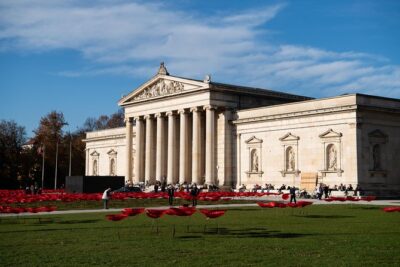 ★ 4.5Third Reich Walking Tour MunichFrom $454,291 reviews
 ★ 5.0Third Reich Berlin: Hitler and WWII Walking TourFrom $243,301 reviews
 ★ 4.7Nuremberg: Walking Tour of Former Nazi Party Rally GroundsFrom $151,665 reviews
 ★ 4.9Berlin: Third Reich, Hitler, and WWII Walking TourFrom $201,133 reviews
 ★ 4.8Nuremberg: Historischer Kunstbunker WWII Art Bunker TourFrom $14921 reviews
Other lists this tour is on