
REVIEW · WARTIME HISTORY
Munich Third Reich and WWII Segway Tour
Munich gets serious when history turns political, and this Segway tour brings that story to life across the city. You glide to major Nazi-era spots around Königsplatz, the Führerbau, and key apartment and beer hall areas tied to Adolf Hitler, all while your guide explains the rise and fall of the movement. It is one of those rare tours where you do not just read plaques, you move through the same urban geography that shaped decisions.
I like that it is built for speed and comfort, with a route designed for areas cars cannot easily reach. I also like the human scale of the experience, small group limits up to 20 people, so questions and photo stops do not get swallowed by the crowd.
One thing to consider is the day can feel chilly and busy downtown. If your trip lands on a crowded day or you are new to balancing on a Segway, you will want to dress warm and take the training moment seriously.
In This Review
- Quick Take
- Why a Segway for Munich’s dark WWII story works
- Price, timing, and what $82.82 actually buys you
- Getting started on a Segway without stress
- The route starts with Munich’s early context: Alte Synagoge to Königsplatz
- Führerbau and the buildings tied to the rise of power
- Beer Hall Putsch context, plus Munich’s political gravity
- White Rose and the turn toward resistance
- Hitler’s apartments in two periods, and why that matters
- Residenz München and Odeonsplatz: closing the story in real city space
- What you will remember most (and how guides change the experience)
- Should you book this Segway tour?
- FAQ
- How long is the Munich Third Reich and WWII Segway Tour?
- What does the tour cost?
- What language is the tour offered in?
- Is there a mobile ticket?
- Where do we meet for the tour?
- What time does the tour start?
- How big is the group?
- Is the tour family-friendly?
- Are there admission tickets included?
- Can I cancel for free?
- What if the tour does not meet the minimum number of travelers?
- Who provides the Segway tour?
Quick Take
- Segway-friendly route that gets you around Munich faster than walking.
- Nazi Germany focus with stops tied to the movement’s key buildings and moments.
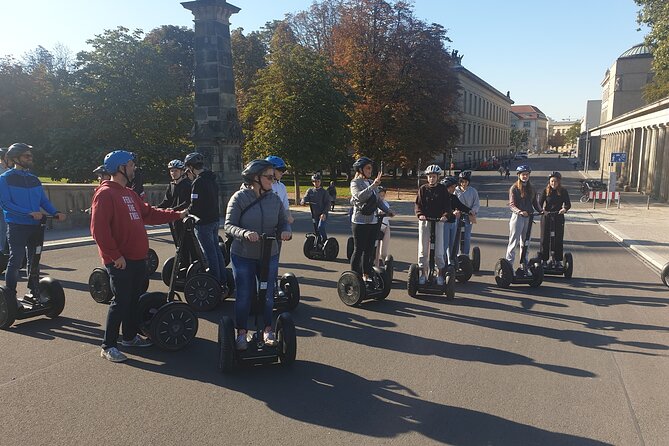
- Small group size (up to 20) helps keep the tour moving at a human pace.
- Real guidance for first-time riders, including extra patience for nervous riders.
- Family- and couple-friendly format that covers a lot in about 3 hours.
- A mix of sites, from early Nazi-era locations to remembrance connected to resistance.
Further wartime history walks we have written up
- Munich: Third Reich & WWII Walking Tour★ 4.6 · 6,181 reviews
- Third Reich Walking Tour Munich★ 4.5 · 4,291 reviews
- Munich: Birthplace of the Third Reich Guided Walking Tour★ 4.6 · 771 reviews
- Munich World War II Sites Including Dachau Concentration Camp★ 4.5 · 570 reviews
Why a Segway for Munich’s dark WWII story works
Munich is not small, and the “Nazi Germany story” is spread out across multiple areas. This tour makes that spread feel manageable by moving you quickly from one meaningful location to the next. You get the physical sense of distances, which matters when you are trying to understand how power grew from a political movement into something that took over public life.
And yes, it is a Segway tour, so it has an easy, playful rhythm. That is not a distraction from the subject, it is a practical tool. Instead of walking from one stop to the next with long gaps, you can stay in “learning mode” while covering real ground.
The best part, in my view, is that the route is not just one landmark. It is a chain of places, including political buildings, public gathering areas, and apartment locations connected to Hitler’s Munich years. That chain helps you see the story as a system, not a single headline.
Price, timing, and what $82.82 actually buys you
At $82.82 per person for about 3 hours, you are paying for three things: guided context, a vehicle that covers city blocks quickly, and a route that includes multiple major stops without you plotting transit. For many visitors, that is better value than piecing together buses and U-Bahn stops between sites, especially if you want to keep your schedule tight.
This is also the kind of tour people plan in advance. The average booking window is about 36 days, which is a clue that slots can fill up. If Munich is your main stop and you want this exact route, booking early is the safest move.
The tour runs in English and starts at 10:00 am, with the meeting point at Artur-Kutscher-Platz 2A, 80802 München. It ends back at the same starting point, which reduces the hassle of timing your next reservation. A mobile ticket is used, so you can keep your phone handy instead of juggling paper.
Getting started on a Segway without stress
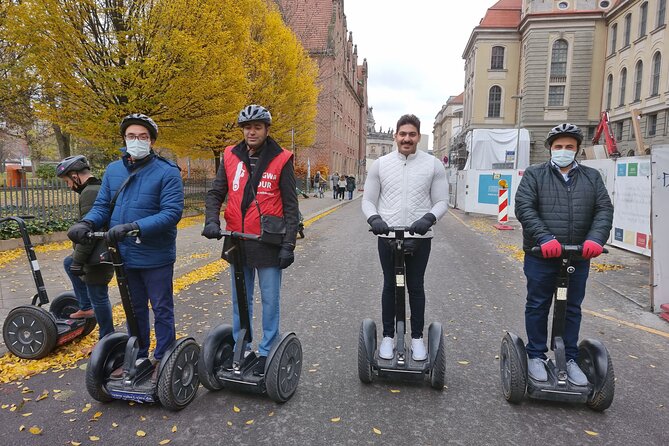
A big reason this tour gets high marks is how the Segways are handled at the beginning. First-time riders can absolutely do it, but you still need to go through that early practice time with care. The experience is set up for most travelers to participate, and guides are described as patient with nervous riders.
In real situations, the most common problem is not the Segway itself, it is cold and attention. If it is chilly, your body tightens up and you get more cautious. One practical tip: dress warmly before you arrive. Multiple people highlight that it can get cold while riding around, so bring layers and something that blocks wind.
Safety also comes down to pace. When the guide is comfortable and consistent, you feel more relaxed, and photo stops become easy instead of awkward. Guides such as Josef and Karl are repeatedly praised for being both friendly and helpful with the ride, not just for reciting facts.
The route starts with Munich’s early context: Alte Synagoge to Königsplatz
The tour begins in Munich with a storyline that starts long before the rise of Nazi power. The guide frames it around how Hitler came to Munich as a young man in the early 1910s, and how the city became central to his political trajectory. That opening matters because it sets expectations: you are not only visiting buildings, you are following a timeline.
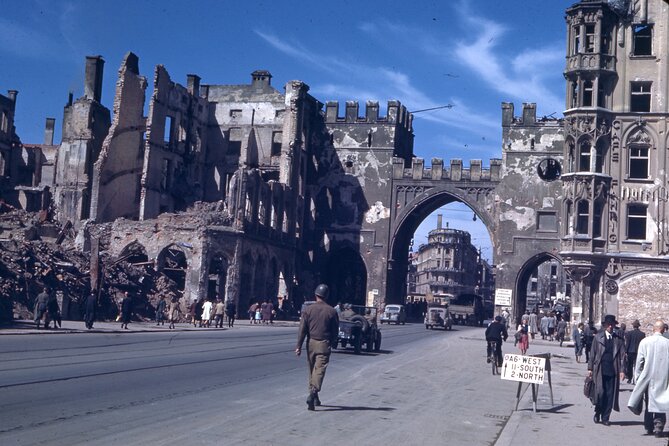
From there, the first set of stops includes the Alte Synagoge area and then Königsplatz. Even if you know little going in, these locations help you understand that the Nazi era did not emerge in a vacuum. Seeing an older religious site and then moving into a big ceremonial square gives you a quick visual contrast between what came before and what followed.
Königsplatz, with its open, monumental layout, is where the story starts to feel public and political. It is easier to imagine speeches and crowds when you can see the kind of space people gathered in. If you like your history tied to real geography, this opening segment does that job.
Potential drawback here is crowding. Central squares can get packed, especially around popular shopping and tourist corridors. If you are the type who gets irritated by tight spacing, arrive mentally ready to move with the group.
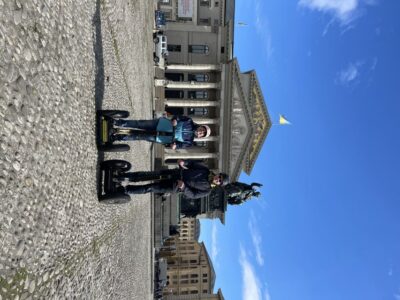
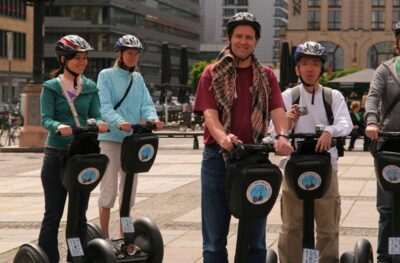
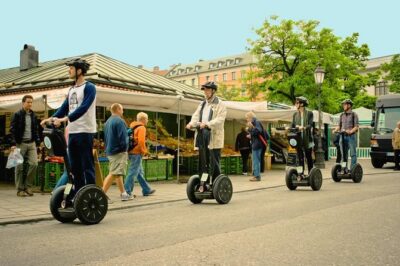
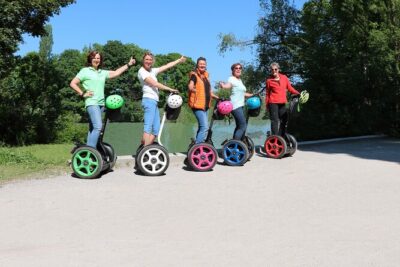
More wheels for covering ground fast
Führerbau and the buildings tied to the rise of power
One of the key highlights is reaching places like the Führerbau, which is directly linked to the Nazi movement’s early years in Munich. The guide connects it to how the first stage of power took shape and how the movement gained influence. You do not just hear names, you see the type of architecture that the regime favored, the kind that projects authority.
Next comes a chain of Nazi-era locations that keeps the focus on how ideology was built into everyday public presence. You move past sites such as Braunes Haus and Schelling-Salon, with your guide explaining why they mattered to the movement. The tour framing helps you understand that propaganda was not only posters. It was meetings, offices, and the physical places where decisions happened.
A bonus for couples and families is that this sequence is designed to keep momentum. You get enough context to follow the story, but the pacing stays energetic. People also call out the tour as more fun than walking, because you save time while still seeing the important spaces.
Beer Hall Putsch context, plus Munich’s political gravity
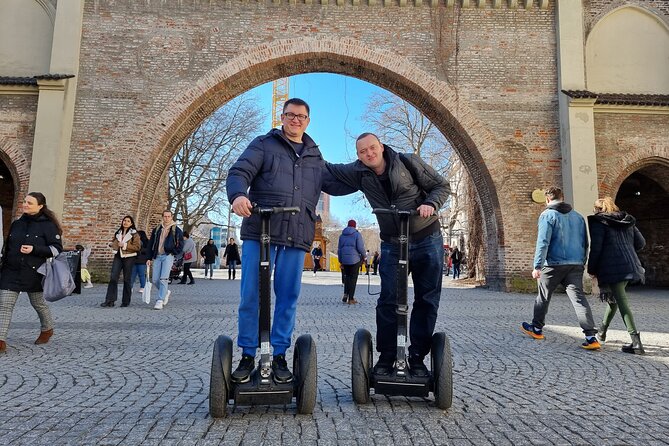
Munich is closely associated with the Beer Hall Putsch, and this tour explicitly addresses why it failed and what it did for the movement afterward. You are not stuck in a textbook. Your guide ties it to the city’s political gravity, including the venues where large public gatherings mattered.
As you head toward beer hall territory, the tour brings you past Hofbräuhaus and Hofbraukeller. These stops are a strong reminder that history often moves through social spaces, not only government offices. In other words, the Nazi story was not limited to formal institutions. It also relied on mass audiences and public rituals.
Here is the practical value: these beer hall stops are easy landmarks for you to remember later when you are walking on your own. Even if you do not revisit them the next day, the visual memory helps you connect the timeline you heard with the city you are standing in.
A consideration: this is a central area, so it can be busy. One person even described a route feeling more crowded and less focused than expected on a day when things were tight. If your ideal tour is quiet and slow, plan for a more active downtown experience.
White Rose and the turn toward resistance
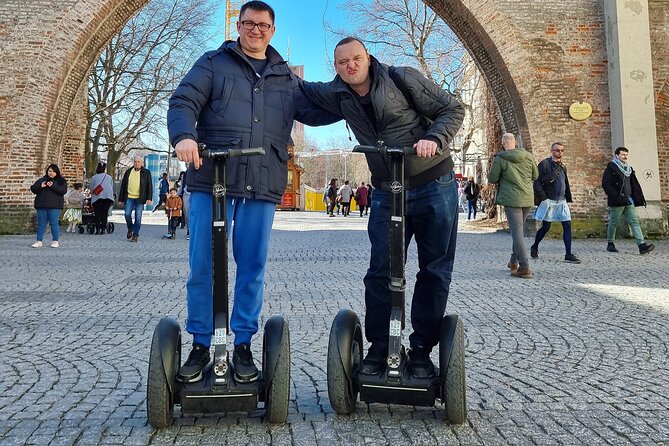
The tour includes a stop connected to White Rose, the student resistance movement. This is where the story stops being only about the rise of power and becomes about pushback. Even if you only know the basics, the guide’s job here is to show you that resistance existed, and that courage can take different forms.
Right after that, you pass sites such as Haus der Kunst and then the Angel of Peace. The value of including these is that they add texture beyond Nazi offices and speeches. They help you see how Munich housed culture, public memory, and the long shadow that Nazi Germany left behind.
This part of the route is also emotionally heavier, so if you bring kids, it helps to know the tour is still structured to keep moving. One review highlights that a family with teenagers had a blast while learning a lot about World War II. That tells you the pacing and guidance can work even when the topic is heavy, as long as your guide keeps the explanations clear.
Hitler’s apartments in two periods, and why that matters
One of the most striking parts of the route is visiting areas tied to Hitler’s apartment in 1933 and another apartment period from 1920 to 1929. Seeing these two different time-linked places helps you understand something people often miss: political power is built step by step. It grows through years, not only through dramatic moments.
The tour uses these apartment stops to connect personal proximity to public events. Instead of thinking of Hitler as a distant villain, you see how his Munich life connected to the city’s political stage. For many visitors, that shift in perspective is the whole point of doing a guided route like this.
After those stops, you move through additional areas such as Maximilianeum and Maximilianenium Straße, which keep the city’s layout in focus. Then you roll back toward more iconic central landmarks, and that helps you end with a sense of place rather than just a list of names.
Residenz München and Odeonsplatz: closing the story in real city space
The final stretch takes you past Residenz München and then to Odeonsplatz. These are “Munich classic” areas, and they work well as a closing act. When you finish near such a recognizable setting, it becomes easier to digest what you learned because you are not mentally stuck in one specific decade.
Odeonsplatz especially gives you a sense of how the city’s grandeur and political drama share the same stage. It is a good ending because it lets you step back and think about contrasts: old power and new power, public celebration and political coercion, and how quickly everything changed.
If you like history that makes you look up, this ending delivers. You start to recognize the city layout instead of treating each site like a separate stop. That is where Segways can actually help your understanding, because your brain maps the distances quickly.
What you will remember most (and how guides change the experience)
The tour format can be the same, but the experience depends heavily on the guide. The positive energy in the ride is often tied to guides who slow down when needed, answer questions clearly, and help riders feel safe on the Segway.
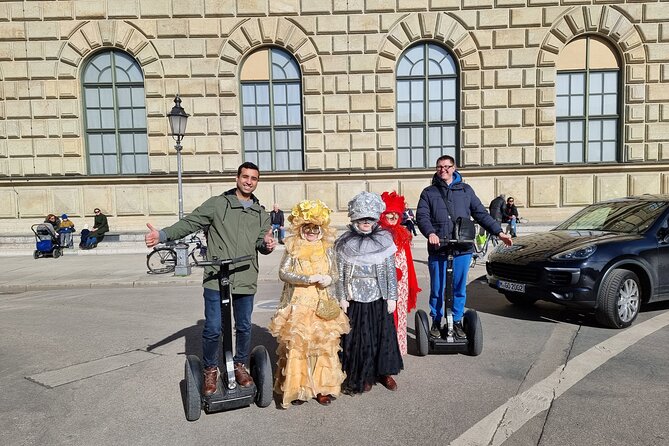
Names that came up include Josef, Karl, Rawen, and Claudia. Each is described as friendly and patient, and several comments praise extra time for questions and for photos at the sights. That matters more than it sounds. When you are learning a sensitive, complicated subject, you do not want to feel rushed.
This is also a tour where people appreciate that it is not only lecture-style. The ride itself gives you motion and breaks up the information load. For families and couples, that can mean everyone stays engaged without zoning out.
Should you book this Segway tour?
Book it if you want a 3-hour, guided route that covers major Nazi-era Munich sites without needing to hop between transit stops. It is a smart fit for first-time visitors who want a broad overview and for families who want structure with a bit of fun built in.
Skip it or choose a different format if you hate crowds or you are very nervous on two-wheeled devices. Downtown Munich can get busy, and cold weather can make riding feel harder. Also, if your top goal is a very specific, ultra-quiet WWII focus with minimal detours, you might prefer a smaller, more targeted walk or a private version.
FAQ
How long is the Munich Third Reich and WWII Segway Tour?
It is about 3 hours.
What does the tour cost?
The price is $82.82 per person.
What language is the tour offered in?
The tour is offered in English.
Is there a mobile ticket?
Yes, the tour uses a mobile ticket.
Where do we meet for the tour?
You meet at Artur-Kutscher-Platz 2A, 80802 München, Germany.
What time does the tour start?
The start time is 10:00 am.
How big is the group?
The tour has a maximum of 20 travelers.
Is the tour family-friendly?
The tour highlights it as a good option for families and couples, and it is described as fun for younger travelers too.
Are there admission tickets included?
The experience is listed as admission ticket free, so you are not shown as needing separate admission during the tour.
Can I cancel for free?
Yes. You can cancel for a full refund up to 24 hours in advance.
What if the tour does not meet the minimum number of travelers?
If it is canceled because the minimum is not met, you will be offered a different date or a full refund.
Who provides the Segway tour?
The provider is FireWheels GmbH.
On Two Wheels and Three
Wartime History Walks We Have Reviewed
Everything else we filed on Munich
- Munich Beer and Bavarian Bites Private Tour
★ 5.0 · 11 reviews - Private Day Trip from Munich to Neuschwanstein and Linderhof
★ 4.0 · 11 reviews - Private Munich Old Town Walking Tour – with optional Breakfast
★ 5.0 · 11 reviews - Festive Concert in the All-Saints Court Church
★ 4.6 · 11 reviews - Private Castle Tour from Munich: Neuschwanstein, Hohenschwangau, and Linderhof
★ 4.5 · 12 reviews - Munich: Oktoberfest Big Beer Tent Evening including table reservation
★ 4.8 · 12 reviews
Third Reich and Wartime History Tours, side by side.
 ★ 4.9Berlin: Third Reich and Cold War 2 Hour Walking TourFrom $236,830 reviews
 ★ 4.6Munich: Third Reich & WWII Walking TourFrom $316,181 reviews
 ★ 5.0Berlin’s Best: 2 Hour Walking Tour Third Reich and the Cold WarFrom $245,486 reviews
 ★ 4.5Third Reich Walking Tour MunichFrom $454,291 reviews
 ★ 5.0Third Reich Berlin: Hitler and WWII Walking TourFrom $243,301 reviews
 ★ 4.7Nuremberg: Walking Tour of Former Nazi Party Rally GroundsFrom $151,665 reviews
 ★ 4.9Berlin: Third Reich, Hitler, and WWII Walking TourFrom $201,133 reviews
 ★ 4.8Nuremberg: Historischer Kunstbunker WWII Art Bunker TourFrom $14921 reviews
Other lists this tour is on