
REVIEW · WARTIME HISTORY
Third Reich Tour Munich
Munich’s Nazi story is written in plain sight. This 2.5-hour walking tour follows key sites tied to the Third Reich, with expert guides explaining how the movement took shape. I like that it focuses on specific locations other tours often skip, so the streets start to make sense.
Two things I really like: the guides bring clear storytelling and answer questions without rushing, and the group stays small, with a maximum of 20 people. In the reviews, I saw names like Kaevan and Jamie getting praised for depth, pacing, and making the walk feel like a story you can follow.
One consideration: this is heavy subject matter, and you’ll be outdoors around central Munich for much of the route. If the weather is cold, plan for it, since one review explicitly noted the chill.
In This Review
- Key things you’ll notice on this tour
- Munich’s Nazi-era walk, 2.5 hours that move at a human pace
- Starting at Isartor Gate, then stepping into the story
- Sterneckerbräu and Hofbräuhaus, how beer halls fueled early power
- Feldherrnhalle and the failed Beer Hall Putsch of 1923
- A real pause at the Square for the Victims of National Socialism
- Führerbau on Königsplatz, where decisions met spectacle
- Guide style: what Kaevan and Jamie seem to do well
- Group size, questions, and how to get more out of the walk
- Price and value, $34.73 for two and a half hours of context
- Getting to and from the tour, ending at Königsplatz
- Who this tour suits best, and who might prefer a different pace
- Should you book the Third Reich Tour Munich?
- FAQ
- How long is the Third Reich Tour in Munich?
- Where does the tour start?
- Where does the tour end?
- Is it a walking tour or mostly public transportation?
- Is there a mobile ticket?
- How much does it cost?
- What sites will I see during the tour?
- Is admission included for the stops?
- How big is the group?
- Can I cancel for a full refund?
Key things you’ll notice on this tour
- Small-group format (up to 20 people) keeps questions and conversation easy.
- Beer hall origins get real attention, starting at Sterneckerbräu and moving to Hofbräuhaus.
- The 1923 Beer Hall Putsch is tied to a specific stop at Feldherrnhalle, not left as vague history.
- A victims memorial stop adds a needed pause at the Square for the Victims of National Socialism.
- Königsplatz and Führerbau show how architecture and public space were used for power and propaganda.
- Mobile ticket and simple public transit connections make the logistics pretty low-stress.
Further wartime history walks we have written up
- Munich: Third Reich & WWII Walking Tour★ 4.6 · 6,181 reviews
- Third Reich Walking Tour Munich★ 4.5 · 4,291 reviews
- Munich: Birthplace of the Third Reich Guided Walking Tour★ 4.6 · 771 reviews
- Munich World War II Sites Including Dachau Concentration Camp★ 4.5 · 570 reviews
Munich’s Nazi-era walk, 2.5 hours that move at a human pace
This tour is built for focused walking, not museum marathons. You’re out for about 2 hours 30 minutes, and the route connects several important landmarks tied to Nazi rise, power, and propaganda in Munich.
It also has an obvious practical advantage: most stops are free to access, so you’re not juggling tickets and extra costs while you’re learning. If you’re in Munich for a short visit and want context fast, this format is a good fit.
Starting at Isartor Gate, then stepping into the story
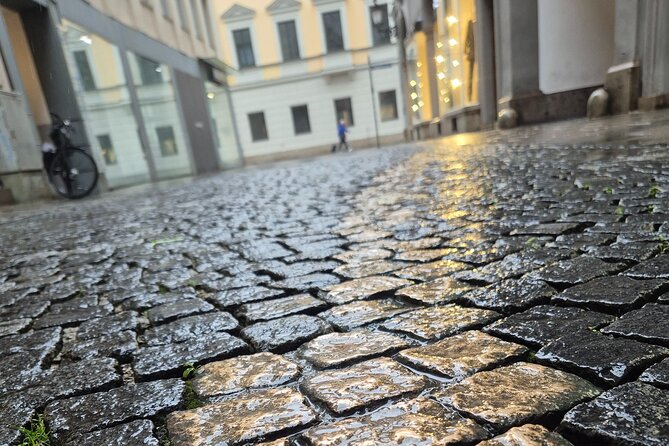
You begin at Isartor Gate (Tal 50, 80331 München). The starting point matters because it sets you up in the central area where Munich’s historic street layout still helps you visualize how people moved through the city.
From there, you head to the first major anchor tied to early Nazi organization. The tone you get right away is part of the value here. You’re not just seeing “dark history,” you’re learning how a political movement worked its way into public life.
Sterneckerbräu and Hofbräuhaus, how beer halls fueled early power
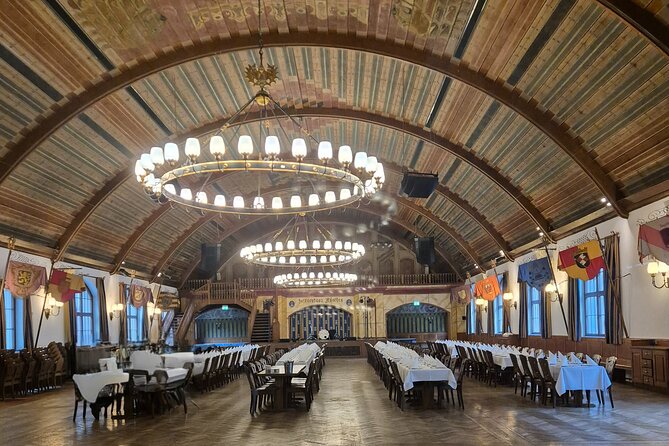
The tour’s first big history shift lands at Sterneckerbräu. This is the former beer hall where the prototype Nazi Party was founded, with Adolf Hitler and his followers using it as an early meeting place. That detail is powerful because it shows the movement starting in everyday social spaces, not only in official buildings.
Next comes Staatliches Hofbräuhaus (Hofbräuhaus), one of Munich’s best known beer halls. This is where Hitler held early Nazi Party meetings, and as the movement gained momentum, larger crowds showed up for speeches. If you’ve ever wondered how propaganda grows, this stop helps explain the mechanics in a very concrete way: public gatherings, recognizable venues, and repeated messaging.
A small caution: both places are famous, and they can be busy depending on the day. Since the tour groups you keep moving and the guide frames each site as part of the sequence, you’ll get the context even if the surroundings feel crowded.
Feldherrnhalle and the failed Beer Hall Putsch of 1923
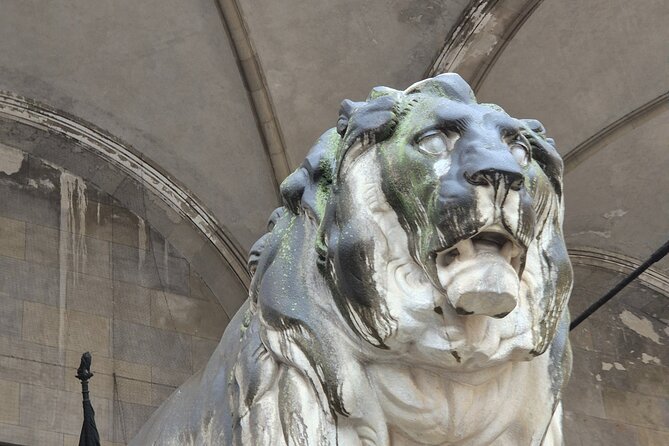
Then you arrive at Feldherrnhalle, the site associated with the failed Beer Hall Putsch in 1923. Adolf Hitler and his followers attempted to seize power, and what happened next turned this location into a lasting symbol tied to the conflict between Nazi supporters and Bavarian police.
This stop is where the tour’s narrative tension ramps up. It’s not just “what Nazis did,” but how an attempted takeover, and the public reaction to it, helped shape Hitler’s path forward. The Feldherrnhalle monument becomes more than a landmark once your guide connects it to that turning point.
One thing I appreciate about this kind of stop is that it prevents history from floating in the abstract. You’re standing in a specific place linked to a specific attempt, and the story has sharp edges because of that.

A real pause at the Square for the Victims of National Socialism
After the charged monuments, the tour shifts to remembrance at Platz der Opfer des Nationalsozialismus (the Square for the Victims of National Socialism). This memorial honors people persecuted by the Nazi regime, and it includes an eternal flame.
This is the part that makes the experience feel balanced. Earlier stops explain power and propaganda, but this one forces a shift back to victims and consequence. For me, it’s also the moment where the tour stops being about “political history” and becomes about human impact.
If you’re sensitive to sites tied to mass violence, take your time here. The guided portion is about 20 minutes, and it’s long enough to read and reflect without feeling rushed.
Führerbau on Königsplatz, where decisions met spectacle
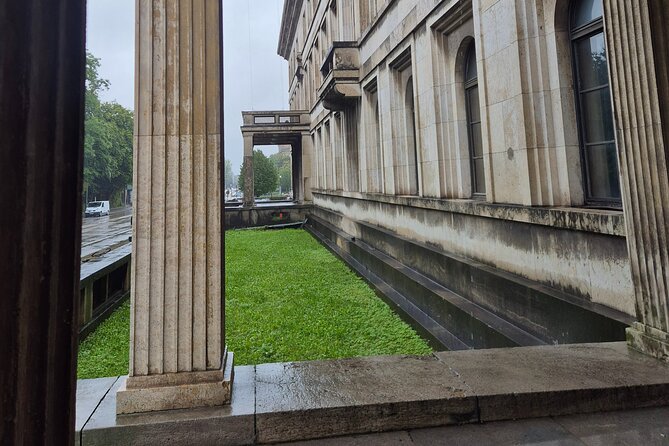
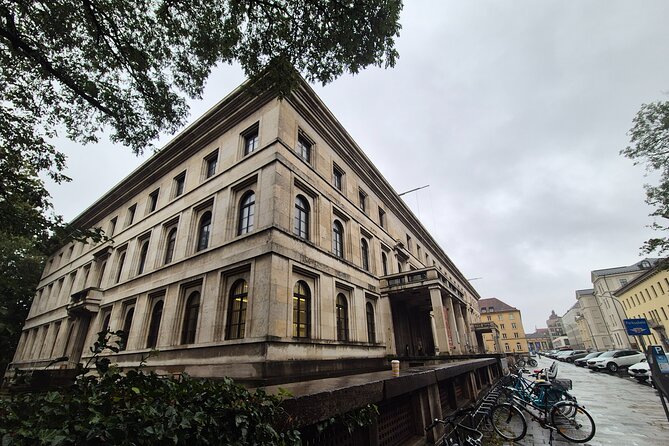
Next up is the Führerbau, Hitler’s official offices in Munich. The tour ties this building to high-level meetings with senior officials and important decision-making. It also flags one major event associated with the site: the signing of the Munich Agreement in 1938.
This stop helps you connect the dots between public performance and behind-the-scenes control. You move from speech venues and street-level gatherings to an office complex tied to power and policy. Even if you don’t know the details going in, the structure of the explanation makes the timeline feel logical.
Then you finish with a walk through Königsplatz, one of the key “stage” spaces of Nazi propaganda. The Nazis transformed the square into a setting for mass rallies and military parades. The guide also points out how the architecture and ceremonies supported the regime’s message, including references to public ceremonies and book burnings.
This is a strong ending because it wraps the story in space. You’re not just hearing that propaganda mattered, you’re seeing the kind of public layout it was designed to exploit.
Guide style: what Kaevan and Jamie seem to do well
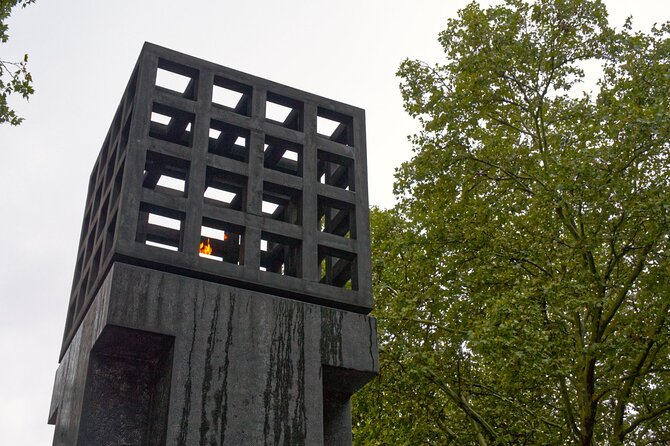
The reviews highlight consistent strengths: guides with strong command of the material, a pace that feels manageable, and an openness to questions.
Kaevan and Jamie are specifically named in the feedback you provided. The comments praised how the guide answered questions, pieced the story together as you walked, and kept a pace that let you absorb what was included plus take in extra information around the route.
That pace detail matters. A tour like this can go two ways: either it becomes a lecture you can’t process, or it becomes too light to be useful. The guide feedback suggests this one lands in the middle, with clear segments at each stop and enough time to actually look.
Group size, questions, and how to get more out of the walk
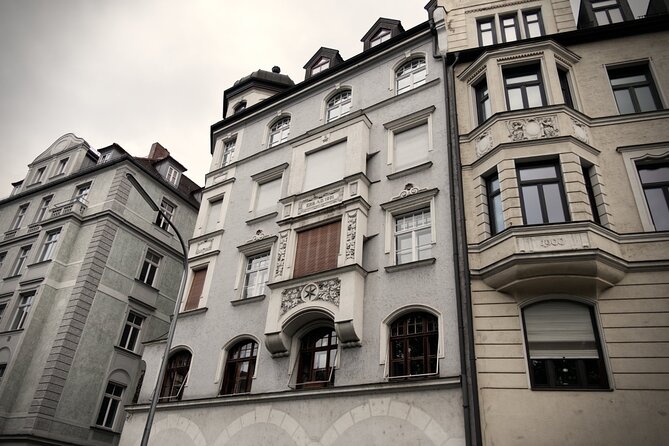
With a maximum of 20 travelers, you should have room to ask questions and hear answers clearly. I’d treat the guide like your on-the-ground history coach.
A practical move: at each stop, ask one question that connects the location to the bigger story. For example, you can ask how a beer hall meeting became political momentum, or why a city square was useful for mass rallies. The tour format is built for that kind of connection.
Also remember: this is a walking tour. You’ll be moving between stops, so dress for comfort. You’ll learn more if you can focus on the explanations instead of your feet.
Price and value, $34.73 for two and a half hours of context
At $34.73 per person, this tour is priced as an affordable guided walking experience. The value isn’t just time, it’s the combination of several landmark stops tied to the Third Reich story, handled in sequence with commentary.
Two things make the price feel reasonable based on the details you provided. First, the tour includes experienced guides with accurate commentary, and that kind of guidance really matters for sensitive historical topics. Second, each stop notes admission ticket free, so you’re not paying extra just to stand in the right place and learn.
If you’re already spending time in Munich’s historic center, this can slot neatly into your day without huge additional logistics.
Getting to and from the tour, ending at Königsplatz
The tour ends at Königsplatz 1, 80333 München. That’s handy because you can reconnect to the city fast.
From there, take the U2 U-Bahn from Königsplatz Station to Central Station, described as one stop and about a minute. If you prefer, buses and trams are nearby too. And if your legs are still willing, you can simply walk to Munich Old City in less than 15 minutes.
You’re also in an area close to public transportation, which is great if your schedule is packed.
Who this tour suits best, and who might prefer a different pace
This tour is a strong match for history buffs who want street-level context, not just general facts. It also works well for curious travelers who like their walking tours to teach something specific and real, because each stop ties to a clear part of the narrative.
It’s also a good choice if you want a guided explanation while you’re sightseeing in central Munich, especially since the route includes both propaganda and remembrance.
If you dislike heavy historical topics, or if long outdoor walks make you uncomfortable, you might find this one stressful. And since the route is outdoors, weather can affect comfort even if the guide keeps the pace steady.
Should you book the Third Reich Tour Munich?
I’d book this tour if you want a structured, guided walk through the key Nazi-era sites in Munich, with enough time at each stop to actually absorb context. The combination of beer hall origins, the Feldherrnhalle turning point, the victims memorial pause, and the Königsplatz finale gives the tour a clear shape.
I’d also consider it if you value small groups. The maximum of 20 travelers helps keep the experience personal, and named guides like Kaevan and Jamie get credit for answering questions and keeping the walk moving at a workable pace.
If you’re coming for lighter sightseeing only, or you know you prefer skipping morally difficult sites, you may want to choose a different Munich tour that fits your emotional comfort level.
FAQ
How long is the Third Reich Tour in Munich?
It runs for about 2 hours 30 minutes.
Where does the tour start?
The start point is Isartor Gate at Tal 50, 80331 München, Germany.
Where does the tour end?
The tour ends at Königsplatz 1, 80333 München, Germany.
Is it a walking tour or mostly public transportation?
It is a walking tour with multiple stops through central Munich.
Is there a mobile ticket?
Yes, the tour uses a mobile ticket.
How much does it cost?
The price is $34.73 per person.
What sites will I see during the tour?
You’ll visit several Nazi-era related landmarks, including Isartor, Sterneckerbräu, Hofbräuhaus, Feldherrnhalle, the Square for the Victims of National Socialism, the Führerbau, and Königsplatz.
Is admission included for the stops?
The tour information lists admission ticket free for the stops.
How big is the group?
The tour has a maximum of 20 travelers.
Can I cancel for a full refund?
Yes, you can cancel up to 24 hours in advance for a full refund.
Wartime History Walks We Have Reviewed
Everything else we filed on Munich
- Paul’s Private Tour Munich Highlights
★ 5.0 · 3 reviews - Private Linderhof Castle, Entry-Ticket – optional Toboggan Run
★ 5.0 · 3 reviews - Paul’s Private Tour in the Alte Pinakothek Munich
★ 5.0 · 3 reviews - Private Tour at Neuschwanstein And Linderhof Palaces From Munich
★ 4.5 · 3 reviews - Private Highlights of Munich Bike Tour with Beer Garden Stop
★ 5.0 · 3 reviews - Munich WWII and Dachau Concentration Camp Private Tour with Licensed Guide
★ 5.0 · 3 reviews
Third Reich and Wartime History Tours, side by side.
 ★ 4.9Berlin: Third Reich and Cold War 2 Hour Walking TourFrom $236,830 reviews
 ★ 4.6Munich: Third Reich & WWII Walking TourFrom $316,181 reviews
 ★ 5.0Berlin’s Best: 2 Hour Walking Tour Third Reich and the Cold WarFrom $245,486 reviews
 ★ 4.5Third Reich Walking Tour MunichFrom $454,291 reviews
 ★ 5.0Third Reich Berlin: Hitler and WWII Walking TourFrom $243,301 reviews
 ★ 4.7Nuremberg: Walking Tour of Former Nazi Party Rally GroundsFrom $151,665 reviews
 ★ 4.9Berlin: Third Reich, Hitler, and WWII Walking TourFrom $201,133 reviews
 ★ 4.8Nuremberg: Historischer Kunstbunker WWII Art Bunker TourFrom $14921 reviews
Other lists this tour is on