
REVIEW · BERLIN WALL
Berlin: Cold War History and Berlin Wall Guided Walking Tour
Berlin has a memory problem, in a good way. On this Cold War walking tour, I love how a local historian turns big sites like Checkpoint Charlie into human stories you actually remember. You also get key Wall-area landmarks in one route, including the Berlin Wall Memorial and a former DDR watchtower area.
I also appreciate the pacing, it is built for walking, questions, and stopping at the places where the city’s division became real. The only downside is that you are outdoors for a full stretch, and city noise and weather can affect comfort, so plan for that and bring comfortable shoes.
In This Review
- Key Things I Think You Should Know
- Entering the Cold War at Brandenburg Gate
- Meeting Your Guide at Hopfingerbräu, Then Walking the Divide
- Brandenburg Gate (and the 15-Minute Reality Check)
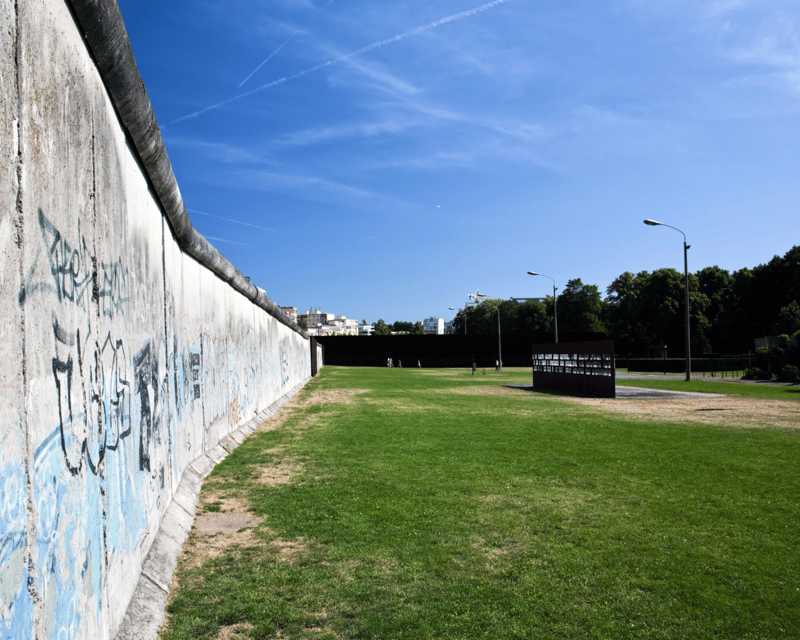
- Berlin Wall Time: Memorial, Watchtower Remnants, and a 200-Meter Stretch
- Topography of Terror (15 Minutes That Put WWII in the Cold War Frame)
- Potsdamer Platz (15 Minutes of a City That Reinvented Itself)
- Checkpoint Charlie (The 25-Minute Border Crossing Everyone Talks About)
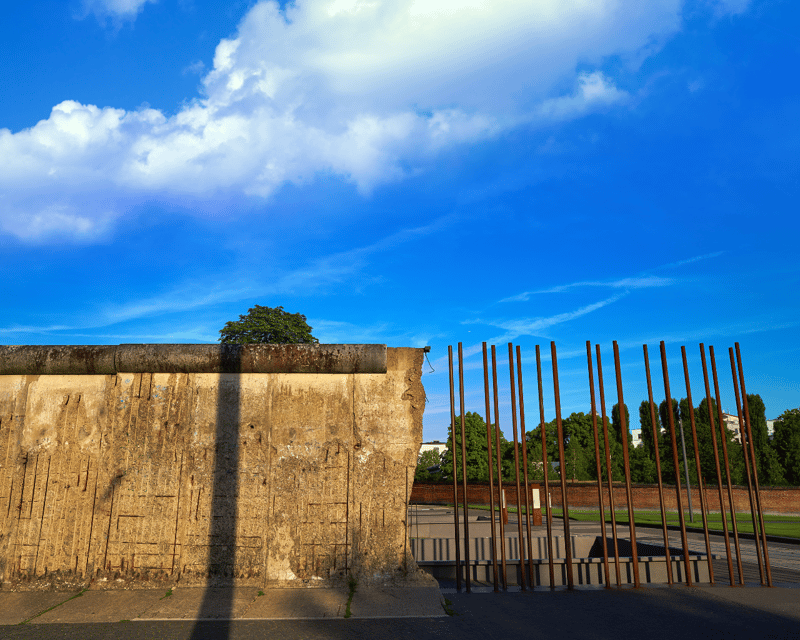
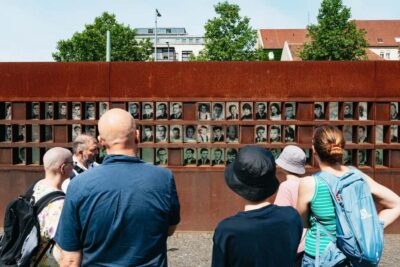
- Berlin Wall Memorial (The 75-Minute Part That Stays With You)
- How the Whole Route Builds Understanding (Not Just Sightseeing)
- Who This Tour Fits Best
- Practical Tips for a Comfortable 3-Hour Walk
- Should You Book This Berlin Wall and Cold War Walking Tour?
- FAQ
- How long is the Berlin Cold War and Berlin Wall guided walking tour?
- Where does the tour start?
- What are the main stops on the itinerary?
- Does the tour include time at the Berlin Wall Memorial?
- Is the tour wheelchair accessible?
- What languages are available for the live guide?
- What should I bring for the tour?
- Is free cancellation available?
- Can I reserve now and pay later?
Key Things I Think You Should Know
- Local historian storytelling that focuses on people, not just dates
- Stops built around Checkpoint Charlie and the Berlin Wall Memorial
- You will see a 200-meter stretch of the former Wall along Niederkirchnerstrasse
- The route includes major Cold War touchpoints like Topography of Terror and Potsdamer Platz
- Guides like Eugen, Paul, and Cieran are praised for answering questions thoughtfully, sometimes with personal photo context
Other walks along the Wall we have reviewed
- Skip-the-Line: Berlin Wall Museum at Checkpoint Charlie★ 4.1 · 2,041 reviews
- Berlin: East Side Gallery Spree Cruise in a Solar Catamaran★ 4.0 · 1,039 reviews
- Cold War, Berlin Wall, Spies and the East Side Gallery★ 5.0 · 1,024 reviews
- THE WALL: asisi Panorama Berlin Ticket★ 4.5 · 580 reviews
Entering the Cold War at Brandenburg Gate
This tour starts in the area around Berlin’s most famous landmark, the Brandenburg Gate, with the guide meeting you outside Hopfingerbräu next to it. That choice matters. You get grounded quickly in the geography of modern Berlin, then you move from the postcard view into the places where Berlin’s Cold War reality hardened.
If you come to Berlin thinking you will mainly see concrete and plaques, you will be surprised by how quickly the tone shifts. The guide frames the period between WWII and the Berlin Wall, explaining how the uneasy alliance broke down and what that meant for daily life. It is not just a political lesson. It is also a story about fear, restrictions, and what people tried to do anyway.
The tour duration is about 3 hours, and it is all on foot. So treat it like a focused walk through a timeline. You will be standing outside for most stops, taking in the atmosphere, and hearing why each place matters.
Meeting Your Guide at Hopfingerbräu, Then Walking the Divide
You meet at Ebertstraße 24, with the practical rendezvous point outside Hopfingerbräu by the Brandenburg Gate. That is helpful. You can orient yourself around one of the easiest-to-find areas in the central core, then your guide leads you from there.
I like that this tour feels like it has a plan without feeling rushed. The itinerary moves in a logical sweep. You hit the big East-West symbols, then you work your way through the more somber sites and the border-crossing spotlight, ending back near where you started.
The guide is a live local historian, speaking German or English depending on the tour. In multiple instances, the experience gets high marks specifically for story quality and for being willing to answer questions. That is a big deal on Wall history tours. You will have curiosity. You want your questions to make sense in context, not just get a short answer and a shrug.
One practical note from real experience: Berlin traffic noise can compete with your guide. If the group setup allows it, position yourself to hear clearly, and avoid standing in a spot where cars and buses are blasting right into the back of the group. A little adjustment improves everything.
Brandenburg Gate (and the 15-Minute Reality Check)
The tour visits the Brandenburg Gate first, for about 15 minutes. This is a fast start, and it works because the Gate is the kind of place everyone photographs, even if they do not know the whole story.
Here is why it is a good opening. Your guide can talk about Berlin’s shifting powers and the idea of a city split in two, using the Gate as an anchor. You see how symbolism sits right next to everyday control.
Drawback to keep in mind: because it is a quick stop, you will want to listen closely. This part sets the stage. It is not meant to be your deep research session.
Berlin Wall Time: Memorial, Watchtower Remnants, and a 200-Meter Stretch
The main Wall focus begins after the early landmark segment. The itinerary includes a Berlin Wall stop for about 25 minutes, then later you go to the Berlin Wall Memorial for a longer, guided 75 minutes.
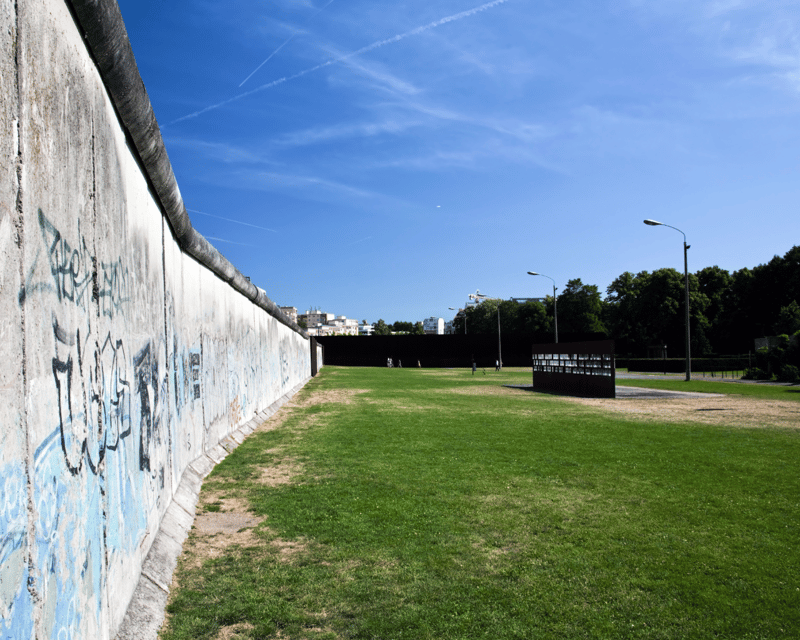
During the Wall portion, you are not just walking past markers. You are following the logic of the barrier and the ways it shaped movement. One of the highlights is seeing a 200-meter stretch of the former Wall along Niederkirchnerstrasse. That length matters because it gives you enough distance to understand the scale without turning it into a long, tiring march.
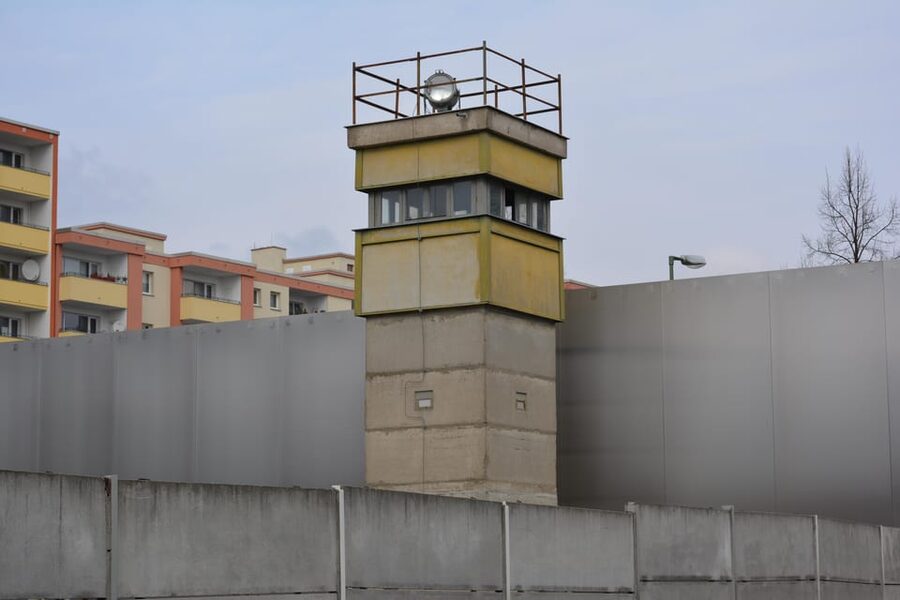
You will also encounter remnants related to a former DDR watchtower. Seeing that kind of structure in context helps you connect the dots between a border wall and the surveillance mindset behind it.
What I like most about the Wall-focused time is the emphasis on the human side. Your guide covers how people tried to escape, what it meant to live under restrictions, and how the Wall functioned as both barrier and psychological weapon. The best Wall tours do not treat the Wall like museum glass. This one leans into what it felt like.
More of the divided city, written up in full

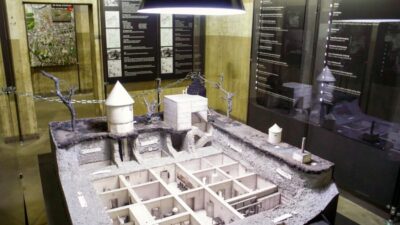

Topography of Terror (15 Minutes That Put WWII in the Cold War Frame)
Next up is Topography of Terror, visited for about 15 minutes. This stop adds an important layer. It helps connect the WWII aftermath to the next chapter, because the Cold War did not appear out of thin air. It grew out of the collapse of old systems and the rise of new power blocks.
In a short stop like this, the goal is not to cover every document or every exhibit. It is to give you the historical backdrop so the later Berlin Wall stories land harder.
Small consideration: this is another outdoor-leaning stop depending on where the group pauses. Dress for the weather and keep an eye on where you are stepping, especially if it is slippery or icy.
Potsdamer Platz (15 Minutes of a City That Reinvented Itself)
Then the route includes Potsdamer Platz for about 15 minutes. This stop might look less dramatic on paper than checkpoints and memorials. But it matters because Berlin rebuilt itself while still carrying the old scars.
This is one of the tour strengths. You get both sides of the story, the division and the later rebuilding. You start to see why Berlin today feels different from the Berlin of the 1960s, 70s, and 80s.
It is a short stop, so treat it as a signpost. Use it to notice how the city’s modern face covers the older fault lines.
Checkpoint Charlie (The 25-Minute Border Crossing Everyone Talks About)
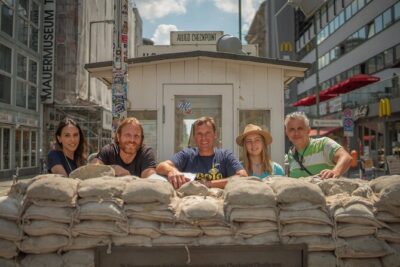
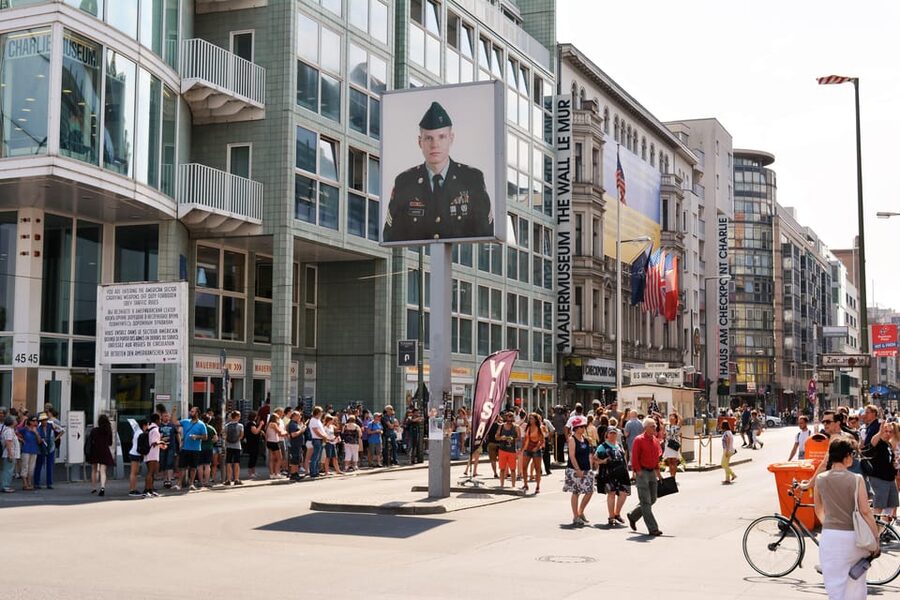
The itinerary’s Checkpoint Charlie segment is about 25 minutes, including a guided portion. This is the stop many people come for, and it lives up to the attention.
Checkpoint Charlie represents the most famous border-crossing idea, the moment people think of when they picture East and West Berlin separated by official control points. Your guide uses it to explain how movement worked, what crossing meant, and what risks people faced.
I also like that the guide brings in the emotional stakes. The best stories are not just about escape attempts, but also about consequences and the everyday reality behind the border.
A particularly memorable detail from the tour experience: some guides use personal family photos to explain what they learned from the Wall era. If you are with a guide like Cieran, you may get that extra layer of firsthand context, which makes the history feel less distant.
Berlin Wall Memorial (The 75-Minute Part That Stays With You)
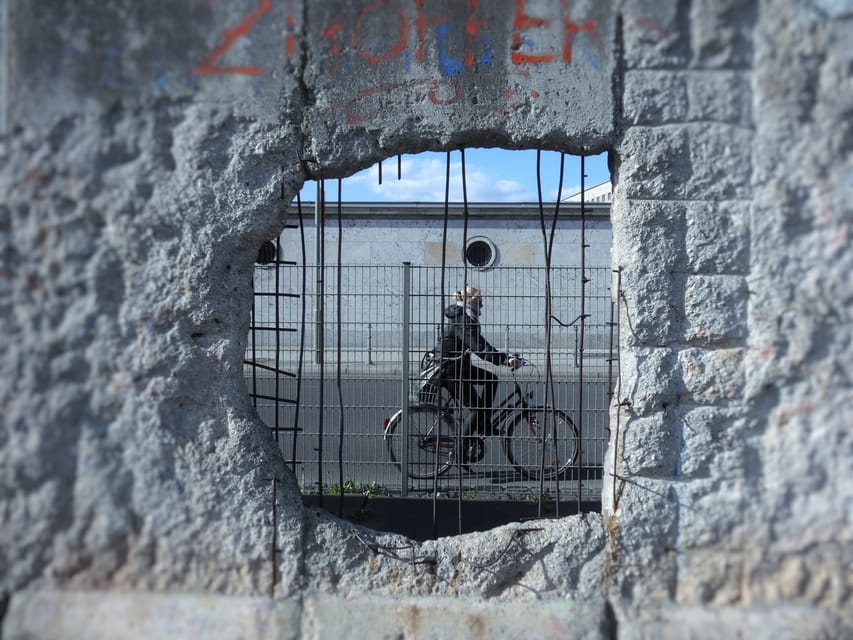
The Berlin Wall Memorial is visited for about 75 minutes and this is where the tour becomes most moving. The memorial is built to commemorate the division and the lives affected by it. Here, you slow down and you get time to absorb why the Wall was constructed and why it lasted as long as it did.
This is also where the guide’s storytelling style really shines. Multiple guides on this tour have been praised for turning political context into something you can picture, not just something you can memorize.
Expect to hear:
- why the Wall was constructed
- how life differed on either side
- the escape stories and the bravery behind them
- the tragedy that comes with oppression
I find memorial time most valuable when you let your brain stop sprinting. If you go in thinking you will simply tick off sites, you miss the point. The longer guided segment is designed to help you understand the “why” and the “how it felt,” which is the real value of a guided walk like this.
How the Whole Route Builds Understanding (Not Just Sightseeing)
One reason this tour works is that it follows a story arc. It starts with iconic Berlin, then it moves into Wall mechanics, then it adds a WWII to Cold War thread, then it lands at the most famous crossing, and finally it dedicates the long time to reflection at the memorial.
By the time you finish, you should understand:
- how the post-WWII alliance collapse led to a new standoff
- why the Wall became the symbol of control
- how border systems shaped daily life, not just escape headlines
- what led to the Wall’s fall, in terms of pressure and historical change
That structure is practical. It helps you connect what you see. It also helps you avoid the common problem of leaving Berlin Wall sites with a bunch of unconnected facts.
Who This Tour Fits Best
This tour is a strong match if you want Cold War history that actually connects politics to people. You should also like guided walking tours if you learn best by moving through places, not by sitting in a classroom.
It is especially good for:
- couples or small groups who want a shared learning experience
- visitors who already know some basics and want the human story behind them
- anyone who wants a guided route that covers the major Wall and border-crossing sites in one go
If you want a lightweight, purely visual tour with minimal context, this might feel heavy. The material is emotional. The guide focuses on bravery, escape attempts, and tragedies, because that is what the sites represent.
Practical Tips for a Comfortable 3-Hour Walk
A few things make this tour much easier.
Wear comfortable shoes. You will be on your feet through a set route that includes multiple stops. The duration is 3 hours, so plan for real walking time.
Dress for weather. One guide experience includes maintaining energy through heavy snow and cold, which is a reminder that Berlin can be brutal even when the forecast looks calm. Bring layers and a warm outer layer if you are visiting in winter.
Plan around sound. Traffic noise can interfere with hearing the guide. If your group is positioned near a busy road, try to stand where the guide’s voice carries best.
Come with questions. Guides on this tour have been praised for answering questions with tact and kindness. If a detail catches your attention, ask. That is where the tour can turn from informative into memorable.
Should You Book This Berlin Wall and Cold War Walking Tour?
Yes, if you want a guided walk that explains the Cold War through the places where the division was enforced, not just through vague generalities. The value is strong for the price, especially because the focus is on storytelling and on the human impact at Checkpoint Charlie and the Berlin Wall Memorial.
Skip or choose a different style of tour if you prefer short stops, minimal emotion, or strictly visual sightseeing. This is history with weight.
If you are building a first Berlin visit around meaningful context, this one is a smart backbone tour. It will give you a framework, so the rest of Berlin feels more legible as you explore.
FAQ
How long is the Berlin Cold War and Berlin Wall guided walking tour?
The tour lasts about 3 hours.
Where does the tour start?
Meet your guide at Ebertstraße 24, outside Hopfingerbräu next to the Brandenburg Gate.
What are the main stops on the itinerary?
You will visit Brandenburg Gate, the Berlin Wall area, Topography of Terror, Potsdamer Platz, Checkpoint Charlie, and the Berlin Wall Memorial.
Does the tour include time at the Berlin Wall Memorial?
Yes. The Berlin Wall Memorial is included with a guided visit of about 75 minutes.
Is the tour wheelchair accessible?
Yes, the tour is listed as wheelchair accessible.
What languages are available for the live guide?
The live guide is available in German and English.
What should I bring for the tour?
Bring comfortable shoes and weather-appropriate clothing.
Is free cancellation available?
Yes, you can cancel up to 24 hours in advance for a full refund.
Can I reserve now and pay later?
Yes, you can reserve now and pay later.
Pavements of Berlin
The Divided Years, Reviewed
Following the Wall a Little Further
Everything else we filed on Berlin
- East Berlin: City of Shadows Walking Tour
★ 5.0 · 11 reviews - Berlin: Die Stachelschweine – Frank Lüdecke – Träumt Weiter
★ 4.7 · 11 reviews - Potsdam Day Trip from Berlin with a Local: Private & Personalized
★ 4.0 · 11 reviews - An Introduction to Berlin Walking Tour
★ 5.0 · 11 reviews - DJ for a Day: Learn to Mix Like a Pro in Berlin
★ 5.0 · 11 reviews - 2-H Segway Sightseeing Tour Berlin
★ 4.5 · 11 reviews
Berlin Wall and Divided City Tours, side by side.
 ★ 4.8Nuremberg: Tunnels and Secret Passages in the City Wall TourFrom $142,334 reviews
 ★ 4.1Skip-the-Line: Berlin Wall Museum at Checkpoint CharlieFrom $212,041 reviews
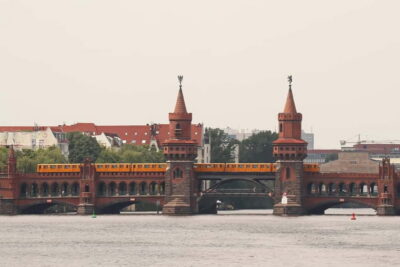 ★ 4.0Berlin: East Side Gallery Spree Cruise in a Solar CatamaranFrom $271,039 reviews
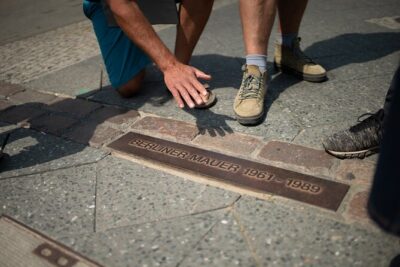 ★ 5.0Cold War, Berlin Wall, Spies and the East Side GalleryFrom $181,024 reviews
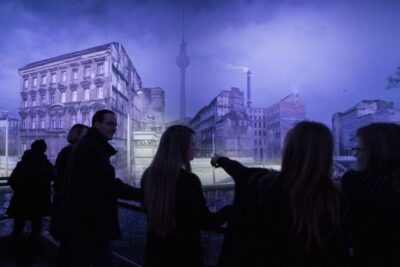 ★ 4.5THE WALL: asisi Panorama Berlin TicketFrom $16580 reviews
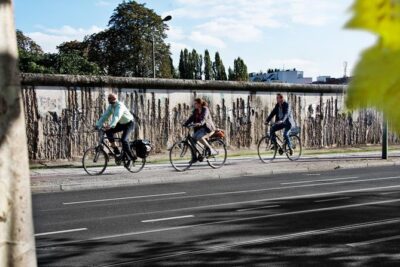 ★ 4.7Berlin: Guided Bike Tour of the Berlin Wall and Third ReichFrom $40499 reviews
 ★ 4.8Berlin: Cold War Walking Tour on Berlin Wall RouteFrom $26437 reviews
 ★ 4.9East Berlin and the Wall: Walking TourFrom $351407 reviews
Other lists this tour is on