
REVIEW · WARTIME HISTORY
Berlin Half-Day World War II Walking Tour
A Berlin WWII walk is a fast way to get oriented. A good guide turns famous sites like Checkpoint Charlie and the Berlin Wall Memorial into a story you can actually follow. You skip the map work and spend your limited time seeing the right places, with local legends and clear historical context.
Two things I like a lot here: you cover major landmarks in one half-day route, and the guide is the main ingredient, bringing the details that are hard to piece together on your own. One consideration, plan for walking and note that public transportation isn’t included if you need it to connect between spots.
In This Review
- Key takeaways before you go
- Why a WWII half-day walk works when Berlin is short on time
- Start at Alexanderplatz, end at Brandenburger Tor (route logic that keeps you sane)
- Checkpoint Charlie: how to read a border site without getting stuck in details
- The Berlin Wall Memorial plus the East Side Gallery: seeing two moods of the same era
- Reichstag, the Third Reich capital story, and why the guide’s connections matter
- Flak Tower and the Russian-German War Museum: the war mechanics behind the monuments
- Prenzlauer Berg and the site of Hitler’s bunker: what to expect from a guided approach
- What you get for $35, and what you do not
- Who should book this Berlin WWII walking tour
- Practical tips to make your half-day smoother
- Should you book this tour?
- FAQ
- What is the meeting point?
- Where does the tour end?
- What time does the tour start?
- How long is the tour?
- How much does it cost?
- What is included in the tour price?
- Is public transportation included?
- Is the ticket mobile?
- How large is the group?
- What is the cancellation policy?
Key takeaways before you go
- It is a half-day route built to hit multiple WWII and Cold War sites without deep planning.
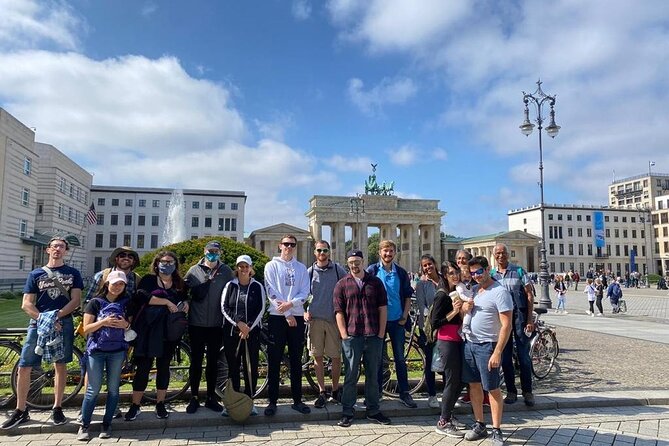
- Start at Generator Berlin Alexanderplatz and finish at Brandenburger Tor, so you do not end up lost on the way out.
- Checkpoint Charlie, the Berlin Wall Memorial, and the East Side Gallery are part of the experience.
- Reichstag area, Flak Tower, and the Russian-German War Museum help fill in the WWII picture.
- You will hear stories beyond the plaques, including local legends and the guide’s connections between stops.
- Group size is capped at 100, and that matters for how much time you get at the most popular points.
Further wartime history walks we have written up
- Berlin: Third Reich and Cold War 2 Hour Walking Tour★ 4.9 · 6,830 reviews
- Berlin’s Best: 2 Hour Walking Tour Third Reich and the Cold War★ 5.0 · 5,486 reviews
- Third Reich Berlin: Hitler and WWII Walking Tour★ 5.0 · 3,301 reviews
- Berlin: Third Reich, Hitler, and WWII Walking Tour★ 4.9 · 1,133 reviews
Why a WWII half-day walk works when Berlin is short on time
Berlin can swallow an entire weekend if you let it. This tour is designed for people who want a strong hit of WWII and related Cold War history in about 4 hours, without building an itinerary from scratch. That time limit is the whole point: you get the big locations, plus enough “why it matters” to make them stick.
I also like that the route does not feel like a random checklist. The emphasis is on how events link together, from the Battle of Berlin and the Third Reich era to the later border and wall story around Checkpoint Charlie and the Berlin Wall Memorial. Even if you know a little going in, a guide helps you connect the dots fast.
The biggest value is mental, not just physical. When you are done, you should be able to look at key Berlin landmarks and understand what role they played in the story, rather than just recognizing them from photos.
Start at Alexanderplatz, end at Brandenburger Tor (route logic that keeps you sane)
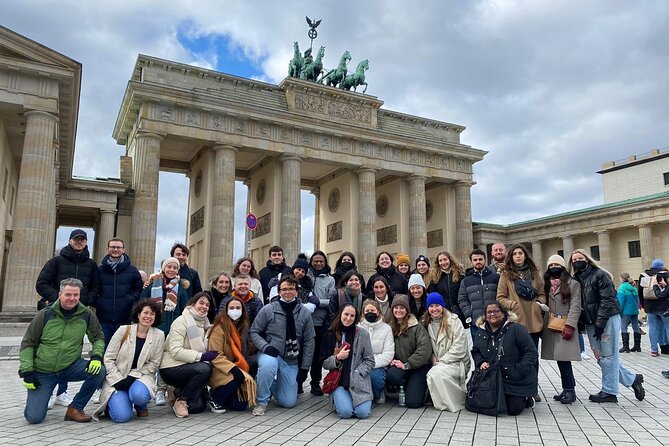
The meeting point is Generator Berlin Alexanderplatz, Otto-Braun-Straße 65, 10178 Berlin. The tour starts at 12:00 pm and ends at Brandenburger Tor (10117 Berlin). That start-and-finish combo is practical. Alexanderplatz is easy to find, and Brandenburger Tor is easy to use as your “done” point for the day.
Because the tour ends at a major landmark, you can plan your next move right away, whether that is lunch nearby or continuing sightseeing in the same general area. It also reduces the chance you spend your last hour hunting for where the tour ends.
Do remember that the tour is listed as having public transportation where applicable, but it is not included. So if you are coming in from farther across town, budget extra time for your own transit to the meeting point.
Checkpoint Charlie: how to read a border site without getting stuck in details
Checkpoint Charlie is one of those places everyone has heard of, but it can be confusing if you only rely on your own reading. A guided stop helps because the guide can explain what made this crossing important, how it fit into Berlin’s divided reality, and why this location became a symbol.
What you will likely appreciate most is the “big picture with real places.” Instead of walking around and wondering where to look, you get pointed to the meaning of the spot. That is especially valuable at Checkpoint Charlie, where there is a lot going on visually and it is easy to miss the historical point.
If you want the site to feel more than a photo-op, come with one mindset: ask yourself what changed for Berliners over time. A good guide will keep bringing the story back to that human reality, not just the names.
The Berlin Wall Memorial plus the East Side Gallery: seeing two moods of the same era
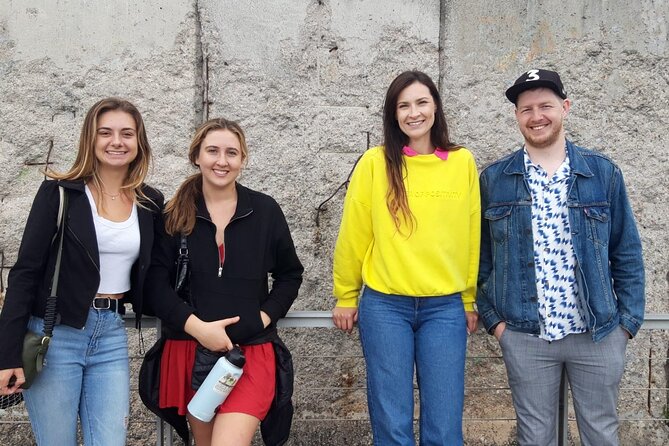
The tour includes both the Berlin Wall Memorial and the East Side Gallery. That pairing matters. One side gives you the sobering, memorial-focused context. The other shows the wall’s later role as a canvas, which is a very different emotional register.
You do not just get to stand in front of a wall. You get to understand why the wall mattered in daily life, why it became a focal point for international attention, and how Berliners and visitors came to process it over time. That contrast is powerful in a short tour, because you are not stuck in only one mood.
Practical note: these are popular sites. Even with a group cap of 100 travelers, you may still feel the crowd pressure around photo spots. If your goal is quiet attention, keep your eyes on what the guide is pointing out, not on chasing the perfect shot.
Other walking routes through Berlin

Reichstag, the Third Reich capital story, and why the guide’s connections matter
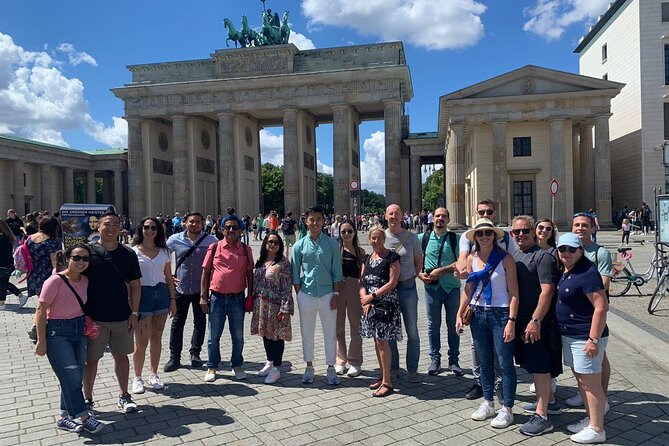
The itinerary info points you toward the Reichstag area and the broader “Third Reich capital” storyline. This is where a guide really pays off, because the wording you often see online can feel vague until you are standing near the physical place where politics played out.
The value here is interpretation. You should expect the guide to link the Reichstag to the wider arc of the war, including Berlin’s role during the conflict and how power was displayed and contested. Without that framing, these locations can turn into architecture appreciation. With it, they become part of a timeline you can follow.
If you are the type who likes structure, you will likely enjoy how the guide builds from place to place. The walking format helps, because you keep moving, and the story stays “active” instead of turning into a classroom lecture.
Flak Tower and the Russian-German War Museum: the war mechanics behind the monuments
Two other stops highlighted in the plan are the Flak Tower and the Russian-German War Museum. These are not the postcard icons. They are the sites that help you understand how the war hit the city, how people dealt with it, and how later generations documented it.
A Flak Tower connects you to the idea of air defense and urban survival during wartime. A war museum helps with the evidence and explanations that make the big claims feel grounded. In a four-hour format, these stops work like “supporting detail,” so the earlier political and border stops do not float off on their own.
One thing I appreciate about including these kinds of stops is balance. Berlin has many layers, and if your tour only hits memorials and dramatic landmarks, you might miss the practical reality of what war meant on the ground. These choices help round out the picture.
Prenzlauer Berg and the site of Hitler’s bunker: what to expect from a guided approach
The tour info also references Prenzlauer Berg and the site of Hitler’s bunker. This is sensitive ground. A good guide’s job is not just to name places, it is to explain why they are remembered and how the story changed after the war.
In these parts of Berlin, you may not see the same kind of formal monument experience you get at larger memorial sites. That is exactly when interpretation matters. You want someone to explain what happened here, and what historical sources say about the events and context.
I suggest going in with a respectful pace. Listen closely, and be ready for a topic that is emotionally heavy. If you prefer lighter storytelling, this tour may feel intense, even though it stays to a half-day length.
What you get for $35, and what you do not
At $35 for an approximately 4-hour guided walk, the value is mostly about time and guidance. You are paying for the route design, the stop selection, and the guide’s ability to tell a coherent story across multiple WWII and Cold War sites.
The included part is simple: an enthusiastic local guide. That means you are not paying for a bundled set of admissions or extras listed here. It also means you should plan your expectations accordingly. You are buying help understanding what you are seeing, not a package of paid entry fees.
Also note the tour is marked as Mobile ticket. That is handy for keeping things simple day-of. Just make sure your phone battery is happy, and have the ticket accessible when you meet.
Who should book this Berlin WWII walking tour
This tour is a strong fit if:
- you are on a tight schedule and want major stops in one go
- you prefer a guide-led route instead of building your own itinerary
- you want WWII and related Cold War landmarks connected into one narrative
- you like learning local legends along with the “official” history
It might be less ideal if:
- you want a slow, museum-heavy day with lots of sitting
- you do not want to walk for most of a four-hour block
- you are very sensitive to heavy topics, since the tour focuses on WWII-era locations and themes
Practical tips to make your half-day smoother
Here are a few things that will make a difference, based on how walking tours like this typically run and on the specific setup here.
- Arrive a little early at Generator Berlin Alexanderplatz. The start time is 12:00 pm, and being late is the fastest way to miss the group.
- Bring comfortable shoes. This is a walking tour, and you will cover multiple stops.
- Have your mobile ticket ready on your phone.
- If you are connecting by transit, handle that yourself. Public transport is not included.
- Expect crowds at the best-known points, especially around Wall and border sites. Your best strategy is to follow the guide’s focus.
One more thing: there is at least one complaint in the mix about a mismatch between paid tour expectations and something offered for free at the meeting point. I cannot verify what happened in that case, but you can reduce the risk by double-checking the exact meeting details in your confirmation and showing up on time with your ticket in hand.
Should you book this tour?
I think you should book it if your goal is efficiency with meaning. $35 is reasonable for a guide-led route that hits major WWII and Cold War reference points, including Checkpoint Charlie, the Berlin Wall Memorial, and the East Side Gallery, with stops tied to the Reichstag area, the Flak Tower, and the Russian-German War Museum. The strong overall rating and high recommendation rate suggest that people mainly loved two things: the guide’s storytelling and the fact that you see a lot without getting lost in planning.
Skip it if you want a mostly light, casual sightseeing day, or if you would rather spend more time inside museums or reading on your own. This tour is for people who want a guided “see it, understand it, move on” afternoon.
FAQ
What is the meeting point?
The tour starts at Generator Berlin Alexanderplatz, Otto-Braun-Straße 65, 10178 Berlin, Germany.
Where does the tour end?
The tour ends at Brandenburger Tor, 10117 Berlin, Germany.
What time does the tour start?
The start time is 12:00 pm.
How long is the tour?
The duration is about 4 hours.
How much does it cost?
The price is $35.
What is included in the tour price?
The tour includes an enthusiastic local guide.
Is public transportation included?
Public transportation where applicable is not included.
Is the ticket mobile?
Yes, it is a mobile ticket.
How large is the group?
The tour has a maximum of 100 travelers.
What is the cancellation policy?
Free cancellation is available. You can cancel up to 24 hours in advance for a full refund. If you cancel less than 24 hours before the start time, the amount paid will not be refunded.
Pavements of Berlin
Wartime History Walks We Have Reviewed
Everything else we filed on Berlin
- East Berlin: City of Shadows Walking Tour
★ 5.0 · 11 reviews - Berlin: Die Stachelschweine – Frank Lüdecke – Träumt Weiter
★ 4.7 · 11 reviews - Potsdam Day Trip from Berlin with a Local: Private & Personalized
★ 4.0 · 11 reviews - An Introduction to Berlin Walking Tour
★ 5.0 · 11 reviews - DJ for a Day: Learn to Mix Like a Pro in Berlin
★ 5.0 · 11 reviews - 2-H Segway Sightseeing Tour Berlin
★ 4.5 · 11 reviews
Third Reich and Wartime History Tours, side by side.
 ★ 4.9Berlin: Third Reich and Cold War 2 Hour Walking TourFrom $236,830 reviews
 ★ 4.6Munich: Third Reich & WWII Walking TourFrom $316,181 reviews
 ★ 5.0Berlin’s Best: 2 Hour Walking Tour Third Reich and the Cold WarFrom $245,486 reviews
 ★ 4.5Third Reich Walking Tour MunichFrom $454,291 reviews
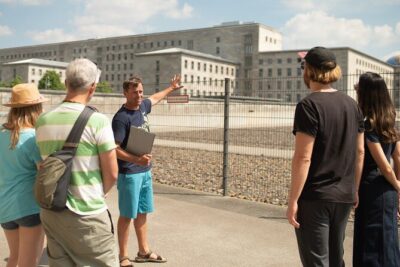 ★ 5.0Third Reich Berlin: Hitler and WWII Walking TourFrom $243,301 reviews
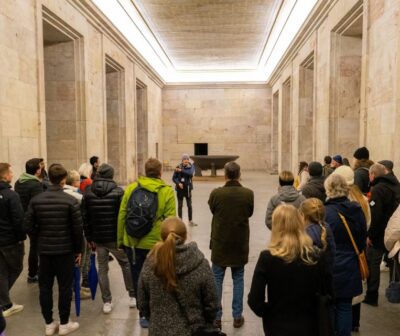 ★ 4.7Nuremberg: Walking Tour of Former Nazi Party Rally GroundsFrom $151,665 reviews
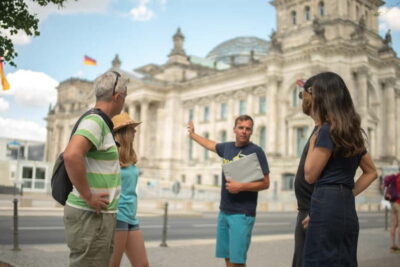 ★ 4.9Berlin: Third Reich, Hitler, and WWII Walking TourFrom $201,133 reviews
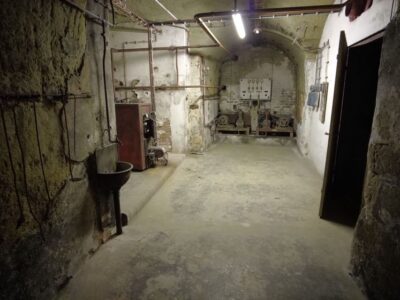 ★ 4.8Nuremberg: Historischer Kunstbunker WWII Art Bunker TourFrom $14921 reviews
Other lists this tour is on