
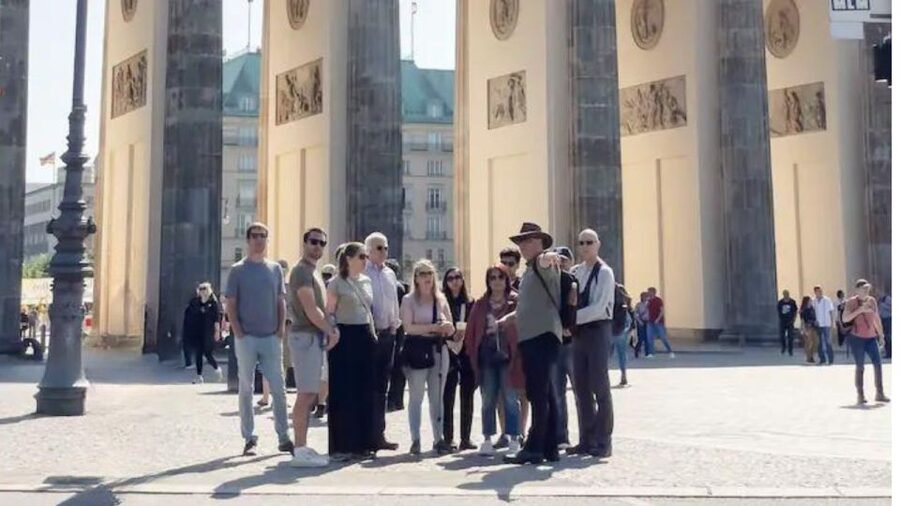
REVIEW · WARTIME HISTORY
Berlin: Hitler’s Berlin The Rise & Fall Guided Walking Tour
Berlin changes after this walk. This 150 minute guided route turns big, scary WWII history into something you can follow, step by step, starting at the Brandenburg Gate and ending at Topography of Terror. I also love how it uses Then and Now photos and historic maps, so you can actually connect what you see today to what happened in 1933 to 1945.
One heads up. This is serious, heavy subject matter, and it is outdoors with a considerable amount of walking, so bring sturdy shoes and plan for the weather.
In This Review
- Key things to know before you go
- Why Hitler’s Berlin Works Better on Foot
- Starting at Brandenburg Gate, with the Right First Beat
- The Reichstag Moment: Democracy, Dictatorship, and Unity
- Memorials You Do Not Rush: Sinti and Roma, then the Holocaust Memorial
- Soviet War Memorial Tiergarten: Learning the Cost of the Final Fight
- Hitler’s Bunker Site: Where the War in Europe Reached Its End
- Johann Georg Elser Memorial: A Different Kind of Resistance
- Former Gestapo and SS Headquarters at Topography of Terror
- How Then and Now Photos and Maps Make It Click
- Practicalities: Walking Time, Weather, and What to Bring
- Value at About $47: What You Get for the Time
- Who Should Book This Tour (and Who Might Want to Rethink)
- Should You Book This Hitler’s Berlin Walking Tour?
- FAQ
- How long is the Berlin Hitler’s Berlin The Rise & Fall guided walking tour?
- Is the tour mostly indoors or outdoors?
- Where do I meet the guide?
- What language is the tour in?
- How much walking should I expect?
- Is the tour wheelchair accessible?
Key things to know before you go
- A clear WWII timeline in Berlin, from Nazi rise to final collapse
- Reichstag plus bunker site, two places tied to major turning points
- Memorial stops built for reflection, including the Holocaust memorial and more
- Former Gestapo and SS headquarters at Topography of Terror, explained in context
- Then and Now photos and historic maps, helping you read the city like a document
Further wartime history walks we have written up
- Berlin: Third Reich and Cold War 2 Hour Walking Tour★ 4.9 · 6,830 reviews
- Berlin’s Best: 2 Hour Walking Tour Third Reich and the Cold War★ 5.0 · 5,486 reviews
- Third Reich Berlin: Hitler and WWII Walking Tour★ 5.0 · 3,301 reviews
- Berlin: Third Reich, Hitler, and WWII Walking Tour★ 4.9 · 1,133 reviews
Why Hitler’s Berlin Works Better on Foot
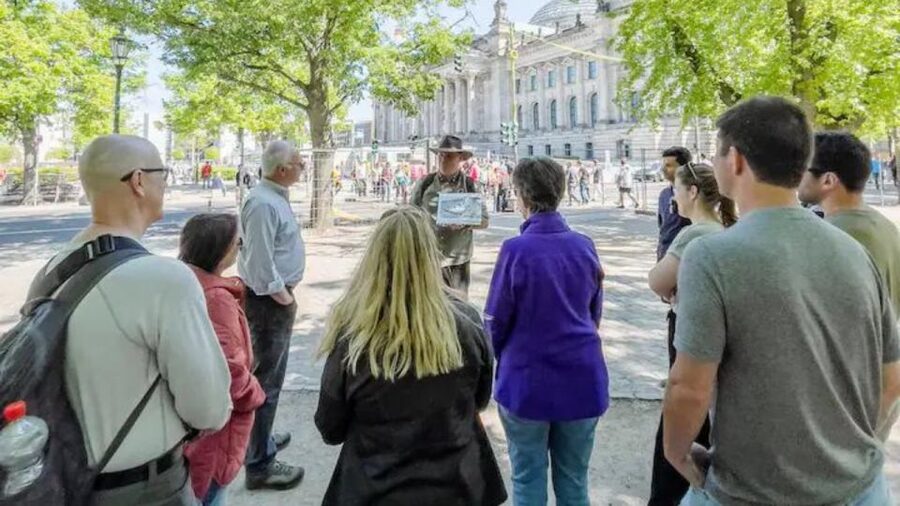
Berlin is full of signs and buildings that look normal until you learn what they were for. That is what makes this tour hit. You are not doing random sightseeing. You are walking a focused story that explains how a democracy fell, how power got concentrated, and how repression worked in everyday life.
I like that the experience keeps things structured. You hear why the Nazis seized power, why the Jewish population was targeted systematically, and how propaganda and fear kept control going. Then you close with the reality of defeat, including the end of the war in Europe coming through the streets of Berlin.
This is also why a small group matters. When the guide has time for questions, you get clarity instead of vague chapter headings. Past participants have praised guides like Scott, Hannah, Matthew, and Ben for making the information clear and for sticking around to answer questions.
Starting at Brandenburg Gate, with the Right First Beat
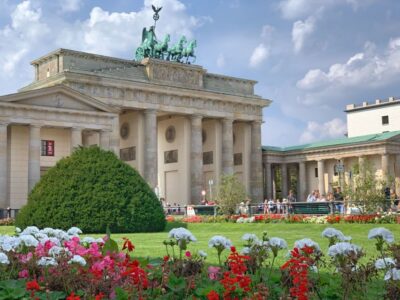
The tour meets at the Tourist Office at Brandenburg Gate and you look for the Blue Umbrella. It starts near the Pferdedroschke, so you are positioned right where Berlin can set the mood fast.
From the first steps, you get a practical lesson. Brandenburg Gate is not just a famous photo spot. It is a symbol that has meant different things across different eras, and your guide frames it so you notice the details instead of just passing by.
Expect a short photo stop, a visit, and some walking along the way. In this kind of tour, those early minutes are important because they help you understand what you are about to see. You go from watching buildings to reading how ideology used space and ceremony.
The Reichstag Moment: Democracy, Dictatorship, and Unity
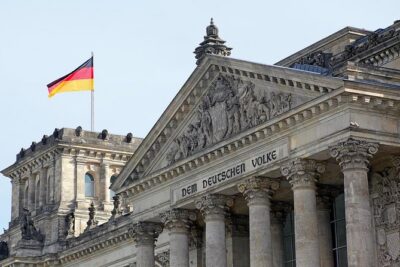
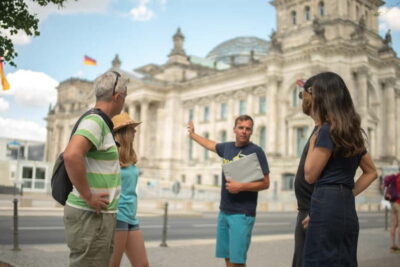
The Reichstag stop is one of the tour anchors. It is where you can feel the tension between what a government is supposed to be and what a dictatorship makes it become. Your guide explains the Reichstag’s role as a symbol, not just as a landmark.
You also get the kind of framing that makes the rest of the day easier. The guide connects political moves to the built environment. That matters in Berlin because the city did not just witness history. It also helped shape how that history played out.
You will have time for a guided visit and photos. The visit is outdoors focused, and the guide uses tools like Then and Now photos and historic maps so you can line up today’s appearance with what came before.
Memorials You Do Not Rush: Sinti and Roma, then the Holocaust Memorial
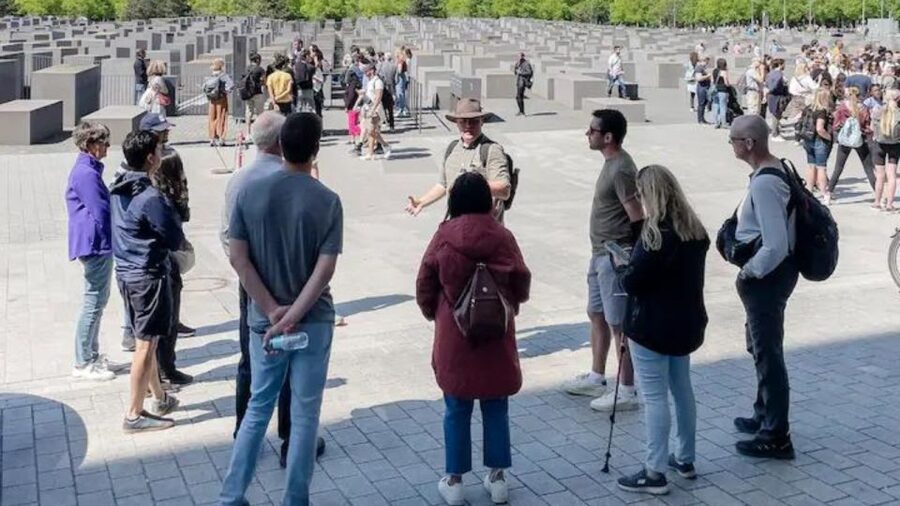
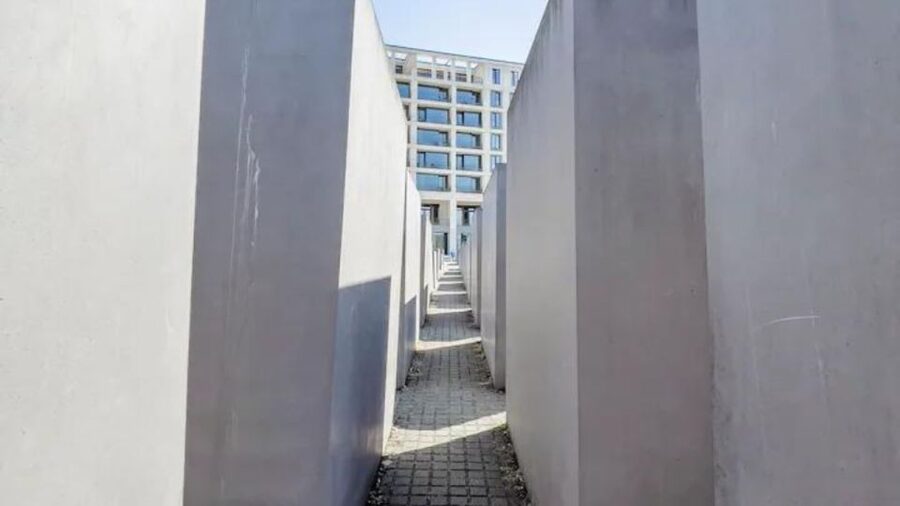
Two memorial stops early on are intentionally brief, but not shallow. First you visit the Memorial to the Sinti and Roma Victims of National Socialism. Then later you stand at the Holocaust Memorial.
These are places where context changes what your eyes do. The guide helps you understand why these memorials exist, and that shifts the experience from sightseeing to remembrance. Even if you already know the basics of WWII, you will likely notice how the city chooses to hold memory in public space.
There is also a practical point here. Memorials often feel better when you are not sprinting. Since the overall tour is structured, you are not rushing every minute. You get short guided pieces plus walking between them, which keeps the pace respectful.
Other walking routes through Berlin
Soviet War Memorial Tiergarten: Learning the Cost of the Final Fight
After the Holocaust Memorial stop, you move toward a different kind of lesson. The Soviet War Memorial in Tiergarten is a reminder of what the end of the war meant on the ground in Berlin.
You will do a photo stop, plus guided explanation and walking between points. This is where the tour reinforces the big picture. WWII was not only ideology and documents. It was also battle, destruction, and loss.
Even if you are primarily there to understand the Nazi regime, this part matters. It shows what came after propaganda and terror. It also sets up why the bunker site and the final days have such weight.
Hitler’s Bunker Site: Where the War in Europe Reached Its End
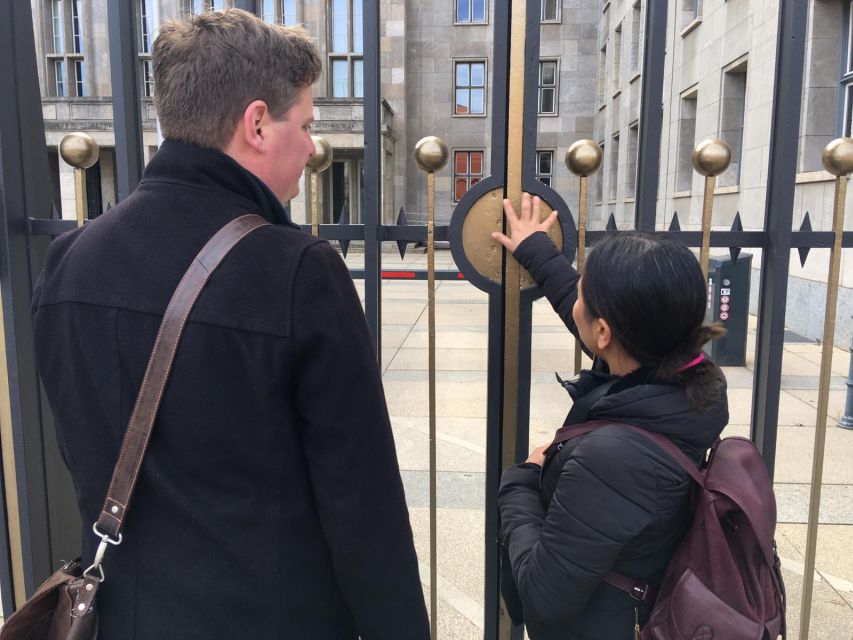
The tour then turns to Hitler’s bunker site. You stop for photos, and you get a guided visit and explanation.
This is one of the stops where the guide has to manage emotion carefully, and the best guides do it by sticking to facts and clear cause and effect. You learn how Berlin became the stage for the final collapse, and how fear and control crumbled when defeat became real.
A helpful detail from this tour style is that you are not just hearing dramatic narration. You also get historical context that links repression to institutions, and institutions to outcomes. That keeps the bunker stop from being only a grim viewpoint.
Johann Georg Elser Memorial: A Different Kind of Resistance
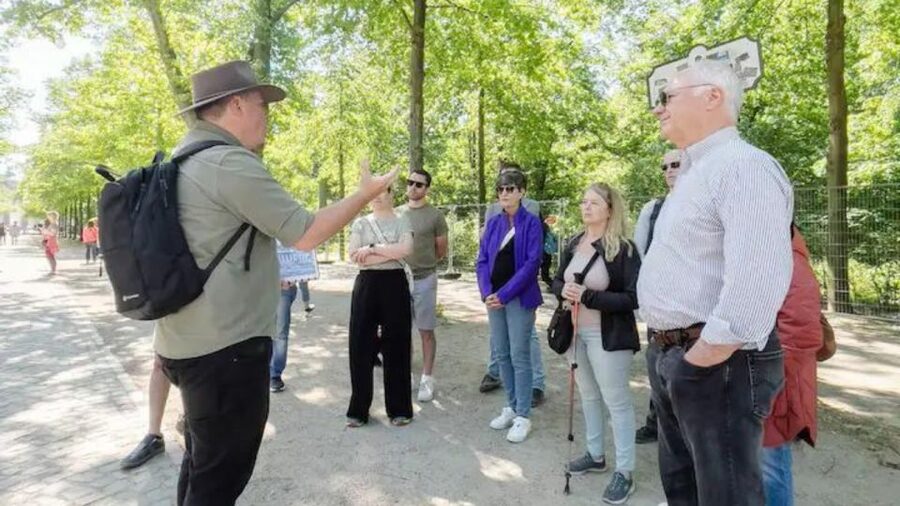
Right after the bunker site, you stop at the Johann Georg Elser Memorial. This is a smart contrast in the tour’s storytelling.
Elser’s place in the narrative helps you see that not everyone went along. You get a guided visit, photo stop, and a bit of walking so the message lands without turning the day into a single-note script.
This is also a good example of why the tour avoids gimmicks. It uses key sites to widen your understanding, not to shock you into paying attention for ten seconds and then moving on.
Former Gestapo and SS Headquarters at Topography of Terror
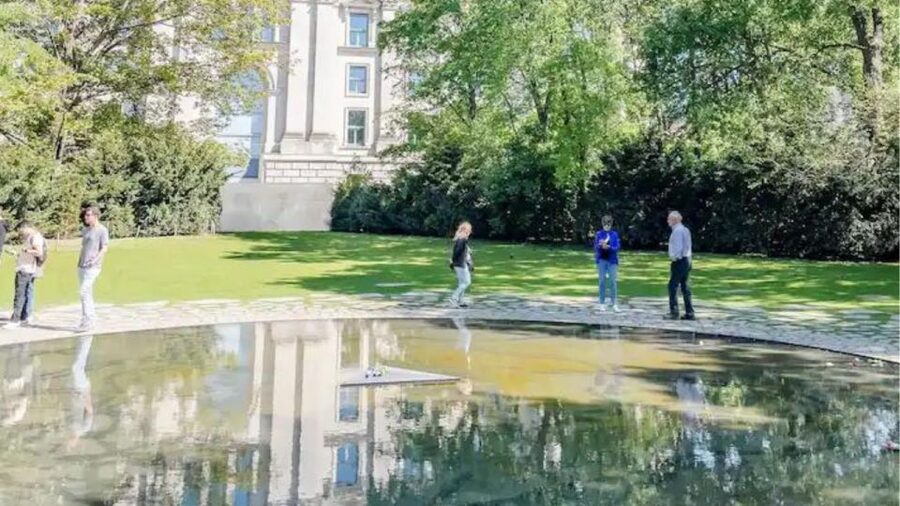
The tour’s emotional center lands at Topography of Terror. This is where you learn about the former Gestapo and SS headquarters, often described as a nerve center of terror and repression.
You do a guided visit with a photo stop and walking on the way to it. Your guide connects the dots between power and people. You hear how fear, propaganda, and repression maintained control, and why the Nazi state needed offices, staff, and systems.
You also get that structured feel here. It is not just dark history in the abstract. It is dark history explained in a way that shows the mechanism.
One extra stop fits into this segment: the German Finance Ministry. Even though it might look like just another building from the outside, your guide explains why it belongs in this story of how the regime worked and how resources supported control.
How Then and Now Photos and Maps Make It Click
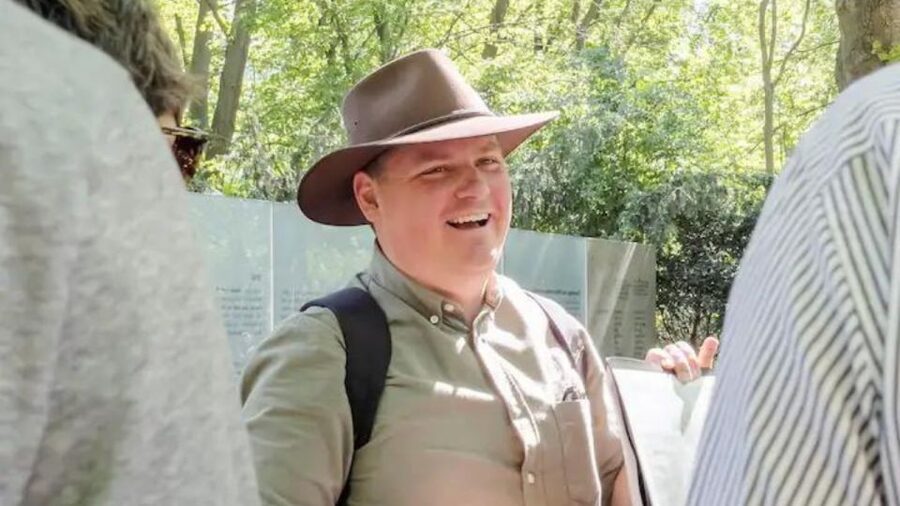
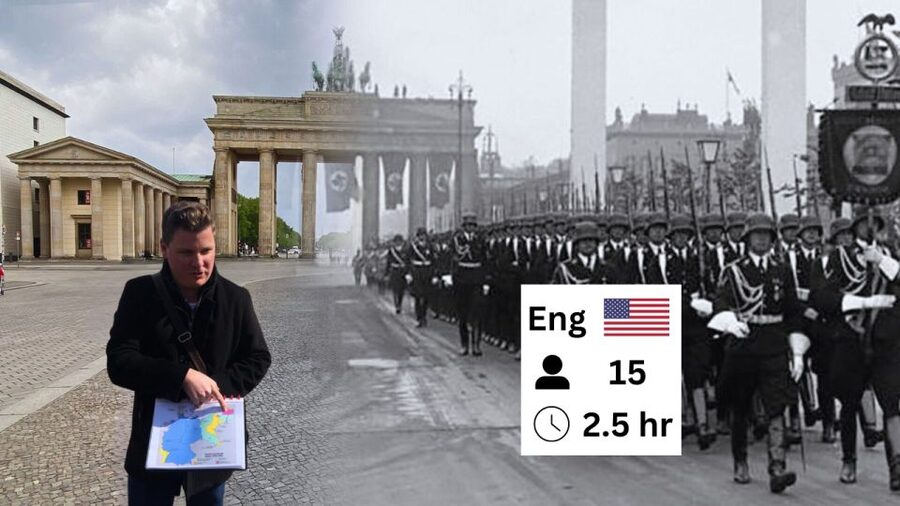
The tour includes Then and Now photographs and historic maps. This is not decoration. It is the fastest way to make Berlin feel like a timeline instead of a blur of buildings.
When you stand at a site and see what it looked like before, your brain stops trying to fill in gaps. You can compare architecture, placement, and surrounding streets. That makes the story clearer, especially if you are visiting Berlin only once.
You also get opportunities for reflection and Q&A with your guide. Past participants have repeatedly praised guides for staying engaged and making time for questions, including people who arrived with some WWII knowledge already.
Guides like Hannah, Scott, and Matthew have been singled out for being friendly, interactive, and able to answer questions in detail. That is huge on a subject where small misunderstandings can snowball.
Practicalities: Walking Time, Weather, and What to Bring
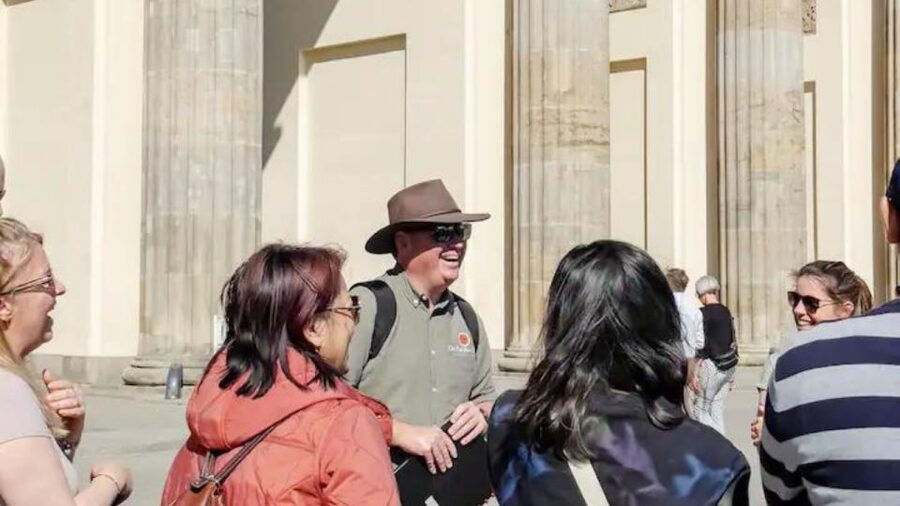
This is a 150 minute walking tour. It is outdoors and consists of a considerable amount of walking, so comfortable shoes are nonnegotiable.
Bring a water bottle. The tour does not include food or drinks, and there are no hotel pickup or drop off plans listed. Plan to handle your own pacing between stops.
Weather is also real in Berlin. One review note that comes up in similar tours is that guides have helped when a downpour hit, including providing umbrellas. Still, I recommend you bring your own, because conditions can change fast and you cannot count on rescue.
The good news is that the tour is wheelchair accessible. It is set up so more people can join, not just those who can do long distances without breaks.
Value at About $47: What You Get for the Time
For about $47 per person, you are buying three things: expert interpretation, focused stops, and a tight time window.
First, you get an expert local guide with academic background in WWII history. Second, you get visits to key Nazi era sites and memorials, plus the guided visits where your guide explains what you are seeing instead of letting you guess. Third, the small group format tends to improve the Q&A experience, so you leave with fewer unanswered questions.
At this price, the value really comes from how the guide ties politics, ideology, and military events into one coherent narrative. If you only do self guided museum hopping, you might see the same sites. You will probably not get the same structure.
And because it is 150 minutes, it is a good add on day plan. You can fit it without sacrificing your whole afternoon, as long as you are ready for outdoor walking.
Who Should Book This Tour (and Who Might Want to Rethink)
This tour is ideal if you want Berlin WWII context that connects the dots. It suits first time visitors who feel like Berlin’s WWII story is big and complicated, and it also works if you already know the basics but want a cleaner timeline tied to real locations.
I especially like it for people who appreciate memorials and prefer accurate framing over quick sound bites. The memorial stops are short, but they are treated as serious spaces, not photo backgrounds.
One reason to rethink it: if you are not comfortable with heavy subject matter. This tour covers systematic targeting, terror, and the regime’s final collapse. It is handled with care, but it is still hard history.
If you are traveling with teens, it can work if they are willing to engage with serious topics and you are prepared for questions. Some participants have said even younger visitors enjoyed it, which suggests the guide can pitch the story in a way that stays understandable.
Should You Book This Hitler’s Berlin Walking Tour?
I think you should book this tour if you want a guided route that makes Berlin’s Nazi era story intelligible fast. The combination of Reichstag, Holocaust related memorials, Soviet memorial context, and Topography of Terror gives you the full arc, not a scattered highlights reel.
You should also book it if you like learning from a guide who can handle questions and keep the pace steady. The recurring praise for guides like Scott, Hannah, Matthew, and Ben points to a consistent experience, not a one off.
I would skip it only if you cannot handle long outdoor walking, or if you want purely upbeat sightseeing. This is not that kind of tour. It is a walk through power, repression, and the end of an era, explained clearly so you can make sense of what you are seeing.
FAQ
How long is the Berlin Hitler’s Berlin The Rise & Fall guided walking tour?
The tour lasts 150 minutes.
Is the tour mostly indoors or outdoors?
It is an outdoor walking tour. Indoor museum exhibitions are not included.
Where do I meet the guide?
Meet at the Tourist Office at Brandenburg Gate, and look for the Blue Umbrella.
What language is the tour in?
The live tour guide speaks English.
How much walking should I expect?
Expect a considerable amount of walking. Wear comfortable shoes and dress appropriately for the weather.
Is the tour wheelchair accessible?
Yes, the tour is listed as wheelchair accessible.
Pavements of Berlin
Wartime History Walks We Have Reviewed
Everything else we filed on Berlin
- East Berlin: City of Shadows Walking Tour
★ 5.0 · 11 reviews - Berlin: Die Stachelschweine – Frank Lüdecke – Träumt Weiter
★ 4.7 · 11 reviews - Potsdam Day Trip from Berlin with a Local: Private & Personalized
★ 4.0 · 11 reviews - An Introduction to Berlin Walking Tour
★ 5.0 · 11 reviews - DJ for a Day: Learn to Mix Like a Pro in Berlin
★ 5.0 · 11 reviews - 2-H Segway Sightseeing Tour Berlin
★ 4.5 · 11 reviews
Third Reich and Wartime History Tours, side by side.
 ★ 4.9Berlin: Third Reich and Cold War 2 Hour Walking TourFrom $236,830 reviews
 ★ 4.6Munich: Third Reich & WWII Walking TourFrom $316,181 reviews
 ★ 5.0Berlin’s Best: 2 Hour Walking Tour Third Reich and the Cold WarFrom $245,486 reviews
 ★ 4.5Third Reich Walking Tour MunichFrom $454,291 reviews
 ★ 5.0Third Reich Berlin: Hitler and WWII Walking TourFrom $243,301 reviews
 ★ 4.7Nuremberg: Walking Tour of Former Nazi Party Rally GroundsFrom $151,665 reviews
 ★ 4.9Berlin: Third Reich, Hitler, and WWII Walking TourFrom $201,133 reviews
 ★ 4.8Nuremberg: Historischer Kunstbunker WWII Art Bunker TourFrom $14921 reviews
Other lists this tour is on