
REVIEW · BERLIN WALL
Berlin: The Wall and Cold War – a Private Walking Tour
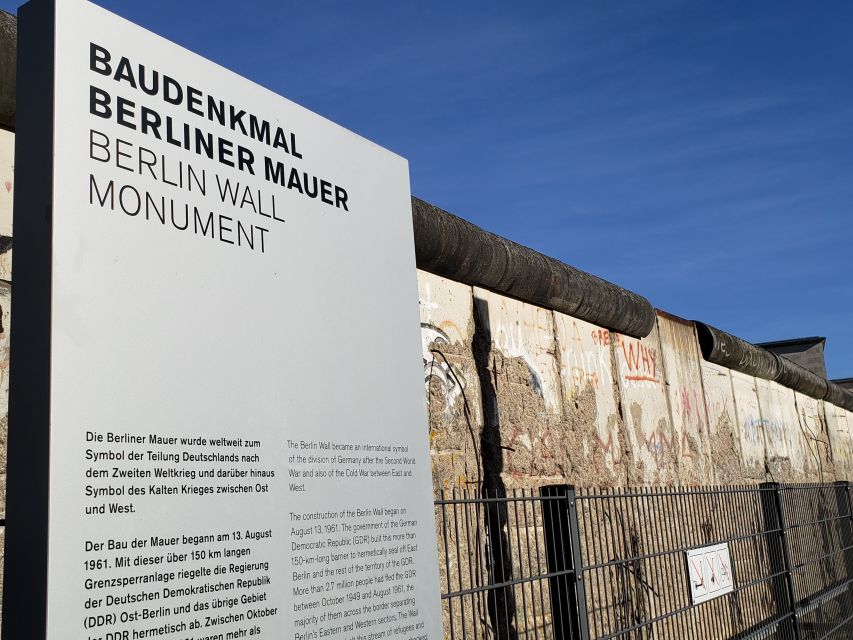
Borders still shape Berlin today. This private walking tour makes the Cold War feel real by tracing the border right through the city, starting at Bernauer Straße and ending at Checkpoint Charlie. I love how you see the wall story in place, not just in photos, and I also like the guided, story-driven pace that ties daily life to specific border sites. One thing to plan for: the death strip viewing platform is only possible if it is open.
I also like that it is built as a focused 2-hour walk through key locations of division and escape. The tour format stays personal, since it is a private group, and the guide shares lived-feeling accounts of what Berliners faced, including day-to-day realities in a divided city. A bonus from past guide styles is that storytelling can shift smoothly between languages for different needs, like English and German.
You will finish with two major former border stations and a clearer sense of how borders worked in real life. The walk is wheelchair accessible, and it stays practical, with you knowing where to start and where it ends. Along the way, you will also get to see what remains of the wall and learn where people tried to get away.
In This Review
- Key things you will notice on this Berlin Wall walk
- Cold War Berlin in 2 Hours, and Why This Walk Works
- Starting at Bernauer Straße: the open-air border museum vibe
- Following the former borderline: what daily life felt like
- Tränenpalast (Palace of Tears): a border crossing you can feel
- The death strip viewing platform: what you get, when it is open
- Checkpoint Charlie finish: the border station everyone recognizes
- Palace of Tears plus the wall remains: how the stops connect
- Price and value: what $22 buys you in Berlin
- Who this private tour fits best
- Should you book this Berlin Wall and Cold War private walking tour?
- FAQ
- Where do I meet the guide?
- What is the duration of the tour?
- Is this a private tour?
- What languages are available?
- What major stops are included?
- Is the death strip part of the tour?
- Where does the tour start and where does it end?
- What is included in the price?
- Is the tour wheelchair accessible?
- Can I cancel for a refund?
- Can I reserve and pay later?
Key things you will notice on this Berlin Wall walk
- Bernauer Straße start point at an open-air documentation museum, setting the tone immediately
- Real border crossing landmarks including the Tränenpalast (Palace of Tears)
- Escape attempts and daily life context, not just wall facts
- What’s left of the Berlin Wall as you follow the former borderline through central Berlin
- Death strip viewing platform, only if it is open
- Checkpoint Charlie finish, so you end at one of the most recognizable border stations
Other walks along the Wall we have reviewed
- Skip-the-Line: Berlin Wall Museum at Checkpoint Charlie★ 4.1 · 2,041 reviews
- Berlin: East Side Gallery Spree Cruise in a Solar Catamaran★ 4.0 · 1,039 reviews
- Cold War, Berlin Wall, Spies and the East Side Gallery★ 5.0 · 1,024 reviews
- THE WALL: asisi Panorama Berlin Ticket★ 4.5 · 580 reviews
Cold War Berlin in 2 Hours, and Why This Walk Works
A Berlin Wall tour can go two ways. It can be a checklist of sights, or it can help you understand how a divided city functioned. This one leans into the second option, because it is built around the actual border line and the places where people met its rules up close.
In just 2 hours, you get multiple layers at once. You learn about the building of the Berlin Wall and its fall, but you also see what border life looked like day to day, including places connected to escape. For me, that combination is what turns history into something you can picture with your own eyes.
The private format matters here too. With a guide who is working specifically with your group, you can ask the practical questions that come up naturally as you walk: what happened here, why was this spot so important, and how did people actually respond to the system they lived under? You get enough time to absorb it without the day turning into a long slog.
Starting at Bernauer Straße: the open-air border museum vibe
The tour begins at U Bernauer Straße, upstairs at the exit marked Bernauer Straße, with your guide holding a sign with your name. That matters because the start is not random. It is designed to put you right where Berliners would have recognized the border line as part of daily life.
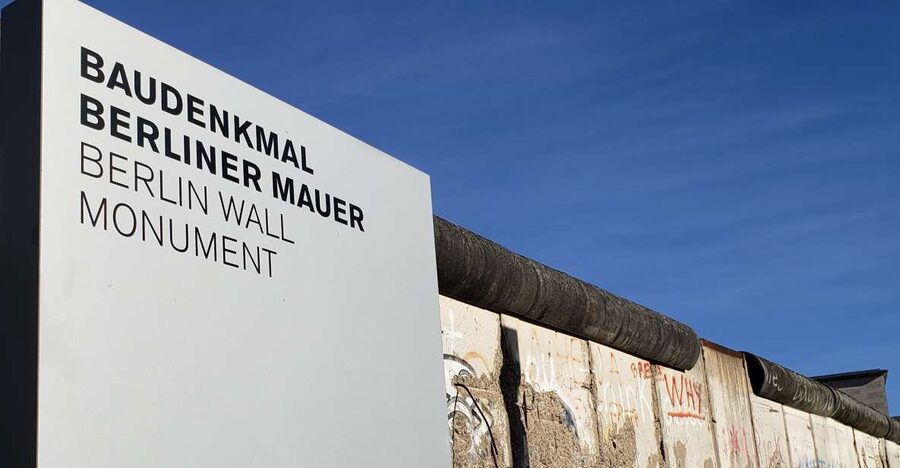
Bernauer Straße is now home to an open-air documentation museum. So even before you move, you are standing in an area that is meant to teach, with the street itself acting like an exhibit. I like starts like this because they help you get oriented fast. You are not trying to guess where the border was while listening to history. You are already in the right neighborhood of the story.
From here, the tour follows the former borderline through the center of Berlin. That route makes a huge difference in how the Cold War “lands” in your brain. The border is not treated as an abstract idea. It becomes a path you walk, a line you cross mentally, and a set of locations with names that keep coming back for a reason.
Following the former borderline: what daily life felt like
As you walk, the guide connects the big events to the small realities of living in a divided city. You will hear about the day-to-day experience of Berliners during the Cold War, and you will also learn about places of escape. That blend is what I look for on this topic, because “construction and fall” alone can stay too general.
This part of the tour is also where the guide’s storytelling style can make or break your experience. In the feedback I’ve seen from past guides, Stephanie and Stefan are both singled out for being strong, authentic story tellers with inside knowledge. When a guide can explain the context without turning it into a lecture, the walking pace feels better and the details start to click.
You should also pay attention to how the tour frames the border as a daily obstacle. Even without adding technical details, the way the guide points out specific locations helps you understand the emotional pressure of constant monitoring and restricted movement. You start to grasp why escape attempts were not random stunts, but desperate responses to a system built to prevent them.
A practical consideration: you will be moving through multiple city areas on foot. Wear comfortable shoes, and dress in layers if weather shifts, because Berlin can make you sweat or shiver quickly depending on the time of day.
Tränenpalast (Palace of Tears): a border crossing you can feel
One of the most meaningful stops is the Tränenpalast, also called the Palace of Tears. This is not presented as a generic museum stop. It is treated as an original border crossing station, and the tour includes a guided visit there.
What makes Tränenpalast special on this kind of walk is the sheer focus of the place. You are going into a location that was designed for separations and reunions under strict control, and the guide uses that to explain what border crossings meant in real life. Even if you know the Berlin Wall story broadly, you will likely pick up a more human sense of what it meant to pass through a system like this.
The guided format here matters. Without a guide, Tränenpalast can feel like a series of rooms and reminders. With a good explanation, it becomes a window into the emotions and logistics people had to live with. That is the value of this tour’s approach: it connects physical spaces to daily life and decision-making.
If you prefer history that is grounded in lived experience, this is the stop to watch closely. If you are more into architecture or urban planning, you will still get something here, because the point is how the setting shaped movement, choices, and separation.
More of the divided city, written up in full


The death strip viewing platform: what you get, when it is open
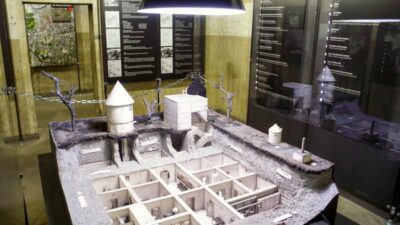
Another highlight is the former death strip, seen from a viewing platform if it is open. The tour frames this area as part of the border design meant to prevent escape attempts. That is a heavy idea, and standing where you can understand the concept visually can change how you interpret the entire wall system.
Because the viewing platform depends on being open, you should treat this as a conditional bonus. If it is accessible during your time slot, you will get a clearer look at why attempts were so dangerous and so constrained. If it is not open, the tour still covers the wall and border story, but you might miss that specific “view it from here” moment.
My advice is simple: keep an open mind about what you can see on the day. Berlin’s memorial sites and platforms can have hours, maintenance, or temporary access changes. If the platform is open, take in the view slowly and listen carefully to the guide’s explanation. The value is in how the location supports the story, not in rushing past it.
Checkpoint Charlie finish: the border station everyone recognizes
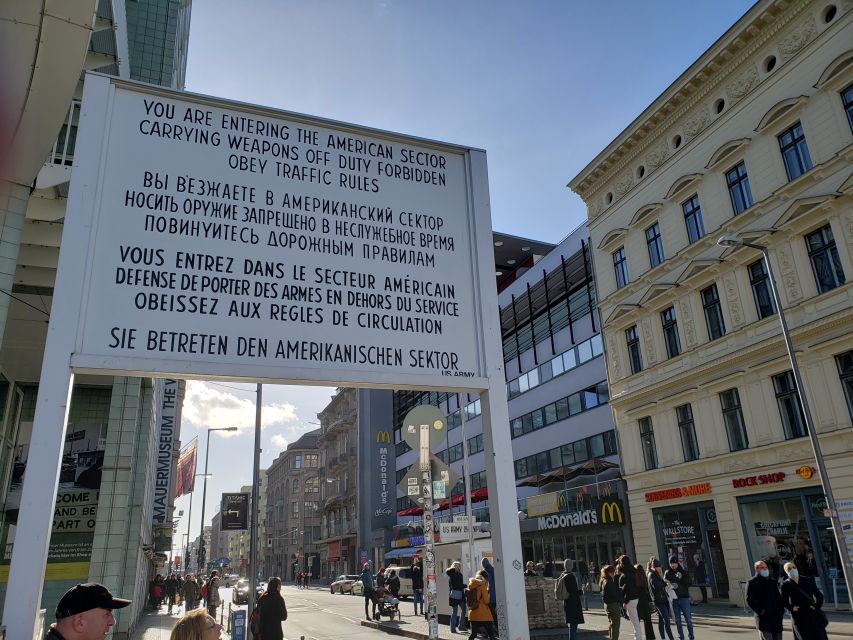
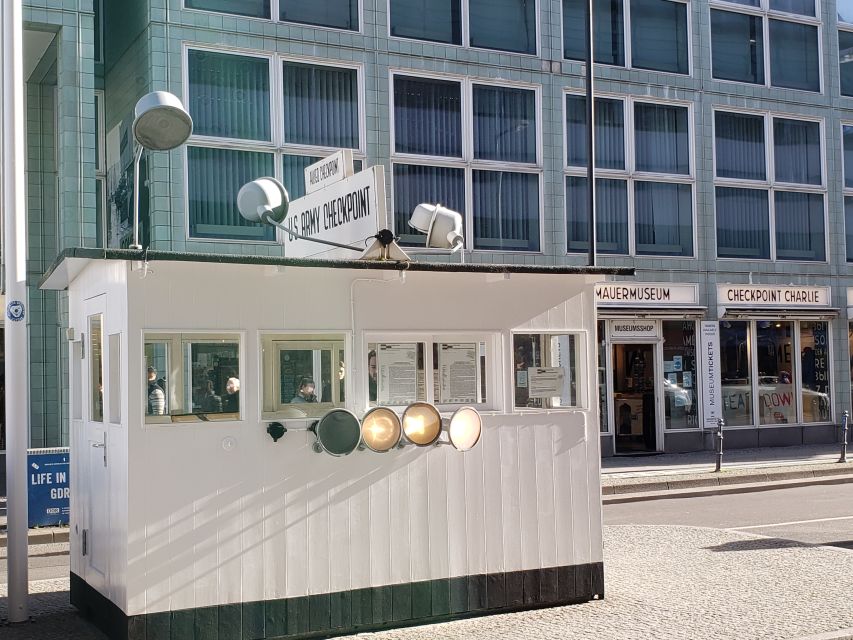
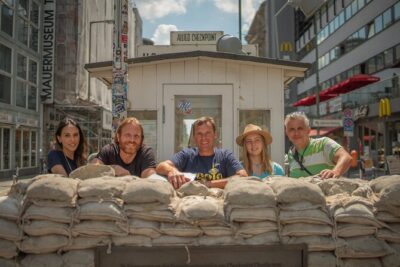
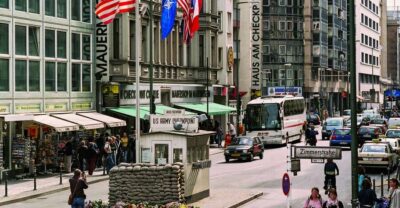
The walk concludes at Checkpoint Charlie, another former border crossing station. This ending is smart, because it gives you a recognizable reference point to anchor everything you learned earlier. By the time you reach it, you have already walked the border line conceptually through the city, so Checkpoint Charlie lands as a culmination, not a random photo spot.
Checkpoint Charlie can be visually iconic, but the tour keeps it grounded. You are not just seeing the idea of a famous checkpoint. You are connecting it to the wider story you heard about earlier, including the construction and fall of the Berlin Wall and how daily border life worked.
Ending at Checkpoint Charlie is also practical for your momentum. After 2 hours of focused history, you have arrived at a well-known location where you can easily continue exploring on your own. If you want to turn your tour time into a longer Berlin day, you can do it naturally from here.
Palace of Tears plus the wall remains: how the stops connect
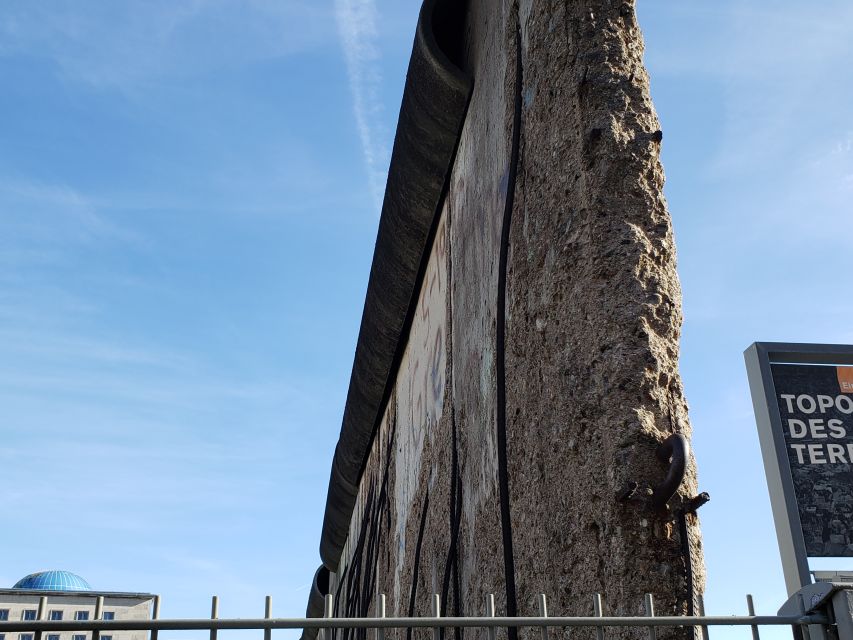
What makes this tour feel coherent is the way each stop reinforces the others. Bernauer Straße sets up the border line. Tränenpalast gives you an original crossing station with guided context. The wall remains show you what is left behind after the fall. And the death strip concept clarifies why the border was engineered to block escape attempts. Then Checkpoint Charlie wraps the story with another major station.
I like how the tour uses a “spine” of locations rather than jumping randomly. If you care about understanding rather than collecting, this structure helps your brain build a timeline and a geography at the same time, even without overloading you.
You also get a clear sense of why places of escape are part of the story, not a side note. Escape attempts are how history shows you human pressure, human ingenuity, and human risk. When you know that the border system was designed to prevent them, you read the spaces differently.
Price and value: what $22 buys you in Berlin
At $22 per person for a 2-hour private walking tour, the value comes from the guide and the concentration of key sites in one outing. You are paying for context, movement between locations, and a local storyteller who can connect the Cold War to the specific places you are walking through.
This is not an all-day ticket that you have to stretch thin. It is a tight time window, designed to deliver the main landmarks and the lived-life interpretation that makes the Wall story click. If you are short on time in Berlin but still want the core sites linked together logically, this price makes sense.
You should compare the decision this way: if you try to do these stops on your own, you might see a lot of wall-related spots, but you can end up with gaps. Here, the guide fills in the “so what” between locations, including daily life and escape attempts, plus how the border line shaped movement.
Who this private tour fits best
This tour is a great match if you:
- want Cold War Berlin tied to real locations, not just general facts
- prefer a guided, story-driven approach
- like walking city tours that focus on a clear theme
- want an experience built around major border stations, including Tränenpalast and Checkpoint Charlie
It is also suitable if you appreciate practical comfort. The tour is wheelchair accessible, and it is a private group, so you are not squeezed into a large crowd dynamic.
If you are traveling with kids, the guide experience can be flexible. Past feedback mentions a guide switching between English and German in ways that worked well with a mixed group, so it can be easier for families to follow along without everyone tuning out.
Should you book this Berlin Wall and Cold War private walking tour?
Book it if you want a guided walk that links the Wall, the border stations, and the human experience in between. The strongest reason is that the tour does not stop at construction and fall. It puts daily life and escape attempts into the same frame as the physical border.
Skip it, or at least temper expectations, if you only want iconic photo stops with no interest in the heavier context. Also keep in mind the death strip viewing platform is only possible if it is open, so part of your “see this view” plan depends on the day.
If you’re the type of traveler who likes to leave a site with clearer thinking, not just more photos, this is a strong choice.
FAQ
Where do I meet the guide?
Meet your guide at the underground station Bernauer Straße, upstairs at the exit marked Bernauer Straße. The guide will have a sign with your name written on it.
What is the duration of the tour?
The tour lasts 2 hours.
Is this a private tour?
Yes. It is a private walking tour with a private group.
What languages are available?
The live guide offers German and English.
What major stops are included?
You will visit key Cold War border locations, including Tränenpalast (Palace of Tears) and Checkpoint Charlie.
Is the death strip part of the tour?
You may view the former death strip from a viewing platform if it is open.
Where does the tour start and where does it end?
It starts at U Bernauer Straße and finishes at Checkpoint Charlie.
What is included in the price?
A local guide is included.
Is the tour wheelchair accessible?
Yes, it is wheelchair accessible.
Can I cancel for a refund?
You can cancel up to 24 hours in advance for a full refund.
Can I reserve and pay later?
Yes, you can reserve now and pay later.
Pavements of Berlin
The Divided Years, Reviewed
Following the Wall a Little Further
Everything else we filed on Berlin
- Private Photo Tour in Kreuzberg
★ 5.0 · 3 reviews - Kreuzberg Private Walking Tour: Immigrants, Artists & Hipsters
★ 5.0 · 3 reviews - Berlin’s Jewish Heritage: Private Tour of the Vibrant Jewish District
★ 5.0 · 3 reviews - Individual city tour Berlin for max. 8 persons
★ 5.0 · 3 reviews - Berlin & The Third Reich Private Guided Tour
★ 5.0 · 3 reviews - Private Analogue Photography Experience in Berlin
★ 5.0 · 3 reviews
Berlin Wall and Divided City Tours, side by side.
 ★ 4.8Nuremberg: Tunnels and Secret Passages in the City Wall TourFrom $142,334 reviews
 ★ 4.1Skip-the-Line: Berlin Wall Museum at Checkpoint CharlieFrom $212,041 reviews
 ★ 4.0Berlin: East Side Gallery Spree Cruise in a Solar CatamaranFrom $271,039 reviews
 ★ 5.0Cold War, Berlin Wall, Spies and the East Side GalleryFrom $181,024 reviews
 ★ 4.5THE WALL: asisi Panorama Berlin TicketFrom $16580 reviews
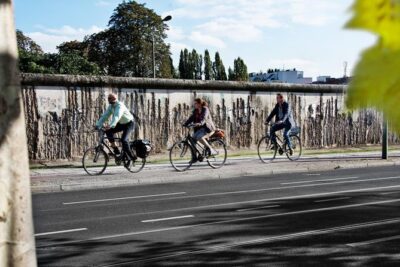 ★ 4.7Berlin: Guided Bike Tour of the Berlin Wall and Third ReichFrom $40499 reviews
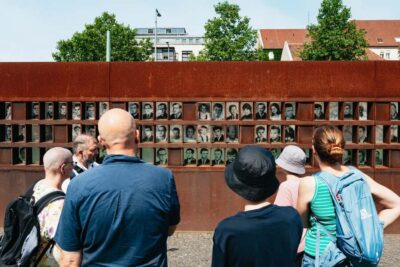 ★ 4.8Berlin: Cold War Walking Tour on Berlin Wall RouteFrom $26437 reviews
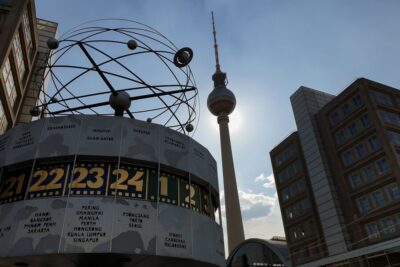 ★ 4.9East Berlin and the Wall: Walking TourFrom $351407 reviews
Other lists this tour is on