
REVIEW · BERLIN WALL
Berlin Wall History Small Group Cycling Tour
Cold War streets can feel personal fast. This Berlin Wall history small-group cycling tour follows the Mauerweg route where East and West Berlin collided, mixing real sights with human stories that make the past click. I especially liked how you cross at Bornholmer Straße where people first broke through the border, and then keep moving through key areas like Bernauer Straße and Friedrichstraße without the tour turning into a museum lecture.
The ride is also designed for flow, not rushing, so you get a practical feel for distances and neighborhoods by bike. The only downside to know up front is that the guide language is German, so if you do not speak it, you may need to rely on your own questions or go with the pace rather than detailed explanations.
In This Review
- Key things that make this tour worth your time
- Berlin Wall on a bike, not a bus
- Meeting point and getting there near Bornholmer Straße
- What you ride and how the tour flows through Berlin
- Stop 1: Square of the 9th November 1989 and Bornholmer Straße
- Stop 2: Crossing at the former border-control and cycling through Mauerpark
- Stop 3: Bernauer Straße wall memorials and the Chausseestraße ghost-station
- Stop 4: Invaliden Graveyard and Invalidenstraße border-crossing
- Stop 5: Government Bank, Government district feel, and the Parliament of Trees
- Stop 6: Brandenburg Gate, Potsdamer Platz, Checkpoint Charlie, and Friedrichstraße
- How the guide experience really affects your learning
- Price and value: is $36 worth it?
- Practical tips before you go
- Who should book this Wall history cycling tour
- Should you book it?
Key things that make this tour worth your time
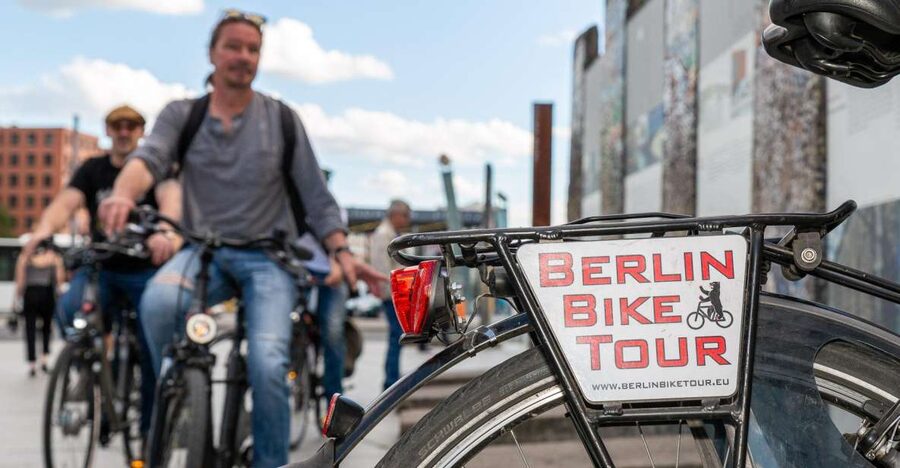
- Small group (3 to 8) keeps the ride calm, with more chances to ask questions.
- Bornholmer Straße border crossing plus the original watchtower and death-strip area helps you understand how the system worked.
- Bernauer Straße wall memorials and the ghost-station and border-crossing at Chausseestraße give you the emotional backbone of the route.
- Invaliden Graveyard and the former border-crossing at Invalidenstraße show how the wall shaped even cemeteries and daily life.
- Government Bank to the Parliament of Trees gives a thoughtful contrast as Berlin re-makes itself.
- Brandenburg Gate, Potsdamer Platz, Checkpoint Charlie, Tränenpalast pack the famous stops into one coherent story.
Other walks along the Wall we have reviewed
- Skip-the-Line: Berlin Wall Museum at Checkpoint Charlie★ 4.1 · 2,041 reviews
- Berlin: East Side Gallery Spree Cruise in a Solar Catamaran★ 4.0 · 1,039 reviews
- Cold War, Berlin Wall, Spies and the East Side Gallery★ 5.0 · 1,024 reviews
- THE WALL: asisi Panorama Berlin Ticket★ 4.5 · 580 reviews
Berlin Wall on a bike, not a bus
There are two ways to see Berlin’s Cold War scars. One is to stand and look. The other is to move through the same city spaces where people once tried to escape, watch, and control.
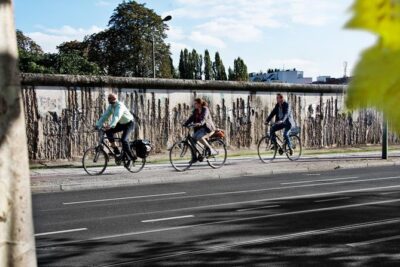
This tour is built around cycling, so it feels like history with momentum. You follow the traces of the Berlin Wall along the Mauerweg, where very little physical wall remains, but the route still makes sense. That is the big win. You start at the place where the wall story ends, the Square of the 9th November 1989, tied to the first East German citizens who crossed the border. Then you ride outward through the key border areas that shaped what happened next.
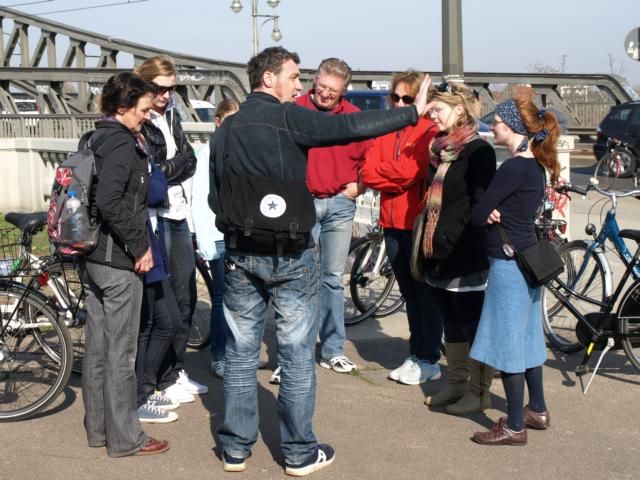
Your group size matters here. With a minimum of 3 and a maximum of 8, you are not trapped in a big moving crowd. The better guides can keep the pace friendly and still explain the serious parts clearly. The best part of the ride, in my view, is that it stays informative and relaxed at the same time. One review put it simply, the tour taught more than years of school, and I can see why. When you connect the stories to what you see on the street, it sticks.
Meeting point and getting there near Bornholmer Straße
You meet your guide at 75 Bornholmer Straße, 10439 Berlin. It is convenient if you use public transport, because the area is well connected and the walk to the meeting spot is short.
Look for these options:
- About 1 minute on foot from tram-stop Björnsonstraße (Lines M1, M13, M50)
- About 2 minutes on foot from S-Bahn station Bornholmer Straße (Lines S1, S2, S8, S25, S85)
- Around 10 minutes on foot from S-Bahn or U-Bahn station Schönhauser Allee (Lines S8, S41, S42, S85, U2)
The tour ends back at the meeting point, so you are not left navigating Berlin afterward with tired legs.
What you ride and how the tour flows through Berlin
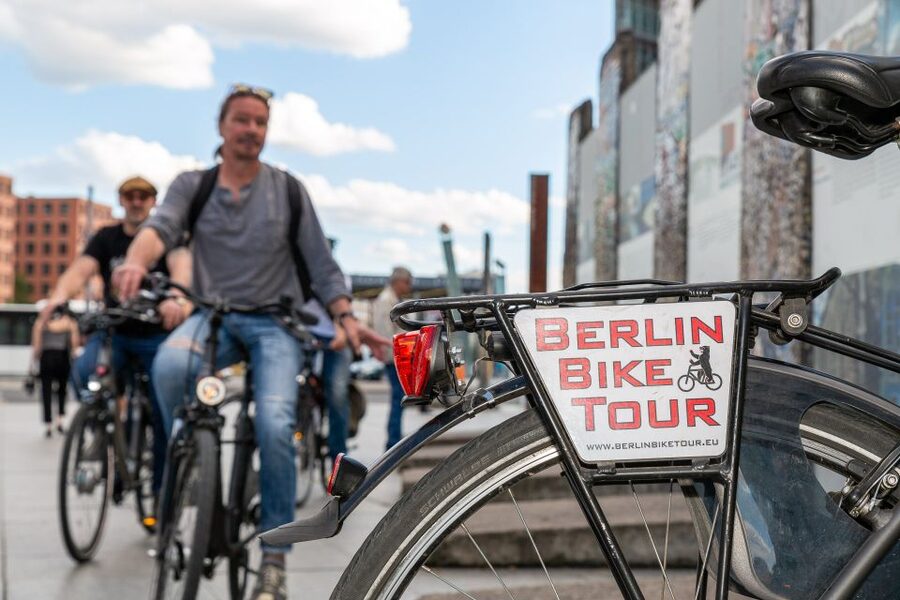
This is a 4-hour small-group cycling tour, and you should expect it to happen in all weather. The operator includes a rain poncho if necessary, so you do not have to guess whether you packed the right thing. In other words, plan for a working day outside, not a short stroll.
The route is structured like a story. You move from the border breakthrough area at Bornholmer Straße, through wall memorial zones, then toward the more famous landmarks like the Brandenburg Gate and Checkpoint Charlie. It is not random. Each stop is a piece of the border puzzle.
You also get important context about why so much of the wall is gone today. Even without wall segments standing, the route still shows you where the border-control stations and the surrounding barriers would have been. That is why cyclists can learn more quickly than people who only see a few remaining sections.
One more practical note: leave large luggage at your hotel. The tour is not set up for luggage or large bags.
Stop 1: Square of the 9th November 1989 and Bornholmer Straße
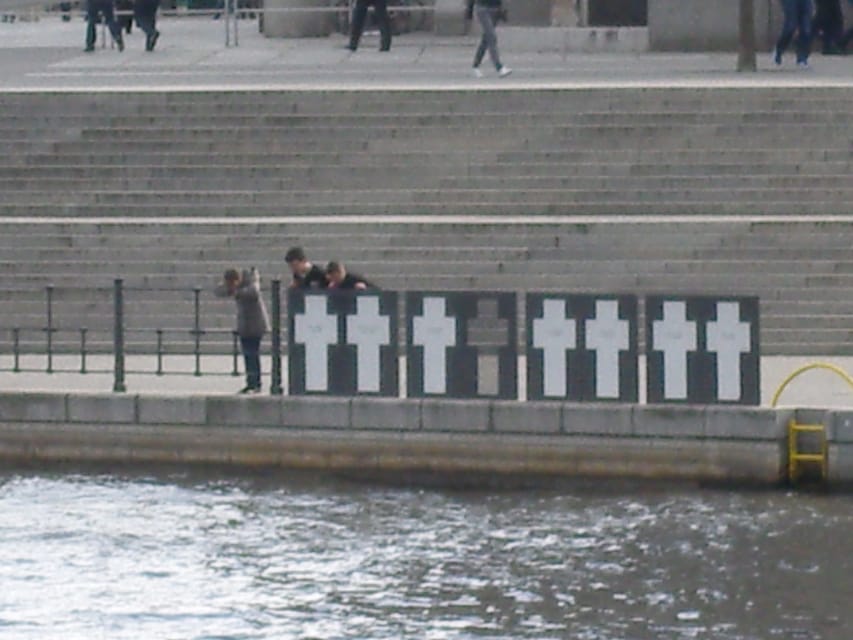
You begin your ride through history in the place where the border story turns. The Square of the 9th November 1989 is linked to the moment when the first East German citizens crossed.
From there, the tour focuses on Bornholmer Straße, including border-control history. The big detail I like is that you also hear why the street is lined with cherry trees, tied to how the area developed after the border era. That little fact makes the present-day city feel connected to what happened there.
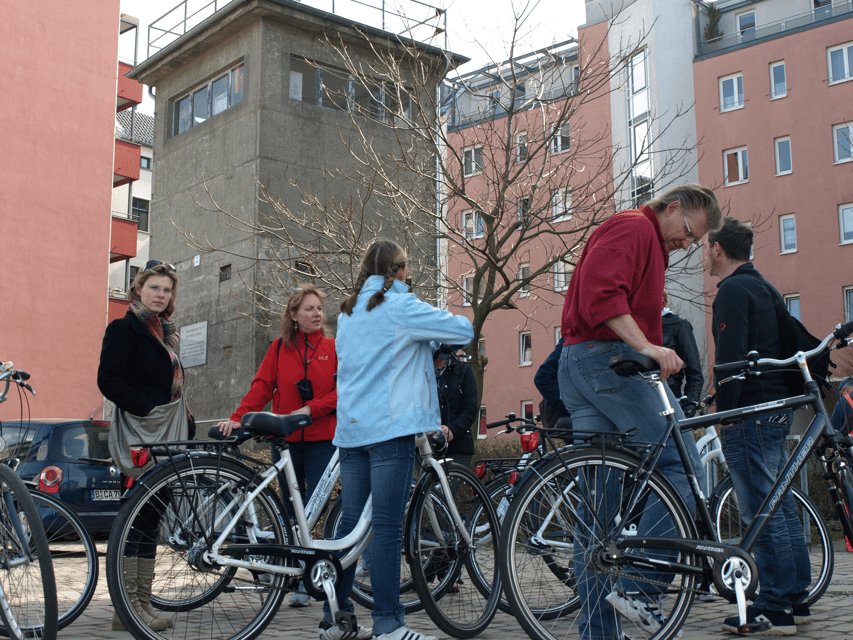
You will also see the original watchtower and get a sense of the death-strip concept. Even if you never see a full intact segment of wall, learning how that zone operated helps you interpret everything else you will see later in the tour. It gives you a mental map for why certain buildings, fences, and sightlines mattered.
Finally, the tour mentions following pictures of rabbits on the ground. It sounds quirky, but it is actually helpful. It marks routes and keeps the ride engaging as you pass through areas that otherwise could feel like normal city streets.
More history walks in Berlin
Stop 2: Crossing at the former border-control and cycling through Mauerpark
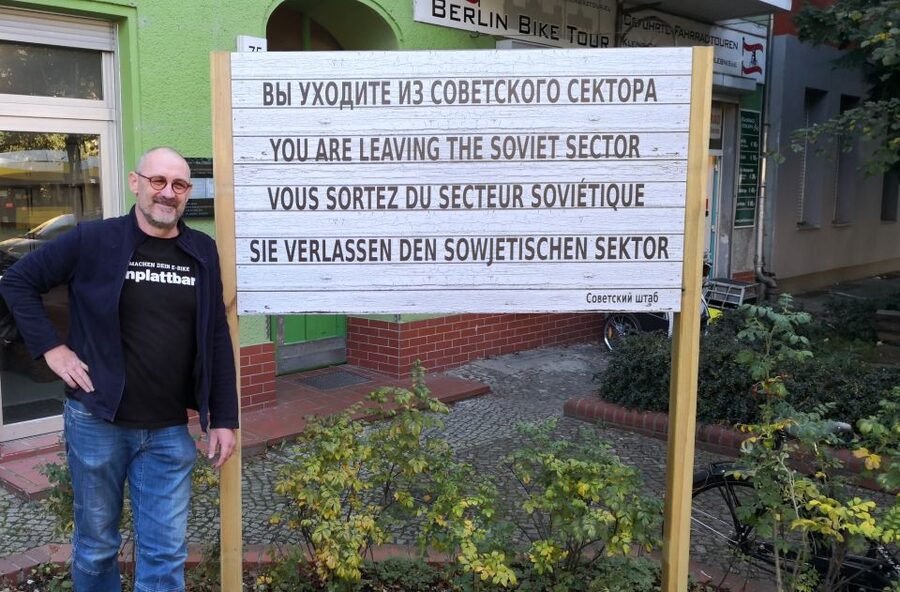
After you learn what happened at Bornholmer Straße, you do the experience part: you cross at the former border-control and then ride through Mauerpark.
This is one of those moments where bike travel changes your perception. Walking a site can feel like you are just reading a plaque. Cycling through the wider context helps you understand scale, like how far you would have been from safety, how movement would have been controlled, and why certain routes created chokepoints.
Mauerpark also serves as a gentle bridge between the heavy parts of the story and the next wall memorial zones. You get breathing room, but you still ride through the Berlin Wall corridor.
Stop 3: Bernauer Straße wall memorials and the Chausseestraße ghost-station
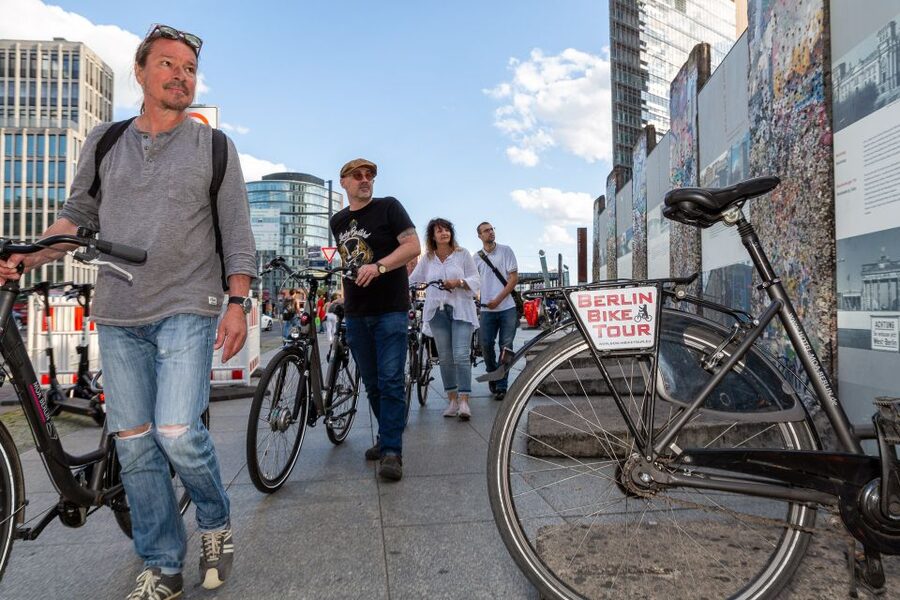
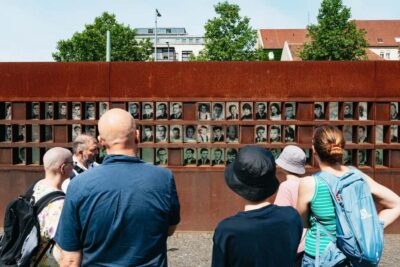
Next up is Bernauer Straße, one of the most powerful wall memorial areas. Even if you only know the wall as a famous photo subject, this stretch can reframe it. The memorial approach helps you understand the wall not as a single object, but as a system of separation that affected everyday life and family plans.
From Bernauer Straße you move toward Chausseestraße, where the tour includes a visit related to the ghost-station and border-crossing there. This stop is a turning point emotionally because ghost-station sites are not about abstract politics. They connect to specific surveillance realities and the way people planned around risk.
The tour also signals you will hear tragic and fateful stories. That is part of what makes the ride more than a sightseeing loop. You are not just collecting facts. You are learning the human cost tied to each section of the route.
Stop 4: Invaliden Graveyard and Invalidenstraße border-crossing
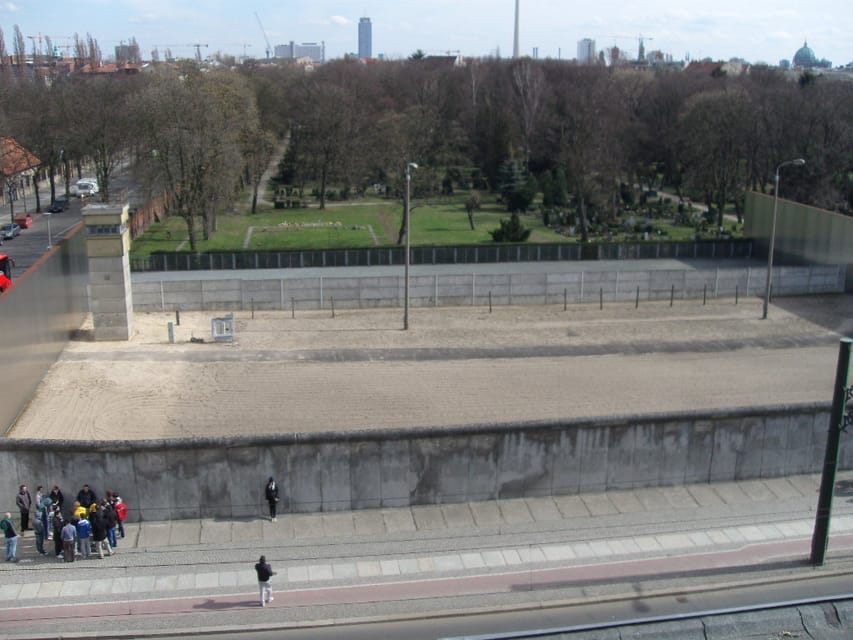
Then you enter another area where the wall’s influence goes beyond fences and guard posts. The tour includes the Invaliden Graveyard and the former border-crossing at Invalidenstraße.
I like this stop because it breaks the usual pattern. Many wall tours focus only on checkpoints and dramatic escapes. Here, you see how border control affected other parts of life, including spaces that should have been about remembrance and quiet.
Invaliden Graveyard gives you a different emotional tone, and it helps you connect Berlin’s present to the reality that people lived, died, and were buried in a city split by policy.
And the former border-crossing at Invalidenstraße gives the practical history. You learn not only what happened in headlines, but where movement intersected with control lines.
Stop 5: Government Bank, Government district feel, and the Parliament of Trees
As you ride, the tour also tracks areas tied to governance. You cycle along the Government Bank to reach the “Parliament of Trees.”
Even without the wall visible in big chunks, this contrast matters. The government district vibe reminds you that borders were not just accidental. Decisions were made in institutions. And after reunification, Berlin’s choices about space and public planting turned that same territory into something different.
The Parliament of Trees stop gives you a pause, a chance to look around and re-sync to modern Berlin after the darker border zones. It also helps you understand how cities heal, not by erasing, but by repurposing.
Stop 6: Brandenburg Gate, Potsdamer Platz, Checkpoint Charlie, and Friedrichstraße
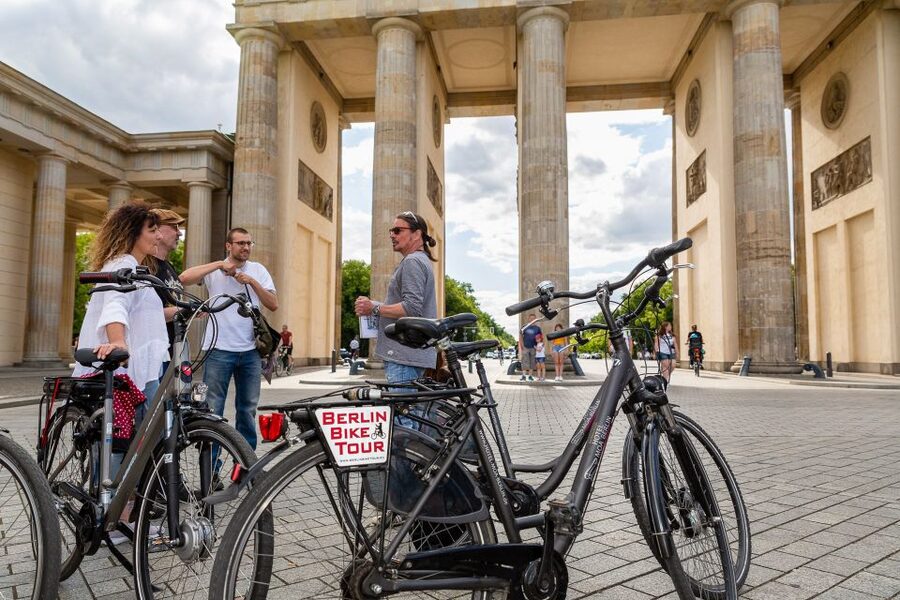
This is where the tour becomes both famous and still meaningful. You will ride along to the Brandenburg Gate, pass through Potsdamer Platz, and reach the Checkpoint Charlie area. For many visitors, those names are already on a map. The value here is that the tour keeps them connected to the wall corridor story instead of letting them float as tourist icons.
Then you head to Friedrichstraße to see the Tränenpalast, often referred to as the Palace of Tears. This is one of those places where the history is emotional by design. The stories you heard earlier about escape attempts, border rules, and consequences get focused into a specific theme: family separation and the heartbreak of crossings gone wrong.
The tour also mentions you pass the Friedrichstadt Palace, the Museum Island, the New Synagogue, and the Old Berlin Post Office. Even if the ride is the focus, these stops help you round out Berlin’s identity. It becomes both Cold War Berlin and classic city Berlin in the same afternoon.
How the guide experience really affects your learning
This tour’s reviews put a lot of weight on the guide quality, and you can feel the difference when a guide knows how to pace storytelling.
The tour is guided in German, but the tone described in reviews is consistent: well conducted, informative, and relaxed. One review specifically praised personal insights from the guide and another highlighted how the biking route covered quieter streets even near the center. That matters. If a route puts you on only major roads, it gets loud and hard to listen. If it strings together smoother neighborhood segments, you can actually take in what is happening.
Two names were mentioned in the review set: Marcus and Kathrin. The pattern is clear. Good guides here do two things at once:
- They explain the wall system clearly.
- They translate it into human, place-based storytelling you can picture.
Price and value: is $36 worth it?
At $36 per person for a 4-hour small-group cycling tour that includes the bicycle, fees, a city guide, and even a rain poncho if needed, it is strong value.
Here is why. The tour is not just moving you between big sights. It is teaching you the logic of the border route, which is exactly the kind of topic that is hard to piece together on your own without wasting time and energy. You also get the bike included, and in Berlin that can easily be a separate cost.
If your goal is to understand the Berlin Wall beyond the obvious highlights, this price point makes sense. If your goal is only to snap photos at famous spots, you might find a cheaper option. But the best value comes when you want context and a guided story tied to what you are riding through.
Practical tips before you go
You will have a better time if you prep like a cyclist, not like a museum visitor:
- Bring your passport or ID card
- Pack sunglasses and a sun hat for daytime rides
- Bring a camera
- Avoid luggage or large bags
- Expect all weather and be ready with the provided poncho
Also, since the guide language is German, consider jotting down a few basic questions in advance. Things like where the border-control line would have been at certain points, or how certain memorial areas explain the wall’s purpose. Even basic questions help you get more out of a German-language tour.
Who should book this Wall history cycling tour
This tour fits best if you:
- Want Berlin’s Cold War story in a route-based way, not random stops
- Like learning while moving, with a clear half-day arc
- Prefer small group experiences over large coach tours
- Are comfortable biking for a few hours and staying outside in variable weather
It may be less ideal if you need a strictly English-speaking guide or you do not enjoy being out on a bike. But if you can handle a German-led narration, the structure and pacing should work well.
Should you book it?
If you want a serious topic delivered in a way that feels real, I think this is a good booking. The route connects Bornholmer Straße, major memorial areas like Bernauer Straße, emotional sites like Tränenpalast, and famous landmarks like Checkpoint Charlie into one coherent story. The small-group size keeps it relaxed, and the focus on the wall system makes it more than a list of stops.
Book it if you are curious about how the wall functioned in everyday space, not only how it looked in photos. Skip it if you want an all-English tour or if you prefer to do Berlin at walking pace with lots of independent wandering.
The Berlin Bike Lanes
The Longer History of Berlin
Following the Wall a Little Further
Everything else we filed on Berlin
- East Berlin: City of Shadows Walking Tour
★ 5.0 · 11 reviews - Berlin: Die Stachelschweine – Frank Lüdecke – Träumt Weiter
★ 4.7 · 11 reviews - Potsdam Day Trip from Berlin with a Local: Private & Personalized
★ 4.0 · 11 reviews - An Introduction to Berlin Walking Tour
★ 5.0 · 11 reviews - DJ for a Day: Learn to Mix Like a Pro in Berlin
★ 5.0 · 11 reviews - 2-H Segway Sightseeing Tour Berlin
★ 4.5 · 11 reviews
Berlin Wall and Divided City Tours, side by side.
 ★ 4.8Nuremberg: Tunnels and Secret Passages in the City Wall TourFrom $142,334 reviews
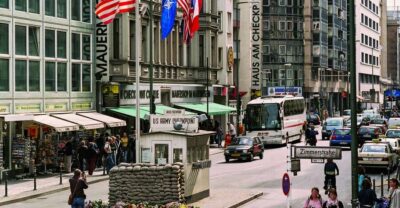 ★ 4.1Skip-the-Line: Berlin Wall Museum at Checkpoint CharlieFrom $212,041 reviews
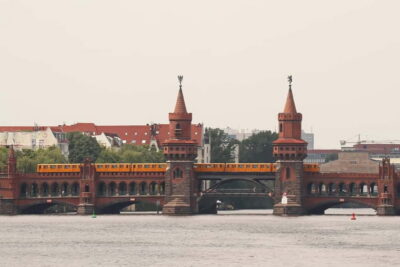 ★ 4.0Berlin: East Side Gallery Spree Cruise in a Solar CatamaranFrom $271,039 reviews
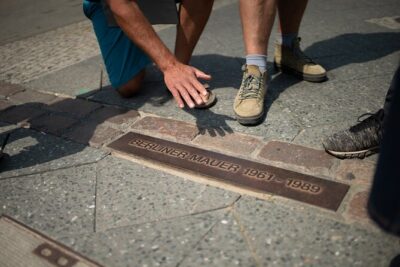 ★ 5.0Cold War, Berlin Wall, Spies and the East Side GalleryFrom $181,024 reviews
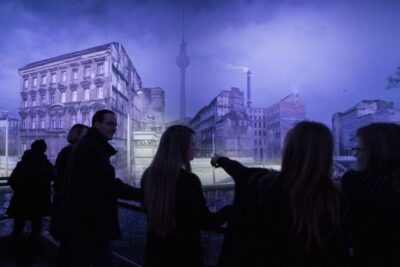 ★ 4.5THE WALL: asisi Panorama Berlin TicketFrom $16580 reviews
 ★ 4.7Berlin: Guided Bike Tour of the Berlin Wall and Third ReichFrom $40499 reviews
 ★ 4.8Berlin: Cold War Walking Tour on Berlin Wall RouteFrom $26437 reviews
 ★ 4.9East Berlin and the Wall: Walking TourFrom $351407 reviews
Other lists this tour is on