
REVIEW · BERLIN WALL
Berlin Wall Self-Drive Trabi Tour
Drive Berlin history in a Trabant. This Berlin Wall self-drive Trabi tour has you meet at Trabi-World, get a safety briefing, then follow a guide in a convoy by radio through Berlin’s Cold War sites, including the Berlin Wall.
My favorite part is how the ride itself becomes the story. You’re in a manual-shift Trabant (the classic East German 600cc style), and the city feels completely different when you’re threading it at Trabi pace. I also really like the live guide commentary by radio, which keeps the history clear without turning the tour into a lecture.
One caution: Berlin traffic can be busy, and the car is basic. If you get tense behind the wheel or you’re not comfortable with gears, think carefully about whether you want to drive, or plan to ride along instead.
In This Review
- Key takeaways before you get in the driver’s seat
- Why a self-drive Trabant tour feels like time travel
- Trabi-World check-in, convoy rules, and the manual-shift reality
- The route through Cold War Berlin, stop by stop
- First stretch: Trabi-Safari briefing, then central squares and monuments
- East Side Gallery: murals on a Berlin Wall remnant
- The second half: TV tower square, border cross point, and division memorials
- Your souvenir Trabant driver’s license, and what you really take home
- Price and value for a 2-hour Wall experience on wheels
- Who this Trabi tour suits best, and who should pass
- Should you book the Berlin Wall Self-Drive Trabi Tour?
- FAQ
- How long is the Berlin Wall Self-Drive Trabi Tour?
- Where do I meet, and when does it start?
- Is this tour self-drive, or can I ride along instead?
- Are the Trabants automatic?
- What driver requirements do you need for non-automatic cars?
- Is there an age limit or policy for children?
- Can I cancel or change the booking?
Key takeaways before you get in the driver’s seat
- Manual-shift only, so driving is the real skill test (and it can be fun, if you expect a learning curve).
- Convoy driving with a lead guide, plus radio narration that works even from the back seat.
- You’ll pass major Cold War landmarks, including the Berlin Wall area and key squares tied to division history.
- Your souvenir Trabant driver’s license is yours even if you are not the driver that day.
- Small group feel, with max 12 travelers and only four passengers per car.
- Tour adds character photos because you’re basically a moving symbol, and people stop to watch and photograph.
Other walks along the Wall we have reviewed
- Skip-the-Line: Berlin Wall Museum at Checkpoint Charlie★ 4.1 · 2,041 reviews
- Berlin: East Side Gallery Spree Cruise in a Solar Catamaran★ 4.0 · 1,039 reviews
- Cold War, Berlin Wall, Spies and the East Side Gallery★ 5.0 · 1,024 reviews
- THE WALL: asisi Panorama Berlin Ticket★ 4.5 · 580 reviews
Why a self-drive Trabant tour feels like time travel
A normal sightseeing bus shows you Berlin from the outside. This tour flips it. You’re inside a little relic from the era when the city’s border was not an abstract concept but a daily reality. The Trabant is quirky, compact, and slow on purpose. That changes how you experience the places you visit.
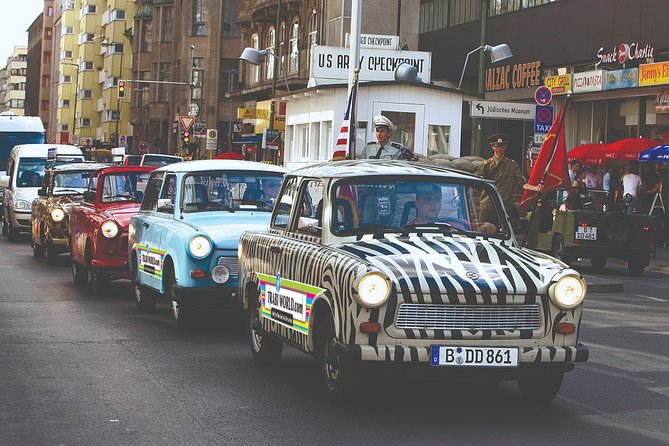
You get a guided route through Cold War sites, so you are not just chasing photos. You also get the feeling of being part of the street scene. In real traffic, a convoy of colorful Trabis becomes something people recognize fast. You’ll likely see cameras come out as you roll past.
And yes, it’s also plain fun. People describe it as a highlight because it mixes history with action. You’re not standing in a queue reading a plaque, you’re moving through Berlin with a live guide and a car that makes you pay attention.
Trabi-World check-in, convoy rules, and the manual-shift reality
You meet at Trabi-World at Zimmerstraße 97-100, and the tour starts at 11:30 am. Before you head out, you’ll go through a welcome and safety briefing, then pick your car color. Colors are first come, first served, so arrive with a clear plan if a specific color matters to you.
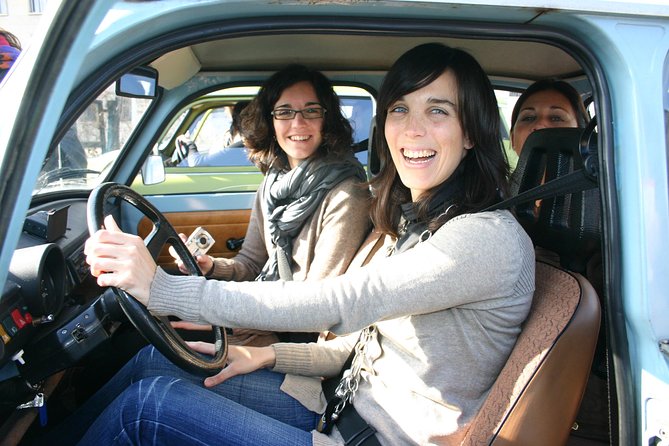
The car details matter here because they affect comfort and driving confidence. These are manual shift only, and the setup is very old-school, including a column mounted gear stick. Expect basic steering and braking. One review notes no power steering and more demanding brakes than modern cars, and another points out that the wing mirrors can feel fixed in place. This is part of the charm, but it also means you should drive with extra attention.
Before you drive, do not skip the briefing. Even if you’ve driven manuals before, a Trabant is not the same as your daily car. Gears, clutch feel, and braking effort all feel different. One practical tip from people who did the tour successfully: start slow, watch the convoy rhythm, and be ready for quick pace changes at junctions.
Now the good news: you’re not alone in this. Your guide leads the convoy, and you follow along as the guide gives history context through the radio system. People report that they could hear clearly even from the back seat. The guide also helps manage the group, and if someone needs a moment to catch up, the tour is designed around staying together.
Also plan for real street conditions. Berlin streets bring cars, bikes, scooters, and pedestrians. If you are an anxious driver, this is the main factor to consider. But you do have options: the tour is described as self-drive with the possibility to ride, too. If driving would stress you out, consider letting someone else handle the wheel, at least on the first stretch, and then decide what feels right.
Finally, there are real-world constraints. Each Trabant can carry up to four passengers, and there is a max weight limit of 350 kg per car. The tour is limited to a maximum of 12 travelers overall, so it stays controlled and you should feel less lost than on big bus tours. Service animals are allowed, and it is near public transportation.
The route through Cold War Berlin, stop by stop
The tour is built around a simple idea: drive past key sites tied to Berlin’s divided past, then connect the dots while you’re on the move. The itinerary is short enough to feel snappy, but it hits enough points that you come away with mental anchors you can revisit later on foot.
First stretch: Trabi-Safari briefing, then central squares and monuments
You start at Trabi-World with welcome and briefing. This is your setup time: learn the driving basics, hear how the convoy works, and get your bearings. After that, the route leaves the garage world and drops you into the center.
Your early driving loop takes you to an important public square and traffic intersection in central Berlin. This is where you get a sense of scale and city layout, and you start to see how Berlin moves today, not just how it was divided.
Next come classic city landmarks with strong visual identity. You’ll pass a famous 18th-century neoclassical monument, then drive by the Red Town Hall from 1870. The guide ties these civic landmarks into the larger story of the city’s past, so they stop being just pretty architecture. In practice, it helps you remember Berlin as a real place shaped by politics, not a museum set.
More of the divided city, written up in full



East Side Gallery: murals on a Berlin Wall remnant
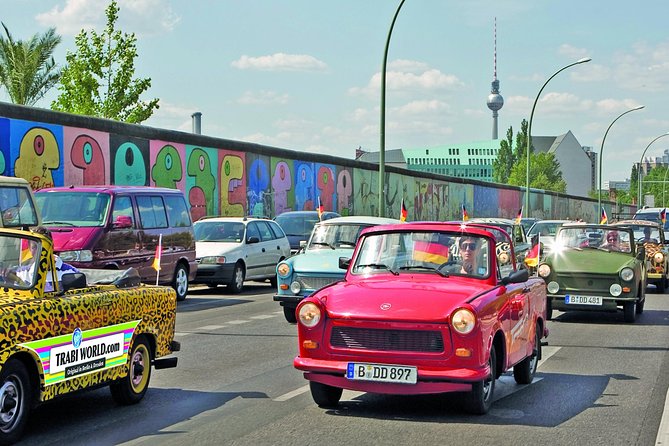
Then you shift to the Berlin Wall story in a very direct way: a stop at the East Side Gallery. This is an open-air gallery painted directly on a 1,316 m long remnant of the Berlin Wall. It is one of the most visited Wall sections for a reason, the art is right there on the original structure.
The stop here is short, about 5 minutes, so treat it like a quick reset for photos and orientation. You’ll want to position yourself for pictures while still listening for context from the guide. If you want more time, this is also a place you can later return to on your own once you know the area.
Because the stop is brief, the value is in what you learn while moving there. The guide helps explain why the Wall mattered, why the art landed here, and what the physical remnant means now.
The second half: TV tower square, border cross point, and division memorials
After the East Side Gallery, the tour continues with more direct Wall and division context.
You’ll pass a public square famous for the TV tower. Even if you know the tower already, it becomes a marker on your mental map during this tour. It helps you place the Wall sites relative to modern Berlin.
Then comes the former border cross point. This is the kind of stop that changes how you see the map. A border cross point is not just a location, it’s an idea of movement, control, and what normal life felt like when crossing was not simple.
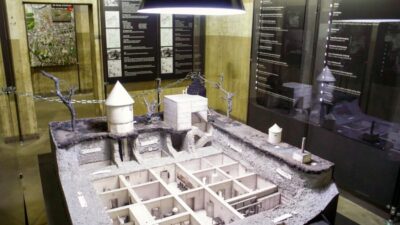
The tour also includes a central memorial site of German division located in the middle of Berlin. This is one of the key emotional moments of the route. The convoy style keeps things moving, but the guide’s narration gives this part weight. It’s the difference between sightseeing and understanding.
Throughout these stops, your guide is doing the connective work: Cold War context, what you’re seeing, and why the Trabant matters as part of the story. That’s important because the car is not random. It’s a symbol of everyday life from the other side of the divide.
Your souvenir Trabant driver’s license, and what you really take home
The souvenir element is surprisingly satisfying. After you finish, you drop the Trabant back at Trabi-World, and you leave with your own souvenir Trabant driver’s license. This is included even if you were not the driver of your vehicle.
That detail matters because it turns the experience into a keepsake, not just a memory. It’s a fun way to make the trip feel official, like you participated in something specific and temporary, not just sat on a chair and looked around.
Beyond the license, what you really take home is a stronger feel for the city’s layout and history sequence. The tour gives you a chain of references, so later, when you walk around Berlin on your own, things make more sense. You understand what sits near what, and you recognize the Wall story as something anchored in actual streets and intersections.
One more takeaway: you get a built-in photo story. You’re driving through major sights in a vehicle people immediately associate with Berlin’s past. That means the photos feel like you traveled somewhere unusual, not just visited a list.
One practical comfort note: because this is a moving convoy, exhaust exposure can happen depending on where you sit and what’s around you. A review warns that exhaust from cars in front can affect your throat. If you are sensitive, pay attention to where you are relative to the vehicle ahead and take short posture adjustments while still following instructions.
Price and value for a 2-hour Wall experience on wheels
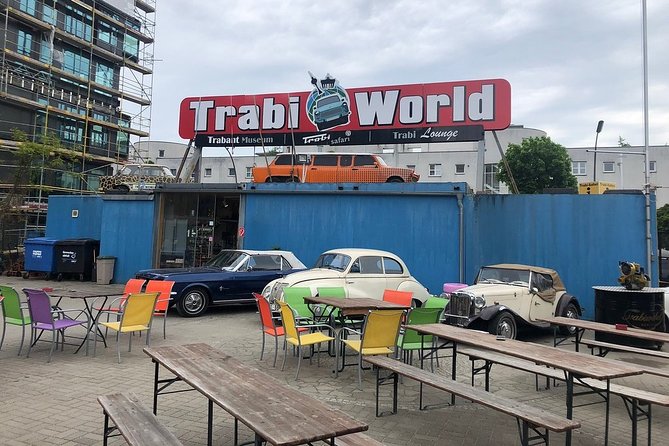
The listed price is $119.48 per person, for about 2 hours 15 minutes. That is not cheap compared to a walking tour. But you are paying for three things that increase value fast: a real guide in person, transport via Trabant car, and a small group experience with a car that is itself part of the attraction.
There are a few ways to think about value:
First, you get guided history plus movement. Many tours give you one or the other, either a ride without context, or context without the fun sensory experience. Here you get both.
Second, the vehicle choice supports the authenticity. A classic Trabant is not a theme prop. It is manual-shift, basic, and unmistakably from the era. That changes the feel of the route, and you can’t recreate that by renting a modern car.
Third, small group limits help. With a max of 12 travelers, you’re less likely to feel like you are swallowed by a big crowd. With only four passengers per car, it stays personal enough that the guide can manage you without chaos.
Now, there are also cost-related considerations. This is a self-drive activity, and the rules require that any driver provide evidence of a driver’s license for non-automatic cars. So budget time for paperwork if you need it, and plan the driving role realistically among your group.
Accidents are also handled with a co-payment requirement noted by the operator if something goes wrong. That is not a reason to avoid the tour. It is simply part of the deal with any self-drive experience, and it reinforces the value of taking the safety briefing seriously and driving within your comfort level.
If you are looking for a cost-effective way to cover multiple major sites in a short window, this can be a strong option. You get a guided Berlin Wall route with transport and a memorable hands-on element.
Who this Trabi tour suits best, and who should pass
This tour is best for you if you want a mix of history and action. You like tactile travel, things you do with your hands and feet, not just things you look at through a window. It also suits you well if you want a first-day style overview of Berlin that you can build on later.
It’s especially good on days when weather or energy would make walking feel unpleasant. One review calls it a great rainy-day plan, and the convoy approach keeps things moving without you spending hours on the pavement.
You’ll likely enjoy it most if:
- You can drive a manual-shift car, or you’re willing to learn with the guide and convoy rhythm.
- You want a guided Cold War story with convoy photos and a car that turns heads.
- You like smaller groups and a clear, short route.
You might want to skip it or plan to ride instead if:
- Driving gears in busy Berlin traffic would make you nervous.
- You expect a modern comfort level from power steering and easy braking. This is an old-school car.
It’s also a good choice for couples and small groups since you can rotate through driving roles in some groups. One review describes being able to switch halfway, which can help people who want the thrill but also want a break.
For families: children must be accompanied by an adult, the minimum age is 18, and children up to 17 are free if they are accompanied. If needed, you must bring a child seat yourself.
Should you book the Berlin Wall Self-Drive Trabi Tour?
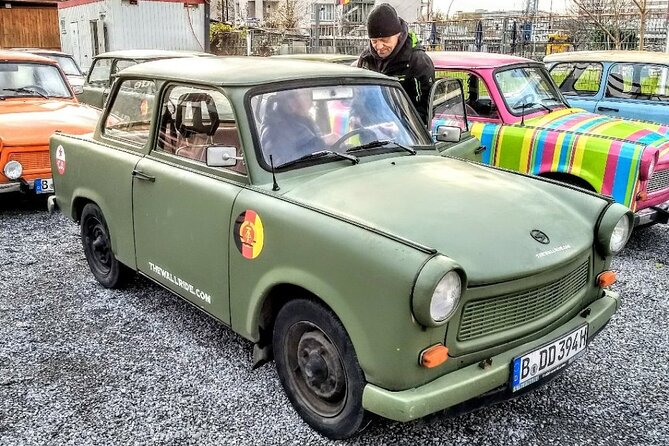
Book it if you want a hands-on Berlin Wall experience that combines a guided route, a real classic car, and a souvenir you can take home. I think it is a strong value if you’re the type who enjoys learning how things work, even if you start out a little rusty with manual driving.
You should hesitate if manual driving in active traffic is not your comfort zone. In that case, consider whether you can ride and focus on the scenery and radio narration instead.
If you do book, here’s the practical move: treat the safety briefing like it matters, show up on time, and plan to drive slowly at first. The payoff is big, you get those Cold War landmarks in a way that feels alive, not academic, and you leave with a story that’s easy to retell, plus that Trabant driver’s license keepsake.
FAQ
How long is the Berlin Wall Self-Drive Trabi Tour?
The tour lasts about 2 hours 15 minutes.
Where do I meet, and when does it start?
You meet at TrabiWorld Berlin, Zimmerstraße 97-100, 10117 Berlin, Germany. The start time listed is 11:30 am, and the tour ends back at the meeting point.
Is this tour self-drive, or can I ride along instead?
It’s a self-drive tour, but the experience is also described as guided car drive or ride, meaning you can go along with the convoy if you prefer not to drive.
Are the Trabants automatic?
No. The cars are manual shift only, not automatic.
What driver requirements do you need for non-automatic cars?
All drivers need evidence of a driver’s license for non-automatic cars.
Is there an age limit or policy for children?
The minimum age is 18 years. Children must be accompanied by an adult, and children up to 17 are free of charge if accompanied. If a child seat is needed, you must bring it.
Can I cancel or change the booking?
No. This experience is non-refundable and cannot be changed for any reason. If you cancel or ask for an amendment, the amount you paid will not be refunded.
The Divided Years, Reviewed
Following the Wall a Little Further
Everything else we filed on Berlin
- 2-H Segway Sightseeing Tour Berlin
★ 4.5 · 11 reviews - Daily First Rickshaw promotion in Combi Vehicle public Group 90€
★ 5.0 · 11 reviews - Berlin: One-Hour Segway Signature Tour
★ 5.0 · 11 reviews - Berlin: Street Food Tour with 10 Tastings
★ 5.0 · 11 reviews - Private Third Reich Walking Tour of Berlin
★ 5.0 · 12 reviews - In Search of Jewish Berlin Walking Tour
★ 5.0 · 12 reviews
Berlin Wall and Divided City Tours, side by side.
 ★ 4.8Nuremberg: Tunnels and Secret Passages in the City Wall TourFrom $142,334 reviews
 ★ 4.1Skip-the-Line: Berlin Wall Museum at Checkpoint CharlieFrom $212,041 reviews
 ★ 4.0Berlin: East Side Gallery Spree Cruise in a Solar CatamaranFrom $271,039 reviews
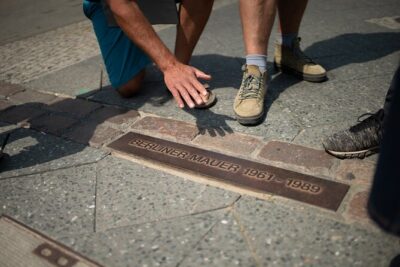 ★ 5.0Cold War, Berlin Wall, Spies and the East Side GalleryFrom $181,024 reviews
 ★ 4.5THE WALL: asisi Panorama Berlin TicketFrom $16580 reviews
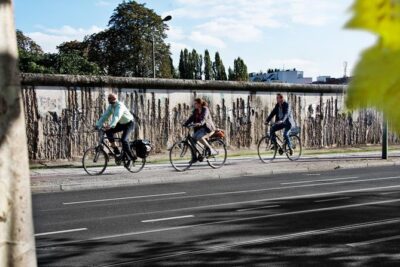 ★ 4.7Berlin: Guided Bike Tour of the Berlin Wall and Third ReichFrom $40499 reviews
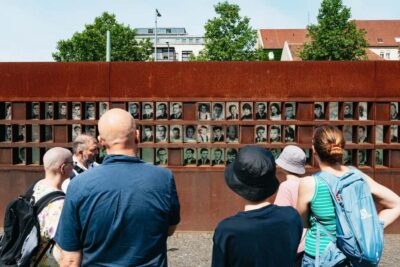 ★ 4.8Berlin: Cold War Walking Tour on Berlin Wall RouteFrom $26437 reviews
 ★ 4.9East Berlin and the Wall: Walking TourFrom $351407 reviews
Other lists this tour is on