
REVIEW · BERLIN WALL
Cold War and Berlin Wall Tour in Italian
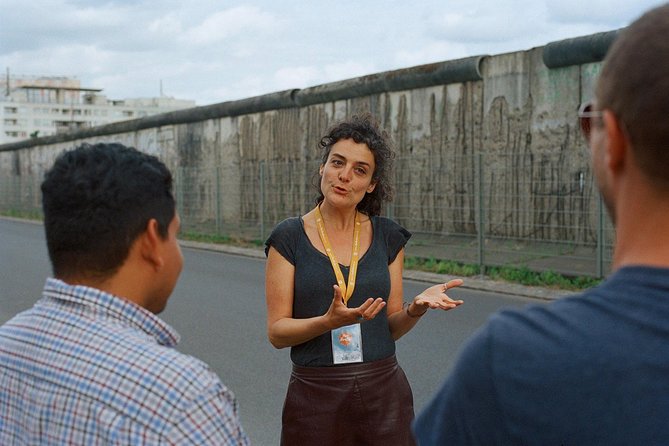
Berlin’s Cold War story walks right beside you. This Cold War and Berlin Wall tour in Italian strings together the big landmarks, with a guide who keeps the timeline clear as you move through central Berlin. I like that you get guided context instead of trying to decode it solo, and I also like the foot route that hits several Wall-related stops without wasting time.
Two things I especially appreciate: first, the stops are practical and concentrated, so you come away with a mental map of where the East and West collided. Second, the guide commentary is built around what you can actually see, from the Memorial of the Berlin Wall to the murals at the East Side Gallery. One consideration: you do need to be comfortable walking and standing for short stretches, and the Berlin TV Tower is a quick outside look only.
In This Review
- Key things to know before you go
- Why this Italian Cold War walk is a smart Berlin plan
- Meeting at Potsdamer Platz, then following the route to the Wall
- Berlin-Nordbahnhof and the ghost stations: what to listen for
- Memorial of the Berlin Wall: where the story turns visual
- Alexanderplatz and the GDR: architecture plus the 1989 turning point
- Berlin TV Tower outside: a quick but telling GDR skyline moment
- Karl-Marx-Allee: Stalinist-era buildings you can actually recognize
- East Side Gallery: the Wall remnant that changed meaning
- Price and value: is 27.87 USD worth it?
- Who this Cold War and Berlin Wall tour fits best
- Should you book Vive Berlin Tours in Italian?
- FAQ
- How long is the Cold War and Berlin Wall tour in Italian?
- Where does the tour start?
- Where does the tour end?
- Is the tour conducted in Italian?
- What’s included in the price?
- Is there a mobile ticket?
- How big is the group?
- Do I need to pay admission fees at the stops?
- Can I cancel for a full refund?
- Does the tour include public transport between sights?
Key things to know before you go
- Italian-speaking guide who steers you through the story on foot, not just with dates
- Memorial of the Berlin Wall as the main factual stop, with time set aside for it
- East Side Gallery included as the best-known Wall remnant thanks to its murals
- Ghost-station history discussed at Berlin-Nordbahnhof, so you know what you’re looking at
- Small group size (maximum 25), which makes it easier to ask questions
Other walks along the Wall we have reviewed
- Skip-the-Line: Berlin Wall Museum at Checkpoint Charlie★ 4.1 · 2,041 reviews
- Berlin: East Side Gallery Spree Cruise in a Solar Catamaran★ 4.0 · 1,039 reviews
- Cold War, Berlin Wall, Spies and the East Side Gallery★ 5.0 · 1,024 reviews
- THE WALL: asisi Panorama Berlin Ticket★ 4.5 · 580 reviews
Why this Italian Cold War walk is a smart Berlin plan
Berlin can feel like a lot when you’re trying to connect Cold War dots on your own. This tour gives you a guided route that covers the major themes in one go: the Wall, the GDR city experience, and the last moments that led to 1989. The value here is time. You’re not spending your morning jumping between separate attractions, and you’re not guessing what matters most.
I also like the tone of the experience. The pace is walk-and-learn, with stops long enough to matter, but not so long that you feel stuck. If you’re the type who enjoys seeing buildings and public spaces with fresh eyes, you’ll get a lot from this format.
A small but real plus is that the tour is set up for a mobile ticket. That’s one less thing to worry about on the day.
Meeting at Potsdamer Platz, then following the route to the Wall
You start at Potsdamer Platz 10 (10785 Berlin), at the meeting point tied to S/U-Bahn Potsdamer Platz. Look for the blue bicycle and the VIVE BERLIN TOURS flag, so you can spot your group quickly instead of circling the station entrance.
The tour ends at the East Side Gallery area (10243 Berlin). The provider says the guide will help you with public transport choices after the tour, which matters here because you’re finishing in a different part of the city than where you started.
The duration is about 3 hours 30 minutes, with short blocks at each stop. That timing matters because you can fit it into a day that also includes other Berlin highlights, rather than sacrificing half of your trip to a single museum.
Berlin-Nordbahnhof and the ghost stations: what to listen for
One of the earliest stops is Berlin-Nordbahnhof, where the guide talks about the history of ghost stations. Even if you’ve read a few basics before, this is the kind of topic that becomes real only when someone connects it to the physical space.
At this stop, think less about taking in a single monument and more about understanding how transit itself was affected by division. A station is a daily-life setting, so the idea of a ghost station hits harder when it’s explained in context.
Time here is about 10 minutes, so don’t expect a long digression. Use those minutes to catch the key points, then carry them to the next sites.
Memorial of the Berlin Wall: where the story turns visual
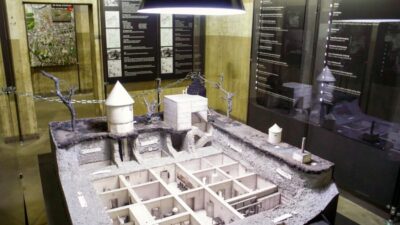
The main anchor of the tour is the Memorial of the Berlin Wall, with about 50 minutes on site. This is the best place to get your bearings on how the Wall was possible and how it functioned.
What makes this stop especially useful for you is that it’s not just about politics or a single dramatic moment. It focuses on how the Wall was built and, crucially, on the systems used to escape. That kind of detail changes how you see every remaining section afterward. When you later reach places like the East Side Gallery, the murals land with more weight because you understand what was being resisted.
This stop also includes the tragic stories of victims. That can feel heavy, but it’s also what keeps the tour honest. If you want a Berlin Wall experience that stays grounded in the human reality, this is the time you’ll be glad you scheduled.
More of the divided city, written up in full

Alexanderplatz and the GDR: architecture plus the 1989 turning point
Next you move to Alexanderplatz for about 15 minutes. Here the guide connects the area to the GDR (German Democratic Republic) and points out typical architecture. This is one of the most effective ways to understand Berlin’s division: instead of only seeing Cold War history as ruins, you see it as everyday city design.
Alexanderplatz is also where the guide talks about a major popular demonstration that led to the fall of the Wall. Even with limited time, it’s a good pairing: architecture on one side, political momentum on the other. It helps you remember that the Wall didn’t fall because of one speech or one document, it fell because something shifted in the streets.
Tip for you: at a stop this short, let the guide’s key markers do the work. If you try to study every building yourself in 15 minutes, you’ll likely miss the story thread.
Berlin TV Tower outside: a quick but telling GDR skyline moment
You’ll also get a brief outside look at the Berlin TV Tower, about 10 minutes. The guide frames it as the most impressive GDR-era structure and notes that it remains the tallest building in Berlin.
Even if you have no plan to go up, this stop is still useful. The TV tower is a visible symbol, and seeing it from street level helps you connect the GDR identity to Berlin’s skyline. Just keep expectations realistic: you’re viewing it outside only, so this is not your moment for a long photo session or an indoor experience.
If your legs are feeling it by this point, use the outside viewing to take one or two solid photos, then move on. The tour is structured to keep energy manageable, but it is still a walking route.
Karl-Marx-Allee: Stalinist-era buildings you can actually recognize
From there, you head to Karl-Marx-Allee for around 20 minutes. This boulevard is lined with buildings from the Stalinist era, and the guide uses it to explain the beginnings of the GDR.
This is a stop that rewards attention to detail. Even without expert-level architecture knowledge, you can start noticing the style cues the guide highlights, because they’re right there in front of you. The value is that you’re not just passively looking. You’re learning a way to read what you see.
A practical drawback to be aware of: Karl-Marx-Allee can feel like a lot visually in a short time. That’s why a guided explanation helps. Otherwise you might just see “big buildings,” instead of understanding why the buildings were shaped the way they were.
East Side Gallery: the Wall remnant that changed meaning
The final major stop is the East Side Gallery, about 20 minutes. This is the longest part of the Berlin Wall on the tour route and the most famous thanks to its murals symbolizing freedom.
This is where the emotional weight of the earlier stops meets something you can process more easily. If the Memorial focused on how the Wall controlled movement and the guide explained escape systems and victims, the murals here show how the Wall’s story transformed after 1989.
For you, the best way to enjoy these murals is to pick a small handful of panels and linger with them, rather than trying to see everything in 20 minutes. If you try to sprint down the stretch, the images turn into background.
Also remember that this is still a public, lived-in area. Keep your pace respectful and give space to anyone who’s trying to take photos or enjoy the walk.
Price and value: is 27.87 USD worth it?
At $27.87 per person, this tour is priced for value, not for a fancy add-on day. The key is what you get for that money: a guided walk in Italian plus a concentrated route covering multiple Wall-related and GDR-related sights.
You’re also not paying for transportation as part of the package, and there’s no food included. That can be totally fine if you’re already planning a meal later. The tour works best when you use it as your structured history time block, then handle your own food and transit before and after.
One more value point is group size. With a maximum of 25 travelers, you’re less likely to feel lost in a crowd, and you usually get better attention from the guide when questions pop up.
If you’re the kind of traveler who feels overwhelmed by self-guided history maps, this is a strong match. If you only want one or two landmarks, it might feel like too much in a short span. But if you want the story to connect, the cost makes sense.
Who this Cold War and Berlin Wall tour fits best
This tour is a good fit if you:
- want an Italian-language guide to connect Cold War events to what you’re seeing
- like walking tours that build a clear route and then let you keep exploring on your own
- prefer a short, focused session over a long museum day
It may be less ideal if you:
- want to spend a long time at just one site
- don’t enjoy standing and walking between stops
- need lots of time for indepth photography at every stop
Because the tour hits Memorial of the Berlin Wall, Alexanderplatz, the Berlin TV Tower outside, Karl-Marx-Allee, and the East Side Gallery, you get a balanced slice of themes: barrier, city, symbols, and aftermath.
Should you book Vive Berlin Tours in Italian?
Yes, if you want a guided, efficient way to understand Berlin’s Cold War story without getting lost in research. I think this tour earns its place because it’s structured around key locations and guided interpretation in Italian, plus the route ends right at the East Side Gallery so you can continue your day in that area.
Book it especially if you like history explained in a human way. The Italian guide experience has a strong reputation for being well prepared, and the tour is built to bring those 1989 turning points into focus while you’re standing in the spaces where they mattered.
If you want to fully decide, ask yourself this: Do you want Berlin’s Wall story in one organized walking session? If yes, this is a solid choice.
FAQ
How long is the Cold War and Berlin Wall tour in Italian?
It lasts about 3 hours 30 minutes.
Where does the tour start?
The meeting point is Potsdamer Platz 10, 10785 Berlin, Germany (near the S/U-Bahn Potsdamer Platz).
Where does the tour end?
The tour ends in the East Side Gallery area, 10243 Berlin, Germany.
Is the tour conducted in Italian?
Yes, you get a guide in Italian.
What’s included in the price?
A guide in Italian is included. Transportation, hotel pickup, and drop-off, plus food and drinks are not included.
Is there a mobile ticket?
Yes, the tour offers a mobile ticket.
How big is the group?
The tour has a maximum of 25 travelers.
Do I need to pay admission fees at the stops?
The itinerary lists admission as free for the stops included in the tour.
Can I cancel for a full refund?
You can cancel for a full refund up to 24 hours before the experience starts.
Does the tour include public transport between sights?
Transportation to and from attractions is not included, but the guide can advise you which public transport to take at the end.
The Divided Years, Reviewed
Following the Wall a Little Further
Everything else we filed on Berlin
- East Berlin: City of Shadows Walking Tour
★ 5.0 · 11 reviews - Berlin: Die Stachelschweine – Frank Lüdecke – Träumt Weiter
★ 4.7 · 11 reviews - Potsdam Day Trip from Berlin with a Local: Private & Personalized
★ 4.0 · 11 reviews - An Introduction to Berlin Walking Tour
★ 5.0 · 11 reviews - DJ for a Day: Learn to Mix Like a Pro in Berlin
★ 5.0 · 11 reviews - 2-H Segway Sightseeing Tour Berlin
★ 4.5 · 11 reviews
Berlin Wall and Divided City Tours, side by side.
 ★ 4.8Nuremberg: Tunnels and Secret Passages in the City Wall TourFrom $142,334 reviews
 ★ 4.1Skip-the-Line: Berlin Wall Museum at Checkpoint CharlieFrom $212,041 reviews
 ★ 4.0Berlin: East Side Gallery Spree Cruise in a Solar CatamaranFrom $271,039 reviews
 ★ 5.0Cold War, Berlin Wall, Spies and the East Side GalleryFrom $181,024 reviews
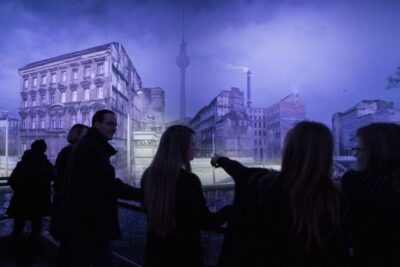 ★ 4.5THE WALL: asisi Panorama Berlin TicketFrom $16580 reviews
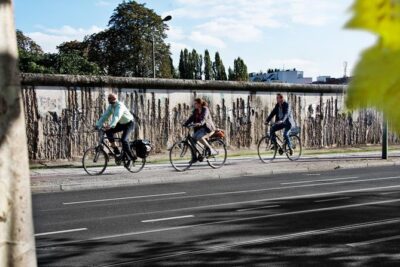 ★ 4.7Berlin: Guided Bike Tour of the Berlin Wall and Third ReichFrom $40499 reviews
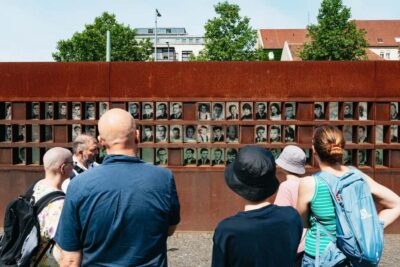 ★ 4.8Berlin: Cold War Walking Tour on Berlin Wall RouteFrom $26437 reviews
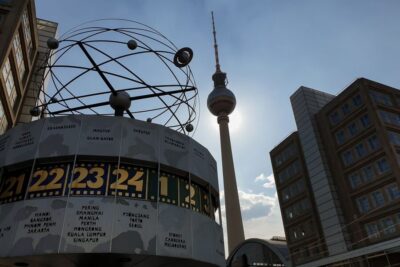 ★ 4.9East Berlin and the Wall: Walking TourFrom $351407 reviews
Other lists this tour is on