
REVIEW · WARTIME HISTORY
Hitler’s Berlin – the rise and fall (Small Group)
Berlin refuses to look away. This small-group walking tour ties the Nazi rise and fall to real street locations, with then-and-now photos and historic maps to help it click. You’ll walk a compact route that makes big events feel uncomfortably close.
I like the guide setup for two reasons: the route stays focused, and the pace leaves room for real questions. I also love how the story connects ideology to specific places, not just names and dates.
One possible drawback: it is mostly standing and walking for about 2.5 hours, and it can get noisy in the open air. If you need a lot of quiet seating, plan to use any stop breaks and wear comfy shoes.
In This Review
- Key highlights to know before you go
- Price and time, why this one costs what it costs
- Where you start: Brandenburg Gate to Topography of Terror
- Your guide, the tone, and the small-group advantage
- Stop 1: Memorial to the Sinti and Roma Victims of National Socialism
- Stop 2: Reichstag Building and how the Nazis took power
- Stop 3: Soviet Memorial Tiergarten, Battle of Berlin context
- Stop 4: The Memorial to the Murdered Jews of Europe, with time to reflect
- Stop 5: Monument to Homosexuals Persecuted Under the Nazi Regime
- Stop 6: Führerbunker, where the end played out
- Stop 7: Johann Georg Elser Memorial, resistance beyond slogans
- Stop 8: Berlin Aviation Ministry, the big building behind big power
- Stop 9: Topography of Terror, former Gestapo HQ and a real break
- What you’ll actually learn from the way the route is built
- The main drawback to plan for: heavy topic, limited seating, and sound
- Who should book this Hitler’s Berlin walking tour
- Should you book this tour?
- FAQ
- How long is Hitler’s Berlin – the rise and fall (Small Group)?
- Where does the tour start and where does it end?
- What language is the tour offered in?
- What size is the small group?
- Are there admission tickets required for the stops?
- Is food and drink included?
Key highlights to know before you go
- Small-group format, maximum 15 travelers, which keeps the Q&A from feeling rushed
- Then-and-now photos and historic maps that turn memory tricks into real context
- Major memorials with discussion time, including space to reflect at the Holocaust Memorial
- A compact WWII route that fits into a half-day without feeling like nonstop sprinting
- A guide with academic background in WWII history, praised for handling a heavy topic with care
Further wartime history walks we have written up
- Berlin: Third Reich and Cold War 2 Hour Walking Tour★ 4.9 · 6,830 reviews
- Berlin’s Best: 2 Hour Walking Tour Third Reich and the Cold War★ 5.0 · 5,486 reviews
- Third Reich Berlin: Hitler and WWII Walking Tour★ 5.0 · 3,301 reviews
- Berlin: Third Reich, Hitler, and WWII Walking Tour★ 4.9 · 1,133 reviews
Price and time, why this one costs what it costs
At $54.44 per person for roughly 2 hours 30 minutes, this tour is priced like a serious walking tour, not a casual intro. The value is that you are paying mostly for an expert local guide, a tight small group, and guided visits to the most important Nazi-era sites in central Berlin.
Also, the key stops on the route are marked as admission ticket free in the tour plan. That matters because Berlin can be expensive once you start stacking paid museums and paid guided entries. Here, you are directing your money to the human part, the explanation, and the way the sites connect.
And because this is booked about 33 days in advance on average, you’ll want to reserve early if your dates are fixed. Berlin tours fill up, and this one stays small by design.
Where you start: Brandenburg Gate to Topography of Terror
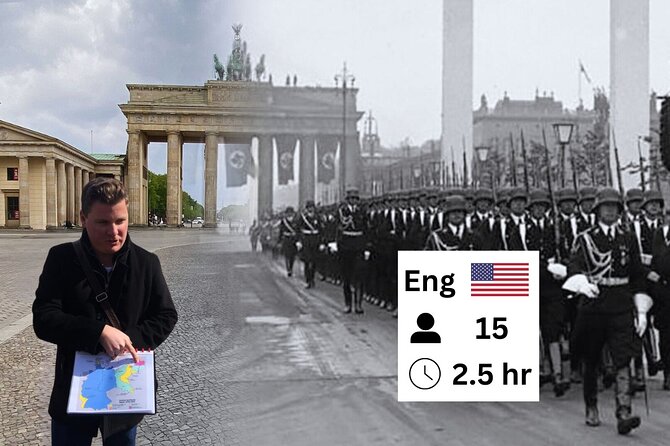
You begin at Brandenburg Gate, Pariser Platz. That’s a smart starting point because it puts you in the center of Berlin’s 20th-century political drama immediately, without warm-up sightseeing detours.
You end at Topography of Terror, Niederkirchnerstraße 8 (Topographie). The tour plan includes time there for a break, so you’re not forced to keep walking through the most intense segment with zero pause.
The walking level is listed as moderate physical fitness. Translation: it’s doable, but you’ll want comfortable shoes. One review notes it covers only a few blocks, not an all-day hike, which matches the “half-day” feel.
Your guide, the tone, and the small-group advantage
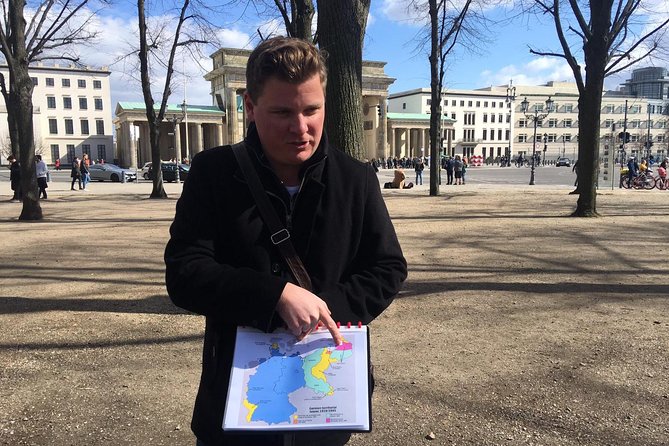
A lot of “Hitler’s Berlin” tours can turn into a shock parade. This one is built around understanding. The included guide has an academic background in WWII history, and you’ll have chances for reflection and Q&A.
The small group helps. With a maximum of 15 travelers, you’re more likely to hear answers and keep up when the guide moves between ideology, politics, and real locations. In past groups, people specifically praised guides by name, like Johan, Scott, Jochen, Matt, and Roshana, for being sensitive with a heavy topic and for working through questions rather than rushing them.
One practical tip: in open-air memorial areas, sound can be an issue. If you notice the group gets spread out, step a bit closer to the guide so you can catch every detail.
Stop 1: Memorial to the Sinti and Roma Victims of National Socialism
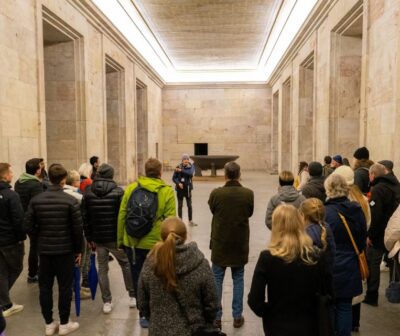
The tour begins with the Memorial to the Sinti and Roma Victims of National Socialism. You’ll spend about 10 minutes here, and the emphasis is on why the Nazis targeted Roma and Sinti people, not just that they did.
What I like about this start is that it reframes the Holocaust story beyond the usual shorthand. You’re given insight into the social philosophies the regime built to justify persecution, and then you can see how those ideas connect to later mass murder.
This is a good opening because it sets a moral and historical tone: the tour doesn’t treat the topic like trivia. It treats it like real harm that had causes, policies, and human consequences.
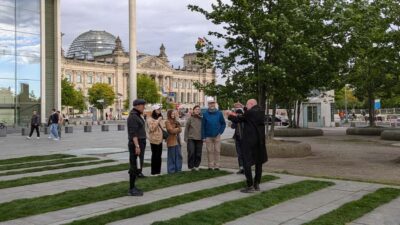
Stop 2: Reichstag Building and how the Nazis took power
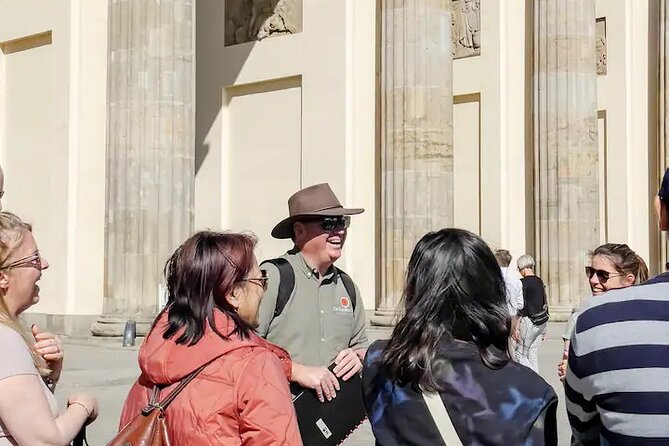
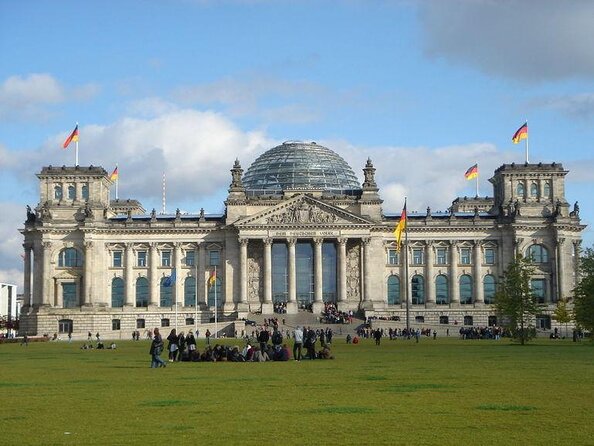
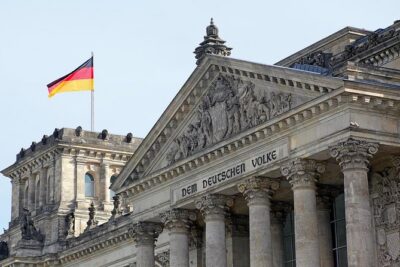
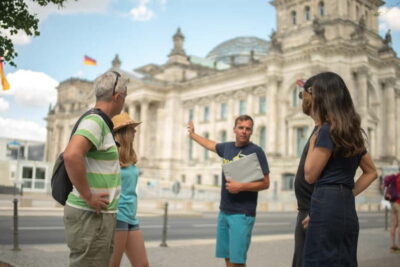
Next you reach the Reichstag building, with about 15 minutes there. The focus is on the political mechanics: how the Nazi Party were elected to power and how Hitler became Führer of Germany.
This stop is valuable because it pushes past the myth that dictators simply “grabged power out of nowhere.” Even if you already know some names, you’ll likely come away with a clearer map of how political influence turned into total control.
Also, because the Reichstag is a major landmark, the explanation lands in a real architectural setting, not a classroom. You get the feeling of politics in motion.
Stop 3: Soviet Memorial Tiergarten, Battle of Berlin context
At the Soviet Memorial in Tiergarten, you’ll spend about 15 minutes. The tour highlights that the Battle of Berlin was one of the bloodiest operations of WWII and talks about how people remembered it after the war.
This stop helps you balance the story. If you’ve only heard the Nazi side, this adds the other half of the battlefield equation, including the grim reality of how Berlin was fought over in the final phase.
Practical note: because this is outside, bring layers. Cold weather and wind can make standing and listening harder, and that’s when good footwear and patience pay off.
Stop 4: The Memorial to the Murdered Jews of Europe, with time to reflect
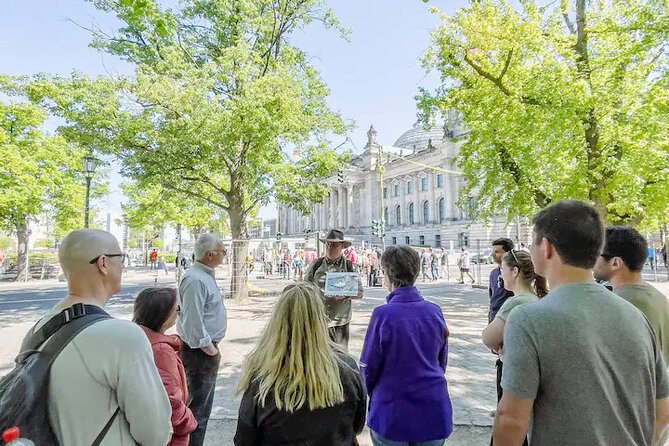
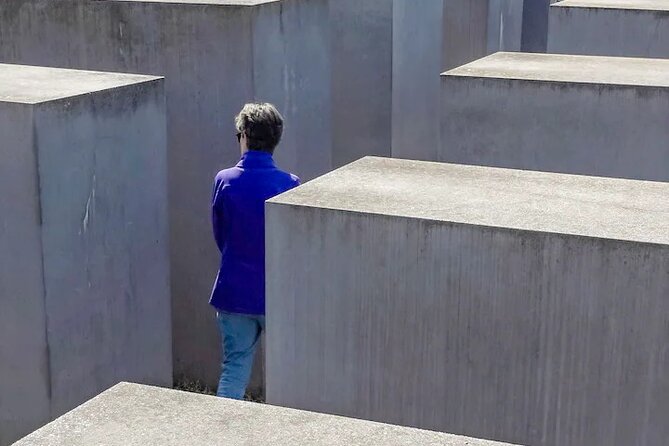
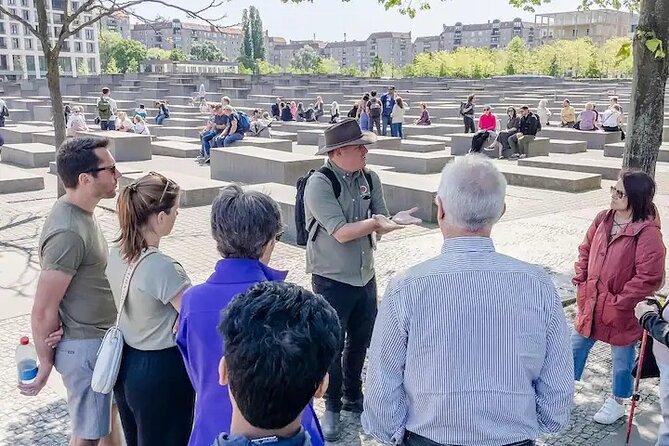
The Memorial to the Murdered Jews of Europe is next, about 15 minutes. The tour notes that this is the largest ethnic group targeted by the Nazis and gives you an opportunity to discuss what the memorial means.
I like that the plan includes reflection time instead of racing through. This memorial can feel confusing at first glance, and guided discussion helps you understand it as a designed space for remembrance, not just a photo backdrop.
If you’re coming with questions, this is where you’re more likely to ask them. You’ll also get context for why the memorial is such a central part of how modern Germany confronts the Holocaust.
Stop 5: Monument to Homosexuals Persecuted Under the Nazi Regime
Then you visit the Monument to Homosexuals Persecuted Under the National Socialist Regime for about 5 minutes. It’s short by timing, but it fills an important gap.
A lot of WWII tours focus on the biggest categories of victims and skip smaller, still crucial parts of the Nazi terror system. This monument makes it clear that persecution extended beyond the most commonly discussed groups.
In a compact route, these shorter stops are still meaningful because they broaden your understanding without dragging the schedule.
Stop 6: Führerbunker, where the end played out
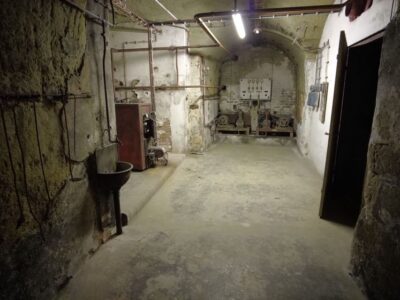
The tour moves to the Führerbunker, with about 15 minutes. This is where Hitler spent his final days of WWII, and the discussion centers on the collapse of the regime.
This stop can be emotionally intense, mostly because it is not an abstract lesson. It’s a physical location tied to the end of a catastrophic political project.
One reason I think this works well in a small group: you can ask questions about what happened in the final days without feeling like you’re disrupting a rigid museum schedule.
Stop 7: Johann Georg Elser Memorial, resistance beyond slogans
Next is the Johann Georg Elser Memorial, about 15 minutes. The tour discusses Elser’s role in the broader story of people who tried to oppose the Nazi regime and attempt to assassinate Adolf Hitler.
What makes this stop stand out is the human angle on resistance. It’s not only about the Nazi leadership. You also get a sense of risk-taking opposition and how complicated it can be to resist a system with strong control.
If you like history that includes agency, this one gives you that. And it’s a reminder that not everyone stood by.
Stop 8: Berlin Aviation Ministry, the big building behind big power
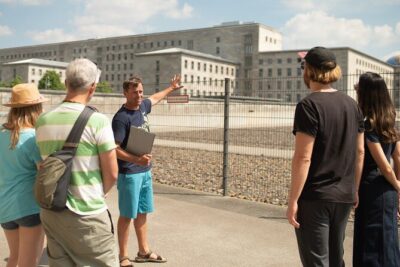
You then visit the Aviation Ministry of Berlin for about 5 minutes. The tour points out that at the time of construction it was the largest office building in Europe, built in 1936 to house the German Ministry of Aviation (Reichsluftfahrtministerium, or RLM), headed by Hermann Göring.
Even though the time is short, this is a clever stop. It shows how modern-looking bureaucratic power can be physically housed in monumental buildings, and how industry, air power, and state authority were tied together.
If you often wonder how regimes scale up, this is a quick answer.
Stop 9: Topography of Terror, former Gestapo HQ and a real break
The final site is Topography of Terror, about 20 minutes on the tour plan. This is the location where the Gestapo headquarters once stood, and you’ll hear how that machinery of fear worked in the daily world of occupied and controlled people.
The tour also builds in a break. There’s time to grab tea or coffee and use the restrooms, which is honestly a smart design for a tour this emotionally heavy.
At the end, your guide also shares the best connection options to your next destination. That is practical, because after an intense history walk you don’t want to spend 20 minutes figuring out transit.
What you’ll actually learn from the way the route is built
The biggest strength here is the order. The story moves from ideology and targeted victims to political power, wartime violence, memorial remembrance, and then the regime’s collapse and resistance attempts. It’s not random site collecting.
The included then-and-now photographs and historic maps help connect past layouts to present Berlin. When you can visualize how a place used to function, the explanation sticks longer than if you only memorize facts.
And the Q&A moments matter. Several reviews specifically mention the guide answering a lot of questions and tailoring the tour to the group. In a topic like this, that can change everything. You might be more interested in politics, more interested in resistance, or more interested in what the memorials are trying to say. A good guide can steer without losing accuracy.
The main drawback to plan for: heavy topic, limited seating, and sound
This is not a light stroll. Even with breaks, you’ll be standing and walking most of the time for about 2.5 hours.
Sound can also be a practical issue. One review notes that at times the guide was difficult to hear due to noise around you, and wearing microphones can help in general. Translation: pick your spot close to the guide, especially in windy or open areas.
Finally, because the subject matter is intense, you should mentally budget for that. This tour is careful and respectful, but it is still dealing with genocide, persecution, and the machinery behind it.
Who should book this Hitler’s Berlin walking tour
This tour fits best if you want a structured, small-group guided route that connects Nazi policy to places you can stand in today. It is a strong choice for:
- History buffs who like tight storytelling and clear cause-and-effect
- People who want memorial context, not just sightseeing snapshots
- Travelers who appreciate Q&A and discussion time
It might not be ideal if you want a very relaxed pace, lots of seating, or minimal walking. It’s designed to be walked, and you’ll get the best experience if you come ready to listen.
Should you book this tour?
Yes, I’d book it if you’re in Berlin and you want the “rise and fall” story told with sensitivity and local expertise. The combination of a small group, an academic WWII-focused guide, and the route’s focus on major memorials and Nazi-era sites gives you real value for your time.
Book it sooner rather than later, since it’s commonly reserved about a month ahead. And do yourself a favor: wear comfortable shoes, bring layers, and don’t plan anything demanding right after. Your brain will still be processing long after Topography of Terror ends.
If you want to understand how the Nazi system took power and how Germany remembers what happened, this is one of the better ways to do it in a compact half-day.
FAQ
How long is Hitler’s Berlin – the rise and fall (Small Group)?
The tour is approximately 2 hours 30 minutes.
Where does the tour start and where does it end?
It starts at Brandenburg Gate, Pariser Platz, 10117 Berlin and ends at Topography of Terror, Niederkirchnerstraße 8, 10963 Berlin.
What language is the tour offered in?
The tour is offered in English.
What size is the small group?
The tour has a maximum of 15 travelers.
Are there admission tickets required for the stops?
The listed stops in the tour plan are marked as admission ticket free, including the memorials and the major WWII-related sites on the route.
Is food and drink included?
No, food and drinks are not included. There is time at Topography of Terror to take a break and get tea or coffee and use the restrooms.
Wartime History Walks We Have Reviewed
Everything else we filed on Berlin
- East Berlin: City of Shadows Walking Tour
★ 5.0 · 11 reviews - Berlin: Die Stachelschweine – Frank Lüdecke – Träumt Weiter
★ 4.7 · 11 reviews - Potsdam Day Trip from Berlin with a Local: Private & Personalized
★ 4.0 · 11 reviews - An Introduction to Berlin Walking Tour
★ 5.0 · 11 reviews - DJ for a Day: Learn to Mix Like a Pro in Berlin
★ 5.0 · 11 reviews - 2-H Segway Sightseeing Tour Berlin
★ 4.5 · 11 reviews
Third Reich and Wartime History Tours, side by side.
 ★ 4.9Berlin: Third Reich and Cold War 2 Hour Walking TourFrom $236,830 reviews
 ★ 4.6Munich: Third Reich & WWII Walking TourFrom $316,181 reviews
 ★ 5.0Berlin’s Best: 2 Hour Walking Tour Third Reich and the Cold WarFrom $245,486 reviews
 ★ 4.5Third Reich Walking Tour MunichFrom $454,291 reviews
 ★ 5.0Third Reich Berlin: Hitler and WWII Walking TourFrom $243,301 reviews
 ★ 4.7Nuremberg: Walking Tour of Former Nazi Party Rally GroundsFrom $151,665 reviews
 ★ 4.9Berlin: Third Reich, Hitler, and WWII Walking TourFrom $201,133 reviews
 ★ 4.8Nuremberg: Historischer Kunstbunker WWII Art Bunker TourFrom $14921 reviews
Other lists this tour is on