
REVIEW · WARTIME HISTORY
Munich in the 3rd Reich and WW2 private walking tour
Munich has two faces during WWII. This private walking tour connects central sites to the rise of the Nazis, the SS, Kristallnacht, the Munich Pact, and the city’s 1945 defeat. You’ll follow the story with undivided guide attention instead of crowd control.
I love the way this is set up for real conversation, with a private format so you can ask questions as you go. I also love the use of photos and memorabilia, which several guides have been praised for bringing to the walk so the history feels concrete, not abstract.
One possible drawback: the topic is heavy and emotionally intense, and it is still a walking tour through the city center, in all weather. If you want a light, carefree stroll, this is not that.
In This Review
- Key highlights at a glance
- Munich’s WWII story starts at Isar Gate, ends near Odeonsplatz
- A private guide is the best fit for questions about the 3rd Reich
- From WWI trauma to the Nazi rise: Versailles to the Movement
- The SS, the Beer Hall Putsch, and power tested in public
- Kristallnacht, the Holocaust origins, and the machinery behind fear
- Nazi Party headquarters and the Munich Pact: diplomacy in the same streets
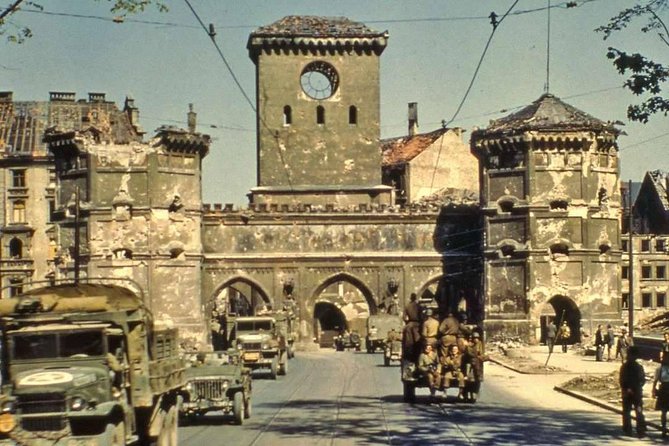
- Bombing campaign to 1945: Allied pressure and the US takeover
- Beerhall break, visual aids, and how the guide keeps momentum
- What you pay for: $423.44 per group up to 6
- Timing, weather, and how to plan your Munich day around it
- Who should book this private Munich 3rd Reich and WWII walk
- Should you book this Munich WWII tour?
- FAQ
- Where does the tour start and end?
- How long is the Munich 3rd Reich and WWII private walking tour?
- What is the price for this tour?
- Is this tour private?
- What language is the tour offered in?
- Do you use a bus or car to see the sites?
- Is there a stop for food or a beerhall break?
- Does the tour run in bad weather?
- Is a mobile ticket provided?
- What is the cancellation policy?
Key highlights at a glance
- Private, up-close guiding for your exact questions, not a big-group script
- Core WWII timeline covered on foot, from WWI fallout to the 1945 US takeover
- History-linked beerhall break during the walk, with flexibility if you prefer a café
- English mobile ticket and an all-weather approach with moderate walking
- Guides who bring materials and performance, including props and sometimes acting out parts
Further wartime history walks we have written up
- Munich: Third Reich & WWII Walking Tour★ 4.6 · 6,181 reviews
- Third Reich Walking Tour Munich★ 4.5 · 4,291 reviews
- Munich: Birthplace of the Third Reich Guided Walking Tour★ 4.6 · 771 reviews
- Munich World War II Sites Including Dachau Concentration Camp★ 4.5 · 570 reviews
Munich’s WWII story starts at Isar Gate, ends near Odeonsplatz
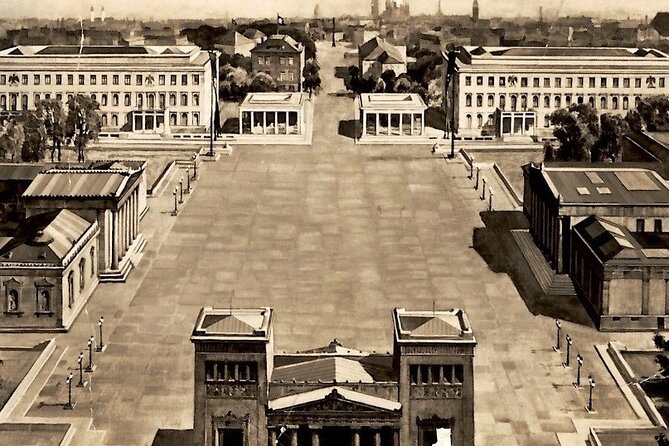
The tour begins at Isar Gate (Tal 50) and finishes at Odeonsplatz, right by the Residenz area. That matters because you’re not only learning facts, you’re seeing how Nazi power rooted itself in the same streets people still use today.
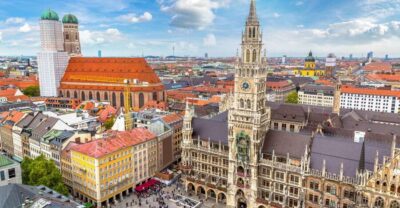
You’ll spend the walk in the heart of central Munich, so expect the mix that makes Munich special and complicated at the same time. The city’s beauty is real, churches and grand buildings are still there, and the tour helps explain how a place with charm became a stage for political horror.
The pacing is designed as a walking tour, not a bus-and-stop show. The route can take you through key parts of the city linked to the era, and the story runs from post-World War I chaos into the Second World War endgame.
A private guide is the best fit for questions about the 3rd Reich
A group of up to 6 is part of the deal here, and it’s not just for comfort. In a subject like this, you often want to ask small, specific questions, like why a certain event mattered or how ordinary people were pulled into a larger system.
With this tour being private, you get your guide’s full attention. That shows in the way guides have been described as being prepared with visual aids, answering questions directly, and sometimes tailoring the walk when time is short.
More than one guide has been praised for teaching in an easy-to-follow way, and at least one has an archaeology background. That background can help you understand how historians piece together events, not only what happened.
From WWI trauma to the Nazi rise: Versailles to the Movement
The walk starts by putting the era in context, and the starting point is the Great War and the Treaty of Versailles. This is important because the Nazi Party did not rise in a vacuum. The tour frames how Germany and Munich went through deep instability after 1918, with social and economic pressure that made extremist ideas gain traction.
You’ll then move into the origins of the Nazi Party, including the leadership of Adolf Hitler and how Munich became a home base. The tour explains how the Nazis branded Munich as the Hauptststadt der Bewegung, or Capital of the Movement, turning a beautiful city on the Isar into a symbolic center for a political project that led Europe toward war.
This section tends to land well for people who know some headlines but not the connections. The guide approach uses the city as your textbook, which helps you see why Munich became so central to that ideology.
The SS, the Beer Hall Putsch, and power tested in public
A big thread in this walk is the early power of the Nazi movement. You’ll cover the birthplace of the SS and the infamous Beer Hall Putsch, which is a key moment in the Nazi story.
Even if you already know what the Beer Hall Putsch was, the value here is how it’s placed into the bigger timeline. The tour connects it to why the Nazi movement could grow from street conflict into a system of control.
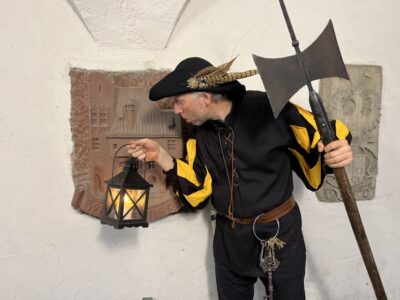
This is the kind of topic where visuals help, and multiple guides have been praised for using photos and memorabilia tied to sites. One guide even has been described as acting out parts, which can make the pressure of that moment feel more real without turning the lesson into a joke.
Other walking routes through Munich
Kristallnacht, the Holocaust origins, and the machinery behind fear
The tour includes Kristallnacht and the origins of the Holocaust, and it does so in a sequence that helps you understand escalation. The point is not only that violence happened, but how it was organized and how the groundwork formed.
You’ll learn why Kristallnacht matters in the timeline, and you’ll also get a clearer picture of how the Nazi system moved from persecution to mass atrocity. Having the guide walk you between key locations can make the lesson feel less like a history lecture and more like a chain of cause and effect across the city.
This is the hardest portion of the tour, and that is exactly why it’s worth doing with a private guide. You can pause, ask, and get answers that match your comfort level. You’re not stuck watching people guess at what you just heard.
If you’re sensitive to disturbing content, plan ahead. Wear something warm, bring a small bottle of water, and remember you can ask your guide to pace the conversation.
Nazi Party headquarters and the Munich Pact: diplomacy in the same streets
A major payoff of doing this as a walking tour is how close the story feels to the buildings you can still see. The tour includes the Nazi Party Headquarters and the signing of the Munich Pact.
This part is especially useful if you want to understand how political decisions worked in the era. The Munich Pact is one of those terms you might recognize, but learning its role inside the city’s Nazi-era space gives it weight.
Guides have been praised for making the narrative clear and for tying the locations to the events. That helps you connect what you’re seeing with why it mattered.
And because the tour ends at Odeonsplatz near the Residenz, you get a strong sense of place by the finish. The city’s grand architecture becomes part of the lesson, not a distraction from it.
Bombing campaign to 1945: Allied pressure and the US takeover
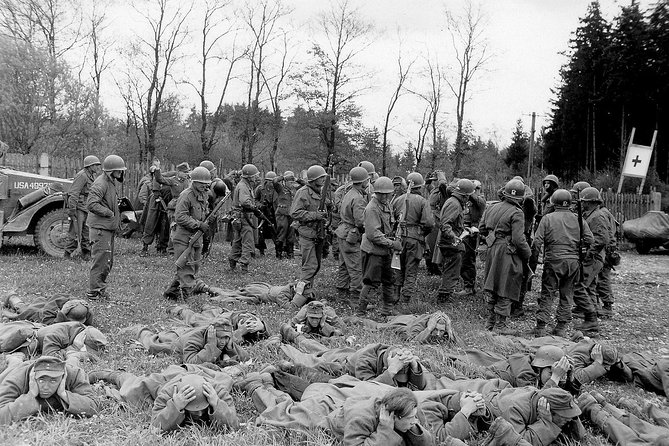
The tour doesn’t stop at politics in the 1930s. You’ll also cover the Allied bombing campaign and how the city fell to US forces in 1945.
This arc matters because it shows the full arc of the Second World War, not only the Nazi rise. You’ll see how the war’s brutality reshaped the city and helped bring an end to the regime.
For history fans, this section is often where the timeline clicks into place. If the rise phase made you wonder how it could have gone so far, the wartime portion shows the consequences and the collapse.
Beerhall break, visual aids, and how the guide keeps momentum
The tour generally includes a break in a beerhall associated with the history. If you’d rather stop for coffee in a café, you can tell your guide, and they can adapt.
Refreshments are not included, so treat the break as a chance to rest your feet and reset your mind. In cold weather, that pause can be a lifesaver, and guides have been praised for keeping the tour strong even during difficult conditions.
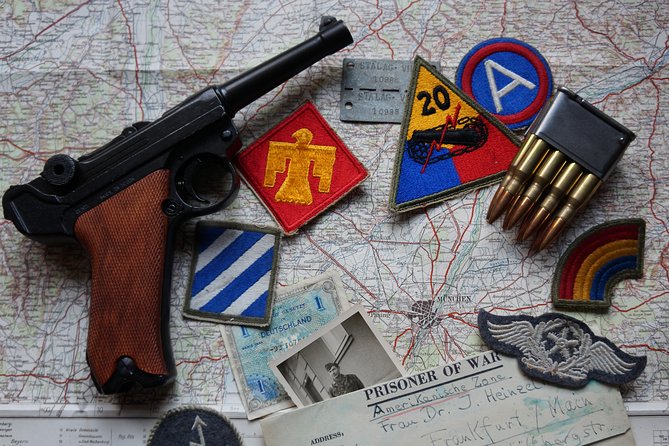
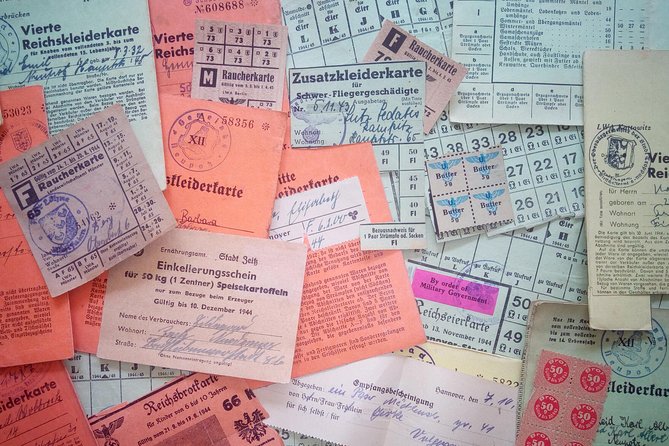
A lot of people mention the guide’s materials: photos supporting historical sites, memorabilia, and sometimes dramatic moments to help you remember scenes. That combination is a big reason the overall rating stays so high.
Practical tip: if you want the most out of the stop, come back from the break with a question. Ask about something you just learned, or ask how a particular event connected to what came next.
What you pay for: $423.44 per group up to 6
The price is $423.44 per group, for up to 6 people. That sounds like a lot until you do the math based on who’s in your group.
- If it’s 6 people, you’re effectively paying about $70.56 per person.
- If it’s 2 people, it’s about $211.72 per person.
- If it’s just you, it’s the full $423.44.
So the value depends on how many people you can bundle together. If you’re traveling with family or friends, this private format can feel like a bargain compared with paying top rates for multiple separate tours.
The other value piece is time with the guide. A 3 hour 30 minute to 4 hour 30 minute walk with undivided attention is also a planning win. Instead of researching every stop yourself, the guide gives you a connected story while you’re already standing in the city’s context.
Timing, weather, and how to plan your Munich day around it
This tour operates in all weather conditions. That’s good because history does not pause for rain, but you should dress for it. Wear suitable footwear for a moderate amount of walking, and bring layers if you’re touring in winter.
Confirmation happens within 48 hours of booking, subject to availability. And if you want a better shot at your preferred slot, plan ahead since the tour is often booked about 54 days in advance on average.
Also, since the tour runs on foot, keep your schedule flexible. If you have tight connections later, ask the guide about adjusting the pacing early on. Guides have been praised for adapting the route seamlessly when weather was brutal and time was limited.
Who should book this private Munich 3rd Reich and WWII walk
You’ll likely love this tour if you:
- care about WWII history and want context from before the war
- want a private guide who can handle questions without rushing you
- enjoy learning history in the real places where events unfolded
It may not be the best choice if you:
- want a short, casual history stop with minimal walking
- need a lighter theme for your day
- prefer a broad overview without the heavy, specific topics like Kristallnacht and the Holocaust origins
Families can do it too. One guide has been described as great with an 11 year old, and teens have also stayed engaged when the guide kept the pacing interactive and clear.
Should you book this Munich WWII tour?
If you’re choosing between a quick group tour and a private walking experience, I’d lean private for this one. The subject is complex, and the locations matter, so having time to ask questions turns the walk into something sharper than a simple checklist.
Book it if you want a connected timeline across the city, not just a pile of facts. Skip it if you want distraction from the topic or you cannot do several hours of walking in changing weather.
Overall, this is one of those Munich experiences that leaves you with more than photos. You come away seeing how political power can take root in everyday streets, and you understand the steps that led from trauma and extremism to catastrophe.
FAQ
Where does the tour start and end?
The tour starts at Isar Gate (Tal 50, 80331 München) and ends at Odeonsplatz (Odeonspl. 3, 80539 München).
How long is the Munich 3rd Reich and WWII private walking tour?
It runs about 3 hours 30 minutes to 4 hours 30 minutes.
What is the price for this tour?
The price is $423.44 per group, up to 6 people.
Is this tour private?
Yes. It is a private tour, meaning only your group participates.
What language is the tour offered in?
The tour is offered in English.
Do you use a bus or car to see the sites?
No. It is a walking tour. There is no car or bus used to visit the sites.
Is there a stop for food or a beerhall break?
The tour generally stops for a break in a beerhall associated with this history. Refreshments are not included. If you prefer a café break, you can tell your guide.
Does the tour run in bad weather?
Yes. It operates in all weather conditions, and you should dress appropriately.
Is a mobile ticket provided?
Yes. The tour uses a mobile ticket.
What is the cancellation policy?
You can cancel for a full refund up to 24 hours in advance. If you cancel less than 24 hours before the experience start time, the amount paid will not be refunded.
Pavements of Munich
Wartime History Walks We Have Reviewed
Everything else we filed on Munich
- Munich Beer and Bavarian Bites Private Tour
★ 5.0 · 11 reviews - Private Day Trip from Munich to Neuschwanstein and Linderhof
★ 4.0 · 11 reviews - Private Munich Old Town Walking Tour – with optional Breakfast
★ 5.0 · 11 reviews - Festive Concert in the All-Saints Court Church
★ 4.6 · 11 reviews - Private Castle Tour from Munich: Neuschwanstein, Hohenschwangau, and Linderhof
★ 4.5 · 12 reviews - Munich: Oktoberfest Big Beer Tent Evening including table reservation
★ 4.8 · 12 reviews
Third Reich and Wartime History Tours, side by side.
 ★ 4.9Berlin: Third Reich and Cold War 2 Hour Walking TourFrom $236,830 reviews
 ★ 4.6Munich: Third Reich & WWII Walking TourFrom $316,181 reviews
 ★ 5.0Berlin’s Best: 2 Hour Walking Tour Third Reich and the Cold WarFrom $245,486 reviews
 ★ 4.5Third Reich Walking Tour MunichFrom $454,291 reviews
 ★ 5.0Third Reich Berlin: Hitler and WWII Walking TourFrom $243,301 reviews
 ★ 4.7Nuremberg: Walking Tour of Former Nazi Party Rally GroundsFrom $151,665 reviews
 ★ 4.9Berlin: Third Reich, Hitler, and WWII Walking TourFrom $201,133 reviews
 ★ 4.8Nuremberg: Historischer Kunstbunker WWII Art Bunker TourFrom $14921 reviews
Other lists this tour is on