
REVIEW · WARTIME HISTORY
Munich: Third Reich Guided City Walking Tour
A Nazi-era timeline in Munich, on foot. This 2.5-hour walk links major sites tied to Hitler’s rise and the Nazi movement to the street-level reality you can still see today. You’ll start at Marienplatz, then move through key stops like Odeonsplatz, Hofbräuhaus, Haus der Kunst, and ends at Königsplatz.
What I like most is how tight the pacing is for a subject that can easily feel heavy. I also like that the tour doesn’t stop at big names and dates, it brings in resistance stories like Georg Elser and the White Rose alongside the events of the Beer Hall Putsch.
One consideration: this tour is Spanish-language only, and children under 13 are not allowed.
In This Review
- Key things you should know before you go
- Entering the story at Marienplatz
- The political origin path, Odeonsplatz to Hofbräuhaus
- Haus der Kunst and how the regime used art
- German Resistance on the walk, Georg Elser and the White Rose
- Führerbau and the Munich Agreement of 1938
- Königsplatz, where the tour wraps
- Price and value, $23 for a 2.5-hour guided walk
- Who this tour fits, and who should skip it
- What the guide does well, and why reviews rate it highly
- Tips to get the most from this walk
- Should you book this Munich Third Reich guided walking tour?
- FAQ
- Where does the tour start?
- Where does the tour end?
- How long is the Munich walking tour?
- How much does the tour cost?
- What language is the live guide?
- Is food and drinks included?
- Are children allowed?
- How many people are required for the tour to run?
- What should I bring?
Key things you should know before you go
- Marienplatz start near the Tourist Information Office puts you in the center of old Munich fast
- Odeonsplatz to Hofbräuhaus connects street sites to the Beer Hall Putsch story
- Haus der Kunst helps explain how Nazi Germany used propaganda through art
- Resistance is part of the route, including Georg Elser and the White Rose
- Führerbau and 1938 bring the Munich Agreement into the same walking frame
- 2.5 hours on foot means comfy shoes matter more than you think
Further wartime history walks we have written up
- Munich: Third Reich & WWII Walking Tour★ 4.6 · 6,181 reviews
- Third Reich Walking Tour Munich★ 4.5 · 4,291 reviews
- Munich: Birthplace of the Third Reich Guided Walking Tour★ 4.6 · 771 reviews
- Munich World War II Sites Including Dachau Concentration Camp★ 4.5 · 570 reviews
Entering the story at Marienplatz
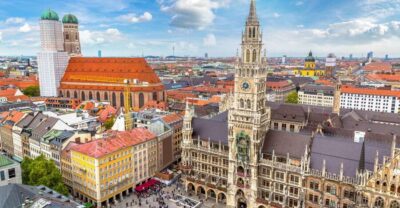
Munich’s city center is compact, which is great for history on foot. You’ll meet your guide at the Tourist Information Office at Marienplatz, and the tour moves from there as one connected narrative. Expect a guided walk, not a museum stop fest, so you’ll be learning while you’re moving.
This start matters because Marienplatz is where you quickly get oriented. From here, you can picture how propaganda and political theater played out in public space, not behind closed doors. It also keeps the experience practical, you are not hunting for details around town all day.
If your Spanish is solid, you will likely appreciate how the guide keeps the story moving without long pauses. The better your language comfort, the more you’ll catch the guide’s explanations at each stop.
The political origin path, Odeonsplatz to Hofbräuhaus
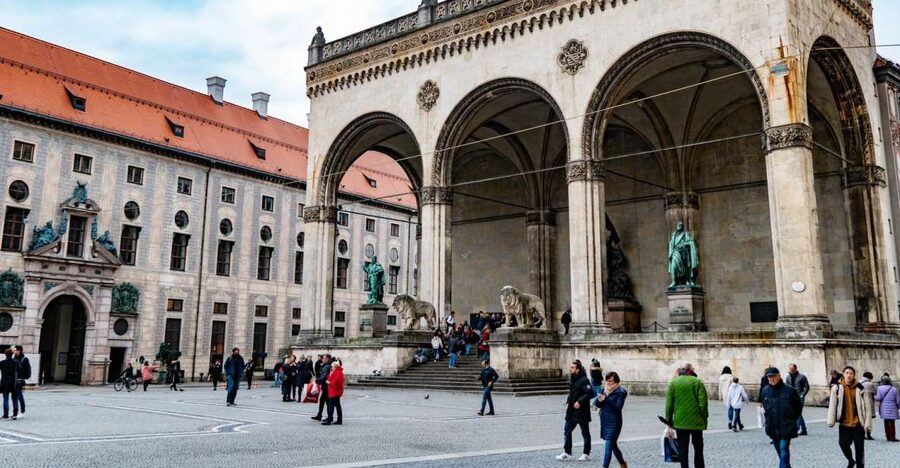
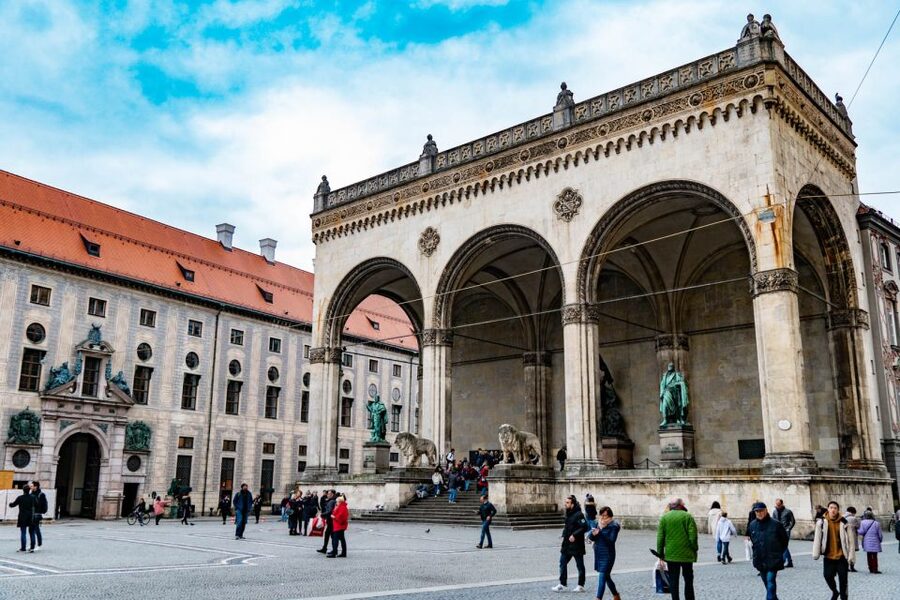
The route heads toward Odeonsplatz, a key transition point for understanding how Nazi power gathered attention in Munich. From there, you go to Hofbräuhaus, a place that matters to the Beer Hall Putsch story. Even if you have only heard the name of the putsch before, seeing the location in context helps it feel less like textbook trivia.
Here’s what I think makes this section valuable for you: the tour ties the movement’s beginnings to real addresses and real public venues. You’re not only learning that early Nazi leaders used spectacle, you’re seeing how the city offered stages for that message. It is political history with street reference points.
You can also expect the guide to connect Hofbräuhaus to the broader origins of the National Socialist German Workers’ Party. That link matters because it shows how the early movement built legitimacy through public events before the regime fully hardened into power.
Haus der Kunst and how the regime used art
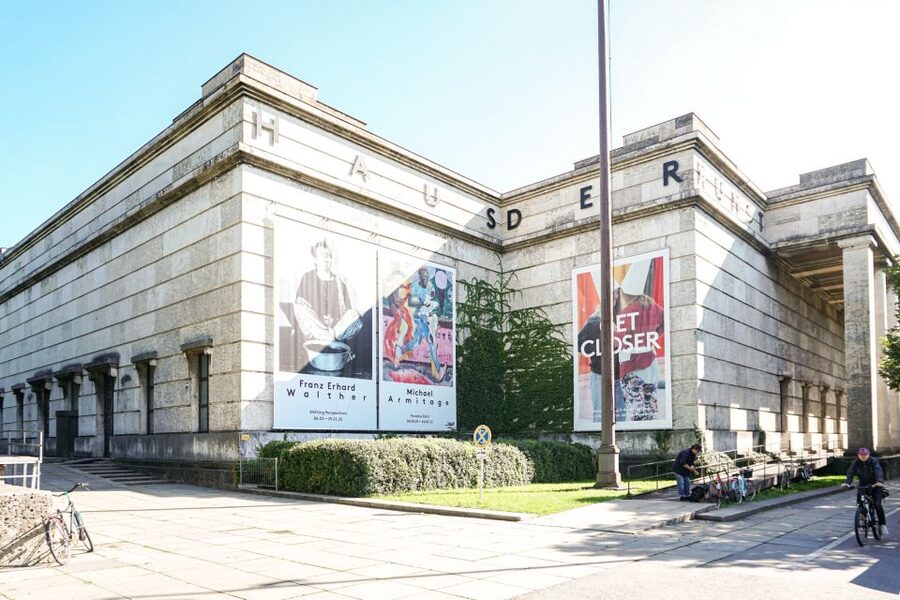
After Hofbräuhaus, the walk reaches the Haus der Kunst area. This stop focuses on Nazi propaganda as it related to art, since the building was the first propaganda building in Nazi Germany. That detail is a clue about the tour’s angle, it treats cultural control as part of the regime’s political strategy.
You’ll also hear about the banning of what the Nazi system labeled degenerate art. This is one of those moments where the guide’s job is not just to list policies, but to explain why they mattered. Art wasn’t optional for the Nazis, it was a tool for declaring what the nation should admire and what it should reject.
A practical note for you: because this part is about policy and cultural messaging, pay attention even when you think you know the background. The tour’s value is in connecting the dots between propaganda buildings and the regime’s broader control efforts.
German Resistance on the walk, Georg Elser and the White Rose
Then the tour shifts to the German Resistance movement, and that change in theme is important. Too many history walks stop at the rise of the Nazis, but this one makes room for people who resisted.
You’ll hear about Georg Elser, and you’ll also learn about the White Rose. The effect is that you stop thinking of the story as one straight line from Hitler to defeat. Instead, you see resistance as something present during the same era, with real protagonists.
For you, this section can be a needed balance. You get context for the moral and political pressure of the time, and you leave with a better sense of how opposition took shape inside Germany. It also avoids the trap of turning the tour into only a sequence of notorious events.
Other walking routes through Munich
Führerbau and the Munich Agreement of 1938
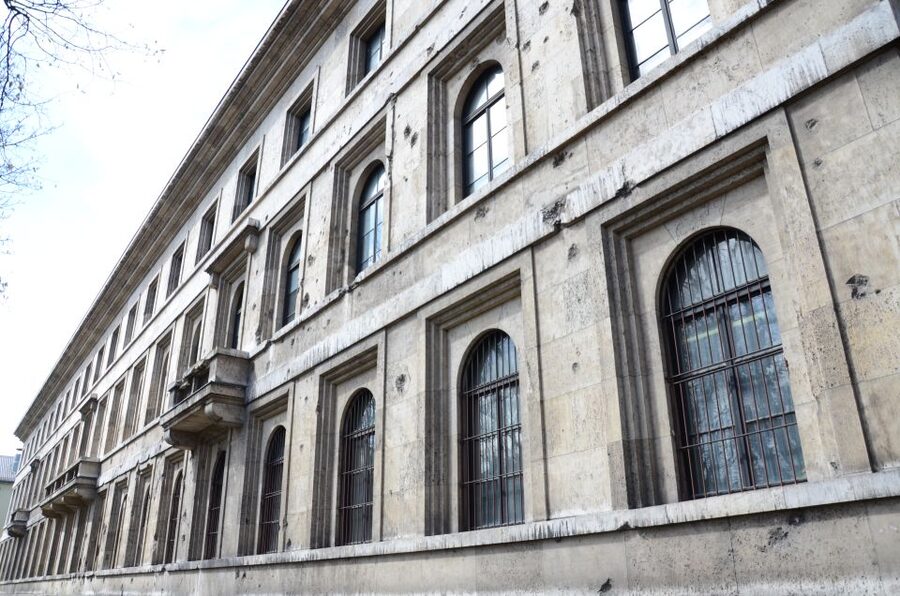
Next comes Führerbau, a major location for understanding the Munich Agreement, signed in 1938. If you have any memory of the Munich Agreement from school or headlines, this is where the tour helps it become real. The point is not just the agreement itself, it’s why it belongs in a walking history of the Nazi movement.
When you stand near relevant sites, the agreement stops being an abstract diplomatic phrase. It becomes part of the same story you learned earlier, the rise of the party, the public power plays, and how international politics intersected with that momentum.
This is also one reason I like this tour format. A walking route forces you to keep switching from person to place to event. That can make the material stick, because your brain keeps building visual links between concepts.
Königsplatz, where the tour wraps
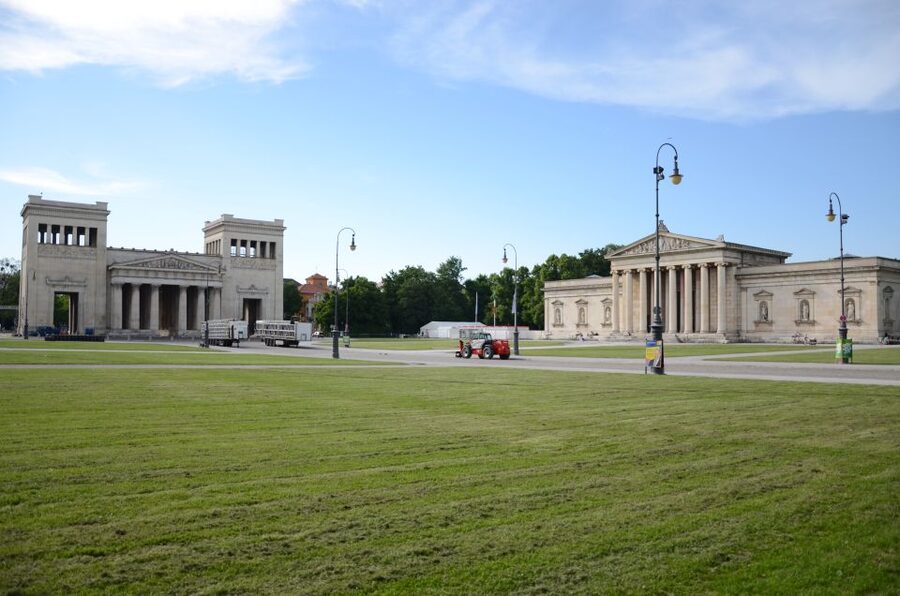
The tour ends at Königsplatz. By the time you reach the finish area, the route has already taken you through key stages: origins, public events, propaganda in cultural institutions, and resistance, plus the diplomatic backdrop connected to 1938.
Finishing here is useful for two reasons. First, it gives you a clean stop point where your mental timeline can settle. Second, it leaves you with the chance to continue exploring nearby sites on your own, without feeling like you must keep going immediately.
If you want to make the most of your time after the tour, keep a note app open and jot down any names you want to research later, like the figures the guide covered and the key events you heard tied to each location. That way your next reading session becomes easier.
Price and value, $23 for a 2.5-hour guided walk
At $23 per person for a 2.5-hour walking tour, this is the kind of price point that feels practical for a focused, topic-specific experience. You are paying for a live guide and a guided route that connects multiple sites into one coherent storyline.
Is it a bargain? For Munich, $23 for a 2.5-hour walk with a guide is usually reasonable, especially when the stops include big, central landmarks. It also helps that the tour is designed around walking between locations rather than forcing extra paid entries into the itinerary.
You do need to plan for what is not included. There is no food or drinks, so bring snacks if you tend to get hungry during city walks. You’ll also want comfortable shoes, because this is still a history walk, not a casual stroll with frequent seating breaks mentioned in the basic info.
One more small value detail: the tour has free cancellation up to 24 hours in advance. That gives you a low-stress way to book while your Munich plans are still shifting.
Who this tour fits, and who should skip it
This experience is best for adults and teens who want a guided, place-based overview of Nazi-era Munich and its surrounding context. The emphasis on the Nazi movement’s origins, the Beer Hall Putsch, propaganda building themes, and resistance stories makes it a strong match for history-minded travelers who like clear structure.
You should also know two hard requirements before you book. The tour is not open to travelers who do not speak Spanish, because the live guide is Spanish. And children under 13 are not allowed.
If you are traveling with kids, or you want an English-language guide, this one likely will not work. In that case, you can save yourself frustration and pick a different Munich history tour that matches your language needs.
What the guide does well, and why reviews rate it highly
The overall rating is 4.9 with 34 reviews, and the comments point to two consistent strengths. First, the tour gives a lot of important historical information without feeling chaotic. Second, it stays well paced, which is crucial for a subject that can turn into a long lecture.
Another theme is that the guide comes across as friendly and knowledgeable in how they present the topic. That kind of delivery matters on a walking tour, because you are balancing movement, sight lines, and concentration. When a guide keeps the pace right, you actually absorb more, even if you already know some of the background.
Tips to get the most from this walk
This is one of those tours where small prep makes a difference.
- Wear shoes you trust for a couple hours on city streets.
- Since the tour is Spanish-only, make sure you are comfortable catching spoken history at normal speaking speed.
- If the Nazi-era material feels emotionally heavy for you, plan a calmer evening afterward. You’ll likely want space to process what you learned.
Also, keep your expectations realistic. This is not a film recap or a quick highlight reel. It is a walking narrative through major sites connected to the political story the tour is focused on.
Should you book this Munich Third Reich guided walking tour?
If you speak Spanish and want a structured, on-foot history walk that connects Munich landmarks to key events, I think you should book it. The route covers major places like Hofbräuhaus, Haus der Kunst, Führerbau, and includes resistance material with figures such as Georg Elser and the White Rose. For $23, in a focused 2.5-hour format, it offers strong value for travelers who like learning by seeing.
Skip it if you need an English-language tour, or if you are traveling with children under 13. And if you want food included or long museum-style breaks, this format may not be your best match.
FAQ
Where does the tour start?
You meet your guide in front of the Tourist Information Office at Marienplatz.
Where does the tour end?
The tour concludes at Königsplatz, and the activity listing says it ends back at the meeting point.
How long is the Munich walking tour?
It lasts 2.5 hours.
How much does the tour cost?
The price is $23 per person.
What language is the live guide?
The live tour guide is Spanish only, and the tour is not open to travelers who do not speak Spanish.
Is food and drinks included?
No, food and drinks are not included.
Are children allowed?
Children under age 13 are not allowed to participate.
How many people are required for the tour to run?
The tour requires a minimum of four participants to operate. If the minimum is not met, the local partner will contact you and offer an alternative.
What should I bring?
Bring comfortable shoes.
Seeing Munich in One Go
Pavements of Munich
Wartime History Walks We Have Reviewed
Everything else we filed on Munich
- Munich Beer and Bavarian Bites Private Tour
★ 5.0 · 11 reviews - Private Day Trip from Munich to Neuschwanstein and Linderhof
★ 4.0 · 11 reviews - Private Munich Old Town Walking Tour – with optional Breakfast
★ 5.0 · 11 reviews - Festive Concert in the All-Saints Court Church
★ 4.6 · 11 reviews - Private Castle Tour from Munich: Neuschwanstein, Hohenschwangau, and Linderhof
★ 4.5 · 12 reviews - Munich: Oktoberfest Big Beer Tent Evening including table reservation
★ 4.8 · 12 reviews
Third Reich and Wartime History Tours, side by side.
 ★ 4.9Berlin: Third Reich and Cold War 2 Hour Walking TourFrom $236,830 reviews
 ★ 4.6Munich: Third Reich & WWII Walking TourFrom $316,181 reviews
 ★ 5.0Berlin’s Best: 2 Hour Walking Tour Third Reich and the Cold WarFrom $245,486 reviews
 ★ 4.5Third Reich Walking Tour MunichFrom $454,291 reviews
 ★ 5.0Third Reich Berlin: Hitler and WWII Walking TourFrom $243,301 reviews
 ★ 4.7Nuremberg: Walking Tour of Former Nazi Party Rally GroundsFrom $151,665 reviews
 ★ 4.9Berlin: Third Reich, Hitler, and WWII Walking TourFrom $201,133 reviews
 ★ 4.8Nuremberg: Historischer Kunstbunker WWII Art Bunker TourFrom $14921 reviews
Other lists this tour is on