
REVIEW · BERLIN WALL
Private Cold War Berlin: Espionage, Berlin Wall, a Divided City
Berlin tells its Cold War story on foot. This private walking tour strings together the Wall, espionage, and escape attempts at real sites, with a guide who keeps the human stakes front and center. I love the hotel pickup and drop-off, because it saves you time in a city where every tram change can cost precious minutes. I also love the way the route connects big events to everyday people trying to survive, get a message across, or simply say goodbye.
One thing to plan for: it’s an active walking tour, so wear comfortable shoes and expect standing time at memorials and museums.
In This Review
- Key highlights at a glance
- Private Cold War Berlin on Foot: what you get in 3 to 4 hours
- Price and value: is $191.44 per person worth it?
- Active comfort tips before you start
- Bernauer Strasse Wall Memorial: escape tunnels and the Chapel of Reconciliation
- Tränenpalast at Friedrichstrasse: farewells and espionage at the same border crossing
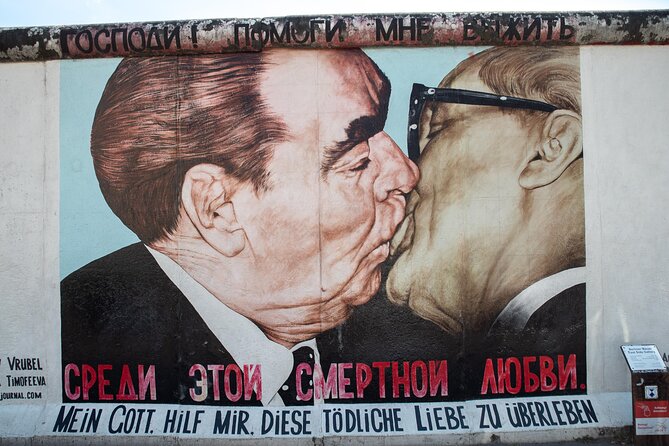
- East Side Gallery: when the Wall became public art
- Stasimuseum and Stasi HQ: how surveillance worked in real life
- Prenzlauer Berg prison sites: NKVD to Stasi, same location, different regime
- Checkpoint Charlie and Alexanderplatz: Cold War tension and the push for change
- Checkpoint Charlie
- Alexanderplatz protest on Nov 4, 1989
- How the guide experience makes a difference
- Who should book this Cold War Berlin route?
- Should you book this private Cold War Berlin tour?
- FAQ
- How long is the tour?
- Is this tour mostly walking?
- Does the tour include hotel pickup and drop-off?
- Is the tour private?
- What language is the tour offered in?
- Are tickets included for the stops?
- Is food included?
- Does the tour operate in all weather?
- How far in advance is the tour usually booked?
- Is there a cancellation refund policy?
Key highlights at a glance
- Bernauer Strasse Wall Memorial with stories of Tunnel 57 and Tunnel 29, including Tunnel 29’s 1962 escape
- Tränenpalast (Palace of Tears) at Friedrichstrasse, where farewells and spy activity happened at the same border crossing
- East Side Gallery murals, a 1.3 km stretch that turns a former dividing line into public art
- Stasimuseum at Stasi HQ, including how surveillance used informants, hidden cameras, and wiretapping
- Checkpoint Charlie and its Cold War flashpoints, including standoffs during the Berlin Crisis of 1961
- Alexanderplatz protest of Nov 4, 1989, when more than half a million people demanded change
Other walks along the Wall we have reviewed
- Skip-the-Line: Berlin Wall Museum at Checkpoint Charlie★ 4.1 · 2,041 reviews
- Berlin: East Side Gallery Spree Cruise in a Solar Catamaran★ 4.0 · 1,039 reviews
- Cold War, Berlin Wall, Spies and the East Side Gallery★ 5.0 · 1,024 reviews
- THE WALL: asisi Panorama Berlin Ticket★ 4.5 · 580 reviews
Private Cold War Berlin on Foot: what you get in 3 to 4 hours
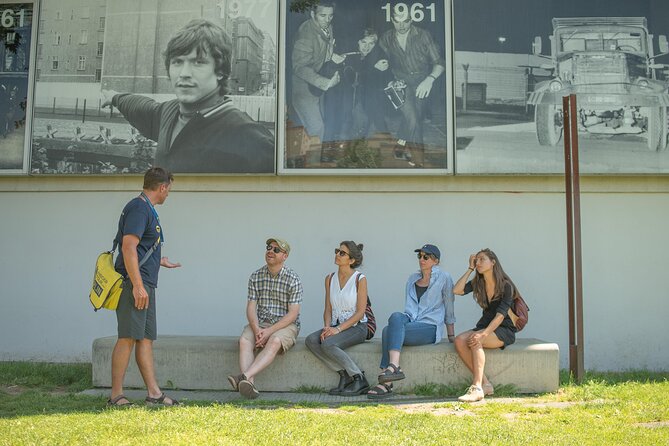
This is a straight-to-the-point way to understand a complicated period. In about 3 to 4 hours, you cover the places where politics turned into daily pressure, and where intelligence games could mean life or death.
The value here is not just the sites, it’s the way the route builds cause and effect. You start with the Wall’s physical impact, then move into borders, propaganda, surveillance, and the moment people pushed back so hard the system couldn’t hold.
If you want a Berlin Wall tour that feels personal, you’ll like this. It’s set up as a private tour for only your group, so your guide can slow down, answer questions, and adjust the pace.
Price and value: is $191.44 per person worth it?
At $191.44 per person, you’re paying for a private guide plus pickup and drop-off. For a lot of Berlin sightseeing, you’d pay similar money for entry tickets and transit time without the focused narrative. Here, most stops are admission ticket free, which helps your money go toward the guide, not paperwork.
Also, private matters in this topic. Cold War Berlin rewards details. A good guide helps you keep names and timelines straight, and makes the stories land without turning them into a list.
The trade-off is that you’re not buying extra time at each stop. You’re buying a well-connected route, so you should be ready to walk, listen, and absorb a lot in one afternoon or morning.
Active comfort tips before you start
This works best for active travelers. The route is built as a walking tour, with multiple short stops inside and outside key sites.
A few practical things help a lot:
- Bring comfortable shoes for uneven sidewalks and time standing near exhibits.
- Dress for all weather, since it operates in all conditions.
- Plan for no food included, so you might want a light snack before or after.
If you have mobility limitations, it can still be a good fit. One guide experience included accommodating physical limitations, so it’s worth mentioning your needs when you book.
Bernauer Strasse Wall Memorial: escape tunnels and the Chapel of Reconciliation
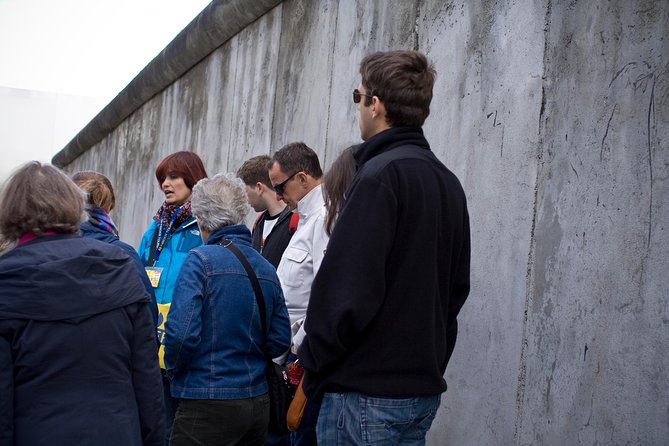
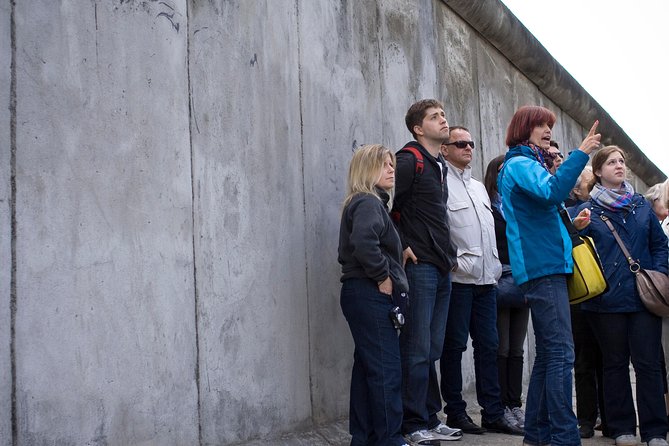
Your first stop hits you with the Wall at its most emotional. At the Memorial of the Berlin Wall on Bernauer Strasse, you see a preserved section of the Wall alongside the Chapel of Reconciliation. That combination matters: it’s not just concrete and dates, it’s the feeling of a city split in a way that families could feel every day.
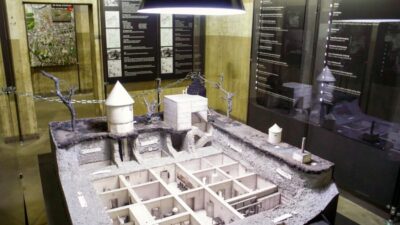
What I like about this stop is the specificity. You get real escape attempts, including Tunnel 57 and Tunnel 29. Tunnel 29 is especially memorable because it led 29 people to freedom in 1962. Hearing those numbers tied to a location helps you understand why people risked everything, even when failure meant prison, violence, or worse.
What to watch for on site: the memorial setting encourages quiet reflection. Even on a guided group pace, the physical layout makes it harder to treat this like a typical photo stop. You’ll probably want a moment to stand and take in the scale before the story moves on.
Possible drawback: this stop sets a heavy tone. If you’re hoping for a lighter, funny history walk, you may find the emotions intense early in the tour. But if your goal is understanding, it’s a smart place to start.
More of the divided city, written up in full


Tränenpalast at Friedrichstrasse: farewells and espionage at the same border crossing
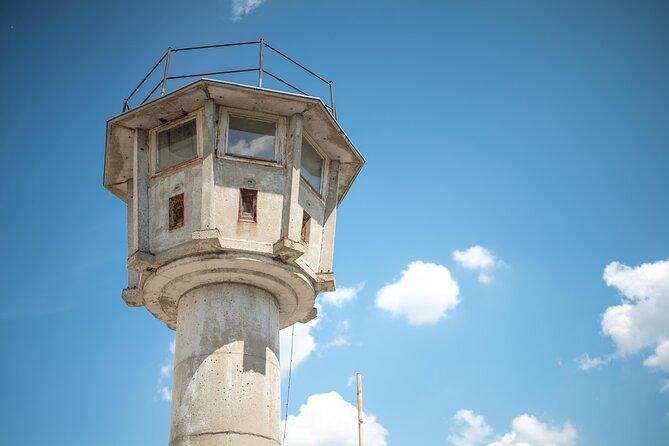
Then you shift from the Wall as a barrier to the Wall as a system. Tränenpalast, the Palace of Tears at Friedrichstrasse, was a border crossing point where East Berliners faced heartbreaking goodbyes when moving into West Berlin.
The building’s past works on two levels. First, it’s intensely human: you get the sense of what it meant to be processed, separated, and watched while trying to hope for the future. Second, it connects to intelligence work. This was also a hotspot for spies attempting to cross between East and West using clever tactics to avoid detection.
Today, the museum inside Tränenpalast explains the border control world and the spy networks behind it. That mix is exactly why this stop belongs on a Cold War route. It shows that espionage wasn’t abstract. It was tied to paperwork, timing, identity, and fear.
Practical tip: because this stop is short, go in with curiosity. If you want extra time, you might consider pairing this tour with a later independent visit when you can take slower notes.
East Side Gallery: when the Wall became public art
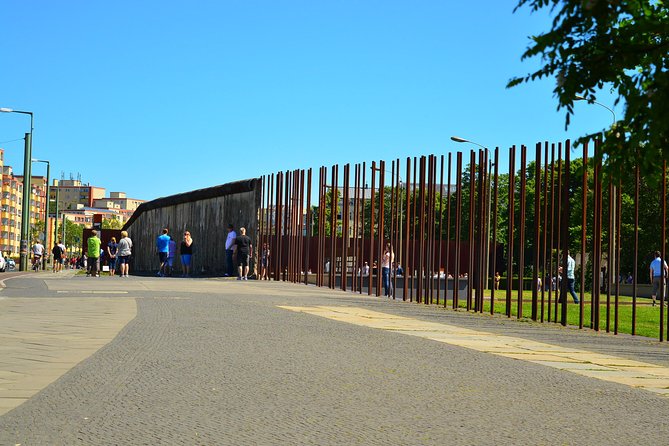
After the emotional weight of the memorial and the border crossing, you get a visual reset at the East Side Gallery. This is a 1.3 km stretch of the Berlin Wall transformed into an open-air art gallery, painted after the Wall fell in 1989.
Your guide will connect the murals to the period right after reunification, including the optimism and hope artists wanted to put into public space. In a tour like this, that context matters. The art isn’t just decoration. It’s a statement, and a reminder that the Wall’s legacy did not disappear when the concrete came down.
If you like photography, this stop can be fun because the murals are meant for the street view, not just museum walls. Bring patience for a bit of crowding, especially when the weather is good.
Possible drawback: since the gallery is long, you won’t see it all during this portion. You’ll experience enough to grasp the idea and pick a few standout sections, but if you want every mural, you’ll need to come back on your own time.
Stasimuseum and Stasi HQ: how surveillance worked in real life
One of the most sobering parts of the tour is the Stasi Museum at the former Stasi headquarters. This is where you stop thinking about the Cold War as big speeches and start thinking about control on a human scale.
The museum tells you how an extensive surveillance system shaped daily life. You’ll learn about informants and spying networks, and also specific methods such as hidden cameras and wiretapping. What hits hardest is the effect on families and individuals, including interrogation and harassment.
This stop feels different from the Wall memorial because it’s less about visible barriers and more about invisible ones. The Wall was concrete and gates. The Stasi was surveillance, fear, and suspicion that could spread through ordinary routines.
Why it’s valuable: it gives you a mechanism. When you later walk through Berlin’s neighborhoods, you can connect the architecture to the story of who watched whom and how.
Practical note: the museum setting can mean time standing and reading. If you need breaks, you can ask your guide, since it’s a private tour format.
Prenzlauer Berg prison sites: NKVD to Stasi, same location, different regime
Next you head to Prenzlauer Berg, to the Fröbelstraße corner where both a former NKVD prison and the Stasi prison were located. That succession matters. It shows how power systems shift, yet the machinery of repression can stay in place.
After WWII, Soviet authorities used the NKVD prison to detain political prisoners, suspected spies, and people considered enemies of the state. Then, with the establishment of the GDR, the prison was taken over by the Stasi, continuing the surveillance and repression.
Your guide will explain the harsh conditions faced by prisoners and the methods used by both authorities to silence opposition. This is one of those “same bricks, different label” stories. The horror changes names, but not the impact on real people.
Possible drawback: because this segment is shorter, you may wish you had longer to process and absorb what you’re seeing. Still, it’s useful to get the bigger connection to the Stasi theme before the tour moves toward the more famous border sites.
Checkpoint Charlie and Alexanderplatz: Cold War tension and the push for change
The last stretch brings you toward two iconic landmarks tied to global Cold War attention, then ends at a moment when Berliners forced history to change direction.
Checkpoint Charlie
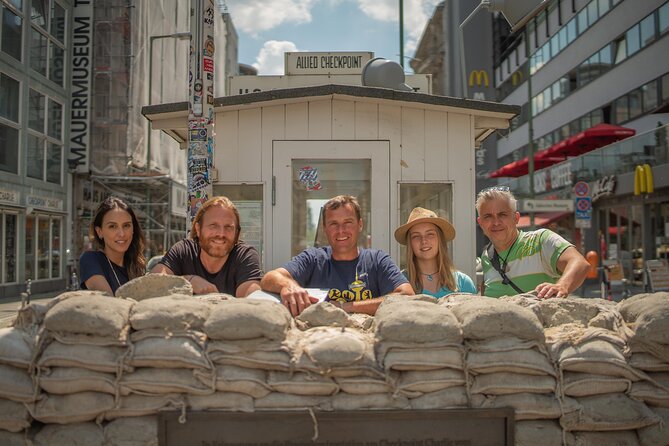
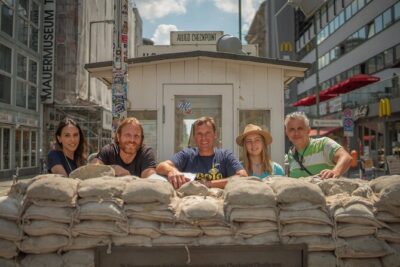
Checkpoint Charlie is one of the most recognizable Cold War symbols. It was a former border crossing between East and West Berlin, and it became a stage for tense standoffs between American and Soviet forces.
Your guide will connect it to dramatic events during the Berlin Crisis of 1961 when the Wall was erected. You’ll also hear about escapes, spy exchanges, and moments that pushed the world toward conflict. There’s a museum at the site too, with exhibits focused on espionage and the Wall era.
Why this works in the route: it gives you a reality check. Even if you understand the Wall conceptually, this stop brings the international pressure into view.
Alexanderplatz protest on Nov 4, 1989
Then you go to Alexanderplatz, which served as a major stage for Cold War events and East German power structures. A key moment here was the Nov 4, 1989 protest, when over half a million East Berliners gathered to demand change.
Your guide points out Cold War landmarks around the square, including the Television Tower (Fernsehturm) and the Red City Hall, linked to GDR leadership. You also learn how this area was tied to Stasi surveillance efforts, and how peaceful resistance in spaces like this helped bring about the end of Berlin’s division.
What to watch for: try to let your understanding shift from survival and control to momentum and collective action. The tour moves from tunnels and prisons to crowds and protests, and that arc is the payoff.
How the guide experience makes a difference
This is a tour where the guide really matters. In particular, the best experiences from this tour type come from people who can tell the human side without turning it into drama.
I’ve seen how guides such as Tina can act as natural storytellers, explaining the lived experience of East and West Germany during the Cold War. I’ve also seen how another guide, Toni, brought a calm, informative style, and added extra context because he was a child during the Cold War.
Even beyond storytelling, the practical advantage is responsiveness. One guide experience noted accommodating physical limitations. That’s not a small thing on a walking route through memorials and museums.
Who should book this Cold War Berlin route?
Book this if you:
- Want a private Berlin Wall and espionage walk that links sites together in one flow.
- Like history that focuses on people, not just dates.
- Are visiting Berlin for the first time or you’ve been before and want a sharper Cold War lens.
- Enjoy active walking tours and can handle a few museum moments with standing and reading.
Skip it if you:
- Want a relaxed, stop-and-shop pace.
- Prefer long, independent time inside museums.
- Are looking for a light sightseeing day with minimal emotional content.
Should you book this private Cold War Berlin tour?
If your goal is to understand Berlin’s division through the Wall, borders, and surveillance, I think this is a strong yes. You get a guided route that covers the big named places while also explaining the mechanics behind escape attempts and espionage, from Tunnel 29 to the Stasi’s surveillance methods.
For value, the private format plus hotel pickup and drop-off makes a real difference, especially when you want to spend your energy on history instead of transit juggling. Just go in prepared for an active walk and an emotional theme, starting with the Bernauer Strasse memorial.
FAQ
How long is the tour?
The tour lasts about 3 to 4 hours.
Is this tour mostly walking?
Yes, it’s a walking tour and it’s best suited to active travelers.
Does the tour include hotel pickup and drop-off?
Yes, hotel pickup and hotel drop-offs are included.
Is the tour private?
Yes. It is a private tour/activity, meaning only your group participates.
What language is the tour offered in?
The tour is offered in English.
Are tickets included for the stops?
Admission tickets are listed as free for the stops included in the tour.
Is food included?
No, food and drinks are not included.
Does the tour operate in all weather?
Yes, it operates in all weather conditions, so dress appropriately.
How far in advance is the tour usually booked?
On average, it is booked about 28 days in advance.
Is there a cancellation refund policy?
Yes, free cancellation is available. You can cancel up to 24 hours in advance for a full refund.
Seeing Berlin in One Go
The Divided Years, Reviewed
Following the Wall a Little Further
Everything else we filed on Berlin
- 2-H Segway Sightseeing Tour Berlin
★ 4.5 · 11 reviews - Daily First Rickshaw promotion in Combi Vehicle public Group 90€
★ 5.0 · 11 reviews - Berlin: One-Hour Segway Signature Tour
★ 5.0 · 11 reviews - Berlin: Street Food Tour with 10 Tastings
★ 5.0 · 11 reviews - Private Third Reich Walking Tour of Berlin
★ 5.0 · 12 reviews - In Search of Jewish Berlin Walking Tour
★ 5.0 · 12 reviews
Berlin Wall and Divided City Tours, side by side.
 ★ 4.8Nuremberg: Tunnels and Secret Passages in the City Wall TourFrom $142,334 reviews
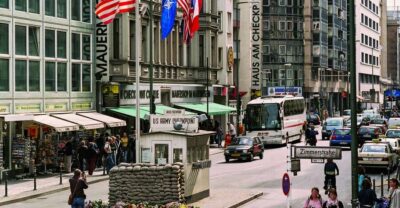 ★ 4.1Skip-the-Line: Berlin Wall Museum at Checkpoint CharlieFrom $212,041 reviews
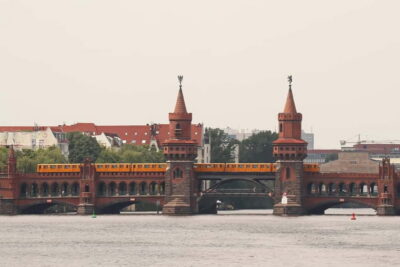 ★ 4.0Berlin: East Side Gallery Spree Cruise in a Solar CatamaranFrom $271,039 reviews
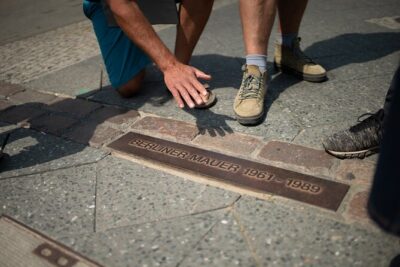 ★ 5.0Cold War, Berlin Wall, Spies and the East Side GalleryFrom $181,024 reviews
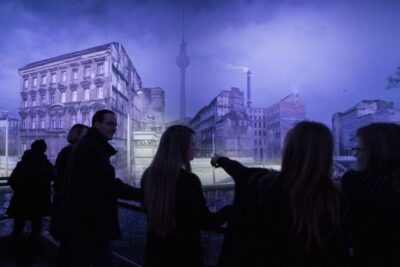 ★ 4.5THE WALL: asisi Panorama Berlin TicketFrom $16580 reviews
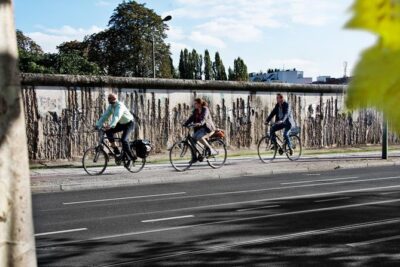 ★ 4.7Berlin: Guided Bike Tour of the Berlin Wall and Third ReichFrom $40499 reviews
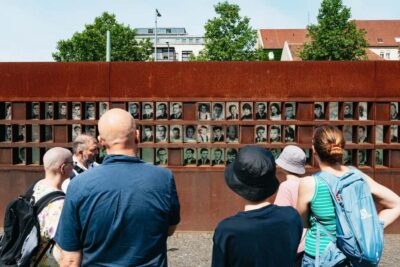 ★ 4.8Berlin: Cold War Walking Tour on Berlin Wall RouteFrom $26437 reviews
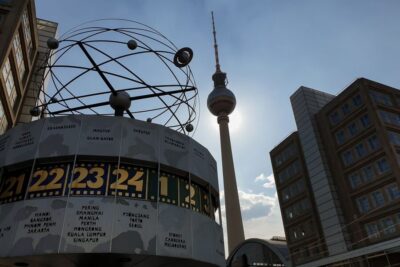 ★ 4.9East Berlin and the Wall: Walking TourFrom $351407 reviews
Other lists this tour is on