
REVIEW · WARTIME HISTORY
Private Walking Tour in Berlin: Hitler’s Germany & WWII
Berlin feels different after you walk this route.
This private 4-hour walk through Hitler’s Germany and WWII focuses on what the Nazi state built, used, and covered up, with a historian guide explaining what you’re seeing. I love the way the tour connects the dots between places, not just dates, and how it pushes past simple slogans into real, human consequences.
I also like the balance: it includes major sites of Nazi terror, and it also gives space to people who were targeted and to those who resisted in different ways. The main drawback to plan for is that you’ll see everything from the outside only, so you will not be going inside the buildings or museums along the way.
In This Review
- Key highlights you’ll feel on this walk
- Nazi Berlin on Foot, with a Historian Guide
- Price and logistics: what $173.06 buys you
- Start at Neue Promenade, end by the Reichstag: timing that makes sense
- Museum Blindenwerkstatt Otto Weidt: a site tied to survival and choice
- Stiftung Neue Synagoge Berlin and the deportation thread
- Topography of Terror and the Aviation Ministry stop: systems, not just scenes
- Gestapo and SS headquarters context, plus Hitler’s bunker area
- Johann Georg Elser and the memorial for those persecuted for identity
- Holocaust Memorial in Berlin: why it deserves time
- Soviet Memorial Tiergarten and finishing with Reichstag views
- Guides matter: when Jasper, Stefan, Rohan, Lewis, or Xavier leads
- Who should book this tour
- Before you go: how to make the day feel manageable
- Should you book this private Berlin walk?
- FAQ
- How long is the Private Walking Tour in Berlin: Hitler’s Germany & WWII?
- Is this tour private?
- Does the tour include pickup?
- Are attractions entered, or do you view them from the outside?
- Are admission tickets included?
- Do I need public transport tickets?
- What are the start and end points?
- Can I cancel for free?
- Is a mobile ticket used?
- Are service animals allowed?
Key highlights you’ll feel on this walk
- Historian-led storytelling that ties places together instead of listing facts
- Half-day pace (about 4 hours) that’s long enough to matter, short enough to keep it doable
- Anhalter Bahnhof and Topography of Terror as central stops that set the tone fast
- Holocaust and other memorials that frame remembrance with purpose, not just sightseeing
- Outside viewing only, with the Reichstag stop not including entry
Further wartime history walks we have written up
- Berlin: Third Reich and Cold War 2 Hour Walking Tour★ 4.9 · 6,830 reviews
- Berlin’s Best: 2 Hour Walking Tour Third Reich and the Cold War★ 5.0 · 5,486 reviews
- Third Reich Berlin: Hitler and WWII Walking Tour★ 5.0 · 3,301 reviews
- Berlin: Third Reich, Hitler, and WWII Walking Tour★ 4.9 · 1,133 reviews
Nazi Berlin on Foot, with a Historian Guide

Berlin makes it easy to move fast, but this tour uses walking to slow you down. You start on the edge of central Berlin and gradually work toward the Reichstag, so the day becomes a route through power, persecution, and aftermath. The guide is a historian, and that matters, because the emphasis is on explanation, not just signage.
You will hit places tied to the Third Reich era and WWII, including locations connected to the former Gestapo and SS headquarters and the site of Hitler’s bunker. Even when you cannot enter, you still get the key context: what these sites were for, how the Nazi system operated, and what it cost ordinary people.
This is not “light history.” You should expect heavy themes. The tour includes Holocaust remembrance and also memorials for groups persecuted under National Socialism, so you are walking in a landscape built to remember atrocity.
Price and logistics: what $173.06 buys you
At $173.06 per person, you’re paying for a private experience with a professional historian guide for about four hours. The value comes from the structure: you get a single, guided thread through multiple locations, rather than spending your time piecing together meaning on your own.
A few practical points that affect value:
- Most stops list free admission tickets, and the tour includes all fees and taxes.
- You do not include entry into the Reichstag building, and the tour clearly sets expectations that you will only view attractions from the outside.
- You’ll likely need a public transport single ticket AB if you use transit to reach the start, with a note that it is about 4 euros per person.
Tips are not included, so budget a little extra if you’re the kind of traveler who likes to reward good guiding. Also note it’s designed as a private group, so you will not be crammed into a huge crowd.
Start at Neue Promenade, end by the Reichstag: timing that makes sense
The meeting point is Neue Promenade 3, 10178 Berlin, and the tour ends at the Reichstag building, Platz der Republik 1, 11011 Berlin. That end location is convenient if you want to keep exploring after.
The walk is about 4 hours, but it’s described as a half-day format where the remaining time depends on you. The guide can stay longer at a certain attraction based on group interest, so if a subject grabs you, you might have a chance to linger a bit.
Route planning tip: because you end at the Reichstag area, decide ahead of time what you’ll do after. A lot of people tack on a visit to the surrounding government quarter on their own, or they simply use transit to get out and reset before dinner.
Museum Blindenwerkstatt Otto Weidt: a site tied to survival and choice
The first stop is Museum Blindenwerkstatt Otto Weidt, where the guide explains the site’s history. You also get a short pause here, about 10 minutes.
What I like about starting with this kind of place is emotional contrast. You are not yet surrounded by the loud symbols of state violence. Instead, you start with a story shaped by human decisions under extreme pressure. Even if you only take in the basics in a short stop, it helps you tune your brain for the themes that come later.
Practical consideration: because the stop is brief, go in with one goal, like learning what the site represents and why it matters to the broader Nazi story you’ll be hearing for the next few hours.
Other walking routes through Berlin
Stiftung Neue Synagoge Berlin and the deportation thread
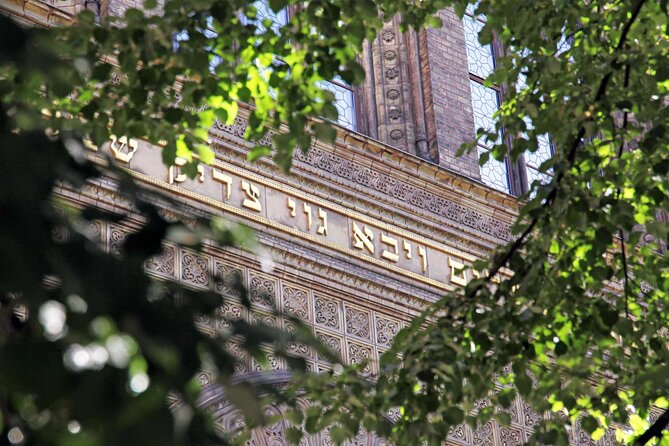
Next up is Stiftung Neue Synagoge Berlin – Centrum Judaicum, again with a short guided explanation. This stop matters because it frames Nazi history not just as politics, but as attacks on Jewish life and institutions.
Then the tour moves to Anhalter Bahnhof, where you’ll focus on its role in the deportation system. This is one of the stops named specifically for what it was used for: prisoners were deported from here to concentration camps. The emphasis on this particular location is powerful because it is a real piece of infrastructure, not an abstract idea.
The main drawback at a stop like this is also simple: 10 minutes can feel short next to a site this heavy. So listen for the guide’s key points and let the location do its work, instead of trying to absorb everything by memory alone.
Topography of Terror and the Aviation Ministry stop: systems, not just scenes
You’ll then reach Topography of Terror, one of Berlin’s most direct explanations of how the Nazi terror machine operated. Expect your guide to put the pieces together: the way power was administered, the way fear was produced, and how the system kept running.
After that is the Aviation Ministry of Berlin stop. The name alone tells you this was tied to state power. Your guide explains the history of the site as part of the larger story of the Third Reich and WWII.
Why this section works: it shifts your perspective from dramatic moments to the bureaucratic machinery that made atrocities possible. You start seeing the Holocaust and wartime terror as the result of planning and administration, not just chaos.
Tip for getting value here: come ready with one question you care about, like how ordinary institutions got repurposed for persecution. If you ask it at the right moment, the guide can connect it across multiple stops.
Gestapo and SS headquarters context, plus Hitler’s bunker area
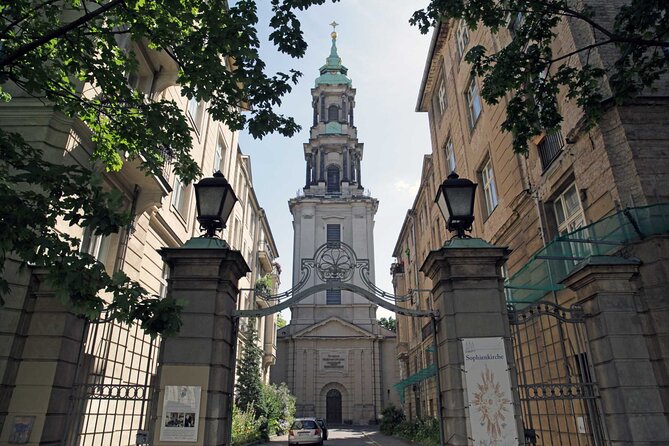
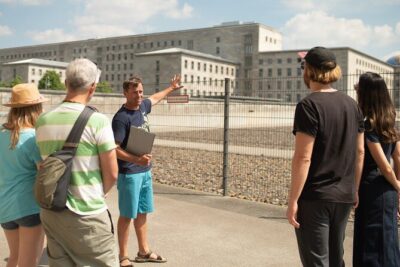
As part of the walk, you also see the former Gestapo and SS headquarters and the site of Hitler’s bunker, with explanations from the guide. These are the kinds of places where the distance between history and modern streets feels surreal.
Even though everything is viewed from the outside, your guide’s framing helps you understand why these spots mattered. You are listening for the human pattern: intimidation from above, enforcement on the ground, and how the Nazi leadership tried to control both reality and narrative.
Emotion check: if you feel overloaded, it’s okay to take mental breaks during the short pauses. Use those few minutes to reset your breathing and focus on what the guide says, not on how much it hurts.
Johann Georg Elser and the memorial for those persecuted for identity

One stop you should not treat like a quick photo op is the Johann Georg Elser sculpture. This is a specific name in the tour, and the guide uses it to explain history, keeping the focus on people who struggled against the Nazi system of terror.
From there, you’ll go to the Monument to Homosexuals Persecuted Under the National Socialist Regime. This is where the tour makes sure your understanding includes more than the usual shortlist of victim groups.
What I appreciate is that this stops doesn’t feel like a side note. It’s scheduled alongside the Holocaust remembrance, which tells your brain, “This is part of the same moral and political crime.” That pacing helps you avoid compartmentalizing history into separate boxes.
Holocaust Memorial in Berlin: why it deserves time
You’ll visit the Holocaust Memorial – Memorial to the Murdered Jews of Europe. This stop is longer than many on the route, about 15 minutes, with a guide explanation.
If you only remember one thing from this part of the tour, make it this: the memorial is not there for quick understanding. Even with a guide giving context, you still need time to absorb the atmosphere, the scale, and the intention.
Practical advice: wear comfortable shoes and plan to slow down at this stop. If you need a moment, take it. The best guided tours still leave space for your own reflection.
Soviet Memorial Tiergarten and finishing with Reichstag views
You’ll also see the Soviet Memorial Tiergarten, with the guide explaining its history. It adds a wider WWII and post-war perspective, reminding you that Berlin’s story does not end with Nazi collapse. The tour treats it as part of the wider arc, not just a final ornament.
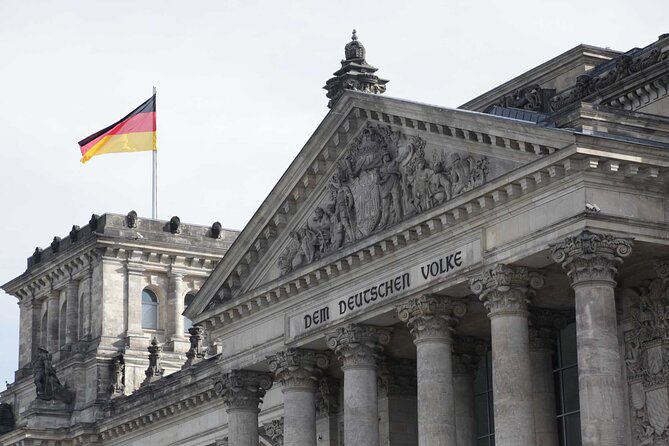
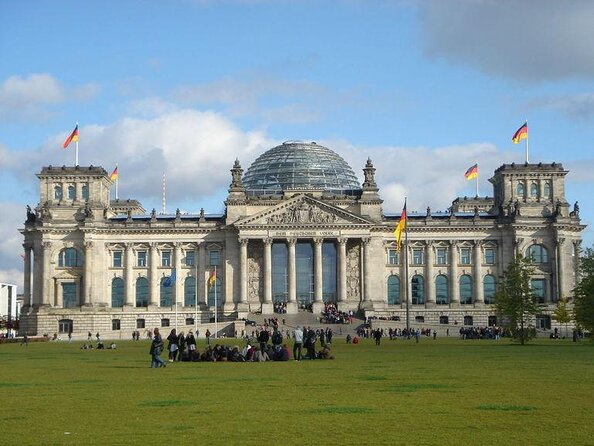
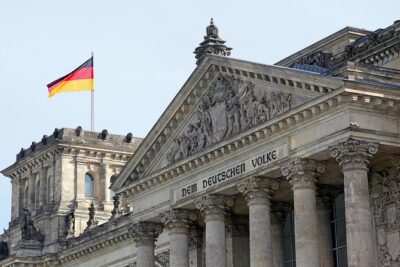
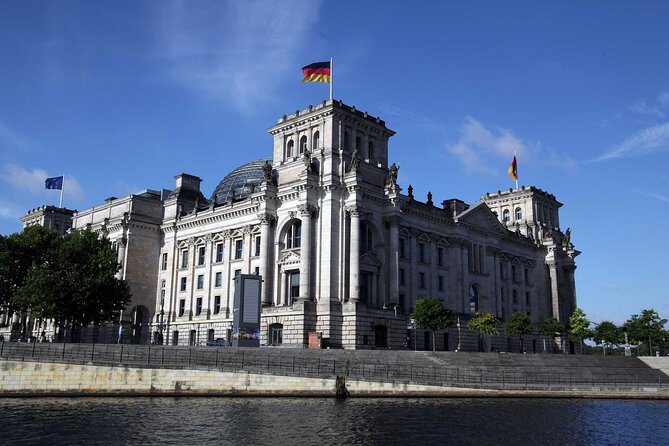
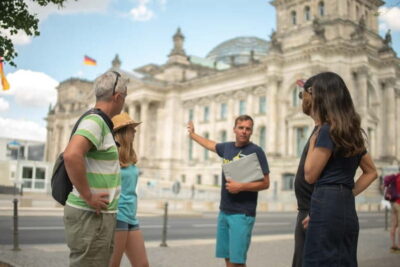
The walk ends with the Reichstag building, viewed from the outside. Entry is not included, and the stop is about 10 minutes. Still, this final location helps with a sense of contrast. You move from sites linked to terror and persecution toward a place associated with German political life. Even if you are not going inside, the guide’s framing can make the location feel meaningful rather than just iconic.
Guides matter: when Jasper, Stefan, Rohan, Lewis, or Xavier leads
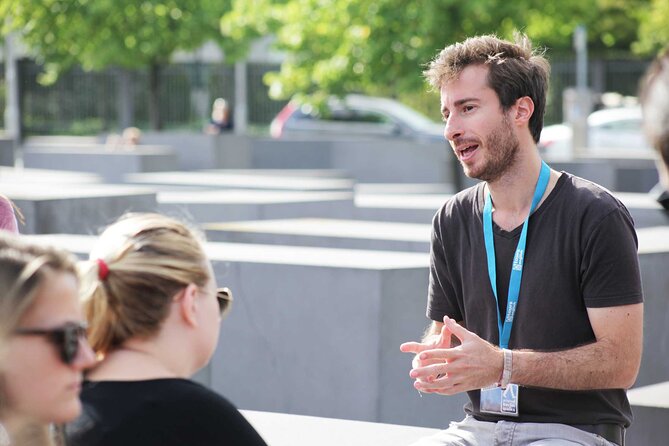
One of the most praised parts of this tour is the guiding itself. Past groups have highlighted guides such as Jasper, Stefan, Rohan, Lewis, and Xavier for explanations that are interactive and engaging. The common theme is that the guide can handle questions and adjust to the group.
What to look for as you go: a good guide does not just name events. They connect the site to a clear idea you can repeat later, like how intimidation was produced, how persecution was administered, or how different groups were targeted.
If you want an even better experience, ask one follow-up question during the early stops. For many people, that’s when the guide starts tailoring the story to what you care about.
Who should book this tour
This is a strong fit if you:
- want a structured, private walking route through Berlin’s WWII and Nazi-era sites
- prefer a historian guide who explains context at each stop
- like getting the story in a logical sequence, rather than hopping randomly between landmarks
- value memorials and victim stories, not just government locations
You might choose something else if you:
- hate walking for about four hours
- need to go inside buildings for your travel style, since you will be outside only
- prefer a lighter topic focus, because this route covers Holocaust and other persecutions directly
Before you go: how to make the day feel manageable
A few practical steps can make this walk easier.
- Wear comfortable shoes. Even though each stop is short, you’re on your feet for a long stretch.
- Bring water and something light to eat, especially if you’re out in warm weather. The subject is intense enough without dehydration.
- Use the question time. If a topic grabs you, ask. A private group setting usually makes it easier to steer.
- Respect the memorial tone. When you reach the Holocaust Memorial, slow down mentally and physically.
Also, because the tour ends at a central landmark, plan your post-tour timing so you are not rushing into a long transfer right away.
Should you book this private Berlin walk?
If you want Berlin to make sense historically, this is a smart choice. You get a 4-hour private tour that strings together major Nazi-era sites, the deportation story tied to Anhalter Bahnhof, Holocaust remembrance, and memorials for other persecuted groups. The historian guide is the key ingredient, and the tour’s structure keeps you from feeling lost or overwhelmed.
Book it if you like learning on foot, and you want a clear sequence that ends near the Reichstag so you can keep your day flexible. Skip it only if you specifically need indoor visits, or if you know you want a more lighthearted sightseeing outing.
FAQ
How long is the Private Walking Tour in Berlin: Hitler’s Germany & WWII?
It runs for about 4 hours (approx.).
Is this tour private?
Yes. It is a private tour/activity, and only your group participates.
Does the tour include pickup?
Pickup is offered, according to the tour features.
Are attractions entered, or do you view them from the outside?
You see the attractions only from the outside, and the tour notes that you do not enter them.
Are admission tickets included?
All listed admission tickets are free for the stops shown (except that tickets for the Reichstag are not included). The tour also states it includes all fees and taxes.
Do I need public transport tickets?
Tickets for public transport are not included. The note says a Single Ticket AB is required about 4 euros per person.
What are the start and end points?
Start is Neue Promenade 3, 10178 Berlin. The tour ends at Reichstag Building, Platz der Republik 1, 11011 Berlin.
Can I cancel for free?
Yes. There is free cancellation. You can cancel up to 24 hours in advance for a full refund.
Is a mobile ticket used?
Yes. The tour includes a mobile ticket feature.
Are service animals allowed?
Yes. Service animals are allowed.
Pavements of Berlin
Wartime History Walks We Have Reviewed
Everything else we filed on Berlin
- Private Photo Tour in Kreuzberg
★ 5.0 · 3 reviews - Kreuzberg Private Walking Tour: Immigrants, Artists & Hipsters
★ 5.0 · 3 reviews - Berlin’s Jewish Heritage: Private Tour of the Vibrant Jewish District
★ 5.0 · 3 reviews - Individual city tour Berlin for max. 8 persons
★ 5.0 · 3 reviews - Berlin & The Third Reich Private Guided Tour
★ 5.0 · 3 reviews - Private Analogue Photography Experience in Berlin
★ 5.0 · 3 reviews
Third Reich and Wartime History Tours, side by side.
 ★ 4.9Berlin: Third Reich and Cold War 2 Hour Walking TourFrom $236,830 reviews
 ★ 4.6Munich: Third Reich & WWII Walking TourFrom $316,181 reviews
 ★ 5.0Berlin’s Best: 2 Hour Walking Tour Third Reich and the Cold WarFrom $245,486 reviews
 ★ 4.5Third Reich Walking Tour MunichFrom $454,291 reviews
 ★ 5.0Third Reich Berlin: Hitler and WWII Walking TourFrom $243,301 reviews
 ★ 4.7Nuremberg: Walking Tour of Former Nazi Party Rally GroundsFrom $151,665 reviews
 ★ 4.9Berlin: Third Reich, Hitler, and WWII Walking TourFrom $201,133 reviews
 ★ 4.8Nuremberg: Historischer Kunstbunker WWII Art Bunker TourFrom $14921 reviews
Other lists this tour is on