
REVIEW · WARTIME HISTORY
Small-Group 2-Hour Munich and The Third Reich Walking Tour
Munich politics gets ugly fast on this walk. I liked how the Nazi-era story stays anchored to real street corners, not just dates, and how the small-group size keeps questions from getting lost.
This is a focused, 2-hour outing that uses Munich’s public spaces to explain how the Third Reich gained power and how specific decisions shaped real lives.
I especially liked starting at Marienplatz, where the guide links the city center to choices made in 1938 that targeted Jewish residents. The only drawback is it is mainly time on your feet, with limited chances to sit while the guide talks.
Alun Evans guides in English with a tone that is direct and appropriately sensitive, even when the subject matter is heavy. The tour runs in all weather, so dress like you mean it.
In This Review
- Quick hits before you go
- Why this Munich Nazi landmarks walk is worth your time (and how it stays respectful)
- Meeting at Marienplatz: starting in the city center, not a classroom
- Old Town Hall and the 1938 decision that turned into terror
- Hofbräuhaus and Hitler’s stagecraft, from speeches to influence
- Odeonsplatz and the 1923 gun battle of the Beer Hall Coup
- Königsplatz ceremonies, the Munich Agreement, and National Socialism documentation
- Small-group rhythm: walking pace, questions, and when you may want a break
- Price, value, and who this 2-hour tour fits best
- Should you book this Munich Third Reich walking tour?
- FAQ
- What language is the tour offered in?
- How long is the Munich and The Third Reich walking tour?
- How big is the group?
- Where do I meet for the tour?
- Is the tour mostly walking, or does it include lots of sitting?
- Does it run in bad weather?
- What is included in the price?
- Is there free cancellation?
Quick hits before you go
- Marienplatz as your starting line: you begin in Munich’s historic heart and connect it to decisions from 1938.
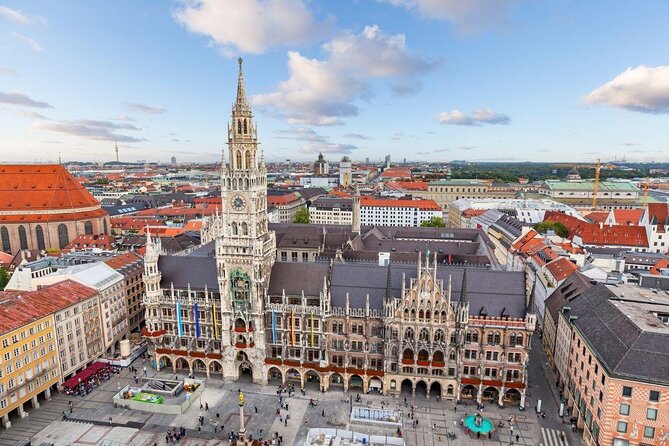
- Old Town Hall context: the guide points out where a 1938 pogrom against German Jewish people was decided in the public sphere.
- Hofbräuhaus and Hitler’s stage: you walk past the place where Hitler regularly gave speeches.
- Odeonsplatz and the 1923 gun battle: you see where the Nazis clashed with Bavarian police during the Beer Hall Coup.
- Königsplatz and 1938 diplomacy plus rituals: you stand where the Nazis held ceremonies after the 1923 failed coup, and you can visit the documentation center afterward.
Further wartime history walks we have written up
- Munich: Third Reich & WWII Walking Tour★ 4.6 · 6,181 reviews
- Third Reich Walking Tour Munich★ 4.5 · 4,291 reviews
- Munich: Birthplace of the Third Reich Guided Walking Tour★ 4.6 · 771 reviews
- Munich World War II Sites Including Dachau Concentration Camp★ 4.5 · 570 reviews
Why this Munich Nazi landmarks walk is worth your time (and how it stays respectful)
This tour is built around a simple idea: when you understand what happened, the buildings and plazas stop being scenery. Munich has a way of looking elegant and ordinary, even when the events tied to certain corners are brutal. That mismatch is exactly why a guided walk helps.
I also appreciate that the tour keeps a steady balance. You are not just ticking off sites. You are getting a guided narrative that explains how the Nazi movement grew, what events mattered, and why these places were useful to them. The tone matters here, and Alun Evans leans into clarity and care rather than shock tactics.
One more reason I like it: the pace is small-group friendly. With a max of 15 people, your questions have room to breathe, and you are not stuck staring at the back of someone else’s head for two hours.
Meeting at Marienplatz: starting in the city center, not a classroom
You meet at Landeshauptstadt München Stadtkämmerei, Marienplatz 8, 80331 München, and the start time is 3:00 pm. That matters because Marienplatz is easy to reach, and it sets the tone immediately. You are in the working heart of Munich, not off in some distant history museum zone.
You also get what you would want from a city-walk tour: pickup from a centrally located meeting point and a return back to the central area at the end. There is no complicated transit juggling during the walk.
One practical note. This is an all-weather activity and the walking is moderate. If rain is in the forecast, treat it like part of the plan: a light rain jacket and shoes with grip will save your evening.
Old Town Hall and the 1938 decision that turned into terror
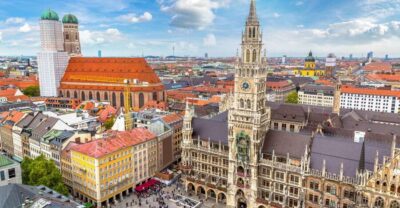
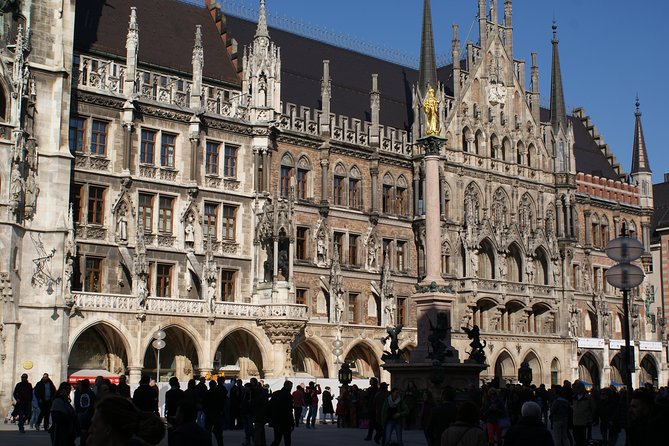
The first stop is Marienplatz, and the focus quickly becomes real policy, real consequences, not vague background. Your guide points out the old town hall on the square and connects it to a specific 1938 turning point: the decision to carry out a pogrom against the Jewish population of Germany.
That detail is heavy, but it is also the point of this kind of tour. It shows how persecution was not only carried out on the margins. It was tied to public institutions and decisions made with official weight.
What I like here is the anchoring. You are standing in a place that still functions as Munich’s civic center, then the guide adds the layer of what those same spaces meant in the Nazi era. It forces your brain to connect everyday urban life with how authoritarian power works.
Also, the stop is listed as free for admissions. Translation: you are mainly there for the explanation, not for a ticketed entry.
Hofbräuhaus and Hitler’s stagecraft, from speeches to influence
After Marienplatz, you move on to the Staatliches Hofbräuhaus area. Here, the tour shifts from decisions to performance. You walk past the spot tied to how Hitler regularly gave speeches in the Hofbräuhaus, part of how Nazi messaging gained traction.
Even if you already know the big timeline, this is useful. It helps you see how places linked to public gatherings could be used to push an ideology. The guide also weaves in the development of the Nazi party and the SS, so the walk does not feel like isolated trivia about random sites.
This stop is only around 10 minutes, which is a good fit for the overall rhythm. You get the key context without turning the day into a marathon of standing and listening.
Other walking routes through Munich
Odeonsplatz and the 1923 gun battle of the Beer Hall Coup
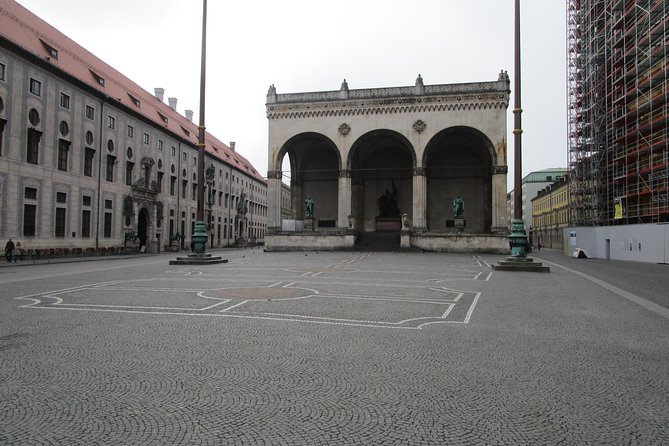
Next comes Odeonsplatz, where you see the location of a gun battle between the Nazis and the Bavarian police during the beer hall coup of 1923. This is the kind of detail that changes how you read a city. A wide plaza can look calm in daylight, but the guide makes clear that political violence has histories too.
What I like about this section is that it sets up why the movement cared so much about public spectacles and street-level control. When you connect the 1923 violence to what comes after, you get a clearer picture of how the Nazi rise was not smooth or inevitable. It took confrontation, planning, and propaganda that could flip a public mood.
Admissions are again free for this stop, so you are not spending time hunting tickets. You are out in the open, following the guide’s lead.
Königsplatz ceremonies, the Munich Agreement, and National Socialism documentation
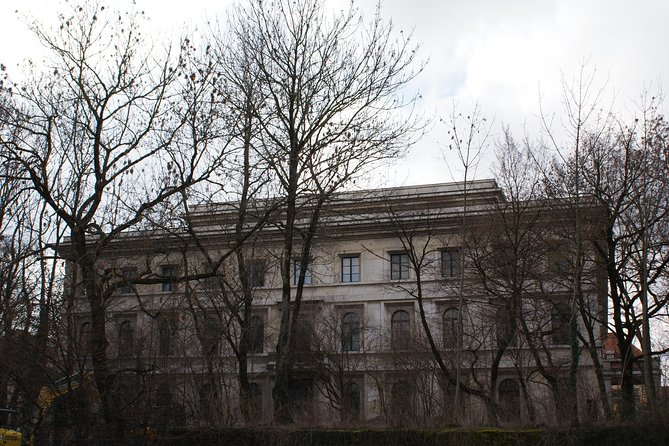
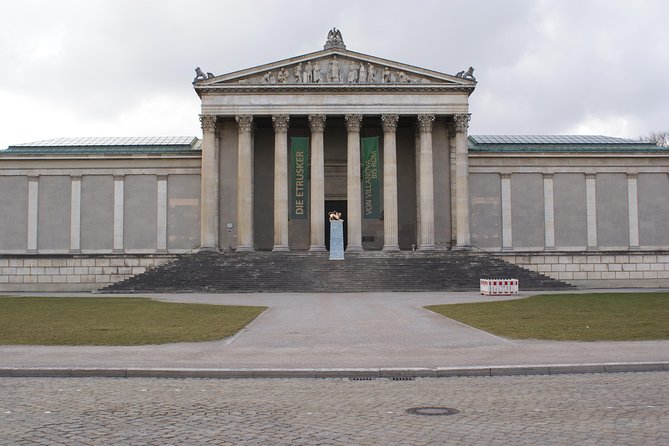
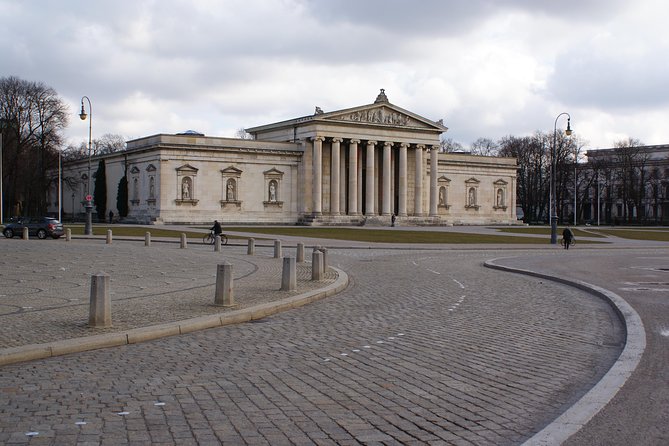
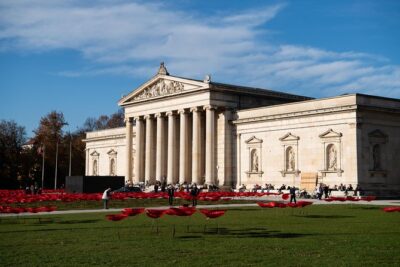
The Königsplatz stop is where the tour gets especially layered. You see the building where the Munich Agreement took place in 1938, and you stand in the broader ceremonial space where the Nazis held ceremonies in respect to the 1923 failed beer hall coup.
This is a big theme of the walk: the way the Nazi movement used symbolism to rewrite meaning. The guide helps connect the propaganda function to the physical locations where people were meant to gather, watch, and absorb the message.
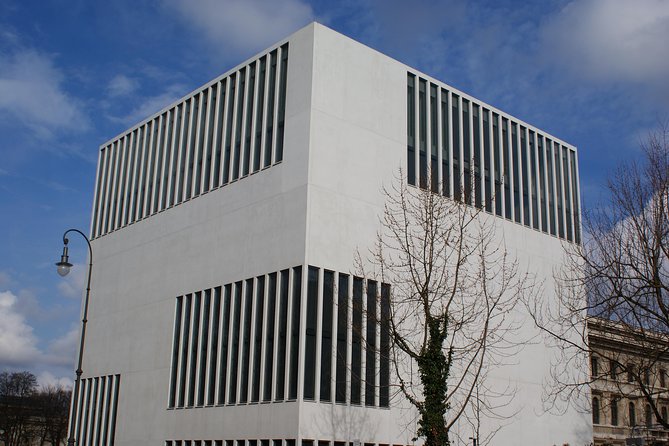
You also have an option here. After the walk, you can visit the documentation centre of National Socialism if you wish. The timing and whether it requires extra planning or ticketing are not spelled out, but it is a logical add-on if you want a quieter, more interpretive follow-up beyond the outdoor talk.
This stop is about 20 minutes, which gives the guide enough time to connect the dots between 1923, 1938, and how political theater helped sustain the regime’s narrative.
Small-group rhythm: walking pace, questions, and when you may want a break
This tour is scheduled for about 2 hours, and the walking covers multiple Munich landmarks within the old city core. The tour is designed for moderate physical fitness, so think comfortable shoes, a watchable pace, and a willingness to stand while the guide explains.
Here is the one consideration I would plan for: it is not built around lots of sitting breaks. If you tend to get restless when you are listening for long stretches, you may feel the lack of rest time. That does not mean it is rushed. It means the format is a walking lecture tied to specific locations.
On the plus side, the small group size, max 15 people, helps keep the energy personal. In a topic like this, it matters that you can ask questions and get direct answers. It also helps that the guide is friendly while staying sensitive to the material, so you do not feel like you are being dragged through a theme-park version of WWII.
Family note, if that applies. The tour has flexibility for quick needs like bathroom breaks, which can make a big difference during a 2-hour window.
Price, value, and who this 2-hour tour fits best
The price is $60.07 per person for about 2 hours, in English, with a small group and a professional guide. For a city with a lot of history tours, that cost is not low, but it is also not outrageous when you factor in the format.
Here is what you are paying for:
- A focused route past specific Nazi-linked locations, not a general overview of Munich
- A guide who ties the sites to events like the 1938 pogrom decision, Hitler speeches at the Hofbräuhaus, the 1923 gun battle at Odeonsplatz, and the 1938 Munich Agreement at Königsplatz
- A max 15 person setting so it does not feel like a factory line
If you are the type of traveler who likes context and asks why things happened, this price can feel fair. If you mostly want broad sightseeing, you might find the emphasis heavy, because the tour is aimed at Nazi landmarks and WWII-era history rather than general city highlights.
When I think about who should go, I’d say it suits:
- People with a serious interest in WWII and the Nazi rise
- Anyone who wants to understand Munich beyond beer halls and postcards
- History-minded visitors who learn best by connecting stories to exact places
Should you book this Munich Third Reich walking tour?
If you want a short, guided Munich experience that connects specific buildings and public spaces to real historical choices, I’d book it. The route is tight, the tour stays anchored to recognizable Munich landmarks, and the small-group setup makes it easier to ask questions when the subject turns complicated.
I would hesitate only if you need frequent sitting pauses, or if you know you are uncomfortable with difficult WWII material presented directly. Also check your weather gear, because it is outdoors and runs in all conditions.
Overall, this is the kind of tour that changes how you see Munich for the rest of your trip. Once you understand what happened in those squares and halls, you cannot unsee the context.
FAQ
What language is the tour offered in?
The tour is offered in English.
How long is the Munich and The Third Reich walking tour?
The tour lasts about 2 hours.
How big is the group?
The tour has a maximum of 15 travelers.
Where do I meet for the tour?
You meet at Landeshauptstadt München Stadtkämmerei, Marienplatz 8, 80331 München, Germany, and the tour ends back at the meeting point.
Is the tour mostly walking, or does it include lots of sitting?
It is a walking tour with stops for explanations, and it is designed for moderate physical fitness. The format is not centered on long seated breaks.
Does it run in bad weather?
Yes, it operates in all weather conditions, so you should dress appropriately.
What is included in the price?
Included are a professional guide, pickup from the designated meeting point, and the tour finishing back at a central location.
Is there free cancellation?
Yes, there is free cancellation. You can cancel up to 24 hours in advance of the experience for a full refund.
Pavements of Munich
Wartime History Walks We Have Reviewed
Everything else we filed on Munich
- Munich Beer and Bavarian Bites Private Tour
★ 5.0 · 11 reviews - Private Day Trip from Munich to Neuschwanstein and Linderhof
★ 4.0 · 11 reviews - Private Munich Old Town Walking Tour – with optional Breakfast
★ 5.0 · 11 reviews - Festive Concert in the All-Saints Court Church
★ 4.6 · 11 reviews - Private Castle Tour from Munich: Neuschwanstein, Hohenschwangau, and Linderhof
★ 4.5 · 12 reviews - Munich: Oktoberfest Big Beer Tent Evening including table reservation
★ 4.8 · 12 reviews
Third Reich and Wartime History Tours, side by side.
 ★ 4.9Berlin: Third Reich and Cold War 2 Hour Walking TourFrom $236,830 reviews
 ★ 4.6Munich: Third Reich & WWII Walking TourFrom $316,181 reviews
 ★ 5.0Berlin’s Best: 2 Hour Walking Tour Third Reich and the Cold WarFrom $245,486 reviews
 ★ 4.5Third Reich Walking Tour MunichFrom $454,291 reviews
 ★ 5.0Third Reich Berlin: Hitler and WWII Walking TourFrom $243,301 reviews
 ★ 4.7Nuremberg: Walking Tour of Former Nazi Party Rally GroundsFrom $151,665 reviews
 ★ 4.9Berlin: Third Reich, Hitler, and WWII Walking TourFrom $201,133 reviews
 ★ 4.8Nuremberg: Historischer Kunstbunker WWII Art Bunker TourFrom $14921 reviews
Other lists this tour is on