
REVIEW · WARTIME HISTORY
Third Reich Berlin Walking Tour with a French-Speaking Guide
Berlin has a way of sticking to your memory.
This Third Reich walk uses German Resistance sites and Jewish neighborhood stops to turn big, grim history into real streets and buildings. It’s guided in French, and it blends memorials with museum time so you get both the facts and the human stakes.
I especially like that the route connects key places in a logical flow, from resistance planning at the Bendlerblock area to deportation points like Anhalter Bahnhof. I also like how the guide’s explanation style tends to be clear and organized, with the kind of narration that links the city to what happened there, not just dates on a page. Some groups are led by Julie, and the tone is often described as living and easy to follow, even when the subject is hard.
One drawback to consider: this is heavy material. You should be ready for emotionally intense stops, and you’ll do a fair amount of walking plus some standing around memorial spaces.
In This Review
- Key highlights worth your attention
- A French-guided Third Reich walk that makes the streets do the teaching
- Potsdamer Platz start: Varian Fry and the Bendlerblock resistance story
- Anhalter Bahnhof: seeing deportation routes as something physical
- Jewish Quarter stops: Neue Synagoge, Auguststrasse, and Grosse Hamburger Strasse
- Museum Blindenwerkstatt Otto Weidt: defiance with real objects and names
- Topography of Terror: putting names and institutions into the larger machinery
- Value, time, and what to do with your day card
- Who this tour suits best, and who might want another option
- Should you book this Third Reich Berlin walking tour?
- FAQ
- How long is the Third Reich Berlin walking tour?
- What does the tour cost?
- Where does the tour start and end?
- Is the tour language French?
- Is transportation included in the price?
- Are the attraction admissions included?
- What if I need to cancel?
Key highlights worth your attention
- French-speaking guide that makes the story easier to track as you move through central Berlin
- German Resistance Memorial Center and Bendlerblock tied to Operation Valkyrie and broader opposition to Nazism
- Jewish Quarter route that reads like a map of persecution and deportation staging points
- Museum Blindenwerkstatt Otto Weidt focused on blind and deaf Jews, and on Otto Weidt’s efforts to protect them
- Topography of Terror included for context about the machinery of repression
- Small group size (max 24) so you can actually hear the guide and keep up
Further wartime history walks we have written up
- Berlin: Third Reich and Cold War 2 Hour Walking Tour★ 4.9 · 6,830 reviews
- Berlin’s Best: 2 Hour Walking Tour Third Reich and the Cold War★ 5.0 · 5,486 reviews
- Third Reich Berlin: Hitler and WWII Walking Tour★ 5.0 · 3,301 reviews
- Berlin: Third Reich, Hitler, and WWII Walking Tour★ 4.9 · 1,133 reviews
A French-guided Third Reich walk that makes the streets do the teaching
If you’re trying to understand Nazi-era Berlin, the problem is scale. The city is huge, and the story stretches across institutions, neighborhoods, and decisions made far from the places you’re standing. This tour’s value is that it keeps you in motion, following the geography so the history lands faster.
You’ll start in the Potsdamer Platz area and move toward the core of the Jewish community sites, using a mix of outdoor memorials and short museum time. That’s important because Berlin’s Nazi-era story is not one building. It’s networks, routes, and places where normal life got rerouted into terror.
Language matters here. Since the guide speaks French, you’ll want a basic ability to follow spoken French, or you’ll feel like you’re watching subtitles on mute. If you do speak enough to follow, you’ll probably appreciate how the guide connects institutions to specific streets like Auguststrasse, and how the story stays structured.
Finally, this is not a “dark photo tour.” The point is understanding. You’ll hear about who resisted and how Jewish communities were targeted, including detention and deportation staging. It’s educational, but it’s also blunt, and you should respect the tone.
Potsdamer Platz start: Varian Fry and the Bendlerblock resistance story
You begin at Potsdamer Platz, a practical jumping-off point with transit options. From there, you’ll see the memorial to Varian Fry, an American journalist whose work is connected to helping people flee danger. It’s a reminder that even during the era of Nazi control, not everyone stood still.
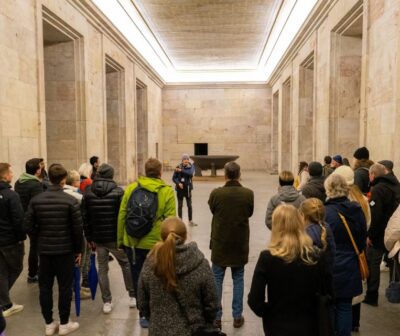
Then you move to the German Resistance Memorial at the Bendlerblock. This is one of the most important stops on the route because it ties the story to a specific act of resistance: Operation Valkyrie was directed from here. Today, the memorial commemorates Germans who opposed and fought Nazism.
What I like about this part is how it changes the tone from pure tragedy to moral action. You still face the reality of dictatorship, but you also get a sense of how resistance operated inside Germany, not only from a distant, heroic postcard viewpoint. It also helps you understand why Berlin is more than a museum city. It’s where decisions were made.
Practical note: this stop is listed with free admission and about 50 minutes, so it’s not just a quick glance at a plaque. Expect a slower pace. Bring patience, especially if you’re the type who likes to read details carefully.
Anhalter Bahnhof: seeing deportation routes as something physical
Next comes Anhalter Bahnhof, a station where a ruined original portion still remains. This stop matters because rail stations were not background props in the Nazi system. They were part of the process, including the deportation of Berlin’s Jews.
On this tour, you don’t just walk. You’ll take a train for the move to the Jewish Quarter area. Since transportation to attractions is not included, you’ll want to have Berlin public transport sorted in advance, specifically a day card for zones AB. (The tour gives you the route and guidance, but you cover your transit.)
This is one of those moments where your brain suddenly stops thinking in history terms and starts thinking in logistics. Stations mean schedules, crowds, organization. Even if you already knew the facts, standing near a place like this makes them feel more real.
The good news: you get a brief, focused segment here rather than endless wandering. The stop is listed as 10 minutes, with free admission, so the visit stays sharp and purposeful.
Jewish Quarter stops: Neue Synagoge, Auguststrasse, and Grosse Hamburger Strasse
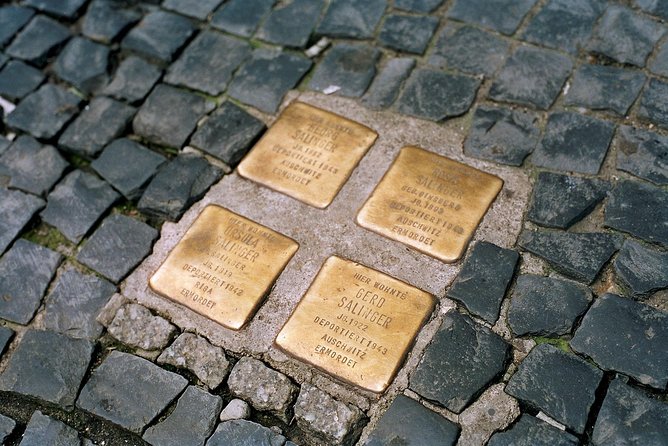
As you move deeper into the Jewish Quarter area, the tour shifts from broad system-level history to community-level geography. That’s the difference between learning about a regime and learning about how it crushed specific lives in specific neighborhoods.
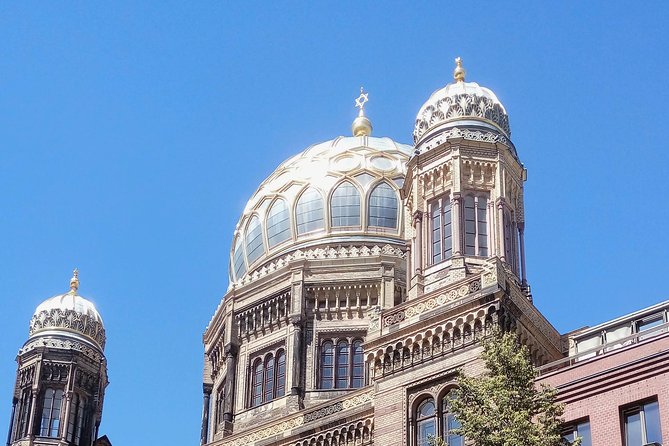
Stiftung Neue Synagoge Berlin – Centrum Judaicum is one of the key stops. You’ll hear about the Jewish community in the 19th and 20th century and the synagogue’s history. This is a necessary counterweight. Before you go through the darker material, you need some sense of what existed and what was lost.
Then you’ll focus on Auguststrasse, where you learn about institutions that used to be there, including a school for Jewish girls and an orphanage during the Nazi time. This stop is tricky in a different way than a memorial. It’s not just about death or deportation. It’s about how the system used schooling and care spaces while destroying the people those spaces were supposed to serve.
After that, you’ll reach Grosse Hamburger Strasse. Here you’ll see the old Jewish cemetery and a Sammellager, which is essentially a detention and gathering site where Jews were held before deportation. This is a hard concept, and it’s also one of the most important ones to understand, because the process wasn’t sudden. It was organized staging.
Time-wise, the cemetery and Sammellager segment is listed as about 30 minutes. That’s enough time to take in the place without rushing, but also long enough that you might want to pause and really read what’s in front of you. If you’re easily overwhelmed, pace yourself and don’t try to absorb everything at once.
Other walking routes through Berlin
Museum Blindenwerkstatt Otto Weidt: defiance with real objects and names
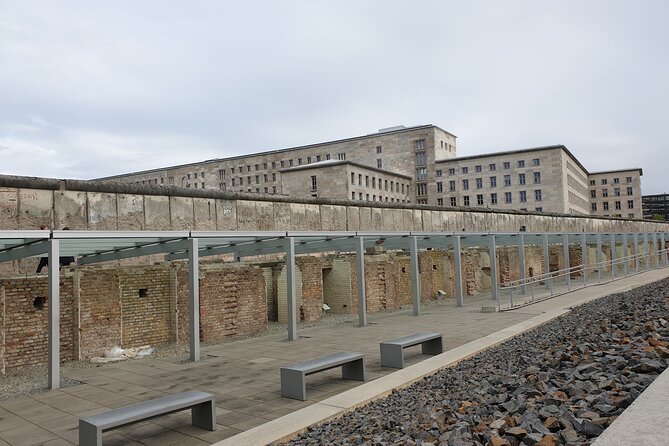
This stop is the emotional center of the route for many people. Museum Blindenwerkstatt Otto Weidt tells the story of Otto Weidt’s workshop during World War II. He employed mainly blind and deaf Jews to work in the factory, producing brooms and brushes.
What makes this stop stand out is the specificity. You’re not just hearing about a vague act of kindness. You’re learning about a real workplace and real roles, and how Weidt tried to protect the people he employed. It’s a story that keeps returning to humanity, even in a system designed to crush it.
The tour notes free entry and about 20 minutes at this museum. That’s long enough to understand the overall narrative, but short enough to keep the tour moving at an appropriate pace.
This is also where the guide style matters most. In the best versions of this tour, the narration helps you connect the objects you might see, like brush or broom production, to the larger question of how people survived. One review praised the way the guide handled both major history and personal fates, and this stop is exactly where that approach pays off.
Topography of Terror: putting names and institutions into the larger machinery
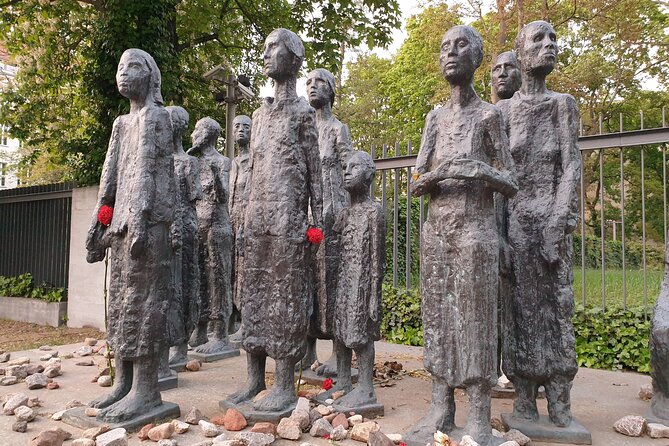
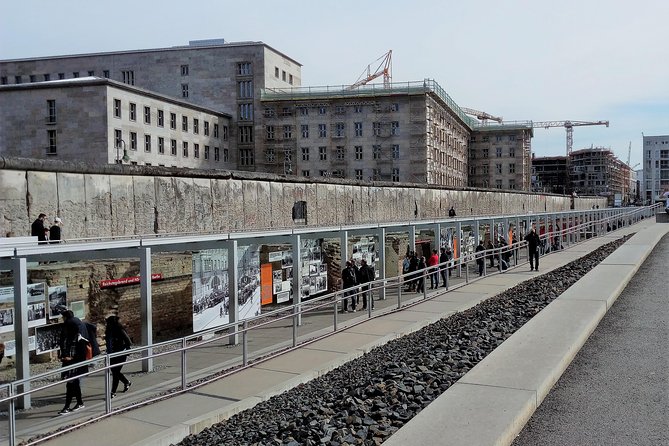
The tour also includes Topography of Terror, which is an essential context stop when you’re working through Nazi-era Berlin. Even if your first thought is that this will be another heavy memorial, it’s also a place that helps you understand how repression was built and run through institutions.
What you’ll get from pairing the Jewish Quarter stops with Topography of Terror is a clearer sense of cause and effect. Detention sites and deportation starting points are part of the story. Topography of Terror helps you see the broader system behind them, not just the local consequences.
Because Topography of Terror is included as part of the experience, I’d plan your headspace accordingly. Don’t try to stack it with another intense museum the same day unless you’re sure you can handle it. This is the kind of place where your attention needs room to breathe.
Value, time, and what to do with your day card
At $31.99 per person for about 3 hours, this tour is priced like an efficient city-history experience. You’re paying for two things: a professional guide and a route that prevents you from getting lost in Berlin’s geography. For many people, that’s the best value part. Without a guide, you might find individual sites. You might not connect them into a coherent story.
You’ll also get a lot of built-in stops with free admission noted for the main listed sites, including the German Resistance Memorial Center and multiple Jewish neighborhood stops. That helps keep your total costs more predictable.
The big logistics detail is transportation. Transportation to and from attractions is not included. You’ll need a day card for Berlin public transport zones AB, and you’ll likely use that when the tour takes a train move to reach the Jewish Quarter area.
Group size is capped at 24. That’s ideal for hearing a guide and keeping pace, but it still means you should avoid dawdling if you want to stay with the group. The tour runs in all weather conditions, so dress for rain or cold and wear shoes you can stand in comfortably.
One more practical point: the tour ends near Hackescher Markt, close to a train station (S-Bahn). That’s convenient because you can continue exploring right after, grab lunch nearby, or connect to another part of the city without a big travel gap.
Who this tour suits best, and who might want another option
This is a strong match if you want a structured Berlin walk focused on Nazi-era history with clear guidance in French. You’ll get the most out of it if you can follow spoken French comfortably, because the value is in the narration connecting sites and meanings.
It also suits you if you like history that’s grounded in place. The stops here are not random. They’re chosen to show resistance, deportation staging, community life, and the human-scale story of Otto Weidt.
If you’re sensitive to heavy themes or you’re visiting with young kids, you might pause and consider whether this route is the right fit for your group. The topic is difficult and painful, and the tour is built around it.
If you prefer a fully self-paced experience, Berlin’s memorials and museum exhibits are all searchable on your own. But for most visitors, this tour’s main advantage is that you get a guided story that makes the route make sense fast.
Should you book this Third Reich Berlin walking tour?
I’d book it if you want a 3-hour, guided, French-language route that links major resistance history and Jewish neighborhood sites with context from Topography of Terror. The route makes the city’s Nazi-era story easier to understand because it tracks you through the places where repression and resistance actually happened.
I’d skip it or switch plans if you cannot follow French spoken at a normal pace, or if you know you’re not up for emotionally intense history right now. For most people who come to Berlin to learn, though, this is a good value way to get your bearings fast and build understanding through places, not just facts.
FAQ
How long is the Third Reich Berlin walking tour?
The tour lasts approximately 3 hours.
What does the tour cost?
It costs $31.99 per person.
Where does the tour start and end?
It starts at Potsdamer Platz 10, 10785 Berlin, Germany, and it ends near Hackescher Markt, 10178 Berlin, Germany, next to the station.
Is the tour language French?
Yes, the guide is French-speaking.
Is transportation included in the price?
No. Transportation to and from attractions is not included, and you should have a day card for Berlin public transport zones AB. The route includes a train ride to reach the Jewish Quarter area.
Are the attraction admissions included?
For the stops listed, admission ticket entry is free.
What if I need to cancel?
You can cancel for a full refund up to 24 hours before the experience’s start time.
Pavements of Berlin
Wartime History Walks We Have Reviewed
Everything else we filed on Berlin
- East Berlin: City of Shadows Walking Tour
★ 5.0 · 11 reviews - Berlin: Die Stachelschweine – Frank Lüdecke – Träumt Weiter
★ 4.7 · 11 reviews - Potsdam Day Trip from Berlin with a Local: Private & Personalized
★ 4.0 · 11 reviews - An Introduction to Berlin Walking Tour
★ 5.0 · 11 reviews - DJ for a Day: Learn to Mix Like a Pro in Berlin
★ 5.0 · 11 reviews - 2-H Segway Sightseeing Tour Berlin
★ 4.5 · 11 reviews
Third Reich and Wartime History Tours, side by side.
 ★ 4.9Berlin: Third Reich and Cold War 2 Hour Walking TourFrom $236,830 reviews
 ★ 4.6Munich: Third Reich & WWII Walking TourFrom $316,181 reviews
 ★ 5.0Berlin’s Best: 2 Hour Walking Tour Third Reich and the Cold WarFrom $245,486 reviews
 ★ 4.5Third Reich Walking Tour MunichFrom $454,291 reviews
 ★ 5.0Third Reich Berlin: Hitler and WWII Walking TourFrom $243,301 reviews
 ★ 4.7Nuremberg: Walking Tour of Former Nazi Party Rally GroundsFrom $151,665 reviews
 ★ 4.9Berlin: Third Reich, Hitler, and WWII Walking TourFrom $201,133 reviews
 ★ 4.8Nuremberg: Historischer Kunstbunker WWII Art Bunker TourFrom $14921 reviews
Other lists this tour is on