
REVIEW · WARTIME HISTORY
Third Reich – Facts about WWII : Small Group Walking tour
Munich’s Nazi story is laid out street by street. In a compact 2 to 3 hours walk, you hit major Third Reich locations without the hassle of planning routes or backtracking.
I like that the group stays small, max 15 travelers, so your guide can slow down when questions pop up. I also like the pace: short stops with real context, so you can cover a lot without feeling wrecked. One consideration, though, is that the topic is heavy, and several stops are brief by design, so it helps to arrive ready to concentrate.
In This Review
- Key Points You’ll Notice Right Away
- First, Know What This Is (And What It Isn’t)
- Starting at Karlstor, Then Walking the Arc of Nazi Power
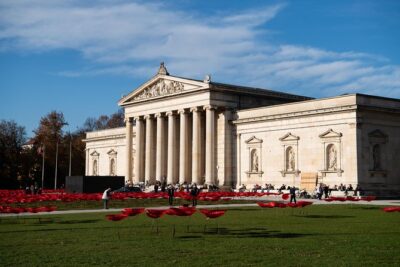
- Konigsplatz: Book Burning and the Propaganda Stage
- Paul von Trost Buildings and the Look of Nazi Architecture
- NS-Dokumentationszentrum Munich and the Brown House Story
- Karolinenplatz and the Social Ladder Behind Hitler’s Rise
- Justizpalast: The Sisters Scholl and Nazi Justice
- Briennerstrasse 7: Doctors Who Decided Life and Death
- Platz der Opfer des Nationalsozialismus: Gestapo Power and a Victims’ Memorial
- Residenz Munchen: Kings, Dukes, and a Nazi Resident
- Hofgarten and Degenerated Art
- Ludwig Maximilian University and the White Rose
- Odeonsplatz and the Hitler Putsch Chapter
- Haus der Kunst and Nazi Art Control
- What $109.86 Buys You, and Where the Extra Money Might Appear
- How to Make the Most of This Heavy, High-Impact Route
- Should You Book This Third Reich Facts WWII Walking Tour?
- FAQ
- How long is the Third Reich facts WWII small group walking tour in Munich?
- Where does the tour start and where does it end?
- What time does the tour begin?
- What is included in the ticket price?
- Is admission included for every stop?
- How big is the group?
- Do I need to bring anything because of the mobile ticket?
- Is there a cancellation option if plans change?
- Is the tour suitable for most travelers, and are service animals allowed?
Key Points You’ll Notice Right Away
- Small-group format (max 15) keeps the tour conversational, not lecture-y
- Konigsplatz to Odeonsplatz gives you a clear chain of places tied to Nazi power and propaganda
- Resistance shows up in the route, not just the regime, with stops linked to the White Rose
- You’ll see both symbolism and decisions, from art policy to justice and even medical authority
- Some buildings need separate admission, while many viewpoints and exterior stops are free
- You finish at Haus der Kunst area, a logical endpoint if you want to keep exploring nearby
Further wartime history walks we have written up
- Munich: Third Reich & WWII Walking Tour★ 4.6 · 6,181 reviews
- Third Reich Walking Tour Munich★ 4.5 · 4,291 reviews
- Munich: Birthplace of the Third Reich Guided Walking Tour★ 4.6 · 771 reviews
- Munich World War II Sites Including Dachau Concentration Camp★ 4.5 · 570 reviews
First, Know What This Is (And What It Isn’t)
This walking tour focuses on Munich’s WWII-era story through specific addresses and landmarks tied to Nazi control, propaganda, and resistance. It is not a big museum day with hours of gallery time. Instead, it is a guided route built for quick understanding, with stop after stop designed to connect people, ideas, and events you can physically see.
The tour also keeps logistics simple. You get a mobile ticket, you meet at a central spot near transit, and you end at Haus der Kunst area. That matters because Munich can eat your time if you keep hopping across town on your own.
Starting at Karlstor, Then Walking the Arc of Nazi Power
You start near Karlstor on Neuhauser Straße and the tour runs from 1:00 pm. The walking is the main format, so you will want comfy shoes and a plan to stay off your phone for stretches of it. Expect frequent looks at façades, squares, and institutional buildings, not just street corners.
With a maximum group size of 15, the guide can pace based on the mood of the group. If someone wants extra explanation, the timing can adjust. If people want brisk movement, that also works. The length, 2 to 3 hours, is short enough to fit into a sightseeing day without feeling like you have to cancel everything else.
Konigsplatz: Book Burning and the Propaganda Stage
The walk begins at Konigsplatz, and right away you get the message that Nazi ideology was designed to look powerful. You will hear about the burning of books, and you will also get pointers tied to how propaganda was filmed and staged, including camera positions associated with filmmaker Leni Riefenstahl.
One small but useful detail here is the physical design of the square itself. You are not just being told that propaganda mattered. You are shown where the visuals were created, so your brain makes a faster connection between architecture and messaging. This is one of those stops where looking up at the space helps you understand the psychology of the time.
Paul von Trost Buildings and the Look of Nazi Architecture
Next comes the Museum fur Abgusse Klassischer Bildwerke, with the two twin buildings associated with Paul von Trost. These structures were constructed for the Nazi era, so even when you are not entering anything, the exterior gives you a sense of what the regime wanted you to see: order, scale, and authority.
It is also a good example of why your guide’s narration matters. Buildings like these can look like normal monumental architecture at first glance. With context, you start to read them as part of a system.
Note on value: this is a short stop and admission is not included for that portion. If you are the type who likes to linger, you might want to plan extra time elsewhere for museums.
Other walking routes through Munich
NS-Dokumentationszentrum Munich and the Brown House Story
Then you are at NS-Dokumentationszentrum Muenchen, a stop that frames how the Nazi movement organized itself and how power took shape through institutions. You will hear about the Brown House and how Hitler worked to organize the NSDAP. You will also get a mention of the involvement of a church during WWII, which is a reminder that history does not stay inside one political box.
This part is brief, with admission not included, so think of it as orientation and narrative framing. If you want deeper reading, you can treat this as a teaser that tells you what themes matter most before you commit to more indoor time later.
Karolinenplatz and the Social Ladder Behind Hitler’s Rise
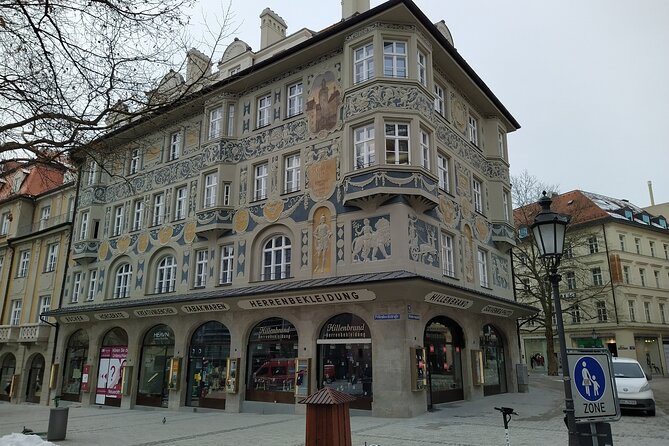
At Karolinenplatz, the focus shifts to people around Hitler, especially the role of the Bruckmanns. You will hear how they mattered in helping Hitler rise as a charismatic figure and how they introduced him into society.
This is a stop I appreciate because it adds a layer beyond marches and speeches. A lot of WWII tourism focuses on uniforms and government buildings. Here, you get a clue that networks, taste, and social access helped make the political story move.
The good news is the stop is short, so you will keep momentum. The caution is emotional. This is where you start confronting how ordinary social influence can fuel extraordinary harm.
Justizpalast: The Sisters Scholl and Nazi Justice
You then reach the Justizpalast, where the story turns toward the legal system and the cost of dissent. You will hear about trials involving the sisters Scholl, tied to the White Rose resistance, plus other Nazi-era trials.
This stop is free, so it is a strong value moment. You are standing in the kind of place where the regime could convert ideology into outcomes. The practical takeaway is that you will likely remember names better when you connect them to the physical setting where decisions were made.
Even if you already know the White Rose story, the guided framing helps you connect it to the wider system, not just the heroism.
Briennerstrasse 7: Doctors Who Decided Life and Death
At Briennerstrasse 7, the tour points to Haus der Deutsche Ärzte (number 23) and what doctors decided about life and death for many people. This is one of the hardest stops to hear about, because it shows that ideology can hide inside professional authority.
The tour keeps the stop compact, but it does enough to make you think. You may leave with a clearer sense that WWII crimes were not only battlefield events. They were also policy decisions carried out through institutions.
If you are sensitive to grim material, this is the place to pace yourself and take a breath. A short walk can still be mentally heavy.
Platz der Opfer des Nationalsozialismus: Gestapo Power and a Victims’ Memorial
Next is Platz der Opfer des Nationalsozialismus. Before you reach the memorial area, you see the early Wittelsbacher Palais, described as a central spot from the Gestapo. Afterward, you view the monument dedicated to victims of the NSDAP.
This combination is effective. You do not just see a memorial and move on. You also see the nearby setting that helped enable repression. That makes the memorial feel less like a standalone symbol and more like the result of a system.
This stop includes time to pause. It is one of the better moments for slowing down, absorbing names you have heard earlier, and letting the whole tour message settle in.
Residenz Munchen: Kings, Dukes, and a Nazi Resident
At the Residenz Munchen, the narration connects Bavaria’s royal setting to Nazi occupation and residence. The tour explains that a Nazi man once lived here, in the residence of Bavarian kings and dukes, and it references a night connected to the amazones.
You get an important contrast here: place matters. Seeing power in a royal setting helps you understand how regimes borrow legitimacy. It also helps you grasp why propaganda is about more than ideology. It is about setting the stage for who belongs where.
This stop is not included for admission. If you want to go inside and keep learning, you will likely need to do that separately.
Hofgarten and Degenerated Art
Then comes Hofgarten, where you will hear about Degenerated Art and how the name connects to an exhibit featuring many expressionist artists. Art policy might sound like a side topic compared to trials and arrests, but the guide uses it to show control over culture and public taste.
This stop is free, and it works well because it gives you a mental break from the legal and medical sites. Still, it keeps the same core theme: the regime tried to shape what people were allowed to admire.
Ludwig Maximilian University and the White Rose
At Ludwig Maximilian University, you get a resistance-focused anchor. The tour discusses the White Rose and the role of the Sophie and Hans Scholl network as part of anti-Nazi actions.
University settings matter in WWII stories. They connect young people, ideas, and institutions that can either enforce conformity or resist it. If you have ever wondered how resistance could grow under surveillance, this stop helps explain the human side.
Because the stop is brief and free, it is a good “anchor point” in the route. It gives you names and themes that you can connect later when you read more or visit other sites on your own.
Odeonsplatz and the Hitler Putsch Chapter
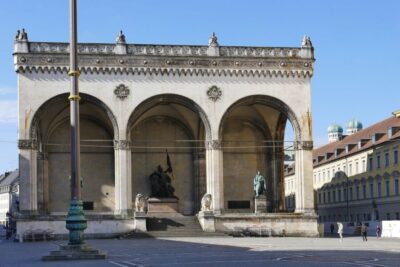
Odeonsplatz is next, and you hear about the Hitler Putsch. The tour treats it as an early, tragic chapter that helps you understand how events escalated toward power. You return to Odeonsplatz again later for additional major events in the Nazi campaign.
This repetition is useful. It reinforces timeline and helps you see the square as a living page of history, not just a single moment. If you like understanding cause and effect, this part helps your brain build a chain instead of a list.
This segment includes free stops, so it is a strong “get more for your time” zone.
Haus der Kunst and Nazi Art Control
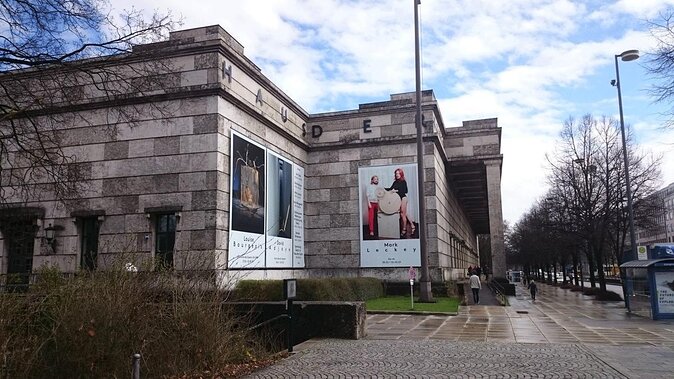
Finally, you reach Haus der Kunst, where the guide points out another work by Paul von Trost and talks about art in the building. This is a continuation of the art-control theme from Hofgarten, tying culture to power.
Like some other indoor or ticketed moments, admission is not included here. That is not a dealbreaker, because the tour is designed for exterior orientation plus narrative. But if you are the type who likes to read museum labels and linger in rooms, you may want to plan extra time after the walking route ends.
Ending near Haus der Kunst is convenient if you want to continue right away, instead of having to reverse your steps.
What $109.86 Buys You, and Where the Extra Money Might Appear
The price, $109.86 per person, is not “cheap.” But it also does not try to be. You are paying for a professional guide, a tight route, and a group size that stays small enough to feel personal.
The big value question is time. In about 2 to 3 hours, you cover many key WWII locations that would be tough to connect without planning. You also avoid the stress of navigating Munich efficiently on your own while keeping the historical thread intact.
About museum costs: several stops are ticket-free, while others list admission not included. That includes parts like the Museum fur Abgusse Klassischer Bildwerke, NS-Dokumentationszentrum Muenchen, Residenz Munchen, and Haus der Kunst. If you only do the walking tour without entering those buildings, you can keep spending under control. If you want to enter everything, you should expect add-on costs.
How to Make the Most of This Heavy, High-Impact Route
This tour moves quickly by design, so I suggest you do two simple things before you go.
First, wear shoes you can walk in for a steady stretch. Even if each stop is short, the route adds up, and you will want your body to feel comfortable enough to pay attention.
Second, bring a mindset of connection. This walk is most powerful when you treat each stop as a link in a chain. Konigsplatz gives propaganda space. Justice and institutions show consequences. Art policy shows cultural control. University and Odeonsplatz point toward resistance and escalation. If you keep that chain in mind, the full story clicks faster.
Also, ask questions if your guide invites them. A small group helps, and a good guide will tailor the narration to the interests in front of them. One guide name you may hear is Paul Riedel, and the energy that comes from a live guide is one of the reasons this format works.
Should You Book This Third Reich Facts WWII Walking Tour?
Book it if you want a focused, short way to understand Munich’s Nazi-era footprints without juggling transit and research. It is a good fit for first-timers who feel overwhelmed by how many sites exist, but still want more than a generic overview. The small group size also makes it easier to get clarity when something is confusing, especially with a topic this complex.
Skip it or consider pairing it with extra museum time if you want a long indoor program or deep artifact viewing. Some key stops are not ticket included, and the duration is tight, so you will not get hours in every building.
If your goal is to get your bearings fast, connect names to places, and leave with a clearer understanding of both Nazi control and resistance, this walk is a smart choice.
FAQ
How long is the Third Reich facts WWII small group walking tour in Munich?
The tour lasts about 2 to 3 hours.
Where does the tour start and where does it end?
It starts at Karlstor on Neuhauser Strasse (80331 München) and ends at Haus der Kunst, Prinzregentenstraße 1 (80538 München).
What time does the tour begin?
The start time listed is 1:00 pm.
What is included in the ticket price?
The tour includes a professional guide. You also receive a mobile ticket.
Is admission included for every stop?
No. Some stops include free admission, while others list admission as not included, such as Museum fur Abgusse Klassischer Bildwerke, NS-Dokumentationszentrum Muenchen, Residenz Munchen, and Haus der Kunst.
How big is the group?
The tour has a maximum of 15 travelers.
Do I need to bring anything because of the mobile ticket?
You will receive and use the mobile ticket, so you should have your phone ready for the ticket.
Is there a cancellation option if plans change?
Yes. There is free cancellation, and you can cancel up to 24 hours in advance for a full refund.
Is the tour suitable for most travelers, and are service animals allowed?
The tour says most travelers can participate, and service animals are allowed.
Pavements of Munich
Wartime History Walks We Have Reviewed
Everything else we filed on Munich
- Paul’s Private Tour Munich Highlights
★ 5.0 · 3 reviews - Private Linderhof Castle, Entry-Ticket – optional Toboggan Run
★ 5.0 · 3 reviews - Paul’s Private Tour in the Alte Pinakothek Munich
★ 5.0 · 3 reviews - Private Tour at Neuschwanstein And Linderhof Palaces From Munich
★ 4.5 · 3 reviews - Private Highlights of Munich Bike Tour with Beer Garden Stop
★ 5.0 · 3 reviews - Munich WWII and Dachau Concentration Camp Private Tour with Licensed Guide
★ 5.0 · 3 reviews
Third Reich and Wartime History Tours, side by side.
 ★ 4.9Berlin: Third Reich and Cold War 2 Hour Walking TourFrom $236,830 reviews
 ★ 4.6Munich: Third Reich & WWII Walking TourFrom $316,181 reviews
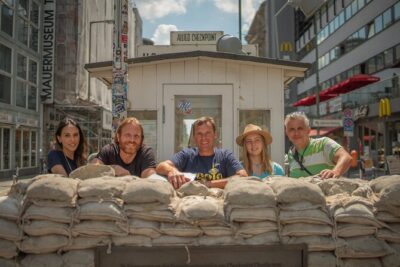 ★ 5.0Berlin’s Best: 2 Hour Walking Tour Third Reich and the Cold WarFrom $245,486 reviews
 ★ 4.5Third Reich Walking Tour MunichFrom $454,291 reviews
 ★ 5.0Third Reich Berlin: Hitler and WWII Walking TourFrom $243,301 reviews
 ★ 4.7Nuremberg: Walking Tour of Former Nazi Party Rally GroundsFrom $151,665 reviews
 ★ 4.9Berlin: Third Reich, Hitler, and WWII Walking TourFrom $201,133 reviews
 ★ 4.8Nuremberg: Historischer Kunstbunker WWII Art Bunker TourFrom $14921 reviews
Other lists this tour is on