
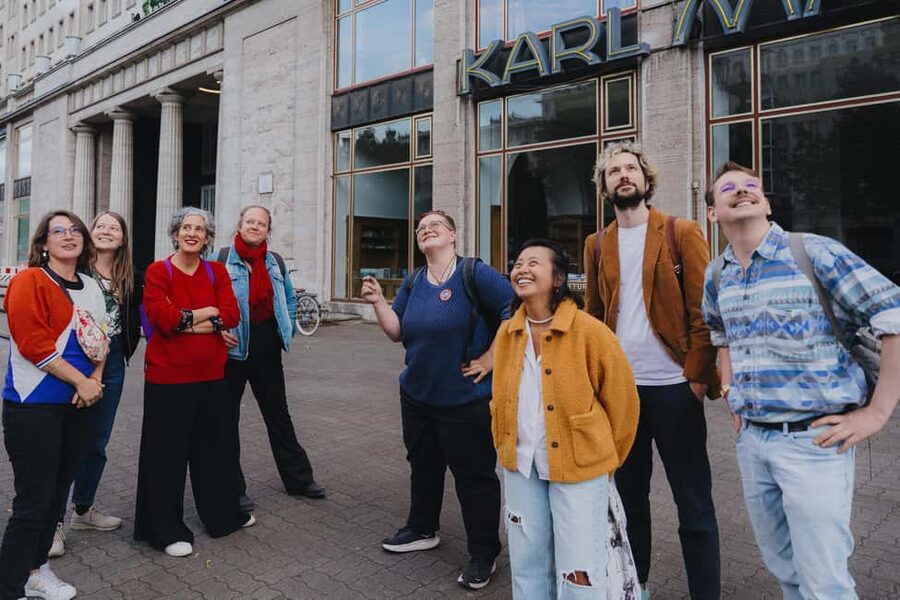
REVIEW · COLD WAR BERLIN
Karl-Marx-Allee Walking Tour: Berlin’s Socialist History
A grand boulevard, built for an ideology. Walking Karl-Marx-Allee feels impressive in a way that is hard to forget, because the buildings were designed to project certainty, power, and a perfect daily life. You also get the other side of the story, the one where control, fear, and propaganda shaped what East Berliners saw and what they had to keep quiet.
I particularly love how this tour connects architecture to real events you can picture, like the moment unrest in June 1953 almost toppled the socialist government. I also like the way your guide, Martina, keeps the pace sharp and the explanations clear, so the street stops being just a pretty façade and becomes a living timeline you can walk through.
One consideration: this is not a light “see the buildings” stroll. You will talk about surveillance and suppression, including what the Stasi hid in plain sight, so keep your expectations realistic and your head in the right place.
In This Review
- Key highlights you will actually care about
- Karl-Marx-Allee, Socialist Classicism, and the Shock of Scale
- Where the tour starts at Frankfurter Tor and how the 2 hours feel
- From postwar rubble to a national reconstruction showcase
- The Cold War logic behind the grand housing blocks
- June 1953 uprising, and why it is more than a date
- Stasi surveillance, wiretaps, and the unease you cannot unsee
- Poplar trees and the political choice to hide what did not fit
- The street after the Wall: neglect, real estate pressure, and protests
- Film locations you may spot while you walk
- Price, time, and whether it is good value for two hours
- Who this tour suits best (and who might want something else)
- Should you book Karl-Marx-Allee?
- FAQ
- Where does the tour meet?
- Where does the tour end?
- How long is the tour?
- What is the price?
- What languages is the tour offered in?
- Is the tour wheelchair accessible?
- What should I wear or bring?
- Is it suitable for children?
- Can I cancel and get a refund?
Key highlights you will actually care about
- Cold War ideology in brick and scale, right down to the grand residential blocks
- A 1953 uprising thread that explains why this street mattered beyond aesthetics
- Stasi surveillance details like listening stations and wiretaps, taught in a way you can visualize
- Poplar trees as political cover, hiding earlier design choices from passersby
- Film recognition moments connected to The Lives of Others and The Queen’s Gambit
More of the divided city, written up in full
- Berlin: Third Reich and Cold War 2 Hour Walking Tour★ 4.9 · 6,830 reviews
- Berlin: Berlin Story Bunker Entry Ticket★ 4.6 · 6,759 reviews
- Berlin’s Best: 2 Hour Walking Tour Third Reich and the Cold War★ 5.0 · 5,486 reviews
- Berlin: 75-minute Trabi Safari★ 4.8 · 2,854 reviews
Karl-Marx-Allee, Socialist Classicism, and the Shock of Scale
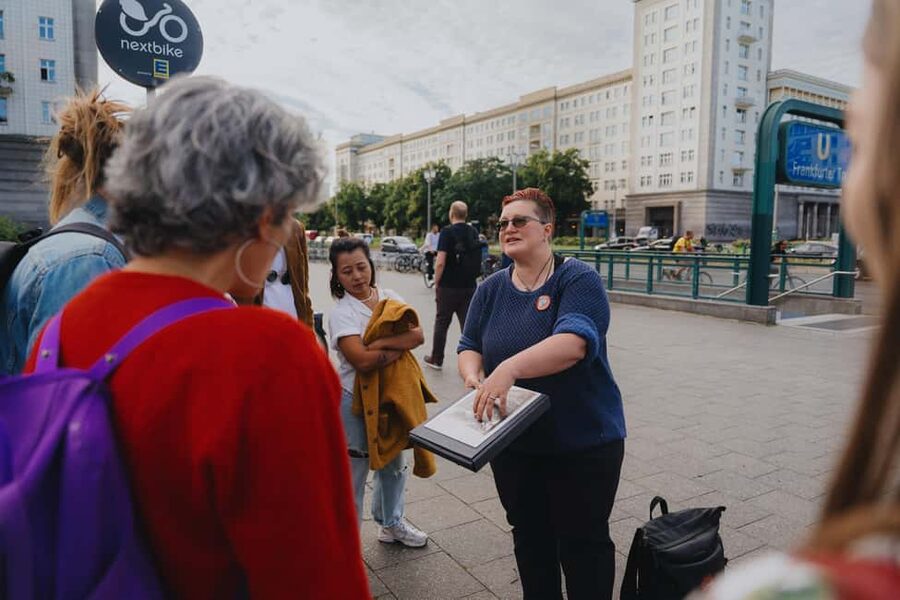
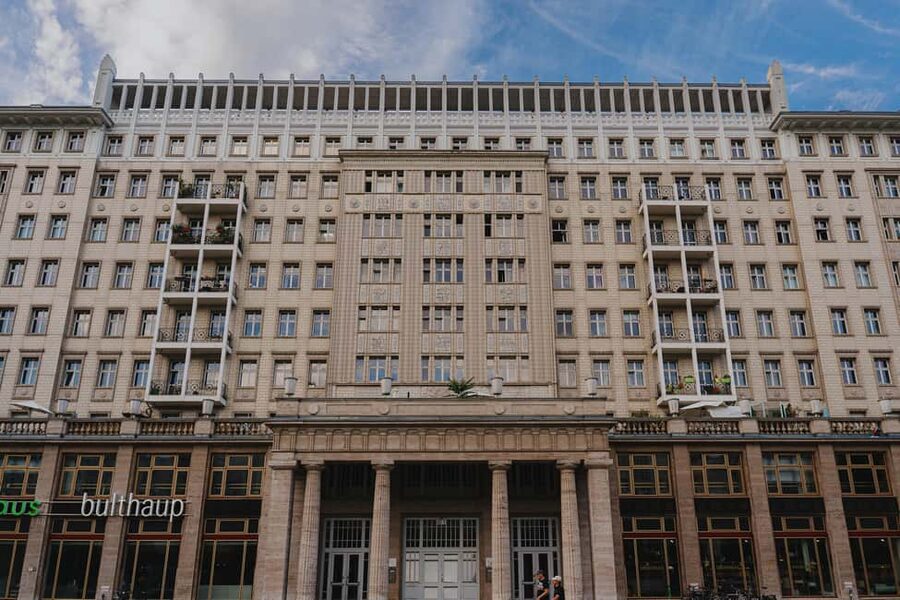
Karl-Marx-Allee, sometimes you will still hear it referred to by its earlier socialist names, is where Berlin’s Cold War self-image became stone and concrete. The street looks grand in a deliberately emotional way. When you walk it, you cannot help but feel small next to those big housing blocks, the kind meant to dwarf ordinary life and make the system look inevitable.
The first thing I like is the human contrast. East Berliners were building after ruin, and this street rose from the aftermath of WWII with help from thousands of volunteers working day and night. On the ground, that turns into a kind of puzzle: why do the buildings feel so sure of themselves, when the era that created them was anything but stable?
The second thing I like is how the tour frames the “look” as a tool. Socialist classicism was meant to communicate ideals through design, not just provide apartments. Your guide points out how the street sold an image of everyday affluence, with cafes, restaurants, and well-stocked shops. Then the story pivots to what was concealed behind the scenes, where surveillance was part of daily reality, not an abstract concept.
Where the tour starts at Frankfurter Tor and how the 2 hours feel
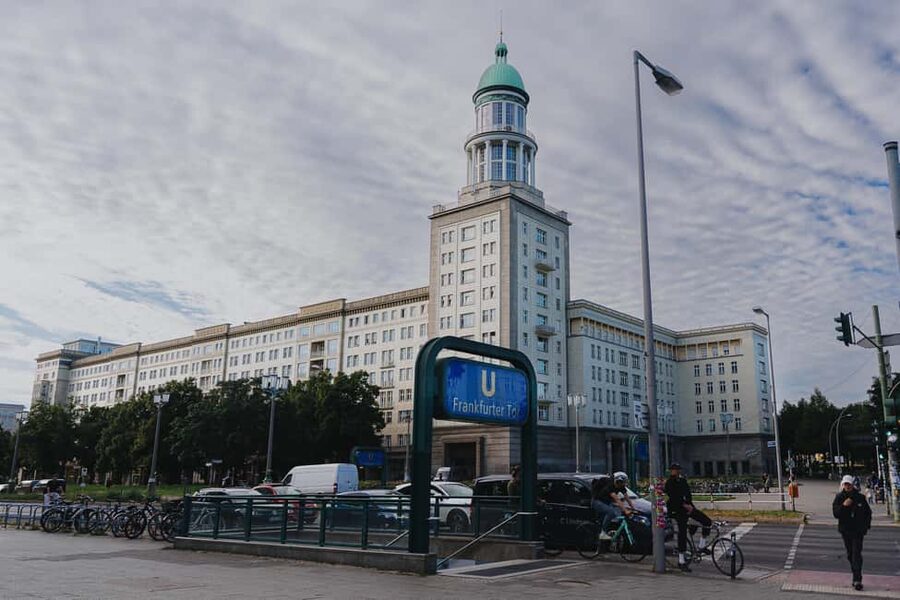
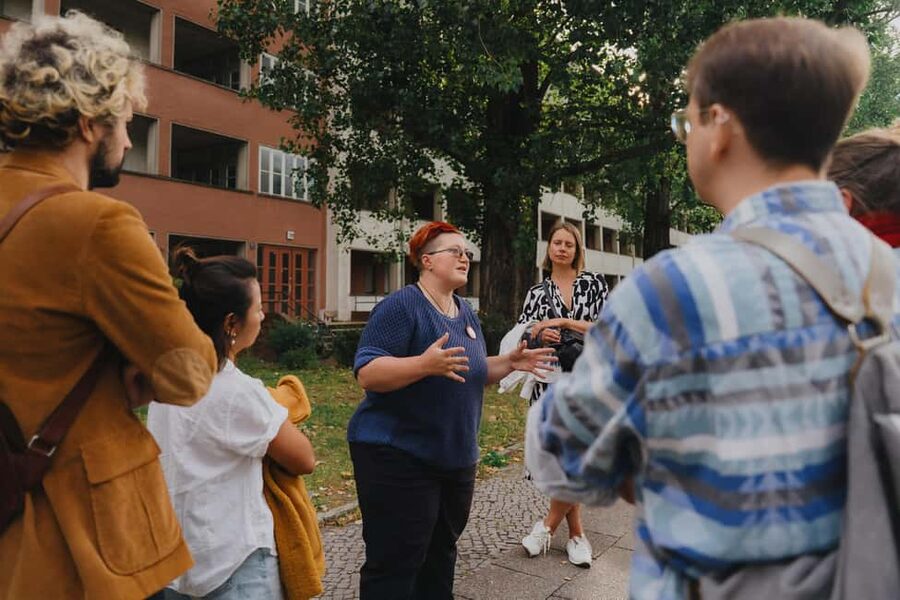
You meet outside the U Frankfurter Tor station, on the corner of Warschauer Straße and Karl-Marx-Allee. Look for your guide holding an orange umbrella. That small detail matters, because it helps you start the walk without wasting time hunting for a group.
Expect about two hours total, with a big chunk focused on Karl-Marx-Allee itself. The walk is structured enough that you do not feel rushed, but you still cover meaningful ground and see the street as a continuous corridor rather than a set of random landmarks.
Practical tip: wear comfortable shoes. This street is meant for walking, but you will still want your feet to be happy for the whole session. Also, if you want to take photos, bring a plan to pause without getting separated from the guide. The story relies on seeing specific building fronts and spatial relationships.
From postwar rubble to a national reconstruction showcase
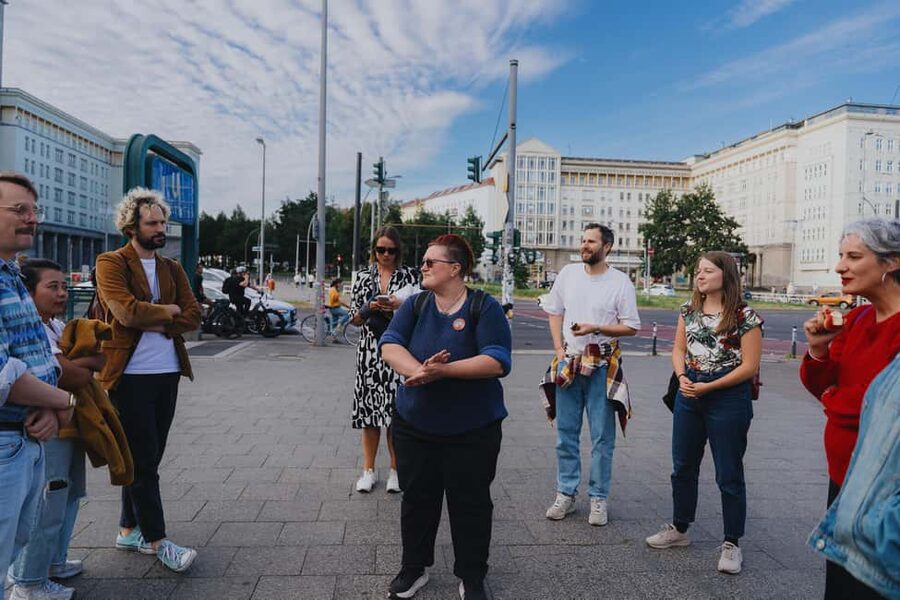
A big theme here is how the street grew out of destruction. The buildings on Karl-Marx-Allee are from the 1950s, but the tour makes clear the street’s roots go further back. Immediately after WWII, the area reflects utopian urban ideas born from the ashes of destroyed Berlin, including modernist influences that did not fit the later regime’s preferences.
You will hear how East Germany treated the project as the main project of the national reconstruction program. Thousands of volunteers, working around the clock, helped build the housing blocks that would define this corridor. That detail changes how you view the street. It stops being only “a thing from the past” and becomes a snapshot of a society trying to rebuild fast, with huge ideological pressure built into the process.
And then comes the tension. The tour explains that building the street almost cost the young East German state its existence. That leads you into a key moment in 1953, when workers started a mass uprising in June that threatened the socialist government itself. You will not just learn the event, you will understand why a grand reconstruction project could also become a flashpoint.
The Cold War logic behind the grand housing blocks

Karl-Marx-Allee is one of Germany’s first socialist streets, and the architecture is the main character. The style is often described as socialist classicism, and what hits you is the sense of order and ceremony. The street was shaped to look like a model of socialist living, with scale and symmetry that signal permanence.
In a place like Berlin, that is powerful because you can compare different eras by eye. The tour encourages you to notice how the Cold War ideology shaped what was built and how it was presented. The goal was to make the system feel confident, even when reality was complicated.
A helpful framing from the walk: the street’s “ideal life” image was part of the messaging. The presence of cafes, restaurants, and well-stocked shops was not accidental. It helped create a daily rhythm that looked normal and even prosperous. That is exactly why the tour’s pivot to hidden surveillance lands so well. You start by trusting the scenery, then the guide shows where the trust gets manipulated.
Other walking routes through Berlin

June 1953 uprising, and why it is more than a date
The June 1953 uprising is not just history trivia on this tour. It is a turning point that explains why the street carried so much political weight. As the narrative goes, workers became disgruntled and launched a mass uprising that almost toppled the socialist government.
Standing and walking along a boulevard designed for public symbolism, you get a real sense of irony. A street built to celebrate socialist reconstruction and success can also become a reminder that people were willing to challenge the system when life did not match the promises.
If you like tours that connect architecture to cause and effect, this is one of the strongest sections. You will come away with an easier time connecting the street to broader East German tensions. You will also understand why propaganda needed constant reinforcement, because it was not based on universal comfort.
Stasi surveillance, wiretaps, and the unease you cannot unsee

Now comes the part that makes the walk feel tense, even though you are outside in daylight. The tour covers the reality of surveillance and suppression by the Stasi police. This is not presented as abstract evil. It is described through practical mechanisms, like wiretaps in flats and listening stations in attics.
That phrasing matters. Once you picture attics with listening setups, and apartments with concealed taps, the street’s everyday normalcy becomes unsettling. The tour’s earlier image of cafes and shops starts to feel like a carefully managed stage set. The message becomes clear: watching was part of how the regime protected itself.
One way I think you will know if this portion is working for you is your own mental shift. At first you look at windows, balconies, and façades as design. Then you start thinking about who might be listening, and how neighbors might have been shaped by fear. That shift is the point, and it is what makes this tour more than sightseeing.
Poplar trees and the political choice to hide what did not fit

Another striking thread is how the street looked different over time, depending on what the regime wanted people to see. The tour explains that modernist architecture from the immediate post-WWII years reminded observers of utopian urbanist ideas. Later on, the style was intentionally hidden from passersby by fast-growing poplar trees.
Think of it as urban editing. The built environment carried multiple design ideas, but the government controlled which ideas were allowed to dominate the public view. That is a weirdly smart way to govern without changing everything overnight. You can keep the structure, soften it, and shift the message simply by changing what people are allowed to notice.
Walking the street, you get a physical lesson in “curation,” even if it was not done for art. It was done for control. You will probably find yourself watching how green barriers alter your sightlines and perceptions of the architecture, which is a useful skill in Berlin in general.
The street after the Wall: neglect, real estate pressure, and protests
When the Berlin Wall fell, this street did not immediately become a cultural museum. The tour explains that it ended up in a state of disrepair and increasingly looked like an odd curiosity from the past. For a while, it seemed to fade into oblivion.
Then Berlin did what Berlin does: housing needs and market pressures showed up fast. The tour describes how real estate agents took an interest again, especially in a city facing a housing crisis. Karl-Marx-Allee shifted from a socialist boulevard for parades to a stage for protests related to gentrification and rising living costs.
This ending matters because it connects ideology to present-day street life. You are not only looking at what a government built, you are also seeing how communities respond when affordability and belonging get squeezed. It gives the walk a “today” edge that helps you stay grounded rather than stuck in 1950s mood.
Film locations you may spot while you walk

If you enjoy film, this tour adds a fun layer. You will see filming locations connected to The Lives of Others and The Queen’s Gambit. Even if you only remember scenes loosely, these streets can trigger recognition because the architecture is so distinctive.
What I think is valuable here is how the films become a second way to interpret the same space. The story of surveillance fits The Lives of Others, but the bigger point is you start to see how filmmakers use real architecture to communicate power dynamics. Meanwhile The Queen’s Gambit ties in through the street’s strong, orderly visual character.
Keep your eyes open for specific façades and sightlines the guide points out. Do not worry if you cannot recall exact scenes. The point is the connection, not the trivia score.
Price, time, and whether it is good value for two hours
At $23 per person, the biggest value is the guide and the way the tour turns a single long street into a structured story. You get architecture, political context, a clear uprising timeline, Stasi surveillance mechanisms, and even film references, all in about two hours.
Two hours can feel like a short window in Berlin, which is why this format works. You do not need to plan a multi-stop self-guided day across different neighborhoods. You simply walk one corridor with a focused narrative, so your understanding builds steadily instead of scattering.
If you are pressed for time but still want depth, this is a solid choice. If you prefer purely visual sightseeing with zero politics, you might find the subject matter heavy. But if you want the “why” behind what you see, the price feels fair.
Who this tour suits best (and who might want something else)
This tour is a great fit if you:
- want architecture with political context tied to specific events
- like learning about the real mechanisms of surveillance, not just big headlines
- enjoy film connections that help you recognize places through your own memory
It is less ideal if you:
- want a kid-friendly outing, since it is not suitable for children under 10
- prefer an upbeat, casual walk without heavy topics like suppression and the Stasi
For me, the sweet spot is a traveler who wants to understand Berlin as more than a postcard city. Karl-Marx-Allee is a place where design, ideology, and fear overlap in a way that rewards close attention.
Should you book Karl-Marx-Allee?
Yes, you should book if you want a guided walk that makes the street’s ideology readable. With Martina leading, you can expect attentive, story-driven pacing, and a clear explanation of how the architecture connects to the 1953 uprising and the Stasi surveillance system.
Skip it if you cannot handle the darker side of East German history or you are looking for a purely scenic stroll. If you are somewhere in the middle, go anyway and bring realistic expectations. This is one of those walks where you see the same street twice, first as buildings, then as a message that people had to live inside.
FAQ
Where does the tour meet?
Meet outside the U Frankfurter Tor U-Bahn station, on the corner of Warschauer Straße and Karl-Marx-Allee. Look for your guide holding an orange umbrella.
Where does the tour end?
The tour ends at U Strausberger Platz, and it finishes back at the meeting point.
How long is the tour?
The tour duration is 2 hours. Starting times can vary, so you should check availability.
What is the price?
The price is $23 per person.
What languages is the tour offered in?
The live tour guide offers English and German.
Is the tour wheelchair accessible?
Yes, it is wheelchair accessible.
What should I wear or bring?
Wear comfortable shoes, since it is a walking tour.
Is it suitable for children?
It is not suitable for children under 10 years.
Can I cancel and get a refund?
Yes, there is free cancellation up to 24 hours in advance for a full refund.
The Longer History of Berlin
Pavements of Berlin
The Divided Years, Reviewed
Everything else we filed on Berlin
- Private Photo Tour in Kreuzberg
★ 5.0 · 3 reviews - Kreuzberg Private Walking Tour: Immigrants, Artists & Hipsters
★ 5.0 · 3 reviews - Berlin’s Jewish Heritage: Private Tour of the Vibrant Jewish District
★ 5.0 · 3 reviews - Individual city tour Berlin for max. 8 persons
★ 5.0 · 3 reviews - Berlin & The Third Reich Private Guided Tour
★ 5.0 · 3 reviews - Private Analogue Photography Experience in Berlin
★ 5.0 · 3 reviews
Cold War and Stasi History Tours, side by side.
 ★ 4.9Berlin: Third Reich and Cold War 2 Hour Walking TourFrom $236,830 reviews
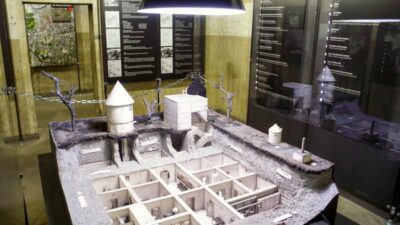 ★ 4.6Berlin: Berlin Story Bunker Entry TicketFrom $216,759 reviews
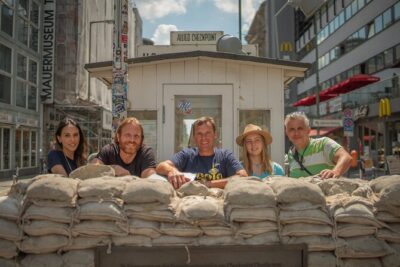 ★ 5.0Berlin’s Best: 2 Hour Walking Tour Third Reich and the Cold WarFrom $245,486 reviews
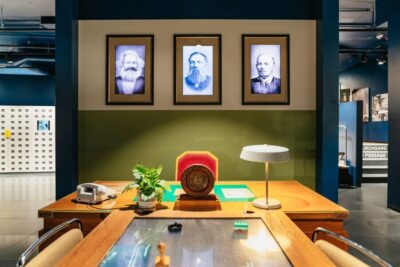 ★ 4.3Berlin: DDR Museum TicketsFrom $153,443 reviews
 ★ 4.8Berlin: 75-minute Trabi SafariFrom $932,854 reviews
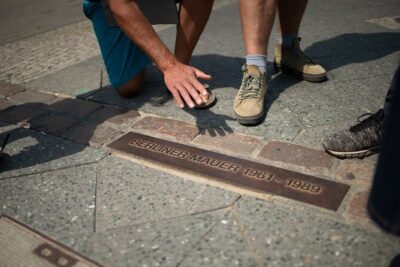 ★ 5.0Cold War, Berlin Wall, Spies and the East Side GalleryFrom $181,024 reviews
 ★ 4.8Nuremberg: Historischer Kunstbunker WWII Art Bunker TourFrom $14921 reviews
 ★ 4.9Leipzig: 90-Minute Trabi City TourFrom $81728 reviews
Other lists this tour is on